Queen Mattress vs King Size a Milwaukee Guide

A lot of bedroom decisions start the same way. Someone stands at the foot of the bed with a tape measure, looks at the dresser, looks at the nightstands, and asks the key question. Will a king make life better, or will it just make the room tighter?
That's the heart of the queen mattress vs king size decision. It isn't just about buying a wider mattress. It's about how two people sleep, how a room functions, and how a home feels every day. In Metro Milwaukee, that matters even more because homes vary so much. One family has a roomy primary bedroom in the suburbs. Another has a cozy bungalow, condo, or senior-living space where every inch counts.
Since 1928, Milwaukee-area families have come to local showroom teams for this exact kind of advice. The most helpful conversations usually aren't about flashy features. They're about practical trade-offs. Can the drawers still open? Is there space to walk around the bed? Will the mattress still make sense a few years from now?
Table of Contents
- The Great Bedroom Debate Queen or King
- Queen vs King The Numbers Game
- Who Sleeps Best in Each Size
- Planning Your Milwaukee Bedroom Layout
- The BILTRITE Difference in Any Size
- Your Queen vs King Decision Checklist
The Great Bedroom Debate Queen or King
A Milwaukee couple can spend weeks talking about a new mattress, then still end up back at the same point. One wants more room to spread out. The other wants the bedroom to feel open, calm, and easy to move through. Both are right.
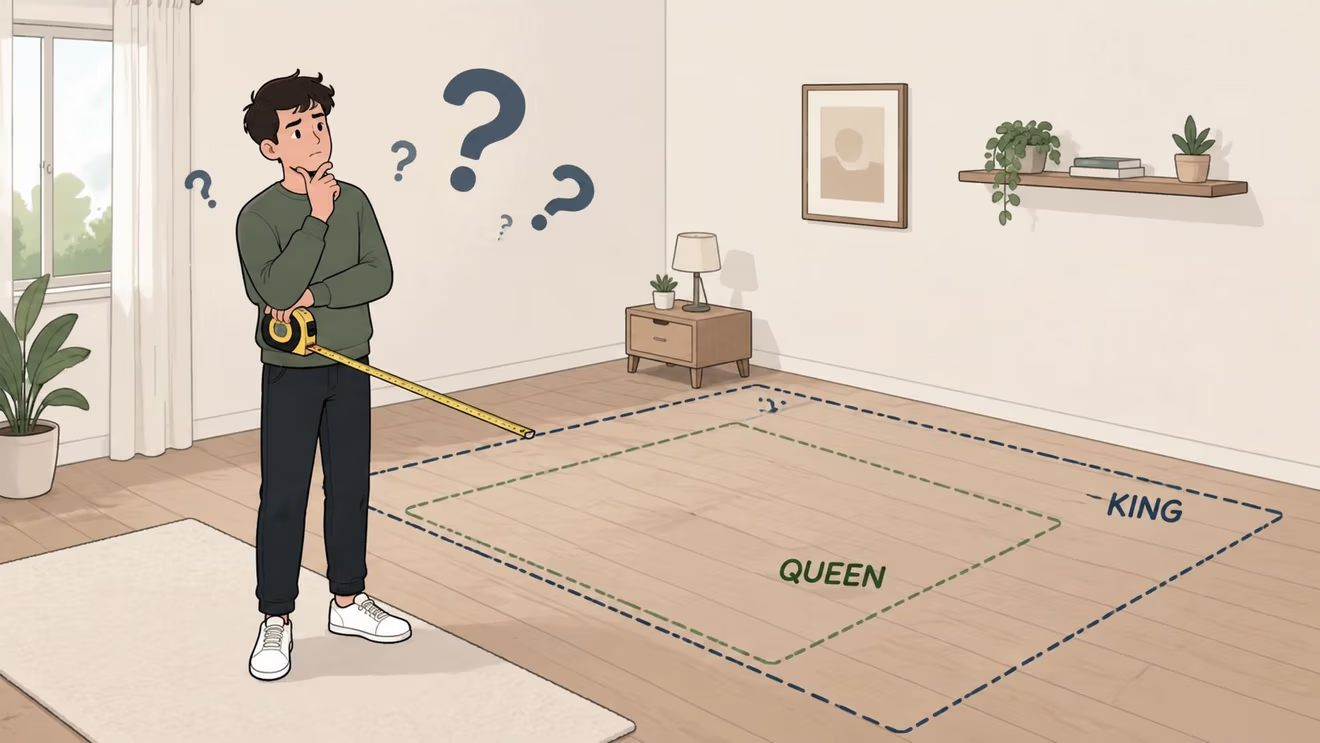
That's why queen mattress vs king size is such a common debate. The bigger bed can sound like the obvious upgrade until the room starts feeling crowded. The queen can sound like the practical choice until one partner keeps drifting into the other person's side in the middle of the night.
Why this choice feels bigger than mattress size
A mattress affects more than sleep. It shapes the traffic pattern in the room, the way the bedroom looks, and how comfortable the space feels when real life happens. Maybe kids climb in early on Saturday morning. Maybe a dog has unofficially claimed the foot of the bed. Maybe one sleeper reads while the other falls asleep fast and doesn't want to be bumped all night.
Those are home-life questions, not just size-chart questions.
Practical rule: The right bed size should support sleep without making the bedroom harder to live in.
The local angle people often miss
In the Milwaukee area, shoppers deal with all kinds of layouts. Some homes have broad primary suites. Others have tighter bedrooms with radiator placement, angled walls, or furniture that has to stay. A mattress can technically fit and still be the wrong call once the room is fully set up.
That's where long-term thinking helps. The better decision usually comes from matching the mattress to the room and the family's habits, instead of chasing size for its own sake. A queen can feel generous in the right room. A king can feel like a lifesaver in the right household. The trick is knowing which one is right for the way a family lives.
Queen vs King The Numbers Game
The simplest way to compare queen mattress vs king size is to start with the measurements, then translate them into real bedroom impact. The length stays the same. The width is where the decision gets interesting.
Queen vs King at a Glance
| Feature | Queen Mattress | King Mattress |
|---|---|---|
| Width | 60 inches | 76 inches |
| Length | 80 inches | 80 inches |
| Difference in width | Standard width | 16 inches wider |
| Surface area | 4,800 square inches | 6,080 square inches |
| Sleeping space difference | Standard baseline | 1,280 square inches more, or about 27% more sleeping space |
| Typical room guideline | Around 10 x 12 feet | At least 12 x 12 feet or larger |
A standard queen measures 60 x 80 inches, while a standard king measures 76 x 80 inches, making the king 16 inches wider with the same length. That increases sleeping surface from 4,800 square inches to 6,080 square inches, or about 27% more sleeping space, according to this king versus queen mattress dimension guide.
For room planning, a commonly repeated guideline is that a queen works well in rooms around 10 x 12 feet, while a king is better suited to spaces of at least 12 x 12 feet or larger, as explained in this room size and mattress layout overview.
What those numbers mean in daily life
That 16-inch difference sounds modest on paper, but it changes how a bed feels and how a room functions. In practical terms, it's like adding a meaningful strip of mattress width across the entire bed. For some couples, that's the difference between sleeping comfortably and feeling like each person is guarding their edge of the mattress.
The room pays for that extra width, though. A king doesn't just ask for more floor space under the bed. It asks for more breathing room around it.
A queen often wins when the bedroom needs to do several jobs well:
- Keep walkways open so the room doesn't feel cramped.
- Leave space for case goods like a dresser or chest.
- Make bed-making easier without squeezing into corners.
- Handle tighter layouts in condos, bungalows, guest rooms, and smaller primary bedrooms.
A king often wins when the sleep surface itself is the top priority:
- Two adults want more elbow room at night.
- A child or pet joins in often enough to matter.
- The bedroom is large enough that the bed won't overpower it.
- The family plans to stay put and wants more personal space over time.
For anyone comparing measurements visually, BILTRITE's mattress size chart is a helpful side-by-side reference.
Who Sleeps Best in Each Size
Mattress shopping gets easier once the conversation shifts from dimensions to sleeping habits. The most useful question isn't “Which bed is bigger?” It's “Who's sleeping here, and how do they use the bed?”
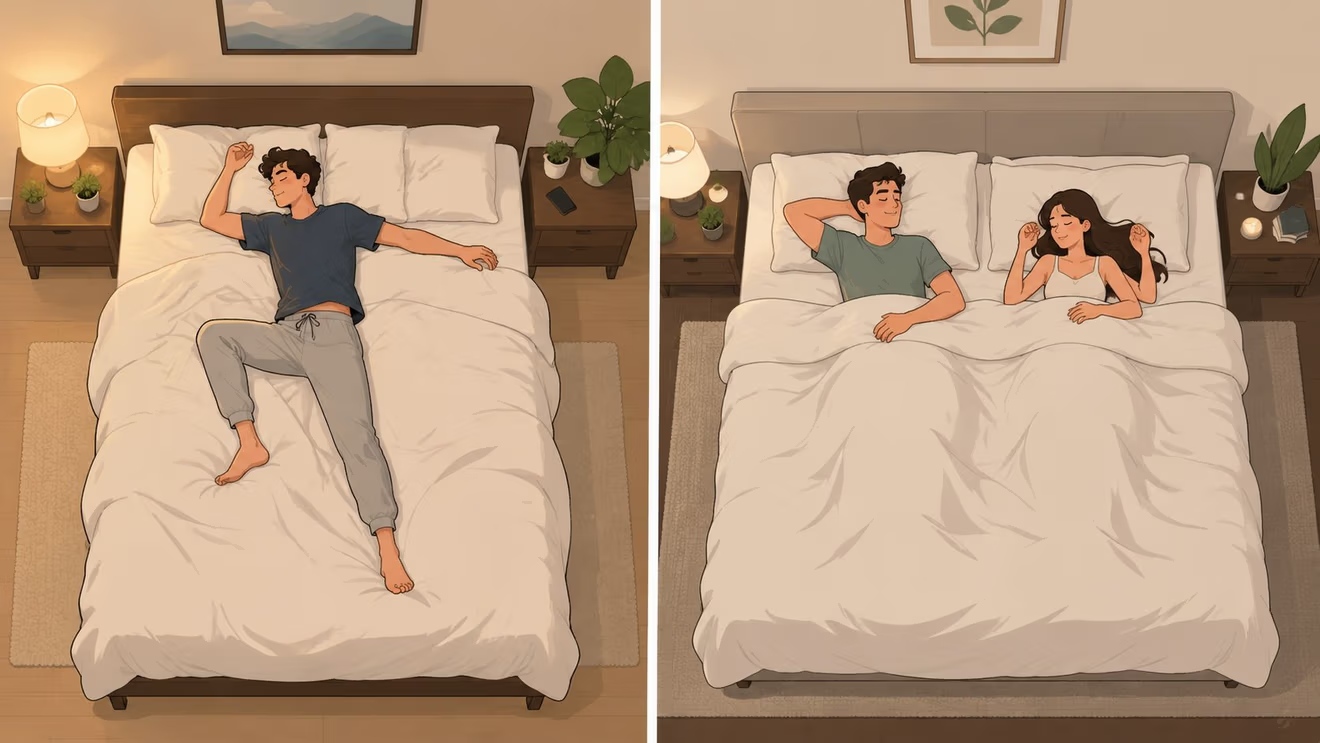
For couples, the biggest practical difference is personal width. A queen gives each sleeper about 30 inches. A king gives each sleeper about 38 inches, which is an 8-inch gain per person, according to this paired-sleeper mattress width breakdown. That's one reason kings are often chosen when children or pets also share the bed.
A queen often makes sense for these sleepers
A queen is a smart fit for many homes because it balances comfort and room function so well.
- Solo sleepers who like space can stretch out comfortably without giving up unnecessary floor area.
- Couples who sleep close and don't mind a cozier feel often do very well on a queen.
- Guest rooms and multipurpose bedrooms usually benefit from the queen's smaller footprint.
- Shoppers watching total bedroom cost often appreciate that the mattress is only one part of the purchase. Bedding, frame choices, and room flexibility matter too.
A queen also tends to feel more natural in bedrooms where furniture still needs to work around the bed. That matters in homes where the primary bedroom isn't oversized and where daily usability matters just as much as sleep surface.
A king earns its space in these homes
A king starts making more sense when the bed has to accommodate a fuller household reality.
A bed can feel generous for two adults on paper and still feel tight once a child, dog, or restless sleeper joins the mix.
A king is often the better call in situations like these:
- One or both partners move a lot at night. More width gives each sleeper a little more independence.
- Children visit the bed regularly. Morning cartoons, storms, and sick nights all make extra width valuable.
- Pets sleep in the bed most nights. Families know this one isn't a small detail.
- The room is big enough that the extra size won't crowd everything else.
The best size depends on both the sleeper and the room. Someone can learn a lot from a size chart, but lying down and testing support still matters just as much. For shoppers sorting through comfort needs along with bed size, this guide on which mattress is right for your body type is a useful next step.
Planning Your Milwaukee Bedroom Layout
The right mattress size has to work with the room every day, not just fit on a spec sheet. In Milwaukee, that matters more than many online size guides admit. Bungalows, older two-stories, condos, and downsized homes often have bedrooms with radiator placement, narrower walls, or door swings that can make a king feel much bigger than it looked in the store.
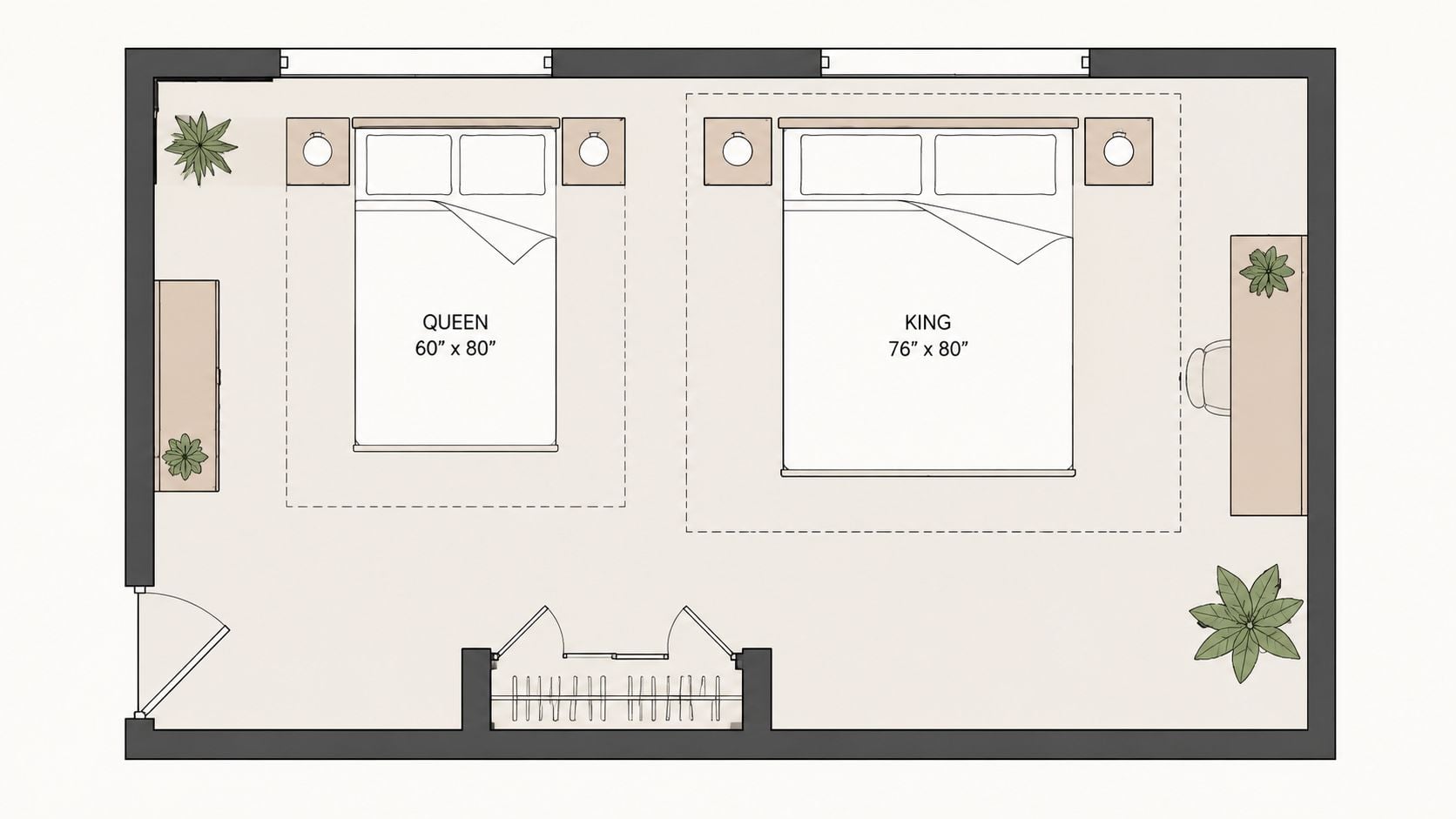
A queen often settles into a room more easily. A king usually needs more than enough floor space for the mattress itself. It also needs clear walking paths, room for nightstands, and enough space to open drawers and make the bed without squeezing sideways.
That daily-use part gets overlooked.
Tape the room before buying the bed
One habit I recommend all the time is simple. Mark the mattress outline on the floor with painter's tape before you buy. If the bed is replacing an old one, include the frame size too, because some headboards and rails add more bulk than shoppers expect.
That quick test answers practical questions fast:
- Can two people get in and out without bumping furniture?
- Do both nightstands fit comfortably?
- Will dresser and closet doors open fully?
- Is there enough space at the foot of the bed for normal movement?
In plenty of Milwaukee homes, a few inches decide whether a room feels easy to live in or cramped every morning.
Match the bed to the way the room actually functions
A bedroom is rarely just a place for sleep. It may also be where someone gets dressed for work, folds laundry, sets up a reading chair, or keeps a crib or pet bed nearby. That real-life use should guide the size decision.
A queen usually leaves more flexibility for the rest of the room. A king makes sense when the bedroom has genuine extra width and the household will use that added sleeping space often enough to justify giving up more floor area.
The most common layout mistakes are easy to spot once you look for them:
- The bed blocks natural walking paths from the door to the closet or bath.
- Nightstands look undersized or get dropped entirely to force the bed in.
- Large dressers stay, but drawers cannot open well once the new mattress arrives.
- The room loses usable floor space that mattered more than expected.
Bedrooms work better when movement feels natural.
That is one reason long-term planning matters here too. If you are buying a mattress built to last, especially a durable two-sided or flip-able model, it makes sense to choose a size that still suits the room years from now. For more practical setup ideas, BILTRITE's guide on how to arrange bedroom furniture is a helpful next step.
The BILTRITE Difference in Any Size
Once the size is settled, the next decision matters just as much. A queen that's built well will usually serve a home better than a larger mattress built to wear out fast. A king that fits the room but lacks support won't feel like much of an upgrade for long.
Size matters but build matters longer
Many shoppers find it advantageous to slow down. Mattress size gets the attention first because it's easy to see. Construction quality is quieter, but it affects comfort, support, durability, and value over time.
For many households, the better long-term move is to focus on questions like these:
- Is the mattress built for lasting use?
- Does it suit the sleepers using it every night?
- Will it hold up to heavier use, guest use, or family use?
- Can it provide value over time instead of just a nice first impression?
That's one reason local shoppers often look closely at two-sided and flip-able mattress options, heavier-duty constructions, and models built with durability in mind. Those details matter whether the mattress is a queen or a king.
What to pay attention to in the showroom
One practical option for Milwaukee-area shoppers is BILTRITE Furniture-Leather-Mattresses, which offers a large mattress selection in-store, including flip-able and heavy-duty options, with a focus on USA-made quality and hands-on testing rather than online-only buying.
That kind of showroom visit helps shoppers compare more than just firmness. It lets them feel edge support, test motion response, and see how different builds perform across both queen and king sizes.
A few details deserve extra attention when testing:
- Edge support: This matters when two people share the bed and use the full surface.
- Center feel: Some mattresses feel great on one side and less supportive in the middle. Couples should always test both together.
- Ease of movement: A mattress should support rest without making repositioning feel like work.
- Durability features: Two-sided construction and heavier-duty builds can make a real difference for some households.
A good mattress shouldn't only fit the room. It should fit the family that uses it.
Your Queen vs King Decision Checklist
A queen and a king can both be the right answer. The choice gets clearer when the decision is narrowed down to room function, sleeping habits, and long-term value.
Ask these questions before deciding
Use this checklist before making the final call:
- Who sleeps in the bed? Two adults is one scenario. Two adults plus a child or pet is another.
- How does the room need to function? Sleeping is the main job, but storage, walkways, and furniture access still matter.
- Does the room feel open with the larger footprint? If a king makes the room feel crowded, the extra width may not be worth it.
- Is a cozier sleep setup acceptable? Some couples like the feel of a queen. Others need more separation.
- What matters more, more bed or more room? That answer usually points the way.
- Is the mattress being chosen for today only, or for the next several years? It helps to think beyond the immediate purchase.
- Has the mattress been tested in person? Comfort and support can't be judged by dimensions alone.
For shoppers who want a broader framework before visiting the store, this guide on how to choose the right mattress is a useful resource.
When an in-store test settles the debate
Sometimes a couple debates queen mattress vs king size for days, then settles it in minutes once both sizes are tested side by side. That's normal. One size immediately feels right. Or one size looks good on paper but feels unnecessary once the room plan and support level are considered together.
The key is staying honest about how the home works in real life. A queen is often the more space-efficient choice. A king often brings welcome personal room. The better answer depends on what the bedroom can support and what the household needs night after night.
A confident decision usually comes from combining three things:
- The actual room measurements
- Your sleeping situation
- The quality of the mattress itself
When those line up, the choice gets much easier.
If the queen versus king question still feels close, a store visit usually helps settle it fast. Milwaukee-area shoppers can visit the BILTRITE Furniture-Leather-Mattresses showroom in Greenfield, try different mattress sizes in person, and talk with a team that's been helping local families since 1928. That kind of hands-on guidance makes it easier to choose a mattress that fits the room, supports the way the household sleeps, and feels right for the long haul.