How to Choose Carpet Size: Expert Tips from Milwaukee


A lot of rooms reach the same frustrating stage. The sofa is in place, the tables are set, the lamps are on, and the space still feels a little off. Usually, the issue isn't the furniture at all. It's the scale of what sits underneath it.
That's where learning how to choose carpet size makes such a big difference. In a Metro Milwaukee home, a rug doesn't just soften the floor. It frames a seating group, gives dining chairs room to move, and helps quality furniture look like it belongs together. For a family-owned store that's been part of the community since 1928, that kind of practical detail matters because long-lasting furniture deserves a foundation that fits.
Table of Contents
- Why the Right Rug Size Matters More Than You Think
- First Things First Getting Ready to Measure
- Sizing Rugs for Your Living Room
- Nailing the Size for Bedrooms and Dining Rooms
- Common Rug Sizing Mistakes We Help Families Avoid
- Finding Your Foundation at BILTRITE
Why the Right Rug Size Matters More Than You Think
A common scene plays out in furnished homes all the time. A family picks a handsome sofa, adds a chair or two, hangs artwork, then drops in a rug that looked roomy in the store. Back at home, that same rug can make the whole room feel disconnected because it's too small to anchor the furniture.
That problem has been around long enough that room sizing settled into familiar standards. The classic 8'x10' and 9'x12' sizes have been used since the mid-20th century to cover about 60 to 70% of a room's usable floor space, while also letting the rug run the length of the sofa with at least 6 to 8 inches of clearance on each side (industry sizing guideline). Those numbers sound technical, but they solve a simple visual problem. The room looks grounded instead of scattered.
What a rug really does in a room
A rug works like a frame around furniture. It tells the eye, “this is the conversation area,” or “this is the dining zone.” Without that frame, even beautiful pieces can seem like they're drifting apart.
Practical rule: A rug should support the furniture grouping, not just sit under the coffee table like an afterthought.
That matters even more with lasting pieces such as USA-made upholstery, Amish dining sets, and solid-wood bedroom furniture. Well-built furniture has visual weight. If the rug underneath is skimpy, the room can feel top-heavy.
Why size changes the mood
A well-sized rug can make a room feel calmer because the layout reads clearly. Walk into the space, and the arrangement makes sense right away. Walkways feel intentional. Seating feels connected. The whole room feels more settled.
BILTRITE has spent generations helping Milwaukee-area families furnish homes that need to work in real life, not just in photos. That includes condos, older bungalows, family homes, apartments, and senior living spaces. In each of those homes, the right rug size helps furniture look more at home and function better day after day.
First Things First Getting Ready to Measure
The measuring step is where most sizing problems get fixed before money is spent. It's also much easier than many shoppers expect. A tape measure, a notepad, and some painter's tape can clear up most of the guesswork.

For anyone measuring a room with furniture already in it, BILTRITE's guide on how to measure furniture for your space is a helpful companion. The same mindset applies to rugs. Measure the room that exists, not the room someone hopes to create later.
Start with the furniture, not the walls
Many people begin by measuring open floor area wall to wall. That sounds logical, but rugs usually need to relate more closely to furniture than to the outer shell of the room. A better first move is to measure the seating group, bed, or dining table and then add the needed surround.
A simple floor outline helps. Place painter's tape where the rug edges would go and leave it there for a day or two. Walk around it. Pull chairs in and out. See whether traffic paths still feel comfortable.
A taped outline catches problems early. It shows whether a rug edge lands in an awkward spot, blocks a walkway, or stops too short under furniture.
Don't forget what goes underneath
The cushion matters, too, especially with carpet installations and rugs in active rooms. For residential carpet, industry standards call for a cushion no thicker than 7/16 inch and no less than 1/4 inch, with a density of 6 pounds per cubic foot. For Berber carpet, using a cushion thicker than 3/8 inch requires a density of 8 pounds per cubic foot to help prevent crushing (residential carpet cushion guidance).
That's one of those details shoppers don't always see, but they definitely feel over time. The right support helps flooring stay steadier under daily use.
A measuring routine that keeps things simple
- Measure the main furniture group. Sofa width, chair positions, bed footprint, or table size comes first.
- Mark the rug outline with tape. This makes scale visible right on the floor.
- Test real movement. Open doors, pull out chairs, and walk through the room naturally.
- Check the underlayer. Cushion and pad choices affect comfort, support, and wear.
Sizing Rugs for Your Living Room
Living rooms create the most rug confusion because they can be formal, casual, compact, open-concept, or somewhere in between. The good news is that most rooms still fall into a few reliable layout patterns.

In many Metro Milwaukee homes, 8'x10' or 9'x12' rugs fit standard sofa groupings well, and smaller rugs tend to create more visual imbalance in designer audits. That's one reason those sizes come up so often in living room planning, especially around standard sofas and sectionals.
For a closer look at placement ideas, BILTRITE also offers this guide on how to place an area rug in a living room.
Three common layouts and how they feel
The first layout puts all furniture legs on the rug. This gives the room a broad, generous feel and works especially well when the seating floats away from the walls.
The second layout places only the front legs on the rug. This is a strong middle ground for many homes. It ties the seating together without requiring the largest rug in the room.
The third layout leaves all seating off the rug, with only a coffee table in the middle. That can work in very tight spaces, but it often looks less connected.
A living room rug should relate to the whole conversation area. If the rug only serves the coffee table, the seating group can feel unfinished.
Standard Rug Sizes and Common Uses
| Rug Size | Best For |
|---|---|
| 5'x8' | Small seating groups, apartments, compact rooms |
| 8'x10' | Many standard sofa and chair arrangements |
| 9'x12' | Larger seating areas, sectionals, open rooms |
A fast way to choose between sizes
If the room feels roomy and the furniture floats in the space, sizing up usually creates a calmer look. If the sofa sits closer to a wall and the room is modest in scale, a front-legs-on arrangement can still look intentional and balanced.
A practical example helps. In a smaller family room with a loveseat and two chairs, a rug that slips under the front legs of each piece can unify the space without swallowing the room. In a larger room with a sectional and accent chairs, a larger rug keeps all those pieces talking to one another visually.
What usually throws people off
Living rooms fool shoppers because the empty floor makes a rug seem larger than it will feel once furniture sits around it. That's why undersized rugs are so common. Once a sofa, chair arms, and tables enter the picture, a rug shrinks visually.
The safest habit is to judge the rug by the furniture grouping, not by open floor around it.
Nailing the Size for Bedrooms and Dining Rooms
Bedrooms and dining rooms ask for function first. If the rug doesn't support how the room is used, it won't matter how pretty it looks.
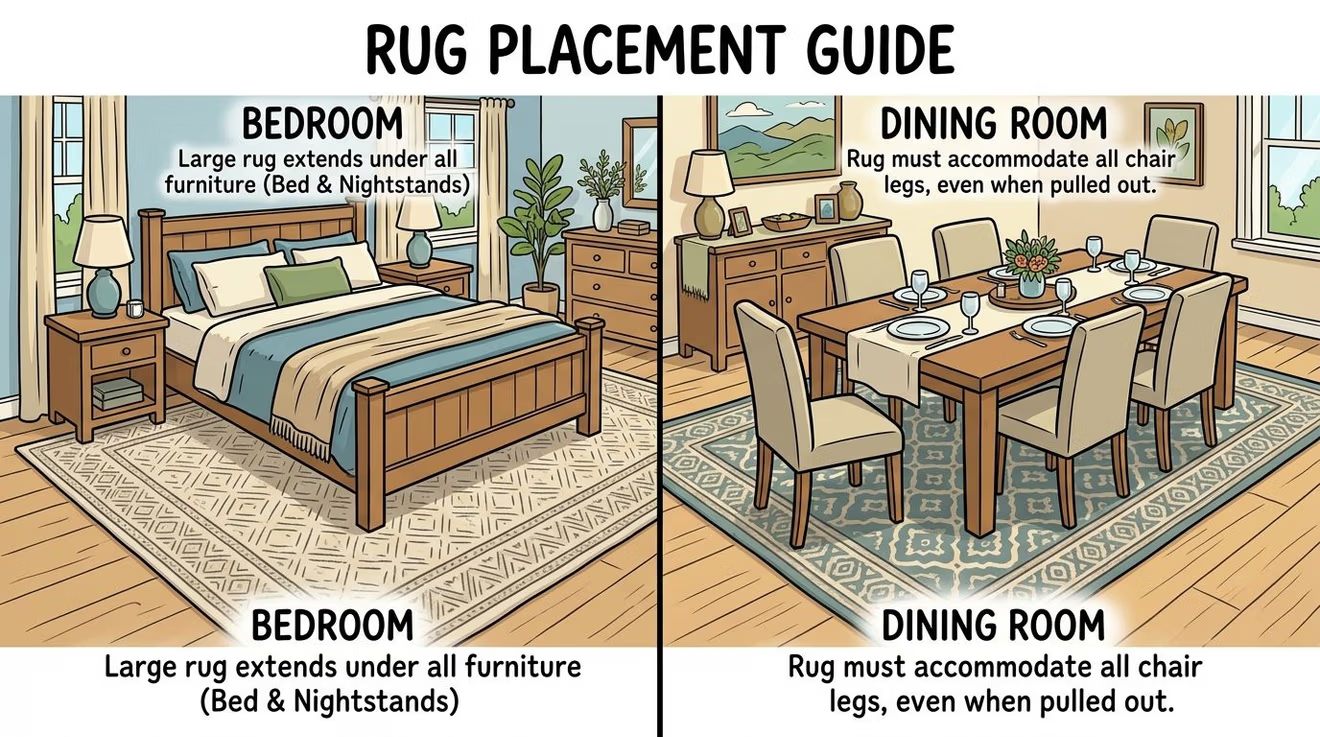
Dining rooms need chair clearance. Bedrooms need a soft landing around the bed. Those goals sound different because they are. One room is about movement. The other is about comfort when getting in and out of bed.
For table planning before rug sizing, this dining table size guide can help lock down the furniture footprint first.
Dining rooms need the chair test
The clearest dining-room rule is simple. The rug must extend beyond the table far enough that chairs stay on the rug when pulled out. Verified sizing guidance places that extension at 60 to 75 cm (24 to 30 inches) on all sides (dining and bedroom sizing benchmark).
That matters with solid-wood dining furniture because chair movement is constant. If back legs catch the rug edge or drop off it, the whole setup feels awkward.
A quick at-home test works well:
- Pull each chair back fully. All four legs should still rest on the rug.
- Check every side of the table. End chairs and side chairs need the same support.
- Notice the feel under motion. Chairs should glide without wobbling at the edge.
Dining rugs aren't just decorative. They need to keep everyday movement smooth and stable.
Bedrooms need enough landing space
Bedroom rugs should greet bare feet, not disappear under the bed. Verified guidance calls for an 8'x10' rug for a Queen bed and a 9'x12' rug for a King bed (dining and bedroom sizing benchmark).
That doesn't mean every bedroom must look the same. Some rooms place the rug under the lower portion of the bed, while others tuck a larger rug farther underneath. The main question is whether there's enough rug visible at the sides and foot of the bed to feel useful when someone stands up.
A simple bedroom decision guide
| Bed Size | Common Rug Starting Point | What it helps with |
|---|---|---|
| Queen | 8'x10' | Gives more visible rug around the bed |
| King | 9'x12' | Supports a larger bed footprint with better side coverage |
Many Metro Milwaukee shoppers pair these sizes with long-lasting wood bedroom sets. That combination works nicely because the rug softens the room while the furniture provides structure and warmth.
Common Rug Sizing Mistakes We Help Families Avoid
The biggest mistake is almost always the same. The rug is too small. It sits in the center of the room like a postage stamp, and the furniture around it looks unrelated.
That old advice to always leave lots of bare floor around a rug can also steer people wrong in compact homes. In smaller apartments, condos, and senior living spaces, wide spacing rules don't always fit the room or the furniture. A more flexible approach often works better.
The small-space rule that actually helps
In Metro Milwaukee micro-units, the standard 8 to 12 inch furniture overhang rule can fail. A 5'x8' rug with just 6 inches of overhang can anchor small-scale furniture without sacrificing the needed 18-inch walkway clearance in compact spaces (small-space rug guidance for micro-units).
That's useful for real homes, not just styled rooms. A senior apartment, a first condo, or a downsized living room may need clear walking space more than a textbook furniture layout.
Four mistakes that show up again and again
- Buying by price first: Smaller rugs can look like a bargain, but they often create a disconnected layout.
- Measuring only the room shell: Furniture placement matters more than empty floor dimensions.
- Ignoring walkways: A rug shouldn't force people to squeeze around the seating area.
- Using standard advice in non-standard rooms: Small-scale furniture sometimes needs small-scale rules.
In a compact room, the right rug doesn't have to be huge. It just has to anchor the main pieces without crowding the path through the space.
This is one area where nearly a century of in-person furniture work really helps. Not every Milwaukee-area home has a sprawling great room. Many need thoughtful scaling, especially when residents want quality furniture that fits condos, bungalows, apartments, and senior living settings.
Finding Your Foundation at BILTRITE
Once the sizing basics click, rug shopping gets a whole lot less stressful. The decision usually comes down to this. The rug should support the furniture, fit the way the room is used, and make the space feel settled when someone walks in.

That's especially important in homes built around lasting pieces. A handcrafted dining set, a solid-wood bedroom suite, or a well-made sofa deserves a rug size that feels considered, not guessed at. BILTRITE Furniture-Leather-Mattresses serves as a local showroom resource for shoppers comparing furniture scale, room layout, and rug placement in person.
Why in-person help still matters
A taped floor plan and a few measurements can answer a lot, but some rooms still need another set of eyes. That's where a seasoned showroom team can help connect furniture scale, traffic flow, and rug placement in a practical way.
BILTRITE has served Metro Milwaukee since 1928 as a fourth-generation family business. The team brings more than 400 years of combined experience, and the showroom in Greenfield gives shoppers a chance to compare sizes, materials, and room setups face to face. Since the store doesn't sell online and stays closed on Sundays and Mondays for family time, the focus stays on the in-store experience and straightforward guidance.
For anyone still sorting out how to choose carpet size, BILTRITE Furniture-Leather-Mattresses welcomes visitors to the Greenfield showroom. Bringing room measurements, a few photos, and furniture dimensions can make the conversation much easier. The team can help shoppers think through rug scale alongside USA-made, Amish-made, solid-wood, small-scale, and heavy-duty furniture options, plus a mattress department with over 60 models.