3 DAY MATTRESS SALE! TUESDAY - WEDNESDAY - THURSDAY!
LABOR DAY SALE EXTENDED ENDS SATURDAY, OCTOBER 3RD AT 5PM!
NO CREDIT CARD FEES!
1000's of Items IN-STOCK + 500 Mattresses!
Largest selection of USA Made Furniture & Mattresses + Amish Made!
FREE In-Store Design Services!
BUY LOCAL & LOVE YOUR HOME!
3 DAY MATTRESS SALE! TUESDAY - WEDNESDAY - THURSDAY!
LABOR DAY SALE EXTENDED ENDS SATURDAY, OCTOBER 3RD AT 5PM!
NO CREDIT CARD FEES!
1000's of Items IN-STOCK + 500 Mattresses!
Largest selection of USA Made Furniture & Mattresses + Amish Made!
FREE In-Store Design Services!
BUY LOCAL & LOVE YOUR HOME!
OPEN LABOR DAY | Tuesday-Thursday 10am to 6pm | Friday 10am to 7pm | Saturday 10am to 5pm | Sunday Closed To Be With Family & Friends | Monday Showroom Closed
5430 West Layton Ave, Greenfield - Metro Milwaukee
The couch has to do a lot of jobs in a Metro Milwaukee home. It's where kids pile up after school, where a partner stretches out after work, where the dog claims the corner, and where a living room either feels roomy or suddenly feels crowded. An oversized reclining sofa can solve that problem, but only if it fits the room, the doorway, and the way the family lives.
That's the honest test. Not whether it looks good in a showroom, but whether it handles a narrow stairwell in Greenfield, a basement TV room in Waukesha, or an open layout in Brookfield without becoming a traffic jam. The right piece gives people more comfort without stealing the whole floor, and the wrong one turns every movie night into a shuffle around furniture.
What an Oversized Reclining Sofa Really Is
A lot of shoppers hear “oversized” and assume the sofa is longer. That misses the point. In furniture terms, oversized recliner sizing usually means more than 50 inches wide, with extra room to curl up, stretch out, or share space with a pet in a large living room or home theater setting, according to Wayfair's sizing guide Wayfair recliner sizing guide. That wider footprint is what separates it from a standard recliner built for one person and from a deep-seat sofa that may feel roomy but does not move.
The real difference is movement
An oversized reclining sofa is not just a bigger couch with softer cushions. It is a motion piece, which means the frame, hinge, and seat structure all have to support the back and footrest as they open. The reclining mechanism changes how the whole piece behaves, and that is the part shoppers need to respect.
Families notice that difference fast. A reclining sofa has to handle movie nights, afternoon naps, and the dog taking over the end seat without feeling flimsy or awkward. It also has to fit the room once the seats are open, which is why buyers comparing styles should look at reclining sofa and loveseat options and pay attention to how the proportions change when motion is part of the design. If the household wants one piece that carries daily lounging, the oversized reclining sofa belongs at the top of the list.
Practical rule: if a sofa has to do the work of a lounge chair, a loveseat, and a family hangout spot, the oversized recliner is the category to look at first.
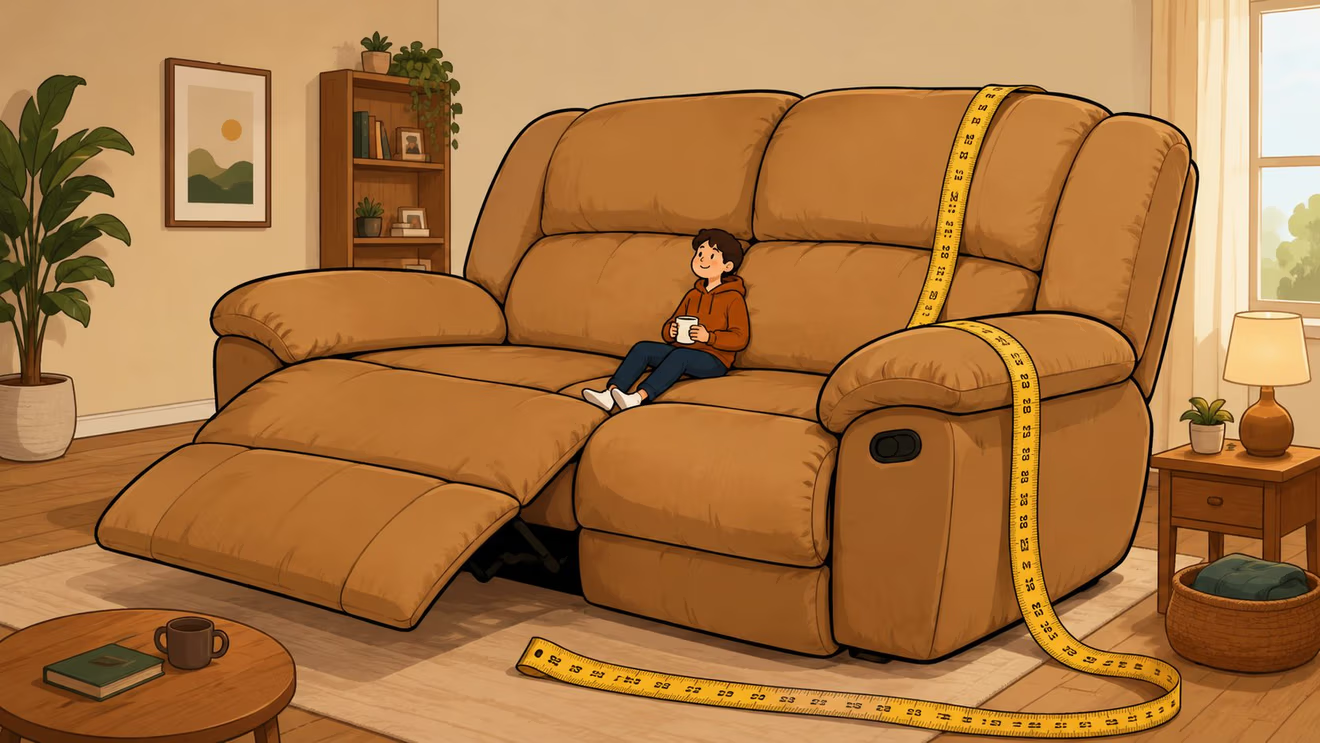
The image below gives the idea a little comic relief, but the sizing lesson is serious.
For shoppers comparing styles in person, the key is to judge whether the piece feels like a real family sofa or just a bigger seat with motion hardware added. Seat width, arm bulk, and the way the mechanism takes up space matter more than a showroom label. A good oversized reclining sofa gives people room to settle in without swallowing the whole room, and that balance is what makes it worth considering in the first place.
Sizing and Fit for Real Milwaukee Homes
The tape measure has to come out before the truck does. A sofa can look reasonable in a showroom and still fail at the front door, the basement turn, or the spot where the footrest opens into the walkway. Milwaukee-area homes often have older door casings, tighter stair turns, and lived-in rooms where the sofa has to fit around family traffic, not just against a wall.
Measure the closed size and the live size
A useful reference point is a powered large recliner sofa from the UK that measures 206 cm wide, 100 to 149 cm deep depending on recline position, and 103 cm high, with a 49 cm seat height and 54 cm seat depthErcol datasheet. The key number there is the changing depth. Once the back and footrest move, the sofa takes up more room than it does while sitting closed.
That's why the room should be measured in three ways. First, the width of the wall or nook. Second, the passage path from the entry door to the final spot. Third, the fully open footprint. A reclining sofa may fit the wall perfectly and still block the coffee table once it opens, especially if the front clearance is too tight.
Household rule: if the walkway shrinks below comfortable movement, the sofa isn't a fit, even if the wall width says yes.
Doorways, stairs, and the turn that ruins delivery day
A lot of delivery headaches happen before the sofa ever reaches the room. One oversized recliner sofa listing shows a 41.0" × 38.0" × 41.0" envelope with a 21" seat depth, 19.5" seat height, and 350 lb weight capacity, while another oversized recliner shows a 37.4" D × 41.7" W × 40.6" H body, 26.8" seat width, and 400 lb capacity oversized recliner listing. Those numbers matter because the shape, not just the width, decides whether it can clear a doorway or stair bend.
The useful habit is simple. Measure the narrowest door, the tightest hallway, and the turning radius at the stair landing or basement bend. Then compare that to the sofa's box size, not just its finished dimensions. That's where come-apart construction earns its keep, especially in older Milwaukee homes where a straight shot rarely exists.
For living rooms, don't ignore traffic paths. Independent planning guidance says comfortable walkways should stay around 30 to 36 inches, traditional recliners often need 12 to 18 inches of wall clearance, wall-hugger designs may need only 3 to 6 inches, and the footrest can extend up to 30 inches into the room small-room recliner planning guide. That's the math that keeps a room usable after the sofa arrives.
Frame Materials and Upholstery Choices That Last
A large reclining sofa takes more abuse than a decorative couch. People drop into it, kids climb on it, pets nap on it, and the mechanism opens and closes again and again. The frame and upholstery have to work together, not just look good on the floor.
What matters in the materials
Shoppers tend to split between two practical choices, fabric and leather. Fabric brings a softer, more casual feel that fits a family room. Leather wipes clean more easily and usually reads as more polished, but it shows wear differently and needs regular care.
For Milwaukee homes, that decision usually comes down to daily habits and season-by-season use. Fabric often feels warmer in winter and more forgiving for movie nights, while leather holds up well in a room where spills and quick wipe-downs are part of life. BILTRITE's focus on USA-made, Amish-made, and solid wood furniture matters because a motion sofa built on a stronger frame has a better shot at holding its shape after years of family use.
Why the inside matters more than the trim
A good reclining sofa is more than upholstery stretched over padding. The frame, base, and mechanism carry the load. A large oversize recliner listing points to a 350 lb capacity, and another reaches 400 lb, which gives a useful picture of the structural expectations placed on the frame and hinge system oversized recliner listing. Wider seats and more foam spread pressure out, but they also ask more from the parts underneath.
Mechanism quality matters more than the arm trim or the USB port. A sofa with a weak frame can feel fine in the showroom and then sag, wobble, or squeak once real life starts. In the showroom, test the structure, not just the cushion. Sit down, lean back, and feel whether the sofa supports the body without feeling hollow underneath.
Straight answer: if the frame feels flexible before anyone has even owned it, that sofa is already telling the truth.
For families who want upholstery that can handle pets and spills, pick the fabric based on the household, not the trend. Performance fabrics fit busy rooms well, and leather is still a solid choice when easy wipe-down care matters. A closer look at cleaning, texture, and day-to-day wear belongs in the broader performance fabrics guide, especially for homes that see heavy use.
Customization, In-Stock Options, and Come-Apart Delivery Paths
Getting the right sofa into the house is half the battle. The other half is choosing a buying path that fits the timeline, the room, and the stairs. Some families need a fast solution. Some want a custom look. Some need a sofa that can come apart to get through a narrow entry.
Three paths, three different kinds of help
A large in-stock model solves the “we need it now” problem. A custom order solves the “we want the right fabric, leather, wood, finish, and hardware” problem. A come-apart sofa solves the “the doorway is the enemy” problem. BILTRITE carries those paths in one showroom environment, so the shopper can compare them side by side instead of guessing from a screen.
For a family in Greenfield, that matters because the purchase isn't only about style. It's about whether the sofa can get into a basement family room, whether the upholstery can handle kids, and whether the delivery crew can finish the job without a scene at the front door. Local showroom shopping still makes sense for a complicated motion piece. Mechanism demos, fabric swatches, and delivery planning all happen face to face.
What white-glove delivery solves
White-glove delivery helps most when the room is tricky. It takes the burden off the homeowner on the exact day the furniture arrives. Old furniture removal helps too, especially when the existing sofa is too large or too awkward to drag out without scratching a hallway or scuffing a stair rail.
Good delivery planning starts before the order is placed, not after the truck is already on the street.
The internal category that fits this discussion is couches that can be taken apart, because that feature is often the difference between a smooth installation and a delivery-day headache. For homes with tight turns, lower basement ceilings, or narrow second-floor landings, a come-apart design is practical, not fancy.
A family still has to decide what kind of convenience matters most. In-stock speed is valuable. Custom details are valuable. Delivery flexibility is valuable. A good retailer should make the trade-off clear instead of hiding it behind vague lead-time language, and a showroom visit makes that conversation far easier.
Oversized Reclining Sofa vs Standard Recliners and Sectionals
Some rooms need the full motion sofa. Some don't. The job here is not to praise every oversized model, it's to separate the pieces that earn their footprint from the pieces that just take up space. Households that lounge together will feel the difference immediately.
Feature
Oversized Reclining Sofa
Standard Recliner
Large Stationary Sectional
Main use
Shared lounging, movie nights, pets, family hangout
One-person comfort
Upright seating, social seating, flexible layout
Seat feel
Wider, roomier, more spread-out
More focused and personal
Can be deep, but doesn't move
Motion
Reclines, often with power or manual control
Reclines, usually one seat
No recline
Space demand
Needs closed and open clearance
Smaller footprint overall
Uses floor space, but stays fixed
Best for
Families who actually use recline daily
A person who wants their own seat
Households that sit upright more often
When the oversized recliner earns its spot
The best case for an oversized reclining sofa is simple. The household wants to stretch out, share the space, and relax without fighting over the best chair. That fits living rooms where the TV is a real part of daily life, and it fits homes with kids and pets that treat one sofa as the main landing zone.
Ergonomics matter here too. A supportive recline is often around 110° to 120° for reading or TV, while deeper angles around 135° can suit napping, and the comfort depends on seat firmness, lumbar contact, and headrest height, not just on sheer size ergonomic reclining guide. That means extra depth helps when the family wants to lounge, but it can become too slouchy for people who prefer a more upright posture.
When a sectionals or regular recliners make more sense
A large stationary sectional gives a lot of seating without moving parts, so it can be a smarter choice for households that mostly sit upright and want a flexible layout. A standard recliner does one seat really well and keeps the footprint smaller. For a family that likes motion furniture but also wants support, the best middle ground is often a power reclining sofa, especially when the room can handle the depth and the household wants one-touch ease. A look at the power recliner sofa category makes that comparison easier to judge in person.
The cleanest advice is blunt. If the room is a lounging room, buy the reclining sofa. If the room is a formal sitting room or a space that needs to stay open, buy the stationary sectional or a smaller recliner and keep more floor visible.
Care and Maintenance That Protects Your Investment
A reclining sofa lasts longer when the owner treats it like a working piece of furniture, not a decoration. That means a little upkeep, done often, instead of waiting for a problem to show up. Families who settle into a short routine usually get more years out of the piece.
Fabric, leather, and the mechanism each need something different
Fabric owners should vacuum regularly, rotate cushions when the design allows it, and spot-clean spills before they settle into the fibers. Leather owners should keep a conditioning habit, especially in Wisconsin's dry indoor heating season and humid summer swings. The goal isn't perfection, it's keeping the surface from drying out or wearing unevenly.
The moving parts deserve attention too. Check for loose fasteners, keep the footrest path clear, and listen for squeaks before they become a bigger repair. A reclining sofa with a solid frame and a smooth mechanism should open and close without drama, and if it starts to bind, the issue usually needs attention sooner rather than later.
Simple habit: keep toys, blankets, and charging cords out of the recline path before the mechanism gets blamed for a problem it didn't cause.
For leather owners who want a straight care routine, the how to condition leather sofa guide is the kind of practical reference that keeps the surface from drying out too fast.
What to do every week and every season
Weekly, a quick vacuum and a glance at the mechanism are enough for most families. Seasonally, check whether the cushions still feel even and whether the frame still sits level. If the sofa has removable cushions, flipping them when the design allows it helps spread wear more evenly.
The biggest mistake is forgetting the sofa is a moving machine as well as a seating surface. The foam, frame, and hinge all age together. That means small habits matter, especially in a home where the sofa gets used every single day by different people in different positions.
Smart Questions to Ask Before You Buy
A shopper who walks into the showroom with the right questions usually leaves with a better fit. The point isn't to sound technical. The point is to avoid a sofa that looks great but causes real-life frustration later.
How can the buyer tell if it's truly oversized
The simplest test is width and use. If the sofa is meaningfully wider than a standard recliner and gives room to curl up, stretch out, or share space, it belongs in the oversized category. If it is only deep but not wide, it may be a deep-seat sofa instead.
What should the buyer ask about delivery
Ask how the sofa gets through the house, not just how it looks on the floor. A borderline measure can still work if the piece comes apart or if the delivery team can manage the angle through the opening. Ask for the closed dimensions, the reclined depth, and whether the sofa needs wall clearance or room to float.
What matters more, in-stock speed or custom choice
That depends on the room and the timeline. In-stock models are the sensible move when the family needs seating soon. Custom ordering makes sense when the household wants a specific fabric, leather, or finish and is willing to wait for the right match.
What should the buyer test in the showroom
Test the mechanism, the seat depth, and the upright posture. A good recliner doesn't only feel good when fully opened. It also needs to work as daily seating when guests are over, when someone's reading, and when the room needs to stay neat.
Ask this out loud: “Will this still work for the room when it's fully reclined, not just when it's closed?”
If a family in Greenfield or anywhere in Metro Milwaukee wants help sorting through in-stock motion seating, custom upholstery, or come-apart delivery options, BILTRITE Furniture-Leather-Mattresses keeps all of that in one local showroom. Visit BILTRITE Furniture-Leather-Mattresses and bring the room measurements, because the best oversized reclining sofa is the one that fits the house.