Bedroom Furniture Espresso: What the Finish Really Means


Can a darker bedroom finish really tell shoppers anything about how long the furniture will last? Not by itself. Espresso describes an appearance, not a promise of quality, and a handsome dresser can still be the wrong choice if its coating, construction, or proportions don't suit daily life.
For homeowners comparing bedroom furniture, espresso offers warmth and depth without the starkness of flat black. The useful questions go beyond color: What's underneath the finish? How is the surface protected? And will that rich brown still look inviting under the bedroom's actual lighting?
Table of Contents
- What Espresso Really Means in Bedroom Furniture
- Judging the Finish Before You Buy
- Matching Espresso Pieces With Light and Walls
- Espresso Furniture in Small and Aging-in-Place Bedrooms
- Solid Wood and Amish-Made Espresso Pieces
- Caring for and Refinishing Your Espresso Pieces
- Come See Espresso Pieces in Our Greenfield Showroom
What Espresso Really Means in Bedroom Furniture
A nearly black bed and a reddish espresso nightstand can sit side by side in the same bedroom display. Both carry the same label on the tag. Espresso names no standard paint code or wood species, so the label alone tells you little about what will match or how the piece will wear.
As described in BILTRITE's espresso dresser guide, the finish generally means a very dark brown stain or toner, typically darker than walnut or cherry but warmer than flat black, with some wood grain remaining visible. That look spread across bedroom furniture, cabinetry, flooring, and dining pieces because it works in more than one style.
On traditional furniture, deep brown suits shaped moldings and substantial proportions. On contemporary pieces, it gives simple drawer fronts and straight bed rails a sleek appearance while keeping some of the warmth of wood. The darkest option on the floor is not automatically the best choice. Light in the room, the wood underneath, and the type of topcoat change the color you live with.
Espresso compared with other bedroom finishes
| Finish | Typical Look | Grain Visibility | Best Fit |
|---|---|---|---|
| Espresso | Very dark brown, neutral to reddish | Some grain stays visible | Warm, substantial bedroom sets |
| Walnut | Medium to dark brown | Strong, open grain | Traditional and mid-century looks |
| Cherry | Reddish brown that deepens with age | Visible, fine grain | Classic, warm bedrooms |
| Flat black | Near black, often opaque | Little to none | Bold, high-contrast modern rooms |
Use the table as a starting point for visual comparison. A heavily toned espresso finish can hide much of the grain, while a more transparent version lets the character of the wood show through. Ask what is under the color before you judge two pieces as a match.
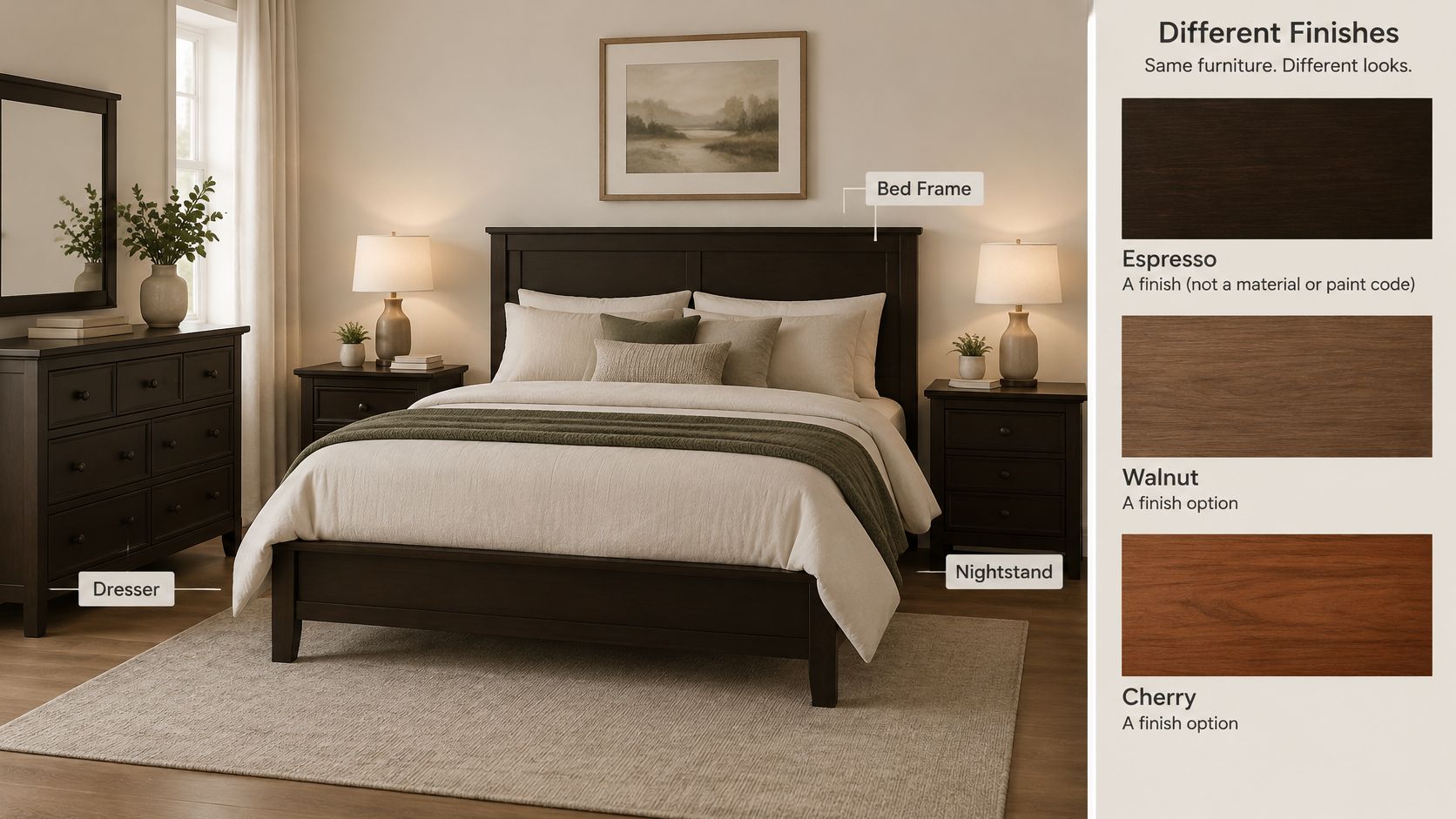
Compare the finish, not just the name
Place finish samples beside each other in daylight, then under warm indoor light. Look for red undertones, a neutral brown base, or an almost-black appearance, and compare sheen as well as color. Sheen shifts the reading of darkness as much as stain does.
Check exposed edges and drawer interiors, too. They help reveal how the visible finish relates to the underlying construction, although an unfinished drawer interior is common in many construction methods.
Practical rule: Ask for dark neutral brown with visible grain and a low sheen, then confirm it under your bedroom lighting. Espresso alone leaves too much unanswered.
Judging the Finish Before You Buy
The coating, not the darkness of the stain, determines how well the surface handles wear. Water-based polyurethane is used for interior furniture because it combines resistance to abrasion, stains, solvents, chemicals, and moisture. Its performance still rests on the resin chemistry, solids content, and applied film thickness, as explained in the Hardwood Information Center's finishing-system guide.
A glossy surface isn't automatically tougher than a satin one. Likewise, a thick-looking finish doesn't establish that it was applied or cured correctly.
A showroom checklist worth keeping
Identify the coating. Ask whether the furniture uses catalyzed lacquer, polyurethane, or another tested finish. A clear answer is more useful than a general description such as durable finish.
Ask about performance testing. Abrasion, scratch, adhesion, and chemical-resistance results address different problems. A surface that tolerates rubbing may still react poorly to a spilled cosmetic.
Understand the benchmark. ISO 4211-5:2021 evaluates furniture finishes using loaded abrasive wheels and records revolutions until a defined initial-wear point. It's a way to evaluate wear, not a promise that furniture can't be scratched.
Inspect the busy spots. Examine drawer fronts near pulls, bed rails, nightstand tops, and exposed edges. Look for even sheen, continuous coverage, and rough or thin spots. Any fingernail scratch check should happen only on an approved sample with permission, never on showroom furniture.
Consider actual bedroom use. Bedrooms usually face less chemical exposure than kitchens, but lotions, cosmetics, drinks, and cleaners still land on furniture. A nightstand deserves more scrutiny than a decorative surface that rarely gets touched.
Compare appearance separately using the available wood stain color options. That keeps an attractive color from distracting from questions about protection.
The darkest or most expensive-looking espresso isn't automatically the strongest long-term choice. A repairable piece with a documented coating can offer better value than a dramatic finish with no clear care or performance information.
Matching Espresso Pieces With Light and Walls
Dark furniture needs a lighting plan, not necessarily a larger room. Dark surfaces absorb more incident light and reflect less back into the space, which can make a bedroom feel smaller or cozier, particularly with small windows, dark floors, or limited ceiling illumination, according to the University of Florida publication on interior color.
The answer isn't to surround espresso furniture with bright white everything. Balanced contrast works better than a collection of unrelated light-colored objects. Cream walls, softly textured bedding, and a pale rug can make a dark bed feel intentional rather than heavy.
| Room Element | Practical Pairing | What It Accomplishes |
|---|---|---|
| Walls and ceiling | Warm white, cream, or a light neutral | Keeps large surrounding surfaces lighter |
| Bedding | Ivory, oatmeal, or a light patterned coverlet | Separates the bed frame from the sleeping surface |
| Lighting | Warm or neutral bedside lamps plus ambient light | Reduces deep shadows around dark furniture |
| Hardware | Reflective metal with a comfortable grip | Adds visible detail against drawer fronts |
| Rugs | A light, low-pile rug with a secure backing | Breaks up dark flooring without adding unnecessary bulk |
Place bedside lighting on both sides of the bed, then add ceiling or wall illumination. A bright reading lamp alone won't solve a shadowy dresser corner. Check the room from the doorway as well as from the pillow, since those views reveal different dark areas.
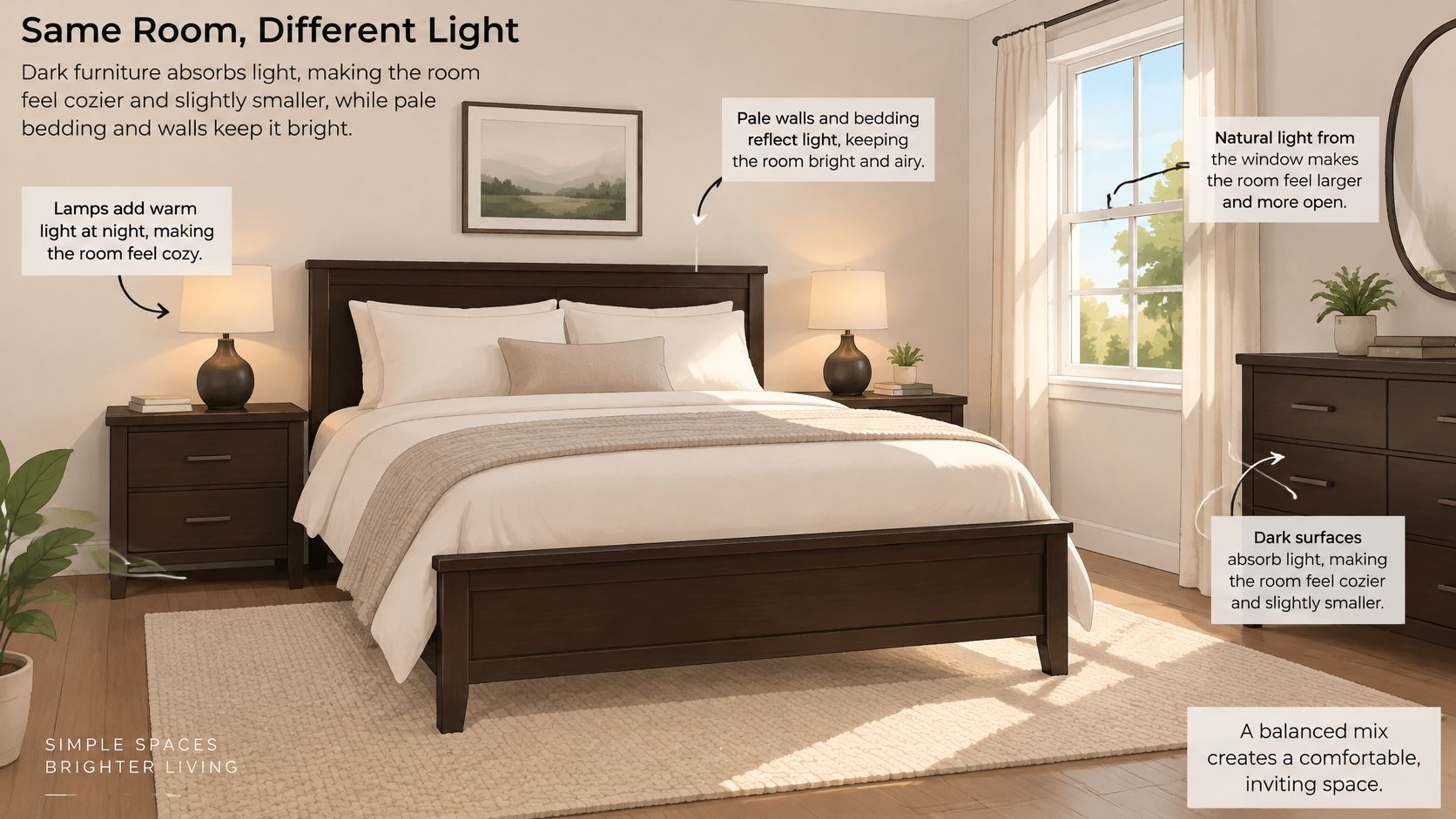
Keep the mix deliberate
For a straightforward coordinated room, keep a consistent wood tone across the bed, dresser, and nightstands. Compare the undertones against a flooring sample in daylight, then introduce contrast through something clearly different, such as a light upholstered headboard or woven bedding.
Mixing nearly matching browns can look accidental. A deliberately lighter accent, like those shown in this guide to light wooden furniture, makes the contrast easier to read.
In a spacious, well-lit bedroom, espresso can provide a strong visual anchor. In a compact Milwaukee-area room, lighter walls, an unobstructed window, and thoughtful lamp placement usually do more good than adding extra decorative accessories.
Espresso Furniture in Small and Aging-in-Place Bedrooms
Dark furniture changes how a tight bedroom feels to move through. Reach distance, clear floor area, and contrast around edges decide comfort more than the finish name, so plan the layout for the person who uses the room every day.
Measurements to check before you buy
| Measurement | Target | Why It Matters |
|---|---|---|
| Storage height | Under 120 cm for regularly used shelves | Higher storage is hard to reach with reduced strength or flexibility |
| Wardrobe depth | Under 40 cm for easy access | Deeper units are harder to reach into |
| Turning space | 150 × 150 cm clear | Gives mobility aids room to turn |
These planning references come from research on older adults' furniture needs published in Humanities and Social Sciences Communications, which identifies storage above 120 cm, wardrobes deeper than 40 cm, and a 150 × 150 cm turning space as relevant accessibility considerations. Treat those numbers as starting points, then adjust for individual reach, balance, mobility equipment, and how much storage the room must hold.
Test the room during use
Can a dresser drawer open without blocking a walker? Can the person using the room reach everyday clothing without stretching? Does the bathroom route stay clear at night?
- Measure usable space. Record the clear area around the bed and in front of the dresser with drawers fully extended, not just closed.
- Choose scaled casegoods. A smaller chest may preserve circulation better than an oversized dresser. Compare options intended for small-scale bedroom layouts.
- Protect the bathroom route. Keep benches, baskets, cords, and loose rugs out of the path.
- Operate every drawer. Check the pull's grip and the force needed to open and close it.
- Secure tall furniture. Install the appropriate anti-tip restraint using the supplied hardware and instructions for the wall construction.
- Make edges visible. Contrasting hardware and bedding help distinguish dark furniture in lower light.
Espresso works in a small bedroom or an older adult's room when scale, placement, lighting, and reach are right. We suggest checking drawer pulls for grip, confirming comfortable reach to daily clothes, and viewing the dark pieces under evening light before you decide.
Solid Wood and Amish-Made Espresso Pieces
A dark finish can make very different construction methods look similar. Solid wood, wood veneer, and engineered components can all sit beneath an espresso-colored surface. Choosing by color alone leaves the most important construction questions unanswered.
Traditional Amish furniture is primarily produced in Pennsylvania, Indiana, and Ohio and generally uses wood rather than particleboard or laminate. Makers select boards for individual pieces and consider grain direction when arranging and joining them.
That selection creates character. A dresser front may have a flowing grain pattern while the bed rails show straighter lines. Nightstands made in the same finish can also have subtle differences because the boards aren't identical.
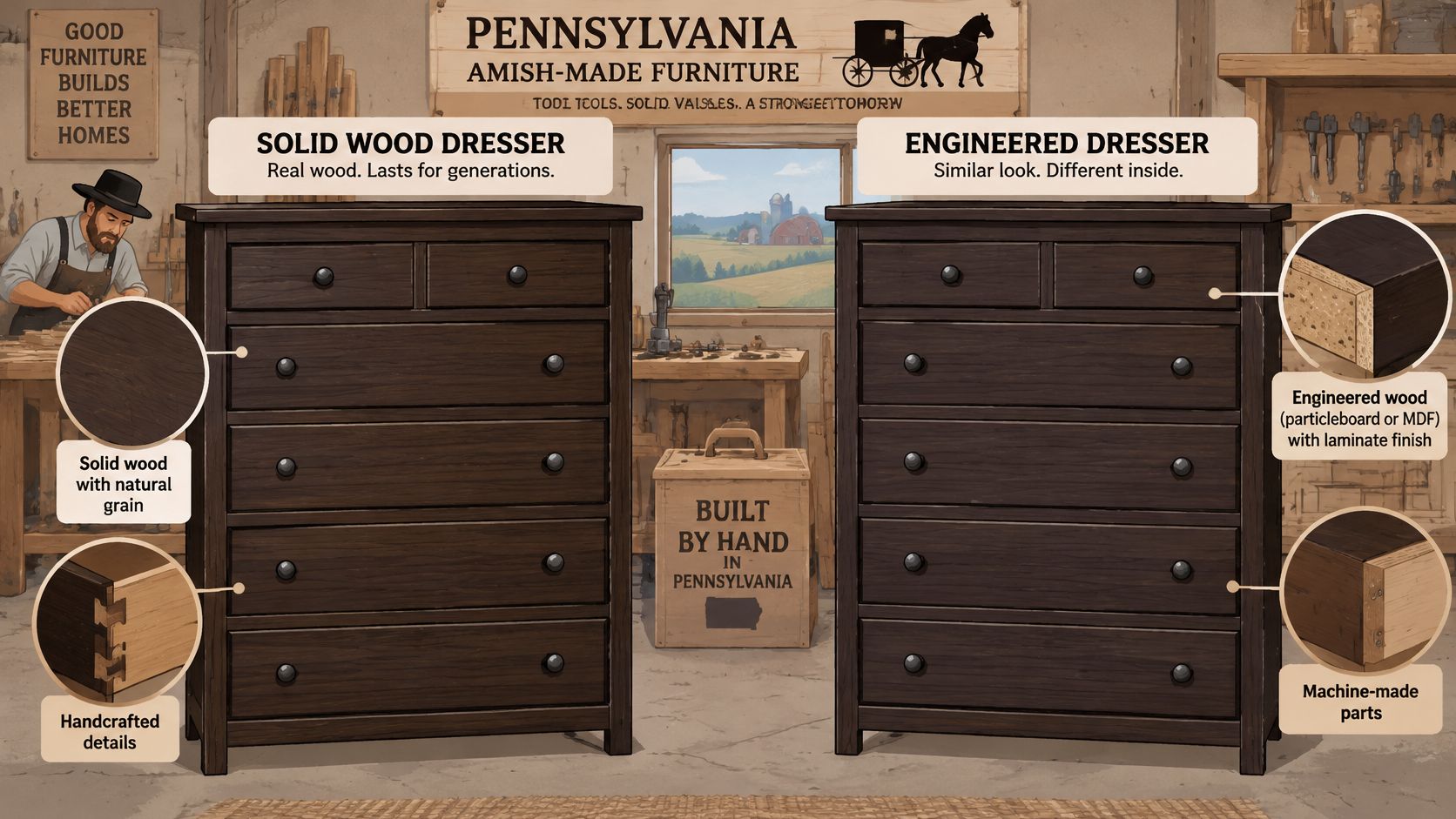
Natural variation is worth appreciating, but it isn't proof of quality on its own. Printed surfaces can imitate grain, and solid wood still needs sound joinery, suitable drawer construction, and a properly applied finish.
Ask what each component is made from
- Is it solid wood, and where? Ask about tops, drawer fronts, side panels, drawer boxes, and backs separately. A general wood description may not identify every component.
- Which finish system was used? The material underneath and the protective coating should both be identifiable.
- How are the joints made? Look for clean, close-fitting connections and drawers that operate without racking or binding.
- Can the surface be repaired or refinished? Ask what a future repair would involve, including whether a professional should handle it.
A review of solid-wood furniture design and manufacturing in BioResources considers manufacturing choices beyond appearance, including carbon reduction. For a household purchase, the practical lesson is to evaluate how the furniture is made rather than treating a dark surface as evidence of lasting craftsmanship.
When comparing Amish-made bedroom furniture sets, look for a coherent combination of material, construction, and maintainability. Grain variation can be welcome; unexplained construction shouldn't be.
Caring for and Refinishing Your Espresso Pieces
Dust weekly with a soft, clean cloth, and wipe spills promptly with a slightly damp cloth before drying the surface. Avoid harsh cleaners, abrasive pads, and household sprays that aren't approved for the coating. Grit trapped in a cleaning cloth can create the very marks the cleaning was meant to remove.
Espresso often makes pale dust, fingerprints, and fine scratches easier to notice. That doesn't mean the finish is failing. It does mean a gentle, regular wipe usually works better than waiting for visible buildup and scrubbing harder.
Protect the surface before damage starts
Use coasters beneath drinks and clean felt pads beneath movable accessories. Place lamps on nonabrasive protective mats that won't trap moisture or react with the coating, and keep furniture away from prolonged direct sun where practical.
For a small scratch, use a finish-compatible touch-up product matched on an inconspicuous area first. A color marker can disguise a pale line, but it won't level a deep gouge or repair a lifting clear coat.
Care reminder: Adding more polish isn't the same as restoring a damaged protective finish.
A Journal of Industrial Ecology study of wood-furniture refurbishment used complete removal of the existing finish and replacement with a water-based finish in its chair case study. Although the study examined chairs, it illustrates why refinishing a wood dresser is more involved than wiping stain over a damaged spot.
A full refinishing job generally follows this sequence:
- Remove the existing coating when the selected refinishing system requires stripping to bare wood.
- Prepare the surface evenly, taking particular care around edges and any thin veneer.
- Apply the replacement system across the prepared surface, rather than leaving an obvious patch around the original damage.
- Allow full curing before replacing heavy objects or returning the piece to demanding use.
The wood-furniture refinishing guide offers additional preparation guidance. Before purchase, confirm the care requirements and ask whether replacement drawer fronts can be color-matched later, rather than assuming a future espresso component will blend invisibly.
Come See Espresso Pieces in Our Greenfield Showroom
What does an espresso nightstand look like beside your wall color at 7 a.m.? A finish is easier to judge when you can walk around it, handle a drawer, and compare surfaces at different angles. Photographs narrow your options. A hands-on visit settles them.
BILTRITE Furniture-Leather-Mattresses has served customers since 1928. Our fourth-generation, family-owned showroom serves Greenfield and the Metro Milwaukee community. Our team answers questions and gives shoppers time and space for a comfortable decision.
Look for our "USA Made" and "Amish made" icons while you shop. They mark pieces with local craftsmanship, including solid wood bedroom options and small-scale choices for tighter rooms. We focus on affordable, better-quality furniture, and seeing the coating, grain, and color together shows why the darkest finish is not automatically the best fit.
Bring the room along
- Pack useful references. Bring flooring and wall-color photos, room measurements, and a physical sample when available.
- Check the whole setup. Compare samples near a window and under lamps, then inspect the actual furniture rather than relying on a small swatch alone.
- Try everyday movements. With permission, sit on the bed, operate drawers, and check whether pulls and storage areas feel comfortable to reach.
- Ask what is available today. Floor displays and stock change, so confirm which espresso pieces are currently available to examine.
We are located at 5430 West Layton Avenue in Greenfield. Showroom hours are Tuesday through Thursday, 10am to 6pm; Friday, 10am to 7pm; and Saturday, 10am to 5pm. An in-person visit leaves room for questions, comparisons, and an unhurried look at the details that a color name cannot explain.
For espresso bedroom furniture, solid wood options, and approachable guidance on finishes and fit, visit BILTRITE Furniture-Leather-Mattresses in Greenfield. Bring room measurements and a flooring sample, test comfort and drawer operation, and enjoy a no-pressure conversation with the team.