Mismatched Furniture Bedroom: Style Your Eclectic Space


Your bedroom probably got this way. The bed was the first grown-up purchase. The dresser came from family. One nightstand was a good local find, the other just fit. Now you’re standing in the room wondering if it looks unfinished.
It doesn’t. It looks like real life.
A mismatched furniture bedroom can feel warmer, smarter, and more personal than a boxed-up suite that all landed on the same truck the same day. Around Milwaukee, we see this all the time in bungalows, condos, apartments, and senior living spaces. People want rooms that work for their space, their budget, and their story. That’s the right instinct.
Why a Mismatched Bedroom is a Great Idea
A lot of people think a bedroom only looks “done” if every piece matches. I disagree. Some of the best bedrooms have a little history in them. Maybe it’s a solid wood bed you bought new, a painted chest from your grandmother, and two different bedside tables that somehow make the room feel more alive.
That kind of room feels collected, not staged.

Real homes rarely arrive as matching sets
A young couple moves into a Milwaukee starter home. They keep a hand-me-down dresser because it’s built well. They buy a new bed because sleep matters. One nightstand is narrow because the radiator steals space on that side. The other has drawers because somebody needs a place for chargers, books, and reading glasses. That room is not a design mistake. It’s a room that fits the people using it.
And buyers are moving this direction anyway. Only 32% of young homeowners now seek complete matching furniture sets, according to the 2024 NAHB Home Buyer Preferences trend summary.
A bedroom should look like it came together over time, because that usually means somebody made thoughtful choices.
Why this style feels better
Matching sets can be easy, but they can also feel flat. Every surface is saying the same thing at the same volume. A mixed room gives your eye somewhere to land and somewhere to travel.
Here’s what mismatching does well:
- Shows personality by blending old favorites with new purchases.
- Adds depth through contrast in shape, wood tone, fabric, and finish.
- Gives you flexibility when the room has awkward walls, tight corners, or uneven space on each side of the bed.
- Lets you upgrade gradually instead of replacing everything at once.
If you like layered rooms that feel more lived-in than showroom-stiff, take a look at these ideas for mixing furniture styles. The basic principle is simple. Cohesion matters more than sameness.
Choose Your Star The Anchor Piece
If your room feels scattered, you probably don’t have a clear lead piece yet. Every good mismatched bedroom needs an anchor piece. In most rooms, that’s the bed.
Pick the star first. Then let everything else support it.

Why the bed usually wins
The bed takes up the most visual space. It sets the mood fast. A sleigh bed says something different than a simple panel bed. A tall upholstered headboard gives a different feel than a clean-lined wood frame.
If you choose a strong bed, the rest of the room gets easier. Your nightstands don’t have to match each other. Your dresser can lean more traditional or more relaxed. The anchor keeps the room grounded.
What to look for in an anchor piece
Don’t start with the cheapest thing in the room. Start with the piece that gets used hardest and seen first.
A good anchor should have:
Presence
It should hold the room visually. Beds do this naturally.Durability
Solid wood is a smart choice because it can handle years of use and still look better with age.A clear style direction
Rustic, transitional, classic, clean-lined. Pick one lane for the anchor so the supporting pieces know what they’re playing off of.The right scale for the room
A giant bed in a tight bedroom makes every other piece look wrong. A skimpy frame in a large room can feel lost.
My rule: If you’re going to spend real money in the bedroom, spend it on the bed and mattress first. Everything else can flex around them.
Three anchor directions that work well
| Anchor choice | Best for | What pairs well with it |
|---|---|---|
| Solid wood bed | Warm, grounded bedrooms | Painted chests, mixed nightstands, woven textures |
| Upholstered bed | Softer, lighter look | Wood dressers, metal lamps, vintage accents |
| Statement dresser or armoire | Small rooms where storage dominates | Simpler bed, quieter accessories, balanced bedside pieces |
If you’re narrowing down styles, this guide on how to choose bedroom furniture is a helpful place to sort out what deserves top billing.
Create Harmony with Color Finish and Scale
People either make the room sing or make it noisy. Mixing furniture is easy. Mixing it well takes restraint.
You do not need every piece to match. You do need them to cooperate.
Start with color, not furniture labels
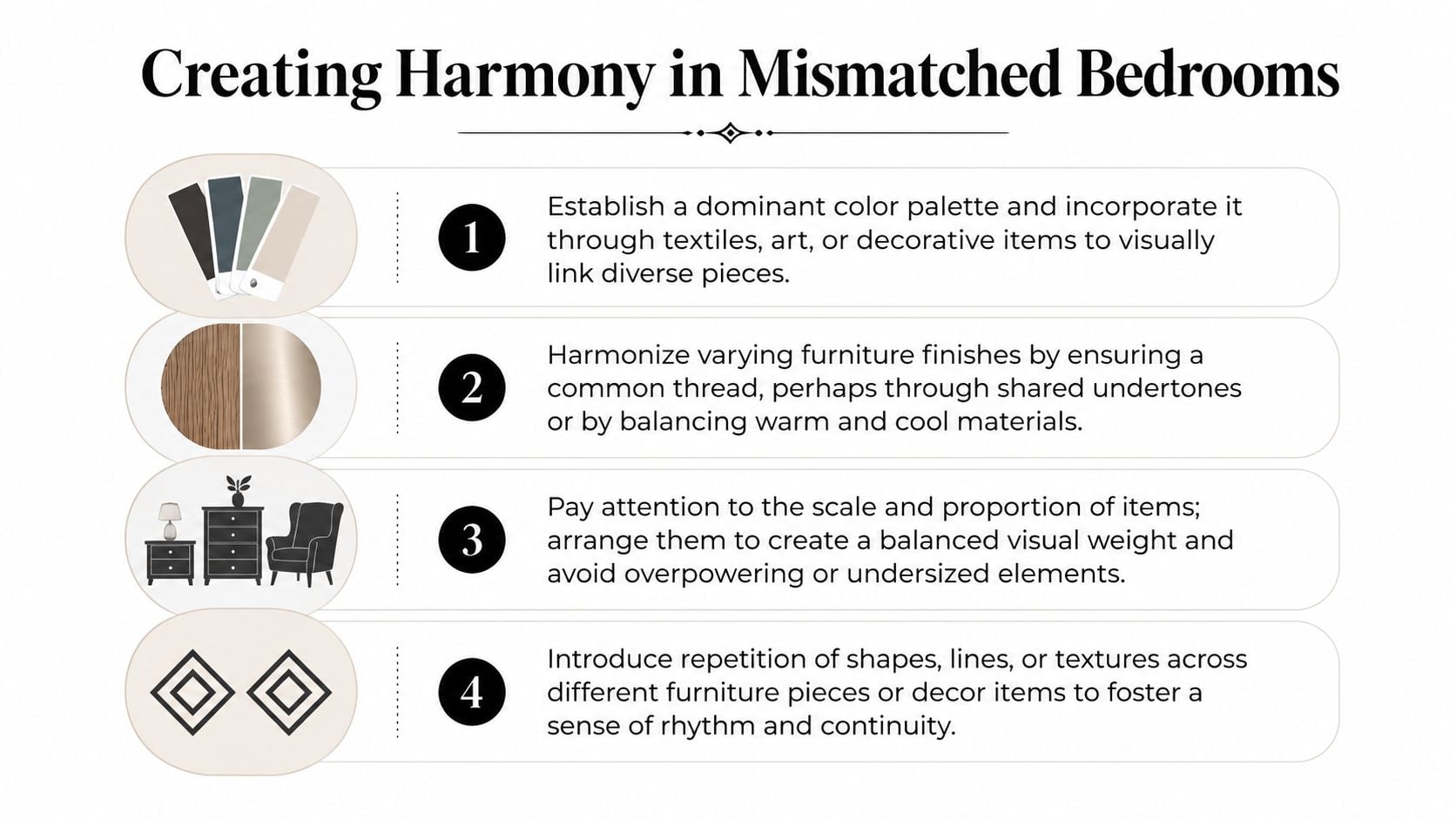
People get hung up on whether pieces are “farmhouse” or “modern.” That’s not the first question. Start with the room’s color story. If the room uses warm woods, creamy bedding, black metal, and muted blue, keep repeating those notes.
A simple rule helps a lot: limit yourself to three main colors or finishes. That’s enough variety to feel interesting, but not so much that the room starts arguing with itself.
Try this:
- Repeat one wood tone in at least two places.
- Carry one accent color through bedding, artwork, or a bench.
- Use one metal finish for lamps, hardware, or mirror frames.
Mix wood finishes like an adult
Yes, you can mix light and dark wood. In fact, it often looks better than making every piece the same stain. Mixed light and dark wood combinations earned an 89% designer approval rating, ahead of all-light and all-dark rooms, according to the wood-finish design benchmark from Petalwood Interiors.
The trick is balance. A dark bed with a lighter nightstand works. A dark bed, red cherry dresser, gray-washed chest, orange oak mirror, and espresso bench usually does not.
Practical rule: Mix contrast on purpose. Don’t mix random.
Scale matters more than people think
A mismatched furniture bedroom falls apart faster from bad scale than from bad color. If one nightstand looks tiny next to a thick wood bed, the room feels off even if the colors are right. The same goes for a tall, bulky dresser shoved into a petite bedroom.
Use this quick check:
- Large bed needs bedside pieces with some visual weight
- Low-profile bed looks better with lighter, simpler companions
- Tall chest should be balanced by quieter furniture nearby
- Narrow room needs slimmer case pieces and open walking space
Use repetition to calm the room down
Repetition is what makes mixed furniture look intentional. Repeat curves, straight lines, black accents, brass hardware, cane texture, or soft upholstery. You’re giving the eye a pattern to follow.
For readers who want help choosing those repeating tones, this expert guide to building a color palette is worth bookmarking.
A room doesn’t need matching furniture. It needs a shared language.
Try These Easy Wins for Instant Unity
If your bedroom feels close but not quite there, don’t rush out and replace furniture. Small fixes usually do more than big purchases.
That’s one reason I like a mismatched approach so much. Mismatched options can reduce long-term costs by up to 28% by allowing for piecemeal updates instead of full set replacements, as noted in HGTV findings summarized by Apartment Therapy.
The fastest upgrades
Most rooms tighten up visually when you repeat a few details. You’re not trying to fool anybody into thinking the furniture came as a set. You’re trying to make the room feel settled.
Here are easy wins that work:
Swap hardware
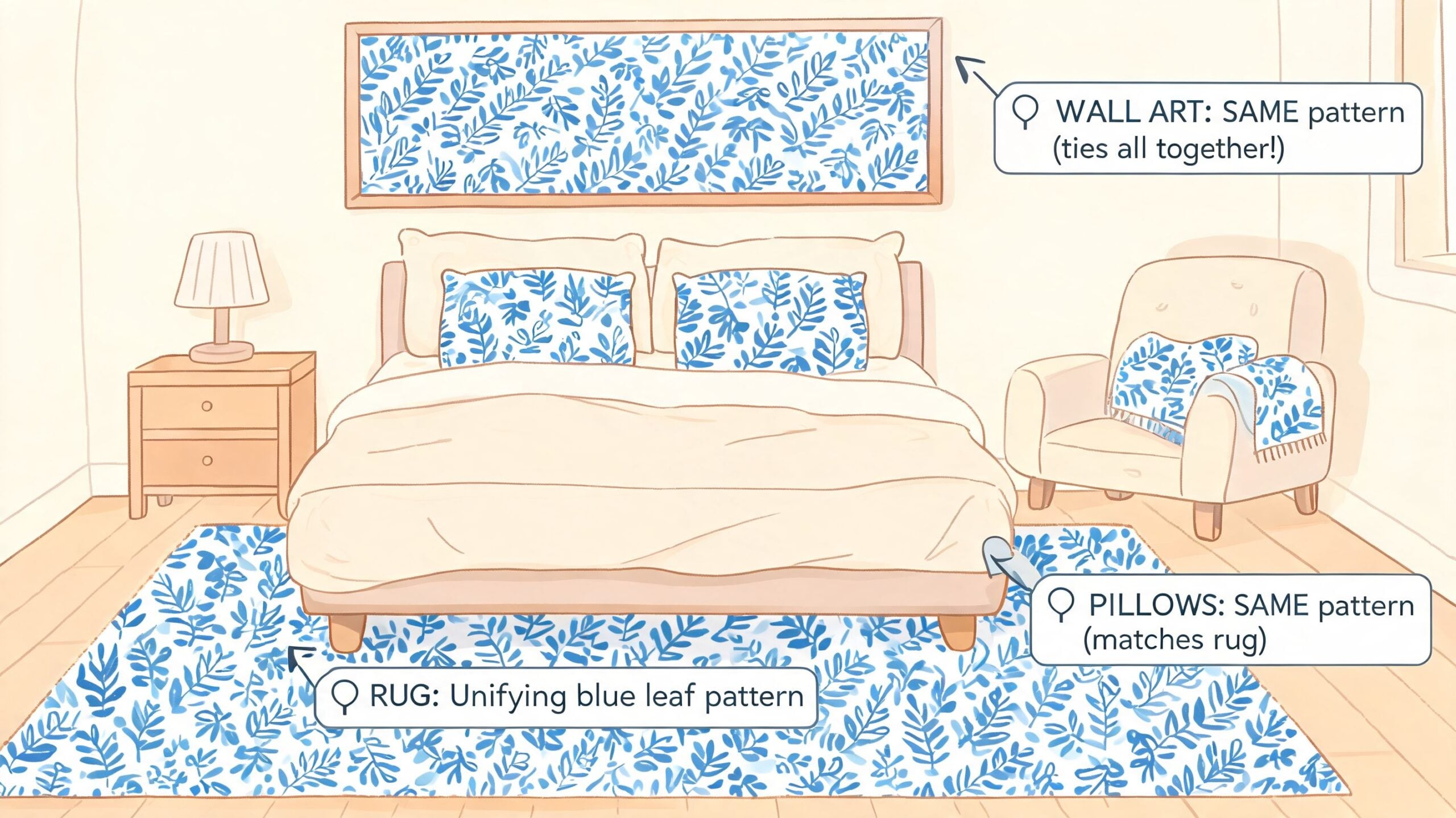
If your nightstands and dresser all have different knobs, changing them to one finish can calm the room down fast.Add a large rug
A rug under the bed and nightstands ties unrelated pieces together better than almost anything else.Match the lamps, not the tables
Different bedside tables can still feel paired if the lamps relate in color, shape, or scale.Use one bedding palette
The bed sits in the center of everything. Bedding is your biggest chance to unify the room.
Weekend projects that make a room feel finished
Sometimes the room just needs one repeated motif. A leaf print in the pillows. Black frames on the wall. A warm ivory painted accent piece. That repeated note tells the eye that the room has a plan.
A few more low-effort ideas:
- Bring in a bench or chair that echoes a finish already in the room
- Paint one oddball piece so it stops fighting with the wood tones
- Use matching baskets or boxes on open shelves and dressers
- Hang art in a consistent frame style above mixed furniture
Don’t chase symmetry if the room doesn’t want it. Chase balance.
If you want to layer patterns without turning the bedroom into visual clutter, this advice on mixing and matching patterns with balance will help.
Arrange Your Furniture for Flow and Function
A pretty bedroom that’s hard to move through gets old fast. This matters even more in the Milwaukee area, where plenty of homes have compact bedrooms, older floor plans, condo layouts, and tricky access points.
Layout is where a mismatched furniture bedroom becomes either practical or frustrating.
Leave room to live
Start with the walking path. You should be able to get in and out of bed without side-stepping around furniture every day. If one side of the room is tighter, don’t force matching nightstands. Use a smaller table, a wall-mounted shelf, or a chest with better storage on the side that can handle it.
That’s just smart planning.
Existing style guides often miss real-life constraints. With 40% of U.S. urban renters seeking compact furniture and seniors making up 15% of Wisconsin’s population, practical small-scale and accessible options matter when mixing pieces in tighter rooms, according to the space-planning discussion at Galleria Furniture.
A better layout for smaller rooms
In tighter bedrooms, use fewer pieces with better function. Don’t cram in every category because some checklist says a bedroom needs it.
Try this order of priority:
Bed first
Center it if the room allows. If not, place it where circulation works best.Storage second
Choose the dresser or chest that handles the most daily use.Bedside function third
One drawer unit and one slimmer table is often better than two bulky nightstands.Extras last
Bench, chair, vanity, or accent chest only if they earn their footprint.
In a small room, every piece should either store something, improve comfort, or make the room easier to use.
Don’t ignore delivery and accessibility
This is a practical point, but it matters. Older homes, upper-floor condos, and senior living spaces often have tight turns, narrow doorways, or elevators that don’t forgive oversized furniture. Pieces that fit the room on paper still have to get into the room.
That’s also why sturdy, supportive furnishings matter for seniors and caregivers. Stable bed heights, easier pathways, and durable pieces make a bedroom calmer and safer to use every day.
If you want help visualizing a better setup, this guide on how to arrange bedroom furniture gives you a solid starting point.
Ready to Create Your Dream Bedroom? Come Say Hi!
A good mismatched bedroom isn’t random. It has one strong anchor, a few repeated finishes, smart scale, and a layout that makes daily life easier. That’s it. You do not need a matching suite to make the room feel pulled together.
I’ll say this plainly. The best bedrooms usually aren’t the most uniform ones. They’re the ones that feel personal, useful, and built around the people who sleep there.
That idea has guided our family business since 1928. We’ve spent four generations helping Milwaukee-area neighbors find furniture that fits real homes and real routines. We believe in buying better, choosing pieces built to last, and getting hands-on help from people who know furniture inside and out.
If you’re trying to pull together a mismatched furniture bedroom, visiting a showroom still beats guessing from a screen. You can compare wood tones in person, check scale with your own eyes, open drawers, feel finishes, and talk through room challenges with someone who’s done this for years. That’s especially helpful if you need small-scale options, solid wood furniture, supportive mattresses, or durable pieces for a busy household or senior living setup.
And that’s the kind of help people remember. Friendly, local, no nonsense.
If you’re ready to build a bedroom that feels like yours, visit BILTRITE Furniture-Leather-Mattresses in Greenfield. We’re a fourth-generation family business serving Metro Milwaukee since 1928, with affordable better-quality furniture, Amish and USA-made options, solid wood pieces, small-scale solutions, heavy-duty favorites, and a mattress center with over 60 models. Come say hi and let our experienced team help you find the right pieces for your home.