Leather Sofa with Storage: A Smart Buyer’s Guide


It's Friday movie night, and somebody has to move three throw blankets, a board game, two remotes, and a pile of homework just to find a seat. If that sounds familiar, you're not short on furniture. You're short on furniture that does more than one job. A leather sofa with storage tackles both problems at once, giving your family a comfortable, durable place to sit while hiding the everyday clutter that takes over a living room.
Table of Contents
- Why a Leather Sofa With Storage Is Worth a Second Look
- Storage Types That Actually Fit Your Living Room
- Leather Quality and How It Holds Up to Daily Use
- Measuring Your Room Before You Measure the Sofa
- Mechanism Durability and What to Test in the Showroom
- Style Trade-Offs and How to Match the Room
- Safety, Maintenance, and Your Final Checklist
Why a Leather Sofa With Storage Is Worth a Second Look
Most Milwaukee living rooms work overtime. They're homework central after school, movie headquarters on weekends, and overflow space when guests stay over. A regular sofa handles the seating part just fine, but it does nothing about the blankets on the floor, the games stacked in a corner, or the seasonal pillows with nowhere to go.
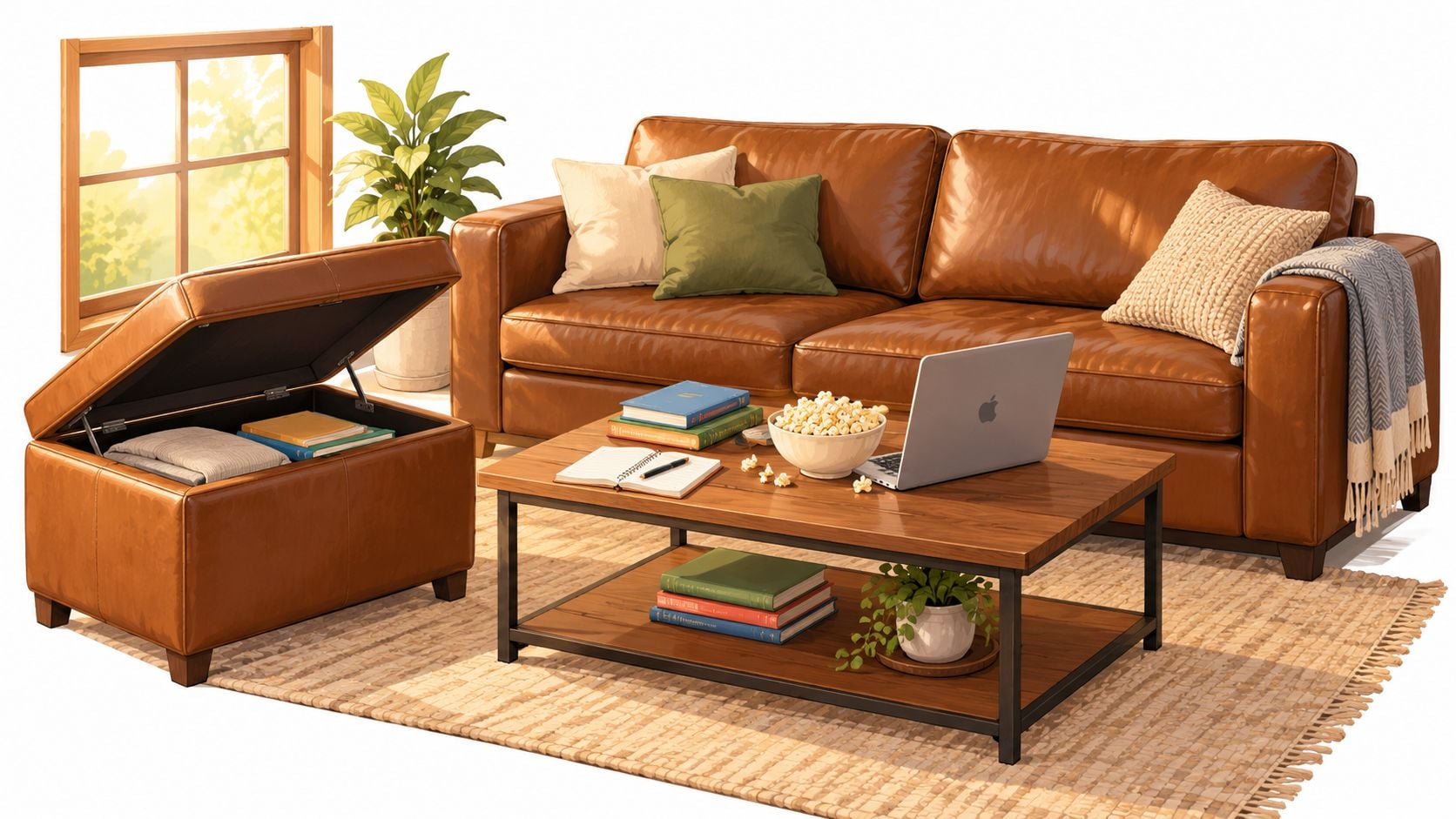
That's where a leather sofa with storage earns its floor space. The hidden compartment keeps blankets, board games, remotes, and extra bedding right where your family uses them, without adding another cabinet or basket to trip over. You get one piece doing the job of two, and the room looks calmer the minute everything has a home.
The Storage Problem Is Real, Not a Sales Pitch
Households keep asking for more places to put things. A 2020 report found that approximately 2.3 million U.S. households purchase closet-storage systems each year, and the underlying 2019 study recorded about 108 million linear feet of closet and garage storage installed in American homes. Average closet installations also grew from 15 linear feet to 18 linear feet, a 20% increase, between the two most recent annual studies cited in that same report.
Those numbers don't measure sofa compartments, but they point to the same need. Families want storage built into the places they already live, not tacked on afterward. For apartments, smaller homes, and senior living settings, a compartment inside the sofa can recover organizational space without giving up a single inch of floor.
The value of a storage sofa isn't just seating capacity. It's seating capacity plus the closet space you didn't have to build.
We've been helping Metro Milwaukee families solve exactly this kind of problem since 1928. BILTRITE started as an upholstery shop founded by Irwin Kerns, moved to Mitchell Street in 1948, and now operates from a 45,000-square-foot Greenfield showroom, as Milwaukee Magazine's profile of BILTRITE's local legacy documents. Four generations in, the advice hasn't changed. Buy the piece that fits your room and your family's habits, not the one that only looks good in a photo.
Storage Types That Actually Fit Your Living Room
Not all storage sofas open the same way, and the opening style decides whether you'll use the compartment daily or forget it's there. A big lid you have to wrestle open becomes a graveyard for things you never touch. The right mechanism, matched to your household, gets opened every single day without a second thought.
Storage Sofa Types Compared
| Storage Type | Best For | Opening Style | Usable Volume | Consideration |
|---|---|---|---|---|
| Lift-up seat | Blankets, pillows, bedding | Seat hinged upward | Large, deep bay | Seat must be clear before opening |
| Chaise compartment | Sectional layouts, guest linens | Chaise top lifts up | Large, single space | Needs clearance in front and above |
| Console storage | Remotes, books, device cords | Flip top in center console | Small, divided | Great for media rooms, not bedding |
| Drawer-out base | Kids' toys, games | Drawer pulls from base | Moderate, easy reach | No heavy lid for children to lift |
Lift-up seats hold the most, which makes them the go-to for bulky blankets and spare pillows. The trade-off is real, though. Everyone sitting down has to stand up, and anything on the cushion has to move before the lid opens. For a household that opens storage once in the evening, that's fine. For one that digs in ten times a day, it gets old fast.
Chaise storage suits sectional layouts because the chaise usually isn't the prime seat everyone fights over. One person can lift it while others stay put. Shoppers comparing layouts can see how a sectional couch with storage arranges that space before visiting in person.
Matching the Mechanism to the Household
Console storage wins for media-heavy rooms. It swallows remotes, reading glasses, coasters, and charging cords, and it opens without disturbing anyone. It won't hold a comforter, and it shouldn't try.
Drawer-out bases are our recommendation for families with younger kids. There's no heavy lid to lift, no hinge to pinch small fingers, and children can put their own toys away, which is half the battle. Seniors often prefer drawers too, since pulling beats lifting when shoulders or grip strength are a concern.
- Choose lift-up or chaise storage if bedding and blankets are the main cargo and access happens once or twice a day.
- Choose console storage if the clutter is small stuff that migrates across cushions.
- Choose drawers if kids or seniors need to reach the compartment independently and safely.
Practical rule: The best compartment is the one your family will actually open. Size comes second.
Trying each mechanism in person settles the question faster than any product photo. Lid weight, hinge feel, and reach depth are things your hands understand in seconds.
Leather Quality and How It Holds Up to Daily Use
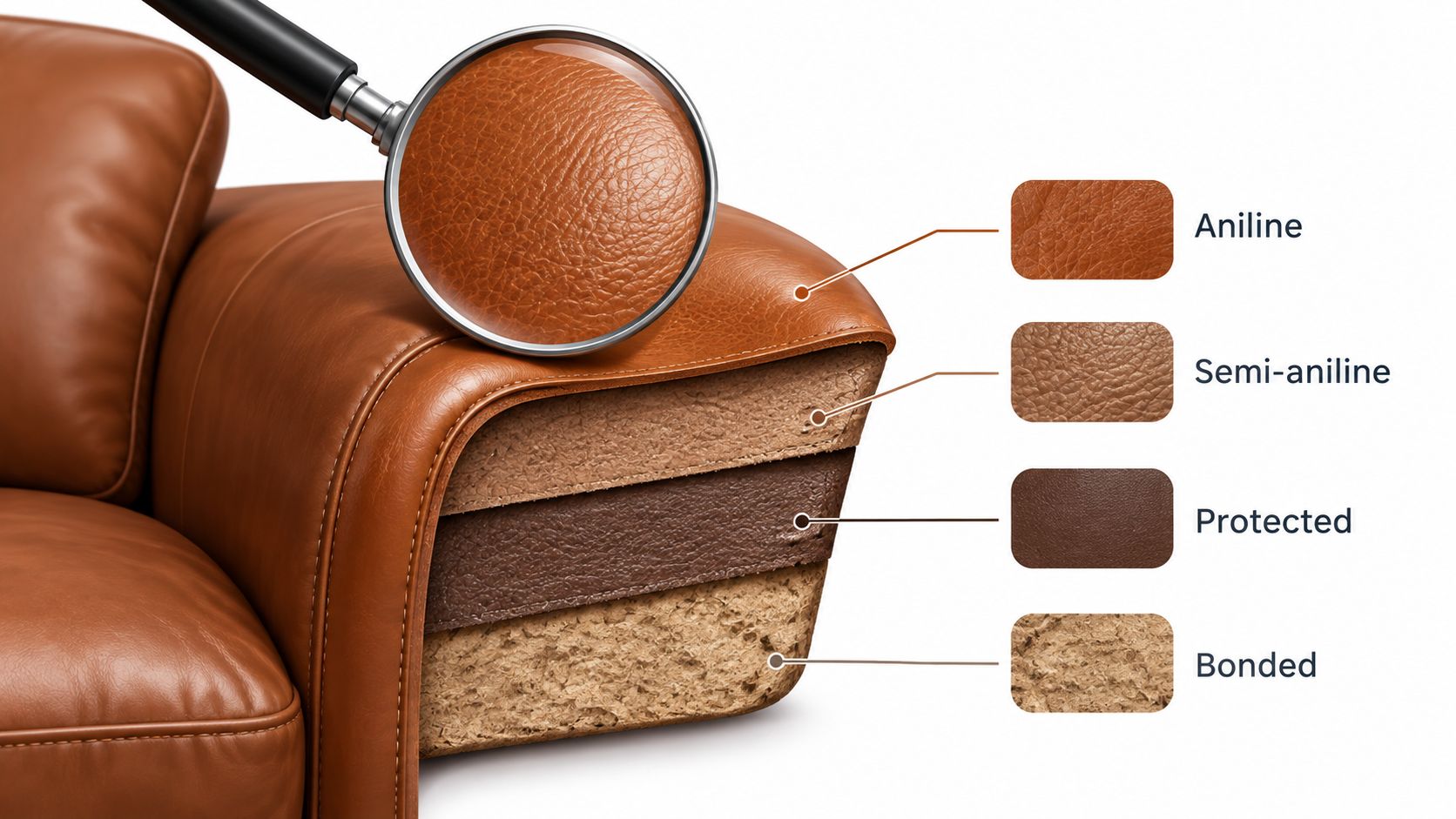
Here's the honest truth we share in the showroom. The word leather on a tag tells you almost nothing by itself. Aniline, semi-aniline, protected or pigmented, and bonded leather behave very differently, and a storage sofa stresses those differences because hands grip the same lid edges and seams flex every time the compartment opens.
Aniline leather feels soft and shows natural markings and patina over time, which many people love. It also absorbs spills more readily and asks more of its owner. Semi-aniline adds a light protective finish, balancing natural feel with better stain resistance. Protected or pigmented leather carries the toughest surface coating, hides scuffs from frequent lid contact, and cleans up easiest, which is why we steer most busy families toward it.
For a deeper foundation before shopping, our guide to the difference between top grain and full grain leather explains how the hide itself is prepared. Finish and grain together decide how a sofa ages, so it pays to understand both.
What the Martindale Test Actually Measures
Leather durability gets measured, not guessed. ISO 17076-2:2011 specifies a Martindale method where a leather sample is rubbed in controlled oscillating motion, inspected at 100-rub intervals, and assessed for finish breakdown, according to the upholstery leather technical guide describing the ISO 17076-2 procedure. The endpoint is the rub count needed to produce breakdown in at least four locations.
Industry guidance in that same guide places light residential upholstery around 15,000 Martindale cycles, heavier residential use at roughly 25,000 to 40,000 cycles, and commercial-grade materials at 50,000 cycles or more. For a family storage sofa opened daily, aim for the heavier residential range or above. Those are benchmarks, not guarantees, since sunlight, body oils, cleaning, and construction all affect longevity.
Abrasion Is Only One Test
A high rub count doesn't prove overall durability. Specification guidance also calls for tear strength, flexing endurance, finish adhesion, and wet and dry rubbing colorfastness, with FIRA's guidance on specifying leather for furniture referencing EN 13336:2022, EN ISO 3377-1 for tear load, and EN ISO 5402-1 for dry-flex resistance. Published benchmarks in that guidance include at least 20,000 dry-flex cycles for some non-pigmented aniline leather and 50,000 cycles for more demanding categories without cracking.
Before buying, ask four things. What's the exact leather category? Which test method produced the cycle rating? What does the warranty exclude? Which cleaner is approved? Our team, with over 400 years of combined experience, has these conversations every day, and they're easier in person with the actual hide under your hand.
Measuring Your Room Before You Measure the Sofa
The most common mistake we see isn't picking the wrong color. It's falling in love with a sofa that can't get through the front door, or one whose storage lid smacks into the coffee table every time it opens. Fifteen minutes with a tape measure prevents both headaches.
Walk the Delivery Path First
Start at the curb, not the living room. Measure doorway widths, hallway turns, and stairwell clearances along the exact route the sofa will travel. Older Milwaukee-area homes and senior living apartments often have tight corners that surprise people, which is why we stock come-apart sofas and sectionals designed for narrow passages.
Write the tightest measurement down and bring it shopping. A sofa that fits the room but not the hallway helps nobody. Our reference on sofa dimensions in inches helps translate those numbers into real shopping limits before you visit.
Measure the Room the Way the Sofa Will Live in It
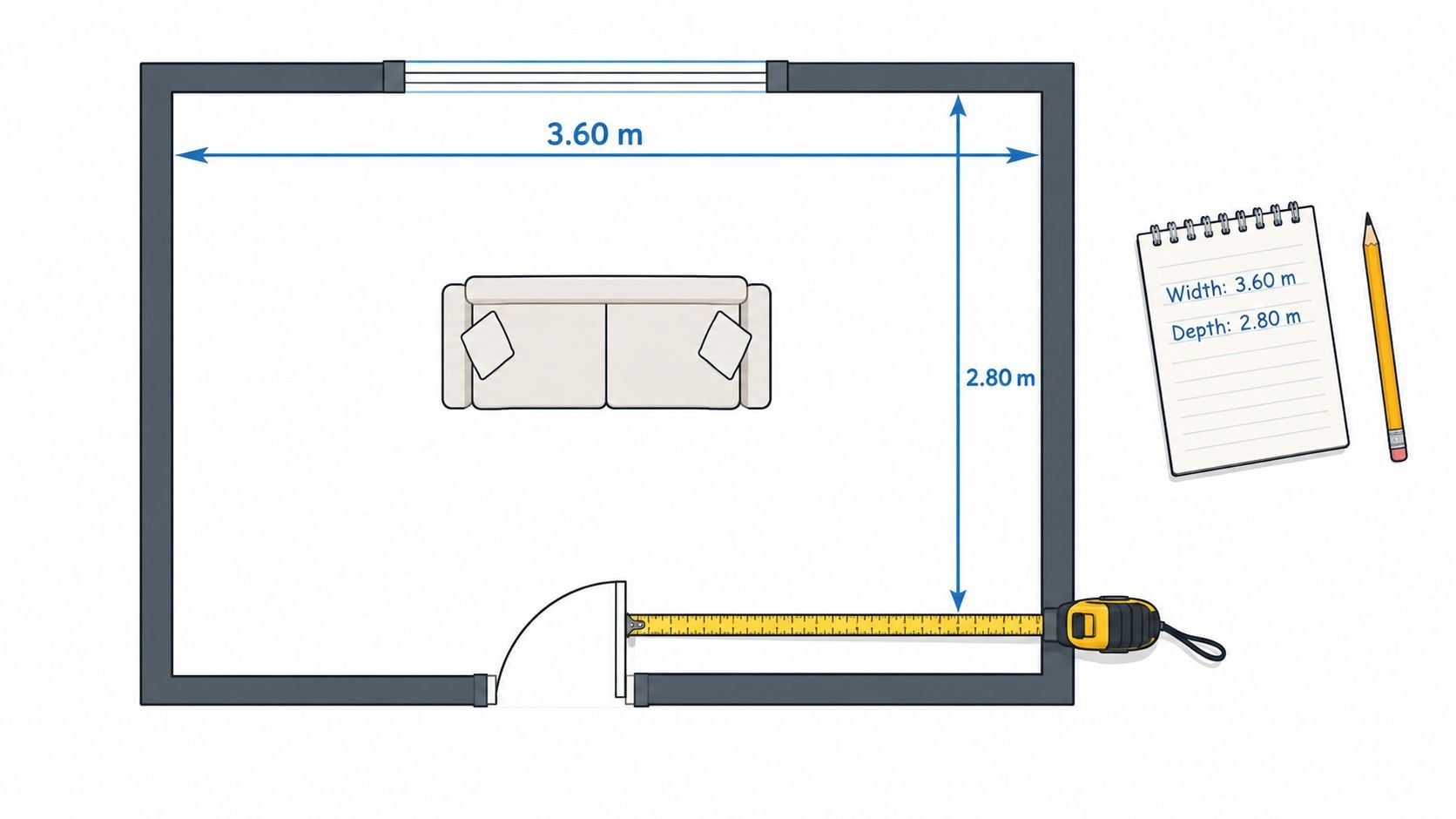
Next, measure the wall where the sofa will sit, the room depth, and the space the lid or drawer needs to open fully. A lift-up seat needs vertical clearance and a clear cushion. A drawer needs floor space in front. A reclining back may need distance from the wall. Sketch it on paper, painter's tape on the floor works even better, and live with the outline for a day.
Then measure usable storage volume, not just the outside of the sofa. Record the compartment's internal length, width, and depth, and compare that against what you plan to store. Recent market reporting estimated the global multifunctional-furniture market at $15.9 billion in 2024 and projected $25.4 billion by 2034, driven by urbanization and smaller living spaces, per Mordor Intelligence's space-saving furniture market report. Market growth doesn't tell you whether your blankets fit, though. Your tape measure does.
- External fit: Sofa width, depth, and seat height against your wall and walkways.
- Opening fit: Full lid swing or drawer extension without hitting tables, radiators, or walls.
- Internal fit: Compartment dimensions against your bulkiest blanket or game box, measured, not guessed.
Measure twice, walk the path once, then shop. That order saves more returns than any other advice we give.
Bring your numbers and your tape-outline photos to the showroom. We'll happily talk through your layout before you commit to anything.
Mechanism Durability and What to Test in the Showroom
A storage sofa has moving parts, and moving parts are where furniture succeeds or fails over time. Every open and close stresses the hinge, the lid, the frame, and the leather finish around them. A regular sofa never asks this of its construction, so storage models deserve a harder look.
Plenty of shoppers assume all leather handles this stress equally. It doesn't. The leather at the lid hinge area and the seat-to-storage transition flexes and takes concentrated edge loading every cycle, while the broad seat surface mostly just gets sat on. Weak finishing shows up at those hinge zones first, long before the cushions look worn.
The Five-Minute Showroom Test
Run this sequence on any storage sofa you're seriously considering.
- Open and close the lid five or six times. Feel for hinge looseness, grinding, or wobble that worsens with repetition.
- Let go of the lid midway. Positive lid support holds it open. A lid that drifts or slams fails this test.
- Press along the seam where the compartment meets the seat. Look for flexing, gaps, or finish cracking at the hinge line.
- Load it mentally. Ask for the written maximum storage load, then picture your heaviest blankets inside while you lift.
Mechanisms in other furniture follow the same logic, and our overview of the sofa bed mechanism shows how moving hardware should feel when it's built properly. Smooth, supported, and quiet is the standard. Anything else is a warning.
Bigger Is Not Automatically Better
Here's the counterintuitive part. A huge compartment with a heavy, blanket-loaded lid can stress hinges faster than a smaller, lighter compartment opened more often. Weight multiplies at the hinge every time the lid lifts. Divided, shallower compartments also organize better and keep you from digging through a deep pile.
Ask whether replacement hardware is available if a hinge or support ever wears out. A store that can't answer that question hasn't thought past the sale. Since we started out building custom sofas, including eight-way hand-tied sofas, in 1928, a history noted in Radio Milwaukee's partner spotlight on BILTRITE, construction questions are the ones we enjoy most. Bring yours.
Style Trade-Offs and How to Match the Room
A leather sofa with storage still has to look like it belongs in your home. Style and function trade off against each other in honest ways, and pretending otherwise leads to a purchase that photographs well and frustrates daily. The goal is knowing which trade-offs your household can happily live with.
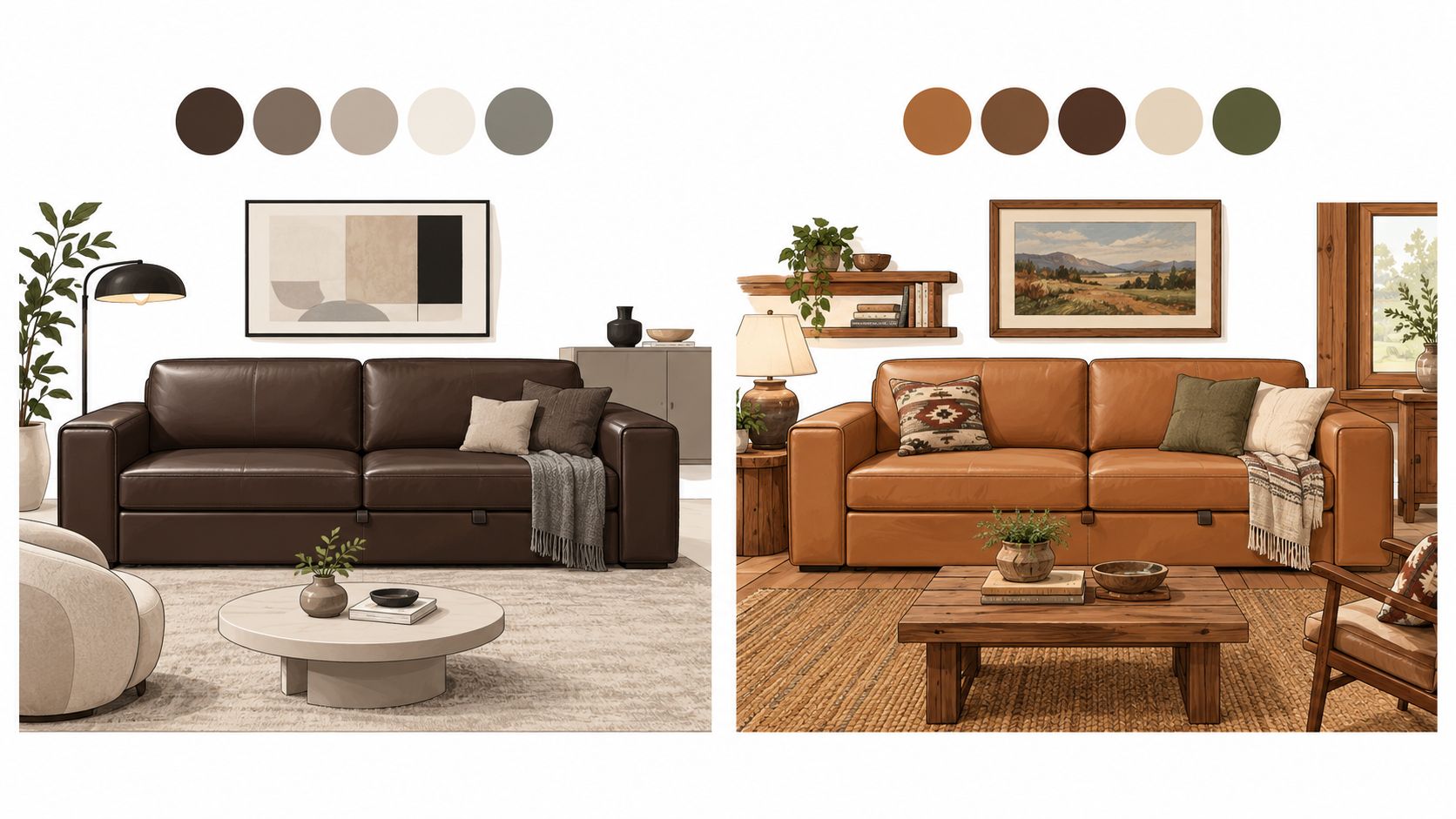
Protected leather in a mid-tone color is the forgiving choice for most families. It hides the scuffs that come from hands gripping lid edges, shrugs off snack spills, and keeps a consistent color across the whole piece. Aniline leather develops a rich patina and shows natural character marks, which is beautiful in a quieter household and stressful in one with toddlers and a large dog.
Details That Signal Construction, Not Just Looks
Stitching, tufting, and nailhead trim tell you how a piece was put together. Tight, even stitching around the storage lid matters because that seam flexes constantly. Tufting looks classic but creates crevices that collect crumbs near high-touch zones. Smooth, fitted surfaces wipe clean faster, which counts for a lot in a family room.
Sectional versus traditional sofa is a layout decision first and a style decision second. Sectionals with chaise storage suit open rooms and corner placements. A traditional three-seat silhouette with drawer storage fits smaller, more formal spaces and senior living rooms where every inch of walkway matters.
- Kids and pets at home: Protected leather, smooth surfaces, drawer or console access.
- Bright, sunny room: Ask about lightfastness testing and plan placement away from direct sun.
- Cozy basement rec room: Watch humidity, since damp conditions raise mold risk for leather.
Looking for American-Made Options
While browsing our showroom, keep an eye out for the USA Made icon, which identifies furniture made in the United States, as described in Milwaukee Magazine's profile calling BILTRITE a local source for American- and Amish-made furniture. It's a clear, named designation rather than a vague marketing phrase, and it makes comparing USA-made and Amish-made pieces straightforward.
Style is personal, and it should be. Seeing colors under real light and feeling finishes side by side beats guessing from a screen every time.
Safety, Maintenance, and Your Final Checklist
Safety deserves the same engineering mindset as storage volume. Before buying, think through the sofa's loaded center of gravity, lid opening path, hinge geometry, and floor contact. Test the compartment with realistic contents, open and close it repeatedly, and watch for pinching points, hinge loosening, or any wobble when the lid is up.
Federal tip-over rules target clothing-storage units specifically, so a storage sofa shouldn't be assumed compliant with them, but their test logic is a useful conservative benchmark. Referenced stability testing applies a 27.2 kg (60 lb) load gradually to the element most likely to cause tip-over and holds it for 30 seconds, as outlined in the Consumers' Federation of Australia summary of mandatory furniture safety standards. Practically, that means specifying soft-close or controlled-stop hardware, rounded accessible edges, and positive lid support, keeping heavy items low, and never letting a child treat an open lid as a climbing platform.
Keeping the Leather Looking Good
Routine care is simple. Dust regularly, keep the sofa out of prolonged direct sunlight, and use only cleaners approved for your specific leather category. Skip aggressive DIY cleaning recipes, since untested mixtures can damage finishes that differ widely by leather type, a caution reflected in guidance on how to care for leather regarding clean, ventilated conditions. Our own primer on how to care for leather furniture walks through the routine step by step.
Run this checklist before you decide.
- Storage type: Lift-up, chaise, console, or drawer, matched to who opens it and how often.
- Leather category: Exact classification, test method, cycle rating, warranty exclusions, approved cleaner.
- Mechanism: Hinge feel, lid support, soft-close hardware, written maximum load, replacement parts.
- Fit: Delivery path, wall clearance, opening swing, and internal compartment dimensions, all measured.
- Safety: No pinch points, no free-falling lid, stable on your actual flooring.
We're a fourth-generation, family-owned business, we don't sell online, and we're closed on Sundays to be with our families. That means your decision happens in person, at your pace, with real help and no pressure.
Come on down to our Greenfield showroom and try a leather sofa with storage the way it deserves to be tried, by sitting on it, lifting the lid, and asking us every question on your list. At BILTRITE Furniture-Leather-Mattresses, our family has offered affordable, better-quality furniture, including USA-made and Amish-made pieces plus a mattress department with over 60 models, since 1928. We'd love to see you in the store, so come say hi and let us help you find the right piece for your home.