Modern Poster Beds: A Complete Styling Guide


A bedroom refresh often starts with a simple thought: the room needs one memorable piece, but not one that makes the ceiling feel lower or the walkway feel crowded. A modern poster bed can bring architectural character without turning the bedroom into a dark, enclosed retreat. The key is choosing the right height, materials, proportions, and support system before styling the bedding.
For homeowners in Metro Milwaukee, the same practical questions come up again and again. Will the posts fit beneath the ceiling? Can the frame handle everyday use? Will the bed feel comfortable for getting in and out? Modern poster beds can work beautifully in master suites, guest rooms, condos, and smaller homes, but the proportions have to serve the people who use the room.
Table of Contents
- Rethinking the Classic Four-Post Design
- Tracing the Shift From Heavy Pillars to Sleek Lines
- Choosing Materials and Finishes That Last
- Measuring Your Room for the Right Fit
- Ergonomics and Structural Stability
- Styling Your Master Suite Versus the Guest Room
- Experience the Difference in Our Greenfield Showroom
Rethinking the Classic Four-Post Design
A homeowner planning a bedroom redesign may first picture a massive wooden bed, thick curtains, carved posts, and a heavy canopy. That image makes the style seem better suited to an old estate than to a bright contemporary bedroom. Yet the modern poster bed has kept the defining geometry while leaving much of the visual weight behind.
A poster bed is identified by four vertical posts at the corners. Traditional versions often enclosed the sleeper with curtains and canopies. Early beds used those coverings for practical reasons, including retaining heat, creating privacy in shared sleeping spaces, and separating nobility from servants. Historical accounts place the design's emergence in Austria between the 12th and 15th centuries CE and note that the canopy was added in the 13th century. (Architectural Digest India's history of four-poster beds)
Today's version usually treats the posts as architectural lines rather than supports for heavy fabric. A slim metal frame can outline the sleeping area while leaving the walls, windows, and artwork visible. A solid-wood frame can add warmth without needing elaborate carving or a full tester overhead.
What makes the modern version different
The distinction comes from openness and restraint. Modern poster beds commonly use clean profiles, simple connections, and finishes that complement the rest of the room instead of competing with it. Black metal can define a pale room with a crisp outline, while natural wood can soften a space filled with neutral textiles.
The bed can suit contemporary, transitional, or minimalist interiors because the frame provides structure without requiring a themed room. A homeowner doesn't need matching antique furniture or formal drapery. A quiet rug, plain bedding, and carefully chosen nightstands can make the posts feel intentional.
Readers interested in how older silhouettes compare with newer bedroom furniture can also explore antique bed frame styles. The useful lesson is that historical influence doesn't require historical decoration. Modern poster beds borrow the shape, then adapt it for open, everyday rooms.
Tracing the Shift From Heavy Pillars to Sleek Lines
Walk into a compact bedroom with a traditional four-poster bed, and the first challenge is often visual weight. Earlier examples could be enormous. Tudor-era beds were described with richly carved pillars reaching about 18 inches in diameter, supporting heavy panelled testers and elaborate drapery. (Historical details on four-poster bed construction)
Modern poster beds keep the upright corners but assign them a lighter job. Instead of displaying wealth through carving and scale, the posts create rhythm around the mattress. Their height draws the eye upward, while slimmer proportions preserve light, circulation, and sightlines to windows or artwork.
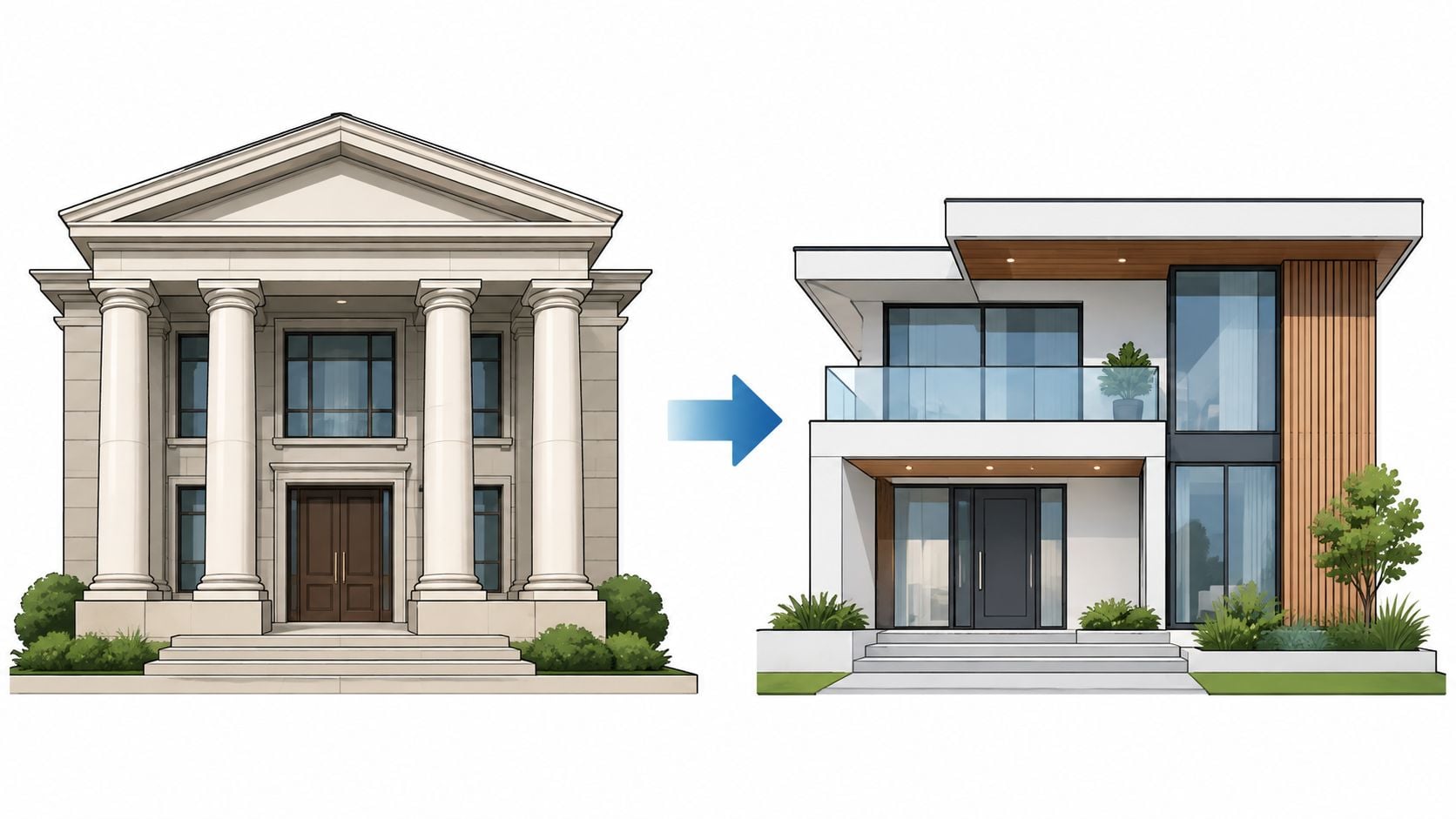
Traditional mass versus modern openness
A substantial wooden pillar remains visually present even when the rest of the bed is restrained. Four heavy pillars can make a room feel formal and enclosed, particularly with a solid tester or thick fabric. That look suits a generous bedroom, but the surrounding furniture, walking paths, and ceiling height must carry its scale.
Slender wood posts create a gentler boundary. They mark the bed's corners while leaving the space between them open, so the room does not read as a solid block. Narrow metal rails can make that outline even clearer, especially with a matte finish.
The form also changed as its purpose changed. Historical accounts describe early four-poster beds as practical enclosures for warmth and privacy, followed by use as status symbols. Later French and iron-frame versions became lighter and more elegant, moving the design toward practical bedroom furniture. Four-poster beds have existed in some form for over 800 years, according to a historical furniture guide.
Choosing the right visual weight
Room size is only part of the decision. Existing furniture matters just as much. A bedroom with substantial case goods may support a grounded wood frame, while a compact room with pale walls may work better with narrow posts and an open top. The bed can then add height without blocking light or making bedside movement awkward.
A useful comparison is architectural. Traditional pillars behave like columns that dominate a facade. Modern posts function more like a clean outline, giving the room order while keeping nearby surfaces visible. For practical guidance on combining older character with newer restraint, contemporary and traditional design styles can help homeowners decide how much contrast feels comfortable.
Choosing Materials and Finishes That Last
The material affects more than appearance. It influences the frame's feel, the room's atmosphere, and the kind of maintenance a homeowner can expect. Modern poster beds commonly fall into two broad families, solid wood and metal, with each offering a distinct visual and tactile experience.
Matte black metal creates definition. It works well with clean walls, industrial details, and rooms that need a strong outline rather than another warm wood tone. Because the frame is open, the dark finish can look graphic instead of bulky. The effect becomes softer when paired with natural bedding, woven textures, or warm lighting.
Solid wood brings a quieter type of presence. Oak-like grains, medium stains, and warm natural finishes can anchor a bedroom without making it feel formal. Wood also blends naturally with nightstands, dressers, and benches that have different but related finishes.
Why construction matters
A quality frame should feel intentional at every contact point. Posts, rails, brackets, and center supports work together to carry repeated movement. Decorative thickness alone doesn't prove that the bed is stable.
BILTRITE Furniture has a long-standing focus on USA-made, Amish-made, and real solid-wood furniture. Skilled Amish artisans craft pieces with careful attention to joinery and finish, while solid wood gives homeowners a material that can become part of the home's story rather than a short-term decorative purchase. More detail on the material's value appears in the guide to the benefits of solid wood furniture.
Material rule: Choose a finish that works with the room today, then prioritize construction that can keep working as the room changes.
Building a collected bedroom
A bedroom rarely needs every piece to match exactly. A dark poster frame can sit beside warm wood nightstands if the bedding, rug, or lighting connects the finishes. Likewise, a wood bed can share space with painted storage when the palette stays coordinated.
Before choosing a finish, examine the room's fixed elements. Floor color, door trim, window casings, and existing furniture all affect how the bed will read. A finish that looks light in a showroom may appear more pronounced against a dark floor. A black frame may disappear into a shadowed wall or become a crisp focal point against a pale one.
The bed should also suit the household. A family seeking an heirloom-like piece may prefer solid wood and visible grain. Someone furnishing an apartment may value a lighter open frame and a smaller visual footprint. BILTRITE offers choices ranging from small-scale furniture for apartments and condos to heavy-duty options for households that need additional durability, along with custom selections of fabric, leather, wood, finish, and hardware.
Measuring Your Room for the Right Fit
Ceiling height is often the first constraint with modern poster beds. The mattress footprint tells only part of the story. The posts occupy the vertical field, so a bed can fit on the floor yet feel too tall once installed.
Modern poster beds commonly have posts about 70 to 78 inches tall. One buying guide recommends posts under 75 inches for 8-foot ceilings, while posts measuring 77 inches or taller work better in rooms with 9-foot-or-higher ceilings.
Another furniture guide states that four-poster beds are usually best suited to rooms with 9-foot-or-higher ceilings, while canopy beds with a top frame typically need at least 8-foot ceilings. It also recommends 24 to 30 inches of open space around the bed for comfortable movement. (Poster bed room-planning guidance)
A practical measuring sequence
Measure the ceiling first. Record the height from the finished floor to the ceiling at each corner where a post will stand. Sloped ceilings and soffits can make one corner more restrictive than the others.
Measure the floor area. Include the mattress footprint, the outer frame, and the space needed to open drawers or doors. Don't measure only the mattress.
Mark the corners. Painter's tape can show where the posts will sit. Walk around the taped outline, then check whether nightstands, windows, and doors still work naturally.
Confirm the product dimensions. A current modern metal canopy listing shows a king at 80 inches by 76 inches by 72 inches, a queen at 80 inches by 60 inches by 72 inches, a full at 75 inches by 54 inches by 72 inches, and a twin at 75 inches by 39 inches by 72 inches. (Current poster bed dimensions)
| Room Feature | Ideal Specification | Why It Matters |
|---|---|---|
| Ceiling height | Posts under 75 inches for 8-foot ceilings, or 77 inches and taller for 9-foot-or-higher rooms | Prevents the top of the frame from feeling crowded |
| Open space around bed | 24 to 30 inches | Supports comfortable movement around the corners |
| Bed height | Check the complete frame, foundation, and mattress stack | Prevents an unexpectedly tall sleeping surface |
| Floor footprint | Measure the outer frame, not just the mattress | Accounts for posts and rails |
| Door and drawer access | Keep openings clear after the bed is taped out | Preserves everyday function |
For a wider bed, the measuring principles in how to measure for a king bed provide a helpful starting point. In a condo or smaller bedroom, a shorter post, narrow frame, or lower-profile bed may create a more comfortable layout than a dramatic tall design.
Ergonomics and Structural Stability
A statement bed still has to work at bedtime and in the morning. For modern poster beds, the practical target is a floor-to-mattress-top height of about 20 to 30 inches. The upper end can suit adults who prefer chair-like sit-to-stand movement, but the right result depends on the user's body and mobility. (Mattress height and bed ergonomics)
The simplest test is physical. A person should be able to sit on the edge with feet flat and knees near a 90-degree angle. That position can reduce strain on the hips and knees when entering or leaving the bed.
Calculate the complete sleep height
The final height comes from three parts:
frame height + foundation height + mattress thickness
A thick pillow-top mattress can push the sleeping surface higher than expected, even when the frame itself looks low. Poster beds make this especially noticeable because tall posts emphasize the room's vertical scale. A bed may look balanced from across the room while still being awkward for a shorter adult, senior, or caregiver.
Comfort check: The mattress should be selected as part of the bed system, not treated as an afterthought.
The store's large mattress department includes over 60 models, giving shoppers room to compare support and height in person. That matters because sitting on a display bed often reveals a problem that measurements alone can't show.
Look inside the frame
Stability comes from the load path, not from post thickness alone. The rail-to-post joints and center-support system determine how well the bed resists racking, wobble, and loosening during repeated sitting and side loads.
Furniture guidance commonly cites 500 to 600 pounds total for standard wooden and platform-style builds, with higher capacities possible when manufacturers reinforce the frame with center beams and multiple legs. Queen-and-larger poster beds deserve particular attention to center support, reinforced brackets, mortise-and-tenon joinery, and kiln-dried hardwood construction.
The practical questions are straightforward. Does the frame list an explicit weight rating? Does the center beam transfer weight into multiple legs? Are the corner joints reinforced? These details offer more useful information than decorative post size. Readers comparing construction choices can also review the strongest bed frame considerations before visiting a showroom.
Styling Your Master Suite Versus the Guest Room
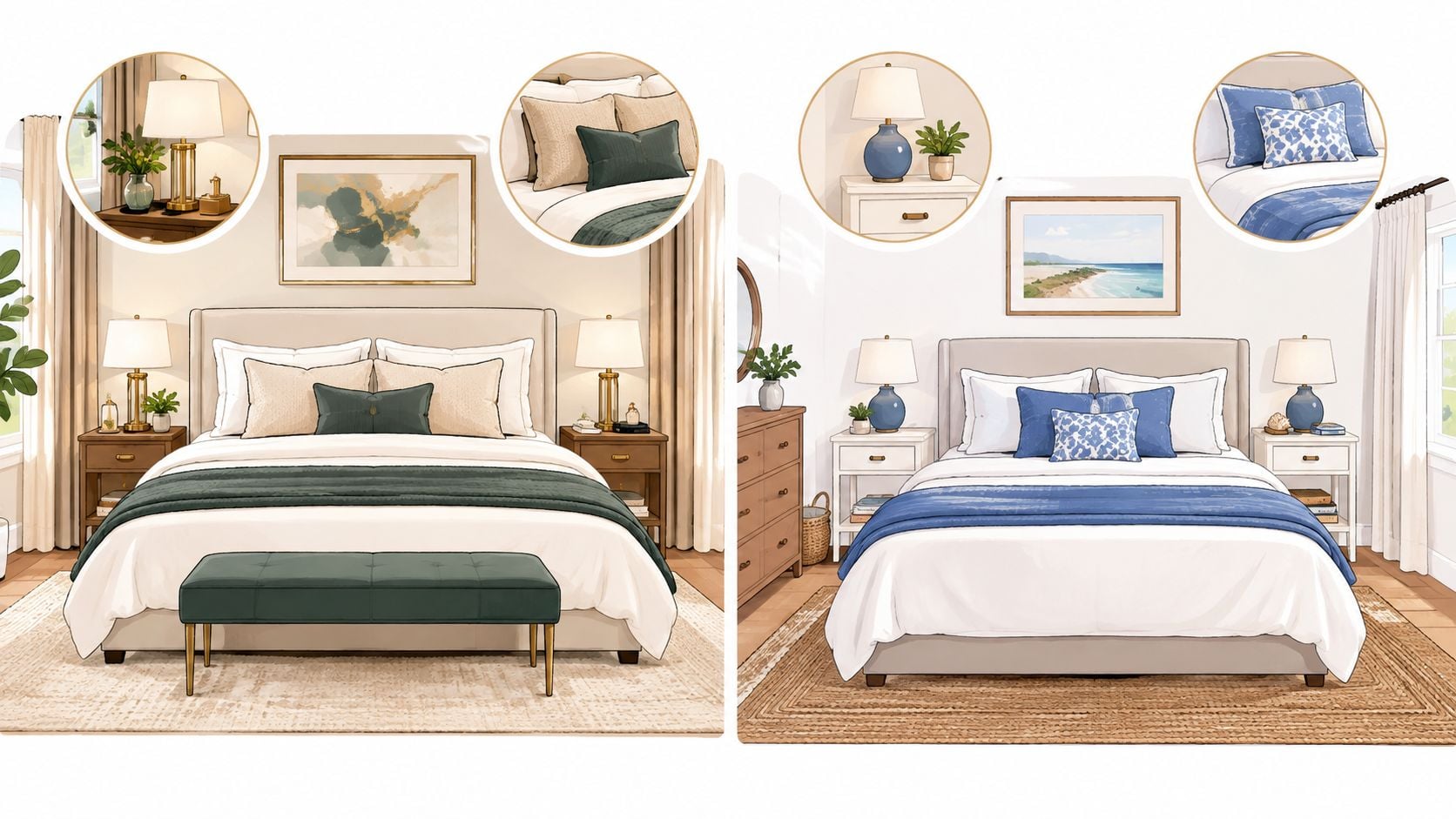
The same poster bed can create two very different moods depending on the room around it. In a master suite, the frame can serve as the room's architectural anchor. In a guest room, it may work better as a light outline that defines the sleeping area without taking over the available floor space.
Give the master suite enough visual support
A larger room can handle richer layering. Start with bedding in a calm base color, then add texture through a folded coverlet or a restrained collection of pillows. The frame should remain visible, especially when its posts are the main design feature.
A rug can help settle the bed into the room. It should extend far enough beyond the sides to connect the bed with the nightstands and walking areas. Substantial nightstands balance the vertical posts, while lamps or wall-mounted lighting keep the composition from feeling top-heavy.
Window treatments should support the bed's scale rather than compete with it. Simple panels hung high can echo the vertical lines, while artwork should be sized to relate to the bed's width. A small picture above a broad headboard area may look lost, even when the artwork itself is attractive.
Keep the guest room breathable
Guest rooms benefit from a lighter touch. Use fewer layers, leave the frame uncovered, and choose nightstands with a compact footprint. The open structure can create a cozy nook without requiring curtains or extra furniture.
A full-size modern poster bed may suit a modest room when the clearance plan works, but the room still needs space for luggage, a chair, or a clear route to the door. A smaller frame or lower profile can make the room more welcoming than a bed that fills every visual gap.
Styling principle: Let the poster bed make the architectural statement, then keep nearby furniture quiet enough to support it.
Color can also change the apparent weight. Pale wood and warm neutrals soften the outline, while black metal adds contrast and definition. Neither choice is automatically too heavy. The surrounding wall color, flooring, bedding, and light determine the final effect.
For either room, the strongest approach is coordinated rather than overly matched. A wood bed can sit comfortably with painted nightstands, and a metal frame can work with natural textures. The room feels finished when the materials repeat thoughtfully, not when every item comes from one identical collection.
Experience the Difference in Our Greenfield Showroom
Furniture dimensions make a useful starting point, but a poster bed is a piece that benefits from in-person judgment. Standing beside the frame helps a shopper understand its visual weight, while sitting on the mattress reveals whether the combined height feels natural. A tape measure can confirm clearance, but it can't show how the posts change the room's atmosphere.
BILTRITE Furniture is a fourth-generation, family-owned business serving Greenfield and Metro Milwaukee since 1928. The showroom focuses on affordable, better-quality furniture, with a strong selection of USA-made, Amish-made, and solid-wood pieces. The store also carries small-scale options for apartments and condos, heavy-duty furniture for families, and a broad mattress department with over 60 models.
Helpful guidance without pressure
The sales associates bring over 400 years of combined experience and are there to help shoppers compare proportions, materials, mattress heights, and room layouts. A conversation can cover practical details such as whether a post clears the ceiling, whether a queen or king footprint leaves enough walking space, and whether the support system suits the household.
The showroom experience also makes it easier to compare a poster bed with other bedroom choices. Some rooms call for an open architectural frame. Others may benefit from a lower upholstered or platform design. Honest guidance includes knowing when a different silhouette will serve the space better.
BILTRITE's local, family-first approach is part of the shopping experience. The business doesn't sell online and is closed on Sundays and Mondays to support family time. That commitment reflects a buy-local focus rooted in the Metro Milwaukee community, not a high-pressure sales process.
A modern poster bed can become the defining piece of a bedroom, but it should also support comfortable movement, reliable sleep, and a layout that works every day. Seeing the frame, testing the mattress height, and discussing the room with an experienced associate can make the choice much clearer.
BILTRITE Furniture-Leather-Mattresses offers affordable, better-quality furniture, USA-made and Amish-made solid-wood pieces, and a mattress department with over 60 models for shoppers comparing modern poster beds. Visit BILTRITE Furniture-Leather-Mattresses in Greenfield to see bedroom furniture in person and talk with the local team about fit, comfort, and style.