What Is Solid Wood Furniture and Why It Lasts


Solid wood furniture is built from natural lumber all the way through each part, including tops, legs, frames, and panels, without plywood, MDF, or particleboard hiding beneath a decorative surface. It remains a major premium category within the global wood furniture market, with one 2026 forecast valuing the solid-wood segment at USD 207,598.19 million and projecting USD 346,195.78 million by 2035, at a 5.85% CAGR, according to Mordor Intelligence's wood furniture market overview.
A shopper may walk into a Milwaukee showroom, place a hand on a dining table, and wonder why one piece feels grounded and substantial while another looks similar but feels lighter. The answer usually starts beneath the finish. Solid wood has a continuous material story that can be seen, touched, inspected, repaired, and cared for. The useful question isn't whether a table looks like wood. It's whether real wood runs through the parts that matter, and whether the construction is suited to the home where it will live.
What Solid Wood Furniture Really Means
Solid wood furniture uses natural timber throughout its primary structural parts. That means the tabletop, legs, rails, panels, and frames are made from full-thickness boards rather than engineered panels covered with a wood-looking surface. A detailed solid wood definition identifies full-thickness natural lumber in the primary visible structural components as the key distinction, excluding MDF, particleboard, and plywood beneath a decorative covering.
A hand across a tabletop tells part of the story. Natural grain usually varies from board to board, and the edge may reveal the same wood continuing through the piece. The weight can also feel substantial, although weight alone isn't proof. A buyer still needs to inspect the underside, drawer parts, and hidden structure.
The material continues beyond the pretty surface
A solid wood top isn't merely a thin layer of attractive timber. The wood continues through the thickness of the panel, so a small nick or future scratch doesn't automatically end the piece's useful life. The same principle applies to legs, drawer sides, rails, and other parts that carry everyday loads.
That doesn't mean every solid wood piece must look rustic or uneven. A carefully finished table can have a smooth, refined appearance while still showing natural variation in grain, knots, color, and figuring. Those differences are part of real lumber, not evidence of a defect.
Practical rule: A wood appearance is only the starting point. The construction underneath determines whether the piece is truly solid wood.
The term also deserves an honest qualification. “Solid wood” isn't automatically a guarantee of excellent craftsmanship, because construction quality, drying, joinery, finish, and design all matter. Some descriptions may refer only to a solid wood frame while other components use engineered panels, so shoppers should ask which parts are solid and which aren't, as explained in this furniture buying guide to the meaning of solid wood.
At BILTRITE, shoppers can look for the solid wood furniture icon on the showroom floor. That marker helps start a clear conversation, but a careful buyer can still ask whether the top, panels, drawer sides, and hidden structure use solid lumber.
Solid Wood vs Engineered and Veneered Pieces
A shopper can learn a lot by opening a drawer, feeling an edge, and looking at how the wood behaves where the finish does not hide it. Solid wood is the same species running through the part. Veneer uses a thin slice of attractive wood over a core. Plywood, MDF, and particleboard are engineered panels made by layering, pressing, or bonding wood materials.
Solid wood and engineered wood furniture can both look good on the showroom floor, but they tell different stories once you inspect the construction.
What shoppers are comparing
A veneer surface can imitate a premium species well, while the edge often shows where the thin layer ends. Plywood uses thin wood sheets that are layered and bonded, which makes it useful in the right parts of a piece. MDF is made from finely processed wood fibers pressed with resin, so an unfinished edge usually looks smooth and uniform. Particleboard is formed from wood particles or chips bonded into a panel, and an exposed edge can look like compressed flakes. Solid wood carries the grain, density, and character through the full thickness of the part.
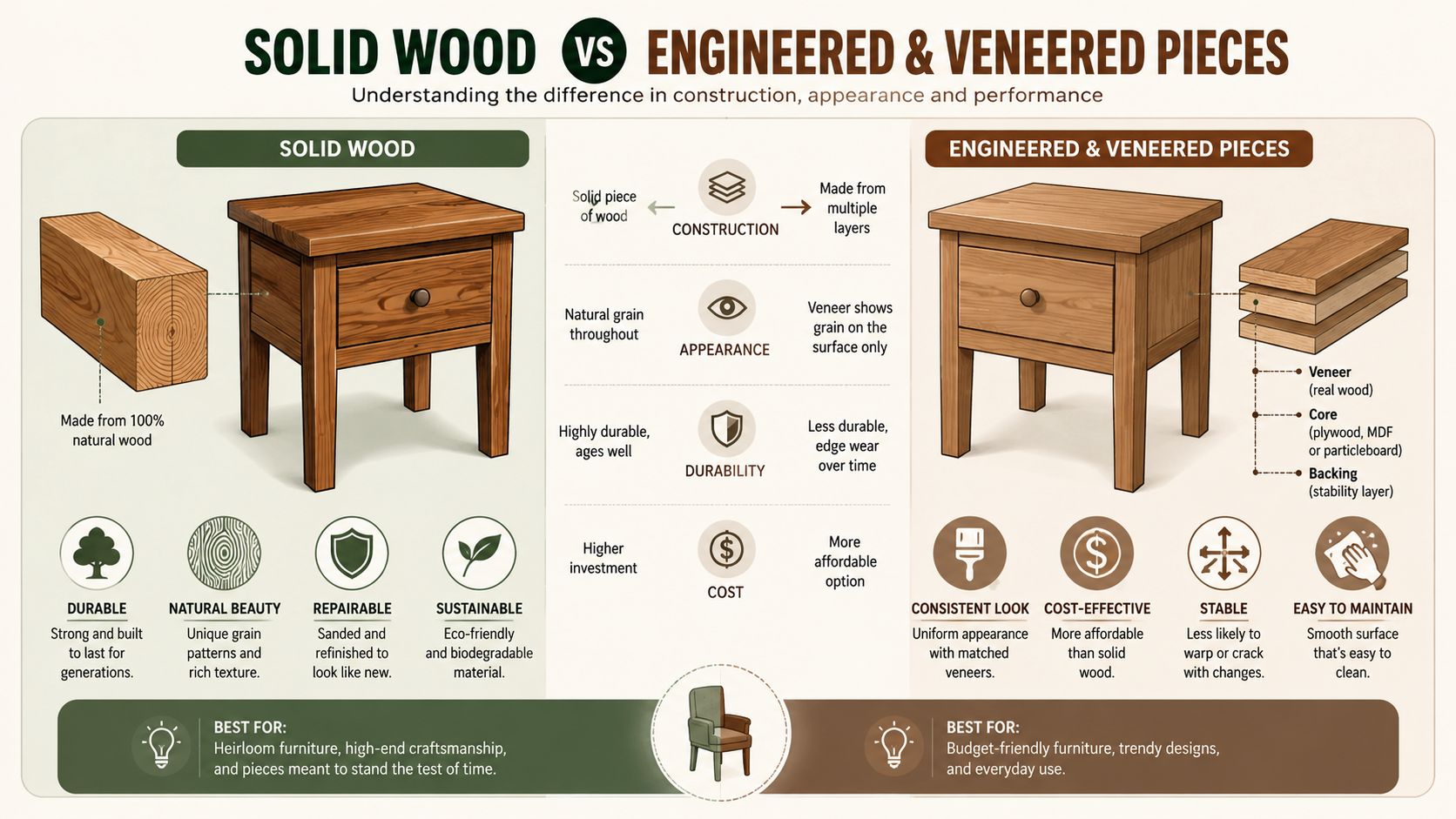
At a Greenfield showroom, you can run a finger along an unfinished drawer rail and feel the difference between full-thickness oak and a veneered edge band. That kind of check is simple, and it tells you more than a polished top ever will.
A drawer gives another clear clue. Pull it open and look at the sides, bottom, and back. Continuous grain that matches the rest of the piece is encouraging. A compressed-flake edge, a fiberboard core, or a paper-like covering points to an engineered material.
Three quick showroom checks
Start with an unfinished or less visible edge. Veneer often ends sharply or changes direction at the corner, while solid wood may show grain wrapping around the edge. Then tap the underside and listen for a dense response, keeping in mind that this is only one clue. Finally, run a hand along the back of a drawer box and under a tabletop. The texture, grain, and construction should make sense together.
Solid wood also handles future wear differently. A sound surface can often be sanded and refinished later, which is why many families like it for pieces that stay in service for years. A thin veneer can be sanded through, and MDF or particleboard can expose a contrasting interior after a deep chip. That does not make every engineered piece a poor choice. It does explain why the right material depends on the room, the expected use, and how long the owner wants to keep the piece.
Common Wood Species and Finishes You Will See
At a showroom floor, the wood itself does a lot of the talking. You can see it in the grain, feel it in the surface, and notice how the finish changes the same species under different light. If you want help sorting through those details, the guide to choosing the best wood for furniture is a practical place to start.
Start with the grain and color
Oak is easy to spot because its grain stands out. The rings and texture give it a sturdy, familiar look that fits dining rooms, offices, and family spaces.
Maple reads smoother and more even. That cleaner surface works well in lighter rooms and on pieces with simple lines.
Cherry brings warmth right away. It often starts with a softer tone, then deepens as it sits in sunlight, so the color can grow richer over time.
Walnut has a darker, chocolate tone and a more refined presence. It works well on a headboard, occasional table, or cabinet where you want the wood to make a quiet statement.
Hickory can vary a lot from board to board. That contrast gives it a lively look that feels at home in casual kitchens and busy family spaces.
Rustic brown maple keeps the maple base but adds character marks like knots and mineral streaks. The result feels lived-in without looking rough.
The finish changes the experience
The finish affects how the wood looks and how it feels in your hand. A natural oil finish keeps the grain close to the surface. A hand-rubbed stain shifts the color while still letting the movement of the grain show through. A conversion varnish seals the surface for everyday use. Distressed and brushed finishes add texture, which can make a new piece feel more relaxed.
Two tables made from the same species can look very different once stain, sheen, brushing, or distressing enters the picture. That is why it helps to compare finish samples in the same light as your room, especially if you are matching floors, cabinets, or older furniture. In a family-owned Milwaukee showroom, you can set those samples beside the actual piece and see which one feels right before you bring it home.
Why Solid Wood Is Built to Last
A solid wood dining table has to handle more than dinner. It may become a craft surface, a homework station, a place for holiday serving dishes, and the landing spot for a dropped pot. The lasting value comes from the combination of material, joinery, finish, and the ability to restore the piece rather than discard it.
A technical overview of solid wood furniture construction describes solid wood furniture as one of the oldest forms of household furnishing, with examples connected to Egyptians, Greeks, Romans, imperial Chinese furniture, European medieval craftsmanship, and Renaissance woodworking. The category later faced pressure from mass production and synthetic materials, then regained attention as buyers placed renewed value on authenticity and quality. One industry estimate placed global solid wood furniture production at more than 320 million units in 2024, showing that the material remains commercially significant as well as historically important.
Four practical reasons owners keep it
- Durability: Properly built joints and full-thickness lumber can stand up to repeated household use. A sturdy chair leg, dining rail, or bed frame has real material supporting the load.
- Repairability: A scratched tabletop can often be sanded and refinished. A loose chair joint may be re-glued and reinforced. A dresser gouge can be filled and blended.
- Long service life: A well-maintained hutch or bedroom set can move from one home to another and remain useful as family needs change.
- Reuse and value: A piece that can be refreshed has more options than one whose surface has chipped through to an unrecoverable core.
The material isn't indestructible. Standing water, extreme dryness, direct heat, careless moving, and poorly designed joints can damage any wood furniture. The advantage is that solid wood gives a craftsperson material to work with when maintenance or repair becomes necessary.
That distinction changes the buying conversation. Instead of asking only whether a piece is attractive today, a shopper can ask whether the piece can be adjusted, refinished, repaired, and passed along.
How to Tell If a Piece Is Truly Solid Wood
A buyer doesn't need a woodworking background to inspect a table or dresser. A few deliberate checks can reveal more than a product label viewed from across the showroom.
Use the five-part inspection
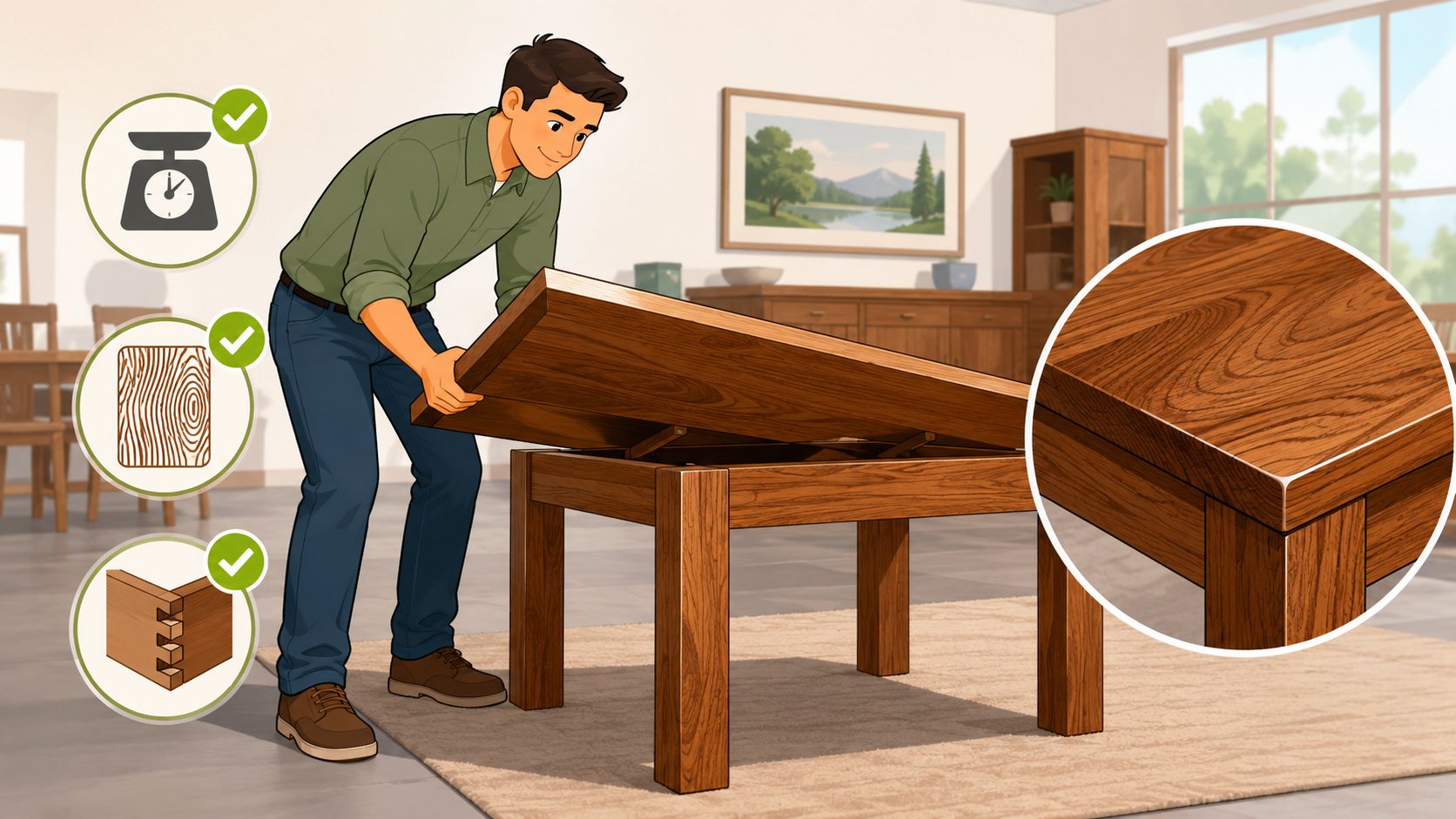
- Check the weight. Lift a corner gently, or ask for help moving a sample. Solid wood often feels grounded for its size, but weight should support the other clues rather than stand alone.
- Inspect the underside. Look beneath a tabletop, behind a panel, or under a cabinet. Natural end grain and consistent lumber tell a different story from cardboard-like backing or a printed surface.
- Follow the edges. Run a hand along a corner. Continuous grain and a natural transition suggest full-thickness wood, while a veneer may stop or change direction sharply.
- Open a drawer. Feel the sides and bottom. Particleboard can resemble compressed flakes, while MDF tends to look smoothly uniform, much like a pencil eraser.
- Notice natural movement signs. Quarter-sawn figuring, small checks, and seasonal changes can reflect the behavior of real wood. They aren't automatically problems, but they deserve an explanation from a knowledgeable associate.
A shopper can find more guidance in this real wood furniture identification guide, then bring those questions into the showroom.
Ask what the label covers
A tag may say solid wood, all solid wood, or solid wood frame. Those descriptions can refer to different portions of a piece, so the important follow-up is specific: Are the top, panels, drawer sides, and hidden structure solid lumber? Can the surface be refinished? What material sits beneath any veneer?
At BILTRITE, the showroom uses icons for solid wood, USA-made, and Amish-made pieces. Those markers give shoppers a practical starting point for verifying construction, origin, and craftsmanship with the sales team.
Simple Care That Keeps Solid Wood Beautiful
A solid wood table or dresser will tell you a lot if you watch how it lives in your home. Wood responds to the air around it. In dry air it can shrink a little, and in damp air it can swell. That movement is normal, which is why stable indoor moisture matters so much for long-term performance. Technical guidance recommends furniture stock around 8% to 10% moisture content for many climate-controlled interiors, while conditioned homes often sit roughly between 6% and 11%, according to this technical bulletin on wood dimensional stability.
A simple care routine helps preserve that honest, touchable feel:
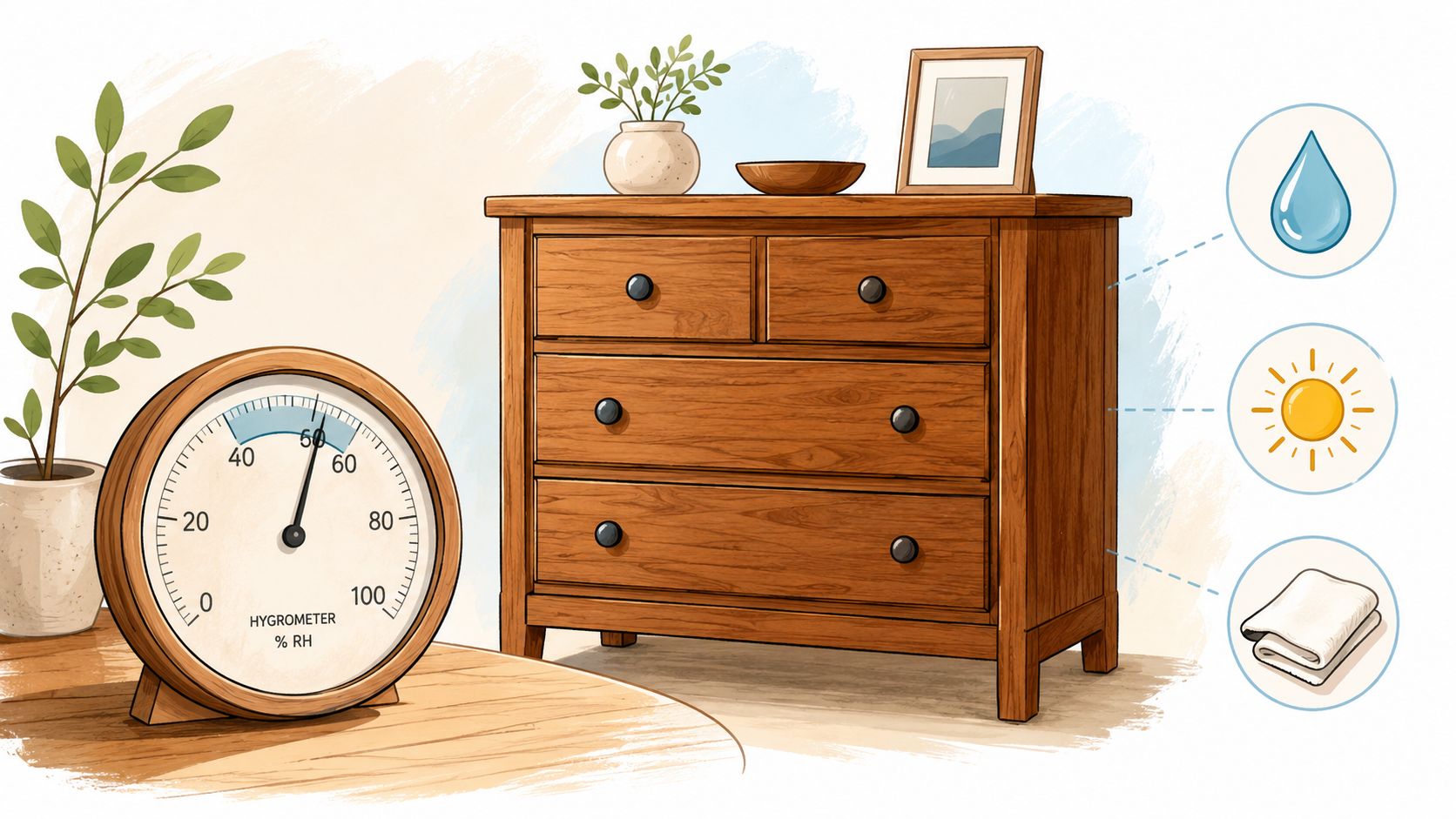
- Control indoor air: A care guide recommends relative humidity between 25% and 50%, as detailed in this solid wood furniture care guide. A small hygrometer can show when winter heat is drying the room or summer air is getting heavy.
- Clean gently: Dust with a soft cloth, and use a barely damp cloth for spills. For more detailed steps on cleaning and maintaining your wood surfaces, see our cleaning guide. Wipe the area dry right away so moisture does not sit on the finish.
- Limit heat and strong sun: Keep pieces away from radiators, fireplaces, and other direct heat sources. Curtains or sheers help when sunlight hits the same spot every day.
- Refresh thoughtfully: Some finishes can handle periodic oil or soap care, and one care recommendation suggests treatment about 2 to 3 times per year. Follow the finish maker's instructions, because the wrong product can do more harm than good.
A manageable Milwaukee rhythm
Wisconsin homes put extra stress on wood during heating season, when indoor air can turn very dry. A practical seasonal habit is simple. Check humidity as cold weather settles in, look for loose parts or drawers that start to bind, wipe spills quickly, and change the furniture's sun exposure when you move a room around.
When a tabletop starts to look worn, refinishing may bring it back instead of replacing it. That repair path is one of solid wood's clearest strengths, but sanding should match the existing finish and be handled with care.
Price, Value, and Why USA and Amish Made Matter
A solid wood price tag reflects more than the species name on the tag. Kiln-dried lumber, careful moisture control, strong joinery, hand-finishing, hardware, inspection, and skilled labor all shape what ends up in your home. A dining table with tight joints and a finish that can be repaired is a different purchase from a table that only looks like wood from across the room.
Lower price can still make sense for the right room and the right use. The better question is what the piece has to handle. An accent table that sees light use has different demands from a family dining table that will carry meals, schoolwork, and holiday gatherings.
Compare value by construction
| Construction Type | Typical Price Range | Average Lifespan | Can Be Refinished? | Resale Value |
|---|---|---|---|---|
| Solid wood | Varies by species, size, joinery, and finish | Can serve across generations when maintained | Often, depending on finish and condition | Often stronger when craftsmanship and condition remain good |
| Veneer over engineered core | Varies by core, veneer, and workmanship | Depends on construction and care | Limited by veneer thickness and core condition | Depends heavily on appearance and condition |
| MDF or particleboard construction | Varies by design and surface treatment | Depends on use, moisture exposure, and construction | Usually limited | Often more sensitive to edge and surface damage |
Use the table as a buying guide, not a promise. Judge a piece by the joinery you can see, the materials you can touch, the finish, the warranty, and the maker behind it.
Why domestic and Amish construction attract attention
USA-made and Amish-made furniture often gives shoppers a clearer path to ask about the maker, wood species, finish, and construction process. BILTRITE's USA-made furniture selection reflects that focus, with showroom markers that help customers identify American-made pieces.
A showroom visit should include a look at species samples, finish cards, drawer construction, joinery details, and written warranty information. If a table costs more, the associate should be able to point to visible reasons for that price instead of leaning on vague words like “premium” or “heirloom.”
Our team includes associates with decades of hands-on experience in solid wood, USA-made, and Amish-made furniture. BILTRITE is a fourth-generation, family-owned business serving Metro Milwaukee since 1928. Its approach centers on affordable, better-quality furniture, including USA-made, Amish-made, and solid wood options, rather than treating the cheapest piece as the smartest buy.
What Milwaukee Shoppers Should Look for In Store
A successful showroom visit starts before the car leaves the driveway. Bring room measurements, ceiling height when relevant, door and doorway widths, stairway details, and the path from the entrance to the intended room. Older Milwaukee homes can have narrow staircases and tight turning areas, so a beautiful piece still has to make the trip inside.
A practical floor plan
Walk with three questions in mind:
- What deserves the budget? Prioritize pieces that receive daily use, such as a dining table, bed frame, or dresser. Occasional furniture can follow a different construction and finish strategy.
- Will it fit the home? Ask about removable legs, sectional pieces that come apart, and delivery methods. BILTRITE marks come-apart sofas and sectionals for customers managing narrow doorways.
- Can it be maintained? Ask how the finish should be cleaned, whether the piece can be refinished, and what changes are normal as the wood responds to the room.
The showroom also offers small-scale furniture for apartments, condos, smaller homes, and senior living spaces, along with heavy-duty options for households needing additional support. Its mattress department includes over 60 models, giving shoppers a separate place to compare sleep options while furnishing the rest of the home.
Three quick tests help confirm what the tag says:
- Lift a corner with assistance and notice whether the piece feels appropriately substantial.
- Run a hand beneath drawer boxes and along their sides.
- Check an unfinished edge for continuous grain instead of a flaky or uniformly pressed core.
The store's sales associates bring over 400 years of combined experience and are available to answer questions without pressure. BILTRITE Furniture-Leather-Mattresses serves Greenfield and the wider Metro Milwaukee community from 5430 West Layton Avenue, and the showroom is closed on Sundays and Mondays so the family can protect family time.
Come on down to BILTRITE Furniture-Leather-Mattresses in Greenfield to inspect solid wood tables, bedroom pieces, and Amish-made options in person. Bring room measurements, ask to see the construction details, and let the local team help match a durable piece to the way the household lives.