Flat Box Spring Guide: What It Is and When to Use One


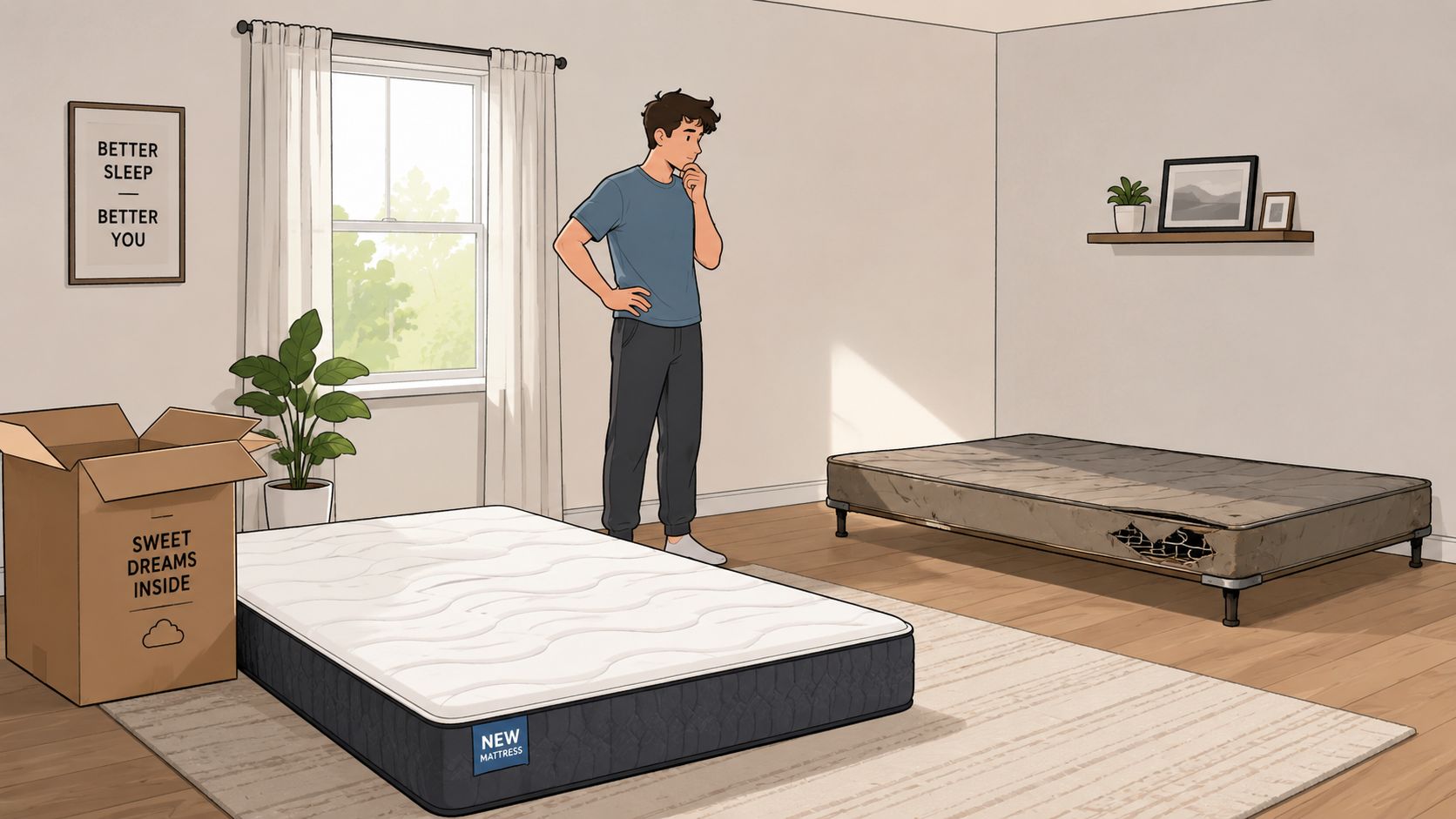
You're standing in the bedroom, new mattress ready to go, and the old base suddenly looks a little suspicious. Maybe it's sagging. Maybe it's too tall for the nightstand. Maybe the mattress maker's paperwork says something that sounds like legal fine print. That's the moment a lot of shoppers realize the piece underneath the mattress matters just as much as the mattress itself.
A flat box spring is one of those support pieces that people often lump together with everything else under the bed, but it has a specific job. It gives the mattress a firm, level surface so the bed feels stable, fits the room better, and lines up with the mattress maker's support rules. At BILTRITE in Greenfield, this is the kind of question our mattress team hears all the time, because the right base can make a new mattress feel like it belongs in the room instead of just sitting there.
Why the Base Under Your Mattress Matters More Than You Think
A shopper can fall in love with a mattress on the showroom floor, get it home, and then realize the old base is the weak link. The bed may look fine at first glance, but if the support underneath is wrong, the mattress can feel softer, sit unevenly, or wear differently over time. That's why the foundation is never just an afterthought.
The quiet part of the sleep setup
A mattress doesn't float on its own. It sits on something that has to hold its shape, stay level, and work with the mattress construction above it. A rigid foundation spreads weight across the full footprint instead of letting one spot dip or flex more than the rest.
That matters for comfort, but it also matters for warranty language. Many mattress rules are written around the support surface, not just the mattress itself, so the base can decide whether the whole setup stays in bounds. The practical question is often not whether a shopper owns a box spring already, it's whether that base still matches the new mattress.
Practical rule: if the old foundation is worn, noisy, or built for a different style of mattress, it deserves a second look before the new bed goes on it.
The scale of the category shows why this still matters. In North America, the broader market tied to flat spiral or disc springs reached about 239,000 tons and roughly $3.3 billion in 2024, with the United States accounting for 89% of consumption and 92% of production. That market is projected to reach 259,000 tons and $4.7 billion by 2035, according to IndexBox's 2024 North America market overview. In other words, support bases still play a real role in major mattress markets.
BILTRITE sees this exact situation often in Greenfield. A mattress shopper walks in thinking only about firmness, then learns the base can change how the whole bed feels. That's why it helps to think about the foundation and mattress as a pair, not two separate purchases.
Read more about when a box spring really helps a bed
What a Flat Box Spring Is
A flat box spring is a rigid mattress foundation with a level support plane. The phrase sounds old-fashioned, but the modern version is less about bounce and more about giving the mattress a steady, even base to rest on. It should feel rigid and unyielding under pressure.
The common heights shoppers run into
Standard U.S. profiles are usually about 9 inches tall, while low-profile versions are about 5 to 5.5 inches, and some ultra-low foundations can be only 1 to 2 inches thick. Those numbers matter because the base changes the finished bed height, which affects how easy it is to get in and out of bed, how the bedding hangs, and whether the mattress lines up cleanly with the rest of the room.
A flat foundation is built to spread weight across the whole mattress footprint. That means fewer localized flex points, which is what many modern mattresses want. The surface stays more even, so the mattress does not have to make up for dips or bounce underneath it.
A flat foundation should feel firm under hand pressure, like a solid work surface. If the support feels springy, it is probably not acting as a true flat base.
The height question also shows up in the room itself. A bed that sits too high can make nightstands look undersized. A bed that sits too low can make the room feel unfinished. Flat box springs help shoppers choose the height that fits the mattress and the room together.
BILTRITE's Greenfield showroom is where that choice gets clearer, because the team can compare mattress height, frame height, and support feel side by side. For shoppers who want to see the wood construction options in plain terms, BILTRITE's wood box spring guide gives a helpful starting point.
Flat Box Spring vs Traditional Foundation and Platform Options
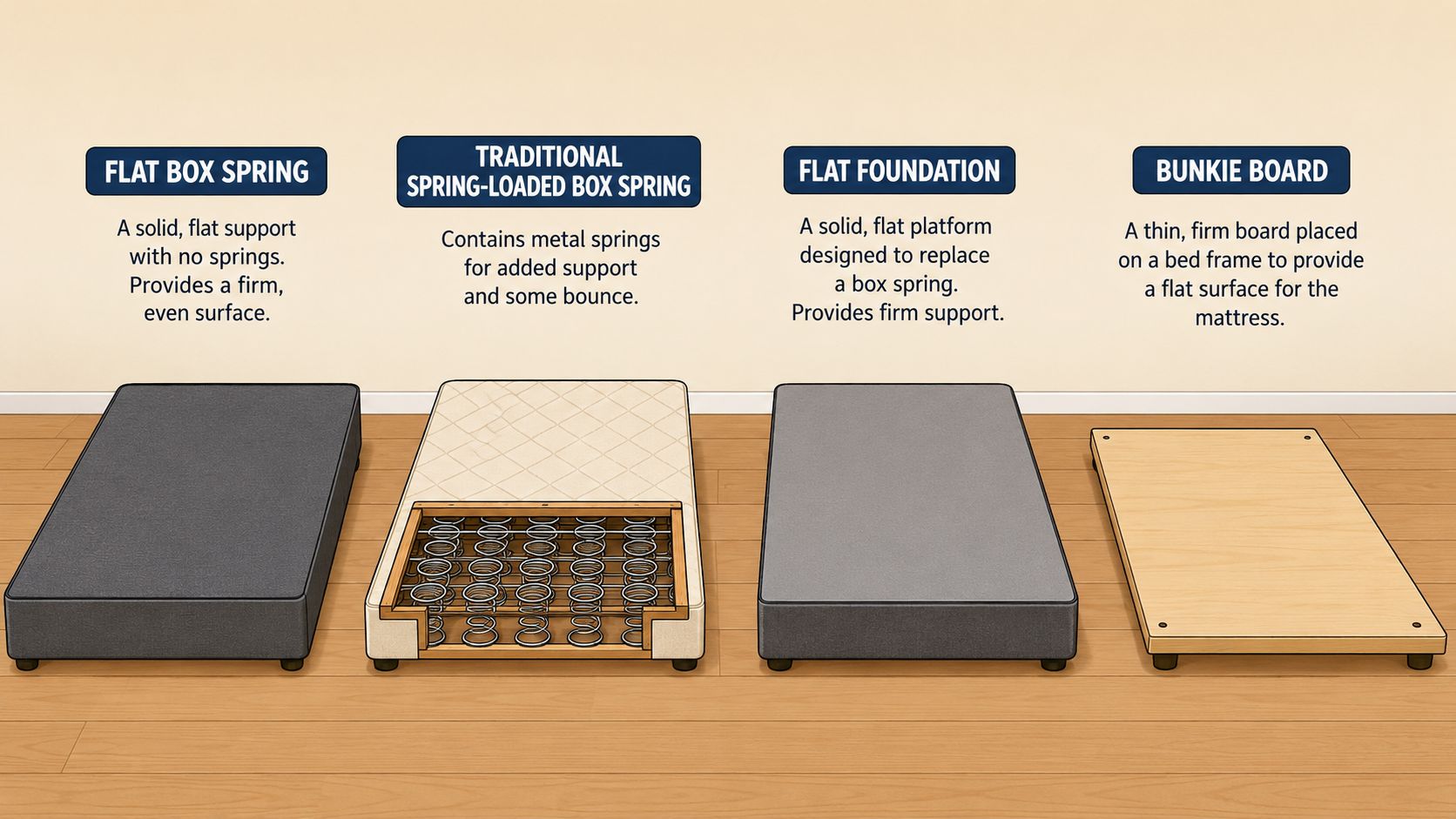
A shopper standing in the foundation aisle usually has the same question, just phrased a few different ways. Which base matches the mattress, which one keeps the warranty language happy, and which one fits the room without throwing off the bed height? The easiest way to sort that out is to look at what each support does.
What each option is built to do
A traditional box spring usually has internal metal coils, so it gives a little when weight goes down onto it. A flat foundation stays firm and even, with solid wood or closely spaced slats doing the work beneath the mattress. A bunkie board is thinner still, more like a stiff insert that sits across the frame support. A platform bed builds that support into the frame itself, so there is no separate base to set in place.
A flat foundation provides firm, even support rather than the slight give you get from a spring-loaded box spring. Flat foundations typically stand 2 to 6 inches tall, while a standard box spring is around 9 inches and has internal coils for a bit of flex. That difference matters because mattress makers often write their support instructions around how much movement they want under the sleep surface.
| Support Type | Typical Height | Best Use |
|---|---|---|
| Flat Box Spring | About 9 inches, or low-profile versions around 5 to 5.5 inches | When a firm, raised base is needed |
| Traditional Spring-Loaded Box Spring | About 9 inches | Older innerspring setups that call for a little bounce |
| Flat Foundation | About 2 to 6 inches | Foam, latex, hybrid, and many modern mattresses |
| Bunkie Board | Thin profile | Extra support over slats or inside a frame |
| Platform Bed | Built into the frame | Clean, integrated support with no separate base |
The practical question is which setup matches the mattress label, not which one sounds familiar. If a mattress maker calls for a firm, non-flexing base, a flat foundation is often the straightforward choice. If the room needs a lower bed height, a bunkie board or low-profile foundation can help. If the buyer wants the support built into the furniture, a platform bed may be the cleaner fit, and BILTRITE's guide to platform beds and box springs gives a clear side-by-side look.
Matching a Flat Box Spring to Your Mattress Type
A mattress and its base should behave like a matched set. The support has to fit the construction above it, not just the size of the frame below it. That's why the right foundation depends on what kind of mattress is sitting on top.
Mattress type changes the rules
Memory foam, latex, and many hybrid mattresses usually want a firm, non-flexing surface. A traditional spring box spring can create too much movement for those designs, and that's why some manufacturer guidance says using the wrong support can affect warranty coverage. The idea is simple. If the mattress is built to stay stable, the base should stay stable too.
Innerspring mattresses are more flexible in this conversation. Some still pair well with a traditional box spring, while others work better on a flatter base, depending on the mattress maker's instructions and the feel the sleeper wants. Pillow-top mattresses usually benefit from even support, because the top comfort layers do better when the surface underneath stays consistent.
Two-sided mattresses deserve special attention. A flat foundation gives them an even bed below, which helps both sides wear more evenly when the mattress is flipped and rotated. That's one reason BILTRITE keeps two-sided options in the conversation when shoppers ask about support systems.
The useful question is not “Do I need a box spring?” It's “Is this specific base compatible with this specific mattress?”
That question gets answered by three things, every time. Mattress construction. Slat spacing. Warranty language. If one of those doesn't line up, the whole setup can miss the mark, even if the base looks fine in the store. The mattress label, the support surface, and the frame underneath all need to agree.
Look at BILTRITE's mattress size chart before you measure your setup
Sizing, Measurements, and Load Ratings Worth Knowing
A tape measure clears up a lot before delivery day. The support has to fit the mattress size, fit the frame, and fit the room. If any one of those is off, the setup can feel cramped, shift around, or leave you with a base that does not sit the way it should.
Match the base to the mattress size
Box springs and flat foundations are built in the same standard U.S. mattress sizes as the beds they support. Standard sizes include twin, twin XL, full, queen, king, and California king, with queen at 60 × 80 inches and California king at 72 × 84 inches. That makes sizing a fit question first, and a style question second.
Room measurements matter just as much as mattress measurements. A queen that looks fine on a showroom floor can feel oversized once you bring it through a doorway, turn it in a hallway, or try to get it up stairs. Before you order, measure the bed space itself, then measure the path into the room so the foundation can get where it needs to go. Use BILTRITE's mattress size chart while measuring your room
Weight matters too, because a larger foundation needs more structure to stay stiff. One published retail spec lists a 9-inch queen metal foundation at 79 x 59.5 x 9 inches and 40.67 lb, while the king version is 79 x 75.5 x 9 inches and 49.38 lb. That extra weight reflects the wider frame needed to resist bowing across a bigger span. A foundation that feels solid in the middle but weak at the edges can still create trouble once the mattress and sleepers are on top of it.
| Size Check | What to Confirm |
|---|---|
| Mattress footprint | Match the support to the mattress size |
| Room access | Measure doorways, hall corners, and stair turns |
| Frame fit | Confirm center support and rail spacing |
| Load rating | Make sure the foundation is built for the sleepers and mattress combined |
Load rating matters because the mattress, the sleepers, and the frame all share the same job. A couple sharing a bed puts more demand on the support than a lighter single sleeper, and a heavier mattress adds to that load. The frame underneath should be built to handle both without flexing more than it should. If a bed frame lacks center support, even a strong foundation can end up carrying a load it was never meant to manage.
Lifespan, Airflow, and Maintenance Tradeoffs
A good base does more than hold weight. It helps the whole sleep setup age more gracefully. That matters because mattress performance changes slowly, and support issues often show up before the mattress itself looks worn.
Support, moisture, and the hidden wear factor
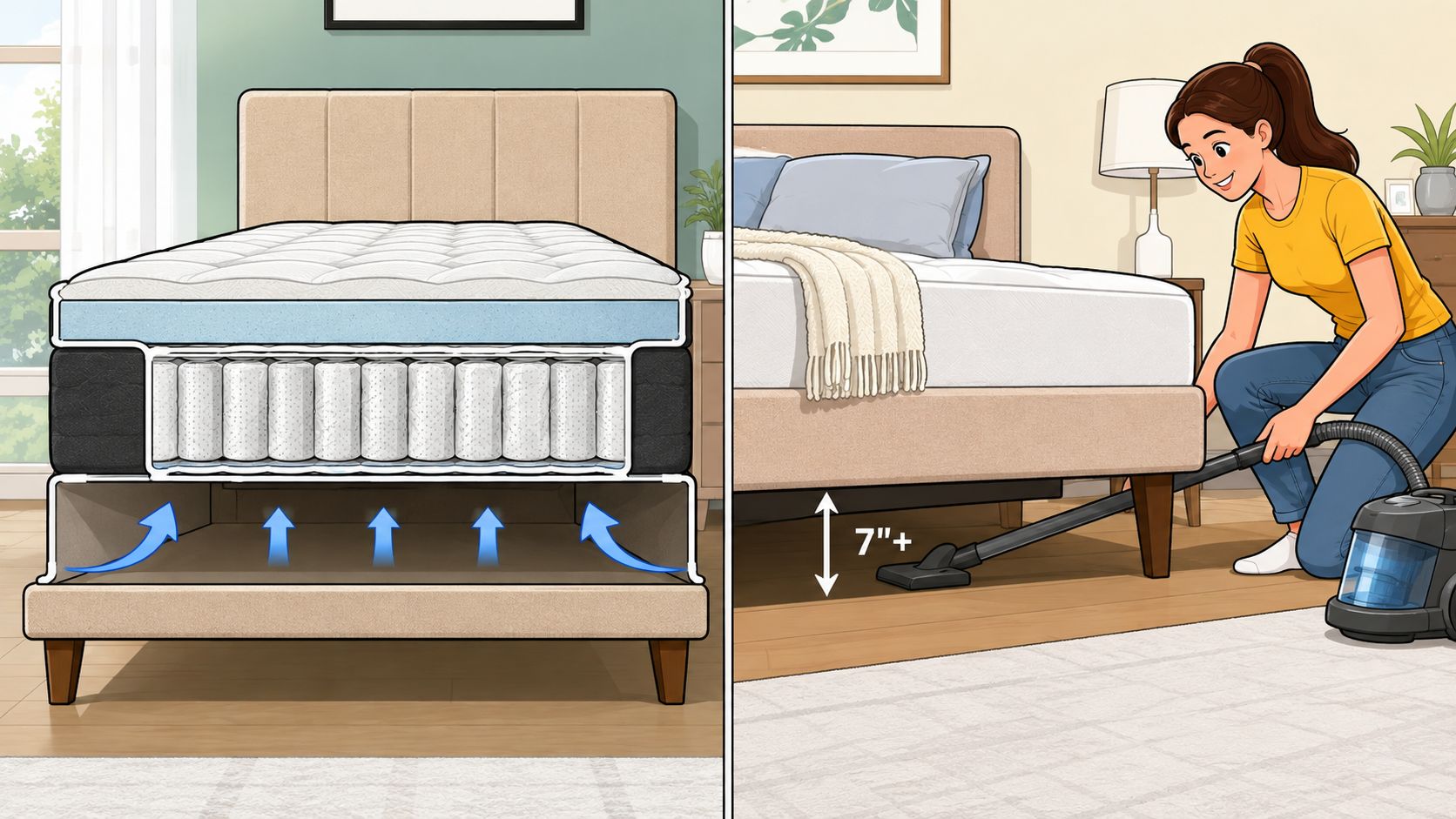
Brand guidance warns that placing a mattress on the floor or on an improper foundation can trap moisture and damage the product, especially with foam or natural-material builds. A flat foundation can still be the right answer, but it has to satisfy the mattress maker's support rules and allow enough ventilation for the room it's living in. The best-looking base is not always the most breathable-looking one.
That's where maintenance comes in. Rotating the mattress, checking slats once a year, and keeping the base dry all help protect the support system over time. A clean, dry foundation is less likely to cause problems that show up as sagging, odors, or uneven wear.
A few simple habits go a long way:
- Rotate on a schedule. This helps the mattress wear more evenly across the supported surface.
- Inspect the frame and slats. Look for looseness, cracks, or gaps that have changed over time.
- Keep the area dry. Moisture under the bed can cause headaches later, especially in enclosed rooms.
The right takeaway is not that more open support always wins. It's that the support surface should match the mattress maker's requirements first, then handle airflow and maintenance well enough for the bedroom it lives in. That balance is what keeps the bed feeling solid for longer.
Installation Tips and Frame Options From the Showroom Floor
A base that looks right on paper still has to fit the room. Metal frames, wood rails, and headboard-and-footboard sets all change how a flat box spring sits, and center support matters more than a fancy label on the frame. A foundation that fits the mattress but overhangs the rails or lands on weak support is asking for trouble.
What shoppers should bring to the store
At BILTRITE's Greenfield showroom, the easiest visits are the ones where shoppers bring mattress dimensions, door widths, and a quick note about the existing frame. That lets the team check whether a flat base, a low-profile option, or a different frame pairing makes the most sense before delivery day. The store also works with qualifying mattress sets that can include a complimentary heavy-duty frame or protector, free white-glove delivery, and old mattress removal in donatable condition.
Bring the room measurements first, not last. A bed that fits the mattress but not the doorway becomes a delivery problem fast.
BILTRITE also has custom options and frame pairings available in the showroom, which helps when the bed has to work around tight corners or a smaller bedroom. The point is to match the support system to the room, not an idealized floor plan. That's where in-person help beats guessing.
See how BILTRITE handles box spring replacement options
Common Misconceptions and Your Next Step
A few myths keep coming up in the foundation aisle. One is that every box spring is the same. Another is that height doesn't matter. A third is that the cheapest base will save money without consequences. Those ideas break down fast once mattress construction, warranty language, and household use enter the picture.
BILTRITE's sleep specialists see the same pattern every week. Shoppers walk in with an old base, a new mattress, and one question, then leave with a much clearer setup because the parts finally match. The Greenfield showroom on West Layton Avenue makes that conversation easy, and our team can walk through frame fit, support rules, and mattress compatibility in plain language.
BILTRITE Furniture-Leather-Mattresses offers a full mattress center, frame guidance, and in-store help with support options that work with your bedroom and your mattress. If a flat box spring is part of your sleep setup, visit BILTRITE Furniture-Leather-Mattresses in Greenfield and let our team help you match the base, frame, and mattress the right way.