Leather Sofa Sectional Sale: Your Milwaukee Buying Guide


A lot of Milwaukee shoppers hit the same moment. They spot a leather sofa sectional sale, see a price tag that looks tempting, and start wondering whether they've found a smart buy or a living room headache with a short honeymoon.
That confusion makes sense. A sectional is one of the biggest furniture choices in a home. It has to fit the room, make it through the doorway, feel good at the end of a long day, and still hold up after movie nights, holidays, naps, and the everyday wear that comes with real family life. A sale price matters, but it shouldn't be the only thing driving the decision.
That's where a local point of view helps. BILTRITE was founded in 1928 by Irwin Kerns and Frieda Kerns as an upholstery shop in Milwaukee, and that family-owned history still shapes how shoppers are guided today through the showroom and the buying process. More on that history is shared on BILTRITE's family story page. For Milwaukee-area households, the goal isn't just to find a sectional on sale. It's to find one that feels like a value years after the receipt is tucked away.
Table of Contents
- What to Look for Beyond the Sale Tag
- Finding the Right Sectional for Your Space
- Timing Your Purchase How to Shop Sales Smart
- In-Stock Speed vs Custom Creation
- The BILTRITE Advantage Why Buying Local Means Better Value
- From Our Showroom to Your Living Room
What to Look for Beyond the Sale Tag
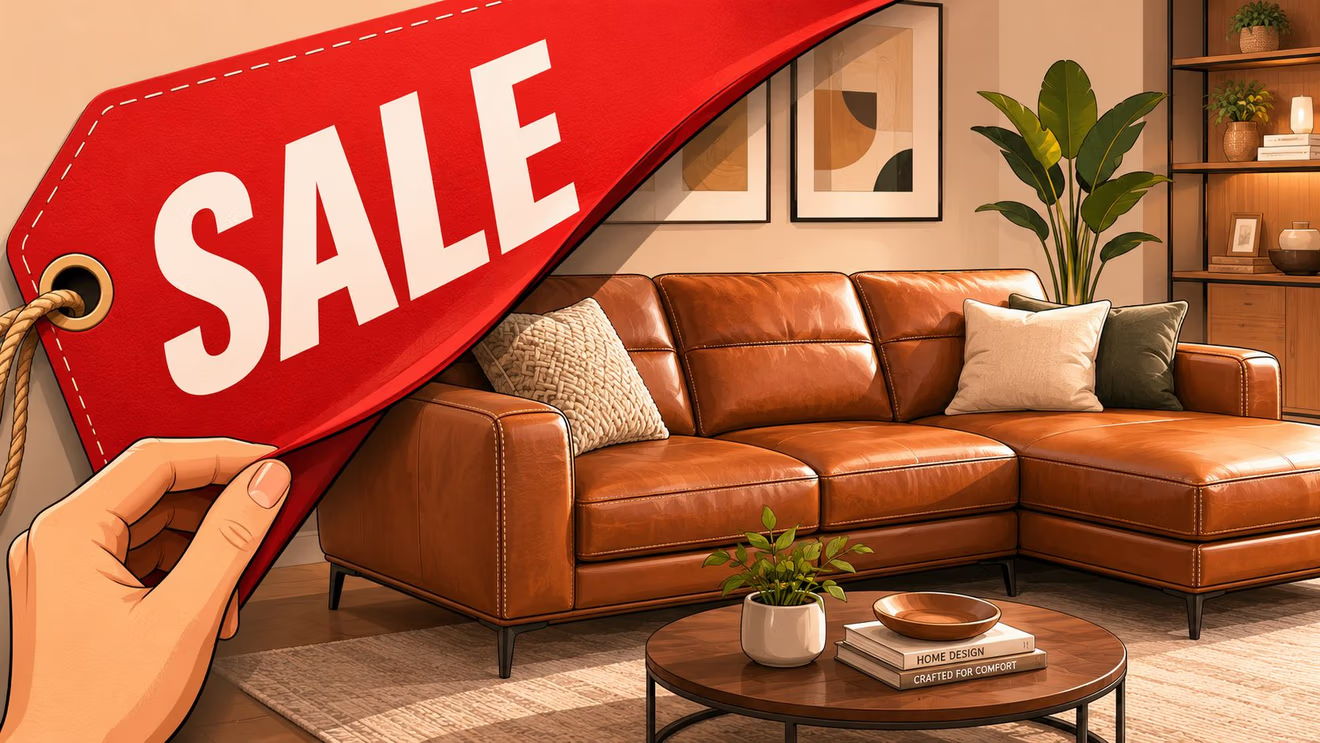
The sale tag grabs attention first. The materials decide whether the purchase still feels smart later.
One of the biggest trouble spots in any leather sofa sectional sale is the language on the tag. Terms sound similar, but they don't perform the same way in a home with kids, pets, guests, or just heavy daily use. That's why many shoppers need a clearer breakdown than they usually get on a sales floor.
Start with the upholstery, not the color
A way to think about leather grades is to compare them to flooring. Top-grain or full-grain leather is like real hardwood. It has natural character, it wears in instead of wearing out, and with care it stays in the home a long time. Bonded leather is more like a surface made from leftovers that looks good at first glance but often doesn't hold up the same way over time.
That difference matters. A published buying guide notes that many sale-focused articles skip the distinction between top-grain and full-grain leather versus faux options like vinyl or PU, which can lead shoppers toward “luxury plastic” seating that may degrade within 3 to 5 years, while real leather can last 15 to 25 years with proper care. That guidance appears in this leather sofa materials article.
Practical rule: If the ticket says “genuine leather” but doesn't clearly explain where the leather is used and what grade it is, that's a sign to slow down and ask more questions.
Buyers also get tripped up by soft, vague phrases. “Premium leather” can sound reassuring without saying much at all. Better questions are direct ones. Is it top-grain? Is it full-grain? Is the entire seating area leather? What material is on the sides and back? The clearer the answer, the easier the decision.
The frame does the quiet work
Leather gets the attention, but the frame does the hard job every day. It carries weight, resists twist, and helps the sectional keep its shape instead of developing that tired, saggy look.
A sturdy sectional usually starts with solid wood construction. Softer framing materials can loosen or deform under use, especially in busy family rooms where everybody lands in the same favorite corner night after night. A better frame doesn't just support the upholstery. It helps the whole sectional stay comfortable and square.
Shoppers who want a deeper construction checklist can use this sectional buying guide from BILTRITE before heading into the showroom.
A quick sale-floor checklist
When standing in front of a discounted sectional, these checks keep the focus on value instead of excitement alone:
- Touch the leather: Real leather should have variation and a more natural hand. If it feels overly uniform or plasticky, ask what it's made of.
- Lift a cushion if possible: Better seat construction usually feels denser and more supportive, not flimsy.
- Ask about the frame: Solid wood is worth seeking out because it supports long-term use.
- Check the seams: Neat, consistent stitching usually signals more careful build quality.
- Sit in the corner seat: That's often where weak support shows up fastest.
The smartest sale shopper isn't chasing the biggest markdown. That shopper is looking for the strongest combination of material, construction, and fit for daily life.
Finding the Right Sectional for Your Space
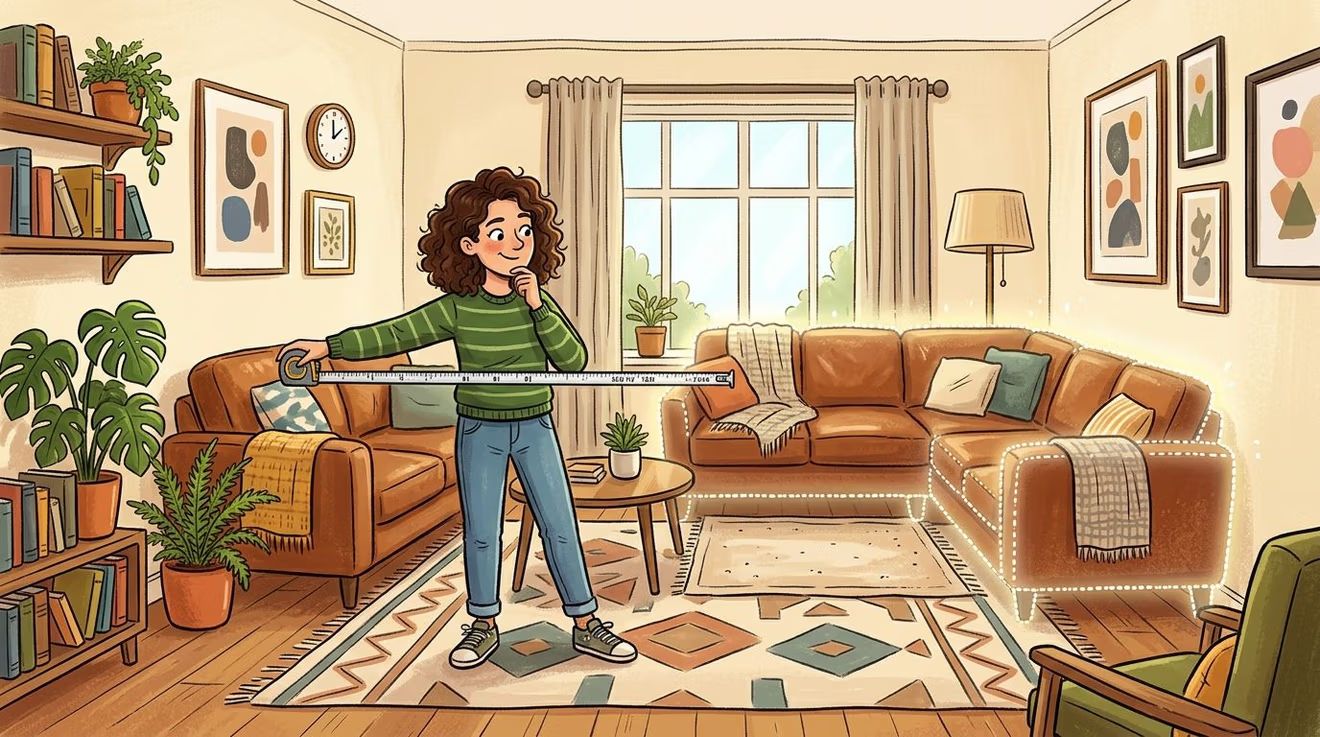
A sectional can look just right in a showroom and feel oversized the second it lands in a living room. That usually happens because shoppers measure the wall, then stop there. The room needs more planning than that.
Measure the room first
Start with the open floor area, then measure the path the sectional has to travel. That means doorways, stair turns, hallway width, elevator space if needed, and any low ceiling spots. A tape measure and a notepad can save a lot of stress.
This process works well:
- Mark the room size. Measure the full width and depth of the seating area.
- Leave walking space. People should be able to move around the sectional without squeezing.
- Note fixed obstacles. Radiators, windows, floor vents, and built-ins can change the usable footprint.
- Measure the entry route. The room isn't the only place that matters. The sectional has to get there first.
A step-by-step measuring walkthrough is available in BILTRITE's sectional measuring guide.
Match the shape to real life
The right shape depends on how the room is used. A family that gathers for movies usually wants easy lounging, clear sightlines, and a spot to stretch out. A condo owner may need a smaller-scale sectional that defines the space without swallowing it.
Here's a simple way to think through the common layouts:
| Room situation | Shape that often works well | Why it helps |
|---|---|---|
| Family room with a TV wall | L-shape with chaise | Gives lounging space without closing off the room |
| Open-concept space | Sectional with a defined corner | Creates a seating zone inside a larger room |
| Apartment or condo | Small-scale sectional | Preserves traffic flow and avoids crowding |
| Home that hosts often | Modular layout | Makes seating more adaptable |
Some shoppers focus so much on seating capacity that they overlook depth and scale. A deep sectional may feel cozy in a large room but awkward in a tighter one. The reverse happens too. A slim design can look under-furnished if the room is broad and open.
A sectional should fit the home's routine, not just the floor plan. A reading room, a casual family room, and an entertaining space all ask for something slightly different.
The good news is that Milwaukee homes come in every shape. Some need compact pieces for bungalows and condos. Others need heavier-duty seating for bigger households. The key is choosing a layout that supports the way the room is lived in.
Timing Your Purchase How to Shop Sales Smart
Some furniture shoppers think sale timing is a mystery. It usually isn't. Retail calendars follow product cycles, holiday promotions, and inventory changes, which means buyers who pay attention can shop with a lot more confidence.
Why holiday sales can be worth watching
Holiday weekends often line up with retail transition points. Stores make room for incoming inventory, and that creates openings for shoppers who have already done their homework on size, materials, and layout.
A good example came during Labor Day 2025. Retailers discounted premium leather sectionals, and the Burrow Field Leather 4-Piece Sectional Lounger dropped to $2,159, which was a 20% reduction from $2,699 during that event, according to Forbes coverage of Labor Day sofa sales. That same report described Labor Day weekend as a strong buying window because brands were adjusting inventory to bring in new stock.
That doesn't mean every holiday price is automatically a bargain. It means timing can create real opportunity when the shopper already knows what quality looks like.
How to judge a sale without getting distracted
A smart buyer treats the sale as the last piece of the decision, not the first. This comparison helps:
- If the sectional fits well, uses stronger materials, and is discounted: that's a meaningful opportunity.
- If the price looks exciting but the construction is vague: that's a reason to keep looking.
- If the model is being cleared out: ask whether it's discontinued, customized, or part of a routine inventory refresh.
One helpful habit is to compare the same factors every time instead of reacting to signage. Look at the leather type, seat comfort, frame details, and room fit. Then weigh the price.
Good sale timing helps. Good judgment matters more.
Shoppers who want a broader look at furniture sale patterns can review BILTRITE's guide to the best time to buy furniture. It's a practical way to understand when promotions often line up with buying needs, without turning the process into a guessing game.
In-Stock Speed vs Custom Creation
Saturday afternoon in Milwaukee, you find a sectional that feels great, the leather looks right, and the sale price finally makes sense. Then the main question shows up. Do you bring home something that is ready soon, or do you wait for the version that fits your room and routine more precisely?
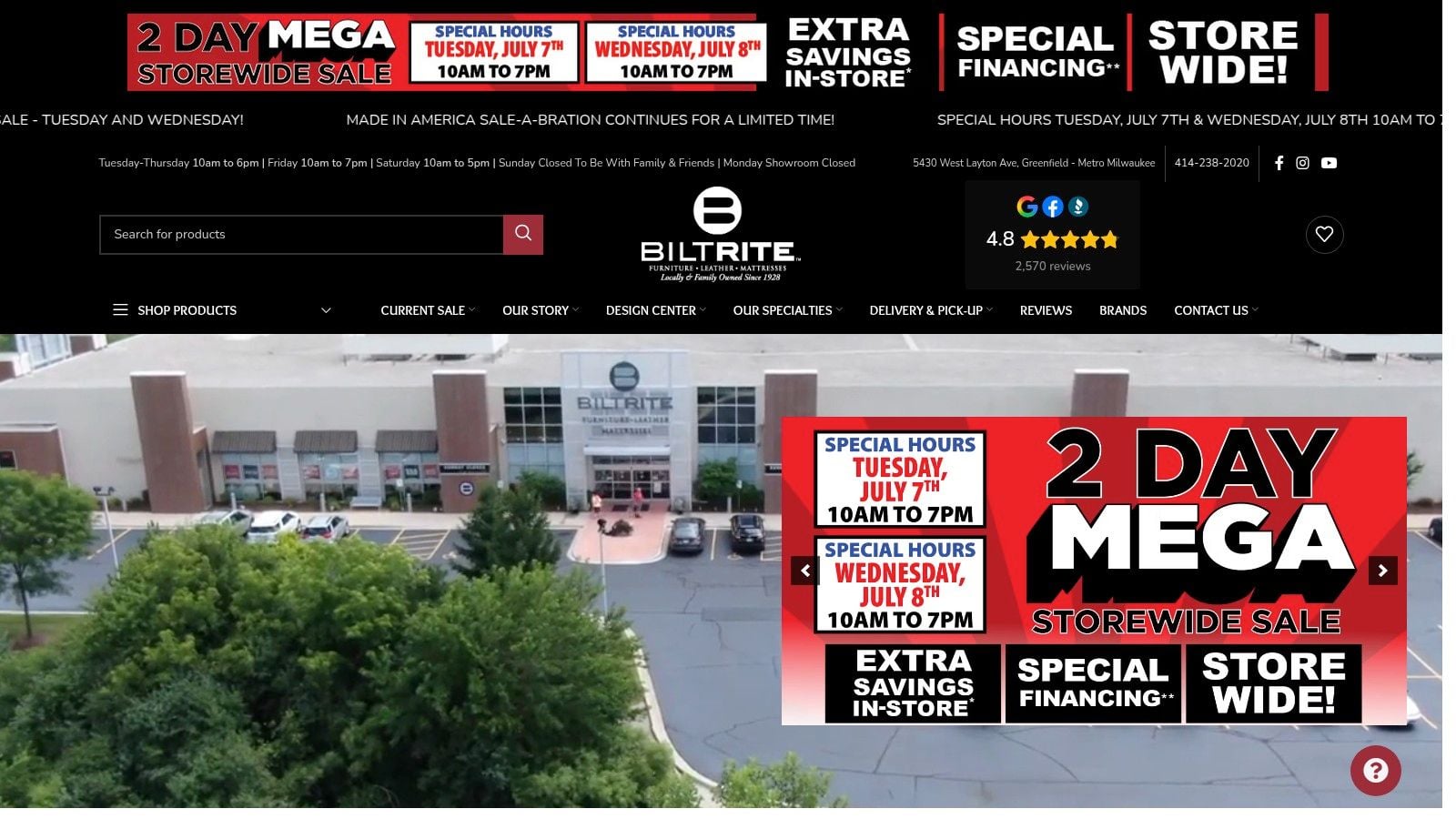
For many shoppers, this is the point where a sale gets confusing. A quick delivery can feel like the obvious win. A custom order can feel like the smarter long-term choice. Both can be right. The key is knowing which risk matters more in your home: waiting longer than you want, or living for years with a sectional that is only close.
When in-stock makes more sense
In-stock sectionals work well for households that need a solution soon and want to judge comfort in person before making a decision. You can sit down, check the seat depth, look at the leather under real showroom lighting, and get a much better sense of scale than you can from a product photo. That matters in Milwaukee homes, where family rooms can range from compact bungalows to wide-open newer layouts.
Speed is only part of the benefit.
In-stock shopping also makes comparison easier. You can move from one sectional to another and notice details that are hard to catch online, like whether the back cushions hold you upright or let you sink in, whether the arms feel bulky, or whether the chaise leaves enough walking space. A good showroom helps you spot those differences before the sectional is in your house.
When custom is the better path
Custom makes sense when your room has specific demands or your eye keeps catching details that standard floor models do not solve. Maybe your fireplace forces a certain return size. Maybe the leather needs to work with warm oak trim that is common in many older Milwaukee homes. Maybe you want the sectional to feel lighter and cleaner so the room does not look crowded.
Custom ordering works like tailoring a jacket. Off-the-rack can be excellent if the fit is already close. Custom earns its keep when the proportions, material, and finish need to line up more exactly.
It also helps with practical decisions such as:
- Configuration: left chaise, right chaise, corner layout, or a shape that keeps traffic paths open
- Leather and color: a feel and tone that suits pets, kids, lighting, and existing wood finishes
- Comfort and function: firmer seats, deeper lounging space, sleepers, or a more refined profile
Shoppers who want to see how those choices work in real life can use BILTRITE's guide to custom furniture options and ordering.
A good rule is simple. If your room is straightforward and your timeline is tight, in-stock often saves time without much compromise. If your room is particular, or you already know you are picky about size, color, or comfort, custom can prevent the more expensive mistake of replacing a sectional that never felt quite right.
BILTRITE Furniture-Leather-Mattresses offers both in-stock sectionals and custom furniture choices with options for leather, wood, finish, and configuration. For Milwaukee-area shoppers, that mix is useful because you can compare a ready-now piece against a made-for-you option with guidance from people who do this every day, right here in the local market.
The BILTRITE Advantage Why Buying Local Means Better Value
You walk into a sectional sale hoping for a clear answer, and instead you see a row of similar-looking leather pieces with very different price tags. One feels soft but light. Another costs more but sits better. A third has a sale card that looks impressive, yet nobody has explained what is under the cushions. That is the moment local experience starts to matter.

Why local guidance changes the experience
At a family-owned showroom, the sale tag is only the starting point. True value comes from putting two sectionals side by side and asking the questions that do not fit on a website listing. How thick is the leather where your family will sit every day? Does the seat keep its shape, or does it already feel tired on the floor? Is the frame built to hold up through Packers Sundays, movie nights, and kids dropping onto the corner seat?
Leather buying works a lot like buying work boots. From a few feet away, several pairs can look close. Once you pick them up, bend them, and ask who made them, the differences show up fast.
That hands-on comparison is especially useful for Milwaukee-area shoppers because local homes vary so much. A Bay View bungalow, a Wauwatosa colonial, and a newer open-plan home in the suburbs do not use furniture the same way. A local team sees those room shapes, traffic patterns, and family habits every day. That changes the advice.
BILTRITE Furniture-Leather-Mattresses also gives shoppers a practical way to sort through labels that can get muddy online. If you want to compare USA-made leather furniture options, ask about Amish-built construction, or understand the difference between a heavier-duty frame and a lighter one, it is easier to verify those details in person than by guessing from a product photo.
What value looks like in leather sectionals
A strong value is a sectional that still feels like a smart purchase years after the sale ends.
In plain terms, that usually means:
- Clear leather information: You know what part of the hide is being used and how it is expected to wear.
- Honest construction answers: You can ask what supports the seat, what the frame is made from, and why one model costs more than another.
- A fit for real Milwaukee living: The sectional suits the household, whether that means a cleaner-lined piece for a tighter city room or sturdier seating for a busy family area.
- Advice with context: The person helping you understands local homes, local customers, and how these pieces hold up over time.
That last point matters more than shoppers sometimes expect. Good guidance can save you from paying sale price for the wrong sectional. A piece that looks like a bargain loses its value fast if the leather is not suited to your household, the seat comfort is off, or the construction is lighter than you thought.
BILTRITE has been part of Metro Milwaukee since 1928, remains family-owned, does not sell online, and stays closed on Sundays and Mondays to support family time. I like that kind of business model because it tells you what the store is built around. Long-term relationships. Real conversations. A showroom where people can slow down, compare carefully, and buy with confidence instead of guesswork.
From Our Showroom to Your Living Room
The last part of a leather sofa sectional sale isn't the receipt. It's the point where the sectional arrives, fits, gets placed correctly, and starts living well in the home.
Before delivery day
Delivery goes more smoothly when the verification happens before the truck arrives. One common shopper question is how to confirm whether a discounted sectional is USA-made or Amish-made rather than mass-market imported furniture. A published FAQ notes that many articles skip the practical steps, even though buyers should inspect for maker stamps, construction techniques, or origin documentation, as explained in this sectional origin verification FAQ.
That advice is useful well beyond country-of-origin questions. It reminds shoppers to confirm details, not assume them.
A short pre-delivery checklist helps:
- Confirm the configuration: Left chaise and right chaise mistakes happen more often than people think.
- Review the route again: Measure the tight spots one more time.
- Ask about delivery options: Some sectionals are built to come apart for difficult entries.
- Check documentation: Keep any paperwork related to construction, care, and origin.
After it arrives
Placement matters. A sectional that sits too close to a heat source or direct sunlight can age unevenly. Leather also benefits from regular care, especially in homes that use the seating every day.
BILTRITE carries come-apart sofas and sectionals designed for tighter spaces, which can help with tricky staircases, narrower doorways, and other delivery challenges common in older Milwaukee-area homes. That kind of problem-solving can be the difference between a stressful delivery day and a smooth one.
For long-term upkeep, BILTRITE's leather conditioning guide gives a practical overview of care habits that help leather stay in good shape.
A strong purchase doesn't end with choosing the right sectional. It includes safe delivery, proper placement, and a care routine the household can actually keep up with.
A leather sectional should become part of daily life without adding regret. That usually happens when the shopper checks construction carefully, measures accurately, verifies the details, and works with people who know how to solve the practical issues before they turn into expensive ones.
Shoppers around Metro Milwaukee who want help sorting through a leather sofa sectional sale can visit BILTRITE Furniture-Leather-Mattresses in Greenfield, see the materials in person, and talk with a team that focuses on affordable, better-quality furniture, including USA-made and Amish-made options. The showroom setting makes it easier to compare comfort, construction, scale, and delivery solutions before bringing a sectional home.