8 Sectional Sofa Layout Ideas for Your Home


Let's Find Your Living Room's Sweet Spot! Does your living room feel a little off? The sofa fits, but the room still doesn't feel settled. Maybe the walkway gets tight when everyone comes over. Maybe the TV angle is awkward. Maybe the whole space looks fine on paper but never quite feels comfortable.
That's where good sectional sofa layout ideas make a big difference. A sectional can turn a room into the gathering spot for movie nights, conversations, afternoon naps, and everyday family life, but only when the layout works with the room instead of fighting it. The right arrangement should feel welcoming, easy to move around, and comfortable for the people who live there.
BILTRITE has been helping Metro Milwaukee families furnish their homes since 1928, and as a fourth-generation family-owned business, BILTRITE has seen just about every room shape, doorway challenge, and “how do we make this work?” situation out there. From compact apartments to busy family rooms, the same truth keeps coming up. The sectional matters, but the layout matters just as much.
Sectionals have also become the leading category in living room furniture, projected to account for 27.3% of the global sofa market. That makes sense. People want seating that's flexible, comfortable, and able to handle real life.
Table of Contents
- 1. The L-Shaped Corner Sectional
- 2. The U-Shaped Sectional Layout
- 3. The Sectional with Chaise Lounge
- 4. The Sectional Sofa with Built-In Recliners
- 5. The Modular Sectional System
- 6. The Symmetrical Sectional Layout
- 7. The Sectional in a Small Space or Studio Apartment
- 8. The Sectional Sofa Floated in the Room
- Sectional Sofa Layouts: 8-Point Comparison
- Ready to Create Your Family's Favorite Room?
1. The L-Shaped Corner Sectional
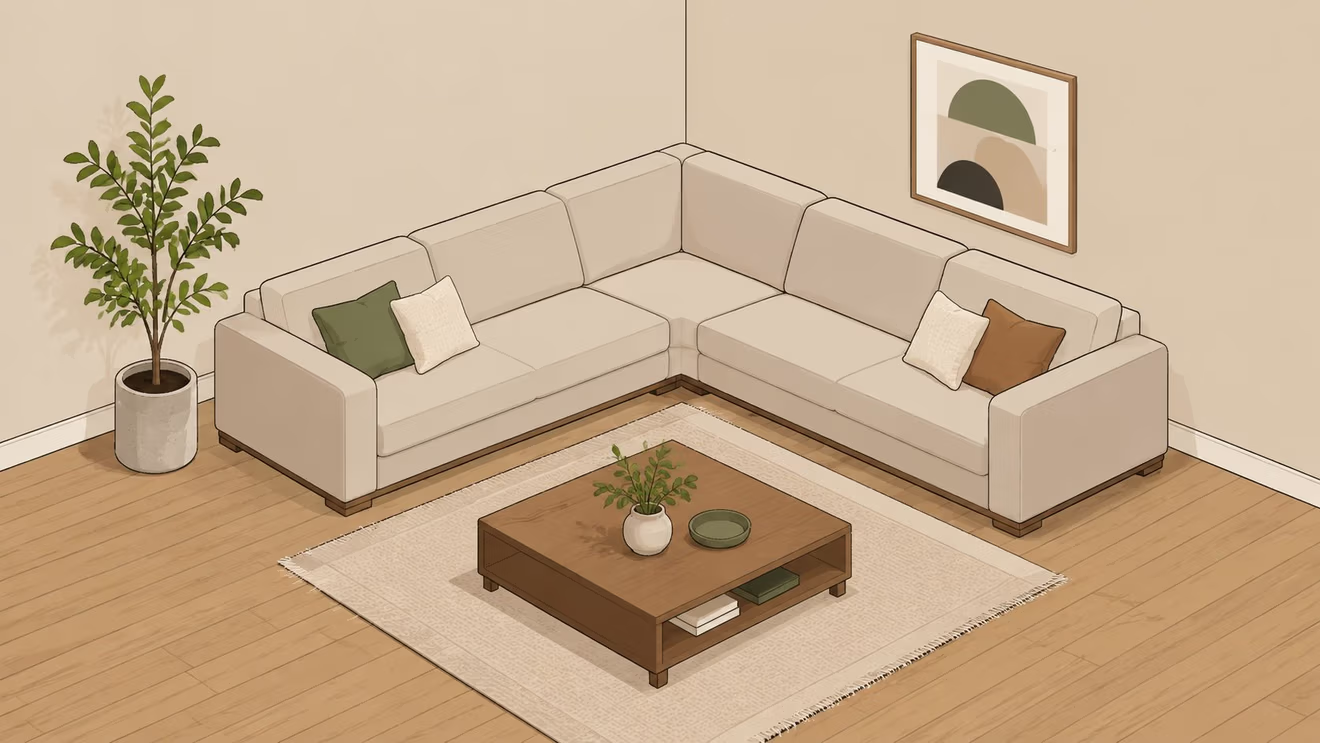
You walk into the living room with a coffee, the kids are already on one end, and there still needs to be a clear path through the space. That is the kind of room the L-shaped corner sectional handles well.
This layout keeps earning its place because it solves two jobs at once. It gives a family enough seating for real everyday use, and it helps the room feel settled without stuffing it full of extra pieces. In a lot of Milwaukee-area homes, that balance is exactly what people need.
It also fits the way many local homes are built. Corner placement uses space that often goes underused, while the open side leaves the middle of the room available for a coffee table, an ottoman, or plain old walking room. For households trying to decide between a sofa and a sectional, our guide on whether a sofa or sectional makes more sense for your room can help narrow that down before you shop.
Why this layout keeps working
A good L-shape usually feels best when the open end faces the main part of the room, not the traffic path. If the short side sticks out into the natural entry, the whole arrangement can feel bulky, even if the sectional itself is not oversized.
That trade-off matters. A sectional can add comfort and function, but it should not make people squeeze around it every time they enter the room.
Here are the details we pay close attention to at BILTRITE:
- Measure the delivery path first: Older Milwaukee homes, bungalows, and upper flats often have narrow stairs, tight corners, and tricky entries. Our come-apart sectionals can save a lot of frustration in spaces where one solid frame will not cooperate.
- Keep the scale honest: Small-scale sectionals are a smart answer for tighter rooms. You still get the shape and seating people want, without giving up too much floor space.
- Leave room around the corner: The sectional should anchor the room, not pin it down. A little breathing room beside the arm or behind the piece helps the layout feel easier to live with.
- Choose a flexible upholstery: Neutral fabric or leather tends to hold up better visually over time, especially if the room does many jobs and the decor changes season to season.
We recommend this layout often because it works for real life. It is practical, family-friendly, and available in forms that solve common local problems, from small-scale silhouettes to sectionals built to come apart for delivery. That is one advantage of buying local. You can sit in the piece, talk through your floor plan with people who do this every day, and get advice that fits your home instead of forcing your home to fit the furniture.
For shoppers comparing styles, BILTRITE's guide to what to know before buying a sectional is a useful next step. It helps connect room shape, delivery needs, and everyday use before anything comes into the house.
2. The U-Shaped Sectional Layout
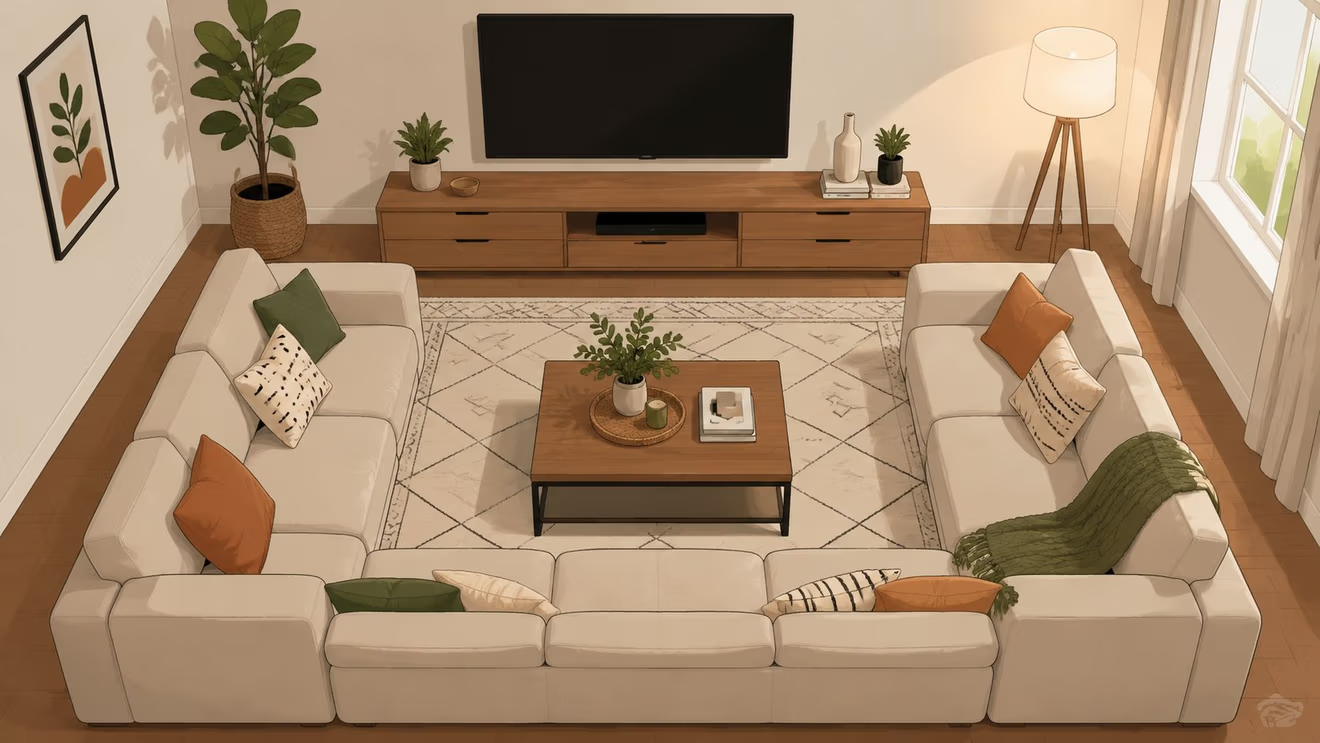
Some rooms call for maximum seating, and that's where the U-shaped sectional really shines. This layout wraps people into the room instead of spreading them out, so it's a strong choice for big families, regular hosting, and homes where the living room gets used all week long.
In larger homes around Mequon, Whitefish Bay, and newer suburban layouts, a U-shape can make a big room feel connected. It also works well for multi-generational households because several people can sit comfortably without dragging in extra pieces every time guests stop by.
Where a U-shape earns its space
This layout works best when there's enough open area around it. If the room is too tight, a U-shape can feel like it's trying to do too much. If the room is generous, it creates a natural conversation zone and keeps everyone facing inward instead of scattering toward the walls.
BILTRITE often points families toward heavy-duty options here, especially when the sectional will take daily use from kids, pets, or a packed house on weekends. Good construction matters more with a large sectional because people tend to use every seat, every day.
A U-shaped sectional can feel warm and welcoming, but only if the room still has clear movement around it.
A few smart questions help narrow it down:
- Need lounging or full seating: Some families want a chaise feel on one end. Others want equal seating on both sides.
- Manual or power features: In media rooms, built-in recline can make the whole setup more comfortable.
- Delivery matters: Large sectionals still have to get through the house. Come-apart construction can save a lot of stress.
For anyone deciding between a standard sofa setup and a larger sectional footprint, BILTRITE's article on whether to buy a sofa or a sectional helps sort out the trade-offs in a practical way.
3. The Sectional with Chaise Lounge
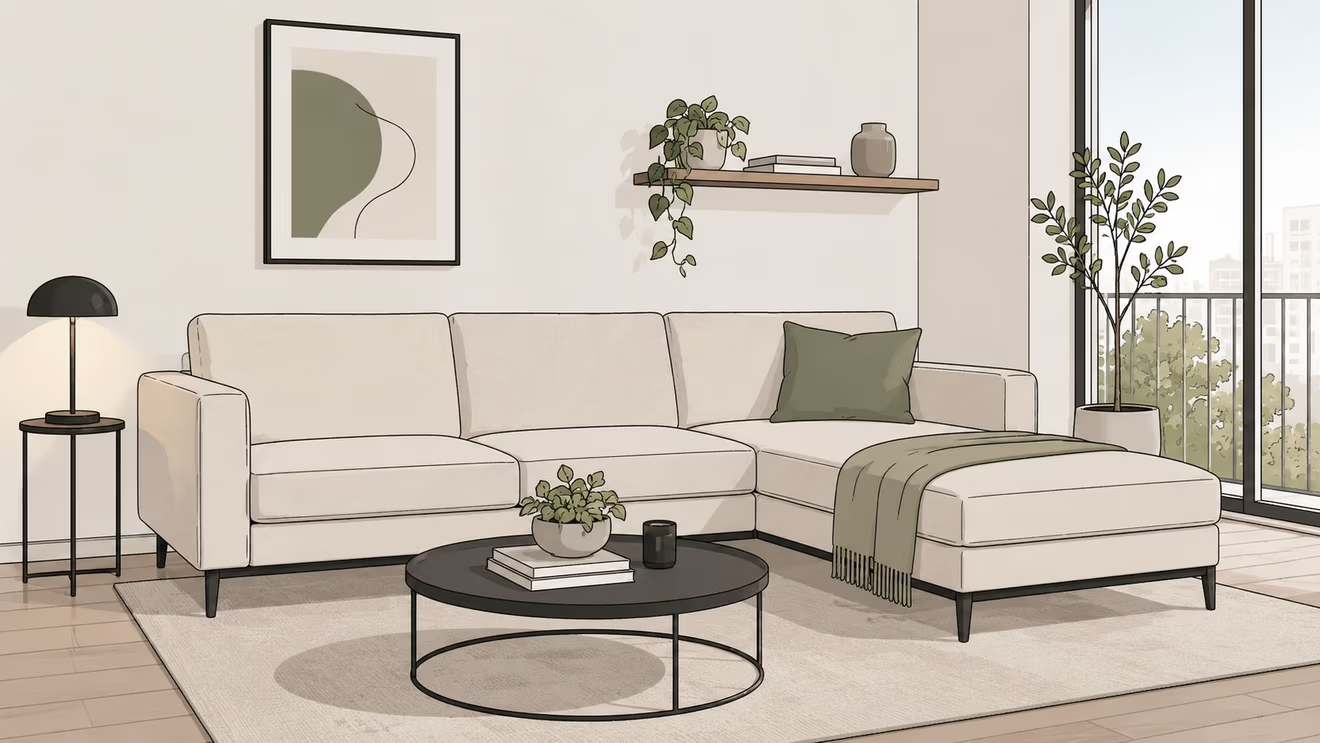
A chaise sectional solves a very common problem. One person wants to stretch out, but the room does not have the space for a larger sectional shape. This layout gives you a true lounge seat without making the whole room feel heavy.
We recommend this style all the time in Milwaukee-area condos, smaller family rooms, and homes where the seating has to do more than one job. It keeps the footprint practical, gives the room a relaxed look, and usually costs less than stepping up to a larger configuration with more corners and seats.
Put the chaise on the quiet side of the room
The best chaise placement follows traffic flow first, then symmetry. If the long chaise side sticks into the main walkway, people end up circling the sofa every day. That gets old fast.
In our showroom, this is one of the easiest mistakes to spot. Shoppers often fall for the photo setup, then realize the chaise blocks a doorway, crowds a fireplace, or cuts into the path to the kitchen. The better choice is usually the side with less movement, where the chaise can stay out of the way and still feel inviting.
A few details make a big difference:
- Primary lounger: Taller family members usually need more leg support and a deeper, longer chaise.
- Room entry points: Doorways, stairs, and main walking paths should stay open.
- Future flexibility: Reversible or come-apart designs make sense if you expect to rearrange or move.
- Daily wear: Chaise cushions take concentrated use, so fabric choice matters more than shoppers expect.
Good chaise placement makes the room easier to live in every day.
This layout also pairs well with BILTRITE's small-scale and apartment-friendly sectionals. For local households trying to get maximum comfort from a tighter footprint, that matters. A well-sized chaise sectional can give you the lounging seat everyone wants without pushing the room into oversized territory.
If comfort is the priority and you are also considering motion seating, our guide to the best reclining sectional sofas can help you compare the trade-offs before you choose.
4. The Sectional Sofa with Built-In Recliners
For households that treat the living room like mission control, a reclining sectional can be the right call. It combines group seating with personal comfort, which is why it works so well in media rooms, finished basements, and family spaces that see long movie nights.
This layout is especially useful for people who don't want to choose between a sectional and recliners. They can have both in one footprint, as long as the room is planned correctly.
Comfort needs room to function
Reclining sectionals have one big advantage and one common mistake. The advantage is obvious. More comfort. The mistake is forgetting that reclining seats need operating space, nearby power in some cases, and enough clearance so open footrests don't block the room.
That's why traffic flow matters even more here than with a standard sectional. BILTRITE often recommends that shoppers test manual and power styles in person instead of guessing. The feel, seat depth, motion, and support can vary a lot from one model to another.
A few practical checks make a big difference:
- Outlet access: Power recliners should sit where cords and connections make sense.
- Walking paths: Reclined seats shouldn't trap someone in the room.
- Upholstery choice: Leather is often easier to wipe down in busy family spaces.
- Daily use: Seniors and households that spend long stretches seated may appreciate easier motion and supportive seating.
For shoppers exploring comfort-first options, BILTRITE's look at the best reclining sectional sofas is a helpful place to compare styles and features before visiting the showroom.
BILTRITE also carries heavy-duty furniture built for everyday use, and that matters in recliners. Moving parts, repeated use, and family traffic put more demand on a piece, so solid construction is worth paying attention to from the start.
5. The Modular Sectional System
A modular sectional makes sense for homes that do not stay static. Kids grow up, rooms get repurposed, people move, and a seating plan that worked last year can feel wrong fast. That is why modular designs keep earning a second look in our Milwaukee showroom, especially from shoppers who want flexibility without settling for disposable furniture.
The biggest advantage is simple. You are not locked into one layout. A modular setup can start as a basic sectional, then expand, separate, or shift as the room changes. That works well for families buying for the long haul, condo owners who may move again, and anyone furnishing an older home with tighter access points.
BILTRITE sees another practical benefit all the time. Many modular and come-apart sectionals are easier to deliver through narrow doors, stair turns, and older Milwaukee floor plans that reject bulky one-piece furniture. That can save a lot of frustration before the sectional is even in place.
Worth remembering: Modular flexibility helps both with room planning and with getting the furniture into the house.
The trade-off is that not every modular sectional feels equally solid. Some systems stay tight and tailored. Others can shift, gap, or feel pieced together if the connectors and frame construction are weak. That is why we tell shoppers to pay attention to how the pieces join, how the seat cushions line up, and whether the configuration still feels stable after people sit, lean, and stretch out.
A few planning guidelines help:
- Start with the pieces you will use most: A well-sized core setup usually works better than filling the room with extra sections on day one.
- Plan for future additions: Neutral fabric or leather choices are easier to match later if you expand the layout.
- Measure access, not just floor space: Doorways, hallways, stairwells, and corners matter as much as the room itself.
- Test the connections: The sectional should stay aligned during everyday use, not drift apart over time.
For shoppers who want flexibility with real customization options, the Art of Options 7000 Series build-your-own sectional is a good example of how modular planning can work in an actual family room, not just on a showroom floor.
6. The Symmetrical Sectional Layout
A symmetrical sectional layout suits rooms that need a clear, settled center. In the right space, it gives the whole seating area a composed look and makes the room feel planned rather than pieced together.
We see this work well in Milwaukee homes with a strong focal point, such as a fireplace, a centered media wall, or a large picture window. The sectional anchors the room, and the matching visual weight on each side keeps the layout calm. That matters in larger family rooms where a sectional has to do more than provide seats. It has to organize the space.
Symmetry also asks more from the room. If one side has a walkway, a door swing, or a heavy architectural feature, the layout can start to feel forced. A sectional may look balanced on paper but feel awkward in daily use once people start walking through the room, setting down drinks, and claiming their favorite seat.
Some of the best symmetrical rooms are not perfectly identical. They are balanced. That is an important difference. A pair of matching lamps might frame the layout, while one side gets an end table and the other gets a floor lamp to keep traffic open. In homes with two focal points, such as a fireplace and a TV, we often solve the problem by softening the setup with angled accent chairs or a slight turn in the seating plan instead of forcing everything into a strict straight line.
A few guidelines help this layout feel right:
- Pick one clear center first: The sectional should respond to the room's main focal point, not compete with it.
- Match visual weight, not every single piece: Equal balance matters more than perfect duplication.
- Protect the traffic path: If one side of the sectional crowds a doorway or main walkway, the layout will feel off no matter how pretty it looks.
- Watch the scale: Symmetrical layouts need enough room around them to look intentional.
For homeowners who like this well-defined look but do not have a huge room, small-space sectional options from BILTRITE can help keep the arrangement balanced without overwhelming the floor plan.
The trade-off is simple. Symmetry looks polished, but it is less forgiving. When the room supports it, the result feels steady, welcoming, and easy to live with. When the room fights it, a more relaxed layout usually serves the family better.
7. The Sectional in a Small Space or Studio Apartment
You see this all the time in Milwaukee. A customer walks into the showroom convinced a sectional is off the table because the living room is tight, the apartment hallway is narrow, or the stair turn is awkward. In plenty of those homes, the right sectional ends up fitting better than a sofa with extra chairs because it uses corners well and keeps the seating plan simpler.
Small rooms reward discipline. Scale matters, but so does delivery. That is one reason we pay close attention to small-scale and come-apart designs at BILTRITE. For apartment dwellers, condo owners, seniors, and first-time homeowners, a sectional has to fit the room and get into the room.
A common mistake is buying by seat count and ignoring visual weight. Bulky arms, tall backs, and overbuilt chaises can make a modest room feel crowded fast. Cleaner lines usually work better. So do sectionals that sit a little lighter off the floor and do not eat up every inch of wall.
Placement matters too. In many smaller rooms, leaving a little space between the sectional and the wall can make the layout feel less boxed in. It also helps the room read as intentional instead of overstuffed. We suggest this often in older homes around Metro Milwaukee, where rooms are tighter and every pathway counts.
A few habits make a big difference:
- Measure the full path in: Entry door, hallway width, stair turns, elevator if needed.
- Choose compact proportions: Look for shorter overall lengths, shallower depth, and a chaise or return that does not block the room.
- Keep one clear traffic route: If people have to squeeze past the sectional every day, the layout will wear on you.
- Use fewer companion pieces: A sectional paired with nesting tables or one small ottoman often works better than adding extra chairs.
- Pay attention to arm style: Narrow arms can save surprising amounts of space without giving up comfort.
Our sectional sofas for small spaces are a good starting point if you want compact scale without settling for temporary-looking furniture.
The trade-off is real. A small-space sectional gives you strong seating capacity, but it leaves less room for oversized tables and extra accent pieces. If the sectional is sized correctly, though, a studio or smaller living room can feel more usable, more comfortable, and a lot less cramped.
8. The Sectional Sofa Floated in the Room
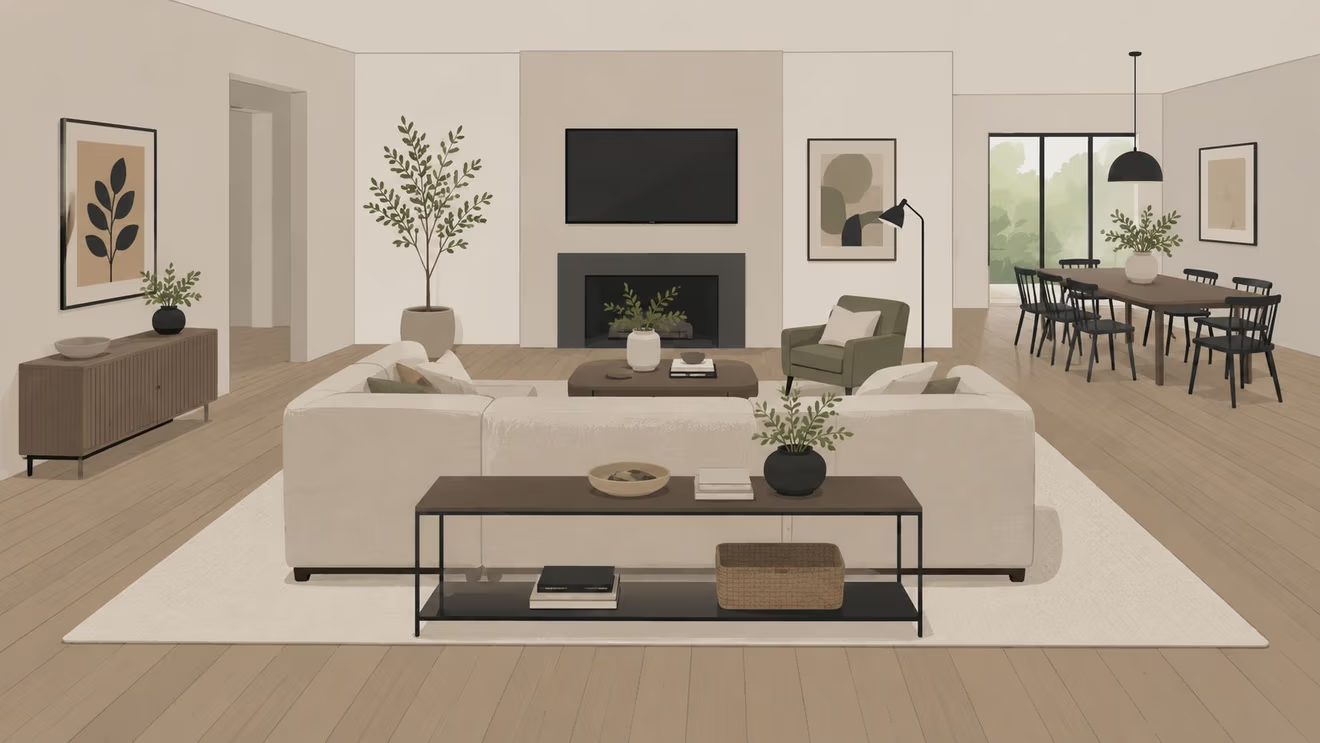
A floated sectional works best when the room needs structure more than wall-to-wall furniture. In open-concept homes, it can separate the living area from the dining space without closing anything off. We suggest this layout often for Milwaukee-area homes with big great rooms, because a sectional placed in the middle of the action usually makes the seating area feel warmer and more connected.
It also solves a problem that wall placement cannot. In a large room, pushing every piece to the perimeter can leave the center feeling empty and the conversation area too spread out. Floating the sectional pulls people together and gives the room a clear purpose.
Floating creates usable zones
The key is to leave enough walking room around the piece so the layout stays comfortable day to day. People should be able to pass behind the sectional without turning sideways, bumping a side table, or cutting through the TV view. If that path feels tight on paper, it will feel tighter once the room is in use.
Rug size matters here too. A floated sectional needs a rug large enough to visually anchor it, or the furniture can look disconnected from the rest of the room. In our showroom, this is one of the most common planning mistakes we see. The sectional is right, but the rug underneath is too small to support the layout.
A floated sectional should solve a room problem, not create one.
A few details make this setup work better:
- Use a finished-back sectional: The back will be visible, so the piece should look good from every angle.
- Add a console table if the room allows: It gives the back side a polished look and creates a practical spot for lamps, drinks, or baskets.
- Keep the walkway open: The space behind the sectional should stay easy to cross and easy to vacuum.
- Choose the right construction for delivery: In many older Milwaukee homes, a come-apart sectional is much easier to get into place than one large fixed frame.
This is also where product choice matters. Some sectionals are too deep or too bulky to float well, especially if the room still needs a clear path to a patio door, dining area, or hallway. Smaller-scale and come-apart sectionals tend to give you more flexibility, which is one reason we carry so many options for local homes with real-life layout limits.
The trade-off is simple. Floating a sectional usually makes the room look better and function better, but it asks for more planning than a basic wall setup. Get the scale and spacing right, and the whole room feels more intentional from the moment you walk in.
Sectional Sofa Layouts: 8-Point Comparison
| Layout | Complexity 🔄 | Space & Resources ⚡ | Expected Outcomes 📊 | Ideal Use Cases 💡 | Key Advantages ⭐ |
|---|---|---|---|---|---|
| The L-Shaped Corner Sectional | Moderate, straightforward placement; delivery considerations | Medium, needs corner/wall space; available small-scale options | Maximizes seating; defines the room; good for entertaining | Family rooms, cornered apartments, media areas | Maximizes seating footprint; versatile styles; anchors space |
| The U-Shaped Sectional Layout | High, complex planning, heavy to move | High, requires significant square footage and budget; come-apart helpful | Maximum seating; intimate conversation and media focus | Large families, home theaters, entertainment-focused rooms | Seats many; conversational layout; customizable features |
| The Sectional with Chaise Lounge | Low–Moderate, simple but orientation matters | Medium, more floor space than a sofa; moderate cost | Adds lounging comfort; creates a relaxing focal spot | Reading nooks, apartments, family rooms | Comfortable reclining area; stylish; cost-effective vs separate pieces |
| The Sectional Sofa with Built-In Recliners | High, electrical planning; motor maintenance | High, higher price, needs outlets; heavier construction | Superior comfort for movie nights; entertainment-ready seating | Home theaters, families with seniors, media rooms | Integrated recline; convenience (cup holders/storage); premium comfort |
| The Modular Sectional System | Medium, needs planning for compatibility and layout | Variable, scalable to budget and space; come-apart delivery | Flexible configurations; adapts as needs change | Renters, small-space dwellers, growing families | Reconfigurable; buy-add approach; easy to move individual pieces |
| The Symmetrical Sectional Layout | Medium, requires centering and balanced placement | Medium–High, needs room to breathe; formal styling | Balanced, formal aesthetic; equal functionality both sides | Formal living rooms, centered focal points (fireplace/TV) | Visual symmetry; designer-curated, polished appearance |
| The Sectional in a Small Space or Studio Apartment | Low, selection is simpler but requires precise measuring | Low, compact, more affordable, often come-apart | Functional seating without overwhelming space | Studios, one-bedroom condos, small homes | Space-efficient; easier delivery; budget- and apartment-friendly |
| The Sectional Sofa Floated in the Room | Medium–High, traffic flow and finished-back planning | High, needs open floor, additional furniture for balance | Defines zones; contemporary, intentional layout | Open-concept homes, large living areas, modern spaces | Creates zones; modern aesthetic; improves circulation and flow |
Ready to Create Your Family's Favorite Room?
Whew! That's a lot of layout ideas, but the good news is simple. Most living rooms don't need a dramatic makeover. They need a sectional layout that supports how the household lives. A family that hosts often may love a U-shape. A condo owner may do better with a compact chaise sectional. An open-concept room may come together the moment the sectional floats off the wall and defines the space.
That practical, real-life approach is what matters most at BILTRITE. Since 1928, BILTRITE has helped Metro Milwaukee families sort through room measurements, tricky entries, style preferences, and comfort needs without making the process feel overwhelming. As a fourth-generation family-owned business, BILTRITE believes furniture shopping should feel helpful, honest, and local.
That also means being upfront about what makes BILTRITE different. BILTRITE doesn't sell online because furniture is something people should see, touch, and sit on before bringing it home. Comfort is personal. Scale is personal. Leather, fabric, support, height, and depth all feel different in person than they do on a screen. That's why the showroom experience matters.
BILTRITE is also proud of its family-first values. The showroom is open Tuesday through Saturday and closed on Sundays and Mondays, which reflects that commitment to family time, while in-home delivery is still available even on closed Mondays through BILTRITE's service model outlined on its company page. That local, steady approach has helped BILTRITE remain a trusted name in the Milwaukee area for generations.
BILTRITE has operated continuously in Metro Milwaukee since 1928 as a fourth-generation family-owned business. Shoppers will also find specialties that fit real homes, including small-scale furniture, come-apart sofas and sectionals, heavy-duty options, USA-made furniture, Amish-made furniture, real solid wood pieces, and a large mattress department with over 60 models. The sales associates bring over 400 years of combined experience, and that kind of hands-on knowledge helps when a room has awkward angles, narrow doorways, or a layout that just won't cooperate.
For families who care about buying local, that matters too. BILTRITE has stayed a stable locally operated business while more than 67 furniture and mattress stores in the Milwaukee region have closed since 1980. That staying power comes from serving the community well, standing behind quality, and treating customers like neighbors.
The right sectional doesn't need to follow a trend. It needs to fit the room, support the household, and feel good every day. BILTRITE's no-pressure team is ready to help with that. Shoppers can bring room measurements, photos, and questions, then try different styles in person and see what works.
Ready to find the right sectional for a busy family room, a condo, or a tricky small space? Visit BILTRITE Furniture-Leather-Mattresses in Greenfield and talk with a friendly, experienced team that's been helping Metro Milwaukee families since 1928. Come see the small-scale options, come-apart sectionals, USA-made and Amish-made furniture, and better-quality pieces in person. BILTRITE would love to see shoppers in the showroom and help them find a new favorite piece for home.