What Is Upholstered Furniture: A Guide to Quality Pieces

A lot of people start with the same question. They're standing in a living room that feels a little too hard, a little too empty, or a little too worn out, and they think, “What is upholstered furniture, exactly, and why do some pieces feel so much better than others?”
That's a fair question. A sofa can look cozy in a photo and still feel disappointing after a few months of real use. A chair can look simple but be built in a way that supports the body for years. The difference usually isn't just color or style. It's what's happening under the fabric.
For families around Metro Milwaukee, that question often turns into a bigger one. How does someone choose furniture that's comfortable now, holds up later, and fits the way real people live? That's where a family furniture business with roots going back to 1928 tends to see things a little differently. After four generations, the conversation usually comes back to the same idea. Soft furniture isn't just about softness.
Table of Contents
- Welcome to the Family! What Is Upholstered Furniture Anyway?
- It's What's on the Inside That Counts
- The Building Blocks of Better-Quality Furniture
- Finding Your Style From Sofas to Sectionals
- Choosing Furniture That Lasts Through Real Life
- Your Guide to Finding the Right Piece at BILTRITE
Welcome to the Family! What Is Upholstered Furniture Anyway?
Upholstered furniture is furniture with a padded, covered surface made for sitting, leaning, or lounging. That usually means pieces like sofas, loveseats, recliners, dining chairs with padded seats, accent chairs, ottomans, and many headboards. If a piece has a frame underneath and layers of cushioning, fabric, or leather on top, it falls into the upholstered category.
That sounds simple enough, but people often misunderstand it. They assume upholstery means “fabric furniture.” It doesn't. Leather furniture is upholstered too. So is a chair with a padded seat and exposed wood arms. Upholstery describes the soft construction system, not just the outside look.
That category is also much bigger than many shoppers realize. The world upholstered furniture market was estimated at USD 73 billion, or about 16% of the total furniture market, according to this world upholstered furniture industry overview. In other words, upholstered furniture isn't some side category. It's one of the major ways people furnish homes, apartments, offices, and shared spaces.
Upholstered furniture answers a very human need. People don't just want a seat. They want support, softness, and a place that feels inviting at the end of the day.
Families who are just beginning to explore materials often find it helpful to learn the basics of upholstery materials and how they differ in everyday use. That's usually the first step toward understanding why one piece feels casual, another feels refined, and a third holds up better with pets or kids.
For a fourth-generation furniture family, this question has always been about more than definitions. Since 1928, the lesson has stayed the same. A good upholstered piece should feel welcoming on day one, then keep doing its job after movie nights, naps, spills, and years of ordinary life.
It's What's on the Inside That Counts
Most shoppers start with the fabric because that's what they can see. The smarter move is to start underneath. Upholstered furniture works more like a layered system than a single object.
A simple way to think about it is cake. The cover is the frosting. It matters, and nobody ignores it, but it isn't what gives the piece structure. The frame, support system, padding, and tailoring determine whether a chair feels steady, whether a sofa keeps its shape, and whether the seat still feels good after repeated use.
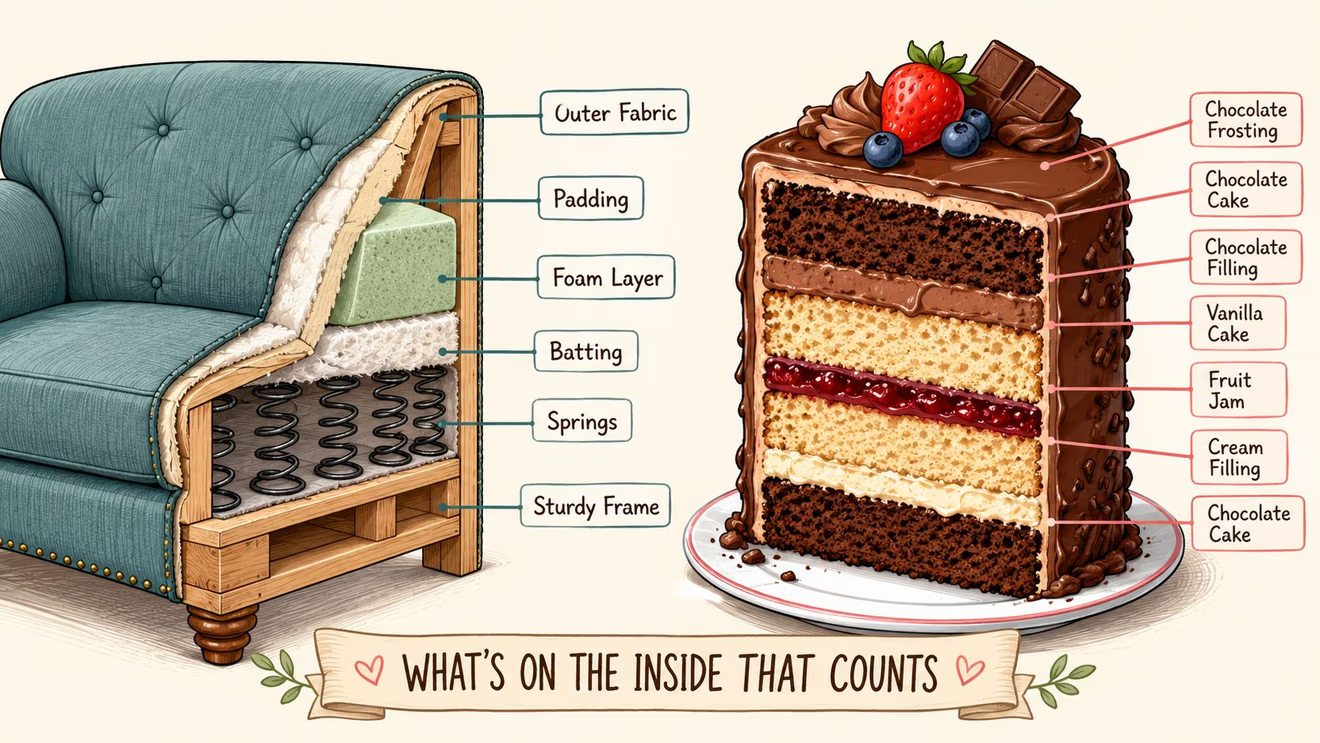
Why two sofas that look alike can feel completely different
Two sofas can be nearly identical from across the room and still behave very differently once someone sits down. One may feel balanced and supportive. The other may sag, lean, or lose comfort early because the materials underneath aren't doing their job well.
Industry specification guidance treats upholstered furniture as a performance system, where suspension, foam density, and tailoring details work together to provide ergonomic support, comfort retention, and durability, as described in this furniture specification document. That's a useful way to shop. It shifts attention from “Does this color work?” to “How was this built?”
Practical rule: If the sales conversation stays only on color, trend, and price, the shopper still doesn't know enough.
The hidden layers matter more than the showroom lighting
This is why experienced furniture people often ask questions that sound less glamorous. What kind of suspension is inside? What's supporting the seat cushion? Does the back keep its shape? How is the fabric fitted around the frame? Those details affect daily comfort more than most shoppers expect.
A good starting point is learning what to look for in a new sofa or chair before buying. That kind of checklist helps people spot the difference between a piece that's made to impress in a quick glance and one that's made for steady, everyday use.
A helpful way to separate surface from substance is this short comparison:
| What shoppers notice first | What often matters more long term |
|---|---|
| Color and texture | Frame strength |
| Soft first sit | Suspension support |
| Trendy shape | Cushion resilience |
| Decorative stitching | Tailoring and construction consistency |
That's the answer to what is upholstered furniture. It's not just soft furniture. It's structured furniture wrapped in comfort.
The Building Blocks of Better-Quality Furniture
When people want to know whether an upholstered piece is worth bringing home, the useful question isn't “Is the fabric nice?” The useful question is “How was this thing put together?”
Most basic explainers stop at the visible parts. They mention fabric, padding, maybe leather, then move on. The better buying conversation goes deeper. As noted in this guide to hidden construction quality, long-term value usually comes from the frame material, suspension system, and cushion quality, which are details shoppers often have to ask about.
The frame holds everything together
The frame is the bones of the piece. If it's weak, the rest of the furniture has to work around that weakness forever.
For households that care about long-term durability, solid wood construction gets attention for good reason. It tends to feel steadier, especially in everyday seating. Joinery matters too. A frame with thoughtful connections usually holds up better than one that depends on shortcuts. Readers who want to understand one of the classic wood-joinery methods can look at how a mortise and tenon joint works in furniture.
The support layer changes the sit
Right above the frame sits the support system. This is the part that carries weight under the cushions.
Different support approaches create different experiences. Some feel firmer and more lifted. Others feel more flexible. Neither is automatically right for everyone, but the support system should match how the piece will be used. A family sofa that gets daily use needs dependable seat support. An occasional chair can sometimes get away with a different feel.
A quick way to picture it:
- For daily lounging: A stable support layer helps the seat keep its shape.
- For easier standing and sitting: A more supportive sit often works better than an overly sinky one.
- For long conversations or reading: Balanced support usually beats dramatic softness.
Padding does more than feel soft
Padding is where many shoppers get fooled. A plush first impression can feel great for ten minutes and disappointing after that. Good cushioning should feel comfortable without collapsing into the frame.
Foam quality, wrapping materials, and the overall cushion design all influence comfort retention. The seat should support the body, not swallow it. Back cushions should feel welcoming without going limp. Edge support matters too, especially for people who sit on the same spot every day.
A well-made cushion doesn't just feel soft. It recovers well, supports the body, and keeps the seat usable over time.
The cover finishes the job
The cover is still important. It affects appearance, hand feel, maintenance, and how the piece fits a room. But it's the finishing layer, not the whole story.
That's where shoppers can use a simple mental checklist:
- Check the frame first. Ask what the structure is made from.
- Ask how the seat is supported. The answer should be clear, not vague.
- Sit long enough to notice support. A quick bounce doesn't tell much.
- Touch the cover with purpose. Look for fit, tailoring, and how practical it is for the room.
When all four layers work together, upholstered furniture stops being just attractive seating. It becomes furniture that earns its place in the home.
Finding Your Style From Sofas to Sectionals
Once the construction side makes sense, the fun part opens up. Upholstered furniture covers a wide range of shapes and uses, and that's why it works for so many kinds of homes.
Recent market projections also show how central these products are to the category. One market forecast estimates upholstered furniture at USD 69.18 billion in 2026 and projects USD 89.36 billion by 2031, with a 5.25% CAGR over that period. The same source says North America held 38.35% of the market in 2025, while Asia-Pacific is projected to grow at 7.17% CAGR through 2031. Another forecast expects the market to increase by USD 18.71 billion from 2026 to 2030 at a 5.0% CAGR, and notes the offline segment was valued at USD 44.69 billion in 2024, with sofas and chairs holding the largest product revenue share, according to this upholstered furniture market report.
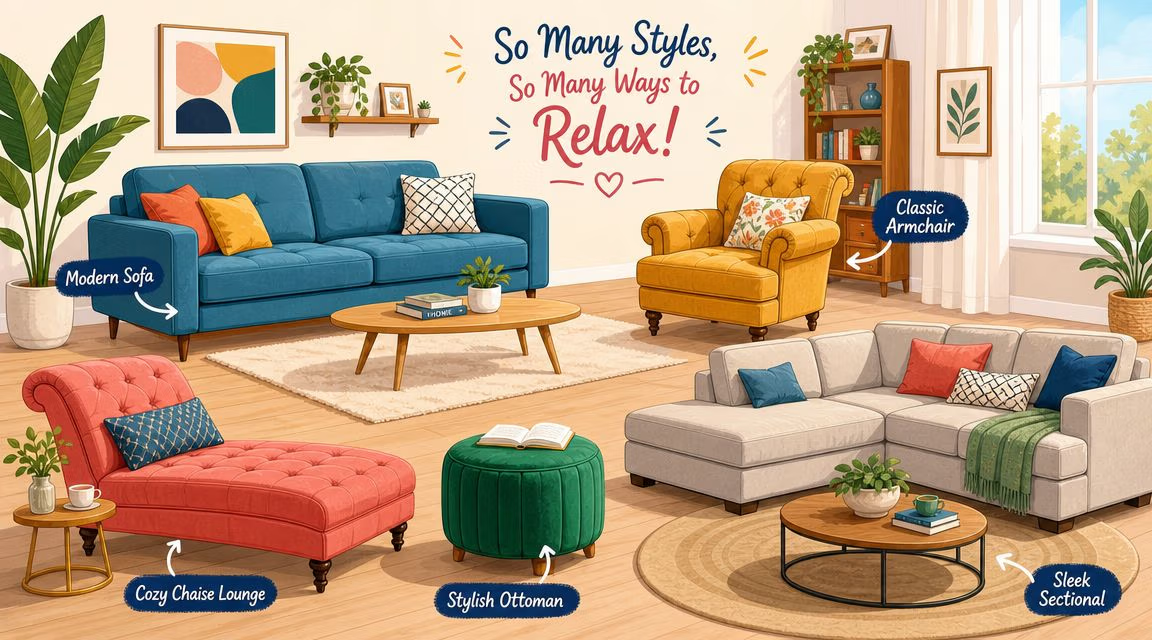
For the movie-night household
A sectional gives a room a gathered, informal feel. It invites people to spread out, put their feet up, and use the whole space together. That's often a smart match for busy family rooms, open layouts, and households that treat the living room like command central.
Shoppers deciding between layouts often benefit from this practical question. Does the room need one long visual line, or does it need seating that wraps around conversation and TV viewing? That's usually more helpful than asking what's trendy. For anyone sorting through those choices, this sofa versus sectional guide can help narrow things down.
For smaller rooms and tricky entrances
Milwaukee-area homes and apartments don't all have giant great rooms. Some have narrow hallways, compact living areas, older staircases, or front entries that make delivery part of the decision.
That's where small-scale upholstered furniture earns its keep. A slightly shallower sofa, apartment-size loveseat, or chair with a trim profile can keep a room feeling open instead of crowded. Come-apart sofas and sectionals solve another common headache. A piece can fit the room on paper and still be a challenge getting through the doorway.
For readers who want one standout piece
Not every room needs a full seating group. Sometimes one upholstered chair changes the whole mood. A recliner can turn a corner into a reading spot. An accent chair can add color and shape without overwhelming the room. An ottoman can work as a footrest, a casual table surface, or extra seating when company drops by.
The right upholstered piece should suit the room's traffic, the home's scale, and the way people actually relax.
That's why “what is upholstered furniture” is also a style question. It isn't just a category. It's the collection of soft seating choices that lets a home feel lived in, comfortable, and personal.
Choosing Furniture That Lasts Through Real Life
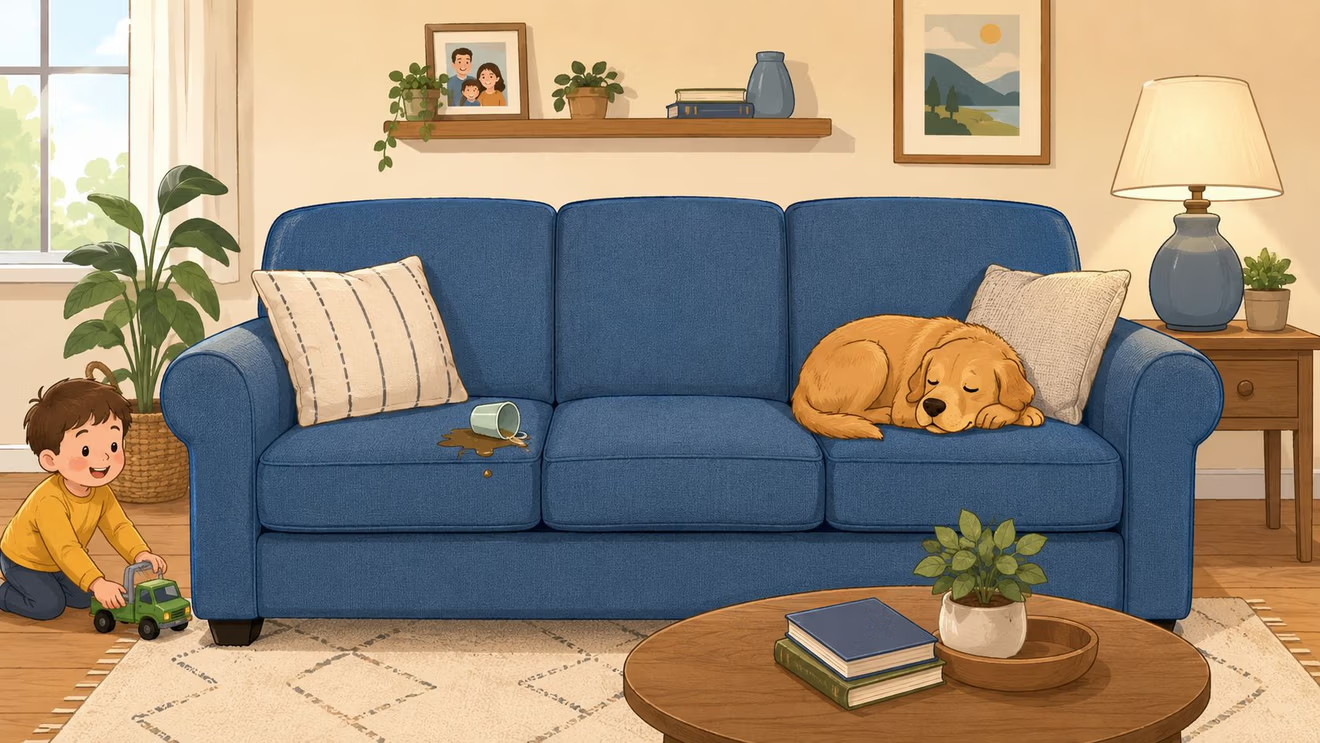
Real homes aren't staged for photos all day. Dogs jump up. Kids spill snacks. Guests sit on the arm even though they shouldn't. The furniture still has to work.
That's why practicality matters so much in upholstery decisions. As noted in this upholstery buying discussion focused on real-world needs, shoppers often care more about pet-friendliness, ease of cleaning, allergy considerations, tight spaces, and customized sizing than pure style alone.
Start with the room, not the swatch
A common mistake is choosing the cover first because it looks beautiful under showroom lights. A better approach is to begin with daily life.
A family with a large dog usually needs something different from a formal sitting room that gets occasional use. A condo owner may care just as much about scale and cleanability as color. A caregiver shopping for an older adult may prioritize supportive seat height, easy entry and exit, and arm shape.
This is where performance fabrics and their practical advantages come into the conversation. They can make sense for homes where spills, busy schedules, and regular use are part of the package.
A practical checklist for everyday homes
Here's a plain-language way to shop for upholstery that fits real life:
- For homes with pets: Look for materials that are easier to maintain and don't turn every bit of fur into a decorating feature.
- For homes with children: Choose covers that can handle frequent cleaning and everyday wear without making everyone nervous.
- For allergy concerns: Ask about materials and care routines that help keep surfaces manageable.
- For smaller spaces: Focus on scale, arm width, seat depth, and whether the piece can fit through tight entries.
- For long-term comfort: Sit normally, not politely. Lean back, shift positions, and notice whether the seat supports the body.
A beautiful sofa that makes people anxious to use it is solving the wrong problem.
Durability also isn't the same thing as stiffness. Some people think a long-lasting piece has to feel hard. It doesn't. The goal is support with comfort, not punishment with good fabric on top. When the construction and the cover match the household, the furniture feels easier to live with from the start.
Your Guide to Finding the Right Piece at BILTRITE
A lot of furniture shopping frustration comes from trying to answer touch-and-feel questions from a distance. Upholstered furniture doesn't work that way very well. Seat depth, back angle, arm height, cushion recovery, and fabric hand all change the experience.
That's one reason many shoppers still prefer to buy upholstery in person. It lets them compare how pieces feel, not just how they photograph. It also gives them a chance to ask the questions that reveal hidden quality.
Why in-person shopping still matters
In U.S. regulation, upholstered furniture compliance is handled at the component level under 16 C.F.R. part 1640, where manufacturers and reupholsterers must show compliance with TB 117-2013 through smolder testing of cover fabric, resilient filling material, barrier material, and decking material. Passing can depend on how those materials work together, not just on the outer cover, as explained in this upholstered furniture compliance FAQ. That tells shoppers something useful. Upholstery is a system of parts, and those parts deserve questions.
A showroom conversation makes those questions easier:
| Ask this | Why it matters |
|---|---|
| What is the frame made of? | It helps reveal the piece's underlying durability |
| What supports the seat? | It affects comfort and shape retention |
| What's inside the cushion? | It changes support, recovery, and upkeep |
| How should the cover be cared for? | It helps the piece fit daily life |
What to ask before saying yes
For local shoppers weighing options, a visit to a knowledgeable showroom can narrow the field quickly. BILTRITE Furniture-Leather-Mattresses in Greenfield focuses on affordable, better-quality furniture and mattresses, with a strong mix of USA-made, Amish-made, and solid-wood pieces built to last, plus small-scale, heavy-duty, senior-living, and come-apart options that fit specific household needs.
A useful in-store approach looks like this:
- Sit the way the furniture will be used. A reader should lean back if they read, curl up if they nap, and check seat height if standing up easily matters.
- Ask about the hidden parts. Frame, support, cushion build, and care requirements tell more than the tag ever will.
- Bring room measurements and doorway notes. That can save a lot of guesswork.
- Compare similar styles side by side. Small construction differences become obvious fast when the pieces are only a few feet apart.
Some furniture sells on first glance. Better furniture usually proves itself on the second sit.
Why local families often prefer to shop this way
There's also a family-first side to this approach that many Milwaukee-area shoppers appreciate. A local showroom can slow the process down just enough for good decisions. That matters when a sofa may be used every day for years, or when an older parent needs a chair that's supportive and easier to get in and out of.
BILTRITE has been family-owned since 1928, serves Metro Milwaukee from Greenfield, and stays closed on Sundays and Mondays to support family time. That says something about how the business sees home life. Furniture isn't just inventory. It's the backdrop for ordinary evenings, holiday visits, recovery days, and all the little routines that make a house feel settled.
The final takeaway is simple. When someone asks what is upholstered furniture, the short answer is padded, covered seating. The better answer is this. It's a layered construction system that should support the body, fit the room, handle daily life, and hold up with use. When a shopper understands that, buying gets much easier.
Shoppers who want to feel the difference in person can visit BILTRITE Furniture-Leather-Mattresses in Greenfield, talk with a no-pressure team, and try sofas, chairs, recliners, sectionals, and mattresses for themselves. Since the store doesn't sell online, the showroom experience is the point. Come by, ask questions, and see what better-built furniture looks and feels like in real life.