Mattress Return Policy a Friendly Milwaukee Guide

Buying a mattress can feel exciting right up until one nagging thought shows up. What happens if it feels great in the store, then not so great after a week at home?
That question trips up a lot of Milwaukee shoppers, and it makes sense. A mattress return policy can sound simple on the surface, but the fine print often includes trial periods, timing rules, condition requirements, pickup steps, and exchange limits. For something this personal and this important, that's a lot to sort through.
That's where a little local guidance helps. BILTRITE has been helping Metro Milwaukee families furnish their homes since 1928, and mattresses are one of those purchases where clear expectations matter just as much as comfort. A shopper who understands the return policy usually feels calmer, asks better questions, and makes a stronger decision from the start.
Local buying also changes the experience. The difference between a nearby showroom and an anonymous online checkout often comes down to support, communication, and knowing what the process looks like if the fit isn't right. That's one reason many shoppers spend time learning why buying locally matters when shopping for a new mattress.
Table of Contents
- Introduction
- The A to Zzzzs of Mattress Return Policies
- Online Box vs Our Showroom A Tale of Two Returns
- Your Game Plan for a Smooth Mattress Exchange
- The Secret Life of a Returned Mattress
- Questions to Ask Our Team in Greenfield
Introduction
A mattress is one of the few home purchases that gets judged in the dark, after a full night, and often after several nights in a row. That's why people can feel unsure even when they've done their homework. A few minutes of testing can help, but it can't tell the whole story.
Modern mattress shopping has changed a lot. Industry guidance notes that many brands use sleep trials instead of traditional returns, with return or exchange windows often falling between 30 and 120 days, and some extending to 365 days. It also notes that many retailers require shoppers to keep the mattress for at least 30 days before a comfort return is allowed because adjustment takes time. That shift made trial-based shopping a defining part of the category, especially in the U.S., where “sleep trial” language is now common according to this mattress return policy overview.
For shoppers, that means the question isn't just “Can this mattress be returned?” The better question is “How does this mattress return policy work from the day it arrives to the day a refund or exchange is approved?”
A good policy should feel clear before the sale, not mysterious after delivery.
That's especially helpful for Metro Milwaukee families comparing local showroom shopping with the long-distance, customer-service-ticket version of mattress buying. The strongest mattress return policy is the one a shopper can understand without needing a decoder ring.
The A to Zzzzs of Mattress Return Policies
A mattress return policy reads a lot like a recipe card. If you know the few ingredients that matter, the whole thing gets easier to follow.
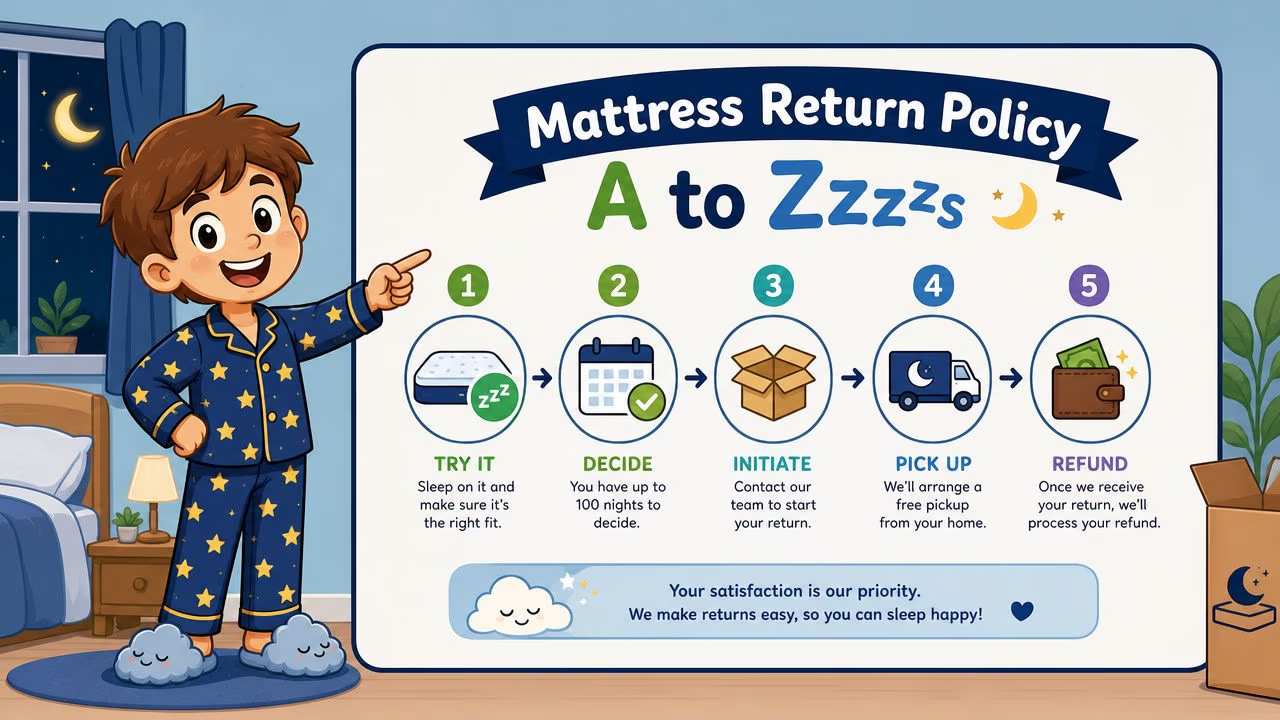
For Milwaukee area shoppers, the goal is simple. You want to know what happens if the mattress feels great in the store, then feels wrong after a week at home. That answer usually comes down to four parts: how long you have, when you are allowed to start the process, whether you can exchange instead of return, and what condition the mattress must be in.
Sleep trial means more than return window
A sleep trial works like a test-drive period with house rules. The calendar may give you a certain amount of time to decide, but many policies also have a waiting period before a comfort exchange or return can begin. Stores and brands do that because a new mattress can feel unfamiliar at first, especially if your old one was sagging or much softer.
That waiting period trips people up because the words sound similar. “Trial window” tells you the overall time allowed. “Minimum sleep period” tells you the earliest day you can raise your hand and say, “This one is not working for me.”
Here is the plain-English version:
| Policy term | What it usually means for the shopper |
|---|---|
| Trial window | The full span of time when a return or exchange may be permitted |
| Minimum sleep period | The first point when a comfort-related claim can usually begin |
| Exchange policy | Whether you can switch to a different model instead of ending the sale |
| Condition requirement | Whether stains, tears, or damage can cancel eligibility |
If you are shopping close to home, reading the store rules before delivery saves a lot of second-guessing later. Local customers can review the details on BILTRITE's mattress return policy and store-specific terms before they buy, which is a lot easier than trying to sort out fine print after a problem shows up in the bedroom.
Condition rules matter more than shoppers expect
Comfort and condition are usually treated as two separate questions. One asks, “Do you like how it feels?” The other asks, “Is it still clean and eligible for inspection or pickup?”
That second question matters more than many families expect. If the mattress has stains, torn fabric, pet damage, or other signs of misuse, a comfort exchange may no longer qualify. The easiest way to avoid that headache is to use a protector from the first night and keep the mattress in good shape while you decide.
A good rule of thumb is simple. Treat the mattress like a library book during the trial period. You are using it at home, but you still need to keep it in returnable condition.
One more point often hides in the fine print. Some policies include pickup charges, transportation rules, or restocking language. For Milwaukee shoppers, that is where working with a nearby family business can feel clearer and more human. You can ask direct questions, get plain answers, and understand the process before there is a problem instead of chasing down help through a distant customer service chain.
Online Box vs Our Showroom A Tale of Two Returns
A Milwaukee shopper orders a mattress online after a long workweek. The box shows up fast, gets hauled upstairs, and opens into a full-size bed in the bedroom. A week or two later, the comfort still feels off. That is the moment the real return policy starts to matter.

What the online process often feels like
Online mattress shopping can feel simple at checkout because the hard part happens later. Once the mattress is open in your home, the return usually becomes a scheduling project. You may need to email support, answer condition questions, send photos, wait for approval, and coordinate a pickup window with a third party. The box that came to your door easily is no help now. An expanded mattress does not go back to its original size.
That process works a lot like returning a couch, not a T-shirt.
For families around Milwaukee, that difference catches people off guard. The website may highlight a trial period, but the actual return can depend on who handles the pickup, how quickly appointments are available in your area, and when the refund is processed after collection is confirmed.
A few sticking points come up again and again:
- The mattress is bulky now. Once it has fully expanded, there is no neat way to pack it back into a small carton.
- Pickup timing can be inconvenient. Someone often has to be home during a service window.
- Refund timing may not be immediate. Credits commonly start after the seller verifies the pickup or donation step.
- Policy wording can leave room for surprises. “Free return” may still come with conditions tied to location, setup, or eligibility.
Why a local showroom feels different
A showroom visit gives you something online shopping cannot. You get a real conversation before the mattress comes home.
That matters more than many shoppers expect.
At BILTRITE, a Milwaukee-area customer can lie down on different comfort levels, describe sleep position, mention shoulder or hip pressure, and ask plain questions face to face. If the fit is not quite right after delivery, you are not starting with a generic customer service queue. You are calling a local family business that has been helping Wisconsin families since 1928.
The difference is a lot like buying shoes. Looking at photos can get you close. Trying them on with someone who knows the fit usually gets you closer.
Local shopping also makes the return or exchange conversation more human. You know where the store is. You know who sold it to you. You can call and talk through what feels wrong instead of trying to explain your sleep problems through a chain of online forms. That transparency is especially helpful for Milwaukee shoppers who want clear expectations, not mystery steps after the sale.
For a closer look at the tradeoffs, our guide on whether you should buy a mattress online walks through the pros and cons in plain English.
A local showroom gives you two chances to get the comfort right. First on the sales floor. Then in the follow-up conversation if your body says the first choice needs adjusting.
Your Game Plan for a Smooth Mattress Exchange
If a new mattress doesn't feel right, the smartest move is to stay organized instead of panicking. A few habits can keep an exchange path open and make the conversation much easier.

Start protecting the return option on day one
A mattress protector isn't just a nice add-on. It's part of the plan. Consumer-facing guidance notes that most return policies are voided if a mattress has stains, tears, or other signs of misuse, and some brands require the mattress to be in donatable condition to qualify for a return at all according to this guide to return eligibility and condition rules.
That's why the first-night checklist should be simple:
- Use a protector immediately. Don't wait a week.
- Keep paperwork together. Receipt, delivery note, and policy details should stay in one spot.
- Leave tags and labels alone unless told otherwise. Inspection steps may rely on them.
- Follow normal-use guidelines. Unsupported setups or visible misuse can create problems.
Keep notes like a smart shopper
Comfort complaints are easier to discuss when they're specific. “It's bad” doesn't help much. “The hips sink too much” or “the shoulders feel pressure after several hours” gives the store something useful to work with.
A short sleep log can help:
- Too firm: Pressure at shoulders or hips, especially for side sleepers
- Too soft: Midsection dipping, lower back soreness, trouble changing position
- Temperature issue: Waking up warm more often than expected
- Motion issue: Partner movement becoming disruptive
Shoppers who want a better sense of what to notice while trying beds can review how to test a mattress in a showroom before buying. That makes the exchange conversation much more focused if it's ever needed.
The Secret Life of a Returned Mattress
A Milwaukee shopper finally gets a new mattress home, sleeps on it for a while, and realizes it is not the right fit. The next question is one many people never think about until that moment. What happens after a mattress goes back?
The short answer is this: a returned mattress starts a whole chain of work behind the scenes.
It has to be picked up or received, checked for condition, handled carefully, and routed to the right next step. In some cases that may mean donation. In others, recycling or disposal is the only realistic option. A mattress is not like a toaster that can go back on a shelf after a quick box check. It is a large personal-use item, and once it has been in someone's home, sanitation and handling rules matter.
That helps explain why return and exchange policies can feel stricter than shoppers expect. Those rules usually connect to real-world questions. Is the mattress clean? Can it be safely moved? Does it meet donation standards? Who is responsible for removal? Every one of those questions affects what happens next.
The environmental side matters too. Mattresses take up a lot of space, and they are awkward to discard. Many parts can be recycled when they are processed the right way, but that still takes labor, transportation, and a local system that can handle the job responsibly.
For Milwaukee-area families, working with a local store often feels very different from dealing with an anonymous online process. Instead of wondering who is picking up the mattress, where it is going, or what condition is required, you can ask real people and get a straight answer. That kind of clarity matters when you are already dealing with a mattress that did not work out.
It also helps to understand the difference between a return and removal. Sometimes the bigger question is not just "Can this go back?" but "Who can take the old one away, and what happens to it after that?" BILTRITE's mattress removal services give Milwaukee shoppers a clear local example of how that part of the process works, especially when a mattress is still in donatable condition.
A good mattress policy makes more sense once you see the full picture. It is less about red tape and more about handling a bulky, personal product in a clean, responsible way. That is the part many national sellers gloss over, but it is often the part shoppers care about most once real life kicks in.
Questions to Ask Our Team in Greenfield
Some mattress shoppers walk into a showroom and freeze. They know they have questions, but they aren't sure where to start. A short checklist fixes that.

Questions that make mattress shopping easier
Good questions bring out useful answers. These are the ones worth asking in the store:
- How does your comfort exchange policy work? Ask about timing, condition requirements, and what counts as normal use.
- When does the trial or decision period begin? Some policies count from delivery, and timing details matter.
- What would void eligibility? Stains, tears, and setup issues require clear discussion.
- What happens if the mattress feels close, but not quite right? Sometimes an exchange is more practical than starting over.
- Do you offer delivery and old mattress removal? Logistics matter almost as much as comfort.
- Based on sleep position and body type, which models make sense to test first? This saves time and narrows the field.
One local option shoppers can ask about is BILTRITE Furniture-Leather-Mattresses, which offers a mattress department with over 60 models in the showroom, store policy information, and mattress-related service support through its team. For many shoppers, that face-to-face conversation removes a lot of uncertainty before any paperwork is signed.
Why local conversation still matters
Mattress shopping gets easier when the shopper can describe what's happening and a real person can respond. That's especially true for couples with different preferences, families replacing an old bed after many years, and anyone who's had a disappointing mattress before.
A local showroom also gives people a chance to talk through details that don't fit neatly into a website summary. Questions about heavy-duty support, two-sided options, delivery access, protectors, foundations, and room setup all affect satisfaction.
Worth asking in person: “If this mattress feels too firm or too soft after the adjustment period, what are my next steps?”
BILTRITE has served Metro Milwaukee since 1928, and the team brings more than 400 years of combined experience to those conversations. That's useful knowledge for shoppers who want clarity, not pressure.
Mattress shopping doesn't have to feel like a gamble. The team at BILTRITE Furniture-Leather-Mattresses welcomes Milwaukee-area shoppers to visit the Greenfield showroom, try different feels in person, ask direct questions about mattress return policy details, and get practical help from people who know the local community.