3 DAY MATTRESS SALE! TUESDAY - WEDNESDAY - THURSDAY!
LABOR DAY SALE EXTENDED ENDS SATURDAY, OCTOBER 3RD AT 5PM!
NO CREDIT CARD FEES!
1000's of Items IN-STOCK + 500 Mattresses!
Largest selection of USA Made Furniture & Mattresses + Amish Made!
FREE In-Store Design Services!
BUY LOCAL & LOVE YOUR HOME!
3 DAY MATTRESS SALE! TUESDAY - WEDNESDAY - THURSDAY!
LABOR DAY SALE EXTENDED ENDS SATURDAY, OCTOBER 3RD AT 5PM!
NO CREDIT CARD FEES!
1000's of Items IN-STOCK + 500 Mattresses!
Largest selection of USA Made Furniture & Mattresses + Amish Made!
FREE In-Store Design Services!
BUY LOCAL & LOVE YOUR HOME!
OPEN LABOR DAY | Tuesday-Thursday 10am to 6pm | Friday 10am to 7pm | Saturday 10am to 5pm | Sunday Closed To Be With Family & Friends | Monday Showroom Closed
5430 West Layton Ave, Greenfield - Metro Milwaukee
A lot of Milwaukee families start the same way. A child is ready for a first “big kid” bed. A teen needs something for a tighter bedroom. A guest room finally gets some attention. Then the shopping starts, and the twin mattress cost seems to bounce all over the map.
One twin looks inexpensive. Another looks almost identical and costs far more. Then a taller college-bound kid suddenly needs twin XL. Then someone remembers the frame, bedding, delivery, and hauling away the old mattress. That's when a simple purchase stops feeling simple.
That confusion makes sense. A twin is usually the lowest-priced standard mattress size, but its actual price depends on what's inside it, how long it will hold up, and what else needs to come with it. A quick glance at a price tag doesn't tell the whole story.
Since 1928, this fourth-generation family business has helped Milwaukee-area shoppers sort through that exact mess without turning it into a sales pitch. The goal isn't to chase the lowest number. The goal is to help families buy smart, sleep comfortably, and avoid paying twice for a mattress that should've been bought right the first time. Anyone who wants a broader starting point on comfort and fit can also browse this guide to choosing the right mattress.
A common Milwaukee story goes like this. A family walks into mattress shopping thinking they need “just a twin.” Then the questions hit fast. Is it for a fast-growing kid? A dorm room? A guest room that might also be used by grandparents? An everyday bed for an adult in a smaller apartment?
That's where twin mattress cost gets tricky. The same size can serve very different jobs, and the price follows the job.
A low-priced twin can work fine in the right situation. A child who'll outgrow the room setup, a guest bed that gets occasional use, or a short-term solution for a spare space may not need every bell and whistle. But if the mattress will be used nightly, or by an adult who needs stronger support, going for the cheapest tag can backfire in a hurry.
The real question isn't just price
Most shoppers start by asking, “How much does a twin mattress cost?” Fair question. The better question is, “What kind of twin mattress makes sense for this room and this sleeper?”
A good mattress purchase starts with who's sleeping on it, not with the sale sign hanging above it.
That's been true for generations in furniture stores. The family buying a bunk bed setup has different needs than the retired couple setting up a first-floor guest room. The college student headed to a dorm has different needs than the young adult furnishing a first apartment.
Why local advice still matters
Milwaukee shoppers don't need more noise. They need someone to narrow the field and explain what's worth paying for.
That's one reason a local showroom still matters. A mattress may look fine online, but no screen can tell someone whether the comfort feels too stiff, too squishy, too hot, or too flimsy. This family business has been helping neighbors sort through those choices since 1928, and that kind of practical guidance keeps people from getting buried in too many options.
A twin mattress shouldn't be a mystery purchase. It should be a straightforward one.
A Look at Twin Mattress Costs by Type
A twin mattress can be a bargain. It can also be a disappointment if the price looks good and the build is weak.
Size keeps twin mattresses lower than fuller, queen, and king models in many stores, but size alone does not set the bill. The mattress type has a lot more to do with whether you are looking at a basic guest-bed option or a twin that can handle nightly use for years.
That matters in Milwaukee homes. A bunk room for grandkids, a kid's first “big kid” bed, a spare room near the lake, and a dorm setup all call for different levels of support and durability. The right price is the one that matches the sleeper and how often the bed gets used.
What the main twin mattress types usually cost
Here's the plain-English version. Innerspring tends to be the lowest starting point. Memory foam usually starts a little higher once you get into better-density foam. Hybrids cost more because they combine coils and foam. Heavier-duty and two-sided models often sit above the entry tier because there is more mattress built into them.
Mattress Type
What It Feels Like
Typical Price Position
Innerspring
Bouncier, more traditional, easier to turn on
Usually the lowest-priced place to start
Memory foam
Closer contouring, quieter, less motion transfer
Often low to mid-range, depending on foam quality
Hybrid
Coil support with a cushioned foam top
Usually mid-range and up
Heavy-duty twin models
Firmer, steadier, built for more support
Commonly above basic models
Flip-able and 2-sided designs
More substantial, often supportive and rotation-friendly
Usually priced above entry builds
That price ladder lines up with what families see in the showroom every day. The more material and structure inside the mattress, the more you can expect to pay.
Twin vs. Twin XL
Twin XL deserves a quick mention here because plenty of shoppers in this area need it. College students, taller teens, and adults in tighter bedrooms often do better with the extra length. A standard twin is shorter. Twin XL gives more room at the foot of the bed, and that extra material usually pushes the price up a bit.
The mistake is buying standard twin just to save a few dollars, then replacing it early because the sleeper has outgrown it.
Where value usually sits
For light guest use or a younger child, a simple innerspring or basic foam twin can do the job.
For nightly use, skip the rock-bottom tier. Start with a better-built innerspring, a quality foam model, or a hybrid that holds its shape. That is where many Milwaukee shoppers get the best long-term value. The sticker price is higher, but the comfort and lifespan are usually better too.
Straight advice: If an adult or fast-growing teen will sleep on the twin every night, buy for durability first and price second.
That approach saves more money than chasing the cheapest tag on the floor.
What Really Drives the Mattress Price Tag
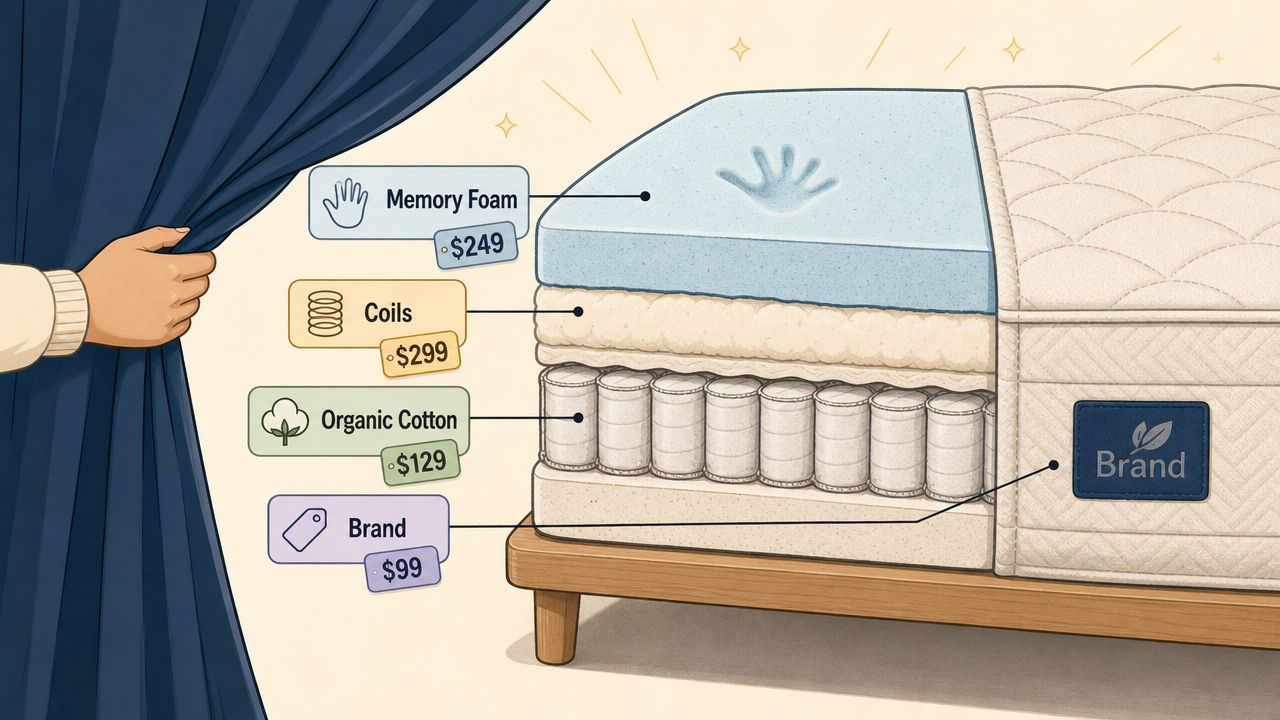
A twin mattress can look fine on the sales floor and still be built to quit early. Price usually comes down to what is packed inside, how well those parts are put together, and how long the bed can keep doing its job in a real Milwaukee home.
The inside matters more than the label
The cover can fool you. The build usually does not.
Two twins in the same size can sit close together, feel similar for five minutes, and still have very different life expectancies. One uses thin foam that compresses fast. Another uses denser comfort layers, a stronger support system, and better edge construction. That second bed costs more for a reason.
Here's what usually pushes the price up:
Foam quality: Denser, better-grade foams tend to resist body impressions longer than light, inexpensive fill.
Coil design: A stronger coil unit usually gives steadier support and better weight distribution.
Layer count and thickness: More substantial builds often feel less flimsy and hold their shape better over time.
Special features: Cooling materials, reinforced edges, and pressure-relief layers add material cost and labor.
How it is made: Better-built mattresses usually show more care in stitching, layering, and overall consistency.
That last point matters more than many shoppers realize. In our part of Wisconsin, people are not just buying a bed for a guest room in a big suburban house. They are buying for kids, grandparents, condos, lake places, first apartments, and everyday family use. Long-term value matters more than a flashy sale tag.
What to check before you look at the price
Start with the support system. If the base of the mattress is weak, the rest of the bed does not have much of a future.
Then check the comfort layers. Plush is easy to sell. Lasting comfort is harder to build.
A good twin mattress should match the person sleeping on it. A younger child can often do well on a simpler build. A teen who is growing fast, or an adult using a twin every night, needs better support and stronger materials. That is where plenty of shoppers save money in the long run. They buy once instead of replacing a sagging bargain bed too soon.
A higher twin mattress cost only makes sense when it buys better support, stronger materials, and a longer useful life.
That is the Milwaukee-area view of mattress pricing. Sticker price matters, but what the mattress costs you over the next five to eight years matters more.
Milwaukee shoppers don't need a mattress lecture. They need straight answers, a chance to try the beds, and someone who knows the difference between “cheap” and “worth it.”
Why local value feels different
Value isn't the same as the lowest twin mattress cost on a screen. Real value means a mattress fits the sleeper, holds up, and doesn't create buyer's remorse a month later.
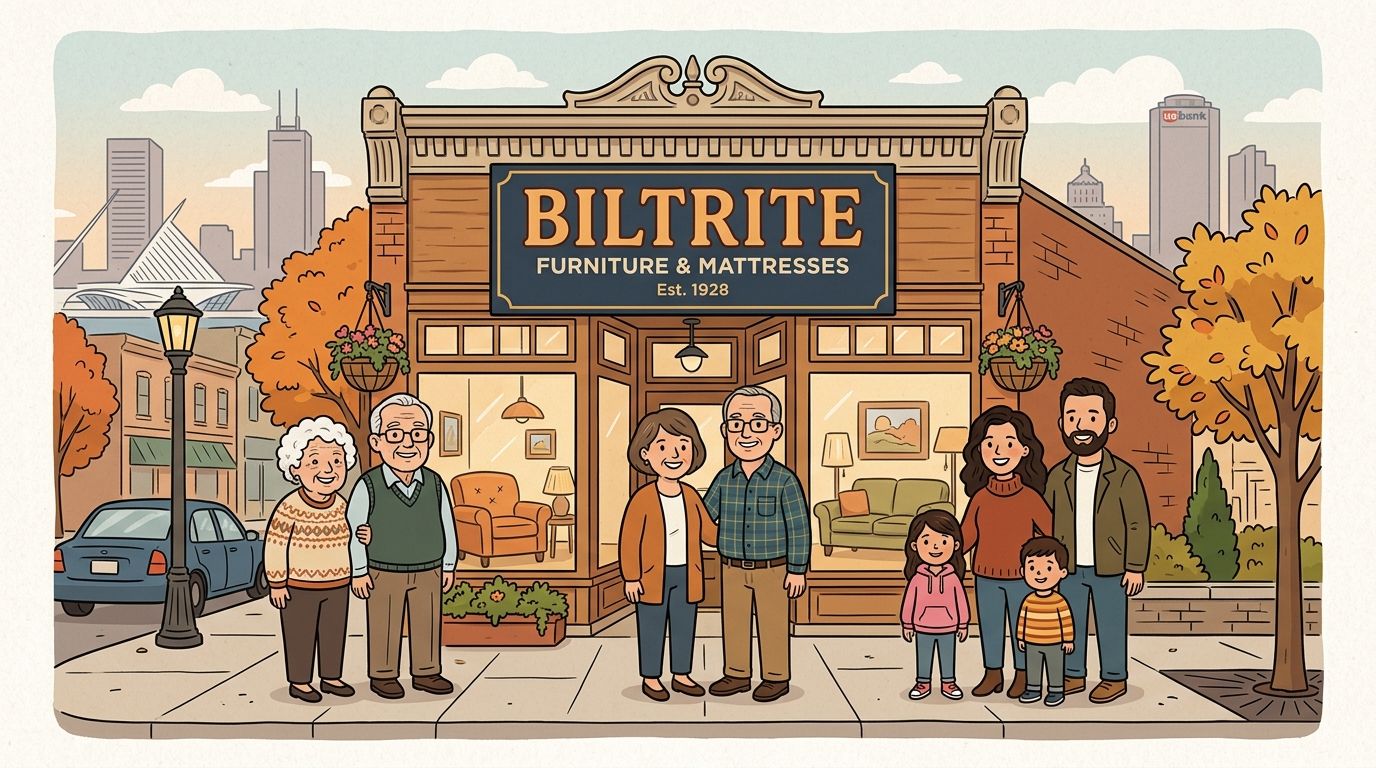
That's where a fourth-generation family business has an edge. Since 1928, this Greenfield showroom has served Metro Milwaukee with a simple philosophy: offer affordable, better-quality furniture and mattresses, explain the options clearly, and treat people like neighbors instead of order numbers.
That approach matters because mattress shopping gets personal fast. One shopper wants a basic twin for a spare room. Another needs a heavier-duty model with more support. Another wants a smaller-scale setup for apartment living or senior living. A broad showroom with knowledgeable people helps sort those needs out much faster than guesswork.
What a showroom visit changes
There's a practical reason so many local families still want to shop in person. They want to lie down, roll over, sit on the edge, and feel the difference for themselves.
This showroom carries over 60 mattress models, and the sales team brings more than 400 years of combined experience. That doesn't mean pressure. It means someone can explain why one twin feels buoyant, another feels contouring, and another feels sturdier for everyday use.
One option Milwaukee shoppers can consider is BILTRITE Furniture-Leather-Mattresses, which offers in-person mattress testing, local guidance, and a wide range of mattresses for different room sizes and sleep needs.
For families: It helps to compare a child's starter bed with a stronger mattress that may last through more life stages.
For guest rooms: It helps to test for comfort across different body types, not just one sleeper.
For seniors or smaller spaces: It helps to see compact, supportive options in a real room setting.
A local store also brings something online listings can't. Accountability. If a question comes up, there's a showroom, a staff, and a real community connection behind the purchase.
The BILTRITE Difference Is More Than Just a Mattress
Sticker price is only part of twin mattress cost. The rest of the story lives in everything around the mattress.
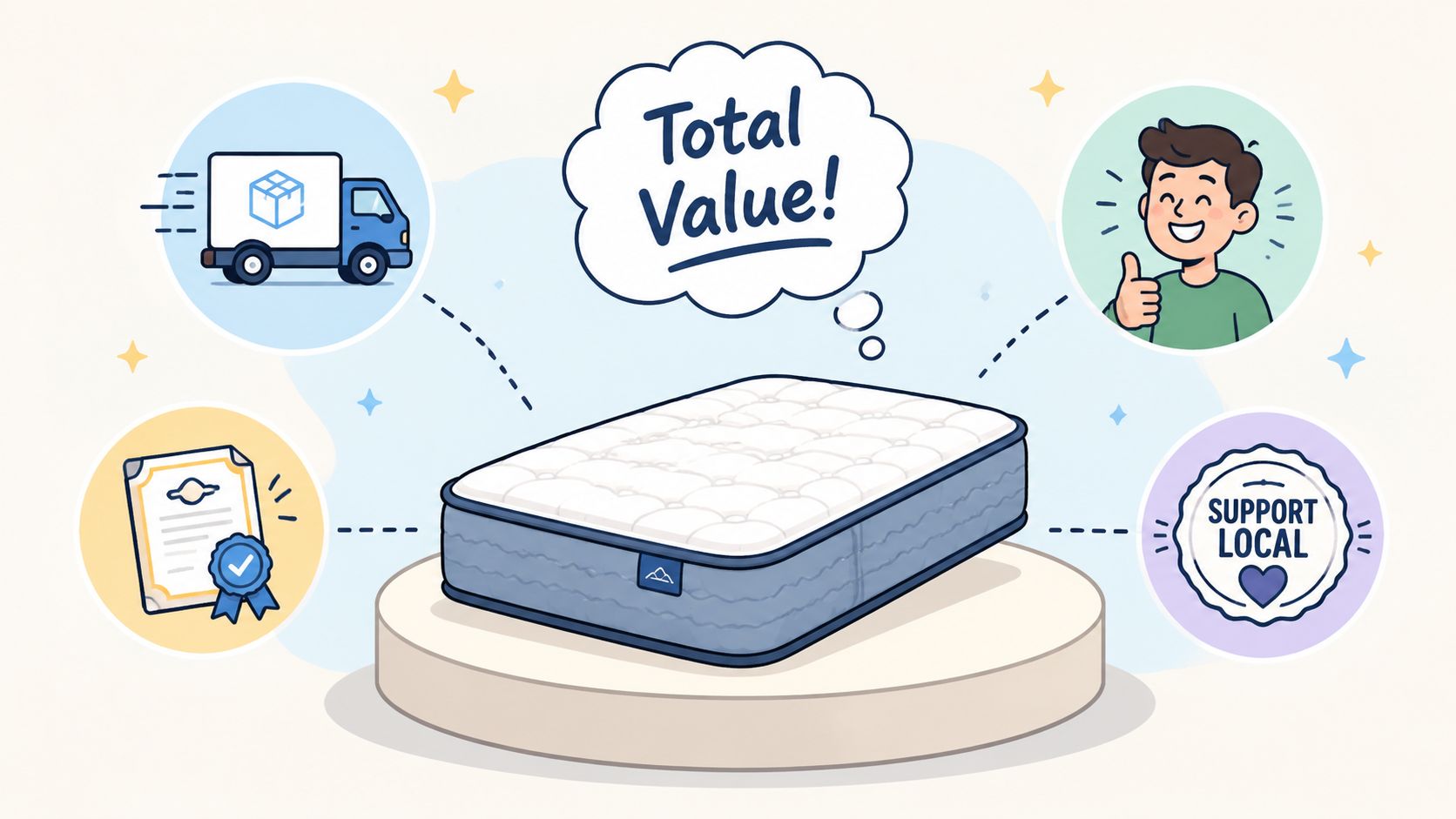
The full cost is what counts
A major overlooked angle in mattress shopping is total cost of ownership. Shoppers often focus on the opening price and miss the rest of the bill: foundation or frame, bedding, delivery, and old mattress removal. That's exactly the gap highlighted in this discussion of all-in twin mattress budgeting.
That's why a bargain mattress can stop looking like a bargain pretty quickly. If the setup still needs support underneath, delivery into the room, and disposal of the old bed, the “cheap” option can become a hassle-heavy purchase in a hurry.
The smartest mattress budget includes the whole setup, not just the number on the tag.
Many families save themselves frustration by asking the full question up front. Not “What does the mattress cost?” but “What does it take to get this room finished properly?”
Why the buying experience matters
The local advantage shows up in the details that make the purchase easier.
In-stock selection: When a bed is needed quickly, a deep local inventory matters.
White-glove delivery: Bringing the mattress in and setting it up beats wrestling one through a hallway.
Old mattress removal: If the old one is in donatable condition, that's one less errand on a busy day.
Value extras: On select sets, a complimentary protector or a heavy-duty frame can improve the overall deal.
Flip-able and 2-sided mattresses: These are especially appealing for shoppers who care about long-term wear and more even use over time.
That last point deserves attention. A two-sided mattress isn't a gimmick. It's a practical design choice for people who value durability and want the ability to flip and rotate for more even wear. For the right buyer, that can be a far better value than replacing a one-sided bargain model sooner than expected.
Families who want a fuller picture of local service, delivery, and what comes with a purchase can review the store's customer advantages.
Our Family's Tips for a Smart Mattress Purchase
Twin mattresses can absolutely make sense for kids, teens, guests, small apartments, and even many adults. But shoppers shouldn't treat every twin as interchangeable.
When cheap makes sense and when it doesn't
Experts note that twin mattresses can work for most adults, but ultra-budget options may give up features that matter more for adult use, especially support and durability, as discussed in this overview of who should spend more on a twin mattress.
That's the key decision point.
A low-cost twin can make sense for a temporary setup or light guest use. It makes much less sense for an adult who sleeps on it every night, a senior who needs reliable support, or a heavier sleeper who's hard on bedding. In those cases, spending more usually isn't overspending. It's avoiding the false economy of buying cheap and replacing early.
The smartest way to shop
A few practical habits make mattress shopping much easier:
Match the mattress to the sleeper: A kid's occasional-use twin and an adult's nightly-use twin should not share the same standards.
Test support before softness: Plush can feel nice for five minutes. Support matters much longer.
Think beyond the mattress only: The room setup, delivery, and old-bed removal affect the total budget.
Consider twin XL early: For taller sleepers, extra length may solve a problem before it starts.
Try it in person: No description replaces lying down and feeling the difference.
Buy for the job the mattress has to do. That one rule prevents a lot of bad purchases.
This family business has been helping Milwaukee-area neighbors make those decisions since 1928, and the advice stays simple. Buy the most sensible quality for the way the bed will be used. Skip the flashy shortcuts. Focus on comfort, support, durability, and the total value of the purchase.
For Milwaukee-area shoppers who'd rather try twin mattresses in person and get straightforward help, BILTRITE Furniture-Leather-Mattresses welcomes visitors to the Greenfield showroom. The store carries a large mattress selection, including small-scale and heavy-duty options, and the team is there to help families compare comfort, support, and overall value without pressure. Come on down to the showroom and say hello.