Solid Wood vs Engineered Wood: Your Furniture Choice

A lot of shoppers in Metro Milwaukee start in the same place. They find a dining set they like, or a bedroom piece that looks warm and substantial, and then one question stops them cold. Is it solid wood, or is it engineered wood?
That question matters because these two materials can look similar from across the room while behaving very differently over time. One may be a better fit for a family that wants something restorable and long-lasting. The other may make more sense where indoor conditions change a lot through the year.
At BILTRITE, that conversation has been happening for generations. Since 1928, this family-owned Greenfield showroom has helped local homeowners sort through furniture choices with a practical eye for value, durability, and how a piece will live in a real home. Around Milwaukee, where summers can feel humid and winters can get dry, that real-world view matters.
Table of Contents
- Welcome to the Great Wood Debate
- What Are We Actually Talking About
- The Head-to-Head Comparison Where It Matters Most
- Lets Talk About Money The Upfront Cost vs Lifetime Value
- Where Does Each Type Shine Matching Wood to Your Home
- How to Be a Smart Shopper in the Showroom
- Why We Believe in Solid Wood for Our Milwaukee Family
Welcome to the Great Wood Debate
A young couple walks through a showroom looking for a table that can handle weeknight dinners, holiday meals, school projects, and the occasional coffee ring. A few steps later, they're looking at a bed that needs to feel sturdy every single day, not just look good under bright lights. Then the labels start to blur together. Hardwood. Veneer. Solid. Engineered. Real wood.
That confusion is common, and it's not because shoppers aren't paying attention. It's because the solid wood vs engineered wood decision sits right at the intersection of looks, budget, durability, and long-term expectations.

The choice has become more common as engineered products have grown in everyday use. In the flooring market, engineered wood products held 50.5% of U.S. wood flooring market share in 2024, according to Grand View Research's U.S. wood flooring market report. That doesn't mean solid wood disappeared. It means both options are now firmly part of how people shop for wood products.
Solid wood is still the traditional benchmark for longevity. Engineered wood became popular because it solves specific performance and cost problems.
For a fourth-generation furniture family, that difference matters. American-made and Amish-made solid wood pieces are often chosen for the rooms people care about most. Dining rooms. Bedrooms. Home offices. Spots where furniture isn't just decoration. It becomes part of the family routine.
What Are We Actually Talking About
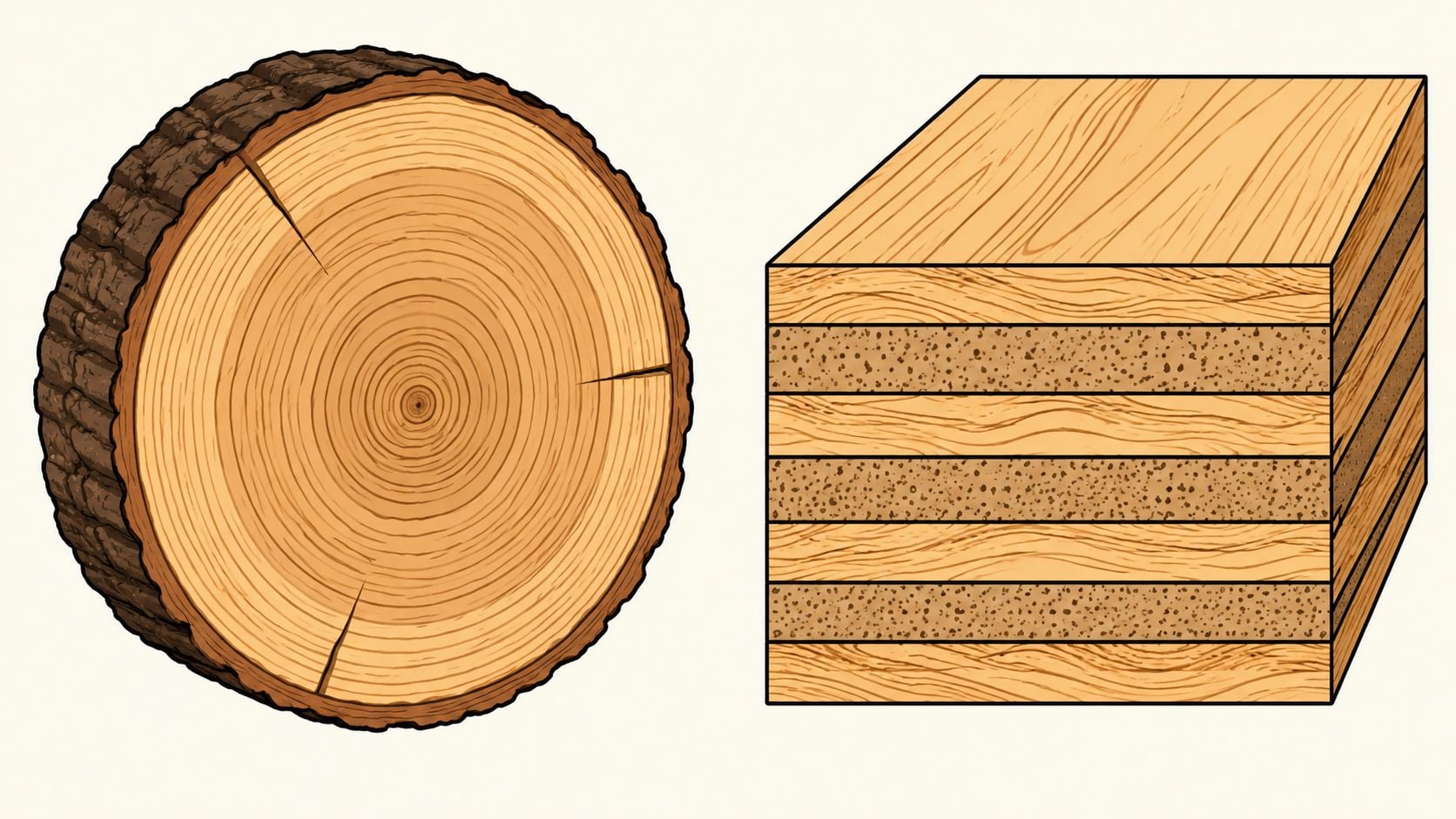
A lot of confusion starts with the words themselves. “Solid wood” sounds obvious, and “engineered wood” sounds more technical than it needs to. In plain terms, one is made from lumber throughout, and the other is built in layers.
Solid wood in plain English
Solid wood furniture uses boards cut from real timber. The material you see on the surface continues through the piece, so if a tabletop gets lightly scratched years from now, there is still the same species underneath.
That matters in everyday life. A solid oak top is oak all the way through. The same goes for maple, cherry, or walnut. It is one honest material, not a surface layer over something else.
In our Milwaukee showroom, this is often the moment when a shopper runs a hand along the edge of a table and says, “Okay, now I get it.” The grain, weight, and feel tend to make more sense in person than they do on a tag.
Engineered wood in plain English
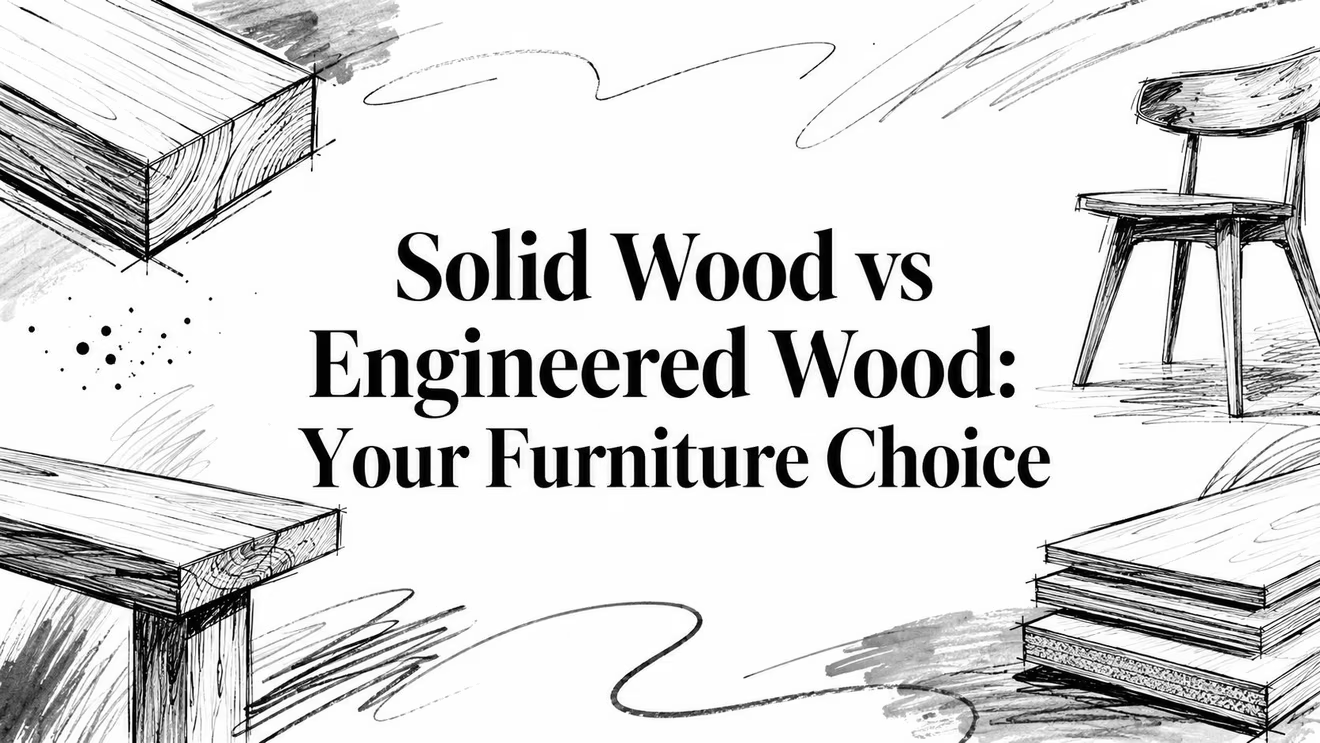
Engineered wood furniture starts with a different goal. It uses a real wood veneer on the outside, then a layered core underneath, often made from materials such as plywood, fiberboard, or other wood-based panels. That layered construction is designed to help the piece stay more stable as humidity changes.
A kitchen-table explanation works well here. Solid wood is one full slice of the loaf. Engineered wood is more like layers pressed together, with real wood on the face you see and a built-up structure doing the support work underneath.
That does not make it fake.
It means the visible top layer is real wood, but the inside is made differently. For a fuller explanation, our guide on what engineered wood furniture means breaks down how these materials are used in actual furniture pieces.
Here is the simplest way to sort it out:
- Solid wood uses the same wood through the thickness of the part.
- Engineered wood uses real wood on the surface with a layered core below.
- Both can be attractive, but they are built for different strengths.
That last point is where shoppers sometimes get tripped up. They assume the debate is only about looks. In a real home, the bigger question is how the piece is built for years of use, changing seasons in Wisconsin, and whether you want something your family may keep for decades.
That is also why we care so much about helping people see these materials side by side. As a fourth-generation Milwaukee furniture family, we have watched plenty of customers walk in unsure about the terminology and walk out feeling confident once they can touch an American-made or Amish-made piece for themselves.
The Head-to-Head Comparison Where It Matters Most
Shoppers usually don't need a chemistry lesson. They need to know what happens after a few years of daily use. Does the piece still feel sturdy? Can damage be repaired? Does it still look rich and substantial, or does it start to feel temporary?
Solid Wood vs. Engineered Wood at a Glance
| Feature | Solid Wood | Engineered Wood |
|---|---|---|
| Construction | Single piece of wood through the thickness | Real wood veneer over layered core |
| Long-term lifespan | Often cited at 30 to 100 years | Typically cited at 20 to 30 years |
| Refinishing | Can be sanded and refinished multiple times | Usually limited refinishing window |
| Moisture response | More sensitive to humidity swings | More dimensionally stable |
| Feel | Traditional, weighty, natural depth | Varies by build quality |
| Upfront cost | Often higher | Often lower |
For readers who want more on why many families gravitate to true wood furniture, BILTRITE also explains the benefits of solid wood furniture.
Durability and lifespan
Lifespan is a critical element in the solid wood vs engineered wood discussion. Solid hardwood is commonly cited with lifespans of 30 to 100 years, while engineered wood is often cited around 20 to 30 years, based on this comparison of engineered and real solid wood. That doesn't mean every solid wood piece lasts a century or every engineered piece wears out quickly. It means the ceiling is much higher with solid wood.
The reason is simple. More real wood thickness gives a piece more chances to recover from life. Scratches, dents, worn finish, and surface aging can often be addressed rather than treated as the end of the road.
Appearance and feel
Both materials can present a wood look on day one. That's why shoppers sometimes struggle to tell them apart at a glance. But over time, many people notice a difference in character.
Solid wood tends to show depth in the grain and a more natural variation from board to board. In a dining table or bed, that can make the piece feel grounded and substantial. It also tends to age in a way many families appreciate, especially when the furniture becomes part of the household story.
Engineered wood can also look attractive, especially when the top veneer is well selected. But quality varies more sharply. One engineered piece may feel thoughtful and sturdy. Another may look fine at first and feel less convincing up close.
Care and repair
The repair question is where people often change their mind.
- With solid wood, a scratch doesn't always feel like a disaster. There's a path back through touch-up, sanding, or refinishing.
- With engineered wood, that path is narrower because the wood layer on top is thinner.
- For active homes, that difference matters. Kids, pets, serving dishes, backpacks, and daily traffic all leave a mark eventually.
A furniture purchase isn't only about how a piece looks in the first week. It's also about how forgiving it will be in year five, year ten, and beyond.
A good furniture decision usually starts with one honest question. Is this a piece for right now, or a piece for the long haul?
Lets Talk About Money The Upfront Cost vs Lifetime Value
Price tags get attention first, and that's normal. Families have budgets. New homeowners have a long list of purchases. It's easy to see a lower upfront number and think the choice is settled.
Why the cheaper choice isn't always the lower-cost choice
Reported material costs for hardwood flooring place engineered products around $4.50 to $16 per square foot and solid hardwood around $5 to $28 per square foot, according to this solid versus engineered hardwood cost comparison. Flooring isn't furniture, but the pricing pattern helps explain the bigger market story. Engineered products often enter the conversation with a lower first cost.
That lower entry point can be useful. It opens the door for certain budgets and rooms. But long-run value follows a different logic. Solid planks can be renewed multiple times, which is why solid wood keeps its restoration value much better over time.
How families often think about value
A family dining table is a good example. If the surface picks up wear after years of meals, projects, and celebrations, solid wood often gives the owner options. Refinish it, touch it up, keep using it. That same history can become part of why the table is worth keeping.
Engineered furniture can still serve a purpose, but the margin for major repair is usually smaller. Once the top layer is compromised, replacement becomes more likely.
Shoppers weighing solid wood vs engineered wood often find it helpful to separate two questions:
- What can the household afford today?
- What will still make sense years from now?
For readers thinking about lifespan as part of the budget, BILTRITE offers more guidance on how long furniture should last.
Where Does Each Type Shine Matching Wood to Your Home
A Milwaukee winter and a July humidity swing can teach a furniture lesson fast. Put the wrong piece in the wrong room, and a good-looking purchase may not feel so good a few years later. Put the right construction where it belongs, and the piece settles into family life the way it should.
That is why room matters as much as material.
Rooms where solid wood often makes the most sense
Solid wood usually earns its keep in the spaces that see daily use and carry family memories. Dining rooms are at the top of that list. A solid wood table handles regular meals, school projects, holiday serving dishes, and the little bumps that come with real life. Bedrooms often belong here too, especially for families who want a bed, dresser, or chest that still feels right years from now.

The biggest advantage in those rooms is simple. Solid wood gives you more ways to live with a piece for the long haul. Surface wear, small dents, and finish changes are often problems a craftsperson can address instead of reasons to start over. If you want help sorting out species as well as construction, our guide to the best wood for furniture is a good next read.
In our showroom, this becomes clear the minute you put your hand on a well-built American-made or Amish-made dining table. The top feels substantial. The edges feel honest. The piece gives off the sense that it was built to stay in the family, not cycle out with the next trend.
Places where engineered construction can help
Engineered construction often fits rooms with more moisture variation or less predictable conditions. A finished basement is the classic example. Rooms near concrete, areas that feel damp at certain times of year, or spaces used more casually can be better candidates for engineered components because layered construction tends to stay more stable in those settings.
That does not mean engineered wood belongs only in second-tier spaces. It means the construction solves a different problem. If a room asks for steadiness more than future refinishing, engineered wood can be a sensible choice.
A practical way to match the material to the room looks like this:
- Dining room: Solid wood often fits best for everyday use, long ownership, and repair options later.
- Primary bedroom: Solid wood makes sense when the goal is a set that still feels worthwhile many years from now.
- Basement or moisture-variable room: Engineered construction can be the safer pick when conditions change through the year.
- Guest room, office, or shorter-term setup: Engineered wood can work well when the piece does not need heirloom potential.
Many Metro Milwaukee families mix both approaches in one home, and that can be a smart plan. They choose solid wood for the pieces they touch every day and hope to keep, then use engineered construction where the room itself makes the decision a little trickier.
That balance is easy to understand once you see the difference in person. In our family business, we have watched shoppers relax the moment they can open drawers, feel weight, study the grain, and compare a solid wood Amish-made bedroom set beside furniture built with engineered parts. A room chart helps. Touching the furniture helps more.
How to Be a Smart Shopper in the Showroom
The showroom is where this topic finally becomes clear. Photos and labels only go so far. Wood is easier to understand when a shopper can touch the top, check the edges, open the drawers, and ask direct questions.

What to look for with your eyes and hands
One common clue is grain continuity. On many solid wood pieces, the visual story of the wood carries through more naturally across surfaces and edges. The piece often feels heavier and more substantial too.
Shoppers should also remember that engineered wood isn't one single quality level. Some premium versions are built much better than entry-level versions. One source notes that premium engineered products with a thicker wear layer, such as 5 mm, can potentially last 100 years or more, which is why wear-layer thickness is such an important question in any engineered versus solid wood flooring discussion.
Not all engineered wood deserves the same judgment. Construction details matter, especially the thickness of the real wood layer.
Questions worth asking before buying
A confident shopper doesn't need fancy language. A few plain questions can tell the story quickly:
- Where was this piece made? American-made and Amish-made construction often comes with stronger material transparency.
- What is solid wood here, and what is not? That question clears up a lot fast.
- Can this surface be repaired or refinished later? The answer often reveals the long-term value.
- How will this material react in the room where it's going? Basement, bedroom, and dining room are not the same situation.
For shoppers who want a practical checklist before visiting a store, BILTRITE Furniture-Leather-Mattresses provides advice on how to buy quality furniture.
At BILTRITE, the in-store experience matters because the store doesn't sell online. That means the decision happens the old-fashioned way. By seeing the piece in person, talking with experienced staff, and comparing materials side by side. With over 400 years of combined experience on the sales team, there's a lot of knowledge available without pressure.
Why We Believe in Solid Wood for Our Milwaukee Family
After weighing solid wood vs engineered wood, the heart of the matter is pretty clear. Both have a place. But for the pieces that anchor a home, solid wood still stands apart.
That belief lines up with what BILTRITE has valued since 1928. Better-quality furniture. American-made choices. Amish craftsmanship. Real materials that can handle real life and still look good years later. In a world full of temporary things, solid wood keeps offering something steady.
For Milwaukee-area families who want to compare finishes, feel construction differences by hand, and talk through what fits their home, the Greenfield showroom is where that decision gets easier. The store is proud to be family-owned, proud to support local shopping, and proud to be closed on Sundays and Mondays so families can spend time together too.
Shoppers who want to compare solid wood and engineered wood in person can visit BILTRITE Furniture-Leather-Mattresses in Greenfield and talk with a team that knows furniture from the inside out. The showroom offers American-made, Amish-made, solid-wood, small-scale, heavy-duty, and mattress options, so families can match material, style, and budget in one place.