What Is a Murphy Bed? A Friendly BILTRITE Guide


A Murphy bed is a fold-down, wall-mounted bed designed to store vertically when not in use, so one room can switch from sleeping space to living space. For a typical vertical Full/Double model, the cabinet is usually about 62–64 inches high, 57–61 inches wide, and needs about 80–82 inches of floor space when open, which is why these beds work so well in rooms that need to do double duty.
Maybe that sounds a lot like your house right now. Your spare room is also your office. Your basement hangout needs to sleep guests a few times a year. Your kid moved out, moved back, moved out again, and now you're trying to make that room useful in the meantime.
That's exactly where a Murphy bed shines.
At our family furniture store in Greenfield, we've spent generations helping Milwaukee-area families make smart use of the space they already have. And if you've been wondering what is a murphy bed, the answer isn't just “a bed that folds up.” It's a practical way to turn one room into two without giving up comfort, style, or common sense.
The Magic Trick Your Spare Room Needs
A lot of folks start with the same problem. They've got a guest room that sits empty most of the year, or a home office that turns awkward whenever family comes to town. They want flexibility, but they don't want the room to feel like a mattress warehouse.
That's where the Murphy bed earns its reputation.
Instead of taking up floor space all day, the bed folds up into a cabinet or wall unit. By day, the room feels open and useful. By night, it becomes a real sleeping space. That's the trick, and it's why this design has lasted so long.
A familiar space problem
Let's say you've got a small bedroom with a desk, chair, and maybe a bookshelf. Add a standard bed, and suddenly you're sideways-shuffling around corners just to get to the window. Remove that bed during the day, and the room works again.
That's the basic appeal. A Murphy bed helps a room do more than one job.
If you're already rethinking that extra room, our guide on transforming your spare bedroom into a welcoming retreat is a helpful next read too.
A Murphy bed isn't about squeezing furniture into a room. It's about giving the room back to you when you're not sleeping in it.
The story behind the name
The fun part is that this idea started with a very real human problem. The Murphy bed is generally credited to William Lawrence Murphy, who invented it around 1900 in San Francisco. According to the Smithsonian's history of the Murphy bed, he patented early versions in the 1910s so he could turn his one-room apartment from a bedroom into a parlor for guests.
That makes this piece of furniture feel a little more personal, doesn't it?
He wasn't trying to make a gimmick. He was solving the same kind of space problem people still deal with today. Small rooms. Shared spaces. Homes that need to adapt.
Why people still ask about them
Readers often get stuck on one question: is a Murphy bed just an old-fashioned fold-up bed?
Not really. A true Murphy bed is built as a wall bed system. It's designed to store upright, use a counterbalanced mechanism, and work as part of the room. That's very different from dragging out an air mattress or unfolding a sofa bed for the weekend.
The most direct way to understand this concept is:
- If you need a room for everyday living: a Murphy bed helps keep it open
- If you want guests to sleep on a real mattress: a Murphy bed does that better than many occasional-use options
- If you care how the room looks: the cabinet can look like furniture, not an afterthought
That's why this old idea still feels fresh.
How Does a Murphy Bed Actually Work
The short answer is balance.
A quality Murphy bed doesn't rely on brute strength. It uses a lift system that helps offset the weight of the bed, so opening and closing it feels controlled instead of clunky. Think of it a little like a well-balanced garage door. The mechanism does a lot of the hard work for you.
Here's a simple visual.

The basic motion
When the bed is stored, it stands upright inside a cabinet or wall unit. When you pull it down, the frame pivots outward until it rests in sleeping position. When you lift it back up, the mechanism helps guide it smoothly into storage.
That's why modern wall beds feel so different from the slapstick version people remember from old movies.
For a broader look at sleep setups and room-friendly options, our article on different types of bed gives helpful context.
What helps with the lifting
Many people hear “fold-down bed” and assume it must be heavy and awkward. In a good model, it shouldn't feel that way at all. The mechanism is usually based on gas pistons or spring systems that counterbalance the load.
Here's what that means in plain English:
- Gas piston systems tend to feel smooth and controlled
- Spring systems use tension to help raise and lower the bed
- Both styles are meant to make operation easier than lifting the full bed weight yourself
Practical rule: The better the mechanism is matched to the mattress and frame, the easier the bed is to use day after day.
Why operation matters more than people think
A Murphy bed is furniture you interact with all the time. If the motion is jerky, too heavy, or poorly balanced, you'll notice it fast. That's one reason quality matters so much.
A well-made unit should feel steady, predictable, and easy to understand after a quick demonstration. You shouldn't need a wrestling background to put your guest bed away.
A lot of confusion also comes from the idea that all wall beds work the same way. They don't. Hardware quality, cabinet construction, and setup all affect how the bed behaves in daily use. That's why seeing one in person can be so helpful. You get to open it, close it, and feel the difference for yourself.
Finding Your Style with Murphy Bed Designs
You walk into a spare room on Tuesday morning, and it needs to feel like an office. By Friday night, it needs to welcome guests. A Murphy bed has to do both jobs well, which means style is not a small detail. It is part of whether the room feels pulled together or feels like a bed got parked against the wall.
Some older wall beds looked like big plain boxes. Good modern ones feel much closer to real cabinetry. In solid wood, especially, the bed cabinet can read like a built-in hutch or storage piece instead of a piece of equipment. That difference matters in a room you see every day.
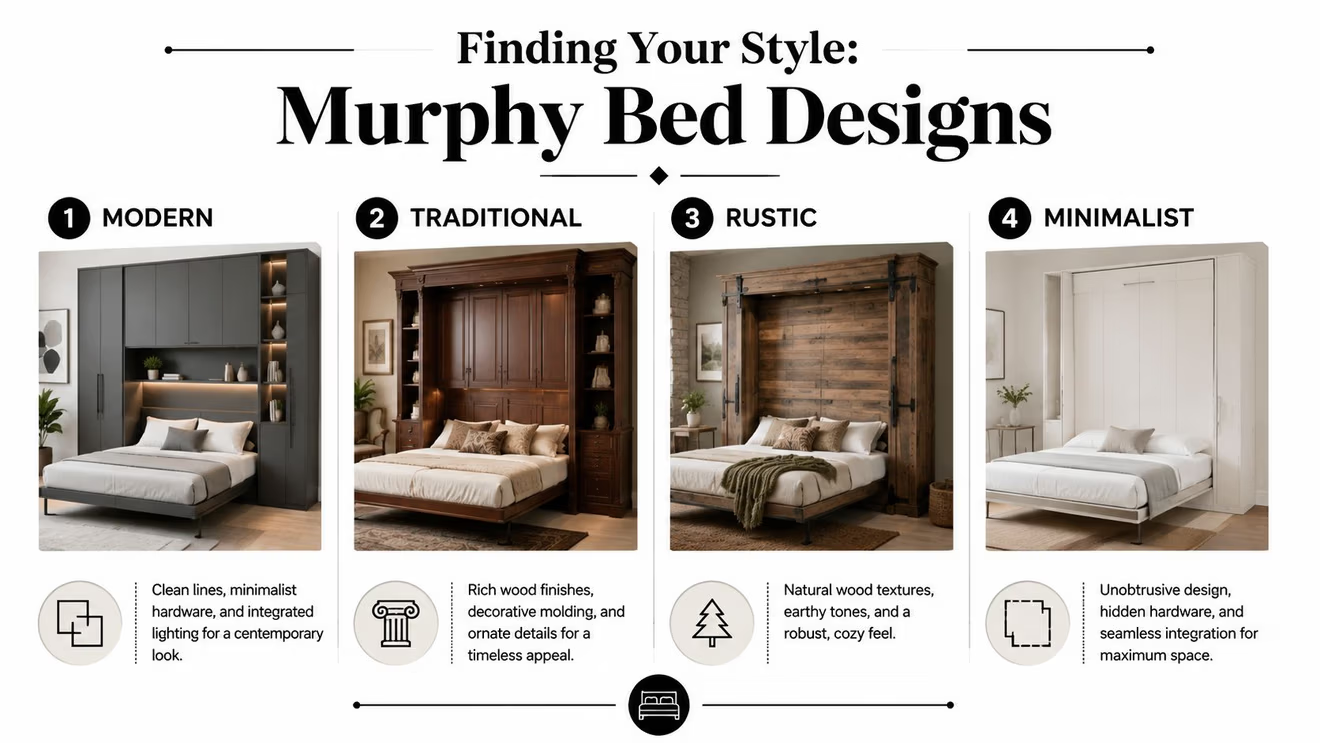
This side-by-side view helps show the range.
Vertical or horizontal
The first style choice is really a room-shape choice.
The Wallbed Factory explains that Murphy beds are commonly built in vertical and horizontal formats, and each layout changes how much wall space, ceiling height, and open floor area you need to work with (Wallbed Factory's guide to vertical and horizontal Murphy beds). In plain terms, a vertical bed stands taller and usually uses less wall width. A horizontal bed stretches wider and usually sits lower.
A simple way to sort it out:
| Layout | Usually works better when | Main tradeoff |
|---|---|---|
| Vertical Murphy bed | You have good ceiling height and want to use a narrower wall | It reaches farther into the room when open |
| Horizontal Murphy bed | You have a lower ceiling or a wide open wall | It takes more wall width |
A vertical bed works like a tall pantry cabinet. A horizontal bed works more like a long credenza. Same basic job, different footprint.
That one choice shapes the whole room. If the wall is short and wide, horizontal often looks more natural. If the room is tighter side to side, vertical usually gives you a cleaner layout and leaves more options for desks, dressers, or walking space.
Cabinet style matters too
After orientation, look at the cabinet the same way you would any other furniture in the room.
Raised panels, warmer finishes, and classic pulls tend to fit traditional homes. Flat fronts and simpler hardware usually suit modern spaces. Visible grain, thicker trim, and a hand-built look feel right in rustic rooms. If you want the bed to fade into the background, a quieter design with clean lines often does the job best.
The key is consistency. The Murphy bed should make sense with the rest of the room, closed and open.
Why solid wood changes the experience
This is often the point where shoppers can feel the difference between a short-term purchase and a piece they plan to keep for years. Solid wood has weight, texture, and character. It looks better with age, and it usually feels more like part of the home.
That is one reason so many families ask us about USA-made and Amish-made options in our showroom. They want to choose the wood species, the stain, the hardware, and the overall look so the bed matches the house instead of fighting it. That practical side gets skipped in a lot of online articles. A Murphy bed is not just a clever space saver. It is a large piece of furniture, and the quality of the woodwork shows every single day.
A well-designed Murphy bed should solve the space problem and still look like it belongs in the room for the long haul.
The Honest Pros and Cons of Wall Beds
Your spare room can pull two jobs with a Murphy bed. Office by day. Guest room by night. That is the big appeal, and it is also why this choice deserves a clear-eyed look before you buy one.
A wall bed solves a space problem in a very practical way, but it also asks for more planning than a standard bed frame. In our family's furniture business, that is usually the turning point for shoppers. Once they understand both sides, they can tell whether they want a clever shortcut or a long-term furniture piece that becomes part of the room.

What people love about them
The biggest benefit is easy to see. You gain usable floor space when the bed is closed.
That changes how a room lives. A guest room can hold exercise equipment, a craft table, or a desk without feeling like half the space is off-limits all day. In smaller homes, condos, and apartments, that flexibility can make one room feel like two.
The second big win is comfort. A Murphy bed uses a real mattress, so the sleep experience usually feels much closer to a standard bed than what many guests expect from a sofa sleeper or futon. If you are comparing options, our mattress size chart for common bed dimensions can help you picture how that translates to real sleeping space.
Many newer models also add storage, shelving, or lighting. That can be helpful, but the true value is not the extra features. It is the way the room works better every single day.
Where buyers need to be realistic
A Murphy bed is more like built-in furniture than a loose piece you can slide around on a Saturday afternoon.
It usually needs proper installation. It has to be matched to the room. And if you care about how it will look and hold up five or ten years from now, construction quality matters a lot. That is one of the practical questions many articles skip. Owning a Murphy bed is not just about saving space. It is about choosing a mechanism, cabinet, and wood construction you will trust every time the bed goes up and down.
There is also a commitment factor. A cabinet bed or daybed is easier to move. A Murphy bed makes more sense for homeowners who want a lasting solution in a room they use often.
That tradeoff is not bad. It is just honest.
A wall bed fits best when you want the room to work harder every day and you are willing to plan for that benefit up front.
A quick comparison
| Option | Strength | Watch-out |
|---|---|---|
| Murphy bed | Opens floor space and sleeps more like a regular bed | Needs installation, planning, and good construction |
| Sofa bed | Adds seating and sleeping in one piece | Mattress comfort can be hit or miss |
| Daybed | Simple, casual, and easy to place | The room still reads like a bedroom |
| Cabinet bed | Easier to move and less built-in | Often has more limits in size, storage, or daily use |
For plenty of homeowners, the core question is simple. Do you want a temporary fix, or do you want a room that works better for years?
If you are leaning toward the second option, this is also where solid wood and USA-made or Amish-made choices start to matter. In our showroom, shoppers often find that the best Murphy bed is not the cheapest one or the flashiest one. It is the one that feels sturdy, fits the room correctly, and looks like it belongs in the house long after the novelty wears off.
Getting the Right Fit with Sizing and Mattresses
You clear out the spare room, pick a wall, and figure a Full bed should fit. Then you open the bed on paper and realize the room has to hold two pieces at once. The cabinet when it is closed, and the bed when it is down. That is the part that trips people up.
Start with the room, not the mattress label
A Murphy bed is a little like buying a refrigerator for an older Milwaukee bungalow. The appliance size matters, sure, but so do the doorway, the trim, and the spot where the door needs to swing. A wall bed works the same way. Mattress size is only one piece of the fit.
A vertical Full bed usually asks for more height. A horizontal Full usually asks for more wall width. That simple difference can save a room with a low ceiling or an awkward layout.
Your measuring checklist should cover four things:
- Wall width: enough space for the cabinet to sit comfortably
- Ceiling height: especially important for vertical models
- Open floor area: enough room for the bed to lower fully
- Walking space: enough room to move around once the bed is open
If you want to confirm the basic mattress dimensions before matching them to a wall bed cabinet, our mattress size chart for standard bed sizes is a useful place to start.
Not every mattress belongs in a Murphy bed
This surprises plenty of shoppers. A mattress can be the right length and width, yet still be wrong for the bed.
The two big limits are usually thickness and weight. Many Murphy bed systems are built for a mattress within a certain range so the bed closes properly and the lift mechanism works the way it should. If the mattress is too thick, the cabinet may not close cleanly. If it is too heavy, opening and closing can feel harder than it should and put extra strain on the hardware.
Bestar's Murphy bed mattress guidance explains that owners need to follow the bed's stated mattress limits for safe, proper operation.
Bottom line: Match the mattress to the Murphy bed's listed thickness and weight requirements. Do not guess.
A simple shopping approach
Here is the order I recommend, the same way we talk through it in our showroom.
- Measure the wall and ceiling first.
- Confirm how far the bed projects into the room when open.
- Check the allowed mattress thickness.
- Check the allowed mattress weight.
- Only then choose comfort details like feel and material.
That order matters. It keeps you from falling in love with a mattress or bed style that does not play nicely with the room or the mechanism.
At BILTRITE Furniture-Leather-Mattresses, shoppers can compare wall-bed-friendly options alongside a large mattress selection in person. That makes it easier to connect the idea of a Murphy bed to real ownership questions, especially if you want a solid wood, USA-made, or Amish-made piece that fits your room and holds up for the long haul.
Installation and Safety What You Need to Know
This is the part too many articles dance around. A Murphy bed is not a piece you casually push against a wall and hope for the best.
For many modern models, proper anchoring is a core safety requirement. If that sounds serious, it should.
The part that is not optional
Many modern Murphy bed units must be anchored directly to wall studs or a secure cabinet structure. The Legacy Handcraft explanation of Murphy bed installation makes the reason clear. This step helps prevent the whole unit from tipping when the bed is lowered or raised.
That's a big deal.
A Murphy bed has moving weight. It changes position. It pivots. All of that means the cabinet and hardware need a stable, secure installation environment. Drywall by itself is not the hero of this story.
Why this gets overlooked
A lot of basic “what is a murphy bed” articles focus on the fun part. Fold it down. Save space. Tidy room. Nice photos.
What they often leave out are the practical questions that really matter in ownership:
- What kind of wall is it going on?
- Can the unit anchor where it needs to?
- Will it fit through halls, stairs, and doorways before installation?
- Who will service the mechanism if it ever needs adjustment?
If delivery access is part of your planning, our article on how to move heavy furniture upstairs is worth a look before you commit to a large cabinet piece.
Professional guidance pays for itself in peace of mind. A wall bed should feel secure every time you use it.
What safe ownership looks like
Owning a Murphy bed comfortably means treating it like built-in furniture with moving parts, not like a temporary guest solution. That includes correct setup, sensible use, and paying attention if something starts to feel off.
A well-installed bed should open and close in a controlled way. It should sit solidly when stored. It should not wobble, scrape strangely, or feel like it's fighting you.
That's why many shoppers decide they'd rather talk through the room, the wall, and the delivery path with a knowledgeable local team before buying. It's not about making the process complicated. It's about avoiding expensive frustration later.
Why a BILTRITE Murphy Bed Is a Smarter Choice
Once you understand what a Murphy bed is, the next question gets more personal. What kind should you bring into your home?
For us, the answer starts with how the piece is built. A wall bed has a job to do every day. It needs to look good, operate well, and hold up over time. That's why material quality matters so much.
Why build quality counts
A Murphy bed isn't just a mattress holder. It's a cabinet, a mechanism, and a moving furniture system all working together. If one part feels flimsy, you'll notice it in the daily experience.
That's one reason so many Milwaukee-area shoppers look for solid wood and better-made cabinetry instead of a basic boxed unit. Amish-made and USA-made furniture often appeals to buyers who want stronger construction, more finish options, and a piece that feels like it belongs in the home long term.
Our article on why to invest in American-made bedroom furniture goes deeper into why that matters.
Why in-person shopping helps with Murphy beds
Some furniture is easy to pick from a screen. Murphy beds usually aren't.
You want to see the wood tone in real light. You want to touch the hardware. You want to open the bed, close the bed, and get a feel for whether the design makes sense for your room. You may also want to compare cabinet styles if you're trying to blend the bed into a guest room, office, or den.
That's where our family's way of doing business still makes a lot of sense. We've been serving Metro Milwaukee since 1928, and we're proud to help people shop face to face. We don't sell online, and we're closed on Sundays so our families can be together. That's part of who we are.
What many homeowners appreciate most
A Murphy bed purchase usually goes better when you can ask real questions and get direct answers.
Things like:
- Which wood works with my existing furniture?
- Will this style look too bulky in my office?
- How will the room feel when the bed is closed?
- What mattress pairs well with this setup?
Our team brings generations of furniture knowledge to those conversations, and that's especially helpful with a product that combines style, construction, room planning, and comfort all at once.
If you want a Murphy bed that feels like real furniture instead of a temporary fix, solid wood, quality craftsmanship, and hands-on guidance make a meaningful difference.
If you're thinking about adding a Murphy bed to your home, we'd love to help you sort through the practical questions in person. Stop by BILTRITE Furniture-Leather-Mattresses in Greenfield, see the craftsmanship up close, and chat with our experienced team about USA-made, Amish-made, and solid wood options that fit your room and your lifestyle.