Oversized Chairs with Ottomans: The Ultimate Buying Guide


You get home, drop your keys on the counter, and head straight for that one seat in the house everyone secretly wants first. Maybe it’s where you read, where the dog curls up, where a grandkid climbs in beside you, or where you finally put your feet up after a cold Wisconsin day. That little scene is exactly why oversized chairs with ottomans have such staying power. They aren’t just extra seating. They become part of the rhythm of home life.
At our family’s store in Greenfield, we’ve spent generations helping Milwaukee-area families sort through what feels good for five minutes versus what still feels good years later. Since 1928, we’ve learned that comfort is only half the story. Questions are usually practical ones. Will it fit the room? Will it support the way you sit? Will it hold up in a busy household? And if you’re buying for a parent, a grandparent, or yourself for the long haul, will it still feel supportive down the road?
That’s where a little guidance helps. Oversized chairs with ottomans come in a lot of styles, but the smartest choice usually comes down to a few simple things: size, support, construction, upholstery, and how the piece will be used every day. Let’s walk through it the same way we do in our showroom, in plain language and without the furniture industry fluff.
Your Quest for the Ultimate Cozy Corner
A lot of people start this search the same way. Not with a design plan. With a feeling.
They want one spot in the house that feels settled. A place to read the paper on a Saturday morning, watch the game, recover after work, or sit with family without balancing awkwardly on the edge of a small accent chair. That’s the moment oversized chairs with ottomans shine. They give you room to sink in, shift around, and stay awhile.

We’ve seen this play out with all kinds of Milwaukee households. A young couple wants one “landing spot” in a new living room before buying everything else. A retired homeowner wants supportive seating that doesn’t feel stiff or clinical. A growing family wants a chair big enough for story time, movie night, and the occasional nap. Different homes, same goal. More comfort, less fuss.
What makes this category so appealing is that it solves a real problem without asking the whole room to revolve around it. A good oversized chair and ottoman can anchor a corner, soften a large room, or create a private little retreat in a shared space.
Some furniture looks nice from across the room. A good lounge chair earns its keep when you actually live with it.
That’s how we’ve always approached it as a fourth-generation family business. We’re proud of our Milwaukee roots, and we’re proud that people still come in looking for honest advice, not pressure. If you’re trying to figure out whether an oversized chair is just a want or a smart home upgrade, the answer often becomes clear the minute you sit in the right one.
What Makes a Chair and Ottoman Oversized Anyway
“Oversized” sounds simple, but it can confuse shoppers fast. Some people think it means bulky. Others think it means extra plush. In real life, it means a chair is built to give you more room than a standard occasional chair, especially in seat width and seat depth, and that extra space changes how you use it.
It’s more than a tape measure
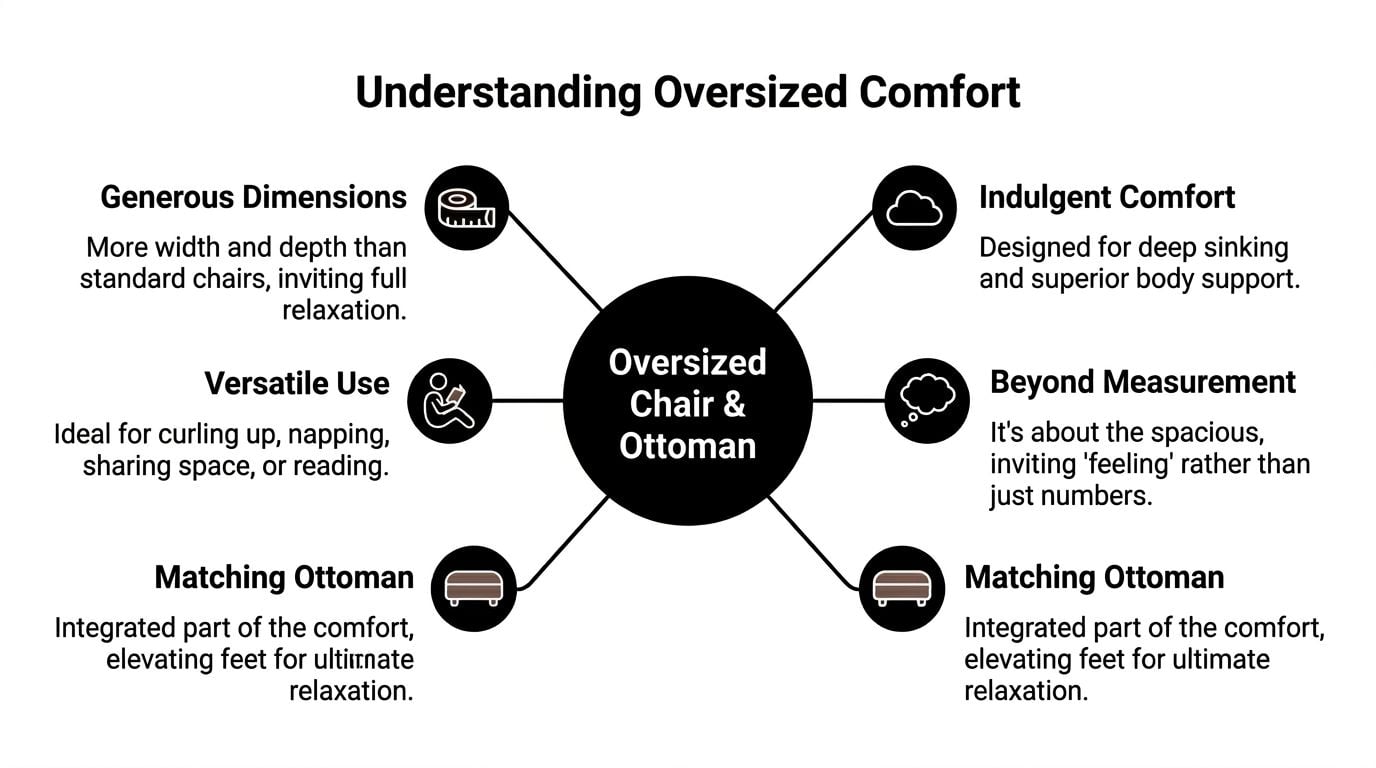
An oversized chair invites different postures. You can sit upright for conversation, lean back with your feet up, tuck a leg under, or curl up with a blanket and a book. The ottoman matters too. It isn’t just an add-on. It completes the posture by supporting your legs and helping your body relax.
To understand this:
- More room to settle in means you aren’t perched on the front edge.
- A deeper seat supports lounging, not just sitting.
- A matching ottoman lets your body fully relax instead of leaving your legs hanging.
- Wider arms and a broader frame often make the chair feel more grounded and substantial.
If you’ve ever wondered how much width matters, our guide to standard chair width helps explain why proportions change the whole sitting experience.
The ottoman has a long history
The ottoman didn’t start as a casual accessory. It traces back to the Ottoman Empire, which lasted over 600 years, where it served as central residential seating and often appeared as a low platform layered with cushions. Later, travelers brought Turkish styles to Europe in the late 18th century, and the ottoman evolved from an exotic status symbol into a practical furniture piece used for lounging, extra seating, and even storage, as described in this history of how ottomans evolved from Ottoman Empire seating to modern furniture.
That history helps explain why the ottoman still feels so natural with a lounge chair today. It has always been tied to comfort, flexibility, and shared living spaces.
One famous set helped define the category
A landmark example came in 1956, when Charles and Ray Eames introduced the Eames Lounge Chair and Ottoman. It debuted on NBC’s Home show, marked a move from their earlier mass-produced work into a luxury upholstered design, and originally sold for $310, or about $3,100 in today’s dollars. It has been produced by Herman Miller for nearly 70 years, which says a lot about how strongly this pairing shaped modern ideas of comfort and craftsmanship, as covered in Dwell’s look at the Eames Lounge Chair and Ottoman’s design history.
That chair doesn’t define every oversized chair with ottoman, of course. But it helped show that generous seating could be stylish, substantial, and built for long-term use.
Finding Your Fit with the Right Size and Style
Shopping for these items gets fun. It’s also a time when people make avoidable mistakes.
They fall in love with a silhouette, then realize it overwhelms the room. Or they choose something that fits the room but doesn’t fit how they live. A smart pick has to do both.
Start with the mood of your room
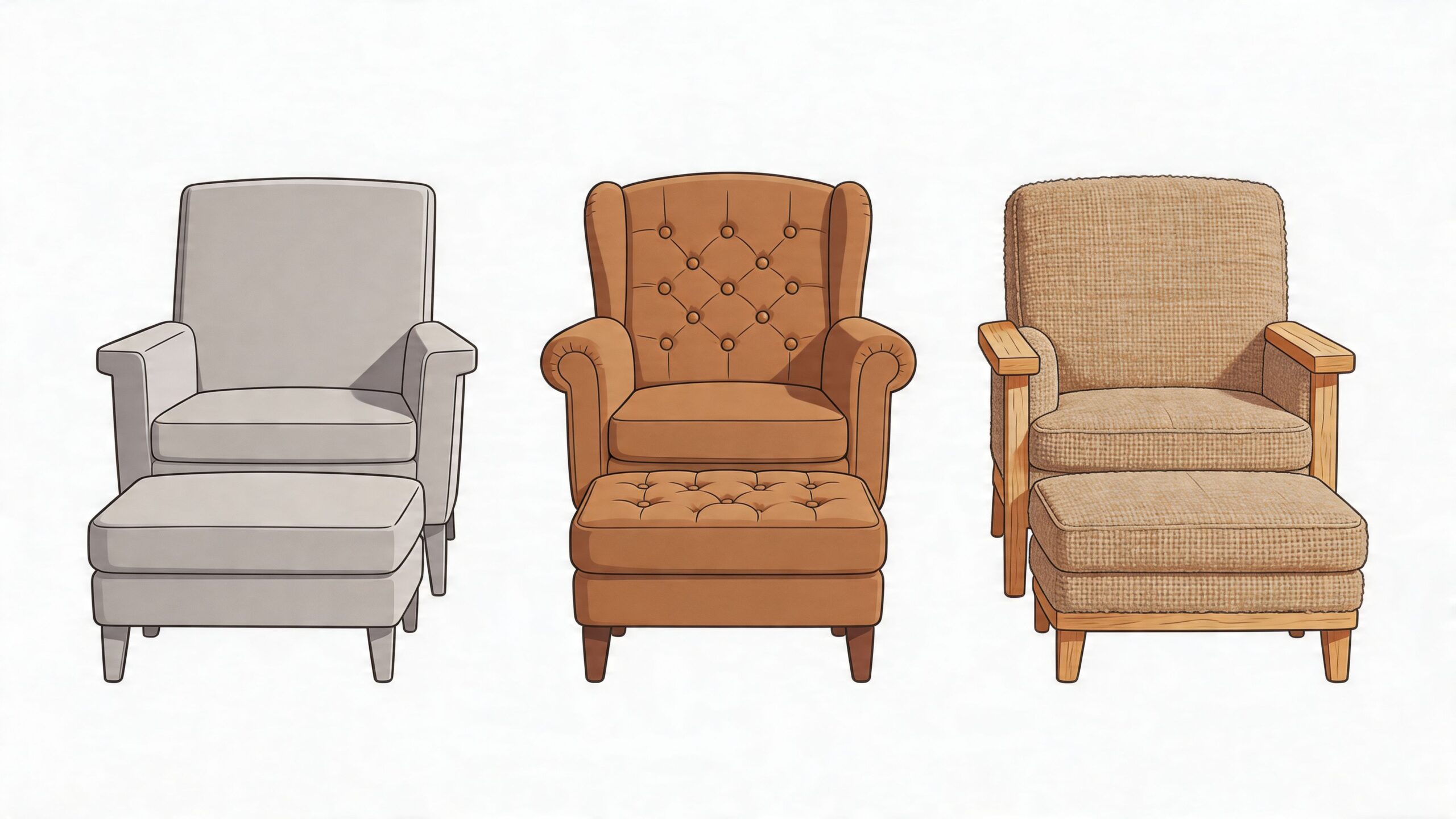
Style changes how an oversized chair feels before anyone even sits in it. The same basic chair-and-ottoman setup can look sleek, relaxed, rustic, structured, or classic depending on the shape and materials.
A few common directions people take:
- Modern rooms often lean toward cleaner lines, slimmer arms, and simpler bases.
- Traditional spaces usually feel at home with rolled arms, wood details, and more structured cushions.
- Rustic or farmhouse interiors pair nicely with warmer finishes, textured fabrics, and handcrafted details.
- Transitional homes mix elements from both sides and tend to be the easiest match for many Milwaukee households.
If you’re still sorting out your look, our overview of different furniture styles for the home can help you narrow down what feels natural in your space.
Then look at scale, not just style
An oversized chair should feel generous. It shouldn’t feel like it swallowed the room.
When shoppers get stuck, we usually bring them back to three measurements:
- The wall space where the chair will live
- The walking path around it
- The visual balance with the sofa, coffee table, and nearby pieces
A chair can fit on paper and still feel wrong if it blocks movement or makes every other piece seem undersized. That’s why scale matters just as much as the actual dimensions.
Practical rule: If the chair is meant for daily lounging, give it enough breathing room that using the ottoman doesn’t crowd a walkway.
Big comfort can still work in small homes
This surprises a lot of people. You don’t need a huge great room to enjoy oversized chairs with ottomans.
In condos, apartments, smaller homes, and senior living spaces, the trick is choosing a chair with the right proportions. Some designs deliver that roomy, cozy feeling with a tighter overall footprint. Others have trim arms, a smarter base, or a less bulky shape that keeps the room open.
Here’s a simple way to think through placement:
| Room situation | What usually works well |
|---|---|
| Large living room | A broad chair and ottoman can anchor a corner or balance a sofa |
| Medium family room | A scaled oversized chair works best when paired with open space beside it |
| Small condo or apartment | Look for a chair that feels deep and welcoming without extra-thick arms |
| Bedroom or reading nook | Focus on comfort and shape first, then make sure the ottoman doesn’t block movement |
Match the chair to real life
If you read every night, prioritize support and arm height. If the chair is for TV watching, think about the angle to the screen and where the ottoman will sit. If grandkids climb in beside you, width matters more than a dramatic silhouette.
That’s where in-person shopping still helps. A chair can look roomy in a photo and feel cramped when you sit in it. Another can look modest and feel wonderfully open because the proportions are better. That’s the kind of difference you notice right away in a showroom.
Built to Last with Durable Fabrics and Leathers
A big chair and ottoman should feel inviting on day one and still feel dependable years later. In our family’s decades of helping Milwaukee shoppers furnish real homes, that long-term comfort usually comes down to two things. What is under the upholstery, and how well the upholstery handles daily life.
An oversized chair works harder than a decorative accent chair. People settle into it for a movie, read in it for an hour, nap in it on Sunday afternoon, and push off the arms to stand back up. In senior living settings and busy family rooms, that repeated use puts real stress on the frame, seat support, and cover.
What durability looks like on the inside
Good construction is a lot like a well-built porch. You notice the paint color first, but the part that decides how long it lasts is the structure underneath.
Some product research on oversized seating points to seat depths over 24 inches and notes that deeper seats may reduce lumbar strain by up to 40%, according to Living Spaces’ oversized chair and ottoman reference. The same source also describes Amish-crafted solid wood frames with mortise-and-tenon joinery capable of withstanding over 1,000 lbs of static load, again in Living Spaces’ oversized chair and ottoman reference.
The plain-English takeaway is simple. A deeper chair can support relaxed sitting better, and a stronger frame is more likely to stay steady instead of loosening, sagging, or starting to creak.
We pay close attention to USA-made and Amish-built upholstery for this reason. Craftsmanship is not just a selling point. It affects how a chair holds up when it gets used by real people, every single day.
Why solid wood construction matters
Solid wood frames tend to hold their shape better under heavy use than lighter composite materials. That matters even more in an oversized chair because the seat is wider, the arms often carry more pressure, and the ottoman encourages longer sitting sessions.
Look for these signs of substance:
- Hardwood framing instead of lighter composite construction
- Joinery that secures the frame parts firmly, not staples alone
- Seat support with lasting resilience
- Arms that feel stable when you push down to stand
A sturdy chair feels settled. It should not twist, wobble, or sound busy when you sit down.
That last point matters for more than durability. For older adults, a quiet, stable chair often feels safer and easier to use. For families, it means the chair is better prepared for years of everyday traffic.
Upholstery affects lifespan too
Fabric and leather do more than change the look. They shape how the chair wears, how easy it is to clean, and how forgiving it feels in a home where life is active.
Our guide to performance fabric benefits can help if you are comparing easy-care upholstery with a softer, more casual feel.
Here’s a straightforward side-by-side view:
| Feature | Fabric | Leather |
|---|---|---|
| Feel | Softer, warmer, often more casual | Smoother, tailored, often more structured |
| Color and pattern options | Broad range of solids, textures, and prints | More limited, but rich and classic |
| Family friendliness | Great for households that want easy-care options | Good for quick wipe-ups, depending on finish |
| Aging over time | Depends on weave and fiber quality | Develops character and patina with use |
| Style personality | Can lean cozy, relaxed, or formal | Often reads timeless and substantial |
Fabric for active homes
Performance fabrics have come a long way. Years ago, many easy-care options felt stiff or overly synthetic. Today, many have a softer hand and a more natural look, which makes a difference on a chair meant for long evenings and everyday use.
That is a practical win for households with kids, pets, or frequent guests. You want a chair people can enjoy, not one everyone is nervous to touch.
Leather for long-term ownership
Leather offers a different kind of durability story. It usually wipes up easily, wears in rather than wearing out, and develops character over time.
A generous leather chair and ottoman can also look grounded and substantial, which fits the scale of oversized seating well. If you like furniture that shows its age in a handsome way, leather is worth serious consideration.
Don’t forget the seat support
Many shoppers check the fabric first and the frame second. The seat support under the cushion often gets missed, even though it has a huge effect on comfort over time.
Ask what sits under the cushions. Springs and support systems help the chair keep its shape and keep you from feeling like you are sinking into a hole after a year or two.
In our showroom, we often suggest a simple test. Sit down once. Stand up, take a short walk, then sit again. That second sit tells you a lot. You start to notice whether the seat settles evenly, whether the front edge still feels supportive, and whether the ottoman meets your legs in a natural, comfortable way.
That kind of hands-on testing has helped Milwaukee families make better furniture choices for more than 90 years. Pretty upholstery gets attention first. Lasting comfort comes from what is built underneath.
Comfort for Everyone from Seniors to Families
Saturday morning tells you a lot about a chair. A grandparent wants a seat that feels steady. A parent wants a place to land for ten quiet minutes. A child sees the same chair and treats it like the best reading spot in the house. An oversized chair with an ottoman can handle all three jobs if it is built and sized well.
That broad usefulness is a big reason this pairing has stayed around for generations. In our part of Wisconsin, families often want furniture that does real work, not pieces that only look nice for company. A good oversized chair and ottoman can become the recovery seat after a long day, the place for evening stories, or the chair everyone claims first.
Why seniors often appreciate this setup
For older adults, comfort usually means support, stability, and easier movement. Softness matters, but only if the chair still helps the body sit down and stand up with confidence.
A helpful setup often includes:
- Arms with enough height and firmness to push off from
- A seat that is easier to enter and exit, without dropping too low
- Room to shift positions without feeling boxed in
- An ottoman that supports the legs at a natural height
That last point gets overlooked. The ottoman works like a properly placed step stool for tired legs. If it is too high, knees can feel awkward. If it is too low, it does not give much relief. When the height is right, the whole body relaxes more evenly.
Some shoppers also compare oversized chairs with motion pieces such as recliners, gliders, or lift models. If standing up is part of the concern, this guide to lift chair options for seniors is a useful next read.
Families use these chairs differently, and harder
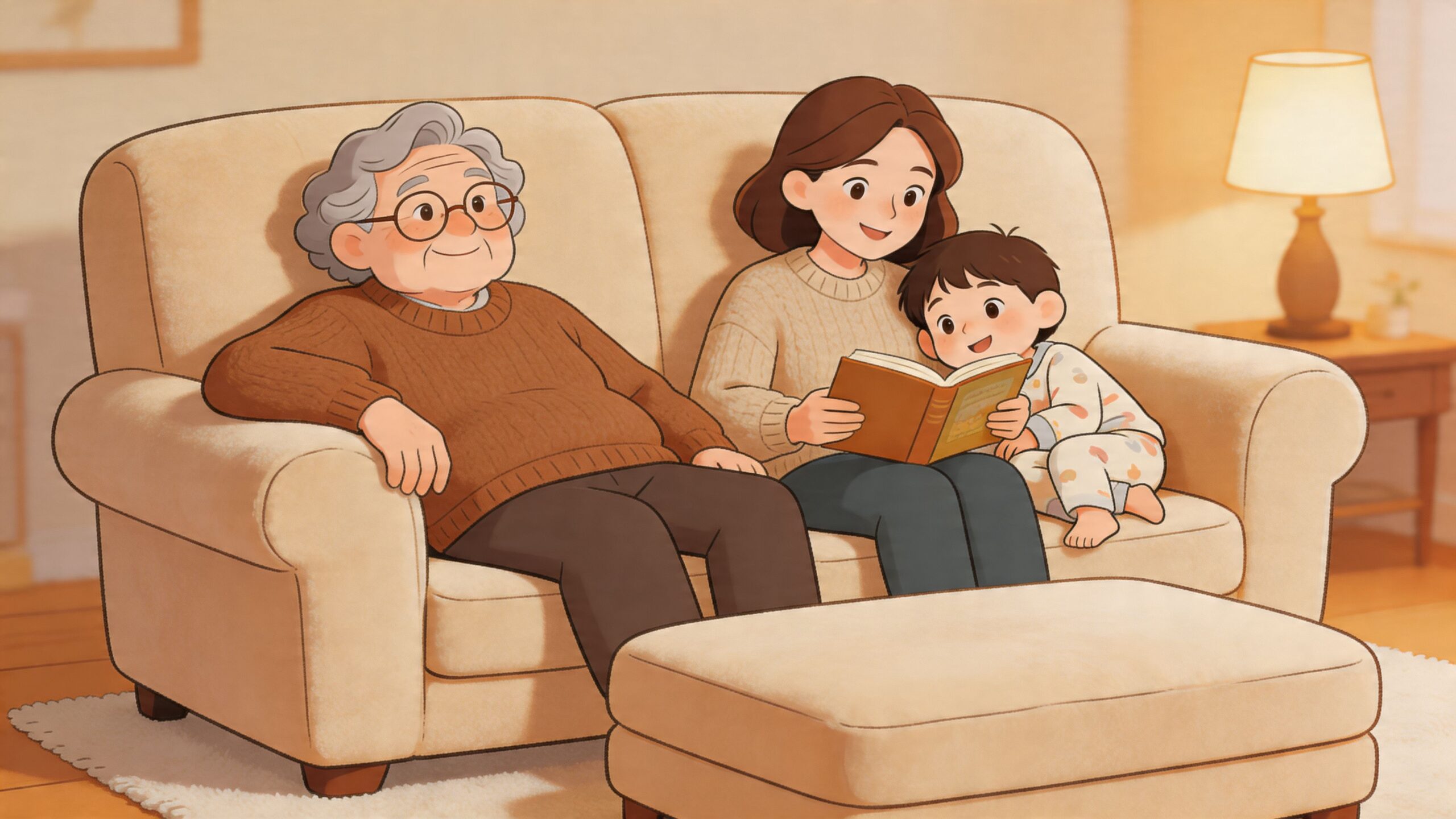
Family seating gets tested in ways a showroom floor sample never will. Someone perches on the arm for a minute. A child climbs across the cushion fort-style. A dog claims the ottoman. Two adults share the chair during a movie even though it was meant for one and a half.
That is why this category deserves a practical eye, not just a decorating eye. The best choice is rarely the chair with the fluffiest first sit. It is the one that still feels inviting after bedtime stories, weekend naps, and years of regular traffic.
In our family's decades serving Milwaukee homes, that pattern shows up again and again. The most loved seat in the room is usually the one that welcomes different bodies, different ages, and different routines without complaining.
Shared comfort matters more than people expect
A small accent chair asks one person to sit one way. An oversized chair gives people options. You can sit upright to talk, curl up with a book, or stretch your legs out on the ottoman without turning the whole room into a recliner zone.
That flexibility helps in homes where one room has to serve several purposes. It can be a calm seat for an older adult in the morning and a cuddle chair for a young family at night.
Compare by use, not by category name
Shoppers often line up several choices before deciding. A standard lounge chair may look cleaner. A recliner may offer more built-in leg support. A swivel glider may suit a nursery or conversation area. An oversized chair with ottoman often lands in the middle, more open than a recliner, more relaxed than a formal chair, and easier to share.
Heavy-duty use should be part of that comparison. If the chair will serve seniors, tall users, guests, kids, or all of the above, ask which option keeps its shape and support under daily wear. That is where craftsmanship matters, especially with well-built USA-made and Amish-made furniture. Good construction shows up in steadier arms, firmer seating where it counts, and comfort that lasts past the honeymoon period.
The right answer depends on the people who will live with it every day. A retired couple may want ease of entry and steady support. A busy household may care more about room to pile in and materials that stand up to constant use. The smart choice meets the life of the home, not just the look of the room.
Making It Yours with Customization Options
A good oversized chair should feel like it belongs in your home, not like it was borrowed from a showroom and dropped into the room.
That is why customization matters so much. The best choices are not only about color. They shape how the chair wears over time, how easy it is to live with every day, and whether it still feels right years from now. In our family’s decades of helping Milwaukee homes come together, we have seen the same lesson again and again. A chair people love usually has a few personal details chosen with care.
Start with the choices you’ll notice every day
Fabric or leather is usually the biggest decision. Fabric often feels softer and more casual. Leather brings a cleaner outline and can be a smart fit for heavy use, especially in homes where the chair gets claimed by everyone from grandparents to grandkids.
Then look at cushion feel. This part trips people up, because “soft” in the showroom can turn into “too hard to get out of” or “too sinky by bedtime” at home. A chair works like a good pair of shoes. The right fit depends on how you use it, how long you sit, and who needs support getting in and out.
Wood finish and trim details matter too. They are the smaller notes in the song, but they still change the whole feel. A warm medium wood can help a chair sit comfortably with older pieces. A darker finish can give the room more weight and formality.
Customization should solve problems, not create them
The smartest custom choices usually come from real-life needs.
Maybe you need a performance fabric that stands up to daily use. Maybe you want firmer seat support for an older adult. Maybe you need a quieter pattern because the rug, drapes, or wallpaper already do plenty of talking. Maybe the ottoman needs to be firm enough to serve as extra seating when family visits.
Those are practical decisions, and they often lead to a room that looks better too.
Here are a few custom options worth asking about:
- Upholstery material for wear, cleanability, and comfort
- Seat cushion firmness for easier entry, support, or sink-in lounging
- Wood finish or leg style to match nearby furniture
- Arm style and silhouette to suit a formal room or a relaxed family space
- Ottoman construction if it will double as a footrest, seat, or catch-all surface
Craftsmanship shows up in custom furniture
Customization means more when the piece is built well to begin with. USA-made and Amish-made furniture often gives shoppers more meaningful choices because the construction underneath is designed for long-term use, not quick turnover. That matters in a chair that may see nightly reading, afternoon naps, visiting grandchildren, and steady daily sitting from someone who needs reliable support.
At BILTRITE, we often tell shoppers to treat customization like tailoring a jacket. The fabric gets the attention first, but the fit is what decides whether you keep reaching for it. A beautiful chair with the wrong seat feel or the wrong scale will never earn its place the way a well-chosen one will.
Seeing materials in person helps. Screen colors can mislead, and texture is almost impossible to judge online. If you want to prepare before visiting the showroom, our guide on how to measure furniture for your home can help you match your custom choices to the room they need to serve.
Before You Buy Measuring Placement and Delivery
This is the part people want to skip. It’s also the part that prevents headaches.
An oversized chair can be wonderfully comfortable and still be the wrong buy if it doesn’t fit the room, the traffic flow, or the path into the house. We always tell people the same thing. Measure first, then fall in love.
Measure the room and the route
Your checklist should include more than the floor space where the chair will sit. You also need to know the path it takes to get there. Our guide on how to measure furniture for your home walks through the basics clearly.
Use this quick list before you commit:
- Measure the chair area so the piece doesn’t crowd nearby furniture.
- Check walkways with the ottoman in place, not just the chair alone.
- Measure doorways, hallways, and stair turns before delivery day.
- Think about windows, radiators, and vents that may affect placement.
Plan for how you’ll use it
A chair by a window works differently than a chair facing the TV. A reading corner needs light and a side table nearby. A family-room chair needs enough surrounding space that the ottoman doesn’t become an obstacle.
Measure twice, and include the ottoman in the footprint. That’s the part people forget most often.
Delivery matters too. In older Milwaukee homes, condos, and tighter spaces, access can be the trickiest part of the purchase. If you’ve got a narrow stairwell or a tight doorway, ask about come-apart furniture options and full-service delivery. A little planning up front makes the whole process much smoother.
Come Find Your Favorite Chair at BILTRITE
The right oversized chair and ottoman can do a lot for a home. It adds comfort, yes, but it also creates a place people return to. That’s what gives it staying power. It becomes part of everyday life.
We’ve always believed furniture should be approachable, well-made, and worth bringing into your home for the long haul. That’s a big part of who we are as a fourth-generation family business serving Metro Milwaukee since 1928. We’re proud of our local roots, proud of our focus on affordable, better-quality furniture, and proud to carry so much USA-made, Amish-made, and solid-wood craftsmanship.
If you’re shopping for oversized chairs with ottomans, we’d love to help you sort through the details in person. Sit in a few. Compare fabrics and leathers. See what feels supportive, what fits your room, and what suits the way your family lives. We’re closed on Sundays and Mondays so our team can spend time with family too, and we’re always happy to help when you stop in.
If you’re ready to explore comfortable, durable seating in person, visit BILTRITE Furniture-Leather-Mattresses in Greenfield. Come say hi, take a seat, and let our experienced team help you find an oversized chair and ottoman that fits your room, your style, and your everyday life.