3 DAY MATTRESS SALE! TUESDAY - WEDNESDAY - THURSDAY!
LABOR DAY SALE EXTENDED ENDS SATURDAY, OCTOBER 3RD AT 5PM!
NO CREDIT CARD FEES!
1000's of Items IN-STOCK + 500 Mattresses!
Largest selection of USA Made Furniture & Mattresses + Amish Made!
FREE In-Store Design Services!
BUY LOCAL & LOVE YOUR HOME!
3 DAY MATTRESS SALE! TUESDAY - WEDNESDAY - THURSDAY!
LABOR DAY SALE EXTENDED ENDS SATURDAY, OCTOBER 3RD AT 5PM!
NO CREDIT CARD FEES!
1000's of Items IN-STOCK + 500 Mattresses!
Largest selection of USA Made Furniture & Mattresses + Amish Made!
FREE In-Store Design Services!
BUY LOCAL & LOVE YOUR HOME!
OPEN LABOR DAY | Tuesday-Thursday 10am to 6pm | Friday 10am to 7pm | Saturday 10am to 5pm | Sunday Closed To Be With Family & Friends | Monday Showroom Closed
5430 West Layton Ave, Greenfield - Metro Milwaukee
You’re probably in the exact spot a lot of Milwaukee shoppers hit. You found a couch you like, then you pulled out the tape measure and realized your room, doorway, or stair turn has other ideas.
That’s why the 76 inch couch keeps coming up in our showroom conversations. It gives you real seating without swallowing the room, and it makes a lot more sense than trying to force a giant sofa into an apartment, condo, bungalow, den, or senior living space.
We’ve been helping local families furnish their homes since 1928, and we’ve learned something simple. A couch has to work in real life. It has to fit the room, fit through the house, hold up to daily use, and still feel good years later. Style matters, of course. But if delivery day turns into a wrestling match with a tight doorway, style won’t save you.
The "Just Right" Couch Why a 76-Inch Sofa is So Popular
You see this size all over Milwaukee for a reason. A 76 inch couch fits how many people here live. It gives you real, everyday seating without crowding a bungalow living room, condo wall, den, or upstairs family space in an older home.
That middle-ground size matters. In our showroom, shoppers often land on 76 inches after ruling out both extremes. Loveseats can feel too limiting for daily use, and full-size sofas can eat up floor space fast in homes with tighter layouts and more modest room dimensions.
Why this size works so often
A 76 inch sofa solves a practical problem. You want enough room to sit comfortably with family, stretch out for a movie, or host a friend without turning the whole room over to one piece of furniture.
It also keeps more options open. You have a better shot at fitting end tables, keeping lamps in proportion, and leaving walking space that makes the room feel usable instead of cramped. If you live in Milwaukee, Wauwatosa, Shorewood, or an older suburb with chopped-up room layouts, that matters every single day.
We also like this size because it tends to work well with better-built furniture. Many USA-made and Amish-made sofas come in this range, which means you do not have to settle for a flimsy apartment couch just because your room is smaller. You can still buy something made with solid construction, better cushions, and fabric that stands up to kids, pets, and regular use.
We recommend a 76 inch couch for shoppers who need one sofa to do a lot without taking over the room:
Apartment and condo owners who want full sofa comfort in a tighter footprint
Milwaukee bungalow and ranch homeowners working with narrower living rooms
Empty nesters and seniors who want easier circulation and less bulk
Families furnishing a den, office, or second sitting room where scale matters
Anyone buying quality first and looking for a USA-made or Amish-made piece that fits real life
76 inch couch versus loveseat or full sofa
Here’s the straight answer.
Option
What it feels like
Where it works
Loveseat
Fine for two people, limited for everyday lounging
Very small rooms or secondary seating areas
76 inch couch
Comfortable, useful, easy to place in more homes
Apartments, condos, dens, smaller living rooms
Large sofa
Generous seating, heavier visual presence
Bigger rooms with wider, easier delivery access
A 76 inch couch is often the smartest call. It feels like a real sofa, looks balanced in smaller rooms, and makes more sense in the kinds of homes we see across southeastern Wisconsin.
That’s its main appeal. This size respects the room, respects the delivery path, and still gives you the kind of long-lasting comfort worth buying once.
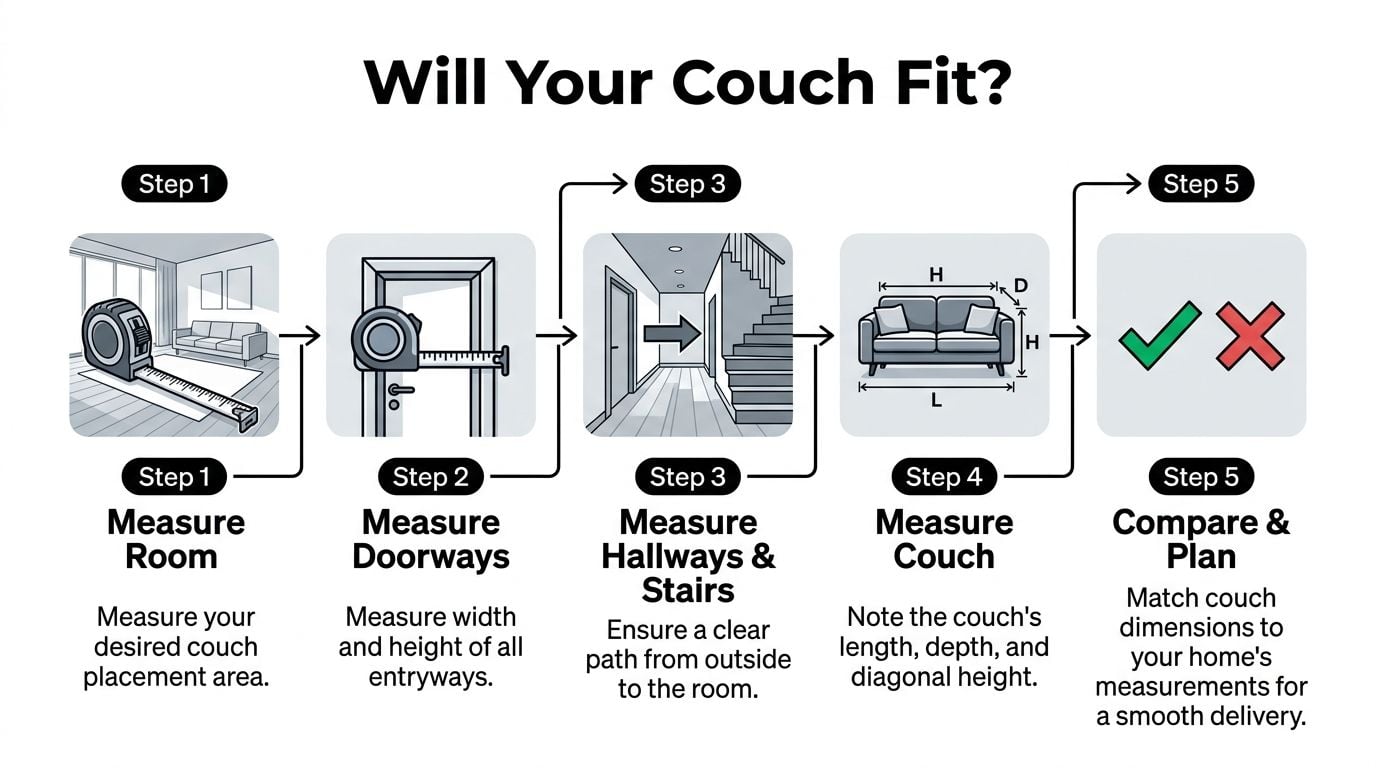
Will It Fit? How to Measure Your Space and Doorways
You find a couch you love. It fits the wall on paper. Then delivery day comes, and a major problem shows up at the front steps, in the narrow hallway, or at that tight basement turn that so many Milwaukee homes have.
We see this all the time. A 76-inch couch is often a smart size for local bungalows, ranch homes, condos, and older two-stories, but only if you measure the whole path, not just the room.
Our advice is simple. Start with the space where the couch will live, then work backward to the front door. If you want a more detailed walkthrough, use our step-by-step furniture measuring guide.
Start with the room, not the product tag
Measure the wall, but do not stop there. Mark the full sofa footprint on the floor with painter's tape, including the depth, then walk around it like you normally would.
Go from the doorway to the chair. Open the nearby door. Check the end table, floor vent, lamp cord, and anything else that gets used every day.
That quick test tells you more than a spec sheet.
If the couch fits the wall but makes the room annoying to live in, it is the wrong couch. We would rather see you buy a well-built USA-made or Amish-made sofa that fits cleanly than force a larger piece into a room that cannot support it.
Measure every part of the delivery path
This is the step that saves people from a miserable delivery day.
Measure the clear opening at:
Front doors
Storm doors
Interior doorways
Hallways
Stairwells
Ceiling slopes
Landings
Sharp corners
Banisters, radiators, and light fixtures that steal inches
Older Milwaukee-area homes are full of surprises. Thick trim, tight vestibules, steep basement stairs, and quick turns near the entry can stop a couch long before it reaches the living room.
Use the doorway diagonal
Straight width is only part of the story. Delivery teams often angle a sofa through an opening, so the doorway diagonal matters just as much as the basic width and height.
Measure the couch height, width, and depth. Then measure the door opening and look at the angle available around the frame, hardware, and nearby walls. That is often the difference between "it should fit" and "it fits."
If your numbers are close, do not guess. Ask about removable legs, detachable backs, or apartment-size construction. Those features are especially useful in city homes, upper flats, and older houses where access is tighter than the room itself.
A short fit-check table
What to measure
Why it matters
Wall space
Confirms the couch suits the room without crowding it
Walking space
Keeps daily movement comfortable
Door opening
Tells you whether the sofa can enter at all
Hall turns and landings
Catches the trouble spots before delivery day
Couch depth and height
Affects both placement and the delivery angle
Bring these numbers with you when you shop. At BILTRITE, we want to help you buy a couch that gets into your home, works with your family, and stays there for years. That is the whole point of choosing quality in the first place.
Choosing a Style That Complements Your Room
Once the fit is handled, the next question is visual weight. Two 76 inch couches can take up the same amount of floor space and look completely different in a room.
That’s where people go wrong. They focus on length and forget shape. In a smaller Milwaukee living room, bulky arms, low hidden legs, and overstuffed backs can make a couch feel heavier than it needs to.
Pick a lighter-looking silhouette
If you want your room to breathe, choose a couch that looks nimble.
Look for:
Raised legs that show more floor underneath
Slim or track arms instead of oversized rolled arms
Clean back cushions that don’t look overbuilt
A lower-profile frame if your room already has a lot of visual weight
These details matter because they change how the eye reads the room. A couch with open space underneath it usually feels less crowded than one that sits flat and heavy on the floor.
A smaller room doesn’t always need smaller comfort. It usually needs smarter proportions.
If you want inspiration on silhouettes and design directions, our guide to furniture styles can help you narrow down what fits your home.
Match the couch to the room’s job
Not every room needs the same kind of sofa.
A 76 inch couch in a formal sitting room can lean structured and upright. In a TV room or den, it can be softer and deeper-looking without turning into a giant lounge piece. The point is to match the style to how you’ll use it.
Here’s a simple breakdown:
Room use
Style direction that usually works
Apartment living room
Mid-century, transitional, or lightly scaled contemporary
Den or TV room
Soft contemporary with supportive cushions
Traditional bungalow
Classic lines, but watch arm bulk
Senior living space
Easy-entry seat height, supportive back, open circulation
Color and fabric change the scale, too
Dark colors can look sharp, but in a compact room they can also make a sofa read heavier. Lighter neutrals, soft textures, and fabrics with a little visual movement often make the piece feel easier in the space.
Patterns can work, but keep the scale of the pattern in line with the scale of the sofa. A busy oversized print on a compact frame can make the whole room feel choppy.
My opinion is simple. If your room is already tight, don’t ask the couch to be the loudest thing in it. Let it anchor the room without bossing it around.
Built to Last A Guide to Materials and Construction
You bring a 76 inch couch into your Milwaukee home, get it through the doorway, set it in place, and it looks great. Six months later, it squeaks, the seat dips, and the cushions already look tired. We hate that outcome, and it usually comes down to construction, not style.
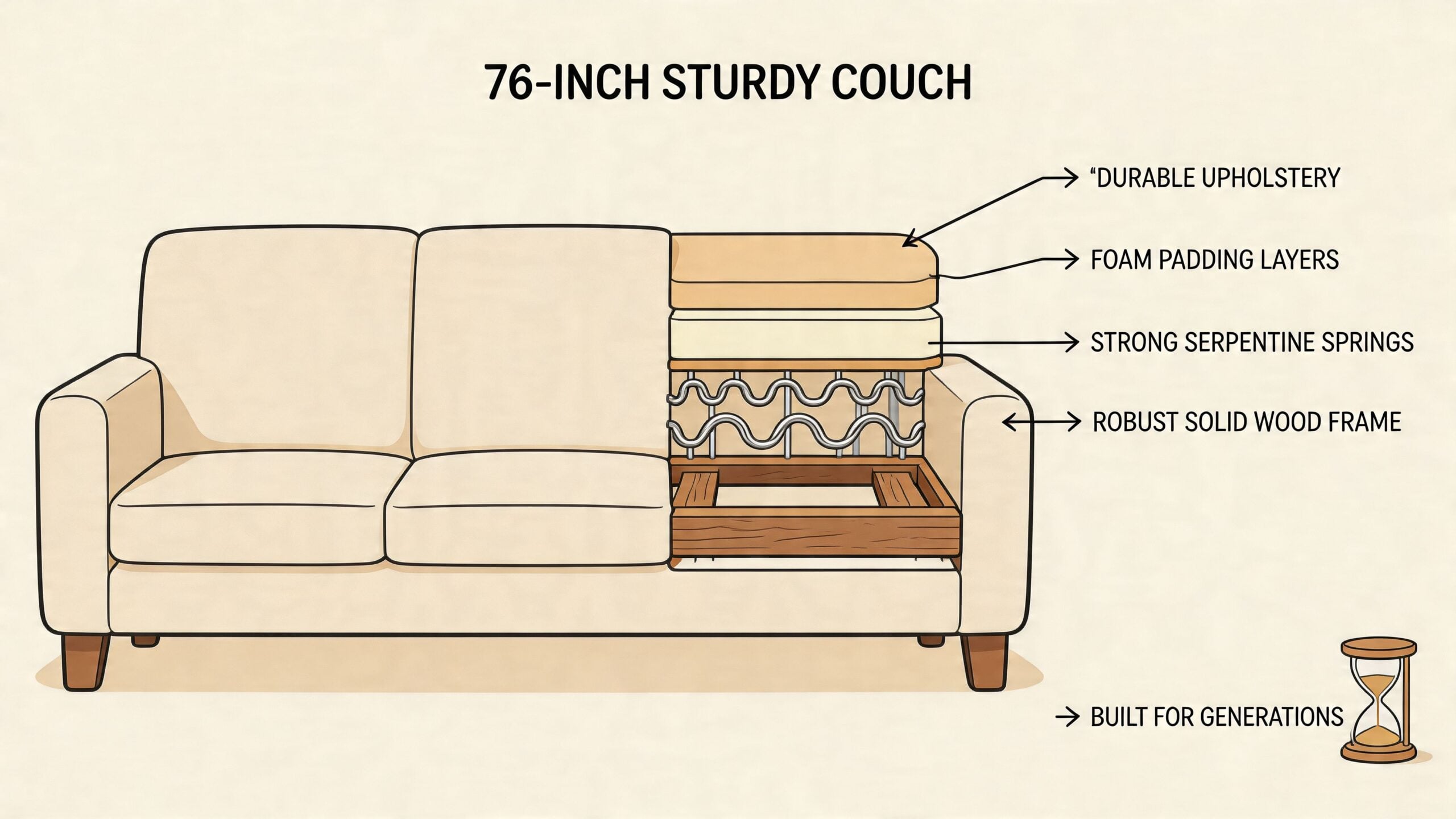
What matters is what sits under the fabric. Start with the frame. Then check the seat support. Then look at the cushions and upholstery. That order will save you from a lot of expensive mistakes.
Start with the frame
The frame decides whether a sofa stays solid or starts loosening up after a few hard Wisconsin winters and a lot of daily use.
We tell shoppers to look for kiln-dried hardwood first. It holds shape better, stays more stable, and gives the rest of the sofa a fair chance to last. A weak frame throws everything else off. You’ll hear more creaks, see more shifting, and feel uneven wear sooner than you should.
If you’re buying a 76 inch couch for a family room, condo, bungalow, or apartment where it will get used every day, do not settle for a flimsy frame just because the fabric looks good on the floor.
Check what holds the seat up
A couch can feel soft for five minutes and still be built poorly.
Good support keeps the seat from collapsing and helps the cushions recover after people sit in the same spot over and over. Ask what is under the cushions and how it is attached. Ask whether the sofa is built for everyday use or light occasional use. If the salesperson cannot answer that clearly, keep shopping.
Here’s what we want you to ask about in any showroom:
Frame material and whether it is kiln-dried hardwood
Seat support system and how it is built
Cushion construction and how it holds its shape
Whether the couch is made for heavy daily use
That short conversation tells you more than a quick sit test ever will.
Upholstery should fit your household
Your upholstery choice needs to match real life in your house. Kids, pets, movie nights, snack spills, blue jeans, and sunlight all leave a mark.
Leather is a smart pick if you want an easy wipe-down surface and a classic look that ages well. Performance fabric makes a lot of sense for busy households because it handles wear better than bargain upholstery. Textured woven fabrics can be beautiful too, but they need to be chosen with some discipline. Soft and pretty is not enough.
Cushions are where comfort and disappointment usually meet.
A sofa can feel plush in the showroom and flatten fast at home. Sit down. Lean back. Stand up. Sit again. Watch how quickly the cushion recovers and whether the seat still feels supportive after a few minutes. For a 76 inch couch, that matters even more because these smaller sofas often work harder in tighter rooms. They get used for everything.
One practical tip from our showroom experience at BILTRITE Furniture-Leather-Mattresses. Pay attention to labels that call out USA made, Amish made, solid wood, heavy duty, and come-apart construction. Clear labeling makes it much easier to compare build quality without getting distracted by throw pillows and sales tags.
Our advice is simple. Buy the better frame. Buy the better support. Choose upholstery that fits your household. If you want a couch that lasts for years instead of a few seasons, hidden construction is where the money should go.
Making It Yours with Custom Orders and Special Features
You find a 76 inch couch that looks right on the sales floor. Then reality shows up. The fabric fights your rug, the seat is softer than you want, or the sofa has to make a brutal turn through a Milwaukee bungalow entry.
That is why custom ordering matters.
We help Milwaukee families with this every day at BILTRITE Furniture-Leather-Mattresses. Older homes, condo hallways, narrow staircases, and tight front doors change what will work. A good custom option keeps you from settling for a couch that is almost right, or worse, buying one that never makes it into the room.
Come-apart designs solve real delivery problems
Come-apart construction is one of the smartest features you can ask for in this size.
A 76 inch sofa often fits the room well, but the path into the room is the primary challenge. Milwaukee-area homes regularly have tight doorways, sharp turns, basement steps, and apartment access points that stop standard sofas cold. A come-apart design lets the delivery team separate the piece, carry it in more safely, and reassemble it where it belongs.
We strongly recommend asking about this early, especially if you live in a condo, duplex, older colonial, or anything with a tricky stair run. It saves time, protects your walls, and avoids the headache of finding out too late that a good sofa is still the wrong sofa.
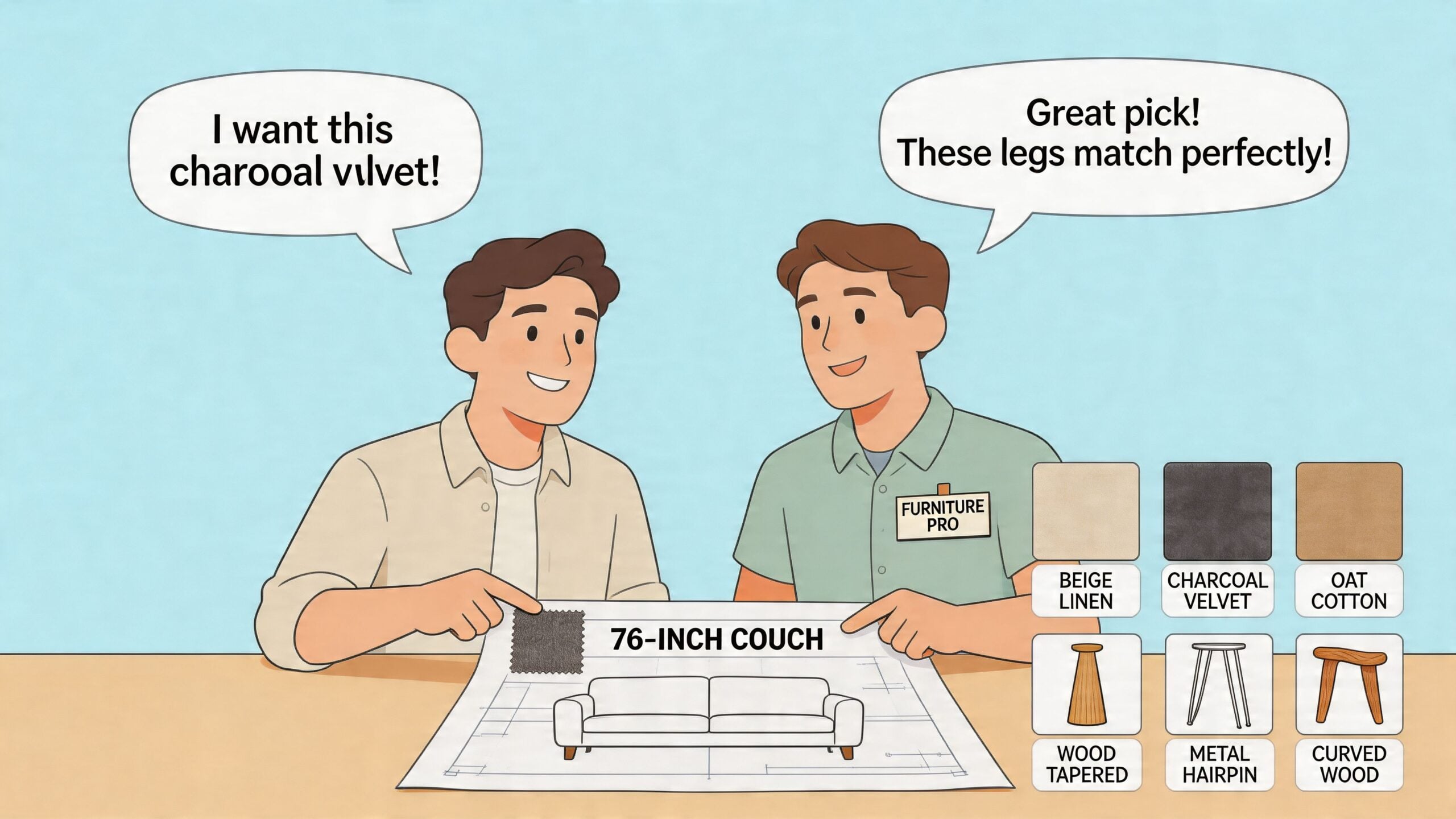
Custom details worth changing
Some upgrades are cosmetic. Some change how the couch lives in your home for the next ten or fifteen years. Start with the ones that affect daily use:
Fabric or leather Pick the cover that fits your household, not just your color palette.
Seat feel Choose the cushion support that matches how your family sits, lounges, and gets up every day.
Leg finish Match it to nearby wood tones so the sofa looks like it belongs in the room.
Arm style and back cushion look These small changes can make a compact sofa feel lighter, more refined, or more relaxed.
Come-apart or access-friendly construction For plenty of Milwaukee homes, this is the feature that makes delivery possible.
Our family has believed in USA-made furniture for generations because it gives you better choices and better staying power. Many Amish-made and American-made sofas offer real customization, not just a couple of fabric swaps. You can often choose the cover, wood finish, cushion feel, and access features without dropping down to flimsy construction.
That matters. A 76 inch couch usually goes into a room that gets real use. Family rooms. Condos. First homes. Long, narrow living rooms. You want something that fits the house, survives daily life, and still looks good years from now.
The right special feature fixes a problem before it becomes one.
Your 76-Inch Couch Buying Checklist
If you walk into a showroom without a plan, every sofa starts to blur together. A simple checklist fixes that.
Bring your phone notes, your measurements, and a little honesty about how you live. If the couch is for a formal room, say that. If the dog owns half the seat, say that too. Good decisions get easier when you stop shopping for an imaginary house.
Bring these measurements with you
Before you shop, have these written down:
Wall space The area where the sofa will sit.
Room clearance Enough space to walk comfortably around the couch.
Doorways and halls Include the narrowest point on the full path inside.
Stairs or elevator constraints If they apply, they matter early.
Ask these build-quality questions
You don’t need to sound like a furniture engineer. Just ask direct questions.
Ask this
Why it matters
What is the frame made of?
Tells you a lot about long-term durability
What supports the seat cushions?
Affects comfort and wear
What fabric or leather holds up best for my home?
Matches the sofa to real life
Is this available in a come-apart version?
Critical for tight access homes
Can I customize the look or feel?
Helps you avoid settling
Our sofa buying tips here are a handy companion if you want a quick refresher before you visit a store.
Use this final gut-check
Ask yourself:
Does it fit the room without shrinking the room?
Can it get into the house without drama?
Will the materials hold up to our daily life?
Do I like the way it looks from across the room, not just up close?
Would I still be happy with this after the novelty wears off?
That last question matters more than people admit.
A good 76 inch couch is a smart buy for a lot of Milwaukee homes. It gives you enough seating, keeps rooms usable, and opens the door to better-quality construction in a size that is practical.
We’d love to help you sort through the options in person. Visit BILTRITE Furniture-Leather-Mattresses in Greenfield, bring your measurements, and our family team will help you find a 76 inch couch that fits your home, your style, and the way your household really lives.