How To Repair Couch Springs: Easy 2026 Fixes

You know the moment. You sit down in your usual spot, coffee in hand, ready to relax, and the couch gives way more than it used to. One seat feels like a hammock. Another leans to one side. Suddenly your comfortable sofa feels tired, lumpy, or uneven.
That sinking feeling doesn't always mean the whole couch is done for.
In our family, furniture has never been just furniture. Since 1928, we've helped Milwaukee-area families make smart decisions about pieces they use every day. A sagging couch is one of those problems that can feel bigger than it is. Sometimes the repair is simple. Sometimes the issue isn't the spring at all. And sometimes a well-built couch deserves careful hands instead of a fast DIY guess.
If you're trying to figure out how to repair couch springs, the best place to start is not with tools. It's with diagnosis. Once you know what kind of support system is under your sofa, the repair path gets much clearer.
That Sinking Feeling and How to Fix It
A sagging couch usually announces itself slowly. One day it feels a little softer. A week later, your favorite seat drops lower than the rest. Then someone in the family says, “What happened to this couch?” and now everyone notices it.
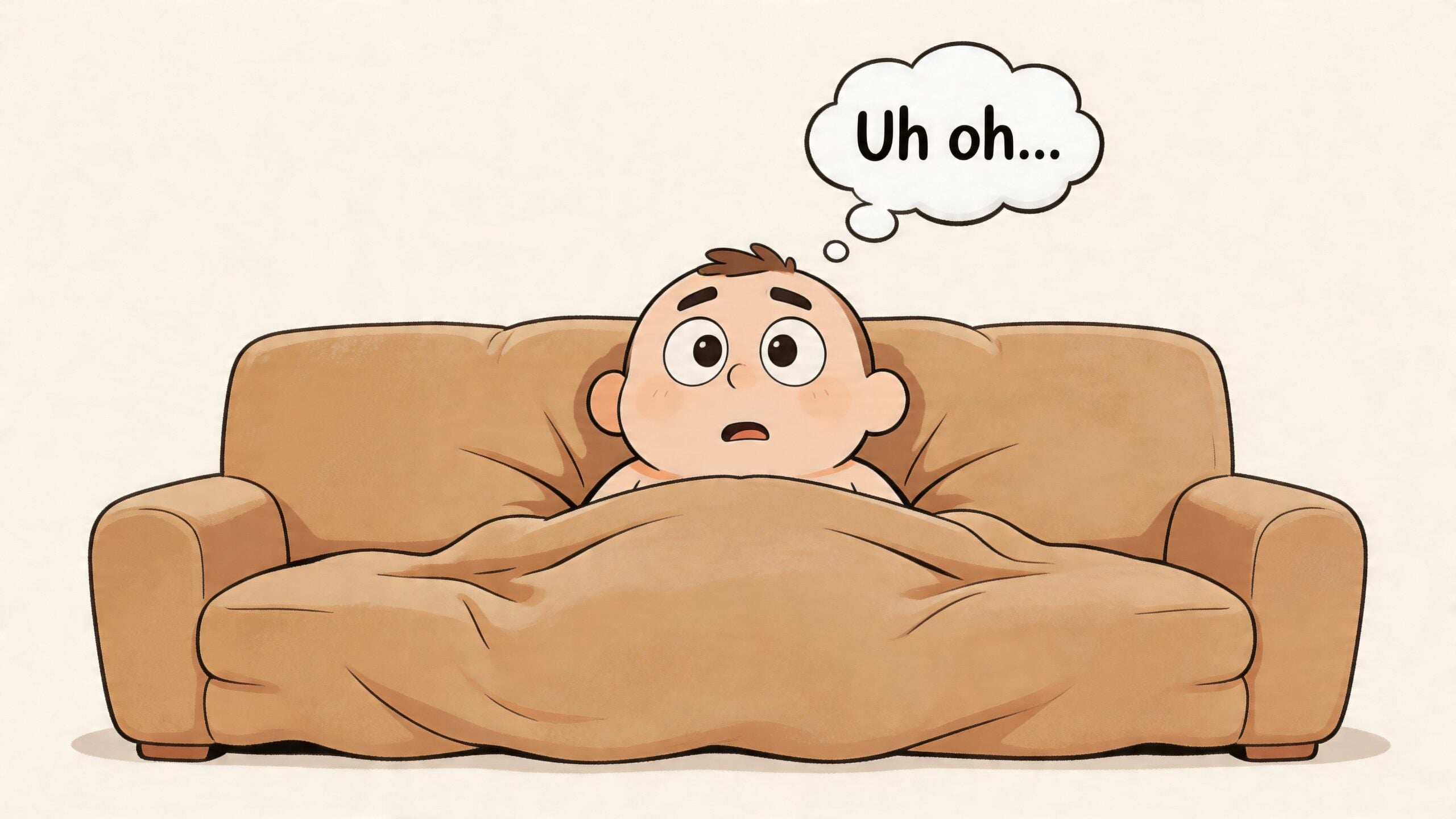
That kind of wear is common, especially in the seat everyone claims first. But sagging doesn't automatically mean your springs snapped in half. In a lot of homes, people pull the cushions, push on the seat deck, hear a little creak, and assume the worst. That's where many repairs go sideways.
A common living room story
Let's say the middle seat on a three-cushion sofa suddenly feels lower than the other two. The fabric still looks fine. The frame doesn't wobble. The cushion has some life left. That setup often points to a support issue under the seat rather than a full furniture failure.
If the sag seems to come from the cushion itself, that's a different problem. We wrote more about that in this guide on how to fix sagging couch cushions, because cushion fatigue and spring trouble can feel very similar at first.
Neighborly advice: If one seat sags and the others feel normal, don't assume the whole sofa needs replacing.
What a repair can actually do
A good repair can bring back support, level out the seating surface, and stop that “falling into a hole” feeling. The key is matching the fix to the actual problem.
Sometimes that means:
- Reattaching a loose spring clip so the spring can do its job again
- Reforming a bent spring if it has lost shape but hasn't broken
- Adding reinforcement when the support system has loosened over time
- Stopping the project before a complex spring system gets damaged by trial and error
For families who own better-built furniture, that last point matters a lot. A mass-market sofa with exposed zigzag springs often invites a simpler repair. A solid-wood sofa with a more advanced support system needs a much gentler approach.
Couch repair isn't about bravado. It's about being careful, patient, and honest about what you're seeing under there.
Diagnosing the Sag What's Really Going On Under There
Before you touch a staple remover or a pair of pliers, turn detective.
Often, the initial assumption is wrong. The thought is, “The spring broke.” But in sofa repair, 97.3% of reported “broken spring” issues are failures of the EK clips that hold no-sag springs to the frame, not the springs themselves, according to this upholstery repair walkthrough. That's why diagnosis comes first.
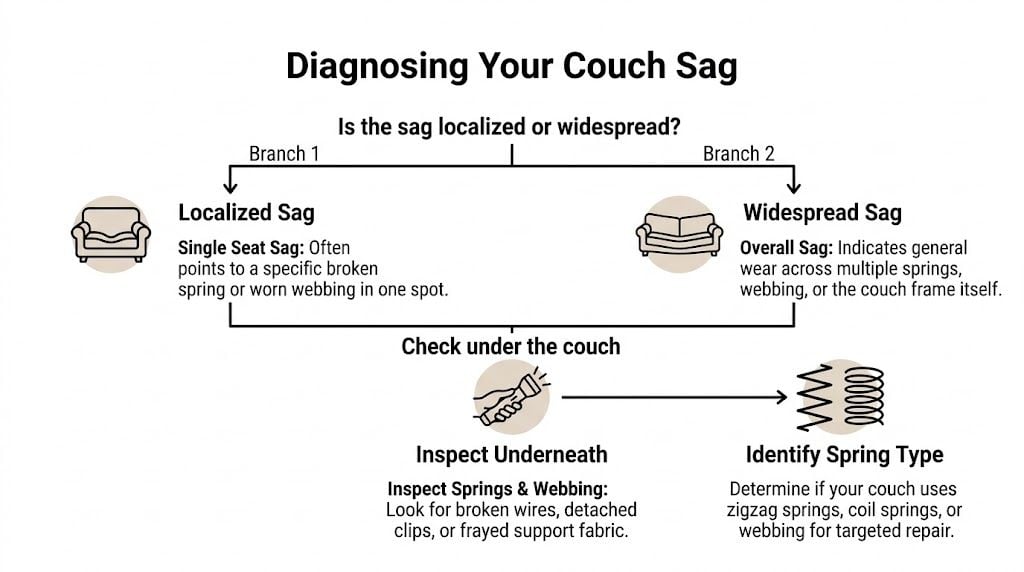
Start with what the sag feels like
Sit in each seat one at a time. Then press down with your hands across the front, center, and back of the seating area.
You're trying to answer one question: is the problem isolated or spread across the sofa?
| What you notice | What it often suggests |
|---|---|
| One seat sinks much more than the others | A detached clip, bent spring, or localized support issue |
| The whole couch feels tired and low | Widespread wear in springs, supports, foam, or frame |
| One side dips or twists | A frame or attachment issue |
| The seat feels uneven but cushion looks normal | Trouble below the cushion, not inside it |
Flip the sofa safely
Most spring repairs start underneath. If your couch is heavy, ask for help. Lay down a moving blanket first so you don't scrape the arms or back.
Once the sofa is upside down, you'll usually see a thin black fabric stapled across the bottom. That's the dust cover. It's not structural. Its job is to keep the underside tidy and reduce dust inside the frame.
Remove it carefully with:
- A staple remover if you have one
- A flathead screwdriver if you don't
- Pliers for stubborn staples
Keep the dust cover intact if you can. Reusing it makes the finish look cleaner when you're done.
What to look for underneath
Now you can inspect the support system directly. In many sofas, especially mass-market models, you'll see sinuous springs. These are the S-shaped or zigzag metal springs that run front to back.
Look for these clues:
Loose or missing clips
The spring may still be fine, but one end has popped free from the frame.A spring that's bent lower than the others
This can create a visible low spot even if nothing is snapped.A spring detached from the frame but still intact
That's often repairable without replacing the whole spring.A cracked wood rail where hardware mounts
That changes the job completely. The spring isn't the only problem anymore.
Look with your eyes first, then with your hands. Press each spring gently and compare how it moves next to its neighbors.
Identify the type of spring system
This part confuses people, especially if they search for how to repair couch springs and assume every couch is built the same. It isn't.
Here are the main categories a homeowner may find:
Sinuous or zigzag springs
Common in many modern sofas. These are the easiest for basic DIY diagnosis.Coil or pocket coil systems
More layered, often less visible, and harder to access.Eight-way hand-tied systems
Found in better-quality and heirloom-style furniture. These involve twine, multiple tie points, and much more skill.
If you're shopping for a new sofa someday, this is exactly why it's smart to understand construction before you buy. This article on what to look for in your new sofa or chair can help you spot the differences.
Match the symptom to the likely cause
A quick way to stay organized is to think in layers:
Cushion issue
The removable cushion is soft or collapsed.Support issue
The seat deck below the cushion has lost tension.Frame issue
The structure holding everything together has weakened.
If you can name the layer, you're much less likely to waste time fixing the wrong thing.
Gathering Your Tools for the Couch Comeback
Once you've found the problem, the job gets less mysterious. Most common spring repairs don't require a giant workshop. They require a few sensible tools, a little floor space, and enough patience to avoid rushing.
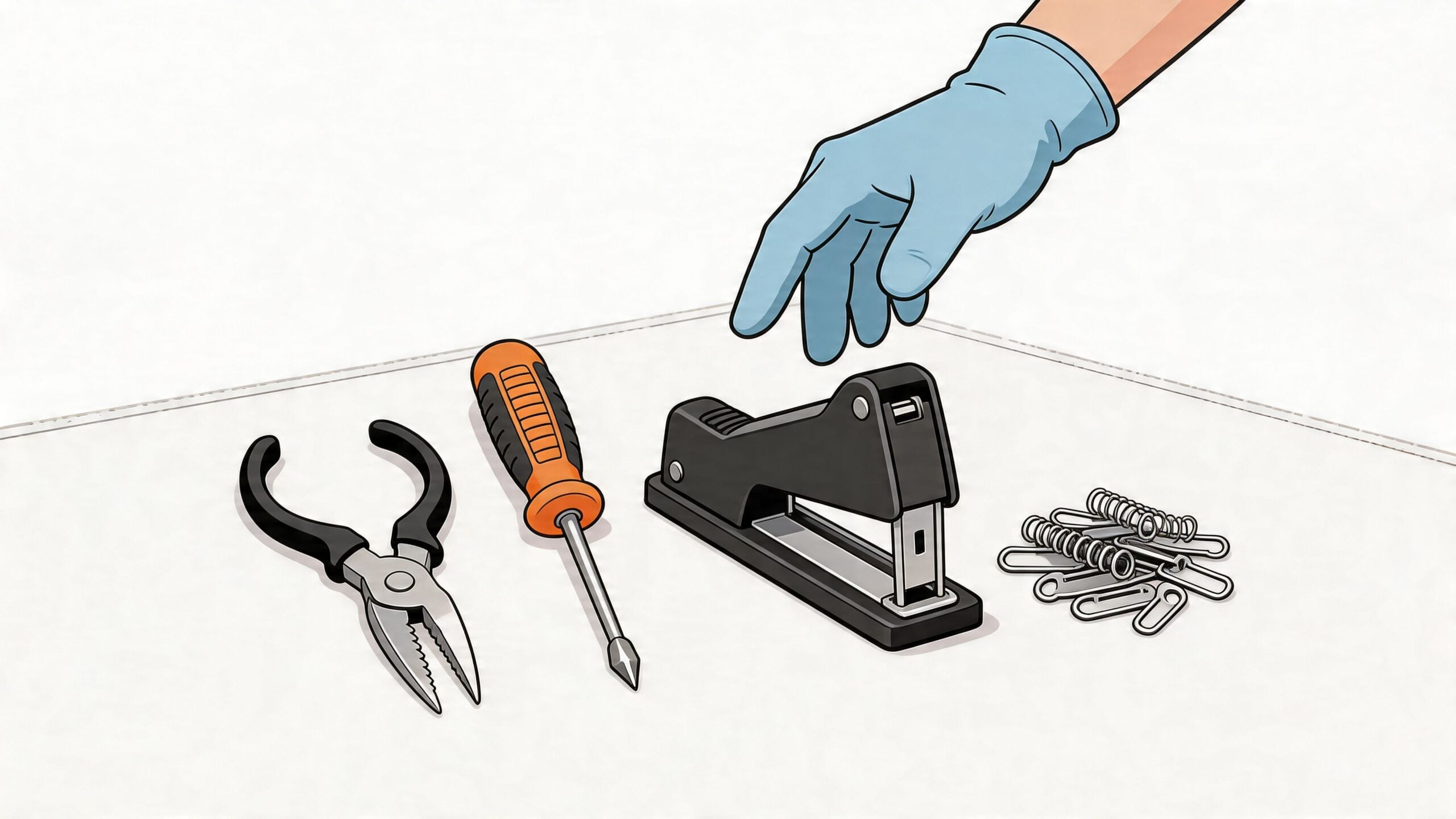
Your basic couch first-aid kit
For a typical underside inspection and simple spring repair, gather these:
- Work gloves for handling metal clips and springs
- Safety glasses in case a clip slips or a staple flies free
- Staple remover or flathead screwdriver to remove the dust cover
- Pliers for gripping, bending, and reattaching hardware
- Heavy-duty stapler or staple gun to reinstall the dust cover
- Flashlight so you can inspect corners and attachment points clearly
If you're repairing a detached sinuous spring, you may also need a replacement clip that matches the original style. If you're reinforcing a system with twine or wire, keep that material nearby before you start.
A few setup habits that save headaches
Tool choice matters, but setup matters too.
Put the sofa on a blanket or rug so the fabric doesn't rub against concrete or rough flooring. Set a small container nearby for staples and loose hardware. Take photos before removing anything. Those pictures help more than people expect when it's time to put the underside back together.
Shop habit worth stealing: Keep left-side parts and right-side parts separate if you remove more than one fastener. It makes reassembly much calmer.
If the sofa is large or awkward
Sectionals, sleepers, and older heavy pieces can be difficult to flip without straining your back or scraping the frame. If you're dealing with a bulky sofa, review some safe lifting basics first. This guide on how to move heavy furniture upstairs covers smart handling habits that apply here too.
One last practical note. If you uncover a more complex support system than expected, stop and reassess before buying specialty parts. A simple tool kit helps with diagnosis. It doesn't automatically make every repair a DIY job.
The Step-by-Step Repair Guide for Common Springs
Now, hands-on repair begins. The exact fix depends on the spring system in your sofa, so start with the simplest and most common situation first. That's the exposed sinuous spring attached to the frame with clips.
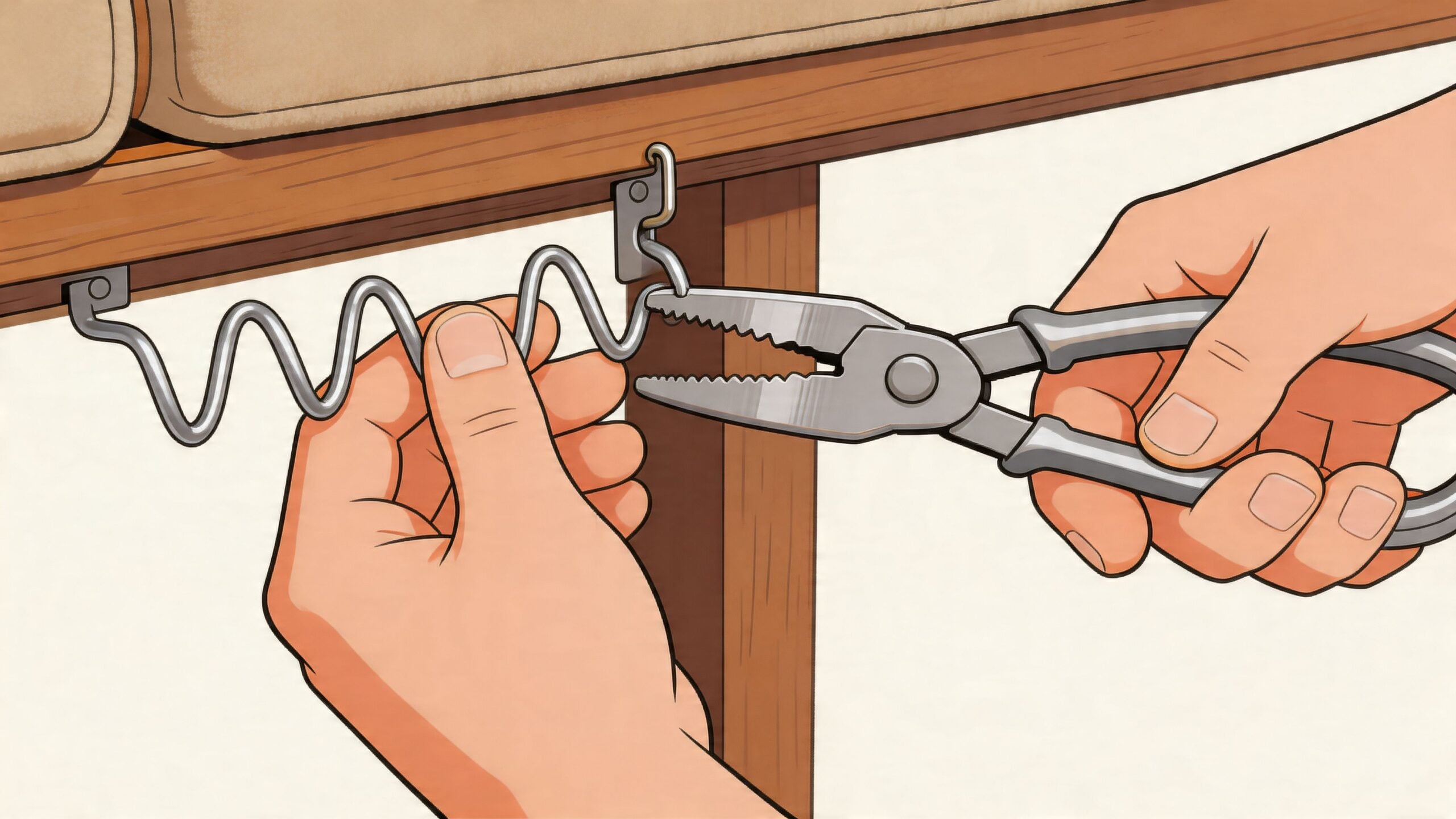
Repairing a detached sinuous spring
If the spring is intact but hanging loose on one end, you're likely dealing with a failed attachment point rather than a ruined spring.
Use this process:
Expose the underside fully
Remove enough of the dust cover to see the full spring path and both ends.Compare the loose spring to the working ones
That gives you a visual map for where it should sit and how much curve it should have.Inspect the clip area
If the clip is bent, loose, or missing, that's probably your culprit.Hook the spring back into place
Use pliers carefully. The spring has tension, so keep your face and hands out of its path.Secure the attachment
If you're using a replacement clip, make sure it sits firmly against the frame and holds the spring end without wobble.Press-test before closing the bottom
Push up and down on the repaired area from underneath, then set the sofa upright and sit on it.
This kind of repair is why diagnosis matters so much. If the spring itself is still sound, restoring the attachment can bring the seat back to life with much less work than a full replacement.
If the spring is bent or stretched
Not every damaged spring is broken cleanly. Some lose shape or tension over time.
A useful repair hierarchy from this guide to fixing broken springs on a sofa or armchair is simple:
- Detached but intact springs can often be re-hooked or re-tied
- Bent or stretched springs may be salvageable with careful reshaping
- Springs snapped in two need replacement with a matching part
That middle category is where readers often hesitate. If the spring has only drifted out of shape, pliers can sometimes help you gently bend it closer to its original form. The key word is gently. Over-bending weakens the metal and can turn a salvageable spring into a broken one.
Reinforcing sag with twine or wire
Sometimes the spring system isn't detached, but it lacks firmness. That's where reinforcement comes in.
Professional upholstery instruction from Upholstery Resource's spring reinforcement guide stresses one point above all else. Tension has to stay consistent and tight. Loose reinforcement doesn't solve the problem. It only delays it.
A common method uses twine or paper-wrapped wire woven perpendicular to the springs through the S-shapes. When the end is fastened to the frame, the connection is formed into a Z shape before stapling. That shape helps prevent the reinforcement from pulling loose under pressure.
The basic reinforcement flow
- Anchor one end securely
- Weave across each spring evenly
- Keep the line tight as you move
- Finish with a Z-shaped end before stapling
Tight, even support works better than a fast patch. If the twine goes slack during the job, redo that pass before closing the sofa.
This is one of those repairs that rewards patience. If the spacing is inconsistent or the tension changes halfway across, the seat can feel strange even if it looks fine from below.
Replacing a spring only when it is truly broken
If a spring is snapped cleanly, replacement becomes the right move. Bring the damaged spring with you when sourcing a substitute if possible. Size and strength need to match, or the seat will feel uneven after the repair.
When replacing a spring:
- Match the shape and length as closely as possible
- Compare the wire thickness to the original
- Install it in the same orientation as the others
- Test neighboring springs too, because one failure can hide another weak point
A mismatched replacement can create a seat that feels oddly stiff in one strip and soft in the next. That's frustrating after all the work, so take your time here.
The big difference between mass-market and better-built couches
Most online articles act like every sofa has exposed zigzag springs and obvious clips. Many don't.
A major gap in repair advice involves solid-wood or Amish-made couches with pocket coil or eight-way hand-tied spring systems, which are much more complex. One source notes that 68% of users on r/upholstery report failed DIY attempts on “heirloom” couches, often leading to frame cracks costing $500+ to fix professionally, according to this discussion of couch spring repair gaps.
That doesn't mean quality furniture is fragile. It means it is built differently.
How to spot a more complex system
| Sign you notice | What it may mean |
|---|---|
| You don't see exposed zigzag springs | The support may be enclosed or layered |
| There is twine tying springs together | You may have a hand-tied system |
| The seat structure looks deep and dense | Coil support may sit below multiple upholstery layers |
| The frame is solid wood and the build feels heavy | The sofa may deserve professional upholstery work rather than a quick DIY attempt |
What to do with pocket coil and hand-tied systems
For these higher-quality systems, your safest DIY role is often diagnosis, not full repair.
You can:
- Inspect for obvious frame damage
- Note where the sag occurs
- Listen for loose internal movement
- Document the underside with photos
- Stop before cutting into upholstery layers
You should be cautious about:
- Pulling apart upholstery to “see more”
- Tightening twine without understanding the tie pattern
- Forcing springs back into shape inside a layered seat deck
- Swapping in generic parts that don't match the original support design
If you've got an older, solid-wood sofa or a premium upholstered piece, it's smart to treat it like the investment it is. The wrong repair can create a bigger bill than the original sag.
If you're interested in more hands-on furniture upkeep, our DIY furniture repair articles are a useful place to browse before you start another project.
When DIY Isn't the Answer Knowing When to Call for Backup
Some repairs are satisfying. You find a loose clip, reattach it, test the seat, and the couch feels steady again. That's a good day.
Other repairs look simple at first and turn into a chase. You fix one spring, but the seat still sags. You reinforce the underside, but the couch creaks more than before. That's usually your clue that the issue goes deeper than one loose part.
The red flags that change the decision
One of the most important facts to keep in mind is this: 75% of sagging can stem from degraded foam or supports, not just springs, based on this discussion of when DIY repair stops making sense. So if your spring repair doesn't solve the feel of the seat, the spring may never have been the whole story.
Watch for these signs:
The frame shows compression cracks
Spring work won't solve structural weakness in the wood.The seat still dips after a repair
Foam, webbing, or a deeper support layer may be worn out.Multiple areas sag at once
That points to broad wear rather than one failed attachment.The sofa is heavy-duty or heavily used
Repeated stress can affect several layers at the same time.You uncover a hand-tied or enclosed coil system
Skill level matters much more here.
A simple repair versus a false economy
The same source notes that if springs are more than 50% stretched or the frame shows compression cracks, professional re-springing at $400 to $800 is a better investment than a spot fix that may fail within 6 months. That's not fun to hear when you're mid-project, but it's useful.
Here's the practical perspective on the matter:
| Situation | Smarter move |
|---|---|
| One detached clip, no frame damage | DIY may make sense |
| Bent spring with otherwise solid support | Careful repair may help |
| Severe stretch across the seating area | Get a professional opinion |
| Cracked frame plus sagging seat | Stop DIY work |
| Premium or heirloom spring system | Have an upholsterer assess it |
Some of the most expensive furniture mistakes start with, “I figured I'd just tighten a few things.”
Why better furniture deserves caution
A well-built couch can last a long time, but that doesn't mean every repair is simple. In fact, quality pieces often use stronger materials and more intricate support methods. Those systems reward good workmanship. They do not reward guesswork.
This is especially true for:
- Solid-wood frames
- Heirloom upholstery
- Senior-use recliners or heavy-use seating
- Older sofas with layered construction
If you're weighing whether a pro should step in, think about access too. The convenience side matters. Services like white-glove delivery are a reminder that furniture care often goes beyond the item itself. Handling, inspection, setup, and protection all affect long-term performance.
Knowing when to stop isn't failure. It's good judgment.
The Best Fix of All A New Foundation for Family Memories
A repair can be exactly the right move. If your couch had one loose clip or one tired support point, a careful fix may buy it plenty more good years.
But sometimes the repair teaches you something else. The sofa has done its job. It carried movie nights, afternoon naps, kids climbing over the arms, late-night talks, and everyday living. At some point, replacing it becomes less about giving up and more about choosing fresh support for the next season of family life.
What a new couch changes
A new sofa doesn't just sit in the room. It changes how the room works.
You notice it when:
- Everyone stops avoiding one seat
- The cushions feel level again
- Getting up is easier
- The whole room looks more settled
If you've gone through the process of learning how to repair couch springs, you also know more now than most shoppers do. You know to look below the fabric. You know support systems matter. You know that build quality and frame quality affect comfort long after the showroom visit.
Shop with construction in mind
When it's time to replace instead of repair, focus on the bones of the piece.
Look for:
- Solid-wood construction
- Thoughtful support systems
- Comfort that matches how your family uses the sofa
- Sizing that fits your room, not just the photo in your head
- A seating feel you can test in person
This matters whether you're furnishing a compact condo, a busy family room, or a home where easier access and dependable support are top priorities.
A couch should feel welcoming on day one, and still feel dependable after real life happens on it.
Buy for the years ahead
The best furniture decisions usually happen when comfort, durability, and honest guidance all meet in the same place. That's why so many families still want to sit on the sofa, feel the arms, test the seat depth, and talk with someone who knows construction beyond the sales tag.
A good replacement should suit your home the way your old favorite once did. Maybe better.
If your current couch needs a second opinion, or you're ready to find a better-built replacement, we'd love to help at BILTRITE Furniture-Leather-Mattresses. We're a fourth-generation family business serving Metro Milwaukee since 1928, and we believe good furniture should feel comfortable, hold up to daily life, and fit your home the right way. Stop into our Greenfield showroom, say hello, and let our experienced team help you compare styles, support systems, and quality in person.