Best Furniture Store Norwalk CT for Your Home in 2026


Your approach to a furniture search in Norwalk is likely a common one. You’ve got tabs open, screenshots saved, and a rough idea of what you want, but no clear way to tell which store is worth your time.
That’s where a little old-school furniture wisdom helps.
We’re a fourth-generation family furniture business from Wisconsin, and while we’re not in Connecticut, we’ve spent decades helping families avoid the same expensive mistakes. Cheap case goods that wobble in a year. Sofas that look good under bright lights and wear out fast at home. Mattresses that sound impressive until you ask one technical question and get a blank stare.
A good furniture store norwalk ct search shouldn’t start with “Who has the biggest sale?” It should start with “Who will help me buy something I’ll still be happy with years from now?”
Your Norwalk Furniture Adventure Starts Here
Furniture shopping usually begins with a simple goal. A better sofa for family movie night. A dining set that can handle real life. A mattress that helps you wake up without feeling beat up.
Then the confusion starts. One store talks style. Another pushes price. Another has polished photos but not much substance. If you’re shopping local in Norwalk, that can feel like a lot of noise.

What we’d tell any new neighbor is simple. Shop for values before you shop for products. A store’s philosophy shows up in everything else, from the quality on the floor to the way delivery problems get handled.
Quality is getting harder to fake
There’s a reason more shoppers are asking tougher questions. Recent data shows a rising demand for quality, with the U.S. solid wood furniture market growing 5.2% annually and searches for “USA-made furniture” in Connecticut increasing by 15% over the past year, according to this Norwalk market reference. That tells me people are tired of disposable furniture.
It also tells me there’s an opening in many markets. Big stores often talk a lot about affordability, trends, and fast delivery. They talk far less about USA-made, Amish-crafted, and real solid wood options. If that’s what you care about, you’ll need to shop with your eyes open.
Practical rule: If a store makes it easy to understand what something is made of, that’s a good sign. If the details stay fuzzy, move on.
Use a simple filter
When you compare local options, ask yourself:
- Does this store explain construction clearly? You want plain answers, not showroom poetry.
- Do they seem proud of durability? Good stores like talking about what’s under the fabric and behind the finish.
- Can they help me plan, not just sell? The better stores act more like guides than closers.
If you’re early in the process, this kind of home design starting point can help you get your ideas organized before you ever walk into a showroom.
Norwalk has options. Your job is to find the one that respects your budget without treating furniture like a throwaway purchase.
How to Find a Great Local Furniture Store
A great local furniture store doesn’t just sell furniture. It helps you make fewer bad decisions.
That sounds blunt, but it’s true. Reviews matter, sure. So does selection. But a key difference shows up in how a store answers questions when you slow the conversation down.
Watch how they talk, not just what they sell
Start with the people on the floor. Do they ask about your room, your lifestyle, and your timeline? Or do they go straight to “What monthly payment are you looking for?”
A strong showroom team usually does a few things well:
- They ask follow-up questions. “Who will use this?” “Do you need storage?” “Will this piece go upstairs?”
- They explain trade-offs. A good salesperson should tell you why one fabric fits pets better and why another works better in a formal room.
- They don’t rush silence. If you need a minute to sit, test, and think, they let you.
The best furniture people sound like consultants. The worst sound like they’re racing a timer.
Look for local roots
You don’t need a family business specifically. But you do want a store that behaves like it plans to be around for a long time.
That often means a business with community ties, a stable staff, and clear policies. Stores that think long term usually care more about repeat customers than one fast transaction.
Here’s a smart way to judge that on your visit:
| What to check | What a good sign looks like |
|---|---|
| Staff knowledge | They can explain materials and construction without reading a tag |
| Delivery discussion | They ask about access, stairs, and room fit early |
| Custom options | They can walk you through fabric, finish, or layout choices clearly |
| Problem-solving | They offer solutions, not shrugs, when you raise concerns |
Pressure is a warning sign
If the energy feels pushy, trust that feeling. Furniture is a high-consideration purchase. You should never feel hustled.
A good local store understands that a customer may visit twice, take measurements home, bring back photos, and then decide. That’s normal. In fact, it’s smart.
If you want a useful framework before visiting stores, this guide on how to shop for furniture smartly lays out the basics in a practical way.
Ask one question early
Try this within the first few minutes:
“What do you carry that holds up best for busy everyday use?”
A good store will have an answer right away. A weak one will drift into generalities about style, color, or “customer favorites.”
You’re not just looking for a store with inventory. You’re looking for a store with judgment.
Measure Twice Buy Once A Practical Planning Guide
Nothing ruins the fun of furniture shopping faster than buying something that won’t fit through the front door.
This part isn’t glamorous, but it saves headaches. Before you shop any furniture store norwalk ct location, do the homework at home.
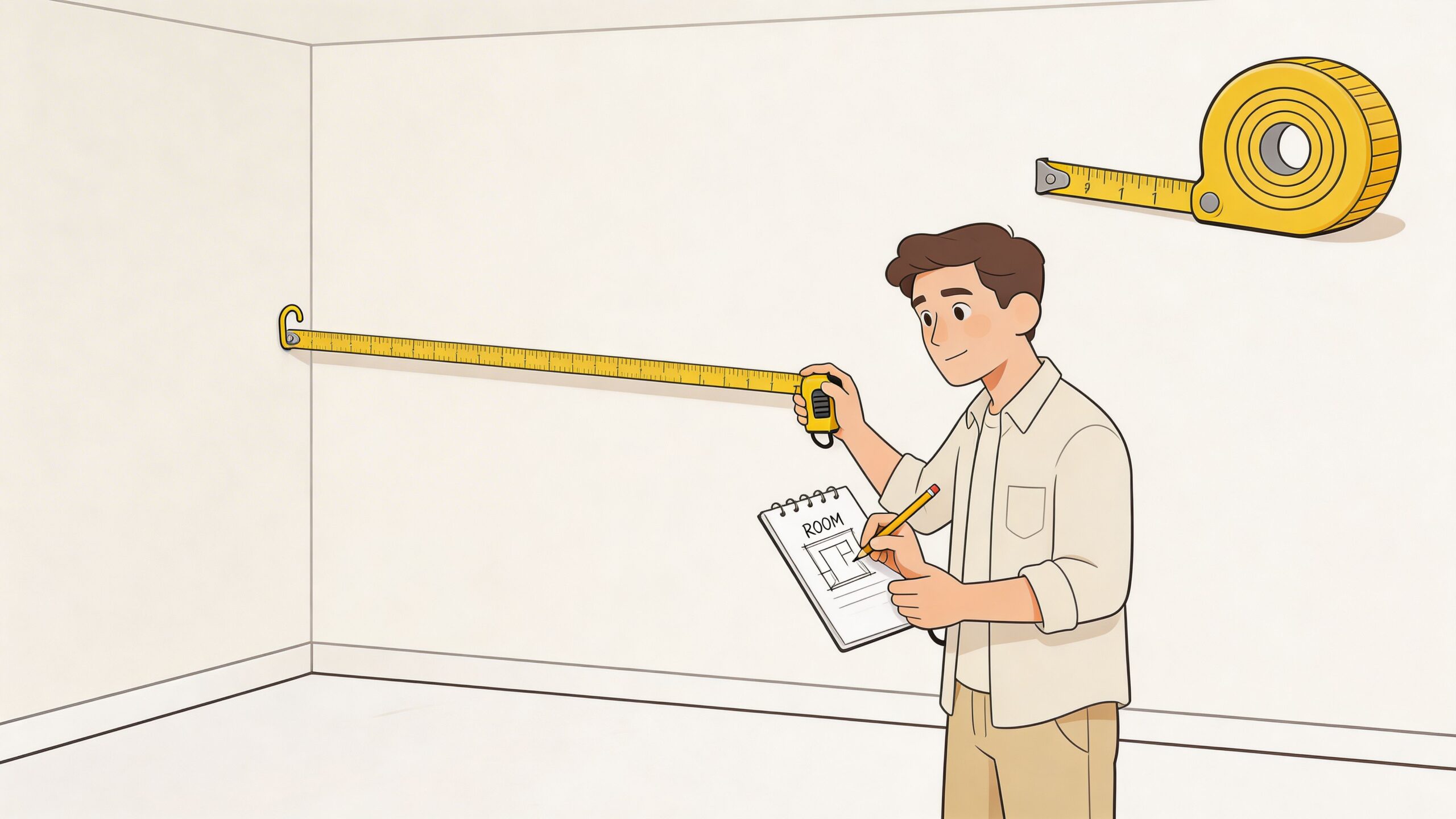
Measure the room and the path
Many measure the wall. Fewer measure the doorway, hallway, stair turn, elevator, or ceiling height.
That’s where trouble starts.
Take these measurements before you go:
- Room width and length
- Door opening width and height
- Hallway width
- Staircase width and landing depth
- Distance from entry to final room
Mark it out on the floor
Painter’s tape is your friend. Tape the outline of the sofa, bed, or dining table right on the floor.
That quick step tells you more than guessing ever will. You’ll see traffic flow, crowding, and whether end tables or dining chairs still have breathing room.
Buy for movement, not just for looks. A room that’s hard to walk through gets old fast.
Ask about delivery-friendly construction
Some of the best pieces for tricky homes are modular or designed to come apart. That matters in condos, older houses, and upstairs spaces.
Good stores know which sofas, sectionals, and recliners can be broken down for delivery. Smart shoppers ask before they fall in love with the wrong piece.
If you want a clean checklist, this furniture measuring guide is worth bookmarking before your shopping trip.
A little prep makes you calmer in the showroom. It also makes you much harder to steer into something that doesn’t fit your life.
Spotting Quality The Secrets to Furniture That Lasts
This part of the shopping trip separates smart buys from expensive regrets.
A dresser can look polished on the floor and still be built for a short life. Good furniture shows its value in the bones. That is how our family has judged it for generations, and it is the standard I’d use in any Norwalk showroom.
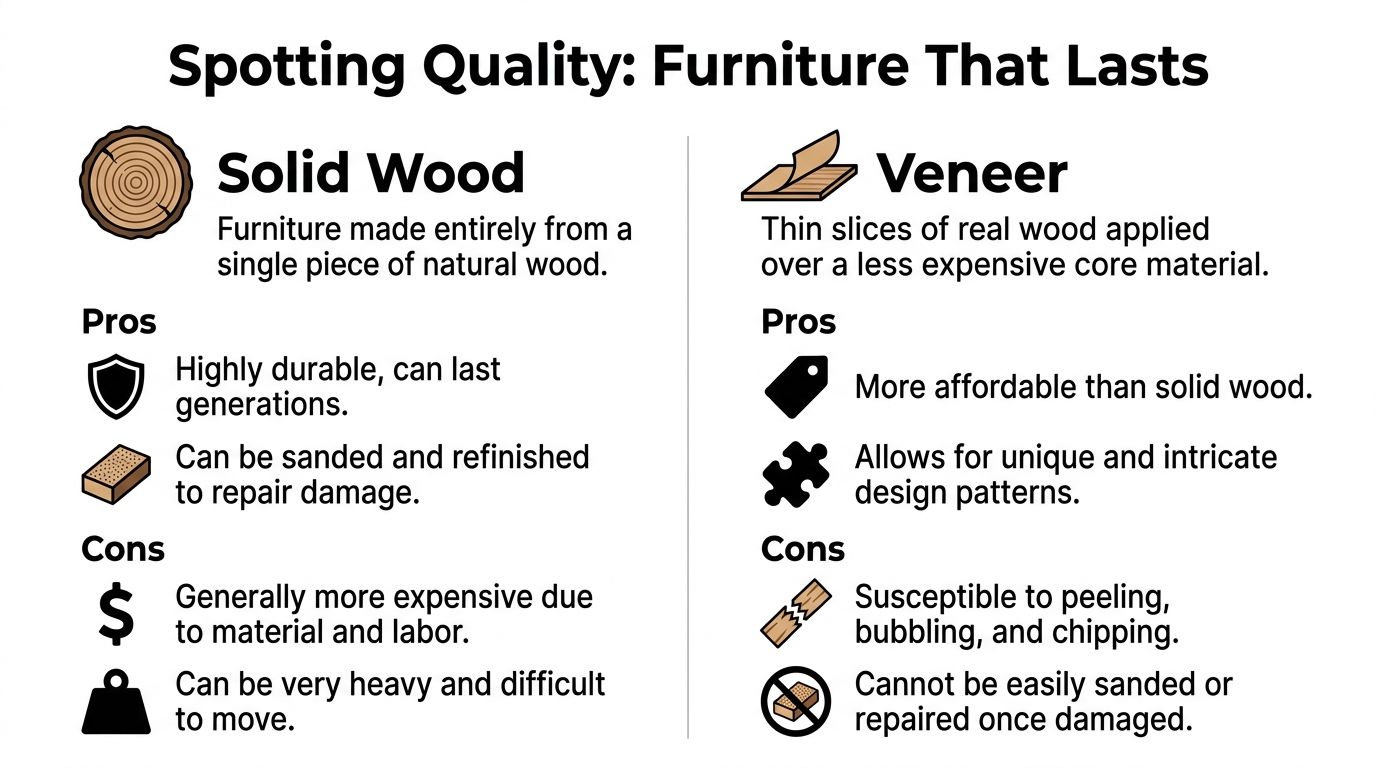
Start with what the piece is made of
Ask for the full construction story.
Solid wood remains the benchmark for bedroom, dining, and occasional furniture that needs to last. It handles daily use better, it can often be repaired, and it usually ages with more dignity. Veneer can also be a smart choice if it is applied well over quality plywood or hardwood. Particleboard deserves real caution, especially in drawers, long shelves, and furniture that gets moved or heavily used.
If the salesperson cannot explain the core material clearly, that is your warning sign.
Inspect the spots that reveal the truth
Shoppers who want lasting furniture need to get a little nosy. Open every drawer. Check underneath the table. Grab the chair arm. Look at the back, not just the front.
Pay attention to these details:
- Drawer joinery
Dovetails are a strong sign. Stapled or thin drawer boxes usually tell a cheaper story. - Drawer guides
Drawers should move smoothly and sit level, not scrape, dip, or rack side to side. - Back construction
A substantial back panel adds strength. Thin nailed-on panels often show where corners were cut. - Table stability
Press gently on corners. Wobble now means annoyance later. - Finish work
Edges, corners, and undersides should look cared for, not rushed.
Trust your hands. They catch what showroom lighting hides.
Use Amish-made and USA-made as your benchmark
Even if you are buying from a local Connecticut store, compare everything against the standards you see in good Amish-made and USA-made furniture.
That standard usually means better hardwoods, better joinery, and people who expect the piece to carry their name with pride. Our family has believed that for more than 90 years. Furniture should be built by people who care what it looks like in your home ten years from now, not just how it looks on a sales floor today.
Amish-made furniture often stands out for one simple reason. The builder expects you to keep it. You see that in the fit, the finish, and the consistency from one drawer or chair to the next.
Upholstery deserves the same scrutiny
A sofa can fool people fast. Soft cushions and a pretty fabric do not guarantee a long life.
Ask what is inside the frame, what suspension system supports the seat, whether the cushions are all foam or foam wrapped, and how the fabric is rated for wear. Good stores should be comfortable discussing fabric characteristic codes, durability ratings such as Wyzenbeek testing, and the practical differences between performance fabrics and basic decorative covers. If they stay vague, keep shopping.
For wood furniture, it also helps to learn the tells before you walk in. This guide on how to tell if furniture is real wood will give you a sharper eye in any showroom.
A Guide to Buying Your Best Mattress in Norwalk
A mattress is one of the easiest purchases to get wrong because so much of the language is designed to blur the truth.
Terms like plush, luxury, cooling, and support sound nice. They don’t tell you enough. If you want a mattress that holds up, ask for the specs.

Know the main types
Most shoppers will run into four broad categories.
Innerspring mattresses use coil systems and often feel more traditional.
Memory foam focuses on pressure relief and contouring.
Latex usually appeals to people who want a more buoyant feel.
Hybrid designs combine coils with foam or other comfort layers.
None of these are automatically best. Your body, sleep position, and comfort preference matter. But construction still matters just as much as feel.
Ask the technical questions
This is one place where numbers matter. According to the Norwalk P.C. Richard & Son mattress reference, a durable innerspring mattress often features 1,000-1,500 individually wrapped coils for motion isolation, while quality memory foam will have a density of 4-5 lbs/ft³ to ensure proper pressure relief and resist sagging. The same source notes that these are the kinds of numbers that separate a shorter-term buy from a longer-term investment, and you can review that benchmark on their Norwalk mattress page.
That’s useful because it gives you a way to cut through the fog.
If the salesperson can’t tell you the coil design or foam density, keep asking. You’re not being difficult. You’re shopping intelligently.
Test for real-life sleep, not showroom comfort
Don’t do the quick sit-on-the-corner test and call it good. Lie down in your usual sleeping position and stay there long enough to notice pressure points.
A few things to watch:
- For side sleepers
Notice shoulder and hip pressure. - For back sleepers
Watch for a gap under the lower back or a hammocking effect. - For couples
Ask about motion isolation and edge support.
A mattress that feels “soft and nice” for thirty seconds can still be the wrong mattress.
Don’t ignore policies and setup
A useful mattress store should explain delivery, setup, old mattress removal, and trial or comfort-exchange policies clearly.
That same Norwalk mattress reference includes a 90-Night Sleep Guarantee with a one-time exchange after the initial adjustment period, which tells me at least one local player understands that mattress comfort can change after real use. Stores that stand behind the process tend to be easier to work with if the first choice isn’t right.
One more opinion from our side of the business. If you ever find a good two-sided, flip-able mattress, give it serious consideration. That style can offer excellent long-term value because you can spread wear more evenly over time.
If you want a practical overview before you start testing beds, this mattress shopping guide is a helpful place to begin.
Smart Questions to Ask in Any Furniture Showroom
You can learn a lot about a furniture store in the first five minutes. Ask one direct question about materials or construction, and pay attention to what happens next. Good salespeople answer clearly. Weak ones get vague, dodge the question, or steer you back to the price tag.
That tells you plenty.
Price and delivery still matter, of course. They just come after you know what you’re paying for. Our family has believed that for generations, and it applies in Norwalk just as much as it does in Wisconsin.
Questions that expose quality fast
Save these in your phone before you walk into any furniture store norwalk ct showroom.
“Is this solid wood, veneer, plywood, or particle board?”
A good store will break that down without hesitation.“How are the drawers built?”
Look for a real answer about joinery, guides, and how the drawer box is constructed.“Where is this made?”
If a store is proud of its product, it will tell you the factory, not just the brand name.“What’s inside the seat cushions?”
Foam density, springs, and cushion wrap affect comfort and long-term wear.“Can I see the warranty in writing?”
Verbal promises are cheap. Printed policies matter.
The upholstery question many shoppers skip
Fabric can make or break a sofa purchase. Ask how the material is expected to wear in a busy home with kids, pets, guests, and everyday use.
One useful question is simple. Ask whether the fabric is rated for regular residential wear and what makes it a better choice for your household. Strong salespeople can explain durability, cleanability, and texture in plain English. You do not need a lecture. You need a straight answer you can use.
From our side of the business, I’ll say this plainly. Stores that know upholstery well usually know their furniture well. Stores that hand-wave fabric questions often hand-wave construction too.
Ask about ownership, not just the piece
A nice-looking dresser or sectional is only half the purchase. The other half is what happens after you say yes.
| Ask this | Why it matters |
|---|---|
| Can I see the full dimensions, including depth and height? | Helps prevent fit and traffic-flow problems |
| What does delivery include? | Clarifies setup, placement, and packaging removal |
| What happens if it arrives damaged? | Shows how the store handles real-world problems |
| Is this available in different finishes or fabrics? | Gives you better odds of getting the right fit |
| How long is the lead time, and is that estimate realistic? | Helps you plan without surprises |
One more question I always recommend. Ask, “If this were going in your own home, what would you choose instead, and why?” Good people in the showroom usually have an honest opinion. That answer can be more helpful than the sales script.
Listen for clarity
You are listening for useful specifics.
A strong salesperson says, “This cushion will feel softer at first, but this one will hold its shape longer,” or “This finish is better if you have active kids.” That is the kind of guidance a family-run store should give freely.
Clear answers build trust. Foggy answers waste your time. And if a store respects your questions, there’s a good chance it will respect you after the sale too.
Ready to Find Your New Favorite Furniture
If you take nothing else from this, take this. Buy from a store that respects your home, your budget, and your time.
Measure before you shop. Inspect construction before you fall for looks. Ask direct questions. Get clear on what materials you’re paying for. On mattresses, ask for specs, not slogans.
Norwalk shoppers have options. The trick is choosing the store that gives you real information and stands behind what it sells. That’s how you buy furniture with confidence instead of crossing your fingers on delivery day.
And if you care about USA-made, Amish-made, and solid wood furniture, don’t be shy about saying so. Those are not old-fashioned priorities. They’re smart ones.
If your travels ever bring you to the Milwaukee area, we’d be glad to welcome you, shake your hand, and show you how our family has approached furniture for generations.
If you’re looking for friendly, no-pressure help from a family that’s been doing this since 1928, visit BILTRITE Furniture-Leather-Mattresses. We’d love to see you in Greenfield, help you compare better-quality options, and show you our USA-made, Amish-made, solid wood, leather, and mattress selections in person.