BILTRITE: Transitional Style Living Room Furniture


You’re there right now. One sofa feels too formal, another feels too stark, and the room in your head looks better than the room in front of you.
That’s why so many homeowners land on transitional style living room furniture. It gives you the warmth people want to live with and the cleaner lines that keep a room from feeling dated. It works in a Milwaukee bungalow, a condo, a family room with kids and dogs, or a downsized senior living space.
We’ve been helping local families furnish their homes since 1928, and I’ll tell you: transitional style has staying power because it solves a real problem. Many homeowners do not want a museum room. They want a comfortable, polished space that still feels easy on a Tuesday night.
What Is Transitional Style Anyway
Transitional style is the middle ground between traditional and contemporary. Not bland. Not confused. Just balanced.
If you like classic details but don’t want heavy carving, ornate trim, or fussy patterns everywhere, this style makes sense. If you like modern furniture but don’t want your living room to feel cold, it makes sense too.
The short version
Transitional style living room furniture mixes familiar shapes with cleaner lines. You’ll usually see:
- Well-fitted seating with less ornament
- Neutral colors like beige, taupe, gray, cream, and brown
- A mix of materials instead of one-note matching sets
- Comfort-first design that still looks pulled together
A lot of homeowners assume this is just a trend. I don’t buy that. The broader living room furniture market reached USD 226,512.2 million in 2023 and is projected to reach USD 389,235.3 million by 2032, according to Credence Research’s living room furniture market report. That kind of scale tells you this look has broad appeal, not short-lived novelty.
Why it works so well in real homes
Traditional furniture can feel too dressed up for everyday life. Contemporary furniture can lean severe. Transitional style fixes both problems.
You get enough softness to feel welcoming. You get enough restraint to keep the room looking fresh.
Tip: If you’re torn between “cozy” and “clean,” transitional is usually your answer.
This style also gives you room to evolve. You can swap lamps, rugs, art, or accent colors later without replacing the whole room. That matters if you want furniture that lasts longer than a paint trend.
For a broader look at how this style fits with other looks, take a peek at BILTRITE’s guide to types of furniture styles.
The Building Blocks of a Transitional Living Room
Start with the pieces you use the most. Don’t begin with accessories. Don’t begin with throw pillows. Build the room from the ground up.
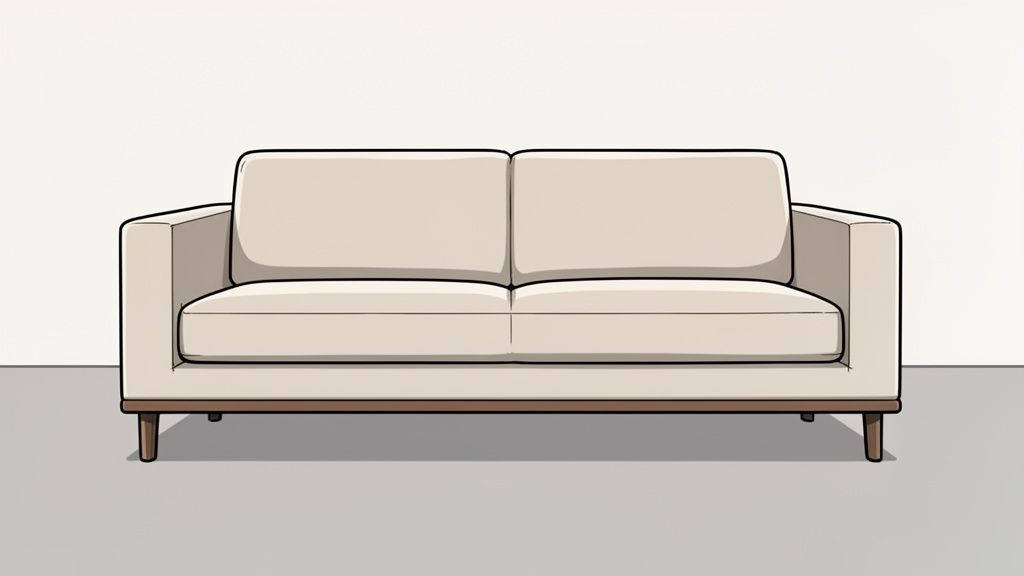
Start with the sofa
The sofa should look clean, but not stiff. Think straight or gently sloped arms, a neatly finished back, and cushions you want to sit on for a full movie.
This style grew in the 1980s and 1990s and often leaned toward a 40/60 to 25/75 ratio in favor of modern elements while keeping classic proportions. That balance has earned over 70% consumer preference in home decor surveys, according to Coddington Design’s discussion of fresh transitional design.
That tells me something useful. Go a little cleaner than traditional, but don’t strip out all softness.
Add one chair with character
If your sofa is clean-lined and straightforward, the accent chair is where you can bring in some curve.
A good transitional chair might have:
- A softer arm shape
- A rounded back
- Wood detail that feels subtle, not showy
That little bit of contrast keeps the room from looking flat. Too many boxy pieces in one room can make everything feel rigid.
Choose tables that calm the room down
Coffee tables and end tables should support the room, not steal it. I like simple shapes in wood, glass, or metal, when the finish has some warmth.
Here’s a quick guide:
| Piece | Best direction | Avoid |
|---|---|---|
| Coffee table | Simple profile, warm wood or mixed material | Heavy carving, overly bulky bases |
| End table | Light visual weight, easy reach from seating | Tiny tables that feel undersized |
| Console | Clean shape with a classic finish | High-gloss pieces that fight the room |
Pay attention to construction
Style matters. Build matters more.
For living room furniture that gets daily use, I’d look for:
- Solid wood where it counts
- Stable frames
- Quality upholstery options
- Cushions that hold their shape
Many people encounter problems here. A room can look good on day one and disappoint you if the bones are weak.
If you’re combining old and new looks, BILTRITE’s advice on how to mix furniture styles is worth reading before you commit to a full room.
Mastering the Mix of Materials and Textures
A transitional room can fall flat if every surface feels the same. Neutral does not mean boring. It means the texture has to do the heavy lifting.
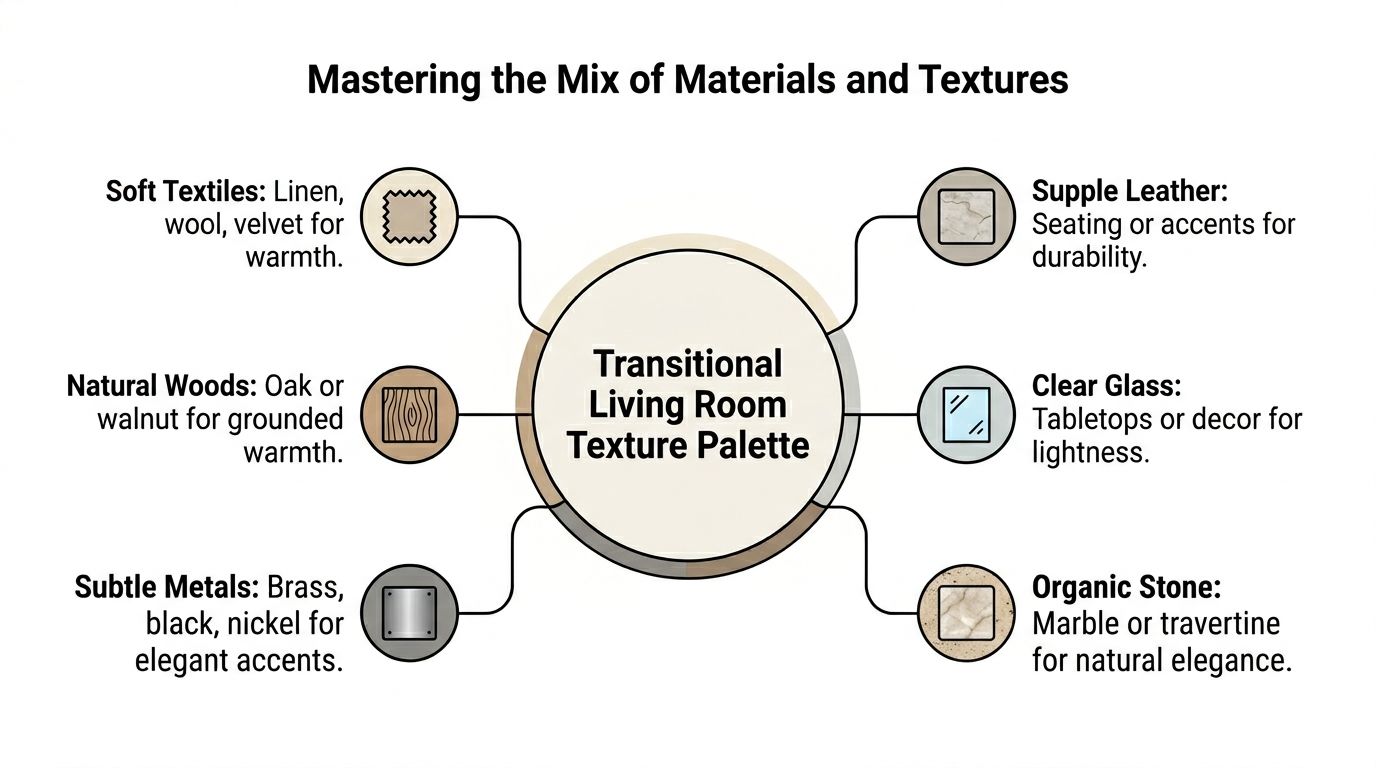
Why texture matters more than color
Most transitional rooms start with a quiet palette. Soft grays, warm beiges, creamy whites, browns. Good move.
But if you stop there, the room can feel sleepy. The fix is layering materials that each bring a different feel.
A texture-driven approach recommends a neutral base, then 4 to 6 distinct textures such as velvet, wool, and leather. That combination produced 92% perceived warmth in user surveys from design firms, according to Homes and Gardens on transitional decorating rules.
That tracks with what we see every day in real homes. Texture is what makes a neutral room feel finished.
A smart material mix
Don’t match everything. Blend it.
Try combinations like these:
- Leather and fabric for contrast between smooth and soft
- Solid wood and glass to keep a room grounded but not heavy
- Metal and upholstery for a little crispness against plush seating
- Stone and wood if you want a room to feel steady and refined
A room with all fabric feels mushy. A room with too much hard surface feels cold. Transitional style works because it splits the difference.
Key takeaway: If your room feels plain, add texture before you add more color.
My favorite way to layer it
I like to start with one anchor piece. Usually that’s the sofa or the coffee table.
From there:
- Add an area rug with visible texture.
- Bring in a second upholstery feel, like leather next to woven fabric.
- Use a lamp or table with a subtle metal finish.
- Finish with pillows or a throw that change the hand of the room.
That’s enough. You do not need every trendy fabric in one space.
If you want a better handle on fabric choices before you commit, BILTRITE has a helpful guide on everything you need to know about upholstery materials.
Getting Proportions and Palette Right
Most rooms go sideways here. Not because the furniture is ugly, but because the shapes fight each other or the scale is off.
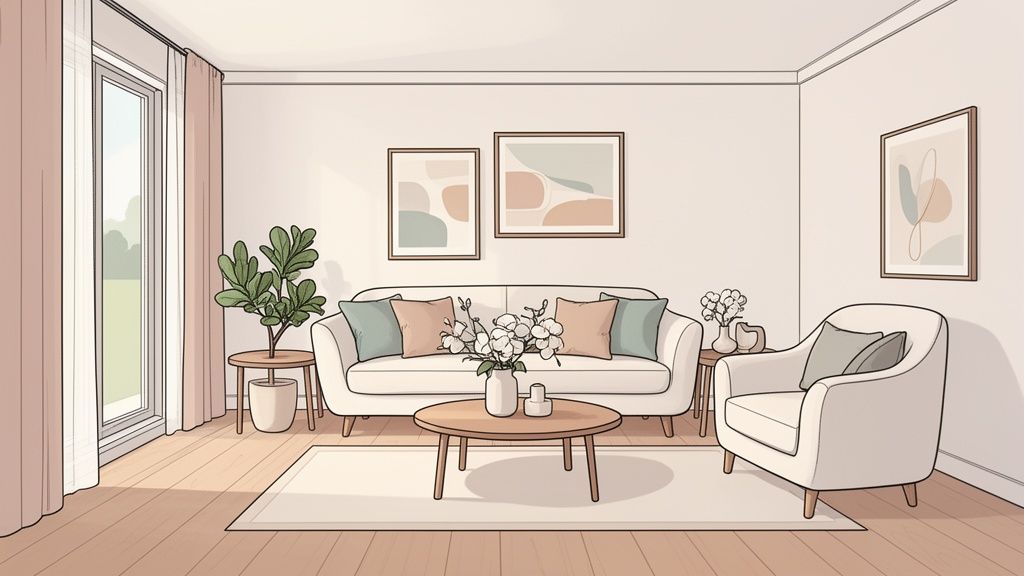
Balance the lines
A strong rule for transitional rooms is a 50/50 ratio of straight-to-curved forms. One classic example is a clean-lined sofa paired with an armchair that has rolled arms or another softer detail, as outlined by Decorating Den’s guide to designing a transitional living room.
That ratio matters because it keeps the room from leaning too hard in either direction.
Here’s the practical version:
- A straight sofa wants a softer chair
- A rectangular coffee table likes a round accent nearby
- A room full of square arms needs at least one curved shape
Keep the palette controlled
Transitional style usually looks best with a neutral base. I agree with that.
Then add personality in smaller doses:
- Pillows
- Artwork
- Throws
- One accent chair
- A rug with subtle pattern
Don’t dump six loud colors into the room and hope it feels collected. It won’t. Pick one or two accents and repeat them lightly.
Get the scale right before delivery day
This part is boring until it saves you. Measure the room. Measure the wall. Measure the hallway. Measure the entry. Then measure again.
Use this simple checklist:
| Area to measure | Why it matters |
|---|---|
| Wall width | Keeps the sofa from overpowering the room |
| Walkways | Makes daily traffic easier |
| Doorways and stair turns | Prevents delivery headaches |
| Chair depth and recline space | Stops the room from feeling crowded |
Tip: A beautiful sofa that blocks traffic is the wrong sofa.
If you love color but want it to stay balanced, BILTRITE’s expert guide to the right color palette can help narrow your choices without making the room feel busy.
Transitional Furniture for Every Milwaukee Home
Here, transitional style really earns its keep. It works in homes that are not staged for a magazine. It works where people live.

A lot of online advice ignores the rooms we see all over Metro Milwaukee. Smaller condos. Apartments with narrow doors. Older homes with tighter layouts. Senior living spaces where comfort and ease matter just as much as looks.
That’s a real miss. Spacejoy’s article on transitional decor ideas notes that 35% of U.S. urban homeowners prioritize scaled-down transitional pieces, yet few guides talk about them.
Small spaces need smart scale, not cheap shortcuts
A smaller room does not need flimsy furniture. It needs better-sized furniture.
Look for:
- Apartment-scale sofas
- Narrower arm profiles
- Loveseats with cleaner silhouettes
- Come-apart seating for tricky delivery paths
This is one of my strongest opinions in furniture. Oversized seating is one of the fastest ways to make a room feel cramped. People buy for the showroom, not the floorplan, and then live with the mistake for years.
Family rooms need durability without looking bulky
If you’ve got kids, pets, or constant traffic, transitional style still works. Just choose pieces with substance.
I’d recommend:
- Performance fabrics
- Solid wood construction where available
- Cushions that can handle regular use
- Tables that hide everyday wear better than glass-only rooms
The good news is transitional furniture doesn’t have to look heavy to be durable. Some of the best-built pieces are visually lighter, which helps the room breathe.
Senior living benefits from this style too
Transitional furniture makes a lot of sense for seniors because it avoids extremes. It’s not overstuffed and hard to move around. It’s not severe and uncomfortable.
A well-planned room for senior living should focus on:
- Easy sit and stand height
- Supportive cushions
- Clear walk paths
- Pieces scaled for the room
- Simple, calming finishes
That’s one reason this style works so well across generations. It feels familiar without looking stuck in the past.
Your Transitional Style Journey Starts at BILTRITE
A good transitional room does not happen by accident. It comes from making a few smart choices in the right order. Start with useful seating. Mix clean lines with softer shapes. Add texture instead of clutter. Keep the palette controlled. Buy for your actual room, not some fantasy room.
That’s the practical side of transitional style living room furniture, and it’s why we like it so much. It gives homeowners flexibility without making the room feel random.
We’ve been part of Metro Milwaukee since 1928, and that long history shapes how we help people. We’re a fourth-generation family business. We believe in better quality, real comfort, USA-made and Amish-made craftsmanship, and furniture that makes sense for everyday life. We’re also proud to be closed on Sundays so our team can spend time with their families.
If you’re thinking about a custom piece, fabric change, wood finish, or a room plan that needs a little tweaking, BILTRITE’s guide to getting started with custom order furniture is a solid place to begin.
Come into the showroom in Greenfield. Sit on the sofas. Open the drawers. Feel the fabrics. Talk with our team. That’s still the best way to make a confident choice.
If you’re ready for practical help from a local team that’s been doing this since 1928, visit BILTRITE Furniture-Leather-Mattresses in Greenfield. We’d love to help you find comfortable, better-built furniture that fits your home, your style, and your everyday life.