3 DAY MATTRESS SALE! TUESDAY - WEDNESDAY - THURSDAY!
LABOR DAY SALE EXTENDED ENDS SATURDAY, OCTOBER 3RD AT 5PM!
NO CREDIT CARD FEES!
1000's of Items IN-STOCK + 500 Mattresses!
Largest selection of USA Made Furniture & Mattresses + Amish Made!
FREE In-Store Design Services!
BUY LOCAL & LOVE YOUR HOME!
3 DAY MATTRESS SALE! TUESDAY - WEDNESDAY - THURSDAY!
LABOR DAY SALE EXTENDED ENDS SATURDAY, OCTOBER 3RD AT 5PM!
NO CREDIT CARD FEES!
1000's of Items IN-STOCK + 500 Mattresses!
Largest selection of USA Made Furniture & Mattresses + Amish Made!
FREE In-Store Design Services!
BUY LOCAL & LOVE YOUR HOME!
OPEN LABOR DAY | Tuesday-Thursday 10am to 6pm | Friday 10am to 7pm | Saturday 10am to 5pm | Sunday Closed To Be With Family & Friends | Monday Showroom Closed
5430 West Layton Ave, Greenfield - Metro Milwaukee
Worried your grandma's cherished wooden chest won't get along with that sleek, modern sofa you've been eyeing? Relax! Mixing furniture styles is how you create a home that feels genuinely you—a space that tells your family's story through your decor.
It’s all about blending different eras and designs to add incredible character and warmth. Think of a sturdy, USA-made Amish dining table paired with contemporary chairs. That's how you escape the rigid, cookie-cutter catalog look and build a home with soul.
Creating a Home That Tells Your Story
Here at BILTRITE, we’ve seen it all since our family started this business way back in 1928. A question we hear all the time from our Metro Milwaukee neighbors is, “Can I really put these two styles together?” Our answer is always a resounding yes!
A home filled with only one style can feel a bit impersonal, almost like a showroom floor. The real magic happens when you start blending pieces that mean something to you.
This eclectic approach isn't new; it really took off during the post-World War II housing boom when homeowners began mixing mid-century modern pieces with traditional wood heirlooms. This created the unique style that defined a majority of American interiors by the 1970s. For budget-conscious Metro Milwaukee families, mixing styles can also save 20-30% by avoiding the need to buy entirely new matched sets.
Why Mixing Styles Works
Creating a mixed-style home is less about following strict rules and more about expressing your personality. It allows you to:
Showcase Your History: Incorporate that inherited armchair or vintage find alongside newer, more modern pieces.
Create Visual Interest: The contrast between different shapes, materials, and time periods makes a room dynamic and engaging.
Build a Collection Over Time: You don’t have to buy everything at once. You can slowly add pieces you love, regardless of their specific style.
As a 4th generation, family-owned business, we believe a home should be a collection of what you love. It’s about comfort, memories, and creating a space where your family can thrive—not about matching every single piece of furniture.
Before you dive in, it helps to have a few guiding principles in your back pocket. These aren't strict rules, but rather time-tested tips that help ensure your eclectic mix feels intentional and harmonious, not chaotic.
| Core Principles for Mixing Furniture Styles | | :— | :— | :— | | Principle | Why It Works | Quick Tip | | The 80/20 Rule | Committing 80% to one style and 20% to another creates a stable foundation with pops of personality. | Pick your dominant style first (e.g., Traditional), then sprinkle in accent pieces from another (e.g., Mid-Century Modern chairs). | | Unify with Color | A consistent color palette acts like glue, tying together pieces from different eras and aesthetics. | Use a neutral sofa, then pull an accent color from a vintage rug to use for pillows, throws, or a modern armchair. | | Repeat Shapes | Echoing a specific curve or line across different pieces creates a subtle, cohesive rhythm in the room. | If your traditional coffee table has rounded legs, look for a modern lamp with a curved base to create a connection. | | Balance the Scale | Ensuring furniture pieces are proportionate to each other and the room prevents one item from overpowering the space. | Pair a heavy, rustic dining table with visually lighter chairs (like those with thin metal legs) to avoid a clunky feel. |
These core ideas are your roadmap to successfully blending styles. They give you the freedom to experiment while making sure the final result is a space you'll love.
Forget the myth that everything has to match! The goal is a cohesive, collected look that reflects who you are. Thinking about where to start can feel overwhelming, but we're here to help. If you're wondering how to begin your design journey, we’ve put together some helpful tips on our blog.
Check out our guide on home design and where to begin to get started with confidence. This guide will show you how to confidently combine pieces to create a space that’s fun, achievable, and truly yours.
Find Your Anchor with the 80/20 Rule
So, how do you actually mix furniture styles without your living room looking like a jumbled mess? It’s a question we’ve been helping Metro Milwaukee families answer since 1928. The secret is to find a dominant style to ground the entire space. It sounds tricky, but we have a super simple trick for it: the 80/20 rule.
Think of it like this: about 80% of your furniture should stick to one primary style. This creates a cohesive foundation, a visual anchor for the whole room. The other 20% is where you get to have some fun and show off your personality, adding accent pieces from a completely different style. This approach is the key to creating a look that feels intentionally curated, not chaotic.
Your Dominant Style (The 80%)
Your dominant style is the main character of your room. It could be the cozy, familiar feel of traditional furniture or the clean, crisp lines of contemporary design. This 80% usually includes the biggest, most impactful pieces in the room.
Imagine a living room with a classic, American-made sofa and matching armchairs. These larger items immediately set a clear traditional tone. They're your anchor, providing a sense of stability and comfort that the rest of the room will build upon. This is the foundation that makes everything else work together.
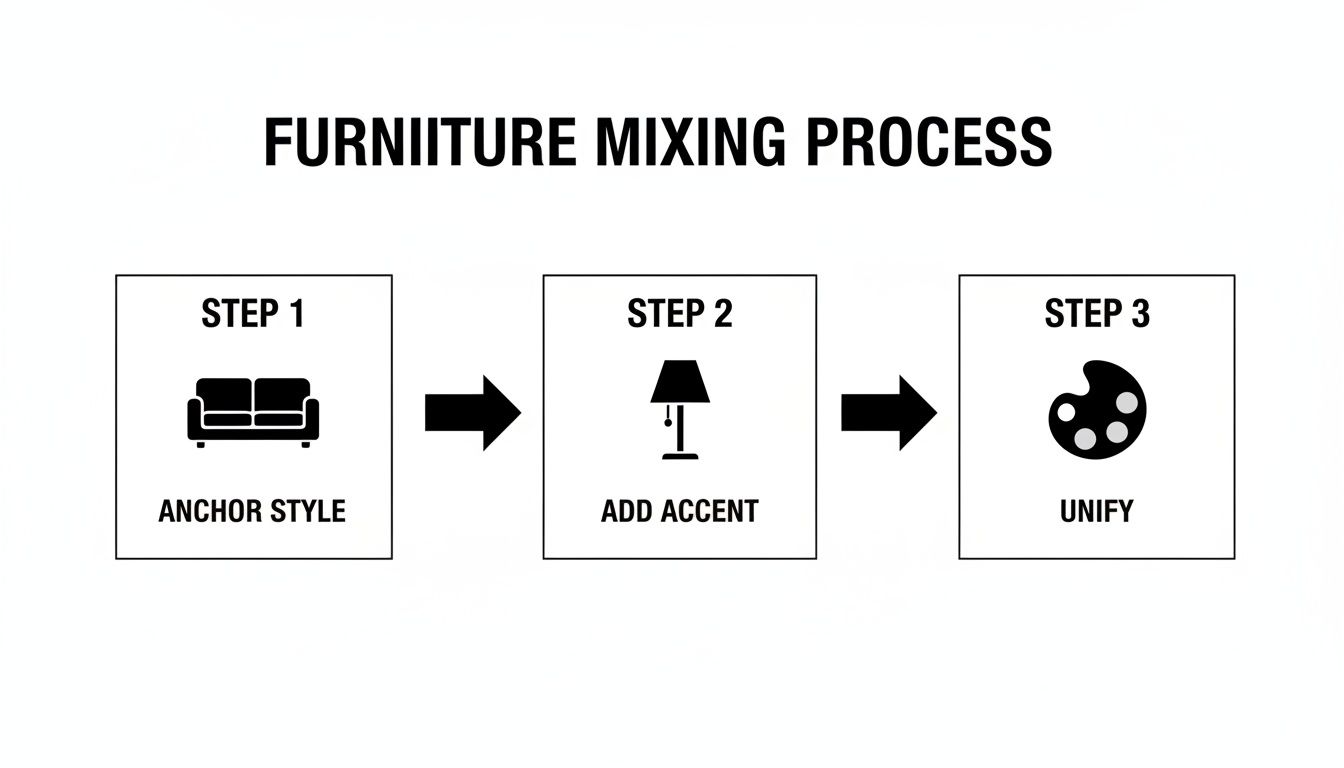
This simple graphic breaks down our favorite approach to mixing styles.
Starting with an anchor style, adding a few distinct accents, and then tying it all together with color creates a beautifully blended space.
Your Accent Style (The 20%)
Now for the fun part! The remaining 20% is your chance to inject contrast and flair. Sticking with our traditional living room example, you could bring in a rustic, solid wood Amish-made coffee table and an industrial-style metal floor lamp. These two pieces are distinctly different, but because they’re just accents, they don't overpower the room.
This 20% is what tells your unique story. It might be a funky chair you found at a vintage shop, a sleek modern side table, or a piece passed down through your family. These are the conversation starters!
Choosing between a dominant contemporary or traditional style can be tough, but knowing the basics of each makes the decision a lot easier. If you need a hand figuring out which style really speaks to you, you can learn more about contemporary vs. traditional design styles on our blog.
The 80/20 rule isn't a strict formula; it's a framework that gives you the confidence to be creative. It ensures your home feels collected and personal, not just decorated. Come on down to our Greenfield showroom, and our team would love to help you find that great 80% anchor piece and the just-right 20% accent to complete your vision.
Unite Your Room With Color And Material
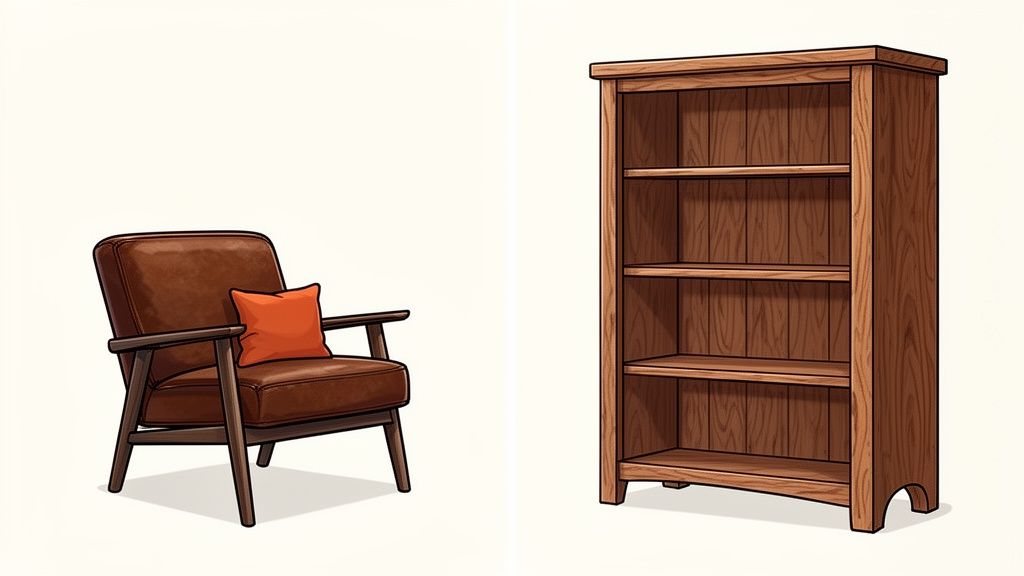
Okay, so you’ve got your 80/20 styles picked out. Now for the fun part: how do you make a sleek, modern leather chair and a beautiful, traditional Amish-made oak bookshelf look like they belong in the same room?
It’s all about creating connections. Think of color and material as the threads that weave your entire look together.
When you're mixing furniture styles, a unified color palette is your absolute best friend. You don't need a dozen different shades to make a statement—in fact, less is often more.
Just pick two or three main colors and sprinkle them around the room. Imagine pairing one of our heavy-duty fabric sectionals in a neutral gray with throw pillows that pull in the deep blue from a nearby vintage armchair. Just like that, you've created an instant, intentional connection.
Create Harmony With A Consistent Palette
Building a color scheme from scratch can feel daunting, but it doesn't have to be. Your best starting point is often a piece you already love, like a vibrant rug or a piece of art.
Pick Your Colors: Pull two or three key colors from that inspiration piece.
Repeat, Repeat, Repeat: Now, weave these colors into your furniture, decor, and textiles. A blue vase on the mantel can echo the blue in your sofa’s throw pillows.
Balance With Neutrals: Use neutrals like beige, gray, or white for your larger items. This lets your accent colors truly pop without overwhelming the space.
If you're feeling stuck on choosing the right hues, don't worry! We've been helping Metro Milwaukee families with this since 1928. A consistent color palette is the bridge that connects different styles, making them feel like a happy, cohesive family.
At BILTRITE, we offer affordable custom options for many of our USA-made pieces, so you can choose the exact fabric or finish to bring your vision to life. For a deeper dive, check out our expert’s guide to the perfect color palette for more ideas.
Let Materials Do The Talking
Another fantastic way to tie different styles together is by repeating materials throughout the space. I'm talking about things like wood tones or metal finishes.
A room with a walnut mid-century modern credenza feels instantly connected to a traditional dining table that shares a similar walnut finish, even if their design styles are decades apart.
This strategy works wonders. While wood furniture is still a popular anchor in most homes, we're seeing more and more people blending it with metals, stone, and other materials to create truly unique spaces.
You don’t have to match everything exactly! The goal is harmony, not uniformity. A dark brass lamp, for instance, can beautifully complement the dark bronze hardware on a nearby cabinet. These subtle links are what create a sophisticated, layered look that feels truly personal.
Mastering Scale and Silhouette
Have you ever walked into a room where something just felt… off? You can't quite put your finger on it, but the whole space seems a little unsettling. Chances are, it's not the color or the styles clashing—it’s the scale. Getting the scale and proportions right is one of the biggest secrets to successfully mixing furniture styles, and it's where our BILTRITE team’s 400+ years of combined experience really shines.
It’s all about making sure your furniture pieces relate to each other and to the room they're in. You wouldn't want a delicate, small-scale loveseat to be completely swallowed by a massive, heavy-duty recliner sitting right next to it. It’s like parking a scooter next to a semi-truck—both get you around, but the size difference is jarring!
Finding Visual Balance
The goal here is to create a sense of visual balance, but that doesn't mean everything has to be the exact same size. Think of your room like a seesaw. One big, visually "heavy" piece on one side can be balanced by two or three smaller pieces on the other.
For instance, a large, comfy sectional sofa against one wall feels grounded and intentional when it's balanced by a pair of elegant armchairs and a slim end table on the opposite wall. This approach creates a pleasing sense of order that makes the room feel complete.
Playing With Shapes
Once you've got the general size down, it's time to talk about silhouettes—the actual shape and outline of each piece of furniture. This is where mixing styles gets really fun, because the contrast between different shapes is what creates that dynamic, designer-quality look we all want.
Don't be afraid to pair items with totally different outlines. In fact, you should lean into it!
Curvy and Boxy: A curvy, ornate traditional chair looks absolutely fantastic next to a clean, straight-lined modern sofa. The contrast makes you appreciate the unique beauty of each piece even more.
Leggy and Grounded: Try placing a "leggy" mid-century modern coffee table (one with those classic tall, thin legs) in front of a solid, skirted sofa that sits low to the ground. That difference in height and visual weight is captivating.
Think of it this way: if all your furniture has the same silhouette, the room can feel a bit flat or one-note. Introducing different shapes is like adding different musical instruments to a song—it creates richness, depth, and harmony.
Getting these details right starts before you even bring a piece home. Measuring your space and your potential new furniture is absolutely crucial to ensuring a great fit for your Metro Milwaukee home. To help you nail it, we’ve put together a simple guide on how to measure furniture to avoid any delivery day surprises. Better yet, come on down to our Greenfield showroom, and we can show you firsthand how different scales and silhouettes play together in person.
Layering Textures for a Rich and Inviting Feel
Once you’ve got your color and scale figured out, the real magic begins with texture. This is what truly brings a mixed-style room to life, transforming it from a collection of nice furniture into a space that feels rich, cozy, and completely inviting.
Texture is the element you not only see but also feel. It’s all about creating a room that doesn’t just look good, but feels incredible to actually live in.
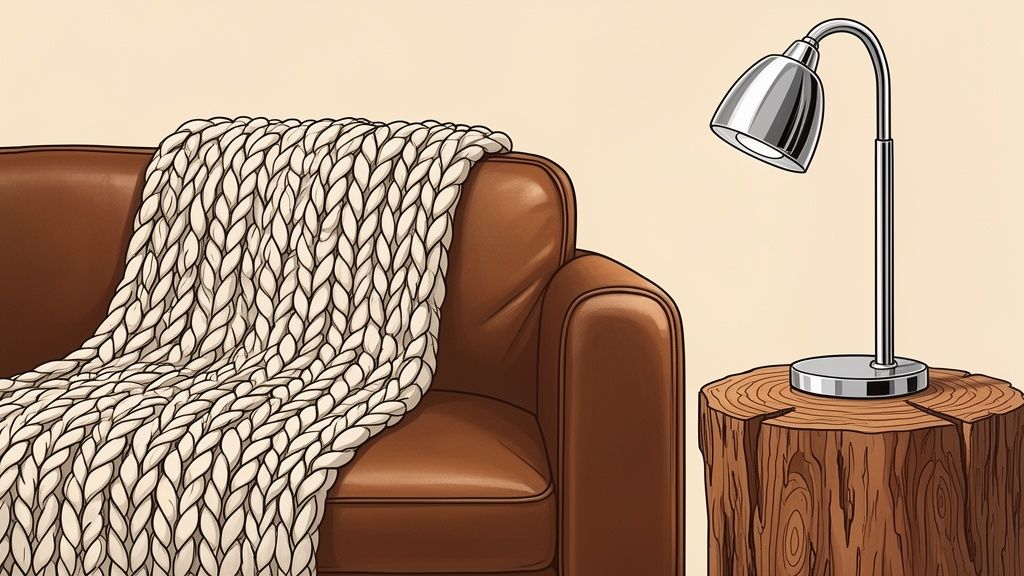
Think about how different surfaces play off each other. Picture a smooth, buttery leather sofa, a chunky knit throw blanket tossed casually over the arm, a rough-hewn solid wood end table, and a sleek metal lamp—all in the same corner. This combination of surfaces is what makes a room engaging. It practically begs you to come in, sit down, and get comfortable.
Combining Different Surfaces
Layering textures is easily one of the most enjoyable parts of mixing furniture styles. It adds so much depth and character, keeping your eyes moving around the room. The easiest way to get started is to simply make sure you have a variety of materials in the space.
Here are a few combinations our awesome team loves to see in a home:
Smooth & Rough: A polished chrome accent table paired with a heavily textured linen armchair. The contrast is sophisticated and immediately catches the eye.
Hard & Soft: Imagine a plush velvet pillow sitting on a sturdy, USA-made oak bench. This simple touch adds a welcome layer of comfort and luxury.
Natural & Manufactured: The organic grain of an Amish-made coffee table combined with the sleek finish of a modern ceramic vase. It's a great balance.
At BILTRITE, we've always said that texture is the secret ingredient that turns a house into a home. It’s what makes a room feel complete and genuinely lived-in. Our affordable, better-quality solid wood furniture, with its incredible natural grain, serves as a fantastic textural foundation for any design.
Textures to Play With
Don't be afraid to experiment! Creating a tactile, interesting environment is all about variety. As you're building out your room, keep an eye out for these materials:
Fabrics: Look for opportunities to bring in velvet, boucle, chunky knits, smooth leather, and breathable linen. For a deeper dive, check out our guide on everything you need to know about upholstery materials for even more inspiration.
Woods: Mix different grains and finishes. Think reclaimed and rustic woods next to something smooth and polished.
Metals: Incorporate a range of finishes like brushed nickel, polished chrome, aged brass, and matte black.
Natural Fibers: Add elements like jute rugs, rattan baskets, or seagrass chairs to bring in an earthy, organic feel.
Of course, the best way to imagine how these textures will work together in your own home is to see and feel them in person. Come visit us in Greenfield and we’ll help you get started!
See It All Come Together at BILTRITE
Reading about design theories is one thing, but seeing how it all clicks together in person? That’s where the real fun begins. It's the moment when mixing furniture styles goes from just an idea to something you can actually picture in your own home. You can read about scale and texture all day, but nothing beats seeing and feeling it for yourself.
That’s why we don’t sell our furniture online. Our showroom in Greenfield is where the magic happens. We’ve been a 4th generation, family-owned business since 1928, and we’ve always believed the best way to find furniture you’ll love for years is to experience it firsthand. We’ve set up our entire store to help you do just that.
See Mixed Styles in Action
When you visit us, our friendly, no-pressure team can walk you through the store and point out real-life examples of beautifully mixed settings. You’ll see exactly how the warm, solid wood of an Amish-made table pairs with sleek, contemporary chairs, or how a modern sofa can be softened with traditional accent tables.
It’s your chance to:
Touch the Textures: Feel the incredible difference between a smooth, cool leather and a soft, heavy-duty fabric.
Compare the Scale: See for yourself how a small-scale apartment sofa looks next to a sprawling, family-sized sectional.
Experience the Quality: Sit on the furniture. Open the drawers. You can truly feel the craftsmanship that goes into our USA-made pieces.
As a family business, we love nothing more than helping our Metro Milwaukee neighbors create a home that feels comfortable and authentic. We’re not here to just push a sale; we’re here to share what we know.
We can also show you some of the practical features that just make life easier. And don't forget our huge mattress department with over 60 models to try! We truly have something for everyone.
We'd love to see you in our store! Come say hi and let us help you find the great piece for your home. We're proud to be a "buy local" business, and we're closed on Sundays to be with our families.
Your Questions on Mixing Furniture Answered
Every day in our Greenfield showroom, we get a lot of fantastic questions from our Metro Milwaukee neighbors. Honestly, helping people figure out how to mix different furniture styles is one of our favorite things to do!
Here are a few common worries we hear and how we help people tackle them.
Is It Okay to Mix Different Wood Tones?
Yes, absolutely! In fact, a room where every single piece of wood furniture is a perfect match can sometimes feel a little flat or dated. Mixing wood tones, like the warm oak of a classic Amish-made piece with a richer, darker walnut, is what gives a room character and depth.
The trick is to choose one wood tone to be the star of the show and let the others play a supporting role as accents. Another good tip is to keep the undertones in the same family—stick with mostly warm woods, or mostly cool-toned woods. That little detail keeps the look intentional and pulled-together.
How Many Styles Are Too Many?
This is a great question, and it's one we get all the time. While there’s no official rulebook for this, we usually suggest sticking to two, maybe three, styles in a single room to keep things from looking chaotic.
A great guideline is the 80/20 rule. Let one style dominate the space (that’s your 80%) and use the other style as a fun, contrasting accent (your 20%). Once you go beyond three distinct styles, it can be tough to make a room feel curated instead of just cluttered.
Mixing styles is all about confidence! If you're nervous, just start small. Swap out your end tables for something different, or bring in a single armchair in a contrasting style. Seeing how one small change can liven up a room will give you the boost you need to try more.
Where Should I Start?
Feeling a little overwhelmed about where to begin? Don't worry, that's completely normal. The easiest way to dip your toes in is by starting with smaller, less expensive items.
You can make a big impact without a huge commitment. Think about things like:
Accent Chairs: A single, bold armchair can make a huge statement all by itself.
Coffee or End Tables: These are so easy to swap out and can introduce a completely new material, shape, or finish into your room.
Lighting: A modern lamp in a traditional room (or vice versa) is one of the fastest ways to add a fresh layer of interest.
At the end of the day, the most important thing is to have fun with it and choose pieces that you genuinely love.
Ready to find your new favorite piece of furniture? Our BILTRITE Furniture-Leather-Mattresses family would love to show you around our Greenfield showroom and help you find the affordable, better-quality, USA-made pieces that will tell your story. Visit us today