Discover Your Ideal Leather Glider Recliner


You’re probably here because one chair in your house is doing too much work. It’s the reading chair, the nap chair, the “my back needs a break” chair, and the spot everyone steals when it’s empty.
That’s why a leather glider recliner gets so much attention in our showroom. It combines soft movement, laid-back comfort, and a material that can look better with age. For families in Metro Milwaukee, it can also solve real day-to-day problems. Small rooms. Achy backs. Busy households. The need for furniture that feels good at the end of a long day and still holds up years later.
We’ve been helping local families choose furniture since 1928, and we still believe some decisions get easier when someone explains them in plain English. So let’s make this simple.
What Makes a Leather Glider Recliner So Special
Some furniture sounds more complicated than it really is. A leather glider recliner is just three useful ideas built into one chair.
Leather means feel, look, and long-term wear
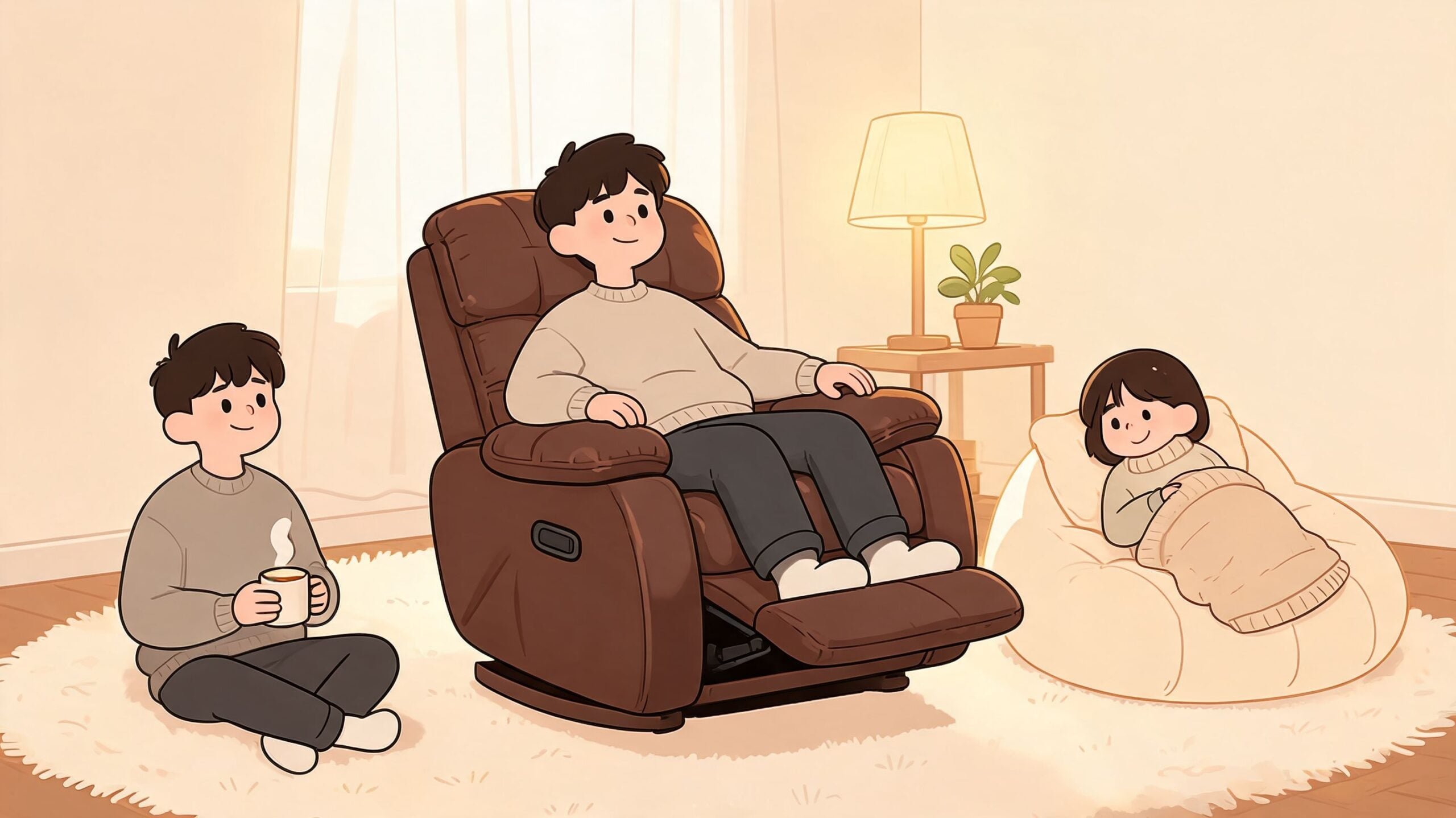
The surface is often the first thing noticed. Genuine leather has a different hand than fabric. It feels smoother, wipes up more easily in everyday life, and gives a room a warmer, richer look without needing fussy styling.
That matters when the chair becomes part of your routine. Morning coffee, evening TV, story time with the grandkids, a quick rest after work. Leather tends to suit all of it.
Glider means smooth motion, not a big rocking arc
Shoppers often get mixed up. A glider is not the same as a traditional rocker.
A rocker moves in an arc, tipping forward and back. A glider moves on a track for a smoother, steadier motion. Many people like that because it feels calmer and more controlled, especially in nurseries, living rooms, and smaller spaces.
If you’ve ever wondered how that compares to similar motion seating, our guide to the swivel rocker glider can help sort out the differences.
Practical rule: If you want a gentler, more even movement, a glider usually feels less busy than a classic rocker.
Recliner means support when your body wants a break
The reclining part is simple. You lean back, raise your feet, and let the chair support more of your body. That can make reading, resting, or watching a movie much more comfortable than sitting upright the whole time.
The modern recliner has deep roots in American furniture history. The modern recliner chair was patented in 1928 by Edward Knabusch and Edwin Shoemaker, the same year our family business began, according to this history of the evolution of recliner technology. That timing always makes us smile a little. Recliners and BILTRITE grew up in the same year.
Here’s the simplest way to understand it:
| Feature | What it adds |
|---|---|
| Leather | A refined look and easier everyday upkeep |
| Glider motion | Gentle movement that feels smooth and steady |
| Reclining function | Foot and back support for longer sitting |
Put those together, and you get a chair people use, not one that just fills a corner.
Not All Leather Is Created Equal
“Leather” on a tag doesn’t tell the whole story. Some leather holds up beautifully. Some only looks good at first glance. If you don’t know the difference, two chairs can seem similar on the showroom floor and wear very differently at home.
The leather types shoppers hear most often
Some terms are useful. Some are mostly marketing. Here’s the plain version.
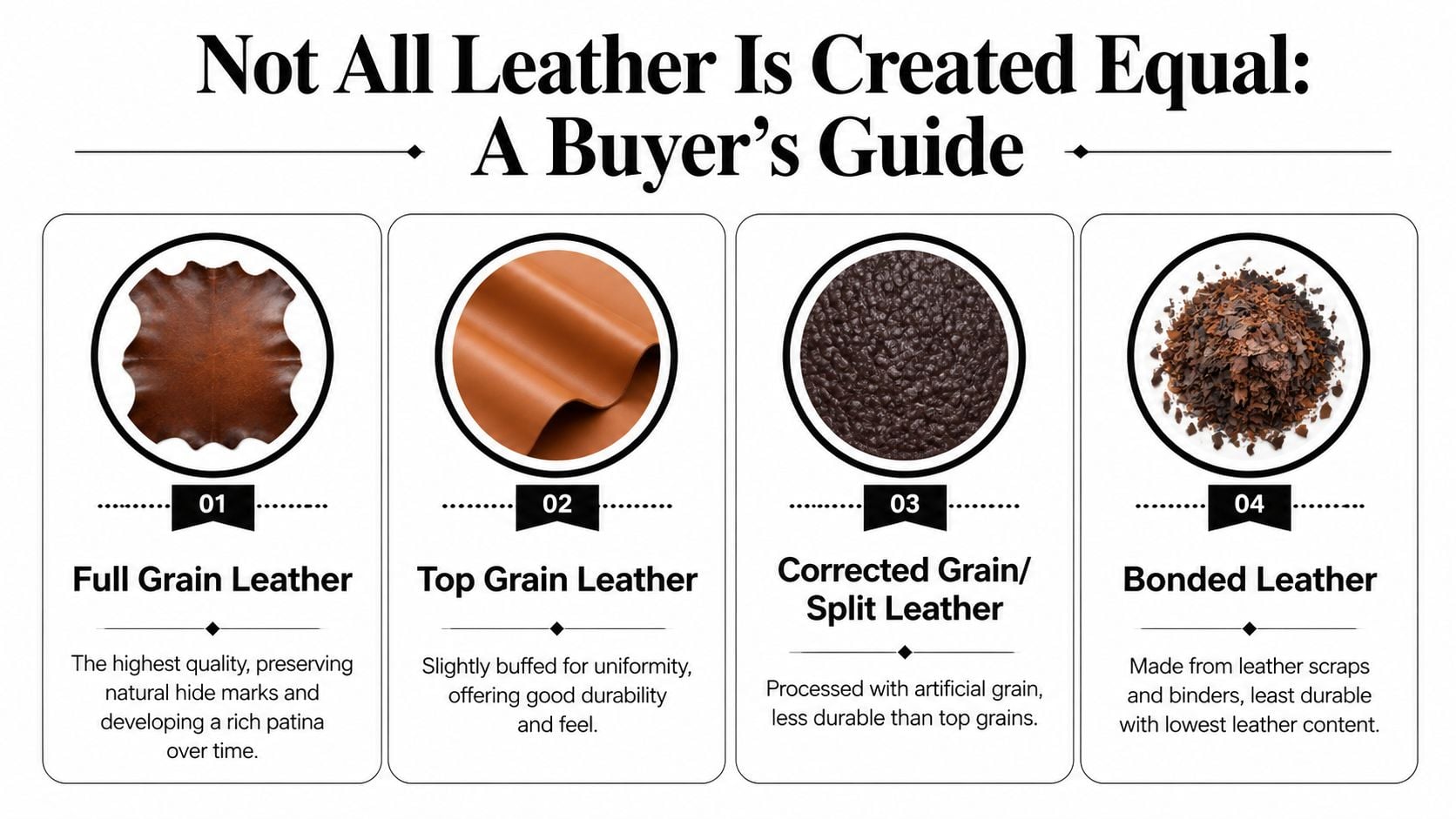
- Full grain leather is the least altered. It keeps more of the hide’s natural character.
- Top grain leather is refined slightly for a more even look and feel. For many families, this is a very practical balance of appearance and durability.
- Corrected grain or split leather has been more heavily processed.
- Bonded leather uses leather scraps combined with other materials. It’s usually the one that disappoints people later.
If you want a deeper side-by-side explanation, take a look at our page on the difference between top-grain and full-grain leather.
What matters more than the label
A leather glider recliner gets touched constantly. Hands on the arms. Head against the back cushion. Legs over the footrest. That’s why the quality of the hide matters so much more here than on a decorative accent piece.
The clearest long-term comparison in the source material is this one. Genuine top-grain leather can last 15 to 30 years with proper care, while many fabric or lower-quality leather alternatives may last 5 to 10 years, according to this overview of the history and evolution of leather recliner sofas.
That doesn’t mean every family must buy the highest-priced option in the building. It means you should know what you’re paying for.
Better leather usually costs more up front. It often asks less from you later.
A simple comparison you can use in the store
| Material | What you’ll usually notice first | What often matters later |
|---|---|---|
| Top-grain leather | Smooth, substantial feel | Better long-term wear |
| Bonded or heavily processed leather | Lower starting price | Greater chance of peeling or cracking over time |
| Fabric | Softer texture variety | Different cleaning and wear pattern |
This is one reason we’re proud of the many USA and Amish-made pieces we carry. When the leather, frame, and motion parts are all taken seriously, the chair tends to feel better in year five than a bargain model felt on day one.
The Mechanics of Comfort and Durability
A recliner’s outside gets the attention. Its inside earns the respect.
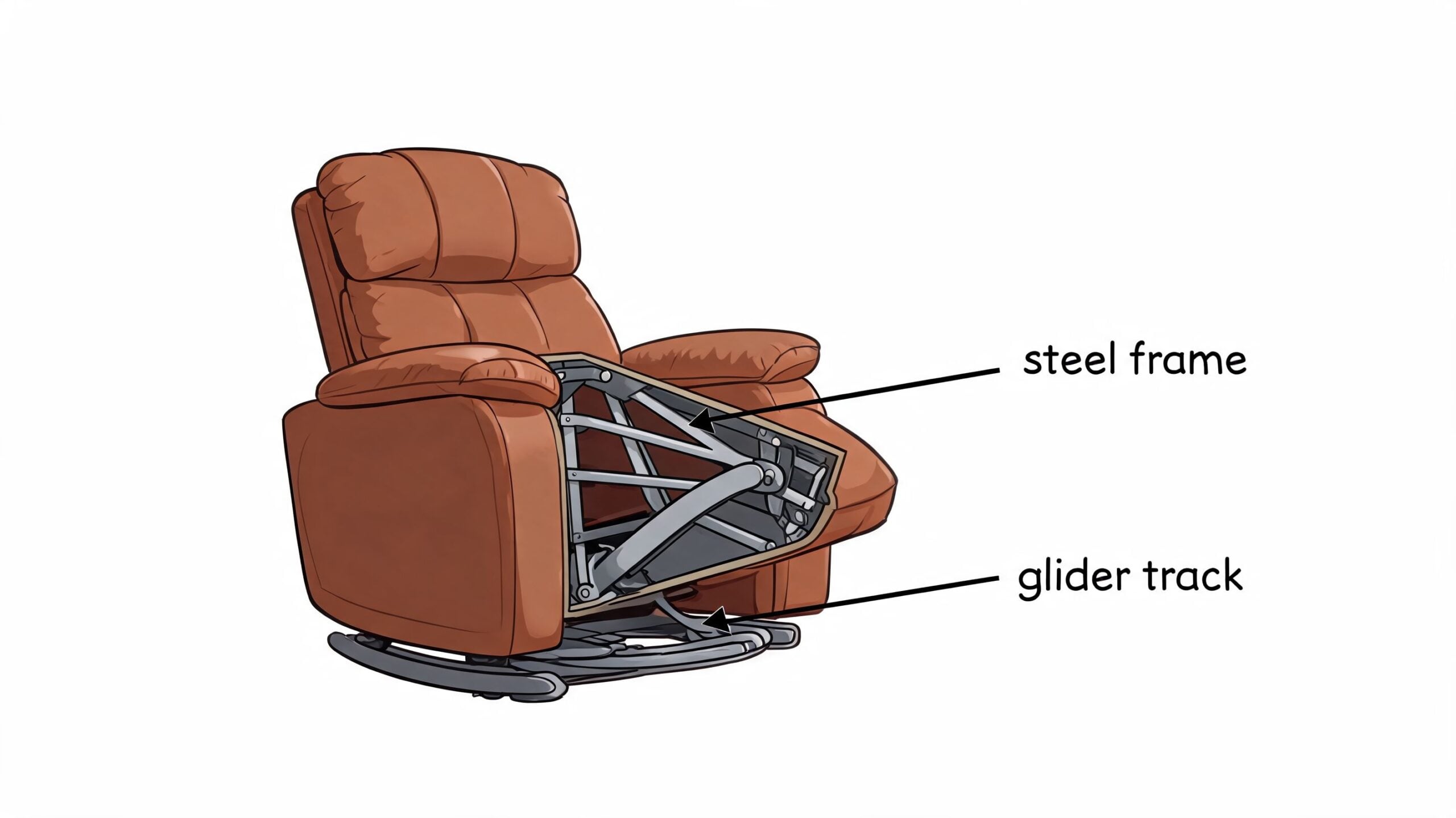
When a leather glider recliner feels sturdy, moves smoothly, and doesn’t wobble under you, that’s the result of the frame, the motion system, and the way those parts work together. This is the quiet part of shopping, but it’s often the part that decides whether the chair becomes a keeper.
Manual or power
Manual recliners usually use a pull handle, push-back motion, or body weight to move the chair. Some people love that because it’s straightforward and doesn’t require a power connection.
Power recliners use buttons to adjust the footrest and back, and some add power headrest or lumbar support. They can be especially helpful for people who want easier position changes with less effort. Our overview of types of power reclining seating shows the main options in simple terms.
The right choice comes down to how you sit, how often you recline, and whether ease of use matters more to you than simplicity.
What to look for underneath
A chair can feel soft on top and still be weak underneath. We always tell shoppers to pay attention to the hidden parts.
Look for these signs of stronger construction:
- Reinforced steel in the motion system for repeated gliding and reclining
- Solid wood framing in the load-bearing structure
- Stable seat support that doesn’t sag or twist
- A smooth transition between upright, gliding, and reclined positions
This is where heavy-duty seating stands apart. Some models are built for more demanding daily use, whether that means a taller user, a larger user, or just a family that uses the chair constantly.
Durability isn’t a guessing game
One of the most useful numbers available here comes from mechanism testing. High-quality recliner mechanisms from brands like Leggett & Platt undergo durability testing for 25,000 cycles, equivalent to over a decade of daily use. Many heavy-duty models are built to support up to 400 lbs, according to the product information for this genuine leather power swivel glider recliner.
That matters because moving furniture fails differently than fixed furniture. The stress points are concentrated in hinges, tracks, pivots, and support joints. If those parts are weak, the chair may still look fine while feeling rough, noisy, or unstable.
If you’re shopping for a senior, a caregiver’s home, or a busy family room, ask about the frame and mechanism before you ask about color.
One local option in this category is BILTRITE Furniture-Leather-Mattresses, which carries heavy-duty, small-scale, come-apart, and motion seating options in its Greenfield showroom. That’s useful when your needs involve tighter doorways, senior living, or stronger support requirements.
Finding the Right Recliner for Your Home and Family
The same leather glider recliner won’t fit every house the same way. That’s part of the fun. One family wants a nursery chair. Another wants a support chair for aging parents. Someone else just wants one comfortable seat that won’t swallow a condo living room.
For the new parent
A glider often makes the most sense here. The motion is gentle and repetitive, which many parents like during feedings or bedtime routines. Leather can also be practical if you want a surface that’s easier to wipe than many fabrics.
The key question isn’t just, “Is it comfortable?” It’s, “Can you sit in it half-awake at 2 a.m. and still feel supported?”
For seniors and caregivers
This shopper usually notices entry and exit first. Is the seat too low? Are the arms helpful when standing up? Does the recline control feel easy to use?
Power motion can help here, especially for users who don’t want to fight with a handle. Some households also need heavy-duty construction or easier delivery into tighter rooms.
A chair for senior living should feel secure in the upright position first. Reclining comes second.
For apartments, condos, and smaller homes
Room planning helps avoid headaches. A lot of people assume recliners need a huge footprint. Some do. Some don’t.
Modern wall-hugger glider recliners require as little as 4 to 6 inches of wall clearance, compared with 12 inches or more for traditional recliners. That space-saving design is one reason many shoppers in smaller homes look at them first, as explained in our ultimate recliner buying guide.
Use this quick measuring checklist before you shop:
- Measure the chair zone from wall to walkway, not just wall to coffee table.
- Check the recline path so the footrest won’t block traffic.
- Think about delivery if your hallways, stairs, or doorways are narrow.
- Test arm height if the chair will sit beside a sofa or under a window.
A good fit should feel natural in the room. You shouldn’t have to redesign your life around one chair.
Simple Care for a Lifetime of Comfort
Leather care sounds fancy. It isn’t. Most families do well with a simple routine and a little consistency.
The basic routine that works
Dust the chair with a soft, dry cloth. Wipe spills promptly. Keep the leather away from strong direct sunlight when possible. A leather glider recliner doesn’t need constant fussing, but it does benefit from regular attention.
The biggest habit we recommend is conditioning. In humid climates like Metro Milwaukee, real leather can wear faster without care. A 2025 report noted that 68% of Midwest consumers saw issues within two years without proper care, and quarterly conditioning with a pH-neutral product is the recommendation in this guidance on leather recliner upkeep.
If you’d like a practical walkthrough, our guide on how to condition a leather sofa applies nicely to recliners too.
A seasonal checklist
- Winter. Wipe away dry dust and watch for indoor air that feels extra dry.
- Spring. Check creases, headrest areas, and arm tops for early wear.
- Summer. Use air circulation or dehumidifying if the room feels sticky.
- Fall. Apply your conditioning treatment before indoor heating season ramps up.
Don’t soak the leather. Don’t grab harsh cleaners. And don’t wait until the surface looks tired before doing anything.
Leather usually gives you warning signs. It starts looking dull or feeling dry before bigger problems show up.
Why Visiting Our Showroom Makes All the Difference
A leather glider recliner is one of those purchases that makes more sense in person than on a screen. Photos can show color. They can’t show how a seat fits your height, how a glide feels under your weight, or whether the arm height works for your shoulders.

What you learn in five minutes of sitting
In the showroom, people usually discover one surprise fast. The chair they liked online often isn’t the one that feels right in real life.
One seat feels too deep. Another pushes your head too far forward. One leather feels slick. Another feels softer and more grounded. Those details matter because this isn’t wall art. You live in it.
Why local guidance still matters
We don’t sell online, and we’re comfortable saying that. Some furniture decisions should be hands-on. You should be able to sit, glide, recline, stand up, compare, and ask questions without guessing.
Our team has over 400 years of combined experience, and that experience shows up in simple ways. They notice when a chair sits too low for your knees. They ask about room size, doorways, family use, and whether you need small-scale, heavy-duty, Amish-made, USA-made, or come-apart options.
That kind of help feels different from scrolling.
Answering Your Top Recliner Questions
A few questions come up again and again once people narrow down their choices. Here are the short answers we give most often.
Does a glider recliner take a lot of room
Not always. Some do need extra space, but wall-hugger styles are made for tighter layouts. The smart move is to measure for the chair fully open, not just fully closed.
Is leather hard to maintain
No, not if you stay consistent. Wipe it down, keep it clean, and condition it on a regular schedule. Neglect causes more trouble than normal use.
Are power recliners harder to live with than manual ones
They’re different, not automatically harder. Power models can be easier on the body because they reduce physical effort. Manual models appeal to people who want straightforward function with fewer moving features.
What about repairs later on
Most issues tend to fall into two buckets. Surface wear on the leather, or wear in the motion parts. Better materials and stronger mechanisms usually give you a better starting point, which is why construction matters so much at the beginning.
Do recliners come in sizes that work for smaller people or smaller homes
Yes. Seat depth, seat height, arm height, and overall scale vary more than many shoppers expect. That’s one reason testing chairs in person makes such a difference.
If you’re ready to compare a leather glider recliner in person, we’d love to help. Visit BILTRITE Furniture-Leather-Mattresses in Greenfield and spend some time trying different styles, sizes, and motion options for yourself. Our family has been serving Metro Milwaukee since 1928, and we’re always happy to help you find a comfortable, well-built chair that fits your home and your everyday life.