Your Solid Wood Furniture Dresser Guide

You're standing in a bedroom set display, opening one drawer, then another, and both dressers look pretty similar from a few feet away. One has a much lower price tag. The other feels heavier, smoother, quieter. Then the questions start. Why is one more expensive? Is “solid wood” always solid wood? And how do you know if a dresser will still be doing its job years from now?
That confusion is normal. We've been helping Milwaukee-area families sort through it since 1928, and after four generations in the furniture business, we can tell you this. A solid wood furniture dresser isn't just about looks. It's about what's underneath the finish, how the drawers are built, and whether the piece fits your actual home and daily routine.
We're big believers in taking the mystery out of furniture shopping. So grab a coffee, and let's talk through what to look for, what to touch, what to test, and how to tell whether a dresser is built for a few years or for a very long time.
Welcome to the World of Solid Wood
You get home after a long Saturday of shopping, slide open the top drawer of your old dresser, and it sticks again. One side droops. The bottom bows a little under the weight of jeans. That moment sends a lot of Milwaukee shoppers back into the store, hoping this time they can tell the difference before they buy.
A solid wood dresser starts making sense the minute you put your hands on one in person.

From a few feet away, plenty of dressers look similar. In our Greenfield showroom, the differences get much easier to spot. Open the drawer. Run your hand across the top. Give the case a gentle side-to-side test. Solid wood often feels more grounded, more substantial, and more ready for everyday use. It is a little like comparing a real cast-iron pan to a thin bargain one. Both can do the job for a while, but one has a steadiness you notice right away.
Why families keep coming back to solid wood
Dressers live a busy life. They hold heavy stacks of clothes, handle slammed drawers, catch dropped keys, and serve as a landing spot for baskets, bags, and whatever ends up in your hands when the day is over.
That daily wear shows up fast on a poorly built piece.
Solid wood appeals to many families because the material can be repaired, refinished, and enjoyed for a long time if the dresser is well made. Scratches are often more forgiving. Small dents do not always mean the surface is ruined. And in a showroom, you can start seeing clues that photos online tend to hide, such as natural grain variation, sturdier drawer boxes, and a cabinet that feels steady when you touch it.
That hands-on part matters. Joinery, finish quality, and drawer fit can sound technical until you test them yourself. Once you do, the subject gets a lot less mysterious.
If you want a fuller explanation of why shoppers often choose this material, our guide on the benefits of solid wood furniture is a helpful place to keep reading.
What "Real Solid Wood" Actually Means
Let's clear up one of the biggest points of confusion right away. Solid wood means the furniture part is made from real lumber, not a thin wood look on top of a manufactured core.
The easiest way to picture it is with food. A solid wood board is like a slice of apple. It's the same material all the way through. MDF and particle board are more like applesauce pressed into shape. Veneer is a very thin decorative layer of real wood placed over that core.
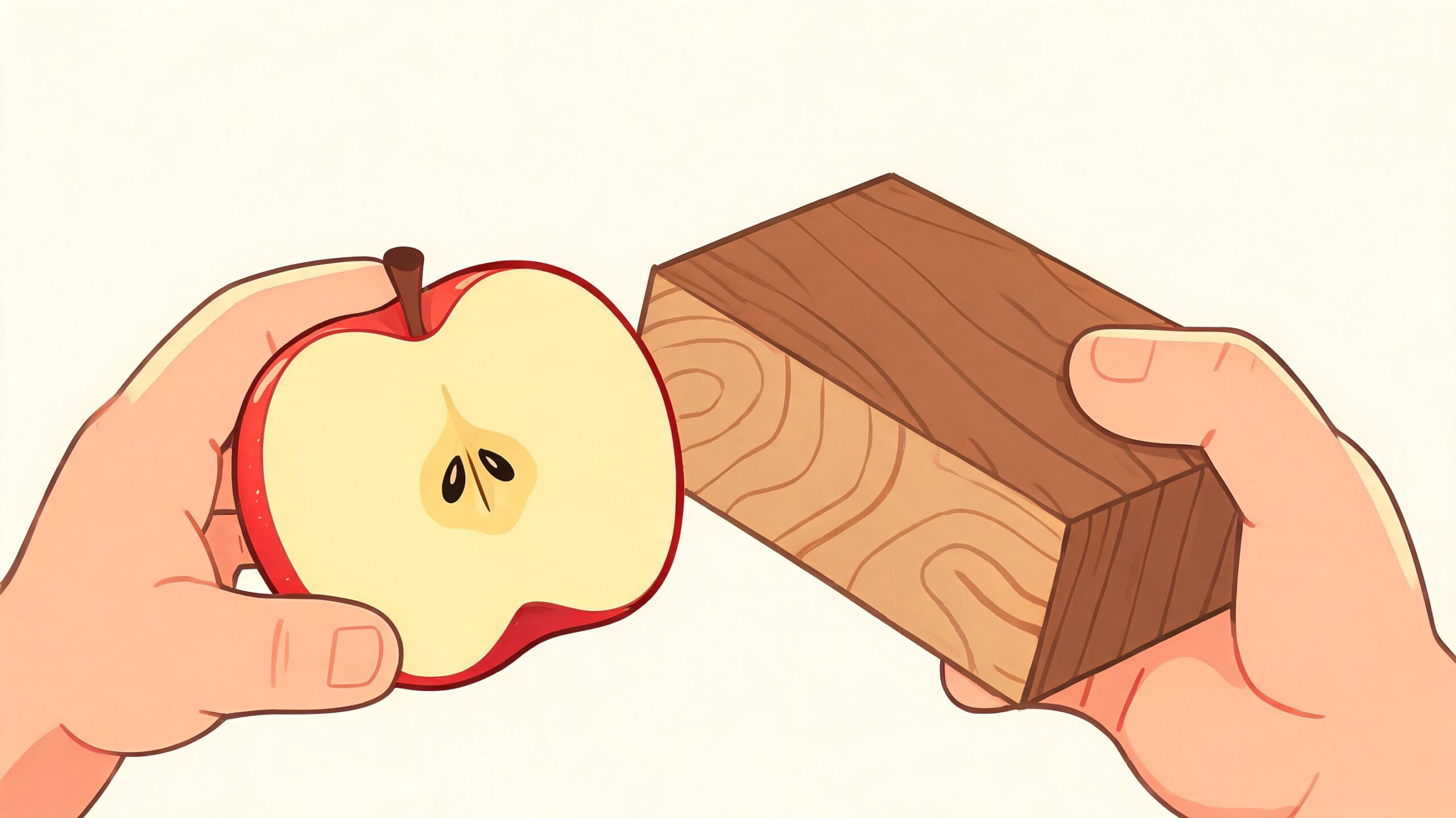
Solid wood, veneer, and engineered wood
Here's the simple breakdown:
| Type | What it is | What shoppers usually notice |
|---|---|---|
| Solid wood | Real wood throughout the part | Heavier feel, natural grain variation, repairable surface |
| Veneer | Thin real wood layer over another core | Attractive appearance, but limited repair options if deeply damaged |
| MDF or particle board | Wood fibers or particles pressed with adhesives | Lower cost, but more vulnerable to wear over time |
One reason this gets confusing is that veneer is everywhere. In modern American furniture production, 80-90% of factory-made pieces use some form of veneer according to this furniture veneer discussion. That doesn't make every veneered piece bad. It does mean that finding genuine solid wood is more special than many shoppers realize.
What to look for in person
A few clues help when you're standing in front of a dresser:
- Check the edges. Solid wood often shows natural grain continuity instead of a thin layer wrapped over a core.
- Look inside the drawers. Construction details often reveal more than the outside finish.
- Ask what parts are solid. Some dressers mix materials, so it helps to know whether the top, sides, drawer fronts, and frame are all wood.
- Look for store identifiers. In our showroom, shoppers can use our in-store icon system to spot real wood more easily.
If you've ever wondered how to tell the difference with your own eyes, our article on how to tell if furniture is real wood breaks it down in everyday language.
Choosing the Best Hardwoods for Your Dresser
You're standing in our Greenfield showroom with two dressers in front of you. Both say solid wood. Both look good from six feet away. Then you get closer, run your hand across the drawer front, study the grain, and open the top drawer. That's usually the moment the wood species starts to make real sense.
The wood you choose shapes more than color. It affects how the dresser feels in the room, how easily it hides daily wear, and how the surface will look after years of socks, sweaters, and a few accidental bumps from a laundry basket.
Oak and maple for everyday use
Oak and maple are two of the hardwoods Milwaukee shoppers ask about most, and for good reason. They have a reputation for durability, and they tend to make practical dressers for bedrooms that see real daily traffic.
Here's the easy way to separate them in person.
Oak has a more visible grain pattern. You can usually see stronger lines and natural variation right on the drawer fronts and side panels. If you like furniture that looks rooted, classic, and unmistakably wood, oak often scratches that itch. It also does a nice job of making small everyday marks less obvious because the grain already has movement.
Maple is smoother and quieter visually. The grain is finer, so the overall look feels cleaner and more refined. A lot of shoppers who want a lighter, simpler bedroom style are drawn to maple once they see it under showroom lighting instead of on a phone screen.
That side by side comparison matters. Online, oak and maple can look surprisingly similar. In person, they usually don't.
Cherry and walnut for warmth and character
Cherry and walnut bring a different personality altogether. These are the woods people often fall for when they want a dresser to feel settled, rich, and a little more distinctive.
Cherry has a warm tone that feels comfortable right away. In a bedroom with soft light, quilts, or traditional details, it can give the space a welcoming, lived-in feel without looking heavy.
Walnut usually reads deeper and more dramatic. The color has more natural depth, and the grain often has a flowing, expressive look that makes each piece feel a little different from the next. If oak is the dependable flannel shirt, walnut is the leather jacket. Both are great. They just tell different stories.
One helpful thing to know is that some woods develop more visible character as they age. Many shoppers love that because the dresser feels more personal over time, not less.
What to test with your own eyes and hands
Shopping in person really helps in this regard. You do not have to memorize wood science. You just need to know what to check.
- Stand a few feet back first. Ask yourself whether the wood feels calm, bold, formal, or casual in the room.
- Move closer and follow the grain with your eyes. Oak usually shows stronger pattern. Maple looks finer and more even. Walnut often has deeper contrast.
- Touch the surface. Smoother-looking woods like maple can feel more refined. More open-grained woods like oak often feel more textured and traditional.
- Open several drawers. Notice whether the wood choice fits the mood of the whole piece, not just the top.
- Compare two species side by side if possible. That's the fastest way to tell what you enjoy living with.
A good dresser is a little like flooring in your home. You see it every day, and over time you stop noticing the trend factor and start noticing whether it still feels right.
A quick wood comparison
| Wood | What you'll notice in person | Often a good fit for |
|---|---|---|
| Oak | Strong grain, classic texture, more visual movement | Traditional rooms, busy households, everyday use |
| Maple | Fine grain, lighter and cleaner look | Transitional styles, brighter bedrooms, simpler designs |
| Cherry | Warm tone, inviting appearance | Cozy bedrooms, classic styling, heirloom feel |
| Walnut | Darker color, rich character, striking grain | Statement pieces, deeper color palettes, more dramatic spaces |
If you want a little homework before you visit, our guide to choosing the right hardwood for longevity and style gives you a clearer feel for how these species differ.
Signs of a Dresser Built to Last for Generations
A dresser can be made of solid wood and still be built better or worse. Construction quality defines the difference. Two pieces may share a similar finish, yet one will hold up far better because of what's happening at the joints, drawer box, and support points.
When shoppers ask us how to spot quality fast, we usually start with the drawers.
Start with the drawer corners
Pull a drawer out and look at how the sides connect to the front. If you see those interlocking wedge-shaped joints, that's dovetail joinery. It's one of the classic signs that the maker cared about strength.
Premium dovetail joinery demonstrates up to 3 times the shear strength of basic butt joints according to this dresser construction reference. That matters in daily use because drawers get yanked, stuffed, and reopened thousands of times.
A basic drawer might look fine on day one. Years later, the front can loosen, separate, or rack out of square. Dovetails help resist that pull.
Then check how the dresser moves and supports weight
Good construction doesn't stop at the joints. You want to notice how the whole piece behaves.
Look for these clues:
- Full-extension drawer glides let you reach the back of the drawer instead of losing storage space.
- Smooth drawer action tells you the fit is controlled and the hardware is doing its job.
- A substantial back panel usually signals better structure than a thin, stapled panel.
- Even alignment across drawer fronts shows care in assembly and fitting.
The verified construction data also notes that advanced joinery paired with stronger drawer bottoms can deliver 33-100 lbs per drawer and support 400+ lbs total in some premium builds, as described in the same construction family of verified material. You don't need to memorize the numbers. Just remember what they translate to: less sagging, less strain, and better day-to-day confidence.
Mortise-and-tenon matters too
Some of the best dressers use more than one kind of quality joinery. Frames may rely on mortise-and-tenon construction, which is one of the old-school methods that helps furniture stay square and stable over time.
If that term sounds technical, don't worry. Our plain-English explanation of what a mortise and tenon joint is shows why furniture people get excited about it.
A dresser built for the long haul usually gives away its quality when you open it, pull it, and look underneath, not when you admire it from across the room.
Finding the Right Size and Style for Your Home
You get home with a dresser you loved in the store, set it against the bedroom wall, and then reality shows up. The closet door clips the corner. The drawers stop short because the bed is too close. The piece itself is beautiful, but the fit is wrong. I have seen that happen for decades, and it is one of the easiest furniture mistakes to prevent.
A solid wood dresser should fit your daily routine as well as your room. Strength matters. So does scale. A dresser that suits the space will feel easy to live with every morning and every laundry day.
Start with the room, not the finish
Shoppers often fall for color first, and I get it. Cherry, oak, maple, walnut. Those are the fun parts. But size usually decides whether you stay happy with the purchase.
In our Greenfield showroom, Milwaukee shoppers can do something online photos cannot offer. You can stand in front of a dresser, walk around it, crouch beside it, and feel its presence in the room. That helps you judge two things that are hard to read on a screen. Actual footprint and visual weight.
Visual weight is just how heavy or light a piece looks. A dresser with thick posts, deep framing, and large hardware can feel bigger than the tape measure suggests. A cleaner-lined piece with the same width may sit much more comfortably in a smaller bedroom.
Small rooms need every inch to work
This comes up all the time in Milwaukee apartments, condos, bungalows, and senior living spaces. A wide dresser may technically fit the wall and still make the room feel cramped once you account for walking space and drawer clearance.
Narrower solid wood dressers often solve that problem well. They leave better paths around the bed, tuck beside closet openings more easily, and still give you useful storage.
If you shop in person, test this with your body, not just your eyes. Stand where you would normally walk. Picture the drawer open in front of you. Can you pass by comfortably, or does the room suddenly feel pinched? That quick test saves a lot of frustration later.
Bigger bedrooms need proportion
A large wall can make a too-small dresser look stranded. If two people are sharing the room, undersizing the storage usually shows up fast in daily life. One person gets the deep drawers. The other gets the leftovers.
Here is a simple way to sort it out before you buy:
- Measure the wall width so you know the space you can use.
- Measure the depth available in front so drawers can open without crowding the bed or walkway.
- Check the height against nearby windows, mirrors, and light switches so the dresser does not interrupt the room in an awkward spot.
- Think about what you store because bulky sweatshirts and winter layers need different drawer space than socks and T-shirts.
- Remember delivery access if you have tight stairs, older door frames, or an elevator to deal with.
That last point surprises plenty of people. A dresser can fit the bedroom perfectly and still be a headache getting there.
BILTRITE Furniture-Leather-Mattresses carries both smaller-scale bedroom pieces and come-apart designs, along with larger dressers for wider rooms. That matters for Milwaukee-area homes where the challenge is often layout, stair access, or room size, not taste.
Let the style support the room
Style works a lot like seasoning in cooking. Too little and the room feels flat. Too much and every piece competes for attention.
If your bed has a simple silhouette, a dresser with more visible grain, framed drawer fronts, or stronger hardware can add personality. If the bed, rug, and lighting already have plenty going on, a calmer dresser often makes the room feel more settled.
This is another place where the showroom helps. Bring a few phone photos of the room. Compare wood tones under real lighting. Step back ten feet and see whether the dresser feels relaxed, formal, rustic, or cleaner-lined than you expected. Those small gut-check moments are hard to get from a product page.
Bring three things if you can. A wall measurement, a couple of room photos, and a quick list of what the dresser needs to hold. That little bit of homework makes the shopping trip much easier, and it helps you choose a solid wood dresser that looks right, fits right, and works hard for years.
Your In-Store Solid Wood Dresser Checklist
Online photos are great for inspiration. They're lousy at telling you how a dresser feels. Shopping in person offers a major advantage for evaluating physical quality.
When you're in a showroom, don't just look. Test. You're allowed to be curious. In fact, you should be.
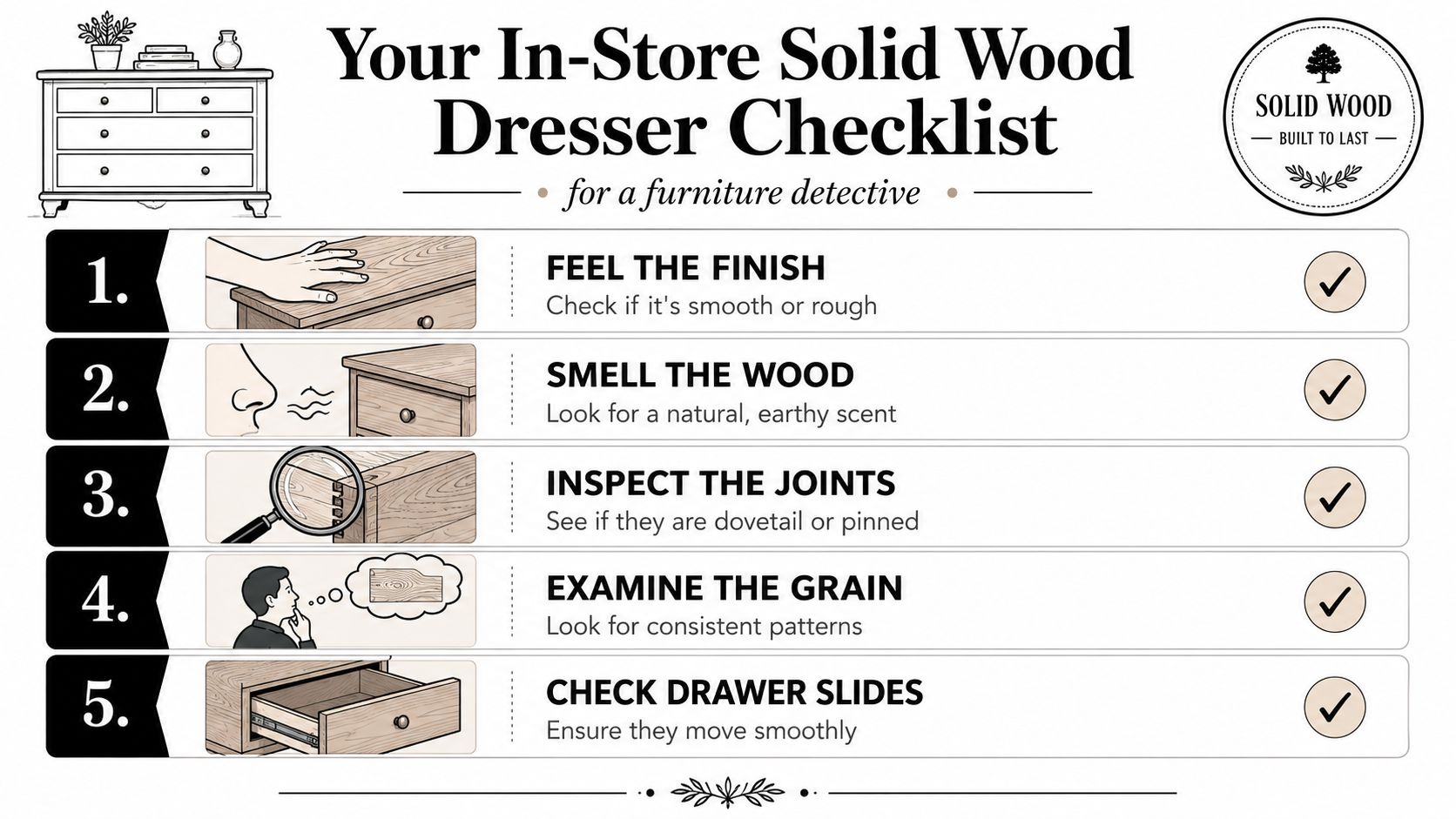
Five things to do before you decide
Give it a gentle wiggle
A well-built dresser should feel planted, not shaky. Small movement can reveal a lot.Open every drawer
Don't stop at one. One good drawer doesn't prove much. Try them all and feel whether the motion stays smooth and steady.Look at the joinery
Get down and inspect the drawer corners. Quality often hides in places casual shoppers skip.Run your hand over the finish
You're checking for consistency. Rough spots, drips, or uneven texture can tell you plenty about the finishing process.Knock lightly on the back and drawer bottoms
Listen for substance. A more solid, grounded sound usually feels different from a thin, hollow panel.
What questions to ask while you're standing there
You don't need fancy furniture vocabulary. Ask normal questions:
- What parts are solid wood?
- Are the drawers dovetailed?
- Do the drawers fully extend?
- Can this finish be touched up or refinished later?
- Will this piece fit through a tighter hallway or doorway?
Good furniture shopping is hands-on. The more you pull, open, inspect, and ask, the clearer the differences become.
If you enjoy doing your homework before visiting, keep that checklist handy and compare what you feel in person to what the product tag says.
Caring For Your New Family Heirloom
You get your dresser home, slide the drawers open that first week, and realize something nice. Good solid wood furniture does not ask for fussy care. It asks for steady, sensible care, the same way a good pair of leather boots or a cast-iron pan does.
That is one of the pleasures of buying a well-made piece in person. After you have already felt the drawer action, checked the finish with your own hand, and looked over the wood at our Greenfield showroom, caring for it at home feels a lot less mysterious. You know what the surface is supposed to feel like. You know how the drawers are supposed to glide. That makes it easier to spot a small issue early and keep the piece looking handsome for years.
The habits that protect wood best
Start simple. Dust with a soft cloth. If something sticky or grimy shows up, use a lightly damp cloth, then dry the surface right away. Wood likes moderation.
A few household habits make a bigger difference than expensive products:
- Use gentle cleaners only. Strong sprays can wear on the finish over time.
- Keep the dresser out of harsh direct sun when possible. Sunlight can slowly shift the color, especially on top surfaces and drawer fronts.
- Aim for a steady indoor environment. Wood is a natural material. Big swings in dryness or humidity can cause it to expand and contract, a little like a wood floor through the seasons.
- Lift objects instead of dragging them. Lamps, jewelry boxes, and mirrors can leave scratches if they scrape across the top.
- Deal with small marks early. A tiny scuff is easier to address than a worn patch you have ignored for two years.
If you want a practical starting point, our guide on how to clean wood furniture walks through safe day-to-day care.
What “family heirloom” care really means
“Heirloom” can sound fancy, but the day-to-day reality is pretty down to earth. Close drawers instead of shoving them. Wipe up spills before they sit. Do not let dust build into grime around hardware and corners.
That is the whole idea. Small care prevents bigger repair.
And here is the part online photos cannot teach nearly as well as an in-store visit. When Milwaukee shoppers see several solid wood dressers side by side in our showroom, they start noticing how different finishes respond to touch, light, and everyday use. One top may have an open grain you can feel. Another may have a smoother, more formal finish. Once you have seen and touched those differences in person, you are much more confident caring for the piece once it is in your bedroom.
Why solid wood earns its keep over time
Life leaves marks. A belt buckle taps a corner. A watch gets set down too hard. A child turns the top into a launching pad for a toy truck.
With solid wood, those moments are often repairable. That is a big reason families keep these pieces so long. Minor scratches, finish wear, and surface dullness do not always mean the dresser is done. In many cases, the piece can be touched up, refreshed, or refinished because there is real material there to work with.
That is what makes a dresser start to feel less like a purchase and more like part of the home.
Questions from Our Milwaukee Neighbors
We hear some version of these every week in the showroom, and they're good questions.
Can I choose the finish on an Amish-made dresser
Often, yes. Many Amish-made collections let you choose the wood species, stain, and hardware. That's helpful if you love the build quality but want a lighter finish, darker tone, or a different knob or pull.
Why are you closed on Sundays and Mondays
Because family time matters to us. We've been family-owned since 1928, and we're proud of the fact that we structure our business around people, not just store hours. Our customers have always been kind about that, and we appreciate it.
Do dressers for smaller homes still come well built
They can. Smaller scale shouldn't mean flimsier scale. A narrow dresser can still have strong joinery, solid wood construction, and useful storage. The key is inspecting it the same way you'd inspect a larger one.
Do you deliver around Metro Milwaukee
Yes. We regularly help customers throughout the Milwaukee area, including suburbs and surrounding communities. Delivery logistics matter with bedroom furniture, especially when hallways, stairs, or senior living spaces are involved, so it's worth talking through access before you buy.
The right dresser is the one that fits your room, holds up to your household, and still makes you happy when you see it every morning.
If you'd like to compare a solid wood furniture dresser in person, we'd love to help. Visit BILTRITE Furniture-Leather-Mattresses in Greenfield, say hi, open some drawers, test the finishes, and chat with our experienced team. We're here to make furniture shopping clear, comfortable, and a whole lot more enjoyable.