3 DAY MATTRESS SALE! TUESDAY - WEDNESDAY - THURSDAY!
LABOR DAY SALE EXTENDED ENDS SATURDAY, OCTOBER 3RD AT 5PM!
NO CREDIT CARD FEES!
1000's of Items IN-STOCK + 500 Mattresses!
Largest selection of USA Made Furniture & Mattresses + Amish Made!
FREE In-Store Design Services!
BUY LOCAL & LOVE YOUR HOME!
3 DAY MATTRESS SALE! TUESDAY - WEDNESDAY - THURSDAY!
LABOR DAY SALE EXTENDED ENDS SATURDAY, OCTOBER 3RD AT 5PM!
NO CREDIT CARD FEES!
1000's of Items IN-STOCK + 500 Mattresses!
Largest selection of USA Made Furniture & Mattresses + Amish Made!
FREE In-Store Design Services!
BUY LOCAL & LOVE YOUR HOME!
OPEN LABOR DAY | Tuesday-Thursday 10am to 6pm | Friday 10am to 7pm | Saturday 10am to 5pm | Sunday Closed To Be With Family & Friends | Monday Showroom Closed
5430 West Layton Ave, Greenfield - Metro Milwaukee
Some nights, your bed feels like a cozy retreat. Other nights, you're throwing the covers off, pulling them back on, and sticking one foot out like it's some kind of thermostat. That's usually when people realize not all comforters feel the same.
A lot of the confusion comes from one simple fact. When shoppers say they want a “good comforter,” they might mean warm, light, fluffy, breathable, easy to wash, allergy-friendly, or built to last. Those are very different things. The good news is that once you know the main types of comforters and how they’re built, the choices get much easier.
We’ve been helping Milwaukee-area families make their homes more comfortable since 1928, and one lesson keeps showing up. Bedding works best when it matches how you sleep, not just the way it looks folded at the end of the bed. That’s especially true if you care about long-term value and want a comforter that still feels good years from now.
Finding Your Just Right Sleep Temperature
You know the routine. You fall asleep feeling comfortable, then wake up warm in the middle of the night. Later, the room cools off and suddenly you’re hunting for the same blanket you kicked aside. That back-and-forth is one of the biggest reasons people start looking into different types of comforters.
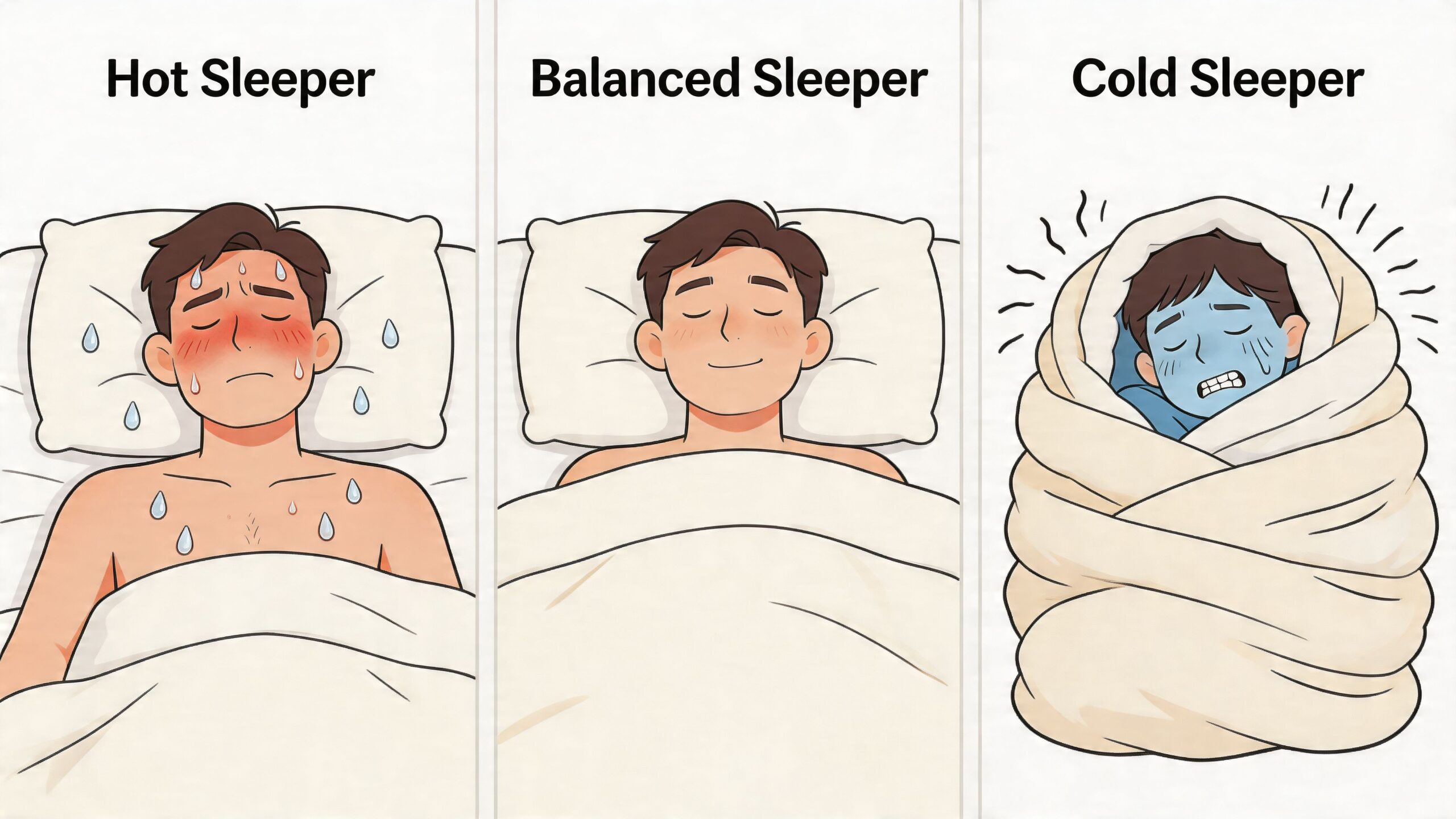
Sleep temperature is personal. One person sleeps cool and wants a cloud-like layer all year. Another runs hot and feels trapped under anything too thick. Add in Milwaukee’s changing seasons, and it’s easy to see why one comforter doesn’t work the same way for everybody.
That “just right” feeling usually comes from a mix of three things:
The fill inside the comforter determines whether it feels airy, dense, breathable, or plush.
The way it’s stitched together affects whether the fill stays evenly spread out or bunches over time.
The warmth level decides whether it works better for summer, winter, or somewhere in between.
A lot of shoppers start by asking, “What’s the warmest one?” That’s not always the best question. A comforter that’s too warm can be just as frustrating as one that isn’t warm enough. The better question is, “What helps me stay comfortable for most of the night?”
A comforter should help your body settle in, not keep making you adjust.
Room temperature matters too. So does your mattress. So do your sheets. If you’ve ever noticed your bed feels different in October than it does in February, you’re not imagining it. Seasonal bedding changes can make a real difference, and adjusting your bedding and mattress setup as seasons change is one of the simplest ways to sleep more comfortably without overcomplicating your bedroom.
Decoding The Different Comforter Fills
When people compare types of comforters, they’re usually talking about the fill. That’s the material inside the comforter, and it has the biggest effect on warmth, weight, softness, and care. If two comforters look similar from across the room, the fill is often why they feel completely different once you pick them up.
What the fill changes
A comforter’s fill shapes your experience in bed more than is often realized. It affects whether the comforter feels light or substantial, whether it holds heat or releases it, and whether it suits someone with allergies, night sweats, or a strong preference for natural materials.
Some fills are known for loft and warmth. Others are chosen because they’re simple to maintain. Some are all about breathability and a clean, crisp feel.
Here’s a side-by-side look.
Comforter Fill Comparison
Fill Type
Pros
Cons
Best For
Down
Lightweight, lofty, strong warmth for its weight, soft drape
Can be pricier, may not suit some allergy-sensitive sleepers
People who want warmth without a heavy blanket feel
Down Alternative
Usually easier to care for, often a practical option for allergy concerns, available in many price points
Can feel heavier for the same warmth, quality varies a lot
Guest rooms, kids’ rooms, allergy-minded shoppers
Wool
Naturally breathable, helps with temperature balance, often feels cozy without being stifling
Can feel different from fluffy down, may need more specific care
Sleepers who want warmth with a more natural feel
Cotton
Breathable, familiar feel, good for lighter bedding preferences
Usually less lofty than down, not the first choice for deep winter warmth
Hot sleepers, summer bedding, layered beds
Polyester
Widely available, budget-friendly, easy to find in many styles
Can trap warmth depending on construction, may flatten sooner in lower-quality versions
Value-focused shoppers and everyday use
The most common choices in plain language
Down is the classic puffy comforter fill. People like it because it can feel light while still delivering strong warmth. If you’ve ever lifted a comforter and thought, “Wow, this is warmer than it looks,” there’s a good chance that lofty feel is part of the appeal.
Down alternative is a broad category, and that matters. Some versions feel soft and airy, while others feel denser and more padded. This is often the easiest starting point for households that want simple care or a fill that’s commonly chosen for allergy concerns.
Practical rule: Don’t assume “down alternative” tells you everything. It tells you the category, not the quality.
Wool tends to attract people who care more about temperature balance than fluff. It’s often a smart pick for sleepers who dislike overheating but still want a cozy layer in cooler weather.
Cotton-filled comforters usually appeal to hot sleepers and anyone who likes bedding that feels breathable and straightforward. They’re not usually chosen for maximum loft. They’re chosen because they feel clean, light, and easy to live with.
Polyester shows up in many comforters, especially affordable ones. Some are perfectly comfortable for daily use. Others feel good at first but don’t hold their shape as well over time. That’s where stitching, shell fabric, and overall build quality start to matter.
A comforter can use a good fill and still fall short on the bed. The reason is simple. Loft affects how full and airy it feels, and construction affects whether that feel lasts past the first few months.
If you’ve ever picked up two comforters that looked similar on the shelf, then noticed one felt fuller, lighter, and more evenly balanced, you were noticing build quality at work.
Fill power in simple terms
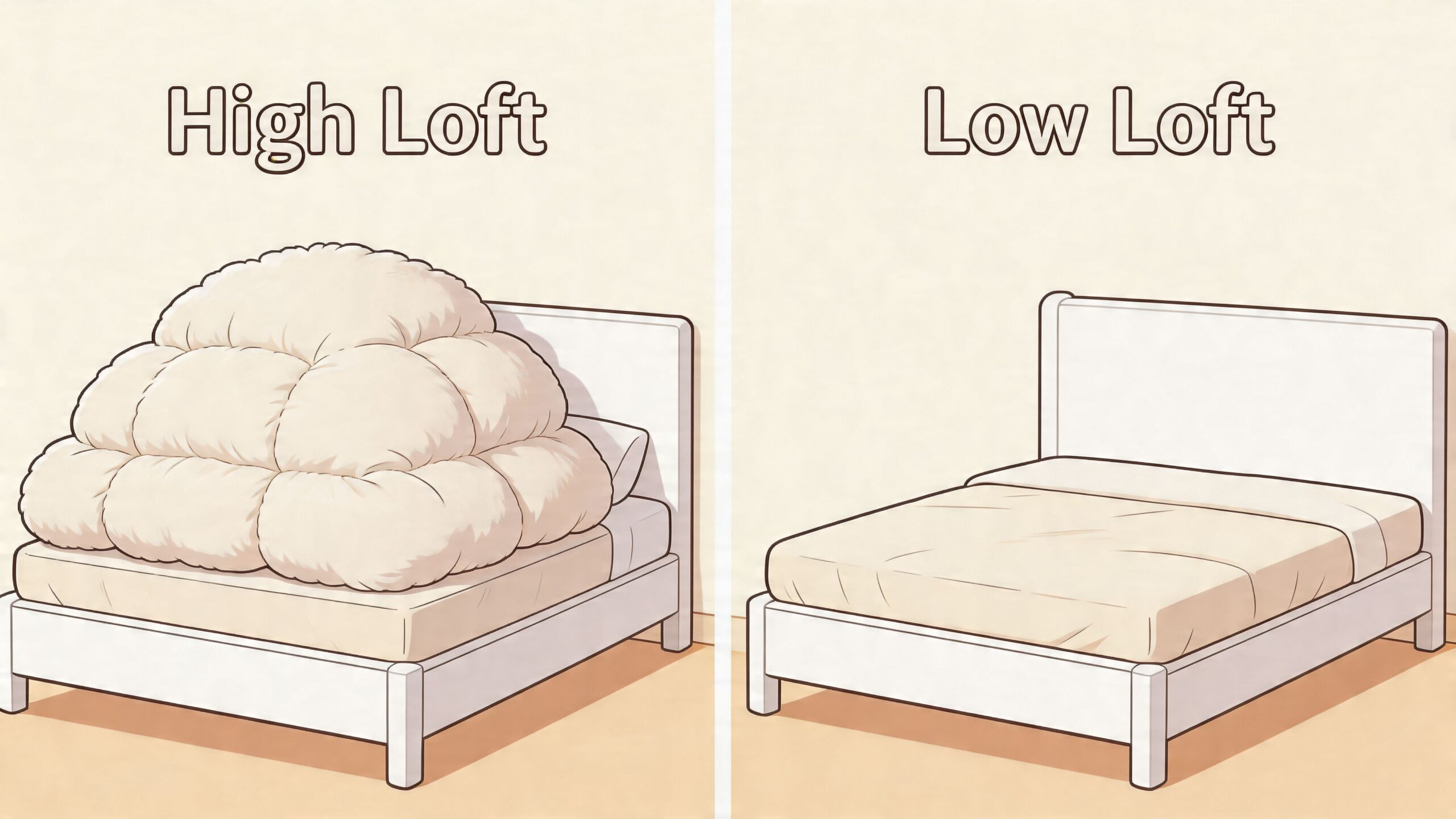
For down comforters, the term fill power comes up often. Here’s the plain-English version. It describes how much space the down takes up. Higher fill power usually means the comforter can create more loft with less weight.
That matters for long-term comfort. A well-made down comforter with healthy loft often feels cozy without feeling heavy, and that lighter, airier build can pair especially well with a supportive, American-made mattress that already has a quality comfort layer underneath. You get warmth on top without piling on unnecessary bulk.
Shoppers sometimes mix up fill power with fill weight. They are not the same thing. Fill power describes the quality and loft of the down. Fill weight describes how much down is inside. One comforter can have high fill power and still be designed for moderate warmth, while another can have more total fill and feel heavier.
Why stitching changes performance
The shell and stitching decide whether the fill stays where it belongs. If the inside shifts too much, the comforter starts to feel uneven. One section gets fluffy, another gets thin, and the whole bed feels less comfortable than it did in the showroom.
Two common construction styles show up again and again:
Sewn-through construction stitches the top and bottom layers together directly. It often costs less and usually has a flatter look.
Baffle box construction uses internal walls to give the fill more space to stay lofty and spread more evenly.
That difference shows up over time. Sewn-through comforters can develop cooler spots more easily because the fill has less room to stay puffed up across the entire surface. Baffle box designs usually do a better job holding their shape, which is one reason they’re often a smarter value for shoppers who want a comforter to last, not just look good for one season.
In our family’s furniture business, this is one of those details we encourage people to feel with their own hands. The comforter may look polished in a product photo, but the actual test is how evenly it lays across the mattress and whether the loft stays consistent from edge to edge.
What to check before you buy
A quick in-store check can tell you plenty.
Run your hands across the comforter and notice whether the fill feels evenly spread. Lift one side and see whether the weight feels balanced. Fold it over your arm. A quality comforter should feel settled and consistent, not lumpy, hollow, or oddly heavy in one section.
Use this short checklist:
Look at the loft. It should feel full and spring back instead of looking tired right away.
Check the stitch pattern. Box construction usually does a better job controlling fill than large open channels.
Feel for thin spots. Pay attention to corners and the center panel.
Notice the shell fabric. A smoother, tighter cover often does a better job protecting the fill and holding up to regular use.
Milwaukee weather can make bedding decisions tricky. A comforter that feels perfect in January can feel stifling by April, especially if your mattress already sleeps warm or your bedroom gets afternoon sun. Choosing warmth and choosing weight are related, but they are not the same decision.
That distinction saves people from expensive mistakes.
A lot of shoppers pick up a comforter, feel the heft, and assume heavy means warm. In practice, warmth comes from how well the fill traps heat, while weight is what you feel pressing over your body. A lighter comforter with efficient insulation can keep you warmer than a bulky one that looks impressive folded at the foot of the bed.
Start with your room, then your preferences
The easiest way to choose is to work from your actual sleep setup. Ask two simple questions. Does your bedroom stay cool overnight, and do you usually run hot, balanced, or cold when you sleep?
From there, the categories get much easier to sort out:
Lightweight comforters fit warm bedrooms, summer use, and sleepers who kick covers off halfway through the night.
All-season comforters fit guest rooms, mixed Wisconsin weather, and households that want one reliable option for most of the year.
Ultra-warm comforters fit colder rooms, sleepers who always want more coverage, and anyone who likes a cocooned, winter-ready feel.
Here is the part that often surprises people in the showroom. Two comforters can offer a similar warmth level and feel completely different on the bed. One may drape softly and barely feel there. Another may feel dense and grounded. Neither is automatically better. The better choice is the one that helps you stay comfortable through the night without constant tossing, kicking, or piling on extra blankets.
Match the comforter to the mattress underneath it
This matters more than people expect. A supportive, well-built mattress changes how a comforter feels because your body stays in a steadier position and keeps more consistent contact with the bedding. Pair a durable comforter with a quality American-made mattress, like the ones we carry at BILTRITE, and you usually get better long-term value from both pieces. The comforter does not have to work overtime to fix a sleep setup that is already uncomfortable.
A good comforter should feel right on night one and still make sense a few years later. That is why we always bring people back to the same question in the store. What will keep you comfortable consistently, not just what feels extra cozy for five minutes under showroom lights?
The Right Comforter For Every Kind of Sleeper
The best comforter for your neighbor might be the wrong one for you. That’s not marketing talk. It’s just how sleep works. Some people heat up quickly. Some are cold almost the minute the room cools down. Some want easy-care bedding they can wash without much fuss.
For hot sleepers
Hot sleepers usually do best when they stop chasing “extra cozy” and start prioritizing breathability. Cotton-filled comforters and some wool options tend to make more sense here than very lofty, heat-holding styles.
A hot sleeper often says the same thing in different words. “I want something soft, but I don’t want to wake up sweaty.” That usually points toward lighter fills, less bulk, and shell fabrics that feel crisp instead of overly padded.
For cold sleepers
Cold sleepers often care about one thing first. They don’t want cold spots. They want steady warmth that doesn’t vanish when they roll over or shift position during the night.
That’s where lofty fills and better construction can make a real difference. A comforter that stays evenly distributed usually feels more dependable than one that starts thin in key areas. Cold sleepers also tend to appreciate comforters that deliver warmth without becoming hard to move around.
For allergy-sensitive households
This group often narrows the field quickly. Down alternative comforters are frequently the first stop because they’re commonly chosen by shoppers looking for a more allergy-friendly bedding option.
That doesn’t mean every down alternative comforter feels the same. Some are slick and lightweight. Others feel more padded and dense. If allergies are part of the picture, comfort still matters. You shouldn’t have to trade one problem for another.
For seniors and easy-handling comfort
A comforter can be warm and still be manageable. That point matters for seniors, caregivers, and anyone who doesn’t want to wrestle with a bulky bed every morning.
A lighter comforter with efficient insulation is often easier to lift, straighten, and reposition. That can make everyday life simpler, especially when the bed is used often and the bedding needs to feel dependable rather than fussy.
Here are a few smart matches by sleeper type:
If you run warm: look for breathable fills and a lighter overall build.
If you get chilly easily: focus on loft, even construction, and a warmth level that suits your room.
If laundry simplicity matters: choose a comforter with straightforward care instructions and a fill that fits your routine.
If the bed gets heavy use: pay attention to stitching quality and whether the comforter keeps its shape well over time.
The right comforter doesn’t just feel good on night one. It still makes sense after months of real use.
Sizing Care And Making Your Comforter Last
Once you find a comforter you like, the next question is simple. How do you keep it working well for years instead of just one season? The answer usually comes down to size, care, and storage.
Size for the mattress you actually have
A comforter that looks fine on the tag can still fit awkwardly on the bed. If your mattress is taller, flip-able, or built with a heavier-duty profile, a skimpy comforter can leave the sides looking short and the sleeper feeling exposed.
A good fit should drape comfortably over the edges without looking stretched tight. If you share a bed, a little extra coverage often makes a big difference. Many couples discover their “nighttime tug-of-war” is partly a sizing issue.
A few simple checks help before buying:
Measure mattress height if your bed sits taller than average.
Think about drape if you like the comforter to cover the sides generously.
Consider shared sleep space if one sleeper tends to pull bedding over during the night.
Care habits that protect loft
Always start with the care label. That sounds obvious, but it saves a lot of trouble. Some comforters can handle routine washing more easily than others, and drying technique matters just as much as washing.
For everyday longevity, these habits usually help:
Use a cover when appropriate to cut down on direct wear.
Air the comforter out from time to time so trapped moisture doesn’t linger.
Wash gently and dry thoroughly so the fill doesn’t stay damp or clump.
Store it loosely when not in use. Crushing it into a tight container can flatten the fill.
Think like you would with quality furniture
People are usually careful with solid wood furniture because they expect it to last. A well-made comforter deserves that same mindset. If the fill is good and the construction is solid, basic upkeep goes a long way.
The goal isn’t fancy maintenance. It’s consistency. Keep it clean, keep it dry, and give it enough room to hold its shape.
Why Feeling Is Believing At BILTRITE
Reading about types of comforters helps. Touching them helps more. Comfort is one of those things that becomes clear the second you feel the difference between a lighter cotton-filled option, a lofty down comforter, and a denser alternative fill.
That’s one reason an in-person showroom still matters. You can test weight, loft, stitching, and overall feel instead of guessing from a product photo. You can also compare how a comforter feels on different mattress styles, which matters more than people think.
Some bedding choices are easier in person
A comforter might sound great on paper and still feel wrong the minute you pick it up. Maybe it’s too slick. Maybe it’s heavier than expected. Maybe the loft is nice, but the drape feels awkward on the kind of bed you have at home.
That’s where hands-on comparison becomes useful. You can fold it, lift it, and get a sense of whether it feels breathable, substantial, fluffy, or easy to manage.
Good guidance saves second-guessing
It also helps to talk things through with someone who understands sleep products. Mattress feel, room temperature, bed height, and sleeper preference all interact. A comforter doesn’t live by itself. It works as part of a full bed setup.
If you’re already evaluating your sleep surface, learning how to test a mattress can make it easier to judge bedding choices in a more realistic way too.
BILTRITE has been family-owned since 1928, and that history shows up in how the showroom works. The focus is on helping people compare real quality, including USA-made and Amish-made furniture, durable heavy-duty options, and a mattress center with over 60 models. The team brings more than 400 years of combined experience, and because BILTRITE doesn’t sell online, the energy goes into a strong in-store experience for Metro Milwaukee families. They’re also proudly closed on Sundays and Mondays to support family time.
If you’d like help sorting through comforters, mattresses, and long-lasting bedroom essentials in person, visit BILTRITE Furniture-Leather-Mattresses in Greenfield. You can see the quality up close, feel the difference for yourself, and talk with a friendly team that’s been helping Milwaukee-area families get comfortable for generations.