3 DAY MATTRESS SALE! TUESDAY - WEDNESDAY - THURSDAY!
LABOR DAY SALE EXTENDED ENDS SATURDAY, OCTOBER 3RD AT 5PM!
NO CREDIT CARD FEES!
1000's of Items IN-STOCK + 500 Mattresses!
Largest selection of USA Made Furniture & Mattresses + Amish Made!
FREE In-Store Design Services!
BUY LOCAL & LOVE YOUR HOME!
3 DAY MATTRESS SALE! TUESDAY - WEDNESDAY - THURSDAY!
LABOR DAY SALE EXTENDED ENDS SATURDAY, OCTOBER 3RD AT 5PM!
NO CREDIT CARD FEES!
1000's of Items IN-STOCK + 500 Mattresses!
Largest selection of USA Made Furniture & Mattresses + Amish Made!
FREE In-Store Design Services!
BUY LOCAL & LOVE YOUR HOME!
OPEN LABOR DAY | Tuesday-Thursday 10am to 6pm | Friday 10am to 7pm | Saturday 10am to 5pm | Sunday Closed To Be With Family & Friends | Monday Showroom Closed
5430 West Layton Ave, Greenfield - Metro Milwaukee
If a seat feels good for the first five minutes but starts to feel hard halfway through tacos, homework help, and one more story from Grandpa, it’s probably not the right one. If the chair looks great online but feels wobbly in person, that matters too. And if you live in a Milwaukee bungalow, condo, apartment, or senior living space, getting the chair through the doorway is part of the job.
That’s why so many shoppers ask us about dining chairs upholstered seat options. They want comfort, yes. But they also want seats that clean up well, hold their shape, fit the room, and still look good after real life happens.
At our family business, we’ve been helping Metro Milwaukee families furnish their homes since 1928. We’re fourth-generation, family-owned, and we still believe furniture shopping should feel like talking things through with a neighbor. No pressure. Just honest guidance, plenty of choices, and a chance to sit in the chair before you bring it home.
Welcome to Our Table A Guide from Our Family to Yours
On a Tuesday night in Milwaukee, the dining table can do a lot of jobs in two hours. Supper lands first. Then comes homework, a spilled glass of milk, a phone call from Mom, and one more cup of coffee after the plates are cleared. If the chairs are wrong, everyone feels it.
That is why upholstered dining chairs deserve a closer look than they usually get. The right one is comfortable enough for a long meal, sturdy enough for daily use, and scaled well enough for a bungalow dining room, condo nook, or smaller kitchen where every inch counts.
Our family has been helping Metro Milwaukee households furnish their homes since 1928, and we have seen this pattern for generations. A shopper comes in looking at color first. Five minutes later, the important questions show up. Will the seat feel good through dinner and dessert? Will it hold up to kids climbing in and out? Will it fit around the table without turning the room into a traffic jam?
A good dining chair doesn’t just match the table. It supports the way your home lives.
That last part matters more than online shopping often admits. A chair can look sharp in a photo and still be too wide, too light, or too lightly padded for the way a family uses it. We spend a lot of time helping neighbors compare what is pretty on a screen with what feels solid in person.
In Milwaukee homes, we also see a need that national retailers often miss. Many families want one of two things. They need a heavy-duty chair that feels dependable under real daily use, or they need a smaller-scale upholstered chair that fits an older home without crowding the room. USA-made and Amish-made options often do both well because they tend to focus on strong joinery, useful proportions, and honest materials instead of chasing trends.
Choosing a dining chair upholstered seat style can feel tricky because several parts have to work together at once:
Comfort that lasts: A seat should feel supportive through dinner, visiting, and the extra twenty minutes nobody planned on.
Construction you can trust: A chair frame should feel planted and quiet, not loose or rickety after a short time.
Size that fits the room: Good chairs leave enough elbow room at the table and enough walking space behind them.
Materials that suit your household: Fabric, leather, and performance options each behave differently in busy homes. Our guide to upholstery materials for real family use can help if you are sorting through those differences.
A dining chair works like a good pair of work boots. You notice the look first, but the support, build, and fit determine whether you are still happy a year later. That is the spirit of this guide, straight from our family to yours.
Choosing Your Upholstery Fabric vs Leather
It's natural to start here, and that makes sense. The covering is what you see, what you touch, and what takes the hit when someone drops salad dressing.
Fabric and leather can both work well. The better choice depends on who uses the chairs, how often they’re used, and how much maintenance you want to deal with.
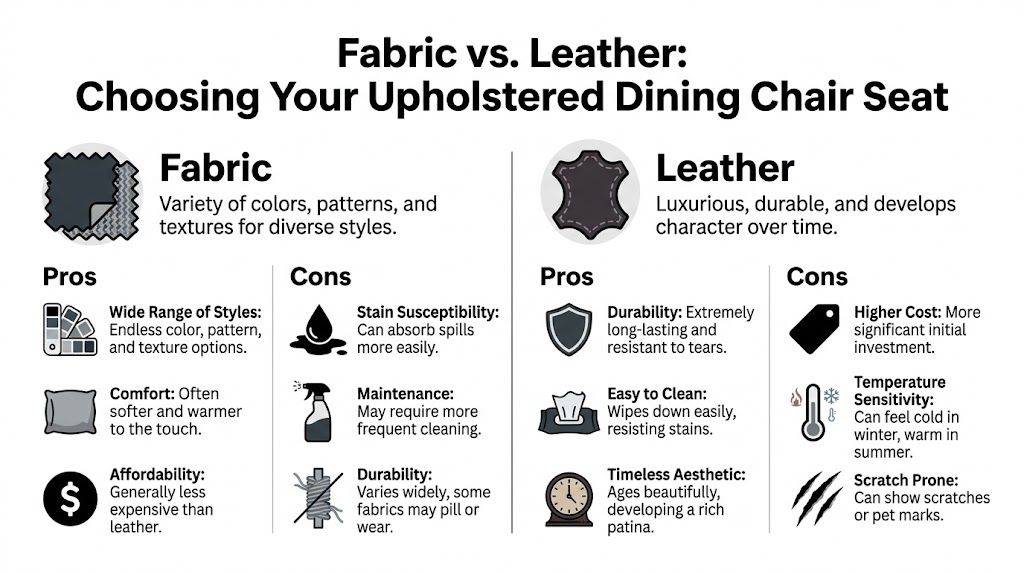
Fabric brings softness and flexibility
Fabric upholstered seats are popular because they offer a huge range of color, texture, and pattern choices. If you want to warm up a dining room, soften a wood table, or tie in drapes, rugs, or painted walls, fabric gives you more room to play.
For many families, fabric also feels cozy right away. It doesn’t have the cool-to-the-touch feel leather can have in winter. That matters in Wisconsin.
Still, fabric asks a little more from you. Some fabrics absorb spills faster than others, and lighter colors show everyday life more easily. If you’re comparing materials, our guide to upholstery materials and how they behave in real homes can help you narrow things down.
Leather favors cleanup and long wear
Leather earns its keep in busy homes. It’s easier to wipe down after meals, and it tends to age with character. In a dining room that gets used every day, that practical side matters.
The verified data also notes that leather alternatives can resist stains better than fabric in heavy-use settings, making them a strong fit for family dining spaces when easy cleanup is high on the priority list.
Here’s a simple side-by-side look.
Feature
Fabric Upholstery
Leather Upholstery
Feel
Soft and warm
Smooth and supportive
Style range
Broad mix of colors and patterns
More tailored and classic look
Spill cleanup
Varies by fabric
Usually easier to wipe clean
Everyday wear
Depends on fabric quality
Strong choice for busy dining rooms
Visual aging
Can show wear by use pattern
Often develops character over time
Budget
Often more approachable
Usually a higher initial investment
How Milwaukee families usually decide
We’ve found that shoppers often choose based on one daily-life question: what happens at your table most often?
Young kids at the table: Leather or a stain-resistant upholstery usually makes life easier.
Formal dining room, less frequent use: Fabric opens up more decorative choices.
Mix of style and practicality: Performance-minded fabrics can offer a happy middle ground.
Pets who brush against chair legs and seats: Leather can be easier to wipe, but scratches may show.
Quick filter: If cleanup is your top concern, lean leather. If visual softness and customization matter most, start with fabric.
There isn’t one right answer. There’s just the answer that fits your house.
What's Inside Matters Padding and Construction
The outside gets attention. The inside decides whether the chair still feels good years from now.
A lot of dining chairs upholstered seat styles look similar from across the room. Sit on them for a few minutes, then use them daily, and the differences show up fast. The seat can stay supportive, or it can flatten. The frame can stay quiet, or it can start shifting.
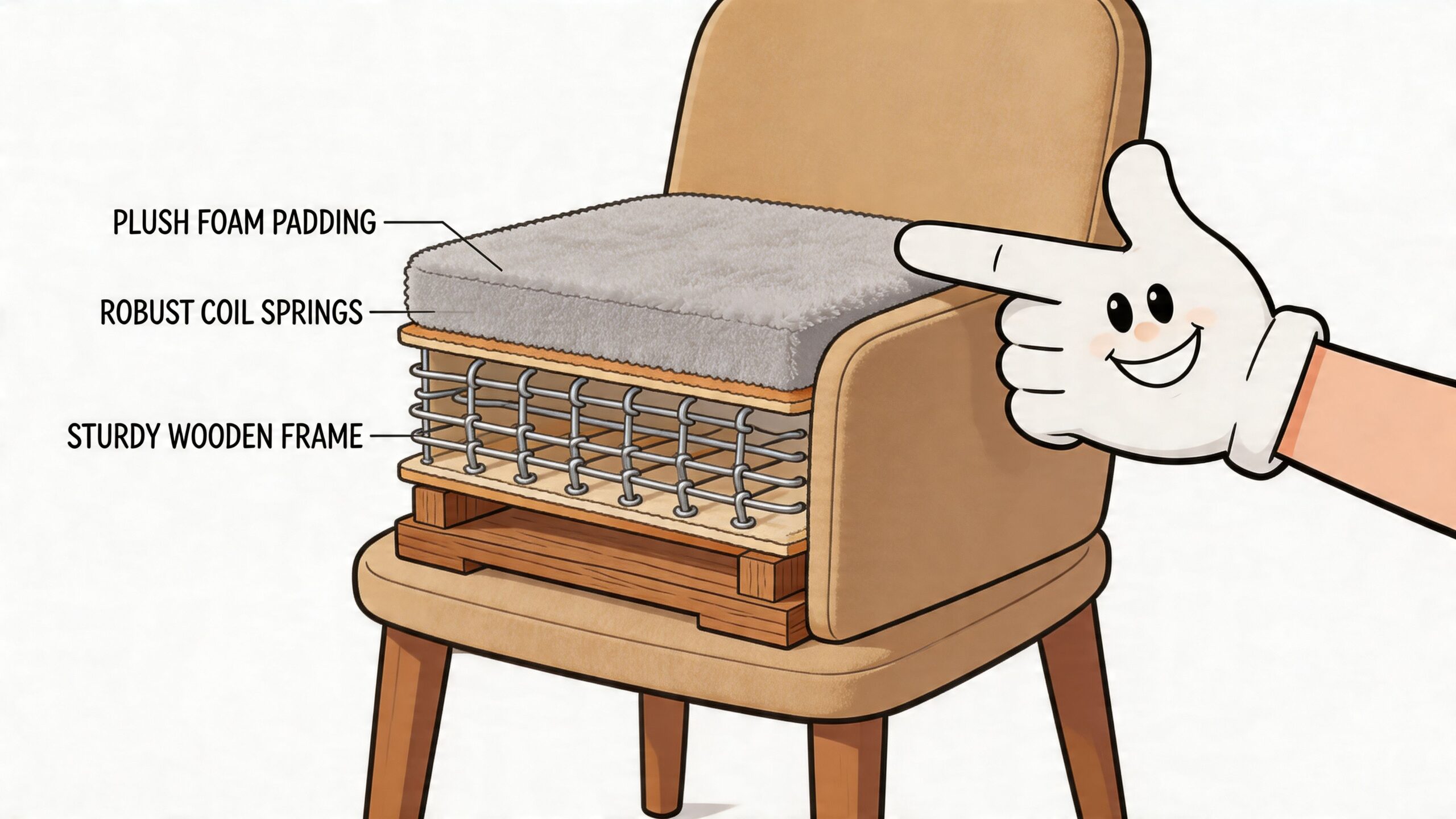
Start with the foam
The most important hidden detail in an upholstered seat is the foam. Verified industry guidance says high-density foam, typically 1.8 to 2.5 lbs/ft³, is critical for longevity because it resists compression and bottoming out better than lower-density foam. Lower-density foams can lose 50% of their thickness after daily use, while higher-density options can retain over 90% of their shape after 100,000 compression cycles in testing, according to this dining chair foam density guide.
That sounds technical, but the everyday version is simple. Better foam keeps you from feeling the seat base under you.
A quick sit test you can do in the store
Try this before you fall in love with a chair’s fabric:
Sit for a few minutes: Don’t just perch and stand up.
Notice the support: The seat should feel cushioned, but not mushy.
Pay attention when you rise: If it feels like you sank too far, that’s a warning sign.
Ask what’s inside: If the salesperson can’t tell you the quality of the foam or frame, keep asking.
Practical rule: A chair should feel supportive when you first sit down and still feel supportive a few minutes later.
The frame carries the load
The frame matters just as much as the cushion. We’re big believers in solid wood dining chairs because they bring strength and repairability that lighter construction often doesn’t. That’s especially important for households where chairs get dragged across the floor, used by guests of all ages, or pressed into service for game night, laptop work, and school projects.
Kiln-dried hardwood at 6 to 8% moisture content helps prevent warping in humid conditions, according to the same verified guidance above. That kind of detail matters in a Wisconsin home where seasonal changes can be rough on furniture.
For shoppers who want a deeper look at construction clues, this article on what to look for in a new sofa or chair covers the kinds of questions worth asking in a showroom.
Watch for these hidden quality markers
Construction detail
Why it matters
High-density foam
Helps the seat keep its shape and comfort
Solid wood frame
Adds strength and long-term stability
Reinforced upholstery
Helps the seat handle regular use
Quality joinery
Reduces wobble over time
Supportive seat build
Prevents that hollow, sunken feeling
One chair may cost less upfront. But if the foam compresses early or the frame loosens, it usually doesn’t stay a bargain.
Finding the Right Fit Size and Scale for Milwaukee Spaces
A chair can be well made, comfortable, and still be wrong for the room. We see that all the time.
In Metro Milwaukee, homes come with all kinds of quirks. Some dining rooms are long and narrow. Some older homes have tighter pathways and smaller door openings. Some condos need furniture that works hard without taking over the room. Fit isn’t a side issue. It’s central.
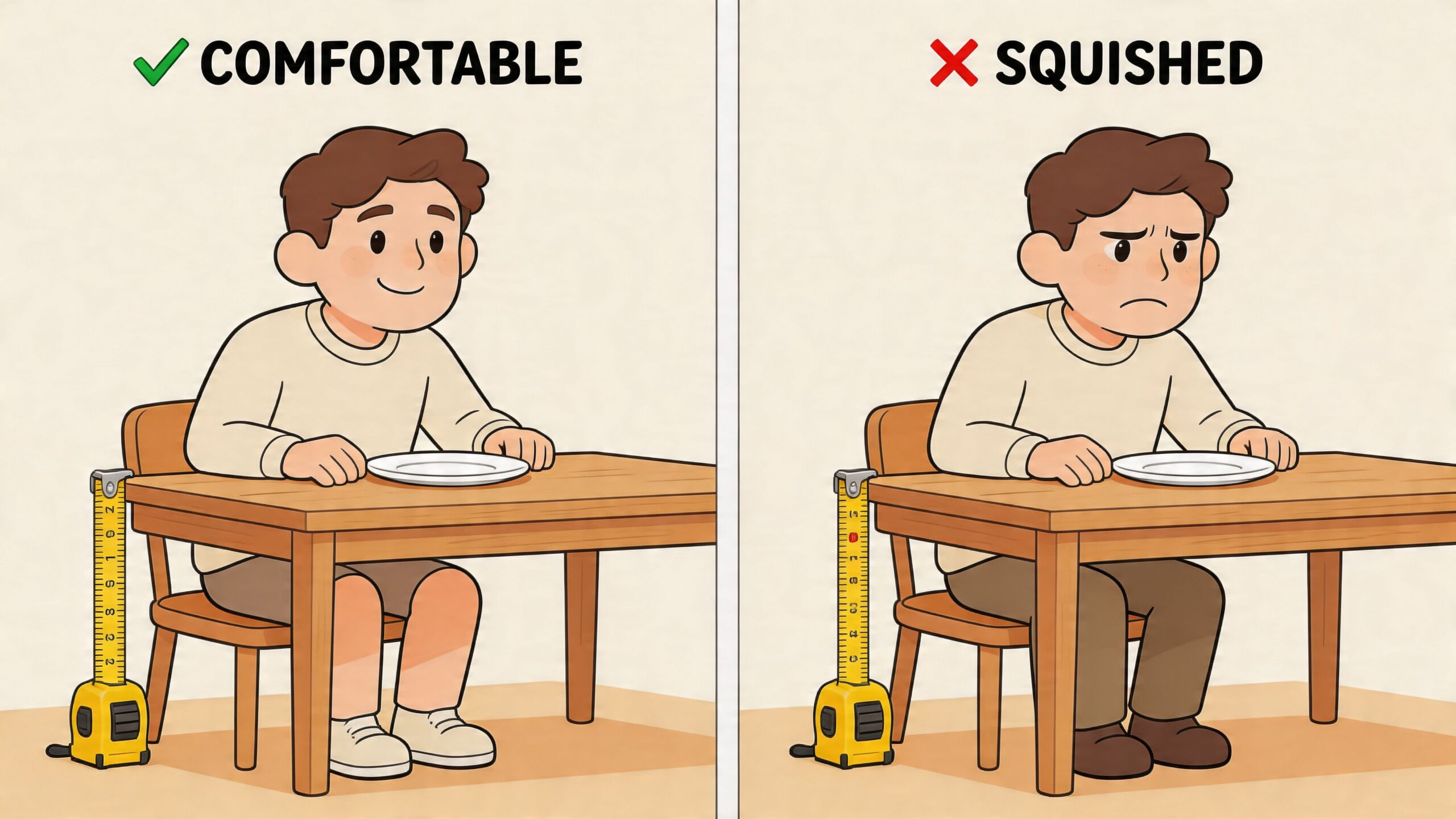
Measure three things before you shop
Many measure the table. Fewer measure the path to the table.
Start here:
Chair seat height: The verified data for this topic highlights seat heights in the 17 to 19 inch range as useful for easy sit and stand in small-scale and senior-focused options.
Chair width: Narrower chairs help preserve elbow room and walking space.
Doorway and turn space: This one saves a lot of headaches.
Verified data shows that up to 40% of urban renters have had to return furniture because it couldn’t fit through narrow doorways or into smaller living spaces, which is why small-scale and come-apart designs matter so much in mixed housing markets like Milwaukee, as noted in this small-space furniture reference.
Small rooms need slimmer choices, not uncomfortable ones
A smaller dining room doesn’t mean you have to settle for tiny, hard chairs. It means you need to shop more carefully.
Armless chairs usually tuck under a table more neatly than armchairs. Chairs with a lighter visual profile can also keep the room from feeling crowded. If you’re furnishing an apartment, condo, bungalow, or senior living space, it helps to focus on pieces made specifically for compact footprints. Our article on furniture choices for small spaces is a useful starting point.
A simple room-fit checklist
Use this before deciding on any dining chairs upholstered seat style:
Check
What to look for
Table clearance
Enough room for legs and apron clearance
Side-to-side spacing
Chairs shouldn’t force diners to bump elbows
Walkway room
People should move behind chairs without a squeeze
Entry fit
The chair should make it through doors and turns
Sit-to-stand ease
Important for seniors, kids, and everyday comfort
A dining chair should fit the person, the table, and the path into the room. Miss one, and the chair becomes a hassle.
A note for senior living and multigenerational homes
This part gets overlooked. A chair that’s too low or too deep can make getting up harder than it needs to be. A stable seat height and supportive cushion can make meals more comfortable and more independent for older adults.
That’s one reason small-scale doesn’t just mean “smaller.” It also means smarter proportions.
Styling Your Chairs for Your Home
Saturday night in Milwaukee. The brats are off the grill, cousins are squeezing around the table, and the room needs to feel welcoming instead of crowded. The right upholstered dining chair helps set that tone. It can make a formal table feel easier to live with, or give a simple breakfast nook a little warmth and polish.
Styling starts with the table you already own. A dining set works like a good conversation. The pieces should relate to each other, but they do not all need to say the exact same thing.
Let the table set the direction
Start by studying the table base and top. A heavy trestle table has a different personality than a slim pedestal or a clean-lined shaker design. Chairs should support that look, or balance it in a way that feels intentional.
A few combinations we see work well in Milwaukee homes:
Traditional wood table: Upholstered side chairs with familiar shapes keep the room comfortable and timeless.
Farmhouse table: Woven-looking fabrics, warm wood tones, and simple frames keep things relaxed.
Mid-century table: Tight profiles and neat tailoring help the room stay open and uncluttered.
Mixed-style room: Upholstered seats often connect older case goods, newer lighting, and inherited pieces without forcing a perfect match.
That last one matters more than people expect. Many families are not decorating from an empty room. They are blending a table from one home, a rug from another, and maybe a buffet that has been in the family for years. Upholstered chairs can tie those pieces together because fabric adds color, texture, and softness in a controlled way.
Use fabric and wood tone as your two anchors
The easiest way to make chairs look like they belong is to repeat one or two visual cues around the room.
Fabric can echo the color in your curtains, pull a tone from the rug, or soften a room with a lot of oak, maple, or walnut. Wood on the chair frame can match the table, or sit close enough that it feels related rather than accidental. If you miss both of those anchors, the room can start to feel like separate purchases instead of one plan.
Shape matters too. Curved chair backs usually sit well with round tables, turned legs, and softer traditional details. Straighter chair lines pair nicely with cleaner, more architectural rooms.
Matching perfectly is not the goal
A room full of exact matches can look flat.
What usually looks better is coordination. Host chairs at the ends can have arms or a different fabric. Side chairs can stay simpler. In a smaller Milwaukee bungalow or condo, that approach gives the room some character without adding visual weight. It also lets you choose small-scale or heavy-duty chairs where they are needed most, which is helpful for families who want comfort, strength, and a footprint that fits the room.
This is also where American-made and Amish-made options stand out. Online retailers often show the same few trendy silhouettes over and over. Local shoppers usually need more range than that. Narrower chair widths, sturdier frames, practical fabrics, and classic tailoring often fit Milwaukee homes better than oversized statement pieces.
If you want a few examples of how to pull those details together, our guide on how to style a dining room walks through combinations that feel polished without feeling fussy.
A well-styled dining chair should look right with your table, feel right for your family, and still make sense five years from now. That is the sweet spot.
Keeping Your Chairs Looking Great Durability and Cleaning
Saturday breakfast runs long. A chair gets dragged back across the floor. One child kneels instead of sits. Syrup lands on the seat. By Sunday night, your dining chairs have done real work.
That is how Milwaukee families use furniture. In a bungalow dining room, a condo eat-in kitchen, or a busy suburban home, upholstered chairs need to handle daily life without looking tired after one hard season.
Why durability saves money later
A dining chair with an upholstered seat has two jobs. It needs to feel comfortable at the table, and it needs to keep its shape after hundreds of meals. If the padding compresses too fast or the frame loosens up, the chair starts aging before the room does.
That is why construction matters so much for families. High-density seat foam, solid wood frames, well-fastened joints, and fabric or leather chosen for everyday use usually hold up better than lighter, cheaper builds. A good chair works like a winter boot. You notice the finish first, but the support underneath decides how long it lasts.
For households that use the dining table every day, these details are worth checking:
Stain-resistant upholstery: A smart choice for homes with kids, guests, or frequent weeknight meals.
Leather or easy-clean coverings: Helpful if you want a simple wipe-down routine.
Supportive seat cushioning: Better at holding its shape over time.
Solid wood construction: A stronger foundation for repeated daily use.
BILTRITE Furniture-Leather-Mattresses carries many heavy-duty, USA-made, Amish-made, and small-scale dining chair options in its Greenfield showroom. That mix matters for local families because online sellers often miss the sweet spot. They show oversized trend pieces or very light budget chairs, while many Milwaukee homes need something sturdy, compact, and comfortable.
Judge an upholstered dining chair by how it will feel after years of dinners, homework sessions, and holiday gatherings.
Simple cleaning habits that protect the fabric
Cleaning does not need to be complicated. Small habits do more good than occasional heroic scrubbing.
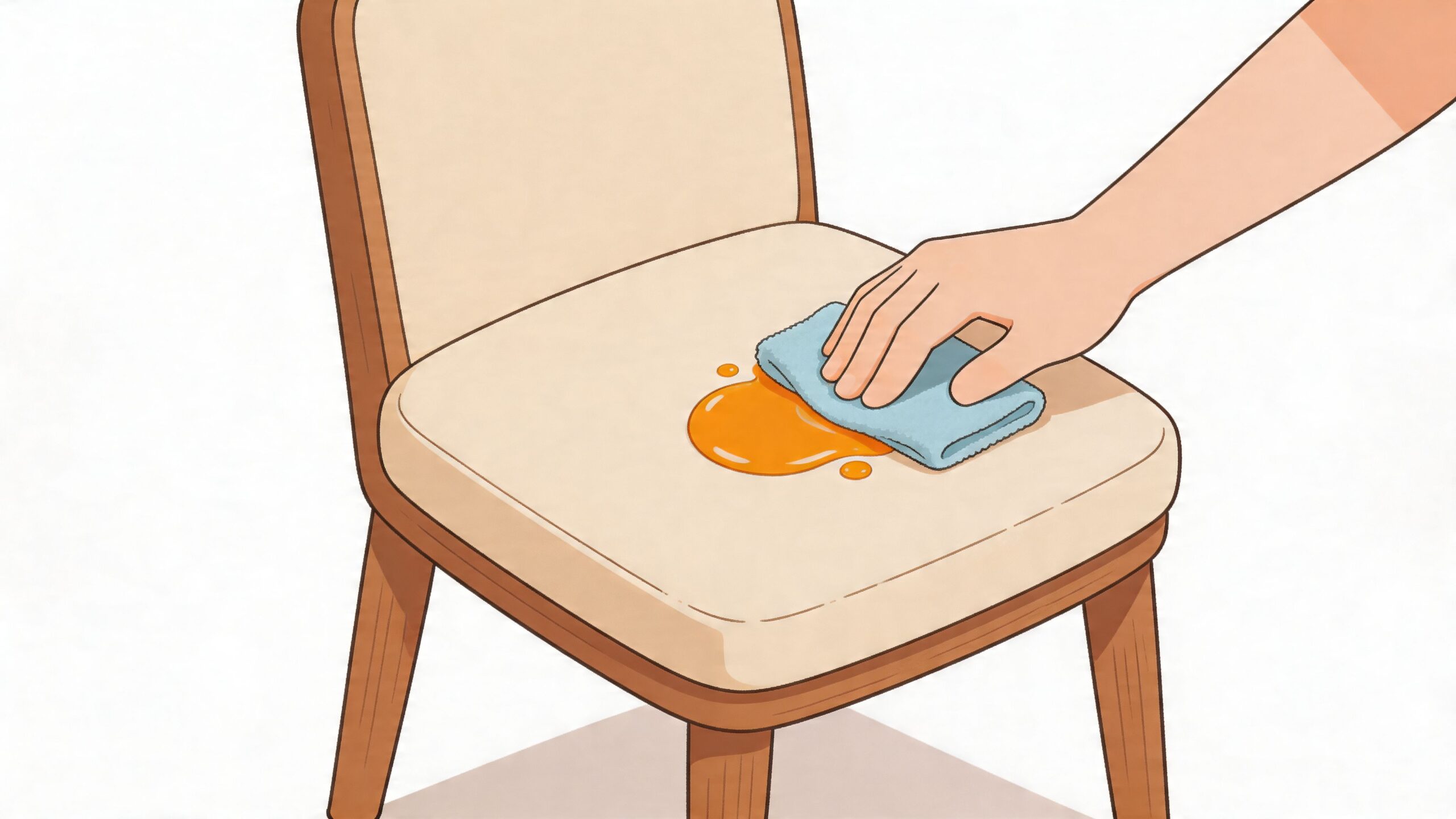
Blot spills quickly. Press with a clean cloth instead of rubbing the spill deeper into the weave.
Vacuum seams and corners. Crumbs act like grit and can wear fabric over time.
Wipe touch points often. Chair backs, top rails, and arms collect skin oils and food residue.
Rotate chairs around the table. That spreads wear more evenly, especially if the same seats get used every night.
If you want a practical starting point for routine care, our guide to cleaning fabric furniture naturally walks through simple methods that fit everyday households.
Durable does not have to look bulky
A lot of shoppers worry that a stronger chair will look heavy in the room. That confusion is understandable. Some mass-market chairs are built big, with thick profiles that swallow up a smaller dining space.
Well-made upholstered chairs do not need all that bulk. Many American-made and Amish-made styles hide their strength in the joinery, seat support, and frame quality rather than in oversized proportions. For Milwaukee families trying to fit a table into an older home, that can be a real advantage. You can get a chair that feels solid under a grown adult and still fits a tighter footprint.
In-person shopping helps solve this problem. You can sit in the chair, press on the seat, check for wobble, and see whether the fabric feels family-friendly or fussy. That hands-on test often tells you more in two minutes than a product photo ever could.
The BILTRITE Difference Why Shopping Local Matters
Local furniture stores earn trust one family at a time. That’s always been the case for us in Metro Milwaukee.
Our family has been serving this community since 1928, and that history shapes how we do business. We don’t believe furniture should be reduced to a thumbnail image and a spec sheet. A dining chair is something you sit in, lean back on, slide across the floor, and live with. It should be tried in person.
Why this matters with upholstered seating
Upholstery has always carried a quality question. Long before modern furniture stores, people learned that what was hidden inside a chair mattered. After the London plague of 1665, the Clean Fillings act made it illegal to reuse old stuffings from hospital mattresses or other furniture, establishing an early consumer protection standard around clean materials in upholstered chairs, as described in this history of upholstery practices.
That old lesson still holds up. Materials matter. Construction matters. Trust matters.
What local shopping gives you
There’s real value in being able to walk into a showroom, sit in several chairs, compare scales, and talk with experienced people who know furniture.
Here’s what that changes:
You can test comfort yourself: No guessing from a photo.
You can compare wood, fabric, and leather in person: Color and texture read differently in real life.
You can ask detailed questions: Frame, foam, seat height, and delivery fit all matter.
You can work with people who know Milwaukee homes: Older bungalows, condos, apartments, and senior spaces all present different needs.
We’re proud to be family-owned, proud to focus on affordable better-quality furniture, and proud of our American-made and Amish-made roots. We’re also proudly closed on Sundays because family time matters at home and at work.
Shopping local isn’t just about where you spend money. It’s about getting better guidance before you live with the choice.
Frequently Asked Questions From Our Neighbors
These are the kinds of questions we hear every week in the showroom. They’re good questions, too.
Are upholstered dining chairs a smart choice for families with kids
Yes, if you choose the material and construction carefully.
Families often worry that upholstered seats automatically mean high maintenance. They don’t. The bigger issue is whether the chair was built for daily life. A wipeable leather seat or a stain-resistant fabric is usually easier to live with than a delicate upholstery in a formal color.
If your dining room doubles as homework central, snack station, and holiday gathering spot, lean toward practical surfaces and supportive seat construction over trend-driven fabric alone.
How do I know if a seat will stay comfortable
Pay attention to what happens after a few minutes, not just the first sit.
A quality upholstered dining chair should feel supportive without collapsing under you. If the seat feels soft in a vague, sinky way, that can be a warning sign. Ask about the foam quality and sit long enough to notice whether the support stays consistent.
A sturdy frame also contributes to comfort. If the chair shifts or flexes while you sit, your body notices that even if you can’t immediately name it.
Is leather too formal for a casual dining room
Not at all.
Leather can read dressy, but it can also feel relaxed depending on the chair shape and wood finish. A simple wood frame with a clean leather seat can work nicely in an everyday kitchen or dining nook. It often looks more welcoming than people expect, especially once the room is lived in.
If you want easy cleanup but don’t want the room to feel stiff, look for softer silhouettes and warmer wood tones.
What if my dining room is small
Then scale matters as much as style.
Look for armless chairs, slimmer seat widths, and shapes that tuck under the table neatly. Bulky chair backs can make a smaller room feel crowded fast. You’ll also want to think about the route into the room, especially in older Milwaukee homes where doorways and stair turns can be tight.
For condos, apartments, and senior-focused homes, chairs with smart proportions often feel better in the room than oversized “statement” seating.
Smaller rooms usually look better with chairs that leave a little visual breathing room around the table.
Should my chairs match my table exactly
No. They should relate to it.
Matching can work, but so can contrast. If your table is visually heavy, a lighter upholstered chair may balance it. If the table is simple, a more detailed upholstered seat can add warmth.
The easiest way to mix successfully is to repeat something. Maybe the wood tone connects. Maybe the fabric echoes another color in the room. Maybe the curves or lines feel consistent. It’s less about matching and more about harmony.
Are upholstered seats good for seniors
Often, yes.
The right chair can make sitting down and getting up easier. Seat height, cushion support, and stability all matter. A chair that’s too low or too soft can be frustrating. A stable, supportive upholstered seat can feel much more comfortable for longer meals or visits.
Many families shopping for parents or grandparents also look for smaller-scale options that fit condos or senior living spaces without feeling flimsy.
How often should I clean upholstered dining chairs
Light upkeep should happen regularly. Deep cleaning depends on the material and how much use the chairs get.
For everyday care, vacuum crumbs from seams and wipe spills promptly. If you have fabric seats, blot rather than scrub. If you have leather, use a gentle cleaning approach recommended for that material.
The biggest cleaning mistake is waiting too long. Fresh spills are much easier to handle than old ones.
Is it worth paying more for a better-built chair
Usually, yes, especially if the chair will be used daily.
A cheaper chair may look similar at first glance, but if the cushion compresses early or the frame loosens, you end up replacing it sooner. Better construction tends to pay off in comfort, appearance, and fewer headaches over time.
That doesn’t mean you need the fanciest option in the room. It means you should focus your budget on the parts that affect daily use most. Seat support, frame quality, and practical upholstery all belong near the top of the list.
What should I bring with me when I shop in person
A few simple things help a lot:
Room measurements: Include the table and nearby walkways.
Doorway measurements: Especially important for tight entries.
Photos of your table and dining room: Lighting and wood tone matter.
A short list of priorities: Easy cleaning, small scale, senior comfort, heavy-duty use, or style goals.
That way, the conversation gets useful fast.
Can I mix upholstered chairs with wood chairs
Absolutely.
This can be a great solution if you want comfort without fully upholstered seating around the whole table. Some households use upholstered host chairs and simpler side chairs. Others mix a bench on one side with upholstered chairs on the other.
The room often feels more layered and personal when you allow that little bit of variation.
If you’ve been trying to sort through all this and still feel unsure, that’s normal. Chairs seem simple until you remember they have to feel good, fit the space, hold up to daily use, and still look at home with the rest of your furniture.
We’d love to help you sort it out in person at BILTRITE Furniture-Leather-Mattresses. Stop by our Greenfield showroom, try different dining chairs upholstered seat styles for yourself, and talk with our experienced team. We’re here to help you find a comfortable, durable fit for your Milwaukee home, without pressure.