Headboard Styles to Know Before You Buy


You've found the bed, chosen the bedding, and maybe even painted the room. Then the headboard arrives, and suddenly the bedroom feels either finished or oddly out of balance. That reaction makes sense. Headboard styles carry more visual weight than most bedroom pieces, so the right choice can make a bed look intentional, while the wrong width, height, or attachment method can make a small room feel even tighter.
After decades of helping Milwaukee-area families furnish real homes, showroom advisors know the most attractive headboard isn't always the easiest one to live with. Room size, delivery paths, wall placement, reading habits, cleaning needs, and the existing bed frame all matter. The following guide breaks down upholstered, wood panel, slat, bookcase, metal, storage, and arched or statement silhouettes, then connects each look to the materials and construction shoppers can inspect in person.
Why the Right Headboard Changes Your Whole Bedroom
A bedroom often has one obvious focal point, the bed. Because the mattress occupies so much of the room, the headboard becomes the visual frame around it. A broad upholstered panel can make the bed feel generous and inviting, while an open metal design can preserve sightlines in a compact apartment. A solid wood headboard adds warmth and structure, especially when the room has plain walls and simple bedding.
Proportion matters just as much. A headboard that's too narrow can make the bed look unfinished. One that's too tall or deep can crowd windows, nightstands, sconces, and walking paths. In smaller Milwaukee homes, a large statement shape may look impressive in a showroom but leave little room for making the bed or carrying furniture through a hallway.
Showroom rule: The headboard should support the room's scale, not compete with every other piece in it.
The bed becomes more intentional
A well-chosen headboard connects the mattress to the rest of the design. Paint color, lighting, bedding, nightstand height, flooring, and dresser scale all influence whether the bed feels settled in the space. A vertical channel or tall panel can pull the eye upward and make the ceiling feel more prominent. A low-profile slat or simple frame keeps the room visually open.
The wrong choice can also exaggerate problems. A heavy bookcase headboard may overwhelm a narrow bedroom, while a delicate metal frame may feel insubstantial beside a large dresser. A window behind the bed may require a shorter design, and a sloped ceiling may call for a custom or winged silhouette that fits the available angles.
Seven families worth knowing
The main headboard styles fall into distinct families:
- Upholstered, including button-tufted, channel-stitched, plain panel, wingback, and arched designs.
- Wood panel, from clean Shaker lines to raised panels and craftsman profiles.
- Slat and spindle, which use open wood construction for an airy, relaxed feel.
- Bookcase, which adds shelving around the bed and makes the wall more functional.
- Metal, including scrollwork, simple tubes, and open industrial forms.
- Storage, with drawers, cubbies, lighting, or charging areas built into the headboard.
- Arched and statement silhouettes, which use curves, scallops, cutouts, or unusual outlines as the room's artwork.
Headboards also have a long history of shifting between status, protection, and comfort. Ancient Egyptian examples used ebony, silver, and gold as status symbols, while Greek and Roman wooden designs helped block cold drafts. Canopy beds emerged in Europe by the 13th century, four-poster beds became major status items by the 15th century, and upholstered headboards gained popularity in the 17th century as comfort became more important, according to this documented history of headboard design.
The Main Headboard Style Families Explained
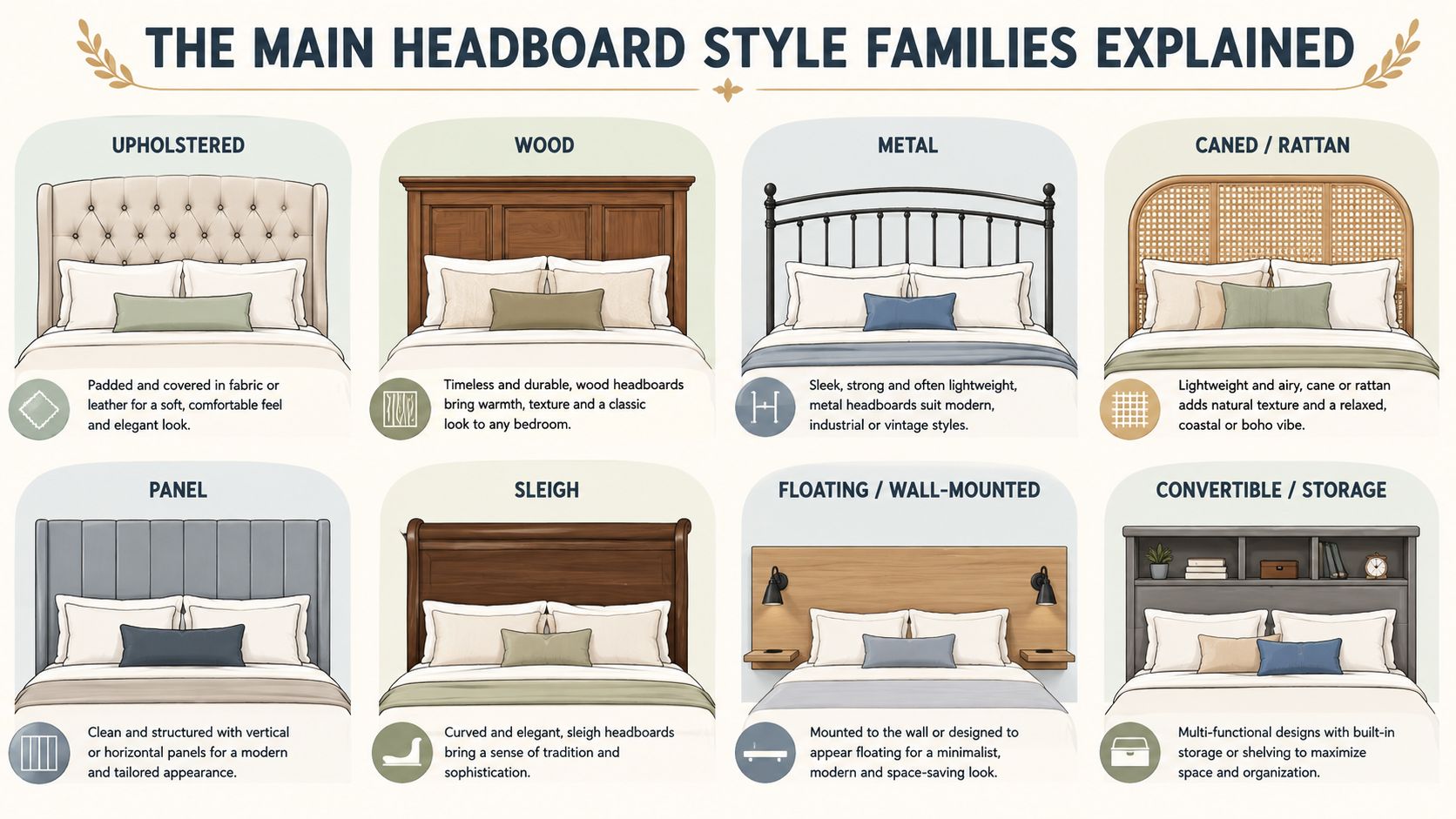
The easiest way to choose among headboard styles is to start with the room's job. Does the bed need to feel soft for reading, airy for a small space, practical for storage, or substantial enough to anchor traditional furniture? Each family creates a different mood and solves a different household problem.
Upholstered headboards soften the room
Upholstered designs include button-tufted, channel-tufted, plain panel, wingback, and arched styles, as outlined in this upholstered headboard style guide. Button tufting feels traditional and refined. Channel stitching adds vertical or horizontal rhythm and suits contemporary bedrooms. A plain panel is calmer, while wingback sides create a more sheltered reading nook. Arched edges bring softness without requiring ornate decoration.
This family works best for readers, morning loungers, and anyone who likes leaning against the bed. Linen-look fabric can create a relaxed atmosphere, while a smoother textile gives a more polished finish. Deep tufting adds visual richness, but it also creates more seams and depressions to clean.
Wood headboards anchor traditional rooms
Wood families include Mission, Shaker, craftsman slat, barn-door plank, raised-panel, and live-edge designs. Mission and Shaker profiles keep the lines restrained and work well in transitional or farmhouse bedrooms. Craftsman slats bring structure without closing off the wall. Barn-door planks feel rustic, while raised panels look more formal. Live-edge pieces make the grain and natural outline the main event.
Wood suits bedrooms that need warmth, durability, and a clear connection to other case pieces. It pairs naturally with warm paint, woven bedding, leather accents, and solid wood nightstands. For a broader guide to coordinating room pieces, see BILTRITE's advice on furniture styles.
Slat and spindle designs keep sightlines open
Slatted and spindle headboards use wooden bars or turned spindles, creating a lighter, airier country-cottage character. They work well in smaller rooms, guest bedrooms, and spaces where the wall color or wallpaper should remain visible. The open construction also gives the bed a less enclosed appearance than a broad panel.
Metal, bookcase, storage, and statement looks
Metal headboards range from wrought-iron scrollwork to minimalist tube frames and industrial mesh. Scrollwork suits vintage or traditional décor, while simple tubes fit modern and minimalist rooms. Metal is a strong choice for renters and narrow spaces, but it doesn't provide a padded backrest.
Bookcase and storage headboards add shelves, cubbies, drawers, lighting, or charging areas. They're useful when nightstands are small or the bedroom lacks built-in storage, though their depth and weight deserve careful delivery planning. Arched, scalloped, cutout, and oversized silhouettes create drama. They're compelling in a spacious bedroom, but the most fashionable statement piece isn't automatically the most livable option in a tight apartment.
Comparing Materials and Construction Methods
Material determines more than appearance. It affects how the headboard feels against pillows, how easily the surface can be cleaned, how much visual weight it adds, and how confidently it can travel through a move. The construction underneath matters just as much as the finish on top.
| Material | Durability | Feel and look | Cleaning and care | Best room fit |
|---|---|---|---|---|
| Solid wood | Strong when properly joined and finished | Warm, substantial, and grain-forward | Dust, wipe carefully, and follow the maker's finish instructions | Primary bedrooms, heirloom rooms, and family homes |
| Upholstered panels | Depends on the frame, padding, fabric, and seams | Soft, comfortable, and available in many silhouettes | Vacuum gently and spot-clean according to the fabric | Reading bedrooms, primary suites, and cozy guest rooms |
| Metal | Durable when welds and finish are sound | Open, crisp, vintage, or industrial | Dust and inspect joints for movement | Rentals, small rooms, and open-frame layouts |
| Engineered wood and veneers | Varies, with damaged edges harder to repair | Budget-friendly panels and printed or thin-wood finishes | Keep dry and repair chips promptly | Shorter-term rooms and cost-conscious furnishing |
| Mixed construction | Varies by the quality of each component | Wood, upholstery, or metal accents combined | Follow the care needs of every surface | Transitional rooms needing both comfort and structure |
Solid wood favors longevity
Oak, maple, cherry, and walnut each bring a different grain and color character. A well-built solid wood headboard can be maintained or refinished, while a damaged engineered panel may be difficult to restore once its edges swell or its surface separates. Joinery deserves attention. The mortise-and-tenon construction guide explains why interlocking wood joints can provide a stronger foundation than relying only on fasteners.
Upholstery favors comfort
Upholstered headboards are the most comfortable choice for leaning, especially with a supportive foam core and a properly built frame. Fabric can collect dust and absorb spills, so households with children, pets, or allergy concerns should favor smooth, tightly woven surfaces over highly textured or tufted options. A mixed design, such as a wood frame with an upholstered center, can balance wipeable structure with a softer contact point.
Match the material to the household
A child's room usually benefits from a sturdy, easy-care surface. A guest room can handle a simpler wood, slat, or metal design because it doesn't need to support nightly reading. A primary suite has more room for padded upholstery or substantial solid wood. Rentals generally benefit from lighter, movable frames, especially when wall mounting isn't practical.
The showroom team can also assess whether the selected piece suits a standard bed frame, bolt-on rails, a wall installation, or a freestanding setup. That decision should happen before delivery, not after the headboard is sitting in the hallway.
Matching Headboard Size to Your Bed and Frame
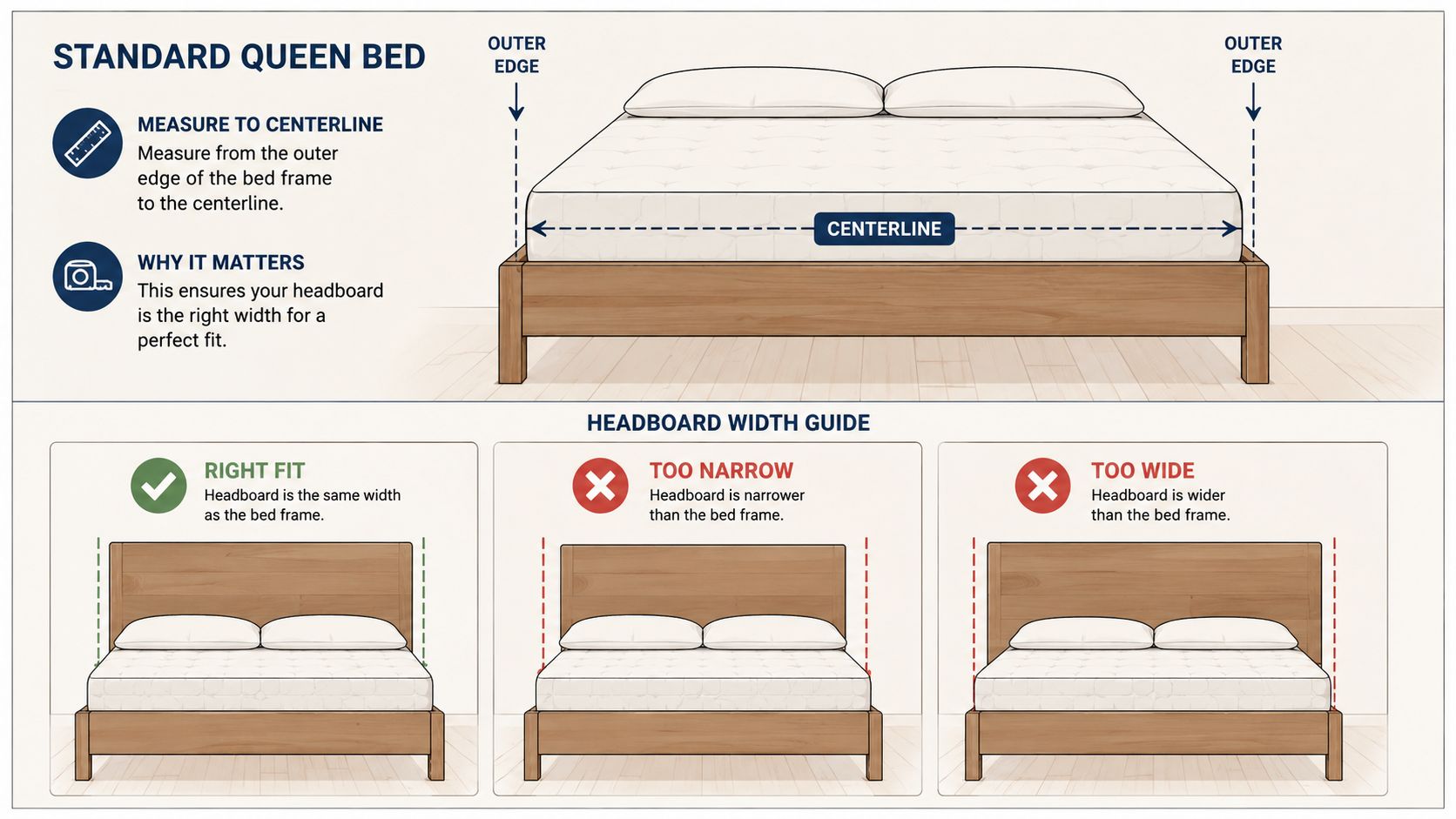
Measure the bed before choosing a silhouette. A headboard that matches the mattress usually sits at the same width or extends slightly beyond it. One practical guide allows 0 to 4 inches beyond each side, which places a queen headboard around 60 to 64 inches wide, based on this headboard sizing guide.
Start with width
Typical width ranges provide a useful starting point:
- Twin and Twin XL: 38 to 41 inches.
- Full or Double: 54 to 58 inches.
- Queen: 60 to 64 inches.
- King: 76 to 80 inches.
Those ranges work for a balanced, traditional appearance. A slightly wider headboard can make a bed feel more substantial, especially in a large room. A narrower open-frame design can work in a small space if the shopper wants to preserve walking room, but the mattress may look less framed.
Height changes the mood just as strongly. Twin and Twin XL headboards often fall around 36 to 48 inches, Full designs around 48 to 54 inches, and Queen or King styles around 48 to 60 inches, according to the same sizing reference. Ceiling height, stacked pillows, windows, artwork, and reading lights should all be checked before selecting a tall profile.
Confirm the attachment method
There are three common attachment types:
- Bolt-on: Bolts, screws, and brackets connect the headboard to the bed frame. Pre-drilled holes matter.
- Wall-mounted: Anchors or screws secure the headboard to the wall, independent of the frame.
- Freestanding: Legs support the headboard on the floor without attaching it to the frame or wall.
A frame without pre-drilled holes may require adapter plates, wall mounting, or a freestanding design. Hook-on systems may appear in individual product designs, but shoppers should confirm the manufacturer's hardware rather than assume compatibility. Platform beds and adjustable bases need special attention. For a split king adjustable base, the headboard should be matched to the overall bed width and supported independently when the base moves.
Before ordering, take three measurements:
- Mattress and frame width, measured across the widest points.
- Available wall height and width, including windows, trim, outlets, and lighting.
- Delivery path, measured through doors, stairways, halls, and tight turns.
For bed configuration ideas, shoppers can also review BILTRITE's bed types guide.
Choosing a Style That Fits Your Room and Décor
The best headboard styles respond to the room already in place. A headboard shouldn't force every nightstand, lamp, wall color, and textile into a new identity unless a full bedroom redesign is planned. Room size comes first, then bed type, then décor direction.
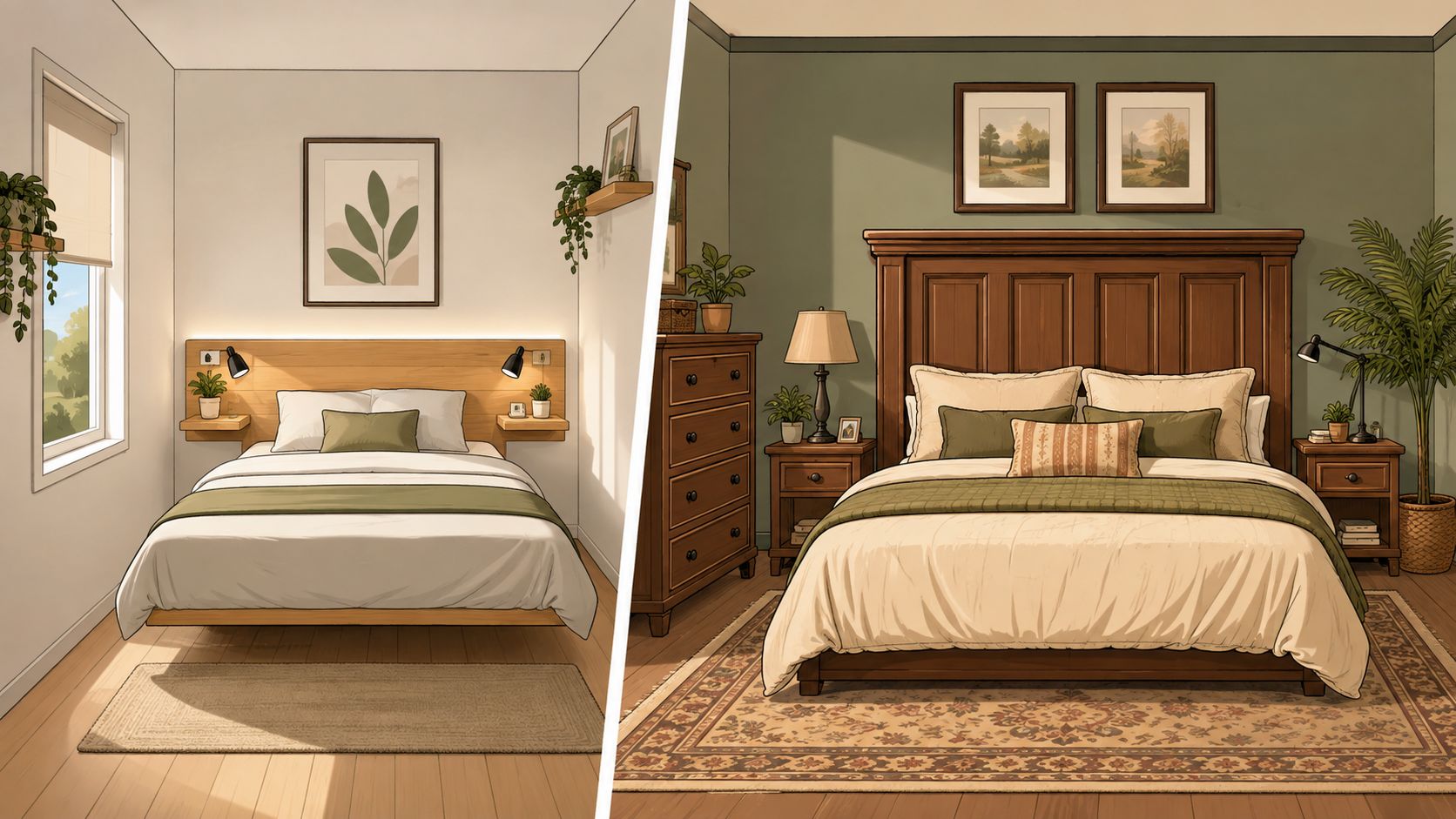
Small rooms need breathing space
A compact bedroom benefits from a low-profile panel, Shaker design, slat headboard, or open metal frame. These options preserve wall visibility and reduce the sense that the bed is closing in on the room. A narrow wing or vertical channel can add character without the broad depth of a storage unit or oversized shelter headboard.
Large primary suites can carry a tall upholstered panel, a wingback silhouette, or a four-poster design. Those forms give a generous room a central anchor. They should still leave enough space for nightstands, bedding movement, and ordinary cleaning.
Let the décor direction guide the finish
- Modern farmhouse: Warm oak Shaker, craftsman slat, or barn-door plank creates an approachable foundation.
- Coastal: Pale wood, open spindle construction, or a simple upholstered panel keeps the room relaxed.
- Mid-century modern: A clean walnut panel or restrained wood frame suits simple furniture and tapered forms.
- Traditional: Raised panels, button tufting, sleigh curves, or carefully scaled metal scrollwork add classic weight.
- Minimalist: Plain upholstery, a flat wood panel, or a slim tube frame keeps the composition quiet.
Mixing wood with upholstered pieces can work beautifully when the finishes share a temperature or repeat a color. BILTRITE's guide to mixing furniture styles offers a useful way to think about balance instead of matching every item exactly.
Solve the awkward placements
A sloped ceiling often favors a lower headboard, a custom wing, or a design that follows the angle without pressing into it. Windows behind the bed may require a shorter panel or an open slat design that lets light remain visible. A platform bed that doesn't accept a traditional bolt-on headboard can use a wall-mounted, freestanding, or separately supported design.
A quick decision tree helps narrow the field:
- Is the room small? Start with open metal, slat, Shaker, or low-profile upholstery.
- Does the sleeper read in bed? Favor a padded panel or wingback.
- Does the wall need storage? Consider bookcase or storage construction after checking depth and delivery access.
- Does the room already have strong furniture? Choose a quiet panel or simple frame.
- Is the bed the room's main design feature? A statement arch, scallop, or tall upholstered silhouette can take the lead.
That process usually leaves two or three styles worth testing against the actual room.
Why Solid Wood and Amish-Made Construction Stand Out
Solid wood and Amish-made construction deserve consideration because a headboard is one of the bedroom pieces touched, leaned against, moved, and noticed for years. A lower-priced panel may look attractive at first glance, but shoppers should ask what happens when hardware loosens, edges chip, or the family moves. A well-built hardwood frame gives the piece a better chance of remaining useful through those changes.
Construction reveals the difference
Solid oak, maple, cherry, and walnut offer genuine grain and a surface that can often be maintained or renewed. Amish-made furniture commonly emphasizes careful fitting, sturdy joinery, and hand-finished details. Mortise-and-tenon frames and dovetailed rails aren't decorative phrases. They describe how parts connect and how the load moves through the furniture.
BILTRITE specializes in affordable, better-quality furniture with a strong selection of USA-made, Amish-made, and solid-wood pieces. The store's solid wood furniture guide gives shoppers another way to evaluate why material and construction belong in the same conversation.
Honest value beats a false bargain
Solid wood and Amish craftsmanship can cost more upfront. That higher initial price makes sense when the finish, joinery, repairability, and daily feel are better suited to long-term ownership. A headboard that survives a move or can be refreshed after a room change may offer better value than a cheaper piece that needs replacement.
Specific finish choices also matter. Quarter-sawn oak creates a distinctive grain pattern, maple gives a cleaner appearance, and cherry develops a warmer character. A hand-rubbed conversion varnish can provide a durable, refined surface when applied correctly. Shoppers should ask what finish is used rather than assume every “wood” headboard has the same protection.
Local inspection answers real questions
Online photographs can't show whether a joint fits tightly, whether a panel feels stable, or whether a finish looks natural under room lighting. At a Greenfield showroom, a shopper can inspect the wood grain, run a hand along the edge, check the hardware, and compare the headboard's scale with nearby beds and nightstands.
That matters for Milwaukee families dealing with narrow stairways, apartment entries, senior living spaces, or frequent rearrangement. The store offers small-scale furniture for tighter homes, heavy-duty options for demanding households, and a large bedroom selection. The experienced sales associates are there to help with fit and construction without pressure.
Styling Tips, Maintenance, and Visiting the Showroom
A headboard looks most settled when the surrounding pieces respect its shape. Upholstered panels pair well with layered pillows and simple art above the bed. Wood panels benefit from bedding that leaves some grain visible, while slat and spindle designs look better when the wall behind them isn't overloaded with competing patterns.
Build the bed around the silhouette
- Upholstered: Use sleeping pillows against the panel, larger decorative pillows in front, and wall art with enough breathing room above the highest point.
- Wood panel: Keep the bedding texture visible and choose nightstands that repeat the wood's scale without matching every detail.
- Slat or spindle: Let the wall color show through, and avoid placing oversized art directly over a busy open pattern.
- Metal: Add softness through quilts, woven throws, or a padded bench so the frame doesn't feel cold.
- Bookcase or storage: Keep shelves edited. A few books, a small lamp, and useful objects look calmer than tightly packed décor.
Nightstands should sit near the height of the mattress top for convenient reach. Wall lights should be placed where they illuminate reading without colliding with the headboard's upper edge. The accompanying bed styling and care diagram provides a visual reminder of those proportions.
Keep maintenance simple
Solid wood usually needs gentle dusting and careful wiping with products suitable for its finish. Upholstery benefits from regular vacuuming with a soft attachment and prompt spot-cleaning using the fabric maker's instructions. Metal frames need dust removal and an occasional check for loose joints, while storage headboards deserve attention inside shelves and cubbies where dust gathers.
Care should match the maker's guidance rather than a one-size-fits-all schedule. The showroom team can explain which finish, fabric, hardware, and attachment method belongs with the selected piece.
Set a budget by construction, not decoration
A budget under $300 generally points shoppers toward simpler metal, basic engineered wood, or uncomplicated in-stock designs. A budget from $300 to $800 opens more choices in upholstered panels, solid-wood details, and storage features. At $800 and above, shoppers can explore more substantial hardwood construction, custom upholstery, detailed joinery, and larger statement silhouettes. These are practical budget bands, not guarantees, because size, material, finish, and craftsmanship change the final price.
BILTRITE Furniture-Leather-Mattresses has served Metro Milwaukee as a fourth-generation, family-owned showroom since 1928. The Greenfield store offers bedroom furniture, USA-made and Amish-made options, small-scale pieces, heavy-duty furniture, and a mattress department with over 60 models, so shoppers can compare the bed, headboard, and sleep surface in one visit.
Come on down to the showroom in Greenfield, bring the three measurements, and let the team check the style, scale, and frame fit before delivery. The store is closed on Sundays and Mondays for family time, so visitors should plan around those hours.
BILTRITE Furniture-Leather-Mattresses offers USA-made, Amish-made, solid-wood, upholstered, storage, and small-scale bedroom furniture for Metro Milwaukee homes. Visit BILTRITE Furniture-Leather-Mattresses in Greenfield to compare headboard styles in person, discuss frame compatibility with the experienced team, and choose a piece that fits the room and everyday life.