Cheapest Futon Beds: Quality & Value Guide


You search for the cheapest futon beds on a Tuesday night because the spare room needs to work by the weekend, or a first apartment still has an empty wall and no place for guests to sleep. That search is easy. Living with the purchase is the part that gets expensive.
Low-priced futons attract attention for good reason. They promise a sofa and a bed in one compact piece, and sometimes that is enough for a lightly used room. I have also seen plenty of bargain futons come back to haunt people after a few months of regular use. The frame starts to wobble, the mattress packs down, and opening it up becomes a chore instead of a convenience.
Price matters. So does what that price buys you.
The better question is not how little a futon costs today. It is how long it will stay comfortable, how well it will hold up to folding and unfolding, and whether you will be shopping again sooner than you planned. A futon that costs a little more upfront can end up being the cheaper choice if it lasts, feels better, and does not need replacing after one lease, one move, or one busy holiday season.
That is the angle worth taking with futons. Cheap online options often look fine in a product photo, but a disposable piece is not a bargain once you count frustration, replacement cost, and poor sleep. A well-built American-made futon from a local store usually asks for more at the register and gives back more years of useful service.
Welcome Neighbor A Smarter Way to Shop for Futons
You find yourself standing in a spare room on a Thursday evening, measuring the wall with a tape measure in one hand and your phone in the other, wondering whether the cheapest futon online will get the job done by the weekend. I have helped plenty of Milwaukee families in that exact spot. The hurry is real. So is the temptation to buy the lowest number on the screen and hope for the best.
A futon is one of the most useful pieces you can put in a small home, apartment, den, or guest room. It gives you seating and sleeping in one footprint. The trouble starts when low price gets mistaken for good value.
Cheap futons often look fine in photos. What you do not see right away is how they hold up after months of sitting, folding, kids climbing on them, or guests spending a few nights in a row. That is where the true cost shows up. A weak frame loosens. A thin mattress flattens out. Hardware starts to fight you. Then the “deal” turns into another purchase sooner than expected.
I always tell customers to shop according to use, not wishful thinking.
A futon for holiday guests a few weekends a year is one kind of purchase. A futon for a first apartment, home office, or everyday family room is another. If it will be used often, paying a little more for better construction usually saves money, aggravation, and poor sleep.
That is one reason a traditional futon setup still makes sense. The frame and mattress are separate pieces, so you have options later. If the mattress wears out first, you may be able to replace only that piece instead of hauling the whole thing to the curb. If you are still deciding between styles, this quick guide on the difference between a futon and a sofa bed can help clarify what fits your room and your budget.
Before you focus on the sticker price, ask a few plain questions:
- How often will it be opened and closed? Frequent folding puts real stress on the frame.
- Who will use it most? A college student sleeping on it nightly needs more support than an occasional guest.
- Will it survive a move or two? Stairs, tight corners, and apartment living punish flimsy furniture.
- Can you replace parts later? A repairable futon usually costs less over time than a disposable one-piece unit.
That is the smarter way to shop. The best futon deal is not always the cheapest one you can buy today. It is the one that still works well, still feels comfortable, and still looks respectable after real life starts using it.
Futon 101 Understanding Frames and Mattresses
A lot of bad futon purchases start the same way. Someone sees a low online price, likes the photo, and assumes all futons work about the same. Then the frame starts creaking, the mattress sags, and the bargain stops looking cheap in a hurry.
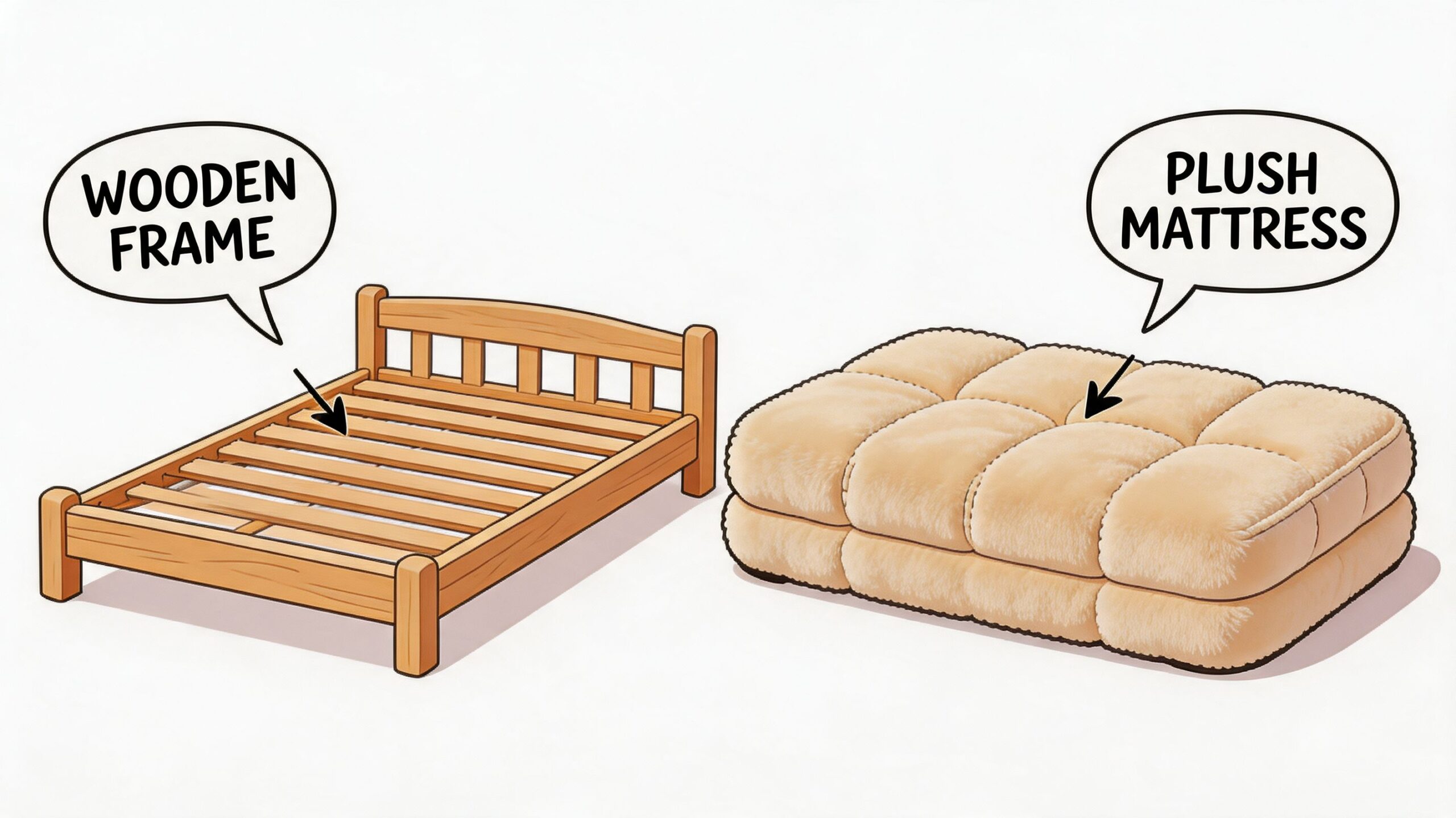
A futon is a simple system with two jobs. The frame has to convert smoothly and stay solid under real use. The mattress has to be comfortable enough that people will want to sit or sleep on it. If either one is weak, the whole piece feels like a compromise.
If you are still sorting out styles, our guide on the difference between a futon and a sofa bed helps clarify what changes in day-to-day use.
The frame decides how long the futon lasts
The frame is where I tell shoppers to start. Fabric and finish catch your eye first, but the frame takes the punishment. It carries weight, handles the fold from sofa to bed, and absorbs the stress every time somebody drops into the seat.
You will usually see two common frame layouts:
- Bi-fold frames use a mattress that folds once. They are the traditional setup and often the easiest to live with for regular use.
- Tri-fold frames split the sleep surface into more sections. They can fit tighter rooms, but they add more hinges, more movement, and more places for a cheap frame to feel fussy.
Neither style is automatically better. A well-built tri-fold can serve a small room nicely. A poorly built bi-fold can still be a headache. What matters is how solid the frame feels when it opens, closes, and supports weight in the middle, where cheaper models often start to give.
A good futon should feel planted when you sit down.
Test it like you plan to use it. Sit on the front edge. Lean back. Shift side to side. Open it and close it. If the arms wobble, the seat deck bows, or the mechanism feels rough, that is not a small cosmetic issue. That is the early warning sign of a futon that may not hold up through daily life or even one move.
The mattress decides whether anyone sleeps well
Many low-priced futons come with a mattress that looks decent for the photo and feels disappointing by the second or third night. That is common because mattress construction is one of the easiest places for manufacturers to cut cost.
Most futon mattresses fall into a few familiar categories:
| Mattress type | What it usually feels like | Best fit |
|---|---|---|
| Basic foam | Firmer, flatter, simpler build | Occasional guests or light use |
| Innerspring or coil | More support and bounce | Regular sitting, more frequent sleeping |
| Foam hybrid | Softer top feel with better pressure relief | Mixed-use rooms and shoppers who want more comfort |
The right choice depends on how the futon will live in your home. A guest room futon can get by with a simpler mattress. A home office futon that becomes a bed every week needs more substance. A first apartment futon that gets used every night should be treated like a real bed purchase, not a spare-piece purchase.
Thickness matters, but thickness alone does not tell the whole story. I have seen bulky mattresses that felt impressive for five minutes and wore poorly because the fill packed down fast. I would rather see an honest, supportive mattress with better internal build than an overstuffed one that loses shape early.
What to check in person before you buy
A short showroom test can save a lot of frustration later.
- Press the center, corners, and front edge. Comfort should feel fairly even across the surface.
- Ask whether the mattress is meant for guest use or regular sleeping. Those are different jobs.
- Watch how the mattress bends with the frame. It should fold without bunching awkwardly or fighting the mechanism.
- Check whether the cover is removable or replaceable. That can stretch the useful life of the piece.
- Notice how the frame and mattress work together. A decent mattress on a flimsy frame still feels flimsy.
That last point gets missed all the time. Shoppers compare futons by price tag, but its true value comes from buying a frame and mattress that match the way the piece will be used. Spend a little more on a better-built futon, especially one made to be serviced instead of discarded, and you usually avoid the faster, more expensive cycle of replacing a cheap one.
The Real Deal on Materials Durability vs Price
If you want to understand cheapest futon beds, stop looking at fabric first. Start with the bones.
The biggest gap between a throwaway futon and one that holds up is usually material quality. That sounds obvious, but it gets buried under staged photos and sale tags. A clean online listing won’t tell you how a frame behaves after repeated folding, sitting, and moving.
Where cheap futons cut corners
Many entry-level futons rely on plywood frames with steel spring backing to hold down cost. One example highlighted in Cosmopolitan’s review of futons for sleeping sits around $300 and uses that kind of build. The problem isn’t that plywood can never work. The problem is repeated stress.
Folding puts strain on connection points. Daily sitting puts strain on the center deck. Moving the piece puts strain on joints and rails. Plywood tends to have a harder time with that repeated load than better solid-wood construction.
Cheap futons often fail in boring ways. A loose arm. A flexing seat deck. A frame that never feels square again after one move.
That’s why the lowest upfront number can become a false economy. You save money at checkout, then spend your patience on squeaks, sagging, and replacement shopping.
Better materials cost more for a reason
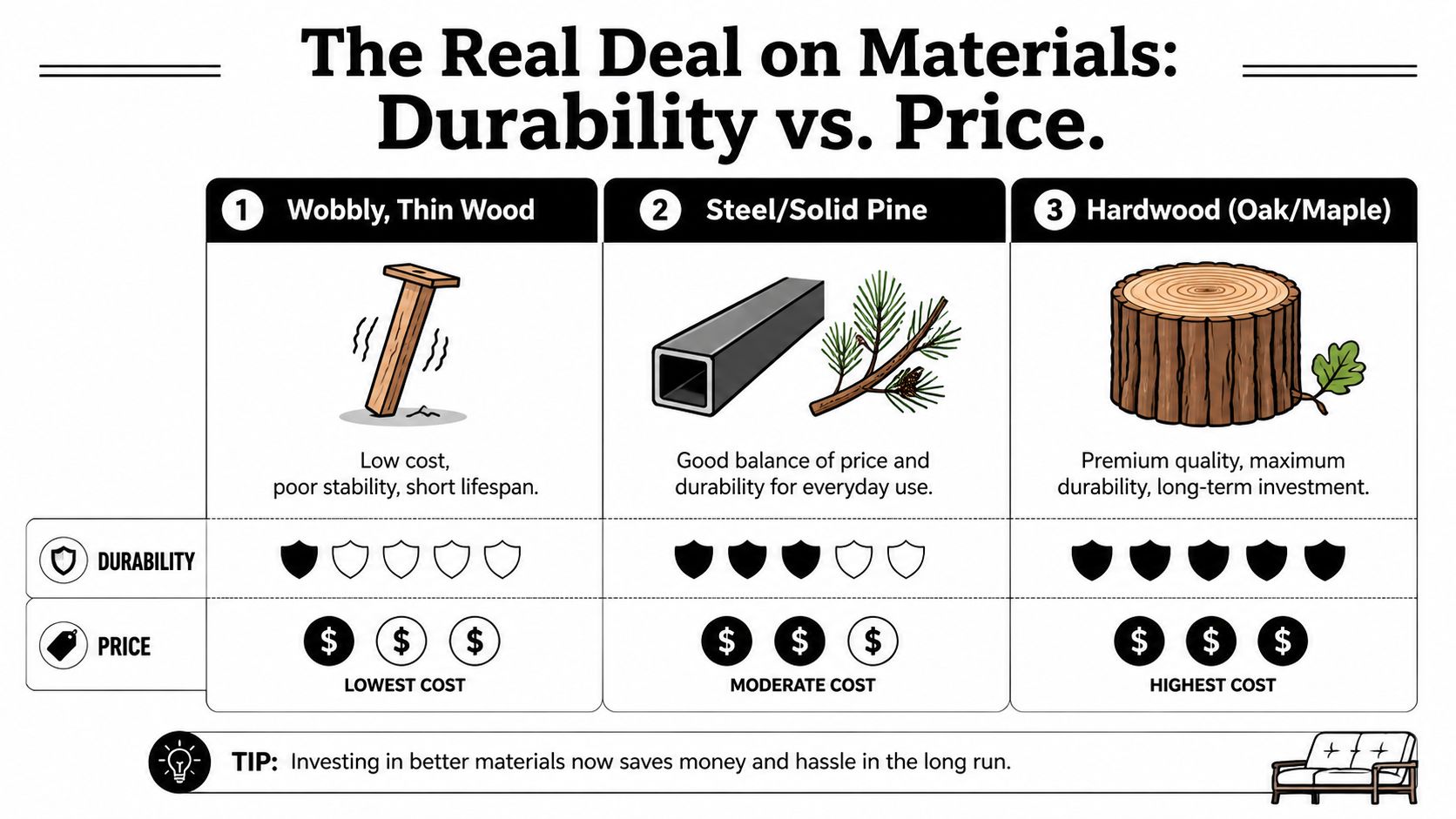
The jump from plywood or light composite parts to sturdier wood isn’t just cosmetic. It changes how the futon feels every day. A stronger frame opens more smoothly, sits more solidly, and stands up better to normal family use.
Here’s a simple side-by-side look:
| Frame material | Typical appeal | Common trade-off |
|---|---|---|
| Plywood and light components | Lower entry price | More vulnerable to wear under repeated folding |
| Steel or solid pine | Practical middle ground | Build quality still varies a lot |
| Hardwood such as oak or maple | Stronger long-term structure | Higher upfront investment |
The same kind of trade-off shows up in upholstery and bedding materials too. If you want a wider primer on what coverings and surfaces hold up best over time, this guide to upholstery material choices is worth reading before you buy.
Mattresses flatten before frames break
Shoppers often focus on the frame because they can see it. The mattress deserves equal scrutiny. In the low end of the market, comfort layers can flatten early, especially when the fill is basic and the futon gets used like a real bed.
That doesn’t mean every budget mattress is bad. It means you need to match expectations to use:
- Light guest use: Basic foam can be enough.
- Mixed use in a den or office: A coil or denser mattress usually gives better support.
- Frequent sleep: A better-built mattress becomes much more important.
A good futon should feel like a practical solution, not a temporary compromise you’re already planning to replace.
Calculating the True Cost of a Futon Bed
A neighbor walks into our store after buying a bargain futon online six months earlier. The frame already wobbles, the mattress has a dip in the middle, and now they need another one. That is the core price problem with the cheapest futon beds. You do not just pay once. You pay again.
The number on the tag matters, but it is rarely the whole story. A futon earns its keep over time, and the best value usually comes from a piece that stays comfortable, holds together, and can handle real everyday use without turning into a headache.
Cheap upfront can get expensive fast
I always tell shoppers to look at three costs instead of one.
First is the purchase price. That is the easy part.
Second is the replacement cycle. A low-grade futon that needs to be replaced in a year or two can cost more over time than a better-built model that gives you steady service for many years. That is especially true in guest rooms, offices, first apartments, and family rooms where the futon gets opened and closed often.
Third is the hassle cost. Returns, missing hardware, stripped screws, poor instructions, and an uncomfortable mattress all have a price, even if it never shows up on the receipt.
What the lowest price usually leaves out
Online bargain futons often win on search results because the opening number looks good. The weak point is what happens after delivery.
Common hidden costs include:
- Earlier replacement: A sagging mattress or loose frame sends you back to shop sooner than expected.
- Assembly frustration: Flat-pack imports can save on freight, but they often ask more of the customer.
- Reduced comfort: If nobody wants to sit on it or sleep on it, it is not doing its job.
- Poor moveability: Cheap frames often do not survive one or two moves intact.
- Limited parts support: If one piece fails, replacing the whole unit may be your only option.
That is why a disposable futon is rarely a bargain. It is a temporary purchase with a low entry price.
A better way to compare value
Use a simple test. Ask how the futon will be used, how long you need it to last, and whether you can service or replace parts instead of starting over.
A separate frame and mattress setup usually gives you more control. If the mattress wears before the frame does, you can swap the mattress. If you buy from a local store, you also have real people to call when you need help, not a return portal and a shipping label.
For shoppers trying to avoid expensive buying mistakes, our guide on how to measure furniture before buying helps with one of the biggest hidden costs of all: ordering something that technically fit the product page, but not your room, doorway, or stairs.
Why spending a little more often saves money
American-made futons and local-store service stand apart from disposable online options. A stronger frame, a better mattress, and honest guidance at the start usually cost more upfront. In return, you get fewer problems, better comfort, and a piece that does not feel worn out long before you are ready to replace it.
That is the true cost calculation. The cheapest futon bed is not always the one with the lowest sticker price. It is the one that stays useful, stays comfortable, and does not send you back into the market before it should.
Measure Twice Buy Once Fitting Futons in Small Spaces
Saturday afternoon is when this mistake usually shows up. A futon arrives, the box makes it through the front door, and then the frame will not turn the hallway corner or open without bumping a dresser. That cheap buy gets expensive fast.
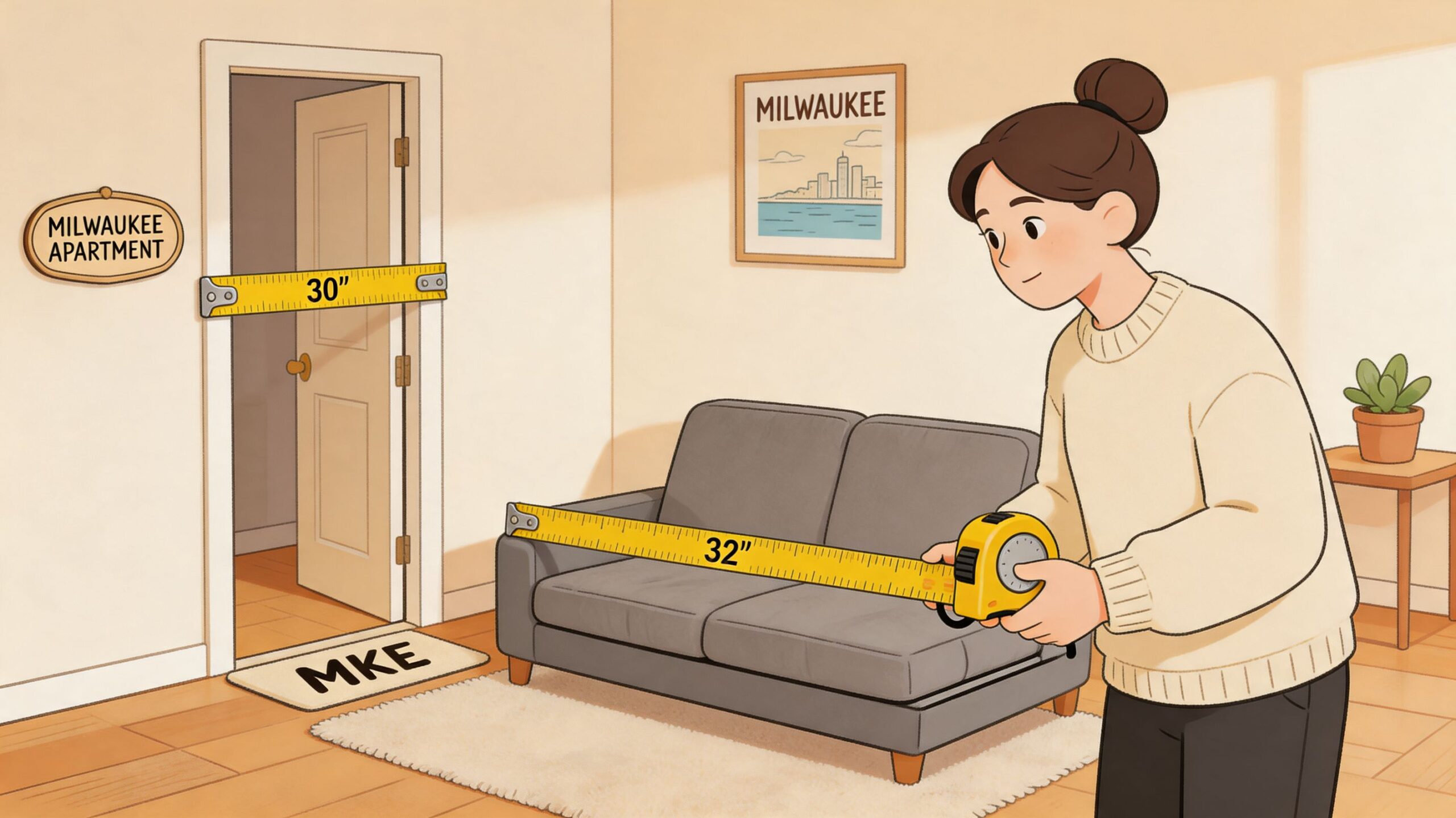
Small-space shopping is not just about picking the narrowest futon. You need a piece that sits well as a sofa, opens fully as a bed, and successfully gets into the home without scraped walls, returned parts, or a delivery problem nobody mentioned online.
The measurements that matter most
Start with the room, but do not stop there.
Measure three things before you buy:
- The sofa position: Width, depth, and how much wall space the frame needs when upright
- The open-bed position: How far the futon comes into the room once it is flat
- The delivery route: Entry door, interior doors, hall width, stair turns, ceiling height, and elevator clearance if you have one
That third one gets missed all the time. In older Milwaukee homes and apartment buildings, the room may be plenty big while the staircase is the main problem.
If you want a practical step-by-step, our guide on how to measure furniture before buying walks through the spots shoppers often forget.
Size should match how the room actually works
A full-size futon is often the safest choice for a guest room, office, condo, or first apartment because it usually balances sleeping space with a manageable footprint. But "fits on paper" is not the same as "works in daily life."
Leave space to walk past it. Leave space to open drawers. Leave space for a coffee table or side table to move when the bed comes down.
I always tell customers to picture the room at 10 p.m., not just at noon. If someone is sleeping on the futon, can another person still cross the room, reach the closet, or get to the bathroom without climbing over furniture?
A simple checklist before you commit
Write these down and check them in order:
- Room width and depth
- Wall space at the back and sides
- Open-bed depth from the wall into the room
- Doorway and hallway widths
- Stair landings, tight turns, and low overhead spots
- Nearby furniture that blocks the open position
This step saves money. A better-built futon is only a good value if it fits your home and your routine. Measure carefully, and you avoid one of the easiest ways to turn a bargain into a hassle.
Why Your Best Futon Deal is Waiting in Milwaukee
Cheapest futon beds get a lot of clicks because everybody likes the idea of saving money. Fair enough. But the strongest deals in furniture often come from matching the right construction to the way you live, not from chasing the smallest number on the page.

In a place like Metro Milwaukee, that means thinking beyond price tags and into real-life logistics. Apartments, older homes, condos, narrow stairs, and awkward entries are all part of the buying decision.
Delivery matters more than most shoppers expect
A major pain point for urban shoppers is getting furniture into the home in the first place. Mainstream budget content barely talks about this. Yet it’s one of the most important parts of buying for a small space.
That’s why the “come-apart” approach matters. As noted in this discussion of the futon retail gap and delivery logistics at Walmart’s futon category context, furniture designed to fit through narrow doorways and apartment stairwells solves a real problem that many generic listings ignore.
That local advantage is a big deal in Milwaukee. Shoppers in condos and older apartment buildings don’t just need a futon that looks compact online. They need one that can make the trip inside.
What a stronger local option gives you
A well-chosen futon should solve several problems at once. It should fit the room, survive normal use, and make sense for your budget over time. Better local furniture shopping tends to help because you can judge the piece with your own eyes and hands.
That often means you can:
- Check stability in person: Sit on the frame and feel whether it stays solid.
- Compare mattress comfort directly: A photo can’t tell you what “firm” feels like.
- Ask about materials: Solid wood, heavier-duty construction, and flip-able sleep surfaces matter.
- Deal with room-size realities: Small-scale furniture isn’t just a style category. It’s a practical need.
For shoppers comparing local options for apartments and condos, this guide to furniture for small spaces is a useful companion read.
The strongest value usually isn’t anonymous
One thing people learn fast with futons is that support matters. Not just back support. People support.
You want somebody who can answer plain questions. Is this frame sturdy enough for daily use? Is this mattress best for guests or everyday sleeping? Will this model work in a tighter room? Can it get through the door? Those answers are easier to trust when you’re talking to people who know the furniture and the homes in your area.
The best futon deal is often the one that avoids the second purchase.
That’s especially true if you care about American-made craftsmanship, solid wood, and furniture that isn’t built to be disposable. A little more care at the buying stage can save a lot of frustration later.
Your Smart Futon Investment Awaits
A futon can be one of the handiest pieces in a home. It gives you seating by day, sleeping space by night, and flexibility in rooms that need to do more than one job. That’s why so many shoppers start by looking for cheapest futon beds.
The smart move is going one step further. Look at the frame. Check the mattress. Think about how often it will be used, how long you want it to last, and whether it will fit through the door and work in the room. That’s where real value lives.
A futon doesn’t have to be expensive to be worthwhile. But it does have to be built for the life you’re asking it to handle. When you shop that way, you’re not just buying a lower price. You’re buying fewer headaches, better use, and a piece that keeps earning its place in your home.
Frequently Asked Questions About Futon Beds
How long should a good futon last
A good futon can last for years, but the range is wide because build quality is wide. I’ve seen bargain models wear out fast from loose joints, flattened fill, and weak hardware. I’ve also seen well-built wood frames and better mattresses stay useful for a long time with normal care.
Use matters just as much as materials. A futon in a guest room has an easier life than one used every night in a small apartment.
Are futons comfortable enough for everyday sleeping
They can be, if they’re built for that job. A thin, basic mattress may work for occasional guests, but regular sleepers usually do better with a denser mattress and a frame that stays level and steady.
That trade-off is where many cheap futons fall short. They look affordable on day one, then start costing you in poor sleep, sagging support, and an early replacement.
Is a full-size futon big enough
For one adult, a full-size futon is often the practical choice. It fits many offices, guest rooms, condos, and smaller bedrooms without crowding the space.
The catch is clearance. The sleeping size matters, but so does the room needed to open the frame, walk around it, and get it through the door in the first place.
Can I replace just the mattress later
In many traditional futon setups, yes. That’s one of the better reasons to buy a true futon instead of a disposable all-in-one piece. If the frame is still sound, replacing the mattress can give the whole unit more life.
If you’re comparing long-term sleep options, our guide to replacement sleeper sofa mattresses helps explain how different sleep surfaces wear over time.
Do futon covers matter
Yes. A good cover protects the mattress, makes cleaning easier, and lets you freshen up the look without replacing the whole futon.
That matters in kids’ rooms, guest spaces, rentals, and any room where the futon gets regular use. A removable cover is one more way to keep the overall cost down over the life of the piece.
What’s the biggest mistake shoppers make
Shoppers get locked in on the lowest sticker price and stop there.
A futon frame has to open and close smoothly. The mattress has to hold its shape. The whole piece has to work as both seating and a bed. If any of those parts are weak, the “cheap” buy often turns into a second purchase, extra frustration, or both. Spending a little more for a better-built, American-made futon from a local store often saves money in the long run.
Is local shopping better for a futon than ordering one sight unseen
For many homes, yes. You can sit on it, open it, check the finish, and feel whether the mattress has enough substance for how you plan to use it.
That hands-on test tells you more than a product photo ever will. It also gives you a chance to ask practical questions about delivery, tight stairways, replacement parts, and how the futon will hold up after a few years of real use.
If you’d like friendly, no-pressure help sorting through affordable futons, solid wood furniture, mattresses, and small-space solutions, stop by BILTRITE Furniture-Leather-Mattresses. We’d love to see you in Greenfield, answer your questions, and help you find better long-term value for your home.