Chaise Lounge Dimensions: Find Your Perfect Fit for 2026


A chaise lounge has a way of stealing the show. Someone spots one in a living room display, starts thinking about Sunday reading, movie nights, or a quiet corner by the window, and then the practical question lands fast. Will it fit?
That's where many shoppers in Metro Milwaukee get stuck. A chaise can look slim in a showroom or in a photo, then feel much bigger once it meets a bungalow living room, an apartment corner, or a bedroom with a bed, dresser, and walking space already spoken for. Families often discover that the underlying issue isn't just whether the chaise fits in the room. It's whether the room still works after the chaise is in it.
Since 1928, BILTRITE has helped local families think through furniture fit in a real-world way. The cozy part matters, of course. So do comfort, fabric, and style. But chaise lounge dimensions matter just as much, because a piece that looks good on paper can still block a path, crowd a doorway, or feel awkward for the person using it.
Table of Contents
- That Dreamy Chaise Will It Fit in Your Home
- Standard Chaise Lounge Dimensions Explained
- Your Guide to Measuring for a Chaise Lounge
- Placing Your Chaise for Comfort and Style
- Finding a Chaise That Fits You Not Just Your Room
- BILTRITE Has a Chaise for Every Milwaukee Home
That Dreamy Chaise Will It Fit in Your Home
A common scene plays out like this. A homeowner falls in love with a chaise for the end of a sectional or a sunny reading nook. The color is right, the shape is graceful, and everyone in the house can already picture the dog claiming it by dinner.
Then the tape measure comes out.
That little moment saves people from a lot of frustration. In older Milwaukee-area homes, room layouts can be quirky. Bay windows, narrow walkways, radiator placement, and tight stair turns all change what “fits” really means. A chaise that seems manageable in theory can make a room feel pinched if the scale is off by even a little.
Neighborly advice: A chaise should give a room a soft landing spot, not turn every trip across the room into a sideways shuffle.
That's why experienced furniture teams usually start with two questions. Where will it go, and who will use it most? A chaise for a quiet bedroom retreat may work very differently than one meant for a family room where people move through all day.
Before anyone falls too hard for the silhouette, it helps to review a solid measuring checklist like this furniture measuring guide from BILTRITE. That step tends to clear up confusion fast. Once the basics are handled, choosing a chaise gets a whole lot more fun.
Standard Chaise Lounge Dimensions Explained
Shoppers often ask for a “standard” chaise size. That's a fair place to begin, as long as standard is treated like a starting point and not a rule.
The indoor baseline most shoppers start with
A widely cited range for a single indoor chaise lounge is 73 to 80 inches long, 25 to 30 inches wide, and 35 to 40 inches high, with metric equivalents of 185 to 203 cm long, 64 to 76 cm wide, and 89 to 102 cm high, according to this chaise measurement guide. That range gives shoppers a useful frame of reference, especially when comparing models in a showroom.
Those numbers tell an important story:
- Length affects whether the chaise reads as compact or roomy in the room.
- Width affects how much floor space it claims side to side.
- Height changes both the visual look and how supportive the piece may feel.
Some people hear “73 to 80 inches long” and assume every inch of that is lounging space. It isn't. The overall frame includes the back, end shape, and supporting structure, which is why dimensions can feel confusing at first glance.
A quick size comparison table
| Size Category | Typical Length | Typical Width |
|---|---|---|
| Compact indoor chaise | Around the lower end of the common range | Around the lower end of the common range |
| Standard indoor chaise | Within the middle of the common range | Within the middle of the common range |
| Roomier indoor chaise | Around the upper end of the common range | Around the upper end of the common range |
A table like this helps, but it still doesn't replace seeing proportion in person. One chaise may have slim arms and a lighter look. Another may use the same rough dimensions but feel heavier because of a taller back or fuller frame.
For homeowners comparing seating sizes across a whole room, this sofa dimensions guide in inches can help place a chaise in context with sofas, loveseats, and sectionals.
A chaise can fall right inside the common size range and still feel too bulky for the room if the shape is boxy, the back is tall, or the nearby traffic path is already tight.
That's why “standard chaise lounge dimensions” shouldn't be the final answer. They're the first checkpoint.
Your Guide to Measuring for a Chaise Lounge
Smart shopping starts here. A tape measure now saves a headache later.

Start with the chaise itself
One of the biggest trouble spots is the difference between seat length and overall length. Chaise lounges commonly have a 42 to 48 inch seat span even when total length is 73 to 80 inches, which means a large portion of the piece is taken up by the backrest and frame, as noted in this buying guide on chaise sizing and pathways.
That matters because shoppers often test comfort with their body, but rooms have to handle the full footprint.
A simple measuring routine helps:
- Measure the full outside dimensions of the chaise being considered. That's the footprint the room has to absorb.
- Check the usable seat area separately. This tells whether the chaise will feel supportive for stretching out.
- Note any extra shape such as rolled arms, angled backs, or extended end panels that may project into walk space.
Then measure the room and the route
The same guide recommends leaving 36-inch pathways for movement. That's a very useful planning rule when a chaise will sit near a main traffic area. In everyday terms, people should be able to walk past without bumping knees, trays, toy bins, or side tables.
A practical home test works well:
- Mark the chaise footprint with painter's tape on the floor.
- Walk around it naturally as though carrying laundry, a cup of coffee, or a sleeping child.
- Check nearby furniture doors and drawers so nothing gets trapped.
- Measure the delivery path too, especially in apartments, stairwells, and older homes with tight entries.
For room layout problems, sectionals, and tricky entry points, this measuring guide for sectionals is especially useful because many of the same delivery and clearance ideas apply to chaises.
Practical rule: If the chaise fits only when the room is empty and nobody walks through it, it doesn't fit as well as it should.
This part isn't glamorous, but it's the part that keeps a dream piece from becoming a furniture puzzle.
Placing Your Chaise for Comfort and Style
Good placement can make a chaise feel welcoming from the second someone walks into the room. Poor placement can make even a beautiful piece feel like it wandered into the wrong house.
In the living room
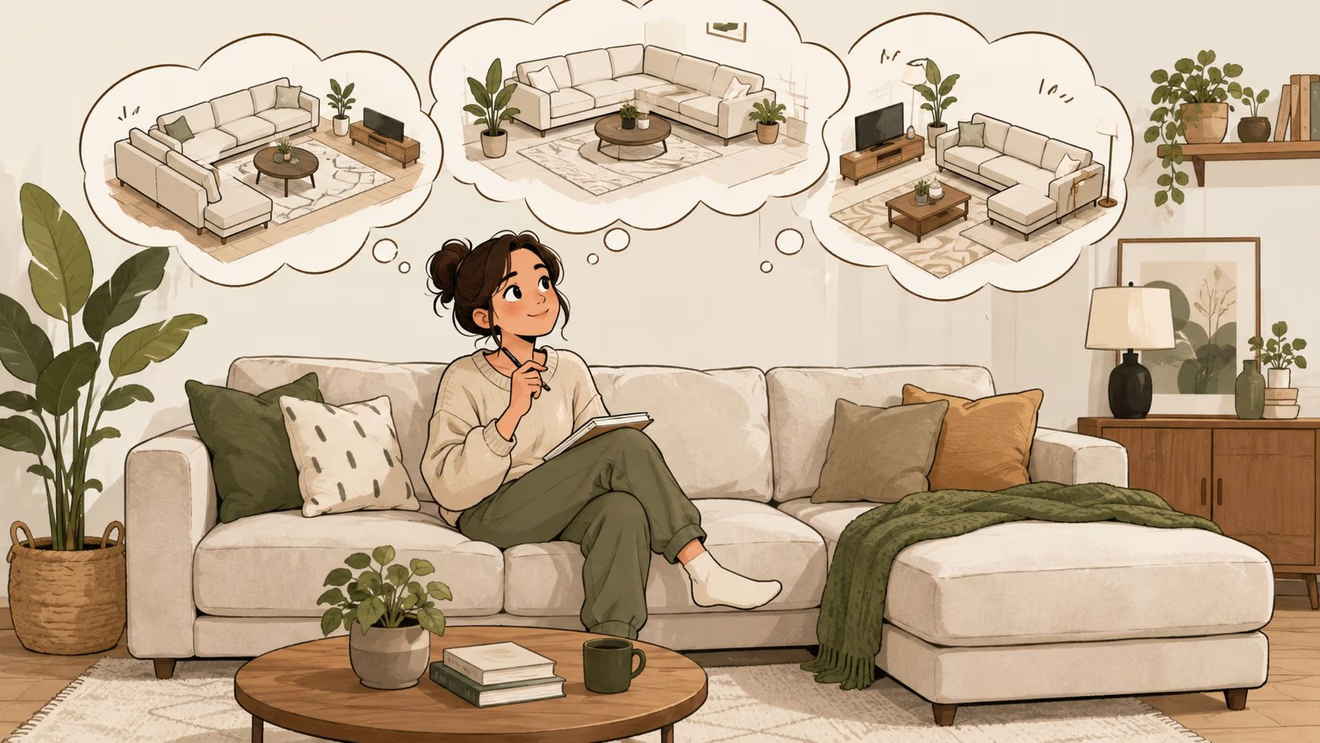
A chaise in a living room usually does one of two jobs. It either extends a sectional and creates a family lounging zone, or it stands alone and acts like a destination seat.
In a family room, the chaise often works best when it supports the room's natural flow instead of cutting across it. If the front door, hallway, or kitchen path runs nearby, the chaise should sit where feet can move past without squeezing. In a smaller Milwaukee house, that often means tucking the chaise along the perimeter instead of letting it float too far into the center.
A standalone chaise can also soften a room nicely near a window, lamp, or bookshelf. It gives the eye a curve and gives the room a purpose. Reading nook. Nap spot. Quiet corner.
For more room planning ideas, these living room arrangement tips can help shoppers think through how a chaise interacts with the rest of the seating.
In bedrooms and quiet corners
Bedrooms are a different story. A chaise at the foot of the bed can look elegant, but only if the room still feels easy to move through. If getting dressed, making the bed, or opening drawers turns awkward, the placement isn't doing its job.
Home offices and den spaces are another smart fit. A smaller-scale chaise can become a reset zone without making the room feel overfurnished. That's especially helpful in homes where one room has to do two jobs.
A few placement checks make the difference:
- Respect the doorway swing. The chaise shouldn't crowd the way a door opens.
- Keep light in mind. Near a window is lovely unless glare lands right in the sitter's face.
- Think about the room's purpose. A chaise for conversation belongs in a social spot. A chaise for unwinding can live farther from the main traffic.
The right chaise placement doesn't just fill an empty corner. It gives that corner a reason to exist.
Finding a Chaise That Fits You Not Just Your Room
A chaise can fit the floor plan and still miss the mark if it doesn't fit the person using it. This is the part many online guides skip, and it's often the most important one.
Why body fit changes the whole decision
Some shoppers want a chaise that lets them curl up sideways with a blanket. Others want a more upright sit while reading or watching television. Taller adults may want more usable lounging area. Someone with sore knees or limited mobility may care less about a dramatic low profile and more about getting in and out comfortably.
Guidance on chaise lounge dimensions often overlooks seat height, even though it plays a major role in daily comfort. Some outdoor-style designs sit at a 13-inch seat height, while higher-seat models may be better suited for people who need an easier time sitting and standing, according to this guide discussing chaise ergonomics and senior living needs.
That one detail can change the entire experience of the chair.
Details that deserve more attention
When people test a chaise in person, these questions help:
- Can both feet plant comfortably when sitting upright? If not, the seat may feel too low or too deep.
- Does the back support a relaxed posture? A chaise shouldn't force the shoulders into an awkward angle.
- Is getting up easy or awkward? This matters for seniors, caregivers, and anyone with hip or knee concerns.
- Does the arm placement help or hinder? One arm can add support. In another room, it can interfere with flow.
For shoppers comparing comfort and scale across different seating types, this guide to standard chair width gives useful context for how body fit and furniture fit overlap.
A room-friendly chaise isn't automatically people-friendly. That's why ergonomics deserve as much attention as style. A graceful silhouette is nice. A chaise that supports real daily living is better.
BILTRITE Has a Chaise for Every Milwaukee Home
Milwaukee-area shoppers don't all live in sprawling open-concept homes. Some live in apartments with tight turns. Some live in cozy ranch houses. Some are furnishing a senior living space where ease of movement matters every day. Chaise shopping makes more sense when those use cases come first.
A major gap in many online guides is the lack of advice for small rooms, senior living spaces, or delivery constraints, where fit and accessibility matter as much as style. A more useful approach is to compare chaise lounge dimensions by use case, as noted in this discussion of common shopping gaps around chaise lounges.

Shop by use case not just by shape
That use-case approach clears up a lot:
- For apartments and smaller houses, shoppers often do better with small-scale pieces that preserve open walkways.
- For seniors or caregivers, higher, easier-entry seating can matter more than a dramatic low silhouette.
- For busy family rooms, sturdier construction and practical layout usually win over delicate styling.
- For tricky delivery situations, pieces designed for tighter access become far more realistic options.
BILTRITE Furniture-Leather-Mattresses serves this kind of shopping by offering small-scale furniture, senior-living-friendly options, heavy-duty pieces, and come-apart seating options in a Greenfield showroom setting where people can test fit and feel in person.
Why in-person testing still matters
A chaise is one of those pieces that benefits from real-life trying, not just browsing. The seat may feel deeper than expected. The arm may land at just the right height, or not. The back angle may feel supportive to one person and too relaxed to another.
That's where a family-owned showroom still has value. Since 1928, BILTRITE has served Metro Milwaukee with a hands-on approach, a focus on affordable better-quality furniture, and a strong mix of USA-made, Amish-made, and solid wood furniture. The store doesn't sell online, which keeps the focus on seeing the scale, sitting on the furniture, and having a real conversation with a knowledgeable team. The showroom is also closed on Sundays and Mondays for family time, which says a lot about how the business operates.
Ready to sort out chaise lounge dimensions in a way that fits both the room and the people living in it? Visit BILTRITE Furniture-Leather-Mattresses in Greenfield and talk with a team that's helped Milwaukee-area families furnish their homes since 1928. Shoppers can try different scales, compare comfort, and find a chaise that feels right without any pressure.