5 Piece Leather Sectional Buying Guide for Every Room


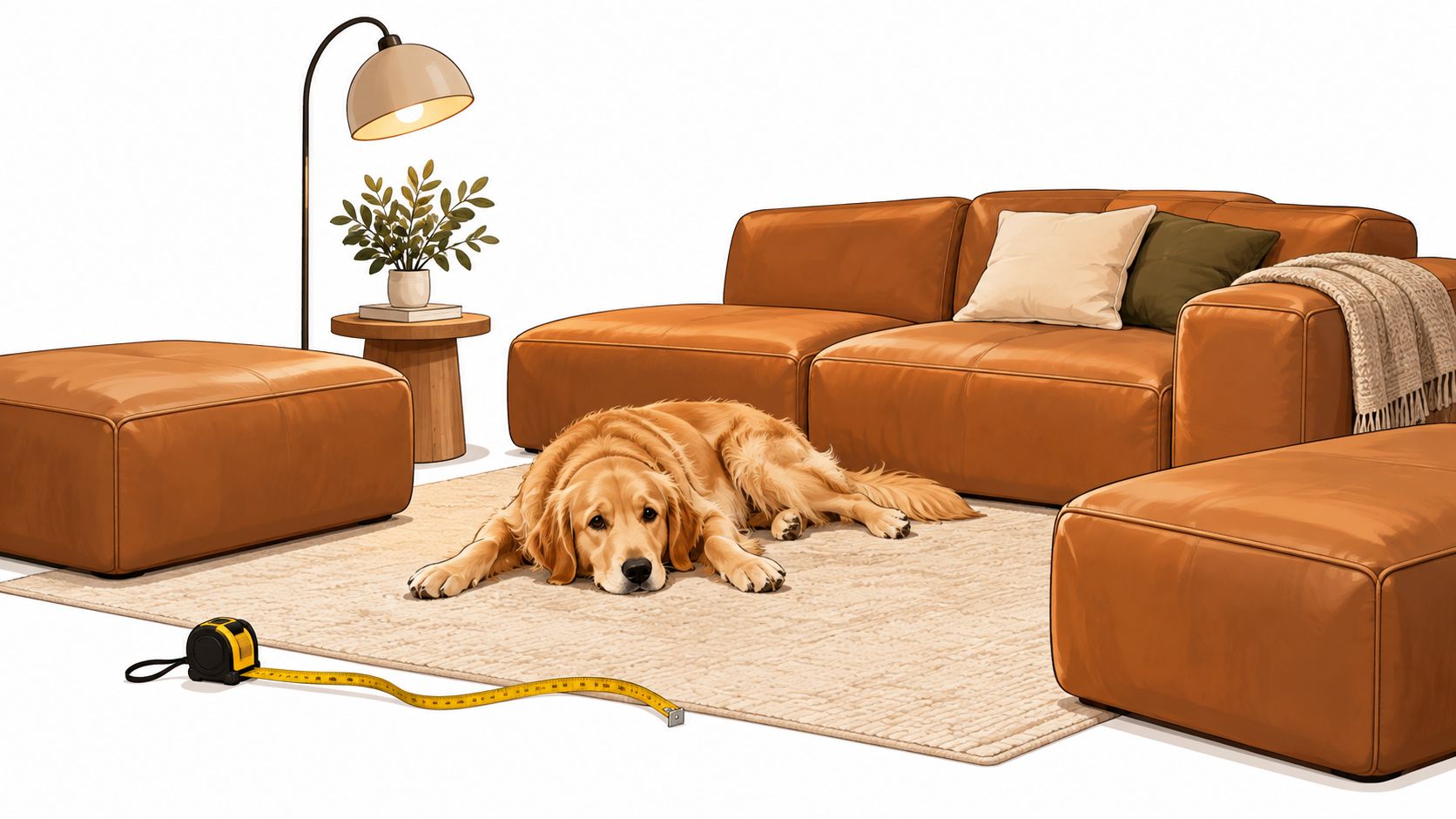
The tape measure is on the living-room floor, the dog is stretched across the rug, and the family is debating whether the television can still be seen from the corner. Then one question stops the planning: what does “five piece” mean? A 5 piece leather sectional isn't one enormous sofa. It's a group of connected seating pieces, and understanding those pieces makes shopping, measuring, delivery, and long-term care much easier.
Table of Contents
- What a 5 Piece Leather Sectional Really Means
- Measuring Your Room Before You Fall in Love
- The Five Modules and How They Change the Layout
- Sit Like You Mean It in the Showroom
- Aniline, Semi-Aniline, and Protected Leather Explained
- What to Ask About Leather Grade and Indoor Air Quality
- Customizing Orientation, Chaise Side, and Cushion Feel
- Delivery Planning and a Warm Invitation to Our Showroom
What a 5 Piece Leather Sectional Really Means
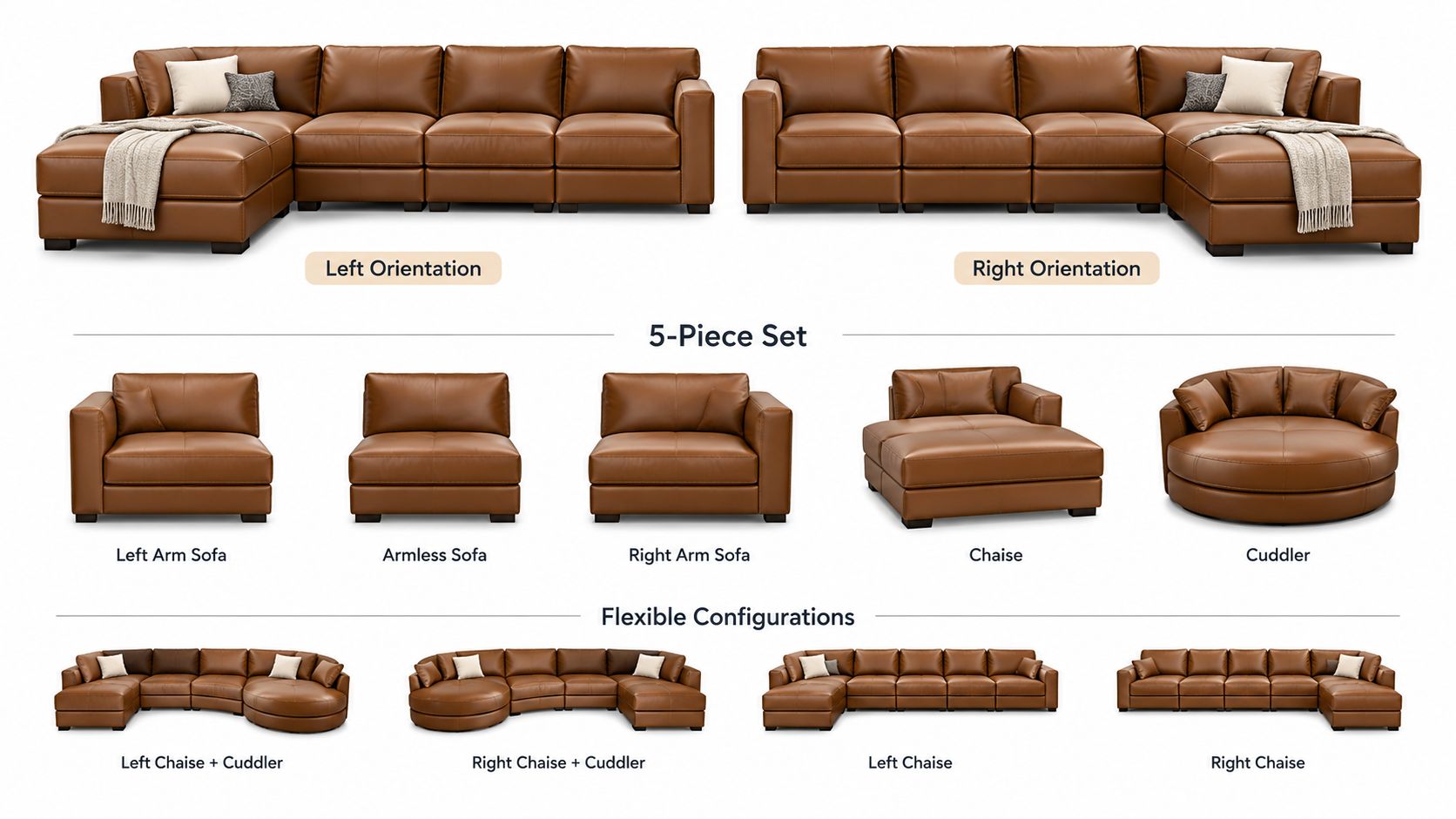
A five-piece sectional is best understood as a modular seating system. The pieces usually connect at an angle, commonly around 90 degrees, and may include armless chairs, corner units, consoles, recliners, ottomans, or chaise sections. The count describes the number of independent components, not five full-size sofas.
That distinction matters in a busy family room. One household might have a corner unit, two armless chairs, a chaise, and a console. Another might use a corner, a sofa, a loveseat, and two recliners. Both are five-piece sectionals, but they won't occupy the room in the same way or provide the same kind of seating.
A short history of flexible seating
Sectional furniture in the United States appears in historical records at least as early as the 19th century, with early forms associated with central Virginia between approximately 1800 and 1820. The design became more visible during the 1930s and 1940s, when modernist designers promoted flexible, movable seating, then expanded alongside mid-century modern interiors during the 1950s and 1960s. Later designs developed into the deeper L-shaped arrangements common in many living rooms today. This overview of sectional sofas places the five-piece format within that longer shift from fixed sofas to movable room layouts.
The practical advantage is easy to see. A sectional that comes apart can move through a narrow entrance more easily than one oversized sofa, and separate pieces can be rearranged when the family moves or the room changes. For households comparing a sectional with multiple conventional sofas, a helpful explanation of sectional versus couch layouts can make the distinction clearer.
The useful question isn't “How big is the sofa?” It's “What are the five pieces, and what can each one do in the room?”
Measuring Your Room Before You Fall in Love
Before choosing leather color, test whether the sectional leaves room for daily life. A five-piece arrangement needs space for walking, opening doors, reaching windows, and keeping a clear television view. The same piece count can produce a compact footprint or fill much of a large room.
Published examples show why. One five-piece motion configuration measures roughly 92 by 92 inches, with a 39-inch depth and 38-inch height. Another five-piece leather configuration measures 138 by 138 inches, with a 35-inch depth and 29-inch height. These layouts have different proportions, so piece count alone cannot predict the space required. Use the dimensions for the exact configuration you are considering, rather than treating “five piece” as a standard size.
A floor-tape test
Painter's tape turns an abstract measurement into something you can walk around. Mark the planned long and short runs, include the complete depth, and preserve a comfortable path along the open side.
Check the room in this order:
- Mark the footprint. Tape the long run, short run, corner, and full depth on the floor.
- Test the pathways. Walk around the outline while carrying laundry or guiding children. Notice tight turns and awkward pinch points.
- Check fixed features. Confirm that doors, windows, vents, outlets, and the television sightline remain usable.
- Test the corners. Look for an arm, chaise, or recliner that could interrupt a passage or block access.
- Record the measurements. Bring the room dimensions, doorway sizes, and a simple sketch when visiting a showroom.
The sectional measuring guide helps organize those checks before you compare configurations. Measure the entry route as carefully as the room itself, because a modular sectional may separate for delivery, while each individual piece still needs clearance through doors, halls, and turns. A tape measure is a small shopping tool that can prevent an expensive mismatch.
The Five Modules and How They Change the Layout
The five modules determine how people sit, talk, stretch out, and move through the room. A corner unit usually acts as the anchor. Once it is placed, the other pieces create the long run, the short run, or a more open arrangement.
An armless chair keeps the profile visually lighter and can connect to another piece without adding an extra arm between seats. A loveseat or sofa creates a longer shared seating zone, while a chaise or cuddler gives one person room to stretch out. A console adds a practical landing spot for remotes, reading glasses, or a drink, depending on its construction.
Common 5 Piece Leather Sectional Modules at a Glance
| Module | Typical Role | Layout Impact |
|---|---|---|
| Armless chair | Flexible individual seating | Keeps the arrangement open and can connect to other modules |
| Corner unit | Direction-changing anchor | Establishes the turn between the long and short runs |
| Loveseat or sofa | Shared seating area | Creates a substantial straight section for family seating |
| Chaise or cuddler | Lounging zone | Extends the footprint and supports relaxed television viewing |
| Console | Storage or surface between seats | Adds function without requiring a separate side table |
A conversation-focused room may use open armless seating on both sides of the corner, allowing people to face one another. A television-focused room may place the chaise along one wall and orient the main seats toward the screen. Separate pieces can also be positioned apart when the household wants two seating zones.
The phrase what is modular furniture captures the central idea: the system's value comes from how its components work together. Buyers should ask which pieces are included, which sides connect, whether the orientation can change, and whether the configuration shown in the showroom matches the one intended for home.
Sit Like You Mean It in the Showroom
A large sectional can look inviting and still feel awkward after a few minutes. Comfort depends on the usable dimensions of every seat, not only the overall footprint.
Neutral furniture-design guidance places typical adult seat height at approximately 16 to 18.1 inches, or 405 to 460 millimeters. Typical seat depth falls around 15 to 18.1 inches, or 380 to 460 millimeters, while seat width commonly falls around 16 to 20 inches, or 405 to 508 millimeters. A casual back angle may sit roughly between 1 and 15 degrees. The dimensional guidance for furniture offers a screening range, not a promise that one measurement suits every person.
The showroom sit-test
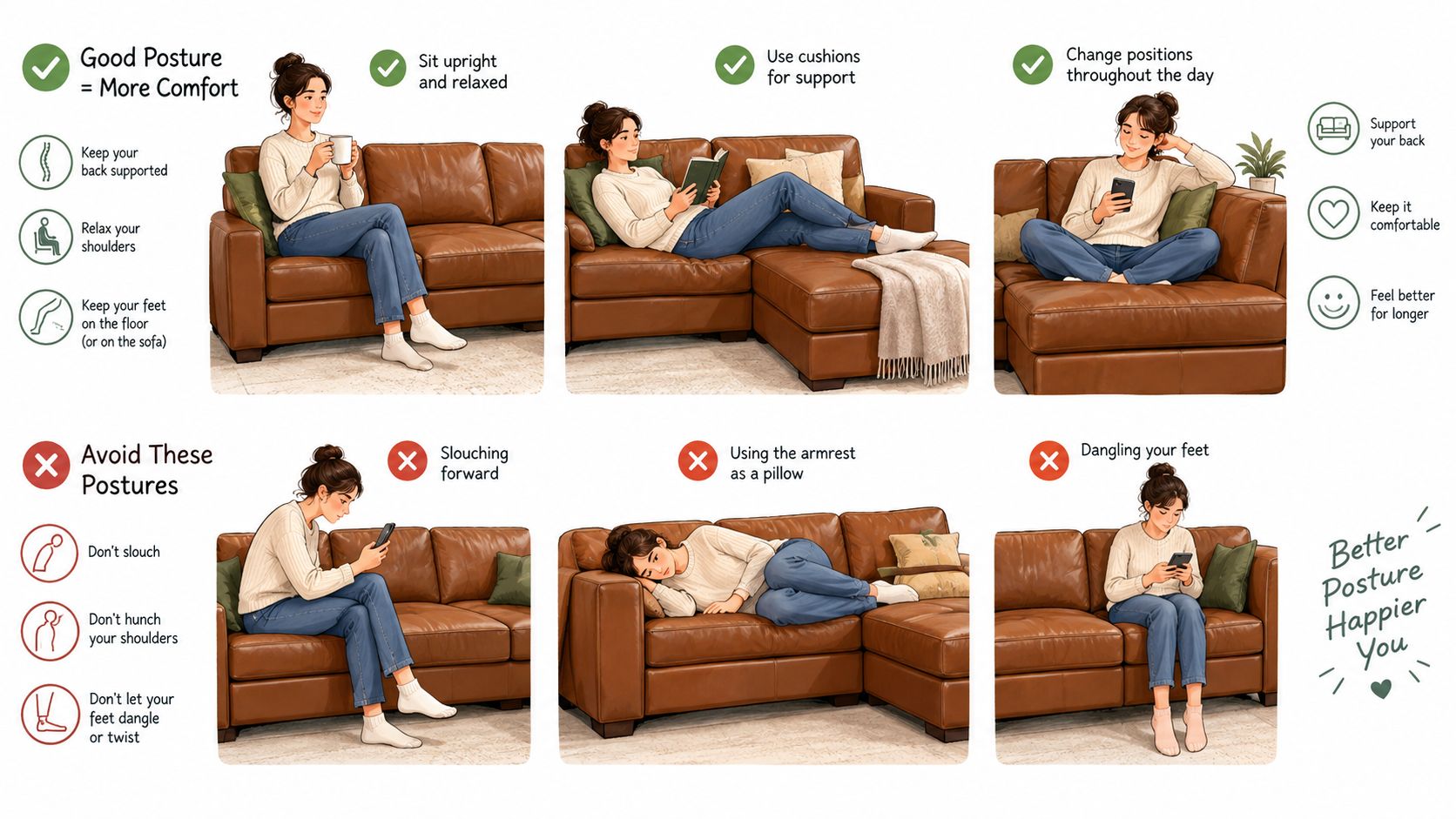
Sit all the way back instead of perching on the front edge. The pelvis should feel supported, the back should meet the cushions comfortably, and both feet should rest flat on the floor. The front edge shouldn't press sharply behind the knees.
A seat that's too high can leave a shorter person's feet unsupported and increase pressure beneath the thighs. Excessive depth can keep the back from reaching the cushions, encouraging a slouched position. A deep seat may feel wonderful for stretching out but less convenient for upright conversation or easy transfers.
Practical rule: Test every type of module, not just the first seat that feels comfortable.
Corners, armless chairs, consoles, and recliners may have different usable dimensions. Older adults, mixed-height households, and anyone who wants easier transfers should pay close attention to seat height and the distance between the arms. A five-piece arrangement can look coordinated while still offering different sitting experiences from one module to the next.
Aniline, Semi-Aniline, and Protected Leather Explained
“Leather” describes a material category, not one single finish. The finish determines how the surface looks, feels, and responds to everyday family life.
Aniline leather is dyed through without a protective pigment layer. It offers the most natural feel and appearance, but it can be more vulnerable to staining, scratching, and fading. It may suit a quieter sitting room where preserving a soft hand matters more than easy cleanup.
Semi-aniline leather adds light protection while retaining much of the natural character. It can be a middle path for a household that wants visible leather variation with some added help against everyday handling.
Pigmented or protected leather uses pigment and a topcoat to create a more uniform surface. It is generally easier to wipe clean and more resistant to ordinary wear, which can make it a practical choice for children, pets, snacks, and frequent guests. This leather selection guide also describes common upholstery leather thickness as approximately 2 to 4 ounces, or about 0.8 to 1.6 millimeters.
Match the finish to the household
A family shouldn't choose aniline just because the surface feels luxurious, or protected leather just because cleanup sounds easier. The right choice depends on the room, the people using it, the household's tolerance for visible marks, and the care routine the family will follow.
A showroom conversation should cover more than the seat cushions. Buyers should ask whether the outside arms, backs, backs of recliners, and connecting pieces use the same leather grade. Some constructions use leather-match materials in less visible areas, so the exact locations matter.
The guide to choosing leather furniture can help shoppers prepare questions before sitting down with a furniture specialist. A good comparison includes touch, finish, color variation, cleaning instructions, and the future availability of matching repair materials.
What to Ask About Leather Grade and Indoor Air Quality
A thoughtful purchase starts with documentation. The label should identify whether the high-contact areas use full-grain, top-grain, corrected-grain, split, bonded, or leather-match material. These categories don't age or repair identically, and a five-piece system includes more cushions, seams, connectors, and separate panels to keep track of.
Buyers should also ask whether the same specification covers every visible panel. If a seat cushion uses one material and the outside arm uses another, that difference can affect appearance, wear, cleaning, and future color matching.
Durability claims need context
Recognized abrasion methods provide more useful information than a vague “heavy duty” description. ISO 17076 describes a Martindale approach for leather, while ISO 5470 covers Taber abrasion. These tests simulate repeated friction under controlled loading, but they don't predict stains, sunlight damage, seam failure, scratching, or cushion deformation by themselves. Eurofins' explanation of leather-quality testing outlines why abrasion is one part of a broader specification.
A 2020 study evaluating upholstery leathers against recommended European standard criteria reported that 73% of the tested upholstery leathers endured 70,000 flexing cycles without damage to the finish. The study also reported that most tested leathers met the recommended characteristics of the PN-EN 13336:2013 upholstery-leather standard. The upholstery leather study provides a repeatable test context, not a household lifespan guarantee.
Ask about the air inside the room
Indoor-air questions deserve the same calm attention. The EPA's overview of volatile organic compounds explains that VOCs are chemicals that evaporate at room temperature. New furniture can involve emissions from adhesives, foam, coatings, backing materials, and composite components, so genuine leather alone doesn't describe the complete product's emissions profile.
Households with infants, allergies, asthma, or limited ventilation can ask:
- Material disclosure: What adhesives, backing materials, coatings, and foam components are used?
- Finished-product testing: Is there recognized emissions testing for the completed sectional?
- Ventilation guidance: How long does the manufacturer recommend airing the furniture?
- Cushion handling: Can cushions be aired separately before use?
- Claims and exclusions: Does the paperwork support a specific claim, rather than relying on a broad “non-toxic” label?
The goal isn't to treat every new sectional as equally concerning. It's to replace a vague odor conversation with clear questions and relevant documentation.
Customizing Orientation, Chaise Side, and Cushion Feel
A modular sectional becomes more useful when its layout matches the household instead of forcing the household to adapt. A chaise on the left can leave a different walking path than a chaise on the right. The change can affect television sightlines, access to a doorway, conversation flow, and where children or pets naturally pass through the room.
Cushion feel matters just as much. Some households prefer a firmer, more upright seat for conversation and easier transfers. Others want a softer lounging feel for long movie nights. The showroom test should include sitting upright, leaning back, stretching out, and sharing the space with another person.
Build around real household habits
A family that hosts often may value open seating and a console between active seats. A household that watches television together may give the chaise the prime lounging position. A room used for reading, visiting, and television may benefit from pieces that can be separated later.
Custom choices can extend beyond orientation. Depending on the furniture program, shoppers may compare leather colors, cushion options, wood details, finishes, and hardware. Custom leather furniture guidance can help frame those decisions as a coordinated room plan rather than a series of isolated choices.
BILTRITE Furniture-Leather-Mattresses offers in-store guidance for furniture options that may include custom choices in leather, fabric, wood, finish, and hardware. The showroom also carries USA-made, Amish-made, and solid-wood furniture, along with small-scale choices for tighter rooms and heavy-duty options for demanding households.
A sectional earns its place in a home when its configuration supports the way the family actually lives.
Delivery Planning and a Warm Invitation to Our Showroom
Delivery planning turns a promising sectional into a manageable project. Measure each module separately, including width, depth, height, and diagonal dimensions, then compare those measurements with the narrowest doorway, hallway, stairwell, elevator, and turn.
Corner pieces deserve special attention because they commonly measure roughly 35 to 40 inches wide and deep. A furniture-planning guide recommends leaving at least 2 inches of clearance between the sofa's narrowest dimension and the narrowest doorway. This delivery-focused sofa guide also emphasizes measuring with doors fully open and accounting for trim, railings, sharp turns, and ceiling height.
A come-apart delivery checklist
- Measure every module: Record the corner, armless chairs, chaise, recliners, console, and any other individual piece.
- Measure the route: Check the front door, interior doors, hallway width, stair turns, elevator opening, and ceiling height.
- Protect the clearance: Compare the smallest furniture dimension with the narrowest passage and leave the recommended space.
- Plan the final position: Keep vents, windows, walking paths, and television views usable after assembly.
- Confirm the configuration: Make sure the delivered pieces match the selected orientation and chaise side.
BILTRITE has served the Metro Milwaukee community as a fourth-generation, family-owned business since 1928. The Greenfield showroom focuses on affordable, better-quality furniture, including USA-made and Amish-made options, and the team's sales associates bring over 400 years of combined experience to hands-on conversations without pressure.
The store also offers choices beyond living-room furniture, including a mattress department with over 60 models, along with furniture for apartments, growing families, older adults, and households that need heavier-duty construction. Wisconsin shoppers comparing mobility furniture can also remember that power lift recliners are exempt from Wisconsin sales tax.
Come visit BILTRITE Furniture-Leather-Mattresses in Greenfield to sit on the pieces, compare leather finishes, and talk through room measurements and delivery access. The family-owned team would be glad to help shoppers find a comfortable 5 piece leather sectional without turning the visit into a hard sell.