Contemporary Dining Set for 6: A Buyer’s Guide


Moving furniture around the dining room can turn an ordinary Saturday into a full family project. A table that looked manageable in the showroom may leave chairs pressed against the wall, while a set that seemed stylish online may feel too formal for cereal bowls, homework, and everyday family dinners.
A contemporary dining set for 6 should do more than fill an empty room. It should give six people enough elbow room, leave space for chairs and walkways, and stand up to the way the household lives. With a few careful measurements and a clear idea of daily needs, choosing the right set becomes a much more enjoyable part of creating a welcoming home.
Table of Contents
- Starting Your Contemporary Dining Set Journey
- Measuring Your Space for the Perfect Fit
- Choosing the Right Shape and Chair Style
- Exploring Wood and Finish Options
- Coordinating Your Dining Room Decor
- Visiting Our Greenfield Showroom
Starting Your Contemporary Dining Set Journey
A family often starts this search after noticing the same small frustrations. Breakfast happens at the kitchen counter because the old table wobbles. Guests arrive, and two people end up balancing plates on the sofa. Someone pulls the table away from the wall for a holiday meal, only to discover that the chairs can't move freely around it.
That moment is useful because it reveals what the new dining area needs to accomplish. A household that hosts regularly may want a table with flexible seating. A family in an apartment may need a lighter visual profile and a compact footprint. Someone who works from home at the dining table may care more about comfortable chairs and a durable surface than about a formal dining-room appearance.
Contemporary design can support all of those routines. The style grew from early modern design changes that favored furniture that was smaller, lighter, easier to maintain, and more widely distributed. Britannica's overview of modern furniture connects this shift with the rationality of design around 1925, as well as the influence of the Bauhaus, which was founded in 1919 and closed in 1933.
Style should serve the household
Clean lines, softened edges, mixed materials, and sculptural bases can make a dining room feel fresh without making it feel precious. A wood table with upholstered chairs may feel warm and relaxed, while a simple table with slim chairs can help a smaller room appear more open.
A useful starting point: The right set is the one that makes everyday meals easier, not merely the one that looks most impressive in a photograph.
The search becomes simpler when the household identifies its priorities before choosing a finish or chair color. Comfort, circulation, maintenance, and flexibility should come first. Once those needs are clear, the contemporary look becomes much easier to narrow down.
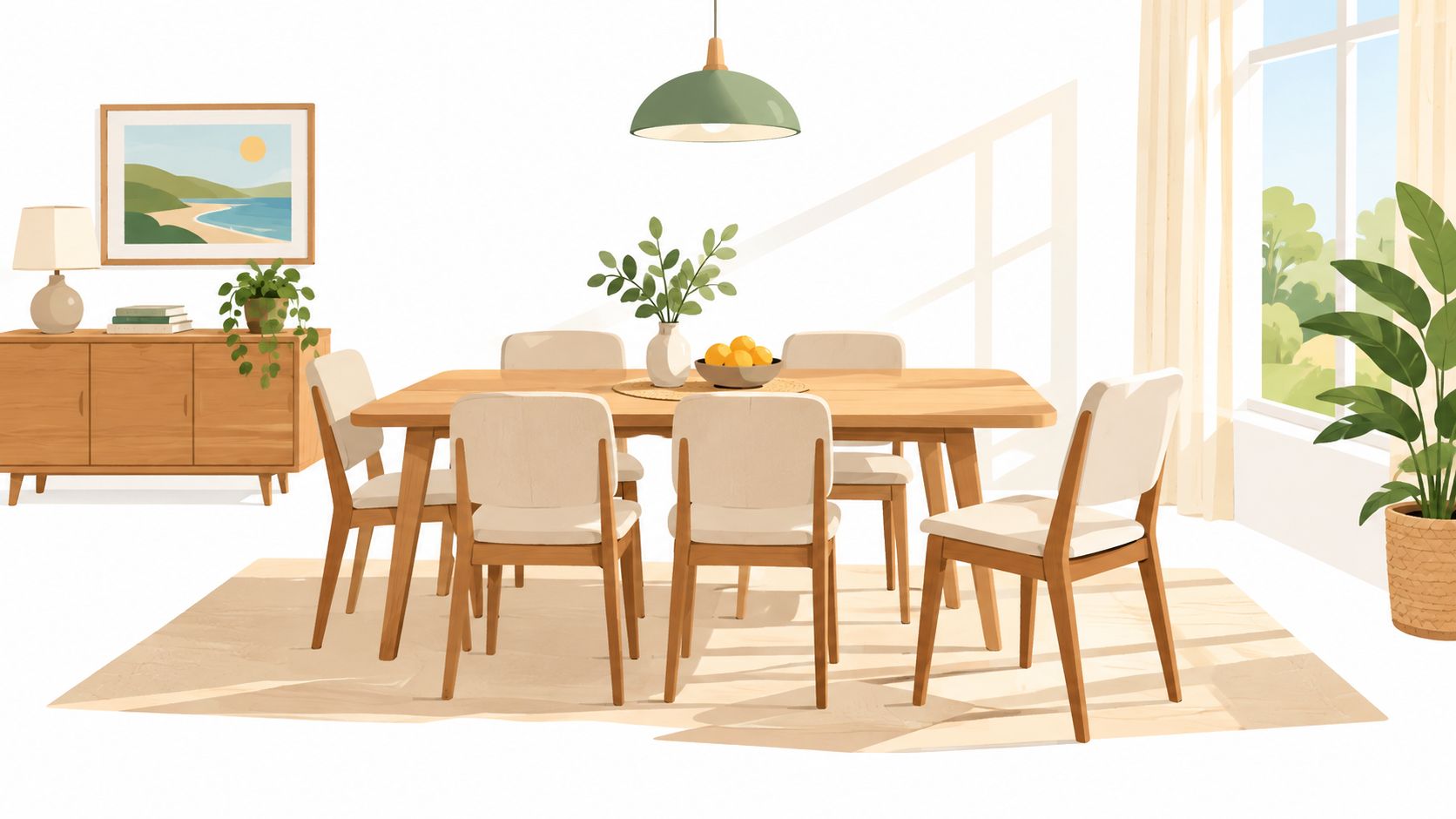
Measuring Your Space for the Perfect Fit
The table itself is only one part of the measurement. Chairs need room to pull out, diners need room to sit comfortably, and people walking behind seated guests need a clear path. A room can technically hold a table and still feel cramped every day.
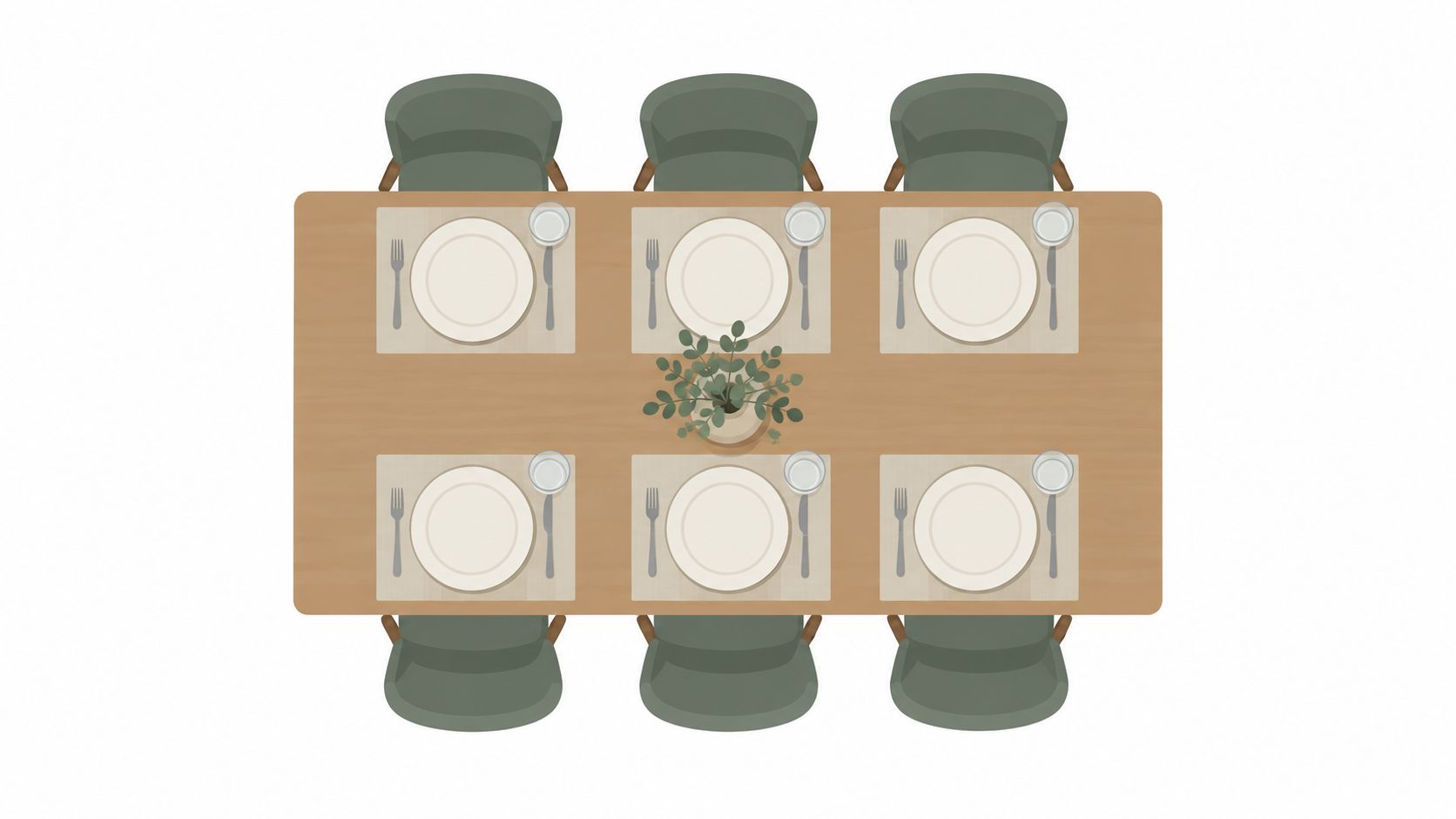
For a rectangular contemporary dining set for 6, start with a table length of 60 to 72 inches. A round option generally measures 54 to 60 inches in diameter. These dimensions are summarized in this six-person dining table size guide, which also recommends at least 36 inches of clearance around the table for chairs and movement.
Use the chair zone, not just the table zone
Measure the room from wall to wall, then subtract the clearance needed on both sides of the table. For example, a rectangular table that is 60 inches long needs additional room at each end for chairs and movement. The same principle applies to the width. The calculation should include the space behind every chair, not just the tabletop dimensions.
Use this quick process:
- Measure the open room. Record the usable length and width, excluding areas blocked by cabinets, door swings, radiators, or permanent furniture.
- Mark the table footprint. Use painter's tape on the floor to outline the intended table size.
- Add the chair zone. Leave at least 36 inches from the table edge to nearby walls or furniture.
- Test the walkways. Pull imaginary chairs back and walk behind them. If people need to pass behind seated diners, 42 to 48 inches is preferred, according to the practical dining chair and table spacing guidance.
- Check doors and drawers. Make sure chairs won't block a doorway and that nearby storage can still open.
A common mistake is choosing a table based only on its listed length and width. The dining room must support the complete experience, including chair pull-back, conversation, serving dishes, and regular movement.
For more planning help, the dining table size guide can help households compare table proportions before visiting a showroom. A paper or tape outline at home can make that advice much easier to apply.
Choosing the Right Shape and Chair Style
Shape changes how a dining room feels and how people move through it. A rectangular table usually works naturally in a long room because it follows the room's proportions. It also creates clear places for diners at the ends and along the sides, which suits family meals, homework, and larger serving dishes.
A round table creates a different experience. Everyone faces the center, conversation feels more connected, and there are no corners to interrupt movement. In a square or compact dining area, a round shape can soften the room and create a more social arrangement. The tradeoff is that the table's footprint spreads evenly in every direction, so the clearance test remains essential.
| Table shape | Often suits | Main consideration |
|---|---|---|
| Rectangular | Long rooms and structured family seating | Confirm that the room can handle chair clearance at both ends |
| Round | Square rooms and relaxed conversation | Measure the full diameter plus the surrounding chair zone |
| Oval | Homes seeking softer lines | Check the widest point and the space needed beside the chairs |
Chair selection should follow household habits rather than a label such as modern or traditional. Upholstered seats can add softness to a wood table, while easy-clean surfaces may suit young children or frequent entertaining. Slim chairs with clean lines can keep a compact room feeling open, while a sculptural base can add character without requiring busy decoration.
Match comfort with the table
Seat height matters just as much as appearance. Standard dining tables are typically 28 to 31 inches high, and dining chair seats are usually 17 to 19 inches high, leaving about 10 to 12 inches of vertical clearance for comfortable thigh room. These measurements are explained in this seating height guide.
The guide to choosing dining chairs can help shoppers consider seat shape, support, upholstery, and scale together. A chair that looks sleek but forces knees too high or leaves too little legroom won't feel good during a long meal.
Exploring Wood and Finish Options
A table can look contemporary and still handle a busy family dining room. Material and finish affect its appearance, the feel of its surface, and how well it responds to everyday meals, school projects, crafts, and gatherings. Solid wood brings visible grain, natural warmth, and a substantial feel, while details such as a clean tabletop, tapered legs, or a sculptural pedestal keep the design from feeling heavy.
Families should match the material to the work the table will do. A wood finish may suit households that value repairability, craftsmanship, and the ability to refresh a surface over time. Sintered stone and ceramic can appeal to people who want a surface that is easier to maintain and less concerning around scratches. Each option has tradeoffs, so the right choice depends on daily habits as much as appearance.
Look beyond the sample chip
Color changes with its surroundings. A light wood finish can make a compact dining area feel brighter, while a deeper tone can add contrast against pale walls and flooring. Daylight, warm pendant lighting, and evening room light may each make the same finish appear different. Viewing a full tabletop in person gives a clearer impression than judging a small sample.
Construction deserves the same close look as color. At BILTRITE, Amish-made pieces use strong joinery such as mortise-and-tenon construction, which holds structural components together more securely than fastener-only assembly. Ask how the frame is built, how the finish is protected, and whether the upholstery and surface are suited to regular dining use. Those questions connect contemporary style with the durability a family needs.
A finish should support the room, not turn maintenance into a daily project. Check how it responds to spills, cleaning, heat, and the occasional mark from homework or a craft activity before choosing.
Consider flexibility before choosing minimalism
An extendable table can stay compact for everyday meals and open up when guests arrive. Contemporary designs are also moving toward softer shapes, mixed materials, sculptural bases, and flexible tables that can shift from 4 to 6 seats, as discussed in this contemporary dining table trend overview.
For six people, the base matters as much as the tabletop. A well-placed pedestal or leg design can preserve usable knee space and reduce awkward contact between diners. A surface that tolerates regular use, paired with chairs that can be cleaned without anxiety, may serve a family better than an ultra-minimal table that requires constant caution.
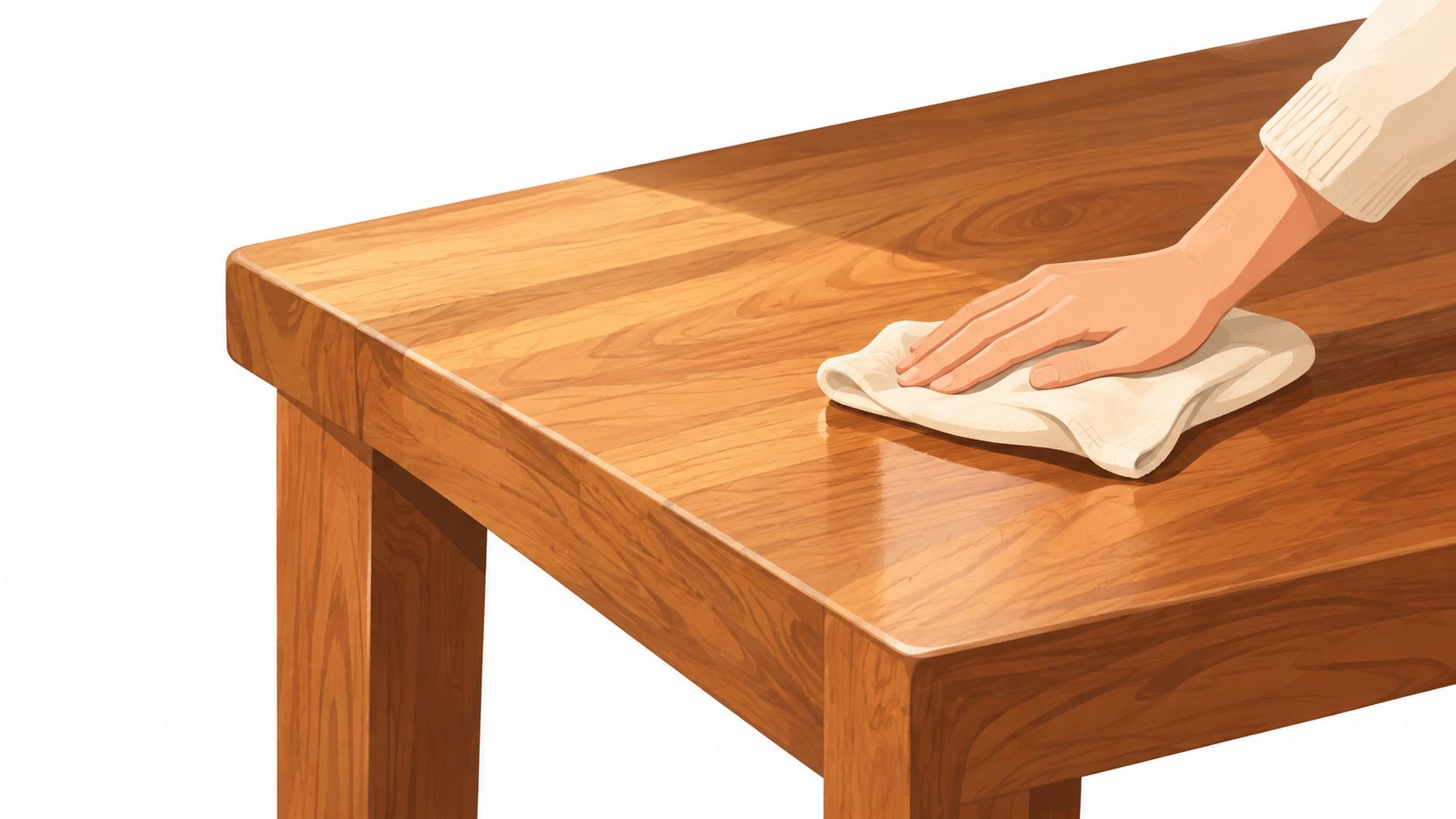
For help comparing color, grain, and care requirements, see this guide to dining table wood finishes. The best finish is one that complements the home and fits the household's willingness to maintain it.
Coordinating Your Dining Room Decor
A dining set doesn't need every surrounding item to match. Contemporary rooms often look more welcoming when the table, lighting, rug, and wall color work together without looking identical. The goal is a comfortable visual rhythm, not a showroom with every piece from the same collection.
Start with the table and chairs, then build outward:
- Choose the lighting position: A pendant light or chandelier should sit visually over the table, helping define the dining area within an open plan.
- Anchor the floor: A rug can add texture and color, but it should leave enough room for chairs to move without catching on the edge.
- Repeat one material: Wood tones, black metal, woven texture, or upholstery can appear in a nearby piece to make the room feel connected.
- Keep the centerpiece useful: A low bowl, vase, or tray adds interest without blocking conversation across the table.
Make contemporary feel inviting
Clean lines don't require a cold atmosphere. Upholstered seating, warm wood, soft lighting, and a few personal objects can make a modern dining set feel relaxed. A pale table may pair nicely with darker chairs for contrast, while a rich wood finish can work with neutral upholstery and light walls.
The household's daily routine should guide the accessories. A family that uses the table for crafts may prefer a simple centerpiece that can move quickly. A household that hosts formal meals may enjoy layered lighting and a more decorative table setting. The dining room styling guide can help organize those choices without imposing rigid rules.
Photos of the room, flooring samples, paint swatches, and fabric pieces can make in-store comparisons more reliable. Seeing those materials beside the actual tabletop helps reveal whether a finish feels too yellow, too dark, too cool, or just right.
Visiting Our Greenfield Showroom
Furniture can look convincing in a photograph and still feel different in person. Sitting in a chair reveals whether the back support works, whether the seat height feels natural, and whether the table leaves enough room for knees. Touching the tabletop also helps shoppers understand the difference between a printed surface, veneer, and real solid wood.
The Greenfield showroom has served the Metro Milwaukee community since 1928, when the family business began as an upholstery shop. Today, the fourth-generation, family-owned retailer continues to focus on affordable, better-quality furniture, with a large selection that includes mostly USA-made and Amish-made pieces. A 45,000-square-foot showroom in Greenfield provides room to compare dining styles and other home furnishings, according to this local profile of the business.
Bring the room into the conversation
Helpful preparation makes a showroom visit more productive:
- Bring room measurements, including doorways and narrow turns.
- Take photos of the dining area in daylight.
- Note the height of nearby counters, windowsills, and lighting.
- Bring fabric or flooring samples if available.
- Sit in every chair and check the table from each position.
The sales associates offer more than 400 years of combined experience, and the showroom also includes a mattress department with over 60 models. Those details support a broader, practical approach to furnishing a home, whether the shopper needs a compact dining arrangement, a heavy-duty option, or advice on coordinating several rooms. Store information, including the 5430 West Layton Avenue location and family-focused operating schedule, appears on the Greenfield showroom locations page.
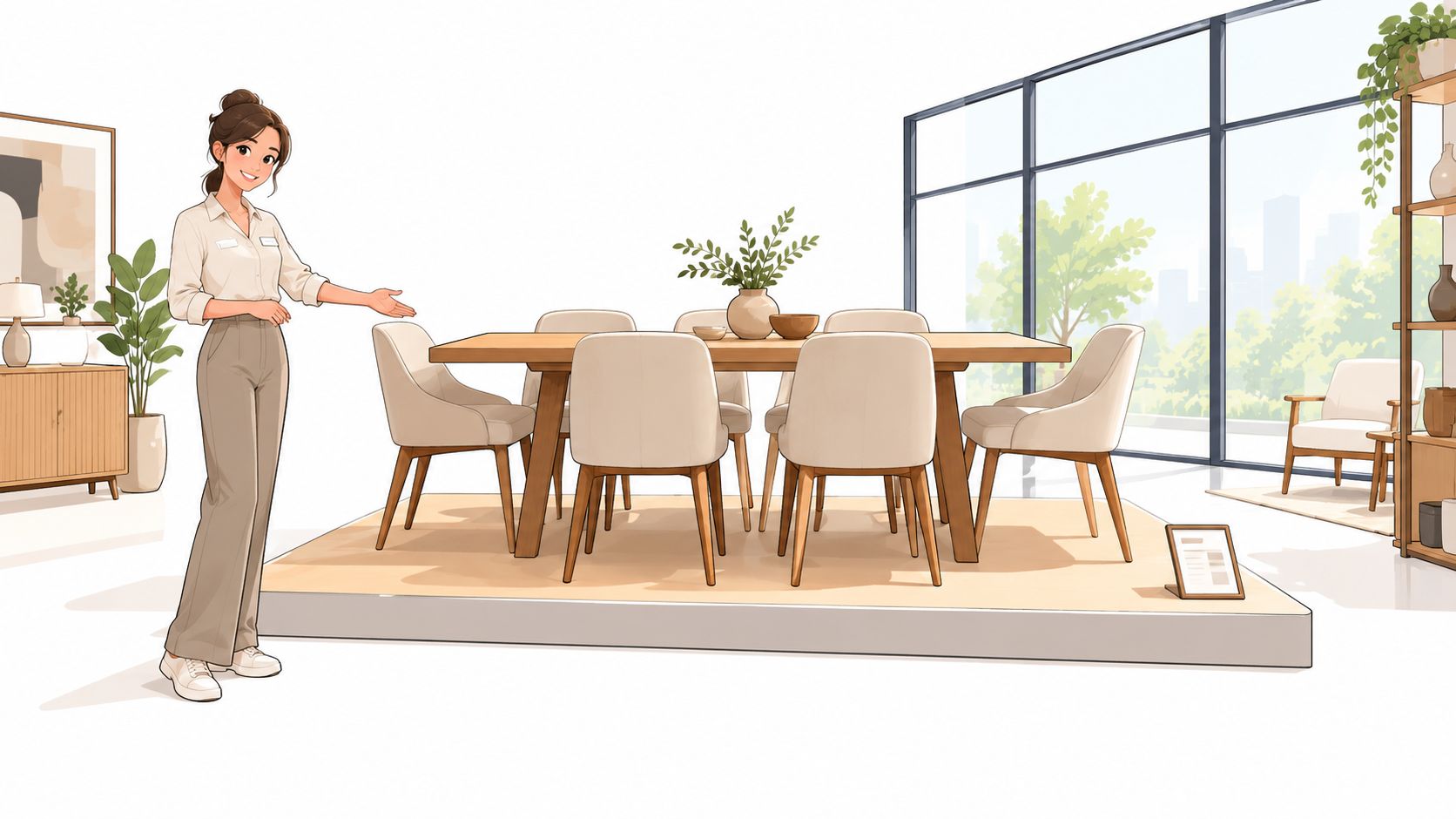
A local showroom visit gives the household a chance to compare proportions, test comfort, and see finishes under real lighting. That hands-on check can prevent the most common buying mistake, choosing a table for its appearance without confirming that it works in the actual dining room.
BILTRITE Furniture-Leather-Mattresses offers affordable, better-quality furniture with USA-made, Amish-made, and solid-wood options that can suit a contemporary dining set for 6. Visit the Greenfield showroom to sit in the chairs, compare finishes, and speak with the experienced team about a set that fits the household's space and daily routine.