Colorful Sectional Couch Guide for Stylish Homes


You've found the room's new focal point, but the question is bigger than “Which color looks nice?” A colorful sectional couch has to work through bright mornings, family movie nights, pet traffic, spills, changing décor, and the occasional move to a different room.
That's why color should be treated as a long-term livability decision, not a quick trend call. The right choice combines a shade that fits the room with upholstery, foam, frame construction, and a layout that can keep up with real life.
Table of Contents
- Picture Your Room Around a Colorful Sectional Couch
- The Color Trends Shaping 2026 Sectionals
- Choosing Upholstery That Stands Up to Daily Life
- Modular Versus Fixed Sectionals for Real Homes
- What Makes a Colorful Sectional Last
- Getting the Scale and Layout Just Right
- Coordinating Your Décor Around a Statement Sofa
- Make It Yours with BILTRITE Custom Options
Picture Your Room Around a Colorful Sectional Couch
Before looking at fabric samples, take a mental snapshot of the living room as it exists today. Identify the pieces that are staying, such as wood flooring, a fireplace, built-in shelving, a television console, or a favorite rug. Those elements establish the room's anchor colors, and the sectional should either calm them down or become the clear centerpiece.
Lighting deserves equal attention. A color can look relaxed in a showroom and much stronger beside a sunny window. Notice where natural light lands during the day, then check the room again under lamps in the evening. A sectional that feels welcoming on a Tuesday morning should still feel comfortable on a Friday night, not like it has taken over the house.
Make a simple seating sketch
Draw the walls, doors, windows, radiators, and major walkways. Mark the intended seating zone, then note whether the sectional will face a television, fireplace, conversation area, or view. This quick sketch catches problems before a large piece arrives.
Use this living room styling guide for another practical way to think through furniture placement, color, and accessories.
Ask one direct question: Should the sectional be the calm counterpoint or the loud centerpiece? A deep olive or warm brown can add personality while remaining grounded. A saturated jewel tone or vivid yellow announces itself immediately and needs quieter surroundings.
The rest of the decision follows from that answer. Color families help define the mood, upholstery determines how the shade handles daily use, modular construction affects flexibility, and custom choices can bring the whole plan together.
The Color Trends Shaping 2026 Sectionals
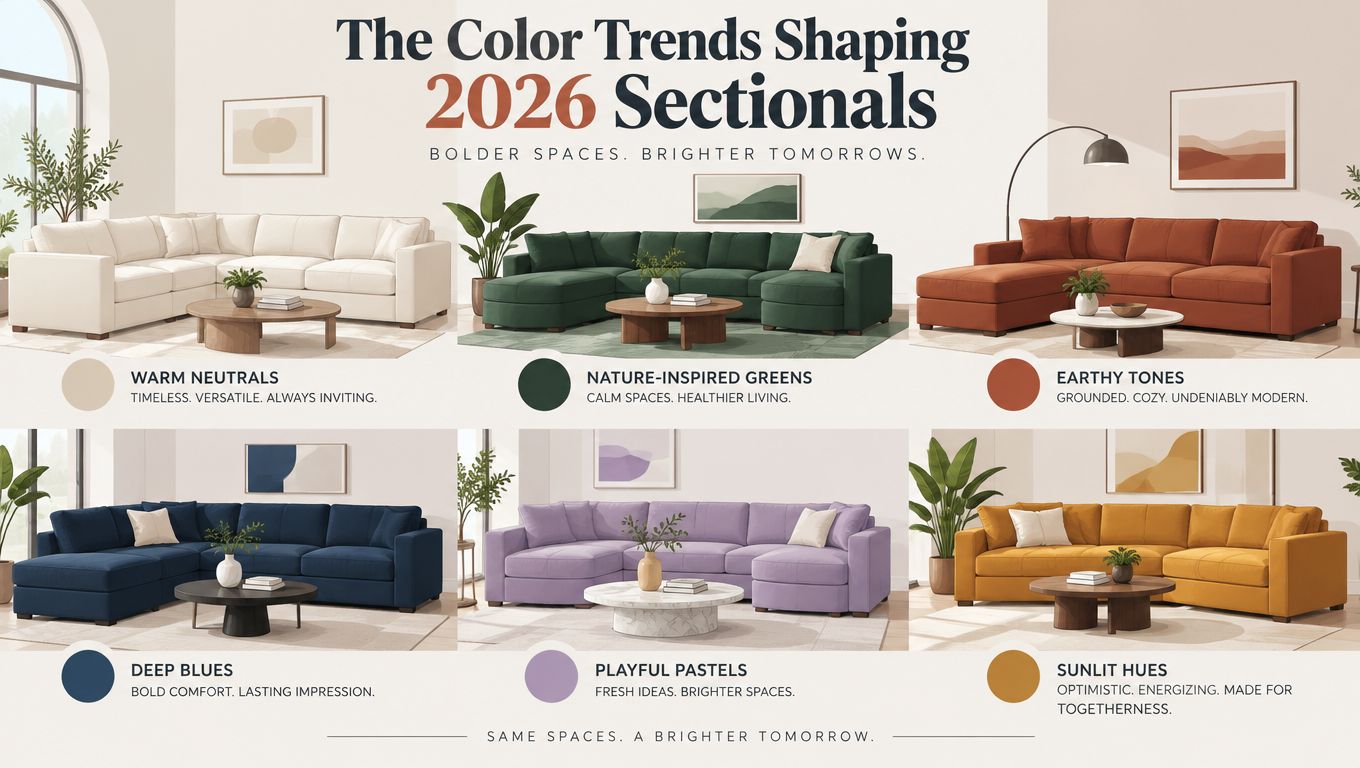
Color direction has moved beyond plain neutrals. Recent 2026 design coverage identifies green as the most popular sofa color for the year, while richer choices such as chocolate brown, olive, oxblood, burgundy, dusty blue, and jewel tones are also gaining attention. Recent sofa color coverage connects that shift to a broader desire for seating with more character.
That movement makes sense in a living room. A sectional already occupies substantial visual space, so a considered color can make the furniture feel intentional rather than oversized. Sectionals represented 27.3% of global sofa revenue in 2025, according to one market report cited in this history of the sectional sofa, which helps explain why color and modular design are receiving so much attention.
Match the palette to the room
Earthy shades, including olive, terracotta, ochre, warm brown, and chocolate, work especially well with oak, natural stone, woven textures, and cream walls. They create a settled feeling and tend to be easier to live with when the room's accessories change.
Jewel tones, such as emerald, sapphire, and deep burgundy, offer more drama. They look strongest when the walls, rug, and art provide breathing room instead of competing for attention.
Dusty blues and softened pastels can brighten a smaller room without making the furniture feel harsh. They pair naturally with light woods, pale walls, and relaxed textiles.
Warm neutrals with caramel accents remain useful for shoppers who want flexibility but don't want a flat gray room. A neutral sectional can still feel expressive when its shape, texture, pillows, and nearby wood tones do the work.
A good color should suit the household, not just the current showroom display. A room with frequent redecorating may benefit from a grounded shade. A homeowner who wants the sofa to define the space can choose deeper saturation and keep the surrounding pieces restrained. More ideas for combining hues appear in this guide to choosing a color palette.
Choosing Upholstery That Stands Up to Daily Life
Color gets attention first, but fabric engineering determines how the sectional behaves after delivery. Families should assess cleaning, sunlight, pets, texture, and cushion support before falling for a particular shade.
Performance fabric and leather solve different problems. Performance fabrics are often polyester or synthetic blends designed for wear and stain resistance, while leather is generally regarded as durable and easy to clean. Solid wood frames, especially kiln-dried wood, are also commonly recommended when durability matters, as explained in this sectional sofa buying guidance.
| Factor | Performance Fabric | Leather |
|---|---|---|
| Daily cleanup | Often practical for households that expect spills and frequent use | Usually easy to wipe clean |
| Feel | Can offer a soft, woven, or textured surface | Smooth, substantial, and increasingly patinated with age |
| Sun exposure | Synthetic blends can offer useful resistance, but samples still need checking in the actual room | Color and finish should be assessed beside the window |
| Pet considerations | Tight weaves and suitable performance treatments can help with hair and everyday mess | Doesn't trap surface hair in the same way, but claws can still leave marks |
| Color effect | Texture can soften or deepen a saturated shade | Surface sheen can make a color look richer and more pronounced |
Choose for the household, not the photograph
A family with children, pets, and frequent guests should lean toward a fabric that can handle repeated use and ordinary accidents. A darker shade may disguise some marks, but it won't compensate for a fragile weave. Lighter upholstery shows dirt more readily, while synthetic or tight-weave materials generally resist fading and staining better than many natural materials, as discussed in this sofa durability and trend guidance.
Leather suits shoppers who prefer a cleanable surface and appreciate a material that develops character. It still needs sensible care, and its surface changes the way a bold color reads. A deep brown, green, or burgundy can appear especially rich against leather's natural finish.
Practical rule: Sample the upholstery beside the room's brightest window, then sit on it in the clothing and posture the household will actually use.
BILTRITE's performance fabric guidance offers another useful starting point for shoppers comparing everyday upholstery choices.
Modular Versus Fixed Sectionals for Real Homes
The layout decision can matter as much as the color. Modular sectionals arrive as separate pieces that can be rearranged, while fixed sectionals follow one established configuration. Neither format wins every room.
A modular layout makes sense for renters, growing families, and homes with awkward access. Milwaukee-area rooms can include narrow stairways, bay windows, built-ins, and older doorways that turn delivery into a real planning issue. Separate components usually offer more options for getting furniture through those spaces.
A fixed configuration creates a continuous, composed look. It can suit a room with a straightforward floor plan where the sectional won't need to change position. It also gives shoppers a clear shape to evaluate on the showroom floor.
| Factor | Modular Sectional | Fixed Sectional |
|---|---|---|
| Layout changes | Pieces can be rearranged as needs change | Intended for one established arrangement |
| Delivery access | Separate sections can help with narrow doors and stairs | May need additional delivery planning |
| Future home | Easier to adapt to a new room | Works best when the current footprint is stable |
| Replacement options | A single module may be easier to address if available | The full configuration remains tied together |
| Visual effect | Can feel relaxed and tailored to the room | Often presents a more unified silhouette |
Think beyond the first floor plan
A modular sectional can shift from an L-shape to a wider conversation arrangement when a family changes the room. It may also make sense when a homeowner expects to move, remodel, or add seating later. That flexibility doesn't eliminate the need to measure, but it reduces the risk of forcing one arrangement forever.
A fixed sectional is a sound choice when the room has a clear purpose and the delivery route is uncomplicated. The main mistake is choosing one only because its color looks right, then discovering that its footprint blocks a walkway.
Both styles are available through BILTRITE, so shoppers can compare the formats against their doorway, floor plan, and future plans. This modular furniture guide explains the idea in more detail.
What Makes a Colorful Sectional Last
A vivid upholstery color can hide poor construction at first glance. Buyers should look underneath the visual appeal and ask how the frame, joints, support system, and cushions will respond to years of sitting, lounging, children, pets, and winter clothing.
Start with the frame and joints
Hardwood or furniture-grade plywood is a stronger starting point than particleboard for load-bearing areas. Kiln-dried wood helps limit moisture-related movement, while reinforced corner blocks and metal brackets help keep modular sections aligned. Glued and screwed joinery is more reassuring than staples alone because the frame must resist repeated shifting and sitting loads.
A rigid frame supports more than the person sitting down. It helps keep seams aligned, cushions evenly supported, and sections from developing gaps or creaks. That matters with colorful upholstery because a sagging frame can make an expressive fabric look untidy long before the shade itself feels dated.
Foam density gives shoppers another useful checkpoint. For everyday residential sectionals, the practical target is 1.8 to 2.5 lb/ft³, with 2.0 lb/ft³ and above offering safer long-term support when the household is hard on seating, according to this sofa durability guide. Foam below 1.5 lb/ft³ tends to break down within 1–2 years of regular use, making the source specification especially important.
Understand the support under the cushions
Sinuous springs can provide dependable support when properly installed. Eight-way hand-tied construction is a more labor-intensive approach that some shoppers prefer for traditional seating. Webbed decks can also perform well when the system is correctly engineered, so the frame and overall build matter more than a single label.
Cushion fill changes the sitting experience. High-resilience foam offers firmer shape retention, while a foam core wrapped in a down-feather blend creates a softer, more relaxed feel but needs regular fluffing. The right choice depends on whether the sectional is primarily for upright conversation, sprawling movie nights, or a mix of both.
Getting the Scale and Layout Just Right
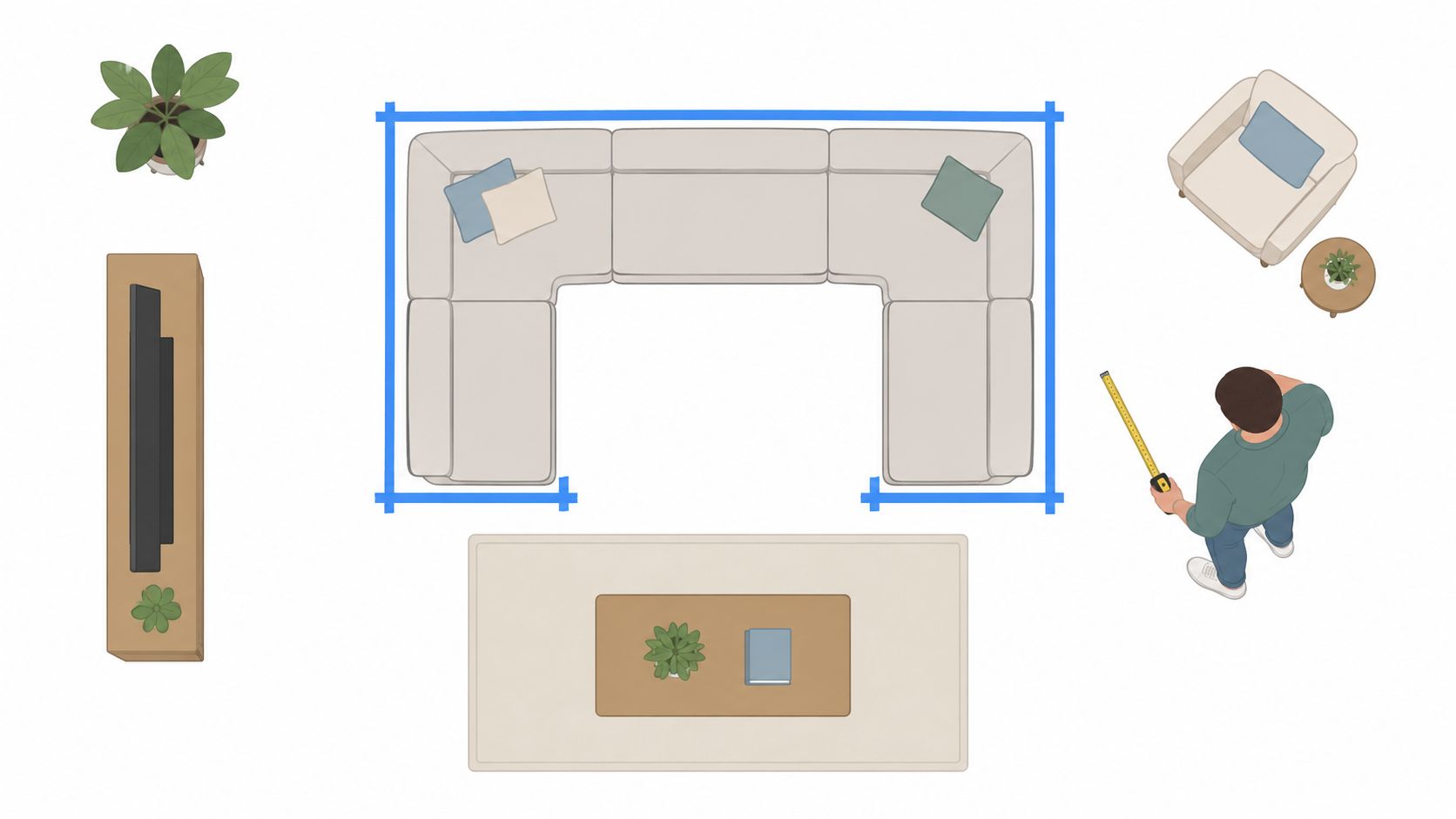
A colorful sectional should feel generous, not like it has swallowed the room. Start with the wall length, ceiling height, doorway width, hallway turns, and stair access. Measure the sectional's full footprint, including the chaise or return, then check every part of the delivery path.
Painter's tape makes the next step easy. Mark the proposed outline on the floor and leave the taped shape in place while household members walk around it. Open doors, move toward the television, reach the windows, and pull out nearby chairs. A floor plan that looks fine on paper can feel cramped once daily movement enters the picture.
Protect the main walkways
A practical target for walking space behind a sectional is generally 30 to 36 inches, as outlined in this guide to measuring for a sectional sofa. The main goal is simple: the sectional shouldn't block the route people use most often.
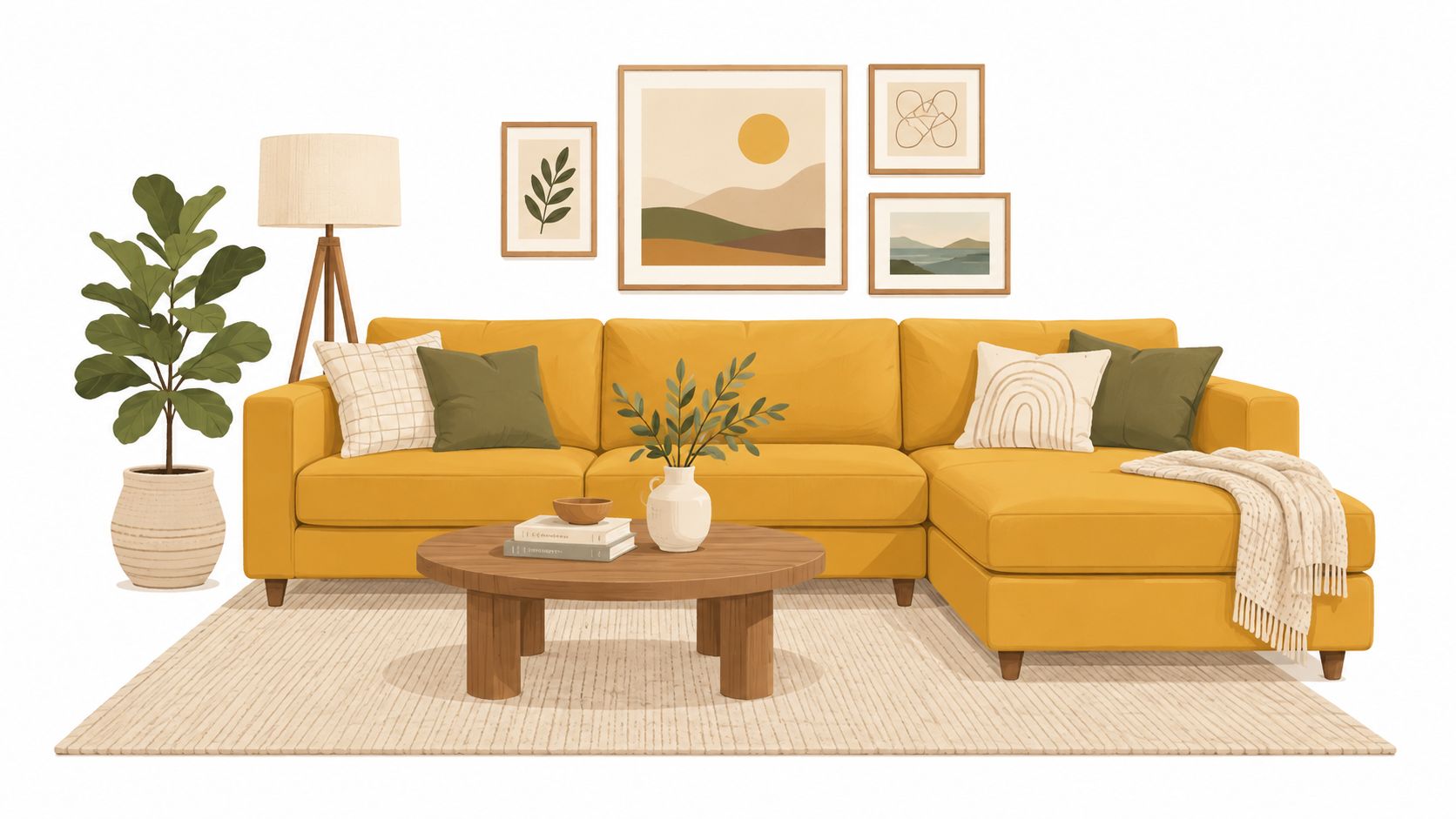
Rugs help anchor the scale. An 8-by-10 or 9-by-12 rug can give a larger seating arrangement one shared visual foundation, with the sectional's front legs resting on the rug when the room allows it. The specific size depends on the room, but a rug that stops just short of the furniture can make the arrangement feel disconnected.
A large L-shape also needs balance across the room. Use wall art, a floor lamp, a console, or a pair of lighter chairs to provide visual weight opposite the sectional. The goal isn't to fill every empty spot. It's to keep one colorful piece from becoming the only thing the eye sees.
Coordinating Your Décor Around a Statement Sofa
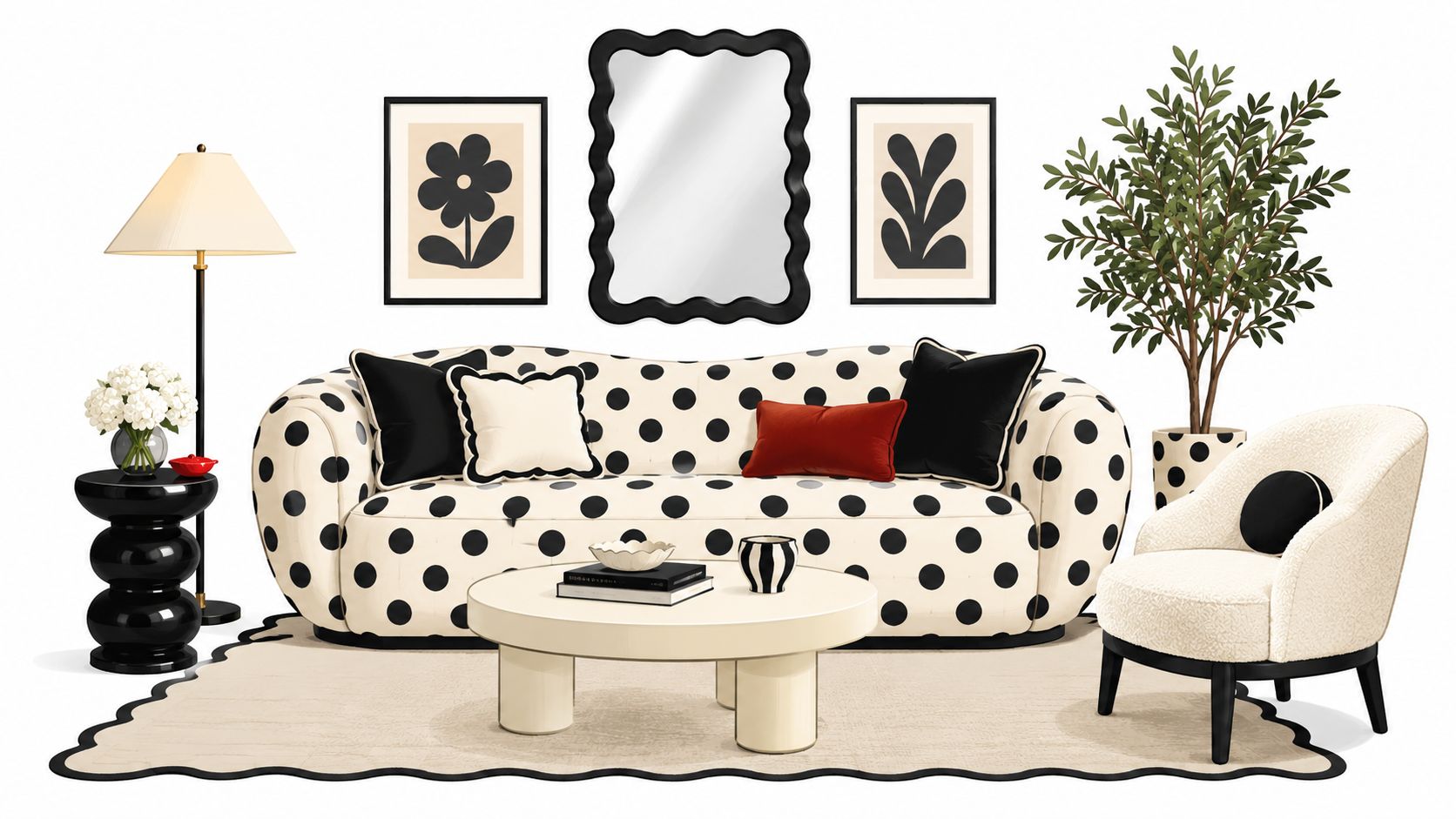
The sectional should lead the room's color story, but it shouldn't dictate every detail. Start with the upholstery, identify its strongest secondary color, and repeat that tone in smaller pieces such as pillows, a throw, a lamp, or part of the rug.
The 60-30-10 proportion rule offers a straightforward guide. Let the room's main background, such as walls, flooring, and large supporting pieces, carry roughly 60% of the visual field. Use the sectional and secondary textiles for about 30%, then reserve the remaining 10% for sharper accents.
Let contrast support the color
Jewel tones often work well with warm white, soft cream, or muted stone walls. Dusty blue can sit comfortably beside pale woods and gentle neutral paint. Olive, terracotta, and brown usually benefit from natural textures, warm metal, and wood tones that reinforce their earthy character.
Wood choice changes the mood. Oak keeps a colorful sectional feeling lighter and more casual. Walnut adds depth and formality. Painted cabinetry can either quiet the room or introduce a second strong color, so it deserves the same sample-testing approach as the upholstery.
A few practical rules keep the arrangement from getting noisy:
- Repeat one secondary shade: Pull a smaller color from the fabric instead of introducing several unrelated accents.
- Mix patterns by scale: Pair one larger pattern with quieter stripes, solids, or small motifs.
- Use metallics deliberately: Warm brass can support earthy upholstery, while cooler metal may sharpen blue or green.
- Keep the surrounding pieces calmer: A bold sectional needs room to breathe, especially in a smaller living room.
A colorful sectional doesn't require a colorful everything. The most comfortable rooms usually give the sofa one strong supporting cast, not a dozen competing voices.
Make It Yours with BILTRITE Custom Options
A shopper may find the right silhouette but not the right shade, seat feel, or configuration on the floor. Custom ordering can solve that without turning the process into a design project that feels overwhelming.
At the Greenfield showroom, a shopper can compare fabric and leather selections, modular arrangements, arm styles, cushion fills, leg finishes, and contrast stitching. Those details change more than appearance. Arm shape affects how open the sectional feels, cushion fill changes the way it supports the body, and leg finish influences whether the piece feels grounded or airy.
Build around the actual household
A family with pets may prioritize a performance fabric and a darker, textured color. A homeowner furnishing a quieter sitting room may prefer leather, a softer cushion, and a more fitted arm. Someone dealing with narrow doorways may need a come-apart or modular configuration before choosing the final upholstery.
Swatches should be viewed in the home's natural and artificial light. They should also be compared with the existing rug, flooring, wall color, and wood finishes. Asking about lead times and price changes before placing a custom order keeps the process clear, while delivery coordination and in-home measurement can reduce surprises around stairs, turns, and doorways.
BILTRITE Furniture-Leather-Mattresses is a fourth-generation, family-owned store serving the Metro Milwaukee community since 1928, with USA-made, Amish-made, solid-wood, in-stock, and custom furniture options. The showroom's sales associates bring over 400 years of combined experience, and the store is closed on Sundays and Mondays to support family time.
The best appointment feels like a conversation, not a sales pitch. Shoppers can sit on floor models, compare colors, test cushion firmness, ask about construction, and decide whether a bold shade still feels right after a practical review.
BILTRITE Furniture-Leather-Mattresses offers in-stock and custom furniture choices, including colorful sectionals in fabric or leather, modular and come-apart options, and support for measuring and delivery planning. Visit BILTRITE Furniture-Leather-Mattresses in Greenfield, bring room measurements and a few photos, and let the team help match the color, construction, and layout to the way the household lives.