Seat Lifts for Chairs: How to Choose, Measure, and Install


A parent or grandparent may be sitting in a favorite recliner, pushing hard on the arms, rocking forward, and still needing help to stand. Families often start searching for seat lifts for chairs at that exact moment, after standing has become painful, tiring, or uncertain. The right lift can make that daily transition calmer, but only when the chair fits the person and the room.
BILTRITE has helped Metro Milwaukee families think through those details since 1928. The practical path is straightforward: measure the user, measure the delivery route and room, compare lift styles, then test the movement in person before making a decision.
Table of Contents
- Why Seat Lifts for Chairs Matter for Everyday Living
- Measuring the User and the Room Before You Shop
- Comparing Lift Chair Styles and Mechanisms
- Weight Capacity, Frames, and Motors That Last
- Ordering, Delivery, and Setting Up at Home
- Daily Use, Safety Habits, and Troubleshooting
- Finding the Right Seat Lift at BILTRITE
Why Seat Lifts for Chairs Matter for Everyday Living
Standing from a low, soft chair demands leg strength, balance, and control. A senior with reduced leg strength may push against the armrests and rock forward several times. Someone recovering from surgery may have the strength to sit comfortably but not enough confidence to rise. Arthritis, balance challenges, and fatigue can turn an ordinary transfer into a moment that requires another person's help.
A lift chair addresses that transfer directly. It's a full recliner with a powered mechanism that raises the seat and guides the user toward a standing position. An add-on seat lift, by contrast, is a separate mechanism designed to sit inside or beneath an existing chair. That option can preserve a beloved chair, but it may not offer the same integrated recline, cushioning, sizing options, or stability as a complete lift recliner.
The distinction matters because families often begin with the furniture they already own. An add-on may suit someone who has a sturdy, properly sized chair that still provides excellent back and arm support. A complete lift chair usually makes more sense when the existing chair is too low, too soft, unstable, or poorly matched to the user's body.
Who benefits most
The most common users include:
- Older adults: Reduced leg strength or balance can make sit-to-stand movement less reliable.
- Post-surgery patients: A powered lift can support transfers while mobility returns, subject to guidance from the person's healthcare team.
- People managing joint or fatigue conditions: Arthritis, painful hips or knees, balance limitations, and fatigue can all make a controlled lift valuable.
The benefit isn't limited to standing. A smoother transfer can reduce the amount of physical help a caregiver provides, lower the chance of an unstable moment beside the chair, and help someone keep using a familiar living space. A biomechanical study involving 28 healthy older adults found that assistive seats could reduce knee and hip angles or joint moments even when sit-to-stand duration didn't change, which is why comfort and movement quality deserve attention alongside speed. See the research on assistive seat biomechanics for the measured comparison.
Practical rule: A lift chair should make standing more controlled and user-directed, not simply add buttons to a recliner.
The trade-offs are real. Lift chairs can cost more than standard recliners, weigh more, and require careful sizing and placement. Families considering the benefits can also review lift chair benefits before deciding whether a complete chair or an add-on mechanism better fits daily life.
Measuring the User and the Room Before You Shop
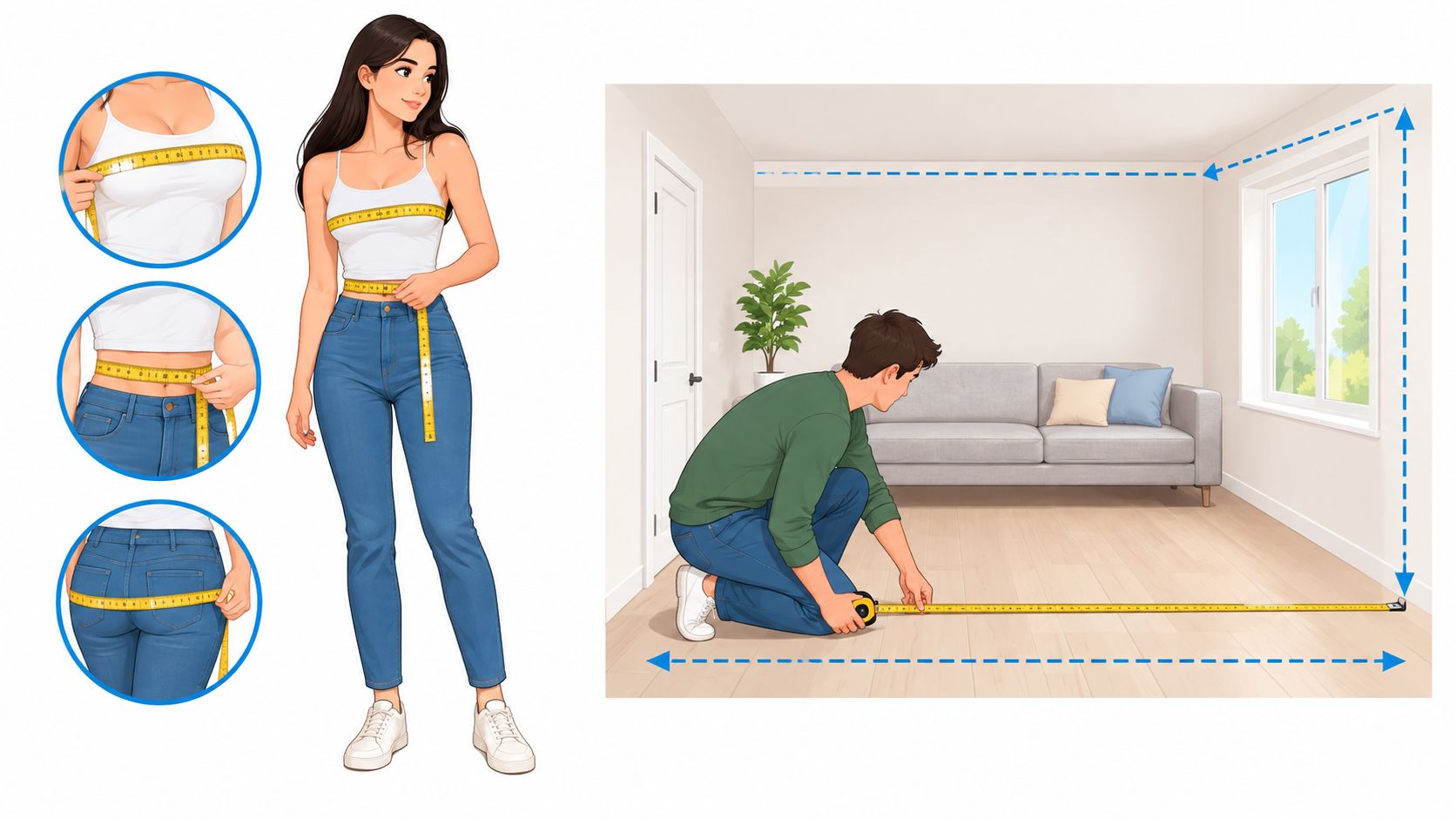
Most fit problems begin before the shopping trip. A tape measure and a few written notes can prevent a chair from feeling too deep, too short, too tall, or impossible to place.
Start with the person
Have the user sit on a firm surface with both feet flat and the knees close to a right angle. Record these measurements:
- Seat depth: Measure from the back of the hip or tailbone to the back of the knee. The finished chair should leave roughly 1 to 2 inches between the seat edge and the back of the knees, a fit guideline described in power lift chair sizing guidance. A seat that's too deep can press behind the knees and interfere with comfortable circulation. A seat that's too short can leave the user perched without enough thigh support.
- Seat height: Measure from the floor to the back of the knee while seated. This helps match the chair's seat height to the user's legs.
- Seat width: Measure across the widest part of the hips or backside while seated. The chair should support the body without squeezing or allowing excessive side-to-side movement.
- Leg and standing measurements: Note thigh length, the distance from hip to the back of the knee, and standing inseam when those measurements help clarify how the user transfers and reclines.
Feet should rest flat on the floor when seated, with the knees near a right angle. If the heels float, the chair may be too tall. If the knees rise sharply, the seat may be too low or the user may need a different size.
Then measure the room
Measure the wall behind the intended chair location, the width of nearby furniture gaps, and the open floor area in front. A standard lift recliner commonly needs 12 to 18 inches behind it for reclining, while wall-hugger designs may need only 3 to 5 inches, according to room-planning guidance for lift chairs. Leave enough space for the chair to lift without contacting a table, lamp, or wall.
Measure every part of the delivery route:
- Exterior and interior doorways
- Hallways and sharp turns
- Stair landings
- Elevator openings, where applicable
- The final chair footprint
Don't forget windowsills, low shelves, ceiling fixtures, and wall décor near the chair's reclining path. A photograph taken from the doorway can reveal obstacles that a flat floor plan misses. Families should bring the written measurements and room photos to the showroom, then use the lift chair dimensions guide to organize the information before testing chairs.
Comparing Lift Chair Styles and Mechanisms
The right lift chair must fit both the user's body and the room. A chair can feel comfortable in a showroom yet become impractical at home if its reclining path blocks a walkway or leaves too little space behind it. Choose the movement pattern first, then refine the upholstery and motor controls.
Upholstery shape and leg support
A full-chaise lift chair carries padding continuously from the seat through the footrest. It gives the legs one smooth surface and suits users who spend long periods reclined. A split-chaise has a visible seam or gap between the seat and footrest. That structure gives the lower legs a more defined position and may feel firmer.
The better choice depends on leg shape and support preference. Thinner legs may feel more comfortable with the enveloping padding of a full-chaise. Users with thicker legs, or anyone who prefers a clearer support point, may prefer a split-chaise. Test both positions in the showroom. Sit fully back, raise the footrest, and check that the calves are supported without pressure at the knees or heels.
Clearance and movement
A wall-hugger moves forward as it reclines, so it can sit closer to the wall. Standard two-position and three-position recliners usually need more room behind the back, but they can provide a deeper resting or napping position. The room's layout should settle this decision before fabric color or finish.
| Style | Rear Clearance Needed | Best For | Trade-off |
|---|---|---|---|
| Full-chaise | Based on the chair's mechanism | Continuous leg support and extended reclining | Can feel less structured beneath the legs |
| Split-chaise | Based on the chair's mechanism | Defined leg positioning and firmer support | The seam may be noticeable |
| Wall-hugger | As little as 3 to 5 inches, per lift-chair room guidance | Apartments and tight rooms | May have a different reclining path |
| Standard recliner | Often 12 to 18 inches | Deeper recline and open layouts | Requires more space behind the chair |
Use the actual chair's specifications for final clearance. Leave room for the lift cycle as well, so the chair does not strike a table, lamp, wall, or nearby person while rising.
Motor count and positioning
A single-motor chair moves the backrest and footrest together. It is straightforward and works well for someone who wants one familiar lounging position. A two-motor chair moves those sections independently, which helps users who read upright, rest with their legs raised, or need more precise positioning during recovery.
Our recommendation is practical: match the mechanism to the room, then choose the motor count according to the positions the user will use. More adjustment adds little value if the remote feels confusing or the chair cannot operate safely in its space.
Weight Capacity, Frames, and Motors That Last
Capacity is a durability decision, not a line to glance at after choosing fabric. The useful calculation is simple: add the user's weight to the items that routinely sit on the chair, such as a blanket, tablet, heating pad, or other personal items. Then round up to the next available capacity tier rather than choosing a chair that operates right at its limit.
Safety guidance also emphasizes staying within the chair's rated capacity. One guide warns that exceeding about 80% of maximum capacity can contribute to long-term damage to the wooden framework, scissor mechanism, and lift frame, as outlined in the FDA patient-lift safety guide. The specific chair rating still controls the decision, and the user should never exceed it.
Look underneath the upholstery
Fabric and leather affect appearance and care, but the frame and lift assembly determine whether the chair feels secure during repeated movement. Shoppers should ask about:
- Frame construction: Kiln-dried hardwood can offer a stable foundation when properly built.
- Lift reinforcement: Steel reinforcement around the scissor mechanism supports the moving load.
- Joint construction: Welded joints and properly secured connections deserve closer attention than vague claims about strength.
- Motor access: Serviceable components can matter if the chair eventually needs attention.
Single-motor designs keep operation straightforward, while two-motor systems provide independent back and footrest control. That flexibility can be useful for napping, reading, and therapeutic positioning, including a Trendelenburg position when the chair is specifically designed for it and the user has appropriate medical guidance.
A sturdy frame is part of the comfort. A chair that flexes, hesitates, or sounds strained during lifting won't inspire confidence, regardless of how soft the cushion feels.
Warranty language offers another useful signal. Coverage such as a lifetime warranty on the steel lift frame, seven or more years on mechanisms, or a five-year parts-and-labor warranty on the complete chair can indicate that the maker is prepared to stand behind more than the visible upholstery. Buyers should read what each warranty covers, who handles service, and whether labor is included.
Families can also review lift chair weight capacity before bringing measurements to a showroom.
| User + Items Weight | Recommended Capacity | Typical Frame Build |
|---|---|---|
| User's weight plus light personal items | Next capacity tier above the total | Standard reinforced frame |
| User's weight plus regular blankets and devices | A comfortably higher rated tier | Reinforced lift frame and stronger mechanism |
| User's weight approaches the chair rating | Heavy-duty option with added margin | Heavier frame and reinforced moving components |
Ordering, Delivery, and Setting Up at Home
A smooth delivery starts with a prepared route. Before shopping, measure the front door, interior doorways, hallway turns, stair landings, and the final location. A chair can fit the living room and still fail at the front door, so every narrow point matters.
A useful habit is photographing the room from the entrance and from the intended chair location. Those images can show a sales associate where a backrest may meet a wall, where a caregiver needs access, or where a nearby table needs to move. BILTRITE's in-store process gives families a chance to discuss those details before delivery rather than discovering them after the chair arrives.
Prepare the room
Clear rugs, baskets, lamps, and small tables from the delivery path. Protect fragile décor and identify the exact resting spot before the crew arrives. The delivery team should know whether the chair belongs in a living room, bedroom, senior-living space, or another room where the user will spend regular time.
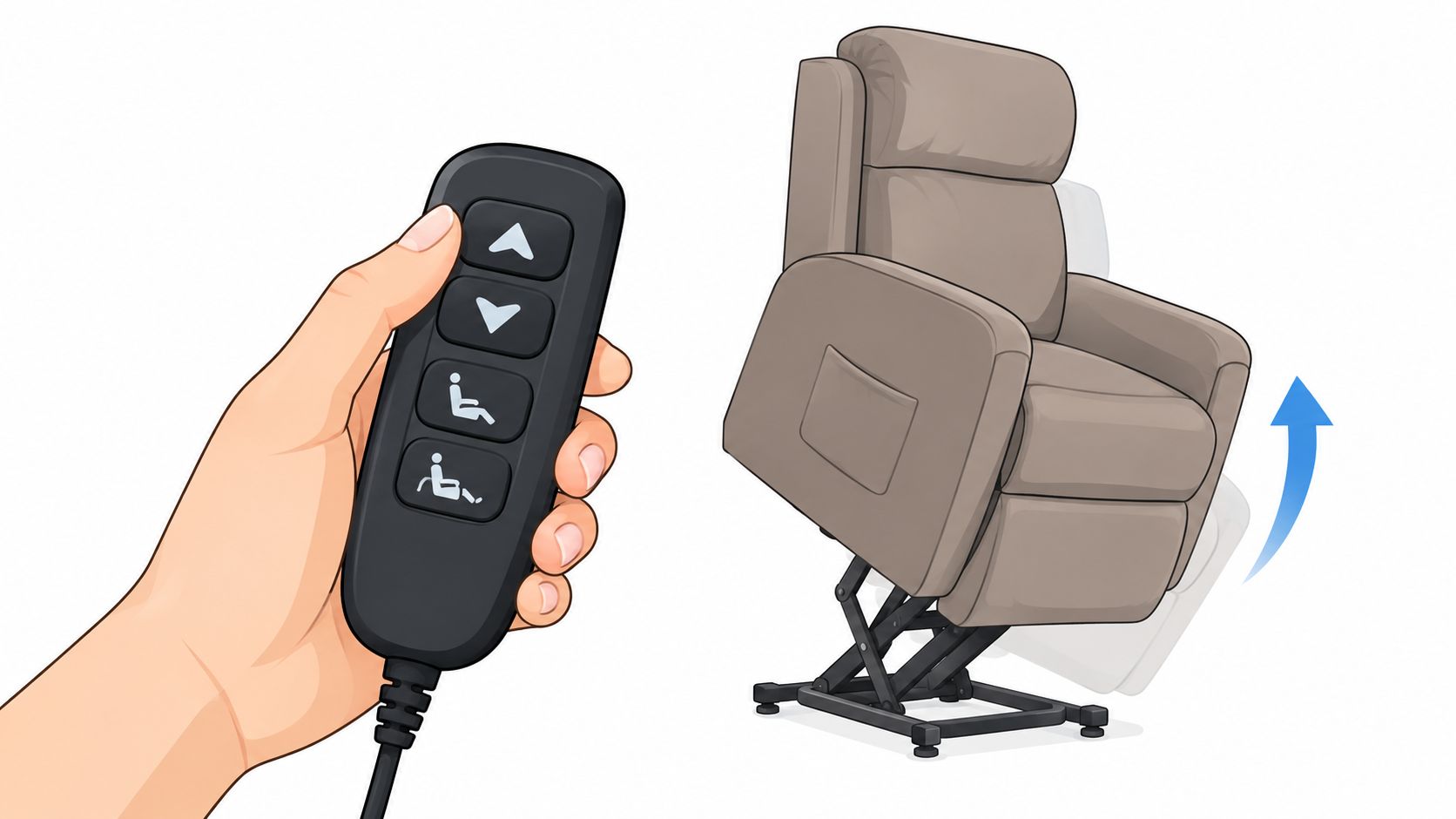
A wall-hugger model can sit closer to the wall because its base travels forward during recline. A standard model needs the rear clearance specified for its full movement. Keep space beside the chair as well, especially when a caregiver may need to approach during a transfer.
BILTRITE's white-glove delivery service is designed around the in-home experience. Families should confirm the delivery details, room placement, assembly expectations, and any access concerns before the scheduled day.
Test the chair before the crew leaves
The final inspection should be hands-on:
- Run the full lift cycle: Confirm that the chair rises smoothly and returns to sitting.
- Test the hand control: Each button should respond without delay or confusion.
- Watch the scissor movement: The mechanism should move evenly without hesitation.
- Inspect the upholstery: Check fabric or leather for transit marks, snags, or damage.
- Confirm placement: Make sure the chair has its required clearance and doesn't strike nearby objects.
A few minutes of testing can prevent days of uncertainty. The user should also practice the lift control while seated, with a caregiver nearby if extra support is needed.
Daily Use, Safety Habits, and Troubleshooting
A lift chair works best when everyone in the household treats it as a powered mobility aid, not a toy or ordinary oversized recliner. The user should sit fully back, keep feet and hands clear of moving parts, and operate the control from a stable position.
Two-button remotes generally keep operation simple, with one control for lifting and reclining in a coordinated way. Four-button remotes may separate more functions, such as the backrest and footrest, which can help users who want more positioning choices. Favorite positions are useful only when the user can operate them confidently, so a complicated remote isn't an advantage if it creates uncertainty.
Keep pets, toys, blankets, and curious toddlers away from the lift mechanism while it moves. The medical necessity standard for seat-lift mechanisms emphasizes that the mechanism should operate smoothly, remain controllable by the user, and effectively assist standing and sitting without other assistance.
Keep the chair clean and observed
For fabric upholstery, blot spills promptly instead of rubbing them deeper into the cushion. Vacuum regularly with a soft brush attachment. Leather needs gentle cleaning and conditioning, while harsh chemical products can dry stitching and damage the finish.
Once a month, check the chair when it's quiet:
- Listen for changes: Grinding, clicking, or sudden strain deserves attention.
- Watch the motion: The scissor mechanism should travel without hesitation or leaning.
- Inspect the cord: Fraying, crushing, or loose connections require service.
- Check battery backup: If the chair has backup power, confirm that it still holds a charge.
The battery-backup lift chair information can help families understand why emergency readiness matters.
Know when to stop troubleshooting
A chair that won't lift may have a disconnected power supply, a remote that needs resetting, or a control that needs re-synchronizing. Those basic checks are reasonable when the user can perform them safely and the instructions permit it.
A chair stuck halfway, making one-sided clicking sounds, smelling hot, or moving unevenly should be taken out of use and referred to qualified service. Nobody should reach into the scissor mechanism or attempt an improvised repair. If a device requires more than one person to operate, the FDA safety guidance warns against solo operation.
Finding the Right Seat Lift at BILTRITE
The purchase decision becomes much simpler when the information arrives in the right order. The user's measurements establish the chair size. The room measurements determine whether a standard or wall-hugger layout will work. Capacity confirms that the frame and mechanism suit the person's everyday use.
Families should bring the following to the Greenfield showroom:
- Body measurements: Seat depth, seat height, width, and leg measurements.
- Room details: Wall clearance, doorway widths, hallway turns, and final placement.
- Photos: A doorway view and a picture of the intended chair location.
- Comfort references: A favorite throw pillow can help test scale and support.
Try before deciding
BILTRITE is a fourth-generation, family-owned business serving Metro Milwaukee since 1928. The sales associates bring more than 400 years of combined experience, and their role is to listen to the mobility challenge, narrow the choices, and let the customer test the chair without pressure.
The in-store process should include sitting fully back, checking foot placement, testing the lift from a natural seated position, and trying the recline that matches daily routines. A user who reads, naps, watches television, or spends extended periods in the chair may need a different balance of cushion firmness, leg support, and motor control than someone who uses the lift only for transfers.
BILTRITE Furniture-Leather-Mattresses offers lift chairs alongside small-scale furniture for apartments and senior-living spaces, heavy-duty furniture, USA-made and Amish-made solid wood pieces, and a mattress department with over 60 models. Families can ask about fabric swatches, leather or performance upholstery options, delivery timing, and whether a chair will come apart for a difficult delivery route.
A showroom visit is also the right time to ask about total ownership cost. Medicare generally covers only the seat-lift mechanism, not the chair itself, and typically pays 80% of the approved amount after the deductible, according to Medicare coverage information for power lift chairs. That distinction can prevent an unpleasant surprise when planning the household budget.
The goal isn't to choose the chair with the longest feature list. It's to find a chair that fits the user's body, clears the room, operates easily, and feels steady enough to use every day.
BILTRITE Furniture-Leather-Mattresses offers lift chairs, supportive senior-living furniture, small-scale and heavy-duty options, and personal showroom guidance in Greenfield. Bring the measurements, room photos, and the person who'll use the chair to BILTRITE Furniture-Leather-Mattresses, and come test the lift motion with the local team.