Stain Resistant Furniture Guide for Busy Homes


A cup of juice tips during a busy Milwaukee weeknight. Before anyone can grab a towel, the sofa has a spreading spot, the dog has tracked in mud, and somebody's asking whether the cushion cover can be cleaned. That's everyday furniture life, not a furniture failure.
Stain resistant furniture can make those moments easier, but it isn't magic. The result depends on the fabric's fiber, yarn, weave, backing, protective finish, and cleaning routine. A good choice gives a household more time to handle spills and a better chance of keeping the room comfortable for years.
BILTRITE Furniture has helped Metro Milwaukee families make those decisions since 1928. As a fourth-generation, family-owned showroom, we've seen plenty of homes with kids, pets, tight stairways, busy schedules, and different ideas of what “easy care” should mean. The right question isn't whether a sofa resists stains. It's whether the whole piece matches the way a household lives.
Table of Contents
- Introduction to Stain Resistant Furniture for Real Life
- How Stain Resistance Really Works
- Comparing Fabrics and Treatments That Resist Stains
- What Most Guides Miss About Performance and Safety
- Choosing Stain Resistant Furniture for Your Household
- Cleaning and Maintenance That Keeps Protection Working
- Shop Smart and See It in Person at BILTRITE
Introduction to Stain Resistant Furniture for Real Life
A stain-resistant sofa earns its keep during ordinary moments. A child eats a snack in the living room, a guest sets down a coffee mug, or a pet jumps up after a wet walk. Those spills may still need attention, but a fabric that slows absorption can give someone time to blot instead of watching liquid disappear into the cushion.
That distinction matters. Stain resistance usually means easier cleanup, not total invulnerability. Oils, ink, colored foods, and delayed cleanup can still create trouble. Repeated rubbing can also wear a fabric even when its surface handles spills well.
The market's size shows how central performance materials have become. One outlook estimates the global stain-resistant fabric market at USD 15.2 billion in 2026, with a projection of USD 29.8 billion by 2036, roughly 96% growth over that decade at a 7.0% CAGR. The same outlook projects upholstery at 44% of the market in 2026, placing stain-resistant material squarely in everyday furniture applications rather than a specialty corner.
A separate estimate places the market at USD 12.56 billion in 2022 and projects USD 68.14 billion by 2032, a more than fivefold increase at an 18.42% CAGR. That source identifies North America as the fastest-growing region during its forecast period, which helps explain why performance upholstery matters to buyers in established furniture markets.
The practical takeaway: stain resistance should support comfortable living, not dictate every decision.
This guide helps shoppers understand how protection works, compare common materials, spot chemistry and durability tradeoffs, choose for a specific household, and care for upholstery without making cleanup harder. It also explains why seeing and touching furniture in a showroom still matters. Texture, cushion support, scale, color, and construction tell part of the story that a product label can't.
How Stain Resistance Really Works
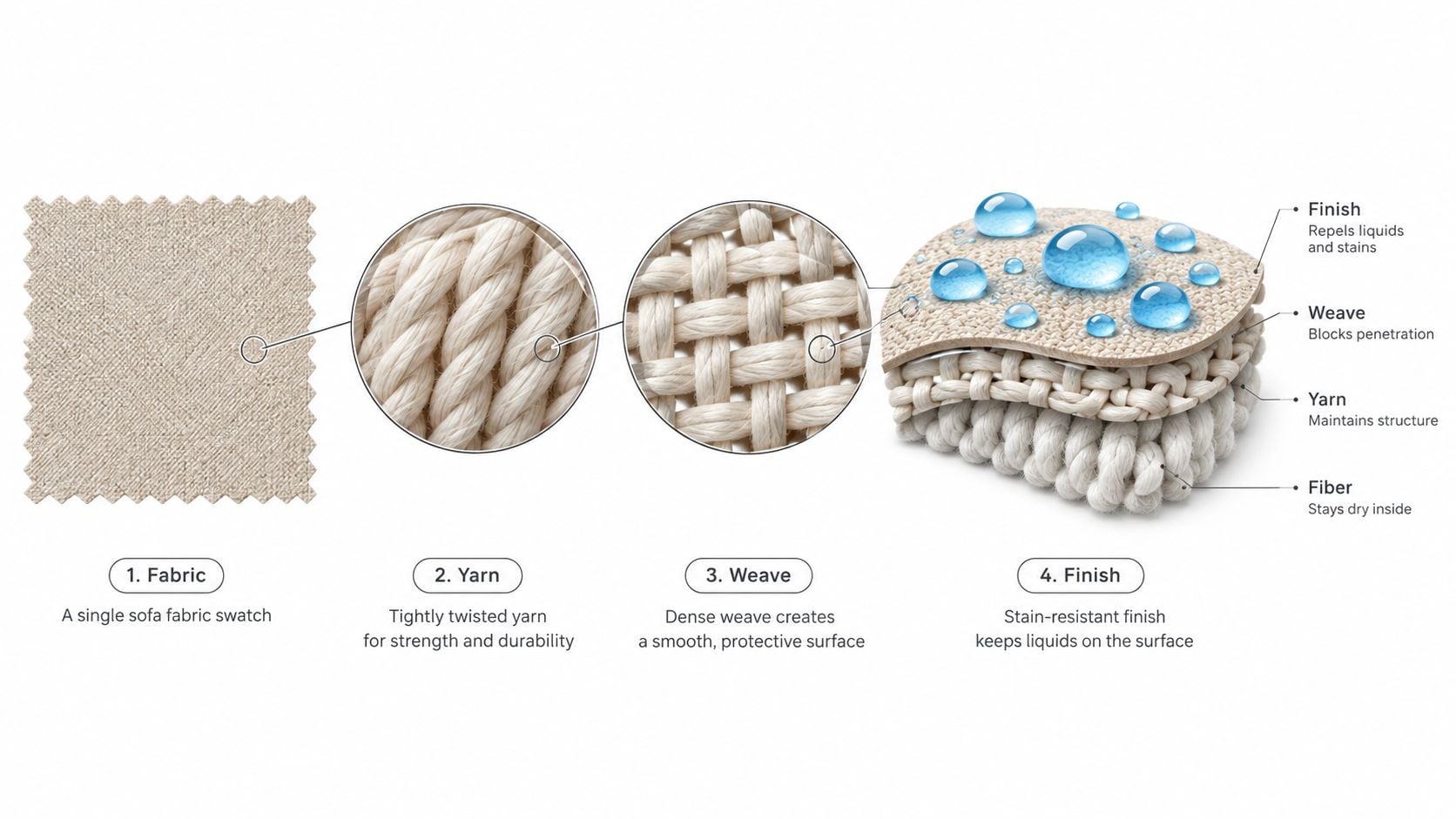
Stain resistance works as a system. Start with the fiber, the basic material that makes up the fabric. Some fibers naturally hold less moisture or are easier to clean, while others depend more heavily on a finish.
Next comes the yarn. Fibers are formed into yarn, and the yarn's thickness, twist, and arrangement affect how much space a spill can enter. Then comes the weave, which controls the fabric's surface texture and openness. A tighter weave can give crumbs, claws, and liquids fewer easy pathways.
Finally, a manufacturer may add a protective finish or backing. A topical finish acts a little like a raincoat. It can help a droplet sit on the surface long enough for someone to blot it, but a raincoat still needs strong fabric underneath. A weak structure can wear, snag, or lose its usefulness even if the surface initially repels liquid.
Four questions to ask about the fabric
What is built into the fiber? Resistant fibers carry some performance through the material itself, rather than relying only on a surface application.
How is the yarn constructed? Yarn structure affects texture, snagging, and the way liquids move through the upholstery.
Is the weave tight or open? A tight weave often supports easier daily maintenance, while a highly textured or open construction may need more careful use.
What does the finish or backing do? A finish may help with spills, but the buyer should ask whether it also affects hand feel, cleaning instructions, or long-term wear.
Stain protection is only one layer of performance. Fiber, construction, and finish have to work together.
Cleaning codes translate some of that construction into household instructions. A W code means spot cleaning with water-based shampoo or foam upholstery cleaner. An S code means using a water-free dry-cleaning solvent, with no water. Industry guidance also recommends pretesting an inconspicuous area, avoiding over-wetting, and avoiding solvents on water-based cleanable fabrics (upholstery cleaning standards and codes).
Shoppers can find more detail about how protective treatments fit into upholstery care in BILTRITE's guide to protective coatings for furniture. The useful showroom question is simple: what protects this fabric, how durable is its construction, and what does the care label allow?
Comparing Fabrics and Treatments That Resist Stains
Different materials solve different household problems. Performance fabrics often focus on spill response and cleanability. Microfiber tends to offer a smooth, dense surface that can feel comfortable in casual rooms. Leather usually allows surface spills to be wiped away quickly, though it still needs appropriate care and can show scratches or color changes.
Solution-dyed acrylic deserves attention for households that want easy cleaning and strong color performance. Furniture-industry guidance describes the color as built into the fiber instead of applied only to the surface. The same guidance reports bleach colorfastness of 5.0 out of 5.0, while many coated or printed fabrics rate only 1–2 (solution-dyed acrylic and upholstery hygiene guidance).
Protected solid wood belongs in the conversation too. A dining table, arm, or occasional table doesn't have upholstery fibers to absorb a spill, but its finish still determines how quickly a liquid can be wiped away and whether moisture leaves a mark. Wood needs its own care instructions, especially around standing water and harsh cleaners.
Stain Resistant Options Compared by Performance and Upkeep
| Material or Treatment | Stain Resistance | Wear and Feel | Best For and Upkeep |
|---|---|---|---|
| Performance fabric | Often designed to slow liquid absorption and simplify spot cleaning | Available in different textures, from smooth to soft and woven | Busy living rooms; follow the exact cleaning code |
| Solution-dyed acrylic | Strong color performance and practical cleanability, including the bleach-colorfastness result described above | Can feel soft while supporting active use | Family rooms and spaces needing regular sanitizing; use approved cleaners |
| Microfiber | Dense surface can make crumbs and some spills easier to manage | Smooth, soft, and casual | Homes wanting a comfortable everyday surface; avoid aggressive rubbing |
| Leather | Surface spills can often be wiped promptly before they soak in | Supple, structured, or textured depending on the hide and finish | Homes wanting wipeable seating; condition and clean as directed |
| Protected solid wood | Finished surfaces can resist everyday drips when cleaned promptly | Firm, tactile, and long-lasting when well constructed | Dining and occasional furniture; use wood-specific care |
| Topical protective treatment | May add a barrier, but performance depends on the underlying textile | Can preserve the original feel when properly selected, though treatments may have tradeoffs | Buyers comparing finishes; ask about chemistry, care, and wear testing |
Abrasion testing helps separate spill performance from everyday wear. A technical specification sheet reports Class 4–5 stain resistance out of 5 and at least 50,000 Wyzenbeek double rubs for a particular performance fabric using ASTM D4157 cotton duck (technical performance specifications). Those are separate measurements. A fabric can handle spills well but still need a strong construction to stand up to sitting, sliding, and repeated friction.
A formal healthcare upholstery test illustrates why vague claims deserve follow-up. Under CFFA Test Method 142, a passing result is recorded as “No stain (4)” after a 24-hour stain-resistance evaluation (healthcare upholstery performance standard). A shopper doesn't need to memorize test methods, but asking what was tested and how the score was assigned can reveal more than a broad “easy clean” label.
For a practical starting point, BILTRITE's performance fabric furniture guide can help shoppers narrow the field. The final choice should balance stain response, abrasion, comfort, appearance, and the household's willingness to follow care instructions.
What Most Guides Miss About Performance and Safety
A family sofa faces more than spilled juice. Its upholstery must respond to stains, daily friction, cleaning, and the chemistry used to create that protection. Stain resistant does not automatically mean safer, longer-lasting, or right for every household.
PFAS is one reason shoppers should ask specific questions in 2026. By January 1, 2026, six U.S. states had active PFAS-related restrictions covering upholstered furniture and textile articles, with additional bans and reporting requirements rolling out through 2027–2032 (PFAS-free stain protection options and regulatory context). “Is it stain resistant?” leaves too much unsaid.
Ask four follow-up questions:
- Chemistry: Does the fabric use PFAS, or is a PFAS-free option available?
- Construction: Do the fiber and weave provide part of the protection?
- Disclosure: Does the retailer or manufacturer explain the finish clearly?
- Care: How does performance change after repeated cleaning?
The finish is only one part of the result. Independent upholstery research found that PFAS-finished fabrics generally produced only small stain-performance improvements over unfinished fabrics, with differences concentrated near the upper end of the test scale (peer-reviewed upholstery stain-performance research). That finding helps put dramatic spill demonstrations in context. A fabric's fiber, weave, and finish work together, and each can affect feel, appearance, cleaning, and wear.
Durability needs equal attention
A treatment may help liquid release while reducing abrasion resistance. Research on functional finishing in upholstery found this possible (research on upholstery functional finishing). The finding does not mean every treated fabric wears poorly. It means spill performance and everyday wear deserve separate checks.
A durable sofa needs more than a spill demonstration. It needs a fabric construction that can handle the household's daily friction.
PFAS-free approaches may use resistant fibers, tighter weaves, or alternative finishes. The most balanced choice often combines these features instead of relying on a single spray-on barrier. BILTRITE's fabric selection guide gives shoppers a plain-language starting point for comparing materials. At the showroom, ask about feel, cleaning, testing, and expected use, then consider how those details fit Milwaukee family life and the lasting strength of USA and Amish solid-wood furniture.
Choosing Stain Resistant Furniture for Your Household
A household with toddlers needs something different from a quiet reading room. A pet owner may care more about snagging and hair than a dining-room host who worries about drink spills. The best choice begins with the room's actual job.

Families with kids
A tightly woven performance fabric in a forgiving color can make a family room easier to live with. Medium tones and subtle texture may disguise small marks between cleanups, while removable cushions can make access simpler. The fabric still needs to match its cleaning code, and the frame and cushion support matter just as much as the surface.
BILTRITE's kid-friendly and pet-friendly furniture guide gives families a practical way to think beyond the fabric sample. A sturdy sofa with appropriate scale and supportive seating may serve a family better than a delicate piece with a dramatic finish.
Pet owners
Pet households should inspect the weave closely. Smooth, dense upholstery can reduce places for claws to catch, while heavily open textures may invite snagging. A color that blends with the pet's coat can reduce the visual impact of hair, but regular vacuuming remains part of ownership.
Leather may suit a home that values wipeable surfaces, while microfiber or a performance textile may offer a softer, more fabric-like feel. The household should also ask whether the cushions, seams, and frame can handle pets jumping up and down.
Seniors and caregivers
Support and access come first. Lift chairs, firm seating, stable arms, and heavy-duty construction can matter more than the strongest stain claim. A cleanable performance cover can add convenience, but comfort, seat height, control placement, and ease of standing deserve hands-on testing.
BILTRITE carries senior living furniture, lift chairs, and heavy-duty furniture and mattresses. A showroom visit lets caregivers test movement and support instead of guessing from measurements alone.
Apartment and small-space dwellers
Small-scale furniture helps preserve walking space without forcing a room to feel temporary. A come-apart sofa or sectional can also solve narrow doorways, stairwells, and tight turns. Shoppers should measure the entry path, not just the room.
American-made and Amish-made solid-wood pieces can add durable construction where a home needs furniture that earns its footprint. BILTRITE offers those options alongside custom choices in fabric, leather, wood, finish, and hardware.
A short showroom checklist helps keep the decision focused:
- Room: Where will the piece go, and who uses it most?
- Spills: Are the main risks drinks, food, muddy paws, or everyday dust?
- Wear: Will people lounge, nap, climb, or sit in the same spot daily?
- Care: Does the cleaning code fit the household's routine?
- Fit: Can the furniture pass through every doorway and turn?
- Feel: Does the fabric remain comfortable after a few minutes of sitting?
Cleaning and Maintenance That Keeps Protection Working
Stain resistance works best when spills receive quick, gentle attention. Delayed cleanup gives liquids more time to move into the textile, while aggressive scrubbing can spread the mark or rough up the fibers.
A calm response to a fresh spill
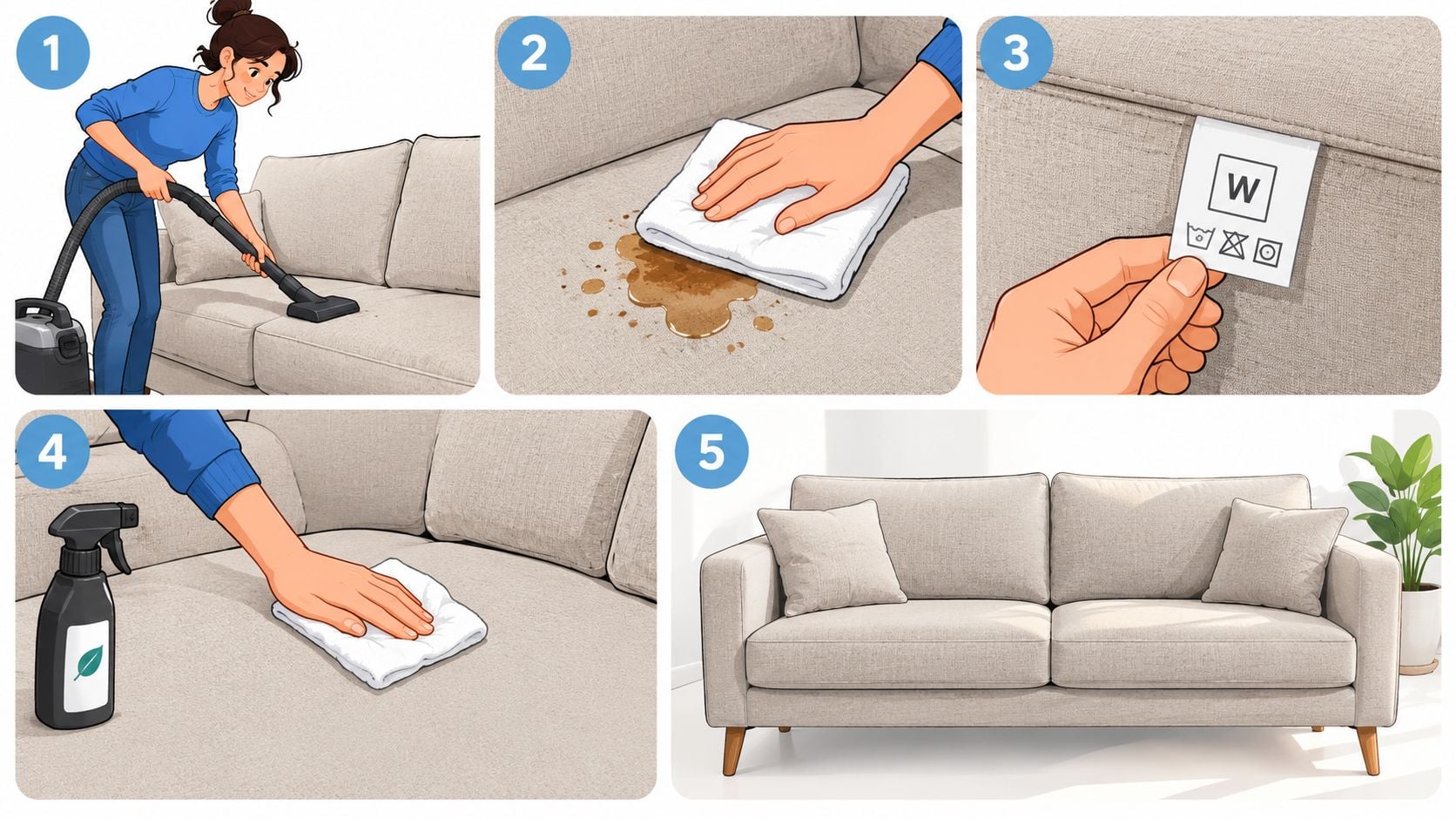
- Lift solids first. Use a spoon or dull edge rather than pushing food deeper into the upholstery.
- Blot liquid. Press with a clean, absorbent cloth. Don't rub back and forth.
- Check the code. Find the cleaning label or care instructions before adding any product.
- Pretest. Test the cleaner on a small, hidden area and allow it to dry.
- Use less moisture. Over-wetting can create rings, slow drying, or move the stain deeper.
Water spotting is a real upholstery concern, not a made-up marketing worry. EN ISO 105-E16 specifies a test for color fastness to water spotting on upholstery fabrics, assessing how water droplets affect color and staining (water-spotting test standard). That's why controlled moisture and even blotting matter.
Follow the cleaning code
For W fabrics, use only a water-based shampoo or foam upholstery cleaner for spot cleaning. Apply the smallest practical amount, work carefully from the outside of the spot toward the center, and avoid soaking the cushion.
For S fabrics, use a water-free dry-cleaning solvent and no water. Mixing the wrong method with the wrong fabric can leave rings, change texture, or damage the finish. The label should always take priority over a general internet tip.
Daily care can stay simple:
- Vacuum gently: Remove crumbs and pet hair before they work into the weave.
- Rotate cushions: Follow the furniture's instructions to distribute use.
- Treat spills early: Quick blotting is kinder than repeated heavy cleaning.
- Skip harsh experiments: Household chemicals can change color and hand feel.
- Call for help: Persistent, oily, large, or unknown stains may need professional cleaning.
BILTRITE's upholstery cleaning tips can help households keep a routine that matches the fabric. Protection lasts longer when the cleaning method respects the material instead of fighting it.
Shop Smart and See It in Person at BILTRITE
A fabric sample can show color and texture, but a showroom lets shoppers sit, touch, compare, and ask questions in real time. BILTRITE Furniture-Leather-Mattresses is a fourth-generation, family-owned business serving Metro Milwaukee since 1928, with affordable, better-quality furniture that emphasizes USA-made, Amish-made, and solid-wood pieces.
The Greenfield showroom includes small-scale furniture for apartments and condos, heavy-duty options for active households, lift chairs, come-apart sofas and sectionals, and custom choices in fabric, leather, wood, finish, and hardware. The mattress department includes over 60 models, with specialists available to help shoppers compare comfort and support.
The sales associates bring over 400 years of combined experience. Their role is to help families understand construction, fabric care, room scale, and comfort without pressure. Since BILTRITE doesn't sell online, the in-store experience is central to the process.
The showroom is located at 5430 West Layton Avenue in Greenfield, Wisconsin. It's closed on Sundays and Mondays so the family-owned team can protect family time, a choice that reflects BILTRITE's local, community-first values.
BILTRITE Furniture-Leather-Mattresses offers performance upholstery, USA-made and Amish-made solid-wood furniture, small-scale and heavy-duty pieces, lift chairs, and a large mattress selection for real household needs. Visit BILTRITE Furniture-Leather-Mattresses in Greenfield to feel the fabrics, test the furniture, and get friendly guidance for a stain-resistant choice that fits everyday life.