Your Friendly Guide to Heavy Duty Industrial Chairs


A lot of people start looking for heavy duty industrial chairs after a small moment of panic. A seat creaks. A wheel sticks. Someone in the family lowers themselves carefully and everyone inwardly hopes the chair makes it through dinner, paperwork, or one more evening at the kitchen desk. That's usually when “heavy duty” stops sounding like an industrial phrase and starts sounding like peace of mind.
In a busy home, a chair doesn't just sit there looking nice. It gets leaned back in, scooted across the floor, used as a work chair, a homework chair, a game-night chair, and sometimes even a step stool when nobody's supposed to be doing that. Heavy duty industrial chairs make more sense in everyday life than many shoppers realize, especially for big and tall adults, active families, and seniors who need a seat that feels steady every single time.
Table of Contents
- Why Your Furniture Should Work as Hard as You Do
- The Anatomy of a Genuinely Tough Chair
- Decoding Specs and Safety Standards
- Heavy Duty Chairs from the Workshop to the Living Room
- Making Your Investment Last with Simple Care
- Find Your Forever Chair at BILTRITE
Why Your Furniture Should Work as Hard as You Do
Nobody forgets the sound of a chair that's about to give up. It starts with a wobble, then a creak, then that split-second calculation about whether to sit down gently or find another seat. For many households, that's often a starting point for learning about heavy duty industrial chairs.
The phrase can sound a little intimidating at first. It brings to mind factory floors, control rooms, and equipment stations. But the main idea is simple. A heavy duty chair is built for repeated use, real movement, and long-term reliability instead of just looking sturdy in a photo.
That difference matters at home.
A parent working at the table for hours needs support that doesn't flatten out by the end of the week. A taller family member needs a chair that feels planted, not tippy. An older adult often needs a seat that inspires confidence the moment they reach for the armrest. Those aren't unusual situations. They're daily life.
Furniture should remove worry, not add to it.
This built-to-last mindset lines up with a long Milwaukee tradition. BILTRITE Furniture was founded in 1928 by Irwin Kerns and his wife Frieda Kerns as an upholstery shop in Milwaukee, making it a 4th-generation family-owned business serving Metro Milwaukee for nearly a century, as noted in this history of the Kerns family business. That kind of family-rooted background tends to shape how furniture gets talked about. Less hype, more usefulness.
For shoppers who already know they need sturdier seating across the whole room, this guide to heavy duty living room furniture helps connect the dots. A reliable chair is rarely a standalone issue. It's usually part of a bigger goal to make the home feel easier, safer, and more comfortable.
Why “heavy duty” gets misunderstood
Many people assume heavy duty means one thing only. Higher weight capacity.
That's part of it, but it's not the whole picture. A chair can sound impressive on paper and still fall short if the base twists, the seat foam collapses, or the moving parts wear out too quickly. Strength in furniture works more like a team effort. Frame, base, seat, movement, and construction all have to pull together.
A tough chair earns trust in small moments. Sitting down. Shifting position. Rolling closer to a desk. Standing back up. That's why heavy duty industrial chairs deserve a closer look from regular households, not just workplaces.
The Anatomy of a Genuinely Tough Chair
A strong chair has “good bones.” That phrase works because the hidden parts do most of the real work. Upholstery can catch the eye, but durability starts underneath.
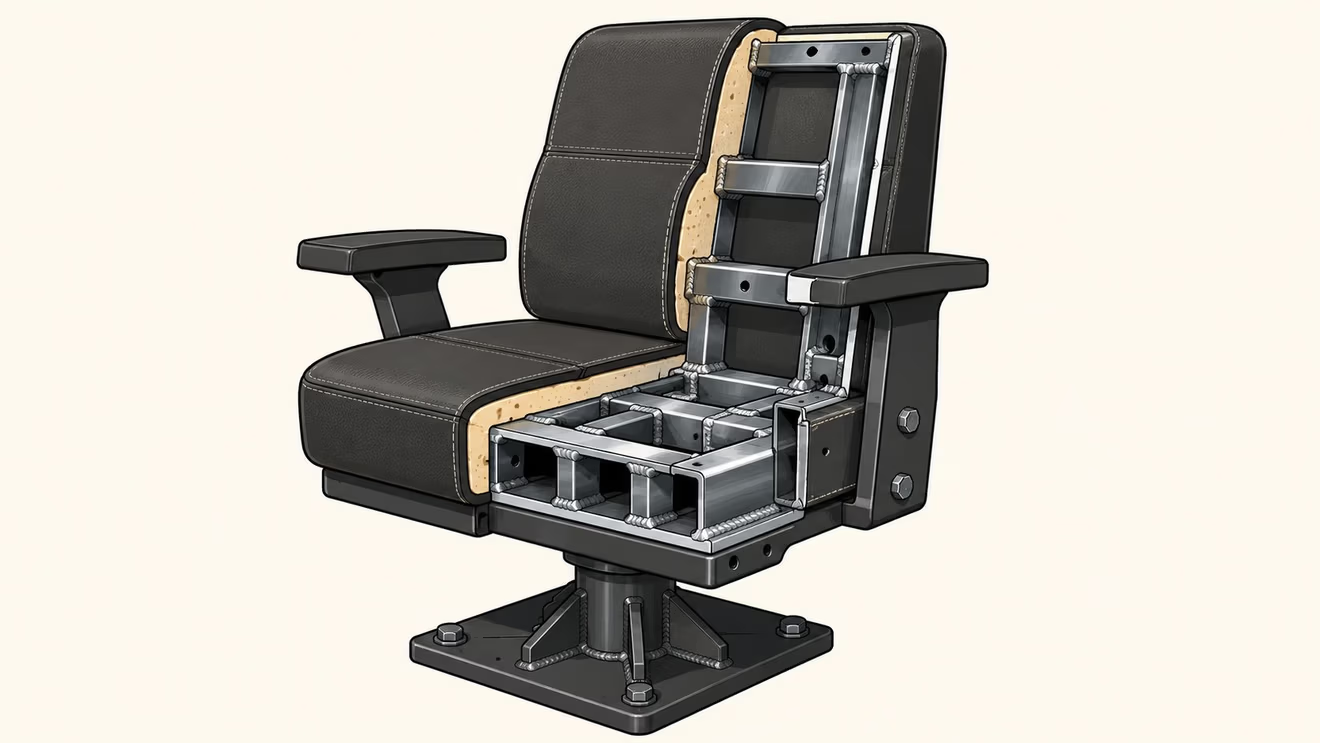
A helpful way to think about it is to compare a chair to a vehicle. Fabric is the paint color. The frame and base are the chassis. If the chassis is weak, the rest doesn't matter much.
Start with the base
The base is where stability begins. On swivel chairs, a five-point base usually gives the best balance because it spreads weight more evenly and helps the chair stay grounded during everyday movement. If the base looks thin, lightweight, or overly decorative, that's usually a sign to inspect more closely.
Shoppers often focus on the seat and back because those are easy to see. The smarter move is to glance downward first.
A tough chair often includes:
- A substantial base: Reinforced metal parts tend to hold up better under repeated movement than flimsy alternatives.
- Solid connections: Where the seat meets the mechanism, the hardware should look and feel secure, not delicate.
- A stable footprint: The chair shouldn't seem eager to tip when someone shifts or reaches.
Practical rule: If the chair looks strong but feels fussy or unstable when someone sits and moves naturally, it probably isn't as heavy duty as it appears.
Look under the cushion
Seat comfort confuses a lot of shoppers because soft and supportive aren't the same thing. A seat can feel plush for two minutes and still wear out fast. Heavy duty industrial chairs need cushioning that keeps its shape under repeated use.
That's where dense foam and strong support layers matter. If the seat “bottoms out,” the user starts feeling the hard structure underneath, and comfort drops quickly. This is one of the first places low-quality seating gives itself away.
The frame matters just as much. In office-style heavy duty chairs, that often means reinforced internal structure. In wood seating, joinery becomes the big clue. Shoppers curious about stronger wood construction can learn a lot from this explanation of the mortise and tenon joint, one of the classic signs that a wood chair was built with longevity in mind.
A quick comparison helps:
| Chair part | What shoppers notice | What actually matters |
|---|---|---|
| Seat | Softness on first sit | Whether it keeps support over time |
| Back | Shape and style | Whether it stays firm and aligned |
| Base | Color or finish | Stability during movement |
| Frame | Often hidden | Long-term strength |
A tough chair doesn't need to look bulky. It just needs every part to do its job without complaint.
Decoding Specs and Safety Standards
Specs scare people off because they sound technical. They don't need to. Most chair specs answer one basic question. Will this seat stay safe and comfortable through real-life use?
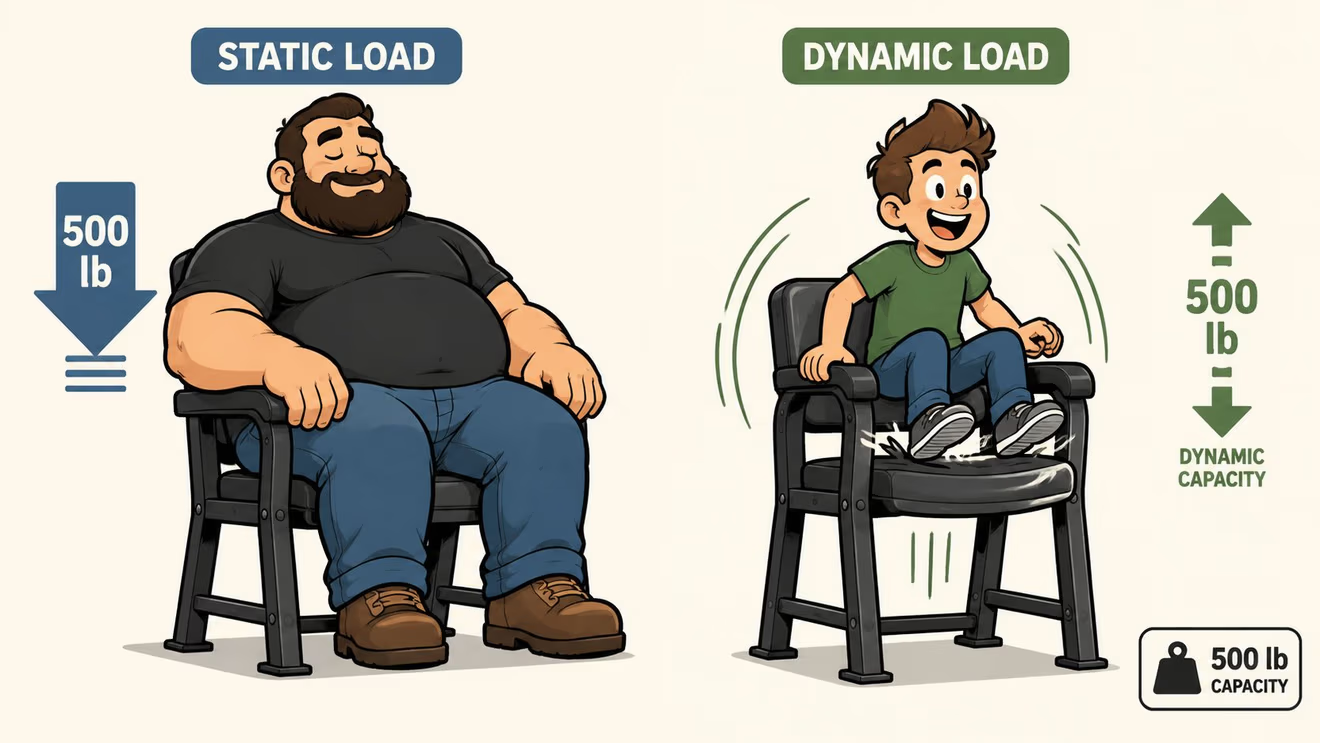
Static weight is not the whole story
The easiest spec to spot is weight capacity. That number matters, but people don't use chairs like statues. They lean, twist, scoot, adjust, and sit down with force at the end of a long day. That movement creates a very different kind of stress than simple, motionless weight.
That's why dynamic load is such an important idea. Dynamic load means the chair is dealing with real use, not just a person sitting still in the center of the seat.
One standard speaks directly to this issue. ISO 7173:2023 seating tests specify cyclic methods for strength and durability across seating structures, simulating repeated real-world loads rather than static weight alone. For households where a chair gets used day after day, that distinction matters.
What the key specs actually mean
Some terms are worth learning because they tell shoppers where the chair's strength really comes from. According to this explanation of dynamic-load chair durability and BIFMA X5.1 compliance, industrial-grade durability calls for a Class 4 gas lift cylinder rated for at least 100,000 cycles, reinforced steel or polished aluminum five-point bases, high-density molded foam seats, and BIFMA X5.1 compliance, which certifies cyclic endurance beyond static weight limits and supports safety for users up to 500+ pounds.
That's a mouthful, so here it is in plain English:
- Class 4 gas lift: The height-adjusting column is built for repeated up-and-down use.
- BIFMA X5.1 compliance: The chair has been evaluated for more than a simple stand-still load.
- High-density molded foam: The cushion is made to resist flattening.
- Reinforced five-point base: The chair has a stronger platform during rolling, swiveling, and leaning.
For shoppers comparing sizes, this guide on standard chair width can help make the spec sheet more practical. Width affects comfort, posture, elbow room, and whether the chair fits the person using it.
A heavy duty chair should answer two questions at once. Can it hold the user, and can it handle the user's movement over time?
A final note on market context helps explain why these chairs keep showing up in more buying conversations. The global office chairs market was valued at USD 18.25 billion in 2025 and is projected to reach USD 28.49 billion by 2034, with Asia Pacific holding 44.89% market share in 2025. Mesh also accounted for the largest material share at 37.68% in 2026, according to this office chairs market analysis. That doesn't mean every home needs a mesh industrial chair. It does show that durable, comfort-focused seating is no small niche.
Heavy Duty Chairs from the Workshop to the Living Room
The word “industrial” makes many shoppers think of warehouses and machine areas first. That's fair. Heavy duty industrial chairs were shaped by places where seating gets pushed hard. The surprise is how well that same logic fits normal home routines.

A home office is a simple example. If someone spends large parts of the day answering emails, paying bills, sewing, gaming, or helping kids with homework, that chair is doing regular-duty work even if it lives beside family photos instead of machinery. A sturdy seat starts to feel less like a luxury and more like basic equipment.
Where home life gets rough on chairs
Home use is unpredictable. That's the challenge.
One person sits carefully. Another drops into the chair sideways. Kids spin. Guests perch on the edge. A senior uses the arm to help stand up. A larger adult needs the frame to feel planted from the first sit. The room may be a dining nook one day and a work zone the next.
Heavy duty chairs make sense in several home situations:
- For big and tall users: The chair needs more than room. It needs steadiness and support.
- For active families: Frequent use exposes weak joints and flattened cushions fast.
- For seniors: Confidence matters. A seat that feels secure can make daily routines easier.
- For hobby spaces: Craft rooms, workshops, and home offices often involve long sitting sessions and repeated movement.
Many Milwaukee-area shoppers also need furniture that works in tighter homes, condos, or older layouts. A chair may need to fit through a narrow doorway, tuck beneath a desk, or sit comfortably in a compact office corner. That's why a well-built American-made desk chair can be such a practical option. Strength doesn't have to mean oversized.
Why constant use matters
One overlooked issue in chair shopping is continuous duty cycle. Most marketing puts the spotlight on maximum weight capacity, but that leaves out a big question. How does the chair perform when it's used heavily and often?
That gap shows up clearly in the industry. Most content for heavy-duty industrial chairs focuses on weight limits while ignoring continuous duty cycle data, and newer buying conversations increasingly prioritize “Intensive-Use” seating with 24/7 ratings over static capacity alone, as noted on this intensive-use seating page.
That point translates neatly to home life. A family may not run a control room, but a chair that gets used from breakfast through bedtime is dealing with wear that looks a lot like continuous duty. The lesson is simple. A chair shouldn't just survive a user's size. It should also survive the household's habits.
Making Your Investment Last with Simple Care
A heavy duty chair doesn't need fussy maintenance. It just needs a little attention before small issues turn into expensive ones. Most care comes down to quick checkups and sensible cleaning.
A short care routine that works
A simple routine keeps a chair feeling solid.
- Check hardware: Look over screws, bolts, and arms now and then. Moving parts can loosen gradually with normal use.
- Listen for changes: New squeaks, shifts, or wobble usually mean the chair is asking for attention.
- Clean the base area: Hair, lint, and dust can collect around wheels and mechanisms and make movement rougher than it should be.
These checks don't take long. A few minutes every so often can protect years of use.
Small maintenance is easier than major repair.
Match the care to the material
Different materials like different treatment. Vinyl and many performance fabrics usually respond well to a soft cloth and mild soap. Wood chairs benefit from regular dusting and gentle product choices that don't leave heavy buildup.
Leather needs its own care routine because dryness and grime can shorten its good looks. This guide on how to care for leather furniture offers a helpful refresher for households with leather seating.
A practical habit helps here. Treat care as part of ownership, not a rescue mission after damage appears. People who do that usually get more comfort, better appearance, and longer service from their chairs.
One more point tends to get overlooked. A well-made chair should age gracefully, not suddenly. If support changes dramatically in a short stretch of time, something in the structure, cushion, or mechanism may need a closer look.
Find Your Forever Chair at BILTRITE
Buying a chair online can be convenient. Buying a chair in person is often smarter, especially when the goal is strength, comfort, and day-to-day confidence. Heavy duty seating is one of those categories where the details are easier to understand when the shopper can sit, stand, shift, and feel the construction firsthand.
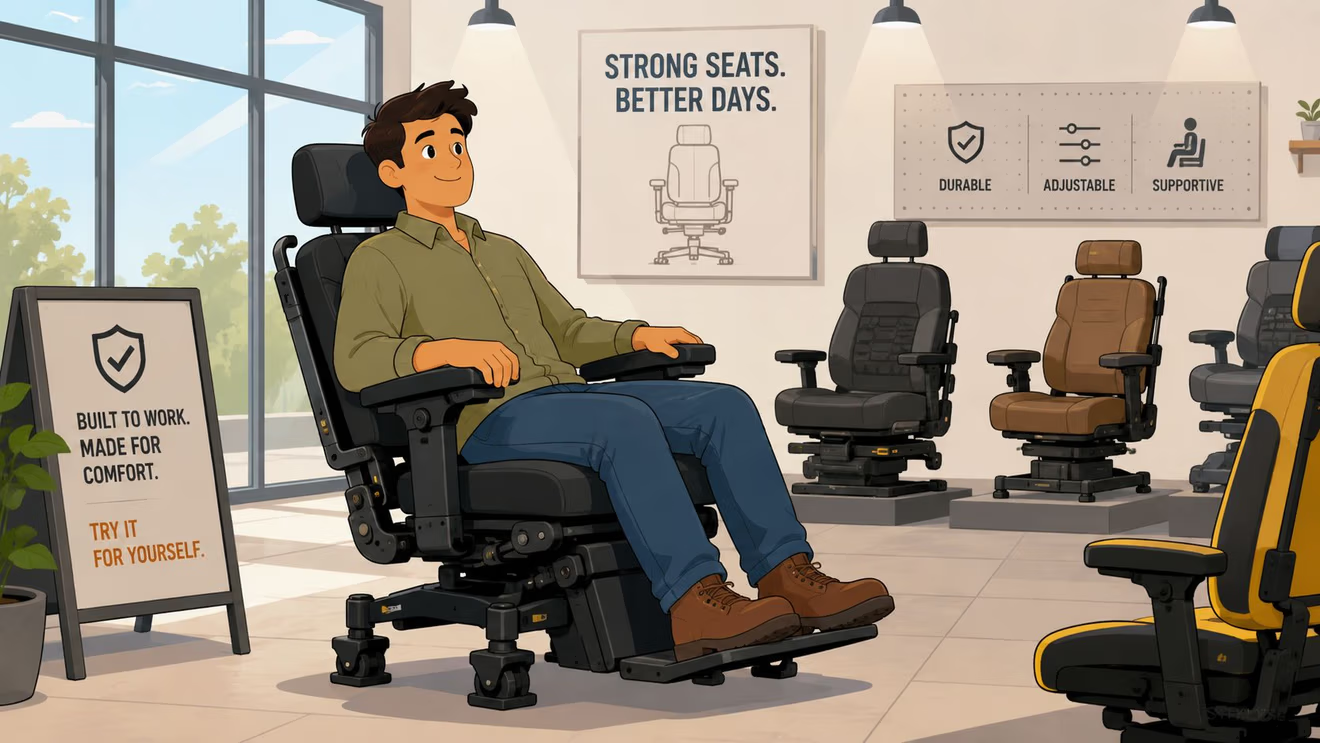
Why in-person shopping matters for a chair
A spec sheet can say a lot, but it can't tell a shopper how secure a seat feels when standing up, whether the arms land at a useful height, or whether the cushion feels supportive after more than a quick test sit. Those are human questions, and they're easier to answer in a showroom.
That's one reason BILTRITE has stayed rooted in a hands-on shopping experience. The business is a fourth-generation family-owned showroom serving Metro Milwaukee since 1928, and that long history tends to attract people who want guidance without pressure. The goal isn't to rush anyone through a transaction. It's to help them get comfortable enough with the options that the decision feels less intimidating.
The selection matters too. BILTRITE specializes in affordable, better-quality furniture and mattresses, with a strong emphasis on USA-made, Amish-made, and solid-wood pieces. That matters for shoppers who care not just about appearance, but about how something is built and whether it was made to last.
Local roots and long-term value
For households looking for durable seating, local shopping offers a practical advantage. People can compare seat heights, widths, arm styles, support levels, and materials in one trip. They can also ask better questions because they're sitting in the furniture while they ask them.
BILTRITE's showroom includes icons that make shopping easier to find what you need. The store showcases a special USA Made furniture icon that guarantees pieces are locally crafted, support American jobs, and use solid wood, reflecting a commitment to quality-made American furniture. For shoppers trying to connect “heavy duty” with craftsmanship they can physically see and touch, that's a helpful shortcut.
The family-first side of the business matters too. BILTRITE is closed on Sundays and Mondays to support family time, with Monday delivery still available, as shared on the BILTRITE history page. That kind of schedule says something about the company's values. It's rooted in community, not just transactions.
There's another practical reason a local visit helps. BILTRITE's team brings over 400 years of combined experience, and the store offers something for many kinds of households, from small-scale furniture for apartments and senior living to heavy-duty options for families, plus a mattress department with over 60 models. A shopper trying to solve one seating problem often ends up improving an entire room.
“Built to last” feels different when the shopper can actually sit in it.
For Milwaukee-area families, caregivers, and homeowners who are tired of furniture that looks fine but feels uncertain, a showroom visit can turn a confusing category into a fun project. The right chair doesn't just hold weight. It supports routines, people, and peace of mind.
Ready to find a chair that feels sturdy, supportive, and right for everyday life? BILTRITE Furniture-Leather-Mattresses would love to welcome shoppers to the Greenfield showroom, answer questions, and help them explore better-quality USA-made, Amish-made, and heavy-duty furniture in person. Come say hi and see what feels best up close.