Adjustable Beds for RVs: Your Guide to Travel Comfort

A lot of RV owners know this scene all too well. The campsite is beautiful, the coffee tastes better outdoors, and the drive felt like freedom. Then morning arrives, and the bed reminds them that sleeping well on the road isn't always easy.
That's where adjustable beds for RVs have started to change the conversation. Instead of treating the bed like an afterthought, more travelers are treating sleep as part of the trip itself. That shift isn't small. The global adjustable bed base and bed market, which includes specialized RV units, was valued at USD 9.58 billion in 2025 and is projected to reach USD 19.09 billion by 2033, with a 9.00% CAGR, according to Data Bridge Market Research on the global adjustable bed base and bed market.
For RV owners, the appeal is simple. A bed that raises the head or feet can make reading, resting, and settling in for the night feel a lot more like home. But RVs come with tight corners, odd sizes, platform bases, and clearance issues that many general bed guides skip right past. That's where careful planning matters.
Table of Contents
- More Than a Bed a Better Way to Travel
- The Big Benefits of an Adjustable RV Bed
- Getting the Measurements Right for Your RV
- RV Power and Installation Explained
- Choosing Your Mattress and Buying Local
- Your RV Adjustable Bed Questions Answered
More Than a Bed a Better Way to Travel
One of the biggest surprises for first-time RV owners is how quickly a weak mattress can wear down a great trip. A day of driving, walking trails, or setting up camp already asks a lot from the body. If the bed doesn't support it well at night, soreness tends to follow.

Adjustable beds for RVs answer that problem in a practical way. They aren't just about luxury. They help turn a fixed sleeping space into a more usable living space. A traveler can lift the head to read during a rainy afternoon, raise the legs after a long drive, or settle into a position that feels easier on the back.
Why RV owners are paying attention
RV living asks a bed to do more than a bedroom bed at home. It has to fit a compact footprint, handle movement on the road, and still feel comfortable night after night. That's one reason adjustable bases have gained momentum in this category.
A good starting point for understanding the comfort side is this guide to the benefits of an adjustable base and better rest. It helps explain why people often feel such a difference once the bed can work with the body instead of against it.
A smart RV bed upgrade doesn't just change sleep. It changes how the whole coach feels at the end of the day.
A home-on-wheels should still feel like home
Many RV owners spend plenty of time choosing the right seating, storage, and kitchen setup, yet keep the same basic mattress that came with the unit. That's often where comfort falls short. The bed takes up a large part of the living experience, especially for travelers who stay out longer or spend more days inside during bad weather.
An adjustable setup can make the coach feel more settled and livable. Instead of climbing into a flat surface and hoping for the best, the sleeper can make simple position changes that support rest, relaxation, and everyday comfort. For people who want their RV to feel less temporary and more personal, that's a meaningful change.
The Big Benefits of an Adjustable RV Bed
The strongest case for adjustable beds for RVs comes from daily use. The value shows up after a long highway stretch, on a cold evening when staying inside sounds better than going out, or on a morning when getting upright gradually feels better than sitting up all at once.
Recent product development shows that this category is being taken seriously. Sleep Technologies has introduced Road Star Beds to the RV market, with adjustable bases designed to handle the weight and vibration demands of travel while bringing hospital-grade comfort and ergonomic positioning into RVs, as reported by RV News covering Road Star Beds for the RV market.
Comfort that works beyond bedtime
A standard RV mattress usually does one job. It lies flat. An adjustable base gives that space more than one purpose.
Some of the biggest day-to-day advantages include:
- Easier evening recovery: After driving or walking most of the day, raising the legs can feel more supportive than lying completely flat.
- Better reading and screen time: Propping up with pillows often slips and bunches. An adjustable head section gives steadier support.
- A more useful small space: In many RVs, the bed also becomes the lounge. An adjustable base makes that much more comfortable.
- Gentler position changes: People who dislike sudden movement in the morning often appreciate being able to lift gradually.
Built for the road matters
There's a real difference between a product meant for a house and one meant for a moving vehicle. RV travel brings vibration, shifting loads, and tighter clearances. That means construction matters just as much as comfort does.
Practical rule: If a bed base is going into an RV, road-ready engineering matters as much as mattress feel.
That's also why many shoppers start looking for sturdier designs, USA-made options, and construction they can trust over time. A bed in an RV doesn't get the easy life a guest room bed gets.
A broader look at health-related comfort concerns appears in this article on how adjustable bases can help alleviate five health concerns. The point for RV owners is straightforward. Better positioning isn't just nice to have. It can make the space more enjoyable every single day of the trip.
Why this upgrade often feels bigger than expected
People often think they're shopping for a bed base. What they're really improving is the whole rhythm of RV living. When the sleeping space becomes more comfortable for relaxing, reading, resting, and winding down, the coach feels less cramped and more usable.
That's why adjustable beds for RVs often end up feeling like a lifestyle upgrade rather than a furniture upgrade.
Getting the Measurements Right for Your RV
Many shoppers make avoidable mistakes. In a house, being off by a little might be annoying. In an RV, being off by a little can mean the base won't fit, the mattress hangs over the platform, or the walking space gets pinched.
RV-specific adjustable beds are made to true RV dimensions. One example is a 60" x 75" split queen, which is 5 inches shorter than a residential queen, helping it fit the space without cutting down a standard mattress and compromising its support layers, according to this guide to RV-specific adjustable bed dimensions.
Start with the platform, not the label
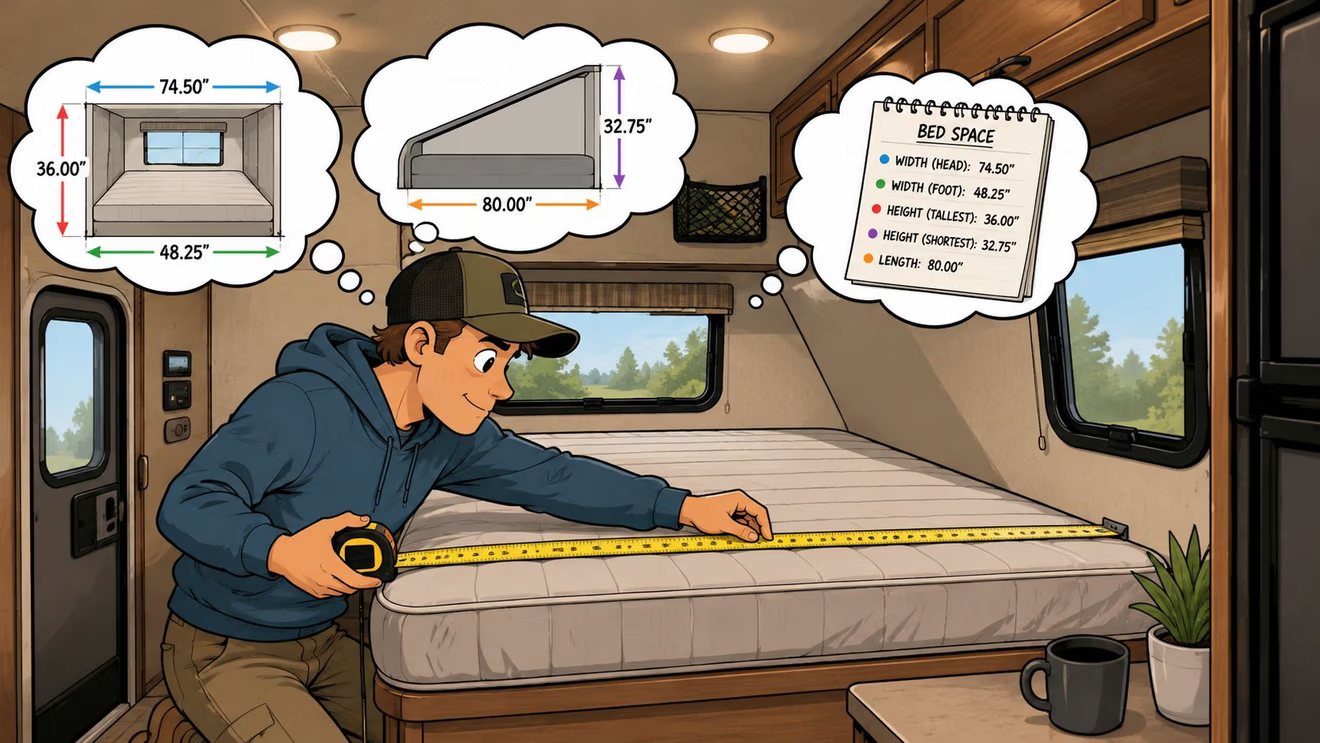
A lot of confusion starts with names like short queen, RV king, or split king. Those labels help, but the platform itself tells the truth. Measure the actual sleeping surface before thinking about product names.
Use a tape measure and write down:
- Overall width: Measure the platform at its widest usable point.
- Usable length: Start at the wall or head area and measure to the foot end.
- Tight spots: Check nearby cabinetry, side tables, and trim that could interfere.
- Walking clearance: Make sure the bed won't crowd the path around it.
- Entry path: Think through how the base and mattress will get into the RV.
Why RV sizing can't be guessed
Residential sizes are familiar, so some shoppers assume they can make a standard bed work. Sometimes that leads to trimming, squeezing, or forcing a fit. None of that is ideal.
A cleaner approach is to match the base to the RV's real dimensions. That keeps support where it belongs and avoids awkward overhangs. It also helps articulation work more smoothly because the moving sections line up with the mattress and platform the way they should.
Measure for movement, not just fit. A bed that barely fits while flat can still fail once it starts to articulate.
A helpful related read is this explanation of adjustable bed height and why it affects fit. Height becomes especially important when the base has to move inside a compact RV bedroom.
A simple measuring checklist
| What to measure | Why it matters |
|---|---|
| Platform width and length | Confirms the true RV mattress size needed |
| Space beside the bed | Helps avoid rubbing walls or furniture |
| Foot-end clearance | Keeps leg articulation from crowding nearby structures |
| Head-end area | Reduces the chance of interference when raised |
| Access into the RV | Prevents delivery and setup headaches |
Common mistakes to avoid
- Using residential assumptions: A mattress that works in a house may be the wrong length for an RV.
- Ignoring fixed furniture: Side cabinets and nightstands don't move out of the way.
- Measuring only the old mattress: The platform and surrounding area matter just as much.
- Skipping articulation space: The bed needs room to move, not just room to exist.
Careful measuring is one of the least exciting parts of the process, but it's the step that protects every other decision.
RV Power and Installation Explained
Power and installation sound technical, but the basics are manageable once the main pressure points are clear. Most confusion comes from assuming an RV bed base installs like one in a house. It usually doesn't.
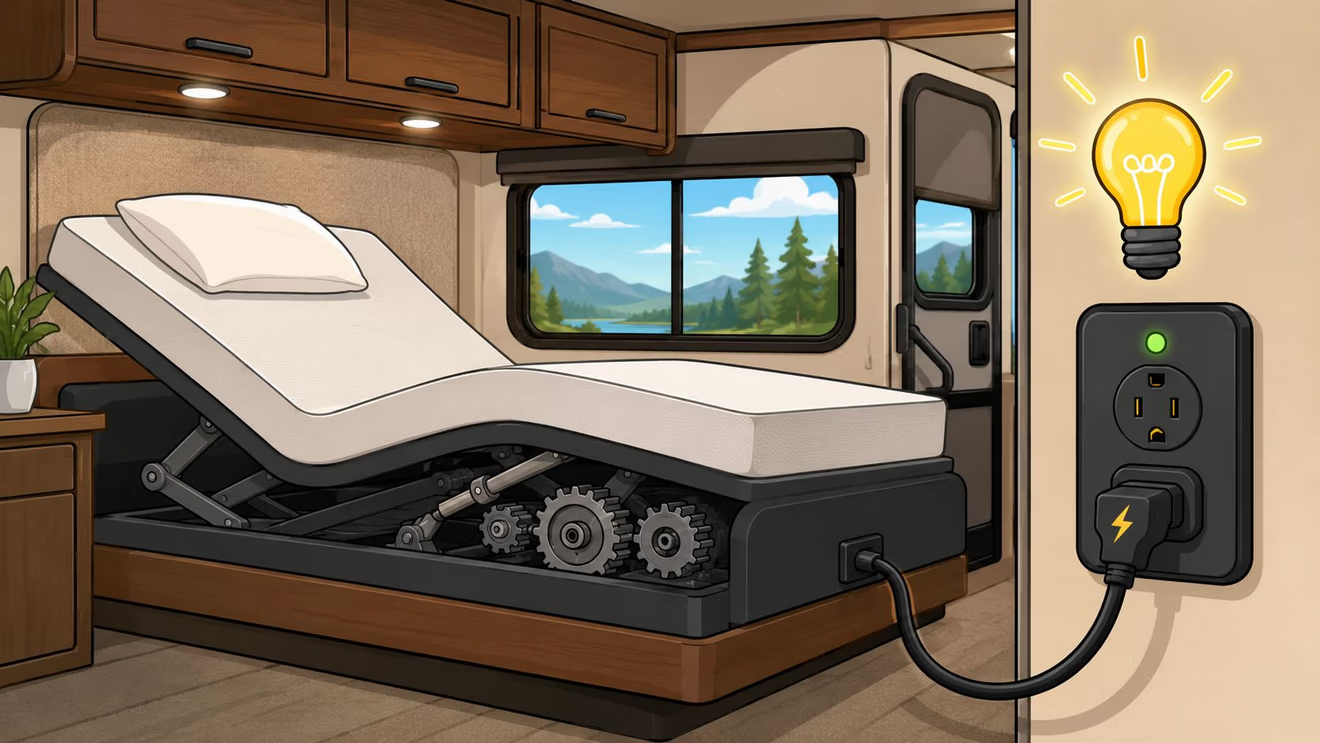
The first thing to understand is profile height. RV-specific adjustable beds need a maximum height of 5 inches so the motorized frame can rest on standard wooden platform bases and keep the raised head section from hitting nearby furniture, as explained in this low-profile RV adjustable bed overview.
Why low profile is a real safety issue
In a residential bedroom, a taller base may not create much trouble. In an RV, extra height can change everything. The head section may rise and clip a wall, scrape a nightstand, or stop short because there just isn't enough vertical room to articulate cleanly.
That's why low-profile construction isn't a small feature. It's part of making the whole system usable. A base can be comfortable and still be wrong for an RV if it sits too high.
The three installation checks that matter most
Before choosing a base, these are the practical questions to answer:
- Power access: The base needs nearby power that can be used consistently and safely.
- Platform support: The RV's bed deck needs to support the base properly.
- Moving clearance: Every lifting section needs room to operate without hitting fixed parts of the coach.
A successful RV installation depends on what surrounds the bed as much as the bed itself.
Some shoppers also benefit from reviewing a broader guide to full-size adjustable bed basics and fit considerations, especially when comparing room needs and articulation patterns.
Weight and road use
Weight matters in an RV more than it does in a house. The good news is that owners often look for road-ready designs specifically because they understand that every added component should earn its place.
The key isn't chasing the lightest option at all costs. It's choosing a base designed for the realities of travel. A base that handles movement well and fits the platform correctly is usually the wiser long-term choice than one that merely sounds convenient on paper.
A calm way to think about setup
If the bed is low enough, sized correctly, supported properly, and placed where it can move freely, installation gets much simpler. Most problems come from one of those four areas being skipped.
That's why the best RV adjustable bed decisions tend to be methodical rather than rushed. A little planning at this stage saves a lot of frustration later.
Choosing Your Mattress and Buying Local
Once the base is sorted out, the mattress becomes the part people notice first. It's the feel, the pressure relief, the support, and the overall comfort of the setup. With adjustable beds for RVs, compatibility matters just as much as comfort.

What kind of mattress usually works best
An adjustable base bends. The mattress has to bend with it. Materials that flex more naturally tend to pair better with this kind of foundation.
These are usually the most practical categories:
- Memory foam options: They generally contour well and move easily with the base.
- Flexible hybrids: Some hybrids work nicely if they're designed to articulate without fighting the frame.
- Mattresses with balanced support: A mattress should cushion the body without feeling stiff when the head or feet rise.
A mattress that feels good while flat but resists movement can take away many of the benefits of an adjustable base. That's why lying on it in person matters so much.
What to watch out for
Some shoppers focus only on softness, but RV comfort is more nuanced than that. The mattress also needs to fit the base correctly, maintain support across the sleeping surface, and work with the limited space around the bed.
A few warning signs include:
- Too rigid to bend well
- Too thick for the available clearance
- A size that almost fits
- Support that feels uneven when raised
The right RV mattress shouldn't just feel comfortable in the first five minutes. It should keep that comfort when the base starts moving.
Why local mattress shopping still makes sense
This is one category where buying based on a picture and a few bullet points can backfire. Adjustable sleep is physical. People need to feel how a mattress responds, how fast it recovers, and whether it stays comfortable in raised positions.
That's one reason local showroom shopping still has real value. It gives shoppers a chance to compare comfort in person, ask direct questions, and sort out fit concerns before anything goes into the RV.
A helpful perspective on that experience appears in this article about why buying locally matters when choosing a new mattress. For many households, the confidence that comes from trying mattresses side by side is worth far more than making a rushed guess.
What a careful shopper should look for in store
A strong in-person visit usually goes better when the shopper checks more than just firmness.
| In-store question | Why it matters for RV use |
|---|---|
| Does the mattress flex cleanly? | Helps it work with the adjustable base |
| Does the edge feel stable? | Useful in tight bed spaces |
| Does it feel supportive while raised? | Reflects real RV use, not just flat use |
| Is the size available correctly? | Reduces compromise and fit issues |
Local stores also tend to offer something online listings can't match well. Conversation. A knowledgeable sleep specialist can often catch an issue with size, profile, or compatibility before it becomes an expensive mistake.
For shoppers who care about better-quality construction, USA-made options, solid support, and the chance to compare many models in one visit, buying local remains one of the smartest ways to approach an RV sleep upgrade.
Your RV Adjustable Bed Questions Answered
Even after the basics are clear, a few tricky questions usually remain. That's normal. RVs rarely follow neat rules, and sleeping spaces can be some of the oddest parts of the floor plan.
One of the biggest trouble spots is the angled or sloped bed area. Recent 2025 data from over 1,200 RVers found that 34% reported adjustable bed failures in angled-frame setups due to frame binding, and no manufacturer provides certified compatibility charts for those sloped applications, according to this report on angled RV bedhead issues. That's exactly why general advice often falls short.
Can a residential adjustable base be used in an RV
Sometimes people ask this because a residential base seems easier to find. The short answer is that it can create problems fast.
Residential models often don't match RV dimensions, and they may sit too tall for a tight coach layout. Even if one fits while flat, it may not move safely once raised. In an RV, a near fit often behaves like a bad fit.
What if the RV has an angled headboard or sloped bed platform
This is one of the most overlooked issues in the category. A flat rectangular bed area is much simpler. Once the platform is angled, sloped, or asymmetrical, movement gets harder to predict.
A careful buyer should treat that setup as a custom fit question, not a standard fit question. Binding, motor strain, and interference become bigger risks. That doesn't always mean the idea is impossible. It does mean assumptions are risky.
Some RV layouts need more than a size check. They need a movement check.
Is a split setup worth considering for couples
For many couples, yes. If each side can move independently, one person can read or raise the head without forcing the other person into the same position. That can be especially useful in a compact RV where the bed doubles as shared seating.
The deciding factor is usually layout. If the room and platform support a split arrangement cleanly, it can add flexibility without adding hassle. If the space is already awkward, a simpler setup may be the better path.
What matters most before making the final choice
A strong decision usually comes down to four things:
- True RV sizing: The base and mattress should match the coach, not a house standard.
- Low-profile construction: Clearance affects both safety and everyday use.
- Mattress compatibility: The bed should stay supportive while articulating.
- Layout honesty: Odd angles and tight furniture need extra caution.
Adjustable beds for RVs can make travel more restful, more comfortable, and more enjoyable. They just need to be chosen with the realities of RV life in mind.
For anyone in Metro Milwaukee who wants hands-on help sorting through mattress comfort, fit, and adjustable-base options, BILTRITE Furniture-Leather-Mattresses is well worth a visit in Greenfield. As a fourth-generation, family-owned business serving the community since 1928, BILTRITE offers better-quality furniture and mattresses, a huge mattress department with over 60 models, and a team with over 400 years of combined experience. The store doesn't sell online, and it's proudly closed on Sundays so families can be with family. Come on down to the showroom, say hi, and talk through the options in person.