Amish Made Hickory Furniture: Durable & Beautiful


A lot of families start in the same spot. The old table has one wobbling leg, the bedroom set has a few too many mystery scratches, and the idea of buying new furniture feels bigger than it should. Wood types blur together, showroom tags seem vague, and online photos never tell the whole story.
That's where Amish made hickory furniture gets interesting. It speaks to people who want something sturdy, warm, and full of character, but who also want to understand what they're bringing into the house. For a family business like BILTRITE, serving Metro Milwaukee since 1928, that conversation has always mattered. Good furniture should feel approachable, not confusing.
Table of Contents
- Welcome to the World of Hickory Furniture
- What Makes Hickory Wood So Special
- Hickory vs Other Popular Woods Like Oak and Cherry
- A Buyer's Guide to Your First Hickory Piece
- Caring for Your Amish Hickory Furniture
- Find Your Forever Furniture at Our Family's Showroom
Welcome to the World of Hickory Furniture
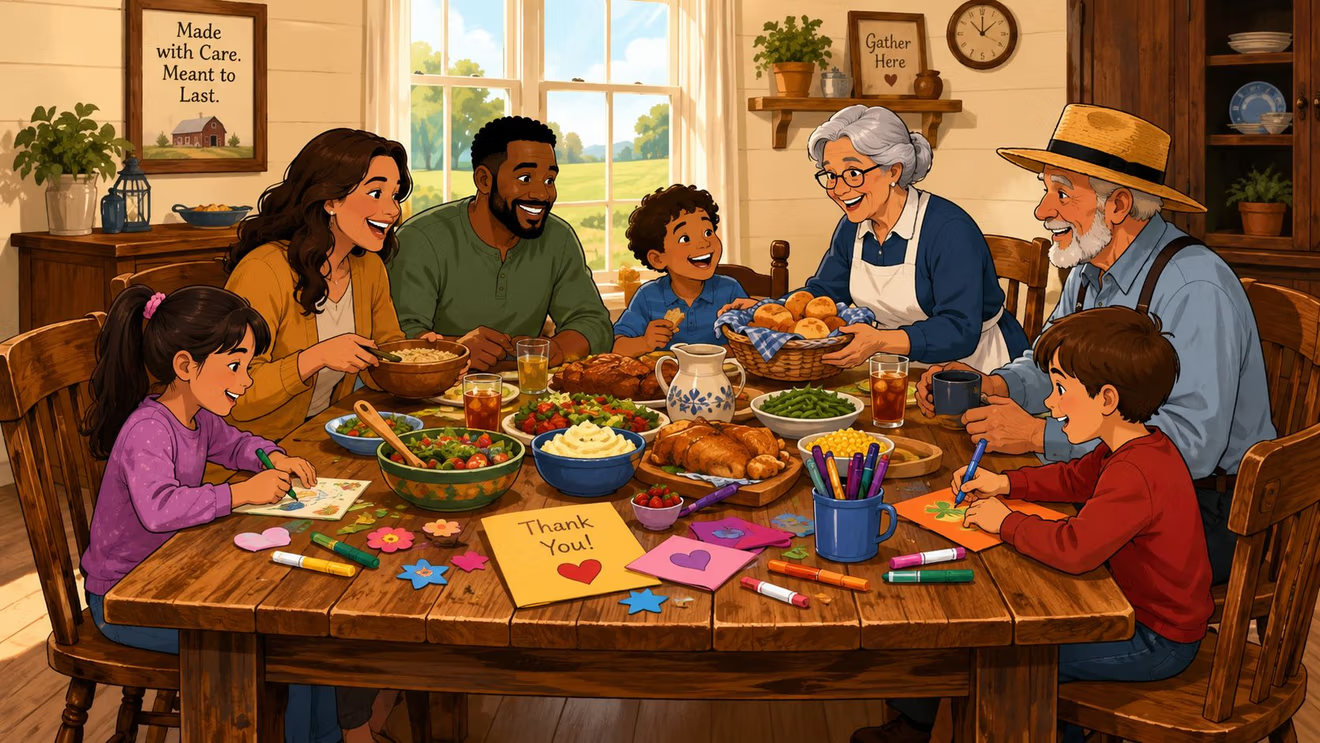
A busy home asks a lot from furniture. One night it's spaghetti and homework at the dining table. The next morning it's coffee cups, backpacks, and a school project with markers spread from one end to the other. Families don't need furniture that only looks good in a staged photo. They need furniture that welcomes real life.
That's a big reason Amish made hickory furniture stands out. It has a grounded, honest look that feels at home in a farmhouse dining room, a cozy lake house, or a Milwaukee home that just wants warmth and substance instead of flash. Hickory doesn't look overly polished or fussy. It looks lived-in from the best possible angle.
For families who are newer to solid wood, Amish furniture can sound almost too broad. Does it mean rustic only? Does it mean every piece looks heavy? Not at all. Amish craftsmanship is really about careful building, durable materials, and attention to details that people can see and feel in person. Readers who want a broader introduction can explore what Amish furniture means in everyday terms.
Why people connect with hickory
Hickory has personality. It often shows strong grain movement and noticeable shifts between light and dark areas. That natural variation can surprise first-time shoppers who are used to more uniform woods, but that's also what gives hickory its charm.
Practical rule: If a family wants furniture with a little soul and a lot of everyday usefulness, hickory usually earns a close look.
BILTRITE has been family-owned and operated since 1928, and across generations one lesson keeps repeating. Trends come and go. Materials change. Finishes change. But people still light up when they find a piece that feels solid, useful, and built with care. Hickory often creates that reaction right away.
What Makes Hickory Wood So Special
Some woods are quiet in the background. Hickory isn't one of them. It brings strength, visual texture, and a kind of straightforward confidence that makes sense in hard-working rooms.
A wood that works hard at home
The easiest way to understand hickory is to connect the wood itself to daily life. A dining chair gets scooted back and forth. A server top catches keys, grocery bags, and the occasional dropped toy. A bedroom chest gets opened, closed, and leaned on for years. A strong wood handles those moments with less worry.
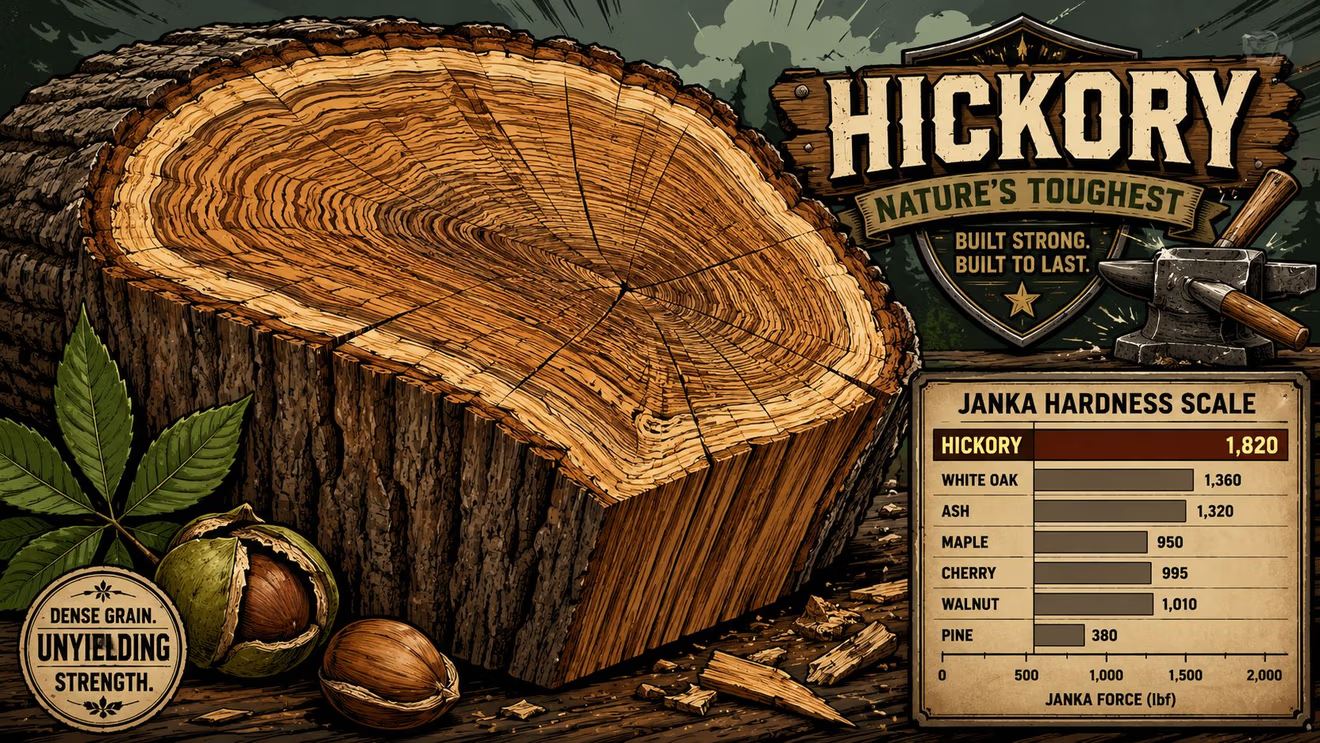
A helpful measure here is the Janka hardness scale, which compares how resistant a wood is to denting. Hickory has a Janka hardness rating of around 1820, making it significantly harder and more resistant to denting than popular woods like Red Oak (1290) and Cherry (950), according to The Wood Database's hickory profile.
That number matters because shoppers often ask a practical question. Will this hold up in a house with kids, pets, guests, and everyday motion? Hickory gives a reassuring answer. It's one of those woods that feels ready for the assignment.
People who are weighing several species side by side can also read a practical guide to the best wood for furniture, especially if they're deciding between a more dramatic grain and a more even look.
Why Hickory looks so distinctive
Strength is only half the story. Hickory also has a visual style that doesn't blend into the background. It often shows bold contrast between lighter sapwood and darker heartwood. That means one tabletop can carry both creamy tones and deeper brown streaks, with grain patterns that feel energetic instead of uniform.
A common point of confusion for some shoppers arises. They wonder whether variation means inconsistency. In solid wood, it means nature did the design work. Two hickory pieces from the same collection can feel related without looking identical, and many families love that.
A few features make hickory easy to recognize:
- High contrast: Light and dark tones often appear in the same board.
- Active grain: The surface usually shows more movement than calmer woods.
- Rustic warmth: Even in a cleaner silhouette, hickory keeps a relaxed, welcoming feel.
Hickory tends to look best when people let it be itself, rather than expecting every board to match exactly.
That combination of toughness and character explains why so many people remember it after seeing it in person. It doesn't whisper. It speaks clearly.
Hickory vs Other Popular Woods Like Oak and Cherry
Choosing wood is a little like choosing the mood of a room. The construction may be similar, but the wood species changes the feeling right away. Hickory, red oak, and cherry all have loyal fans for good reason.
Hickory vs. Oak vs. Cherry At a Glance
| Characteristic | Hickory | Red Oak | Cherry |
|---|---|---|---|
| Overall look | Bold, varied, rustic to rustic-modern | Familiar, balanced, traditional | Smoother, warmer, more refined |
| Color pattern | Often mixes lighter and darker tones | More even appearance | Richer, calmer look |
| Grain feel | Active and noticeable | Prominent but more uniform | Softer and less busy |
| Best fit for style | Farmhouse, lodge, casual family spaces, rustic-modern | Traditional, transitional, everyday classic rooms | Elegant bedrooms, dressier dining spaces, classic interiors |
| Hardness note | Around 1820 on the Janka scale | 1290 on the Janka scale | 950 on the Janka scale |
| Personality in a room | Strong visual presence | Steady and familiar | Quiet and polished |
The table helps, but most shoppers still want the plain-English version. They don't live in a chart. They live in a home with wall colors, flooring, pets, and family habits.
How each wood changes the feel of a room
Hickory tends to be the liveliest of the three. It carries contrast naturally, so a hickory dining set often becomes the visual anchor of the room. Families who like warmth, texture, and a less formal atmosphere usually connect with it fast. It can still work in a cleaner design, but it rarely feels stiff.
Red oak feels familiar. Many people have seen it in dining rooms, bedroom sets, or trim work for years, so it reads as comfortable and dependable. Its grain is noticeable, but the overall look is usually more even than hickory. If a family wants solid wood with a classic, steady appearance, oak often feels like an easy yes.
A lot of Milwaukee-area homeowners also like cherry when they want a richer, dressier mood. A cherry bed or dresser can soften a room and give it a calm, finished look. Readers who enjoy that style can see how cherry works in traditional bedroom furniture through these cherry wood sleigh beds.
Here's where confusion often shows up. Some people assume “better” wood means there's one winner. There isn't. The better wood is the one that fits the room and the way the family lives.
A simple way to decide:
- Choose hickory if the home leans casual, natural, and full of texture.
- Choose red oak if the room needs a classic wood presence that won't dominate everything else.
- Choose cherry if the goal is warmth with a more polished, graceful mood.
The smartest choice usually isn't the wood with the biggest personality. It's the wood whose personality fits the home.
That's why touch and sight matter so much. Color variation, grain movement, and finish all read differently in person than they do on a screen.
A Buyer's Guide to Your First Hickory Piece
The first hickory purchase is often the hardest one, not because it's risky, but because buyers want to get it right. A table, bed, or chest in solid wood feels more meaningful than an impulse buy. That's a good instinct.

What to inspect before saying yes
Start with the functional areas. Drawers should move smoothly and feel substantial, not flimsy. Joinery should look intentional and clean. Doors should hang evenly. Tabletops should feel solid and well-finished along both the top and the edges.
For Amish made hickory furniture, buyers often hear terms like dovetail joints and mortise-and-tenon construction. Those sound technical, but the idea is simple. Good furniture is built so the parts lock together with purpose, not just with shortcuts. In a drawer, dovetailing helps the front and sides stay joined under repeated use. In a table or chair frame, mortise-and-tenon joinery helps create lasting strength where parts meet.
A few smart checks make a big difference:
- Open the drawers: They should feel steady, not loose or rattly.
- Look underneath: The hidden parts say a lot about the maker's standards.
- Touch the finish: It should feel smooth and consistent, not sticky or rough.
- Check the weight: Solid wood furniture usually has reassuring substance.
People who want a broader checklist can use this guide on how to buy quality furniture to sharpen their eye before visiting a showroom.
How customization makes a piece feel like home
One of the pleasures of Amish furniture is choice. The silhouette may catch the eye first, but the final look often comes from the details. A different stain can make the same hickory table feel more rustic, more modern, or more grounded. Hardware can push a dresser in a cleaner or more traditional direction.
Families don't all live the same way. One home needs a compact dining set for a smaller space. Another wants a heavy-duty table that can host holiday meals, game nights, and everyday breakfast traffic. Good customization respects that.
A well-chosen custom detail shouldn't shout. It should make the piece feel like it belonged in the room all along.
There's also the value question, and it's worth answering plainly. Solid wood Amish furniture usually isn't the lowest-ticket option in the room. But many families prefer buying one strong piece they can live with for years rather than cycling through replacements that never quite satisfy.
That thinking fits BILTRITE's long-time approach to affordable, better-quality furniture. The store has served Metro Milwaukee since 1928, and its team brings over 400 years of combined experience to the showroom floor. That matters because newer buyers often need someone to slow the process down, answer the basic questions, and point out the craftsmanship details that photos tend to hide.
BILTRITE also carries something for different kinds of homes and households. There are choices for apartments and smaller rooms, heavy-duty options for busy families, and a large mattress department with over 60 models for shoppers furnishing more than one room at a time. That range helps people build a whole home with consistency instead of patching things together piece by piece.
Caring for Your Amish Hickory Furniture
Good care doesn't need to feel complicated. That surprises some people, especially if they've just brought home a solid wood piece and suddenly feel nervous about every fingerprint and water ring. Hickory is meant to live in a house, not sit behind velvet ropes.
Simple habits that help
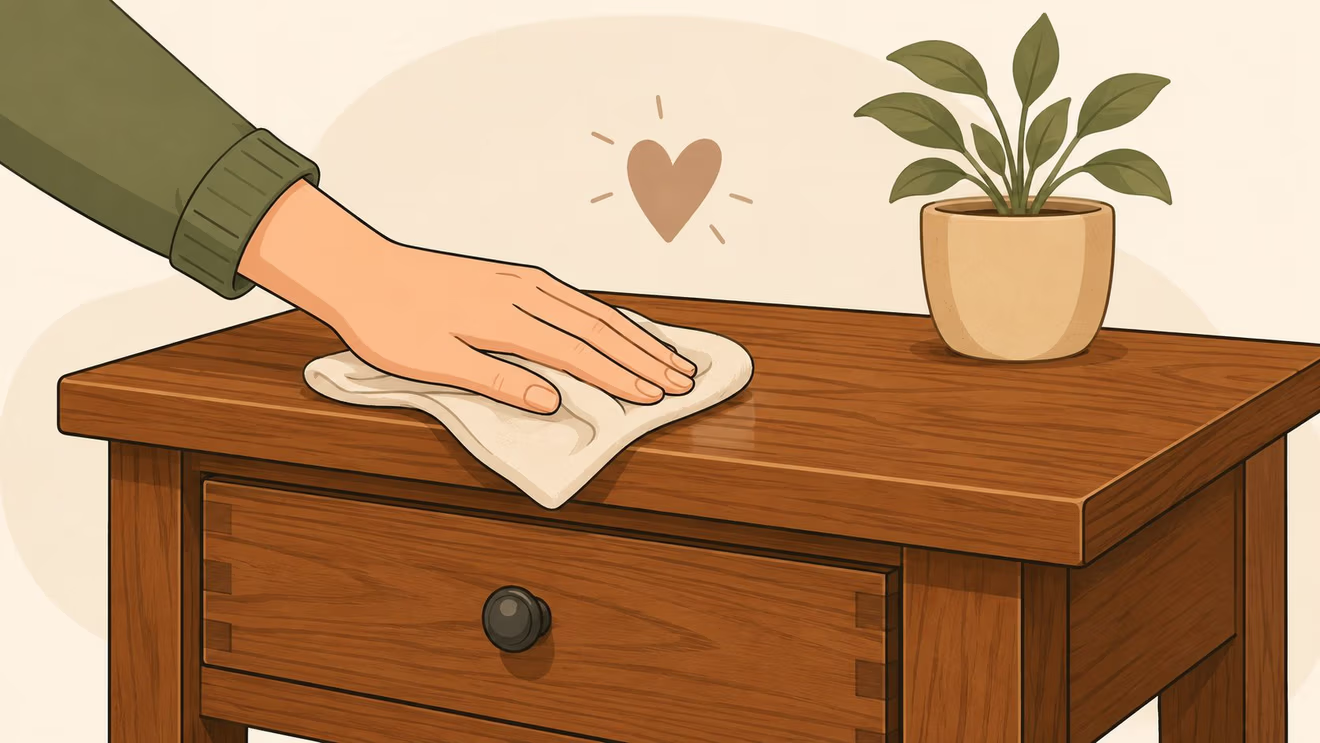
Daily care starts with the easiest habit of all. Dust with a soft cloth. If something sticky lands on the surface, use a gentle cleaner made for finished wood and wipe it dry rather than leaving moisture to sit.
Families who want a fuller routine can review practical steps for how to clean wood furniture. The basics stay simple, though, and that's reassuring.
Helpful habits include:
- Dust often: Fine dust can dull the surface over time.
- Wipe spills soon: Wood furniture does better when liquids don't linger.
- Use protection: Coasters, placemats, and felt pads reduce everyday scuffs.
- Keep the room steady: Solid wood responds best when the home isn't swinging wildly between very dry and very damp conditions.
What to avoid
The biggest mistakes usually come from overdoing it. Harsh chemicals, rough scrubbing pads, and soaking-wet cloths can create more trouble than the original mess. Furniture polish can also become a problem if it's used too heavily or too often without understanding the finish.
It also helps to keep expectations realistic. A dining table that hosts family life may collect a few minor marks over the years. That doesn't mean it failed. In many homes, those small signs of use become part of the story.
Minor wear on solid wood often reads less like damage and more like evidence that the piece has been loved and used.
That mindset makes ownership more enjoyable. Instead of worrying over every little sign of life, families can appreciate that well-built furniture earns character naturally.
Find Your Forever Furniture at Our Family's Showroom
Amish made hickory furniture brings together two qualities that don't always show up in the same piece. It has muscle, and it has warmth. That's why so many families come back to it after comparing other options.
For a fourth-generation store like BILTRITE, that appeal makes sense. The business has been part of the Metro Milwaukee community since 1928, and the values behind it are easy to understand. Family matters. Craftsmanship matters. Local relationships matter. That's also why the showroom is proudly closed on Sundays and Mondays, making room for family time instead of nonstop retail.
There's another part of that philosophy people notice right away. BILTRITE doesn't sell online. That choice is intentional. A screen can't show the full personality of hickory grain, the solid feel of a chair, or the difference between a finish that seems nice in a photo and one that feels right in the room.
The showroom experience matters because furniture is physical. People need to open the drawers, run a hand across the tabletop, step back, and see how the light catches the wood. They need to compare scale, comfort, and color in real life. That's especially true with hickory, where natural variation is part of what makes each piece memorable.
For Milwaukee-area homeowners, that in-person process often makes the decision easier, not harder. The questions get clearer. The wood choices make more sense. The right piece starts to feel obvious.
BILTRITE Furniture-Leather-Mattresses has helped families furnish their homes since 1928 with affordable, better-quality furniture, Amish-made and USA-made options, real solid wood pieces, and a mattress department with over 60 models. The family would love to see visitors in the Greenfield showroom, answer questions face to face, and help them find a new favorite piece for their home. Visit BILTRITE Furniture-Leather-Mattresses and come say hi in Greenfield.