How to Choose a Sectional: Your 2026 Guide


A lot of Milwaukee shoppers are in the same spot right now. The old sofa has given up, the family wants one place to pile in for movie night, and a sectional sounds like the answer. Then actual questions show up fast. Will it swallow the room? Will it fit through that front door in a bungalow or that tight stair turn in a duplex? Will it still look good years from now, or will it be one more piece of fast furniture that seemed smart for about five minutes?
That's where a little old-school advice still helps.
BILTRITE Furniture was founded in 1928 by Irwin Kerns and Frieda Kerns as a custom upholstery shop in Milwaukee, and it remains one of the oldest furniture stores in the Metro Milwaukee area still operating under its original family lineage, as noted on BILTRITE's history page. Around here, choosing a sectional shouldn't feel confusing. It should feel like making a smart home decision with clear eyes, good measurements, and a little common sense.
Table of Contents
- Welcome to the Family A Fun Guide to Sectionals
- First Things First Measure Your Space Twice
- Find Your Sectional Shape and Scale
- Look Inside What Makes a Sectional Last
- Pick the Right Upholstery for Your Family
- The Final Checks and Why Visiting Us Matters
Welcome to the Family A Fun Guide to Sectionals
A sectional usually starts as a daydream. A family stands in the living room, looks at the worn-out seating, and starts picturing one big comfortable spot for football Sundays, naps, and everybody squeezing in at Christmas. That part is easy. The trouble starts when looks get chosen before fit, and fit gets chosen before quality.
That's why the smartest way to learn how to choose a sectional is to treat it like both a comfort purchase and a house purchase. It has to work with the room, the people using it, and the way that home functions on a Tuesday night, not just in a staged showroom photo.
BILTRITE has been part of that conversation in Metro Milwaukee since 1928. This is a fourth-generation family business, and that family-first streak still shows. BILTRITE doesn't sell online, and the store closes on Sundays, and Mondays at the current Greenfield location, to support family time, as shared in this Sleep Savvy feature on BILTRITE. That might sound old-fashioned. Good. Furniture buying should be a little old-fashioned when the goal is comfort that lasts.
A sectional should solve problems, not create them
Some shoppers need a compact chaise for an apartment. Some need something tougher for kids, dogs, and heavy use. Others want USA-made or Amish-made construction because they're done replacing furniture every few years. The right answer isn't the same for everybody.
A good sectional feels easy after it's in the house. Traffic flows. Seats get used. Delivery doesn't become a disaster. Years later, it still feels worth buying.
That's the standard. Not trendy. Not oversized. Not flashy. Worth buying.
First Things First Measure Your Space Twice
A sectional can look perfect in the store, then turn into a headache on delivery day when it sticks in a tight entry or blocks half the room. Milwaukee shoppers run into this all the time, especially in older bungalows, upper flats, condos, and homes with sharp stair turns.
Start with the room
Measure for real life, not just for where the sofa touches the wall.
A sectional should leave clear walking paths, let doors swing freely, and give the coffee table enough breathing room to be useful. A good rule is to keep about 30 to 36 inches for main traffic paths and about 18 inches between the sectional and the coffee table. Those numbers are common practice in furniture layouts because they keep a room comfortable instead of crowded.
Here's the routine I recommend:
- Measure usable wall space: Skip trim, radiators, floor vents, and anything else the sectional cannot cover.
- Measure room depth: Include the space people need to pass through without brushing the sofa every time.
- Mark windows, doors, and registers: These details ruin more layouts than style ever does.
- Tape the sectional footprint on the floor: Include chaise length, corner depth, and any recliner clearance.
- Live with the outline for a day or two: Walk it, sit around it, and see how the room feels.
If you want a practical step-by-step, BILTRITE has a solid guide on how to measure for a sectional sofa.
Then measure the delivery path
This is the part too many shoppers forget.
The sectional has to fit the house before it fits the room. Measure every choke point from the curb to the final spot. Front door width. Storm door opening. Hallway width. Stair width. Ceiling height at landings. Elevator opening. Any tight turn that could stop the longest piece.
And here's a family-trade secret. Ask whether the sectional is a come-apart sectional. That matters in Milwaukee. A true come-apart design can make the difference between an easy delivery and a canceled order, especially in older homes with narrow entries and tricky staircases. Do not assume every sectional breaks down the same way. Some have large one-piece sections that are far harder to get inside.
Practical rule: Measure the room, then measure the path, then confirm the size of the largest individual piece.
That last step matters just as much as overall dimensions.
If you care about buying once and buying well, this measuring stage also protects you from a bigger mistake. Cheap fast furniture often gets built around convenience and short-term looks. Better USA-made and Amish-made sectionals are usually worth the extra effort because they are built to last, often with stronger frames and better materials. But quality furniture still has to make the turn at the front hall. Measure first, and you can choose the good stuff with confidence.
Find Your Sectional Shape and Scale
You can do all the measuring right, get the sectional through the door, and still end up with a room that feels awkward every single day. That usually comes down to shape and scale.
Which shape fits the way the room works
Start with how your family uses the room. Do you want one open side for traffic? Do you host Packers Sundays with a full house? Do you need one person to stretch out without turning the whole room into sofa country? The right shape answers those questions fast.
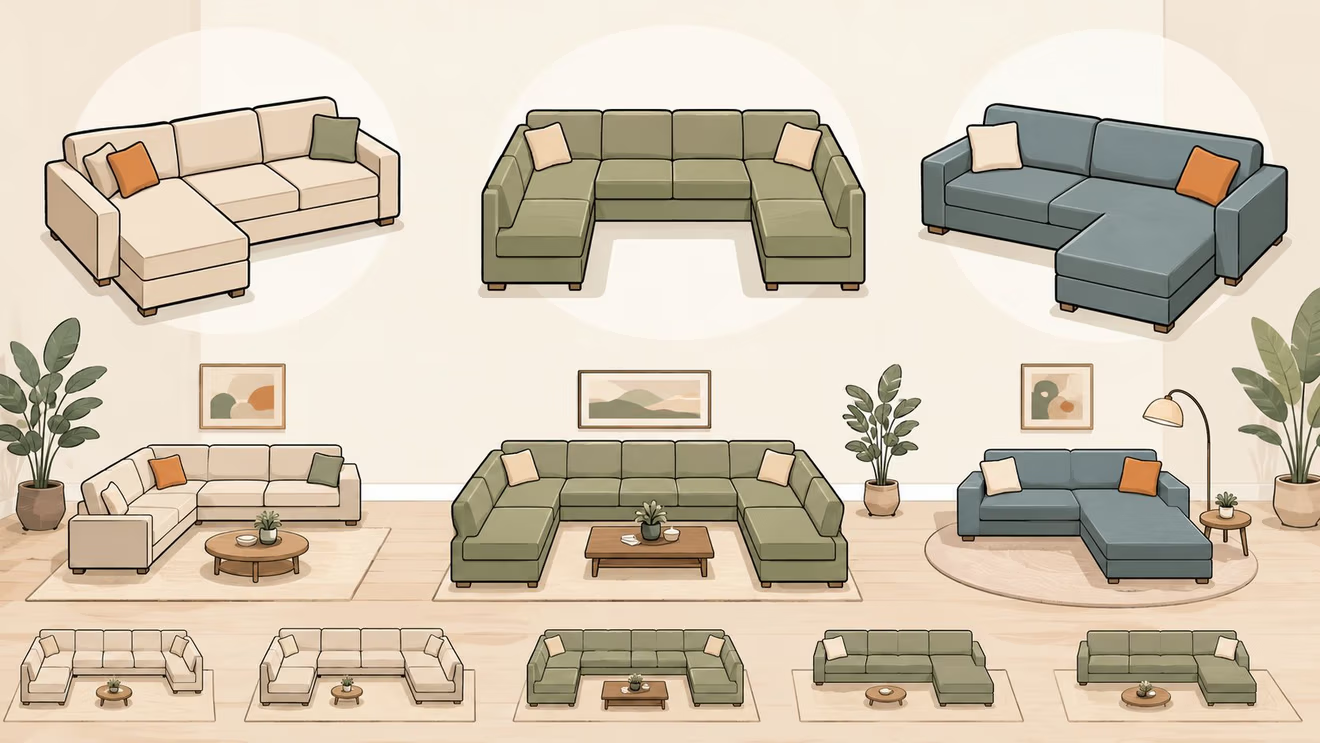
An L-shaped sectional is the safest choice for a lot of Milwaukee homes. It tucks into a corner, defines the seating area, and usually leaves enough floor space for the room to breathe.
A U-shaped sectional needs a room with real width and depth. In a generous great room, it feels welcoming and social. In an average living room, it can crowd the coffee table, pinch walkways, and make the whole space feel boxed in.
Modular sectionals are smart for changing households. If you move, remodel, or like to switch the layout around the holidays, separate pieces give you more options. They also deserve a closer look if delivery is tight, because some modular designs and true come-apart sectionals are much easier to get into older Milwaukee homes with narrow entries and sharp turns.
Chaise sectionals earn their keep in smaller spaces. You get a lounge seat without committing to a bigger footprint than the room can handle.
If you want a good visual for how one popular layout comes together, our guide to the 4-piece sectional shows how the arrangement changes the feel of the room.
Scale matters as much as size
Here's the mistake I see all the time. Shoppers focus on overall width and miss the bulk of the piece itself.
A sectional can fit the wall and still feel too heavy for the room. Wide track arms, extra-deep backs, thick seat boxes, and chunky bases all add visual weight. In a smaller room, that weight matters. Cleaner lines and trimmer proportions usually look better and leave the room feeling calmer.
Comfort needs to match the people using it, too. Deep seats are great for tall folks and serious loungers. They are a nuisance for shorter sitters who want their feet on the floor and proper back support. Low backs can look sharp in a showroom, but they are not always the best choice for long movie nights.
My advice is simple. Buy the shape that supports your traffic pattern first, then choose the scale that suits your room and your family. And if you are shopping for heirloom quality, do not let pretty proportions distract you from practicality. The best USA-made and Amish-made sectionals are built to stay in the family, so make sure the shape works for real life before you bring one home.
Look Inside What Makes a Sectional Last
A pretty sectional can still be a bad buy. The frame decides whether it keeps earning its spot in the room.
Fast furniture costs more than it looks
A lot of shoppers shop by fabric color, price tag, and how soft the cushions feel for ten seconds. That's how people end up overpaying for a sectional that looks current today and feels tired much too soon.
According to this furniture trends article discussing quality and heirloom concerns, 59% of consumers overpay for trendy sectionals that degrade in 3 to 5 years because most guides don't explain how to verify quality like real solid wood or Amish-made status. That's the heart of the issue. Most buying advice spends too much time on color and not enough on construction.
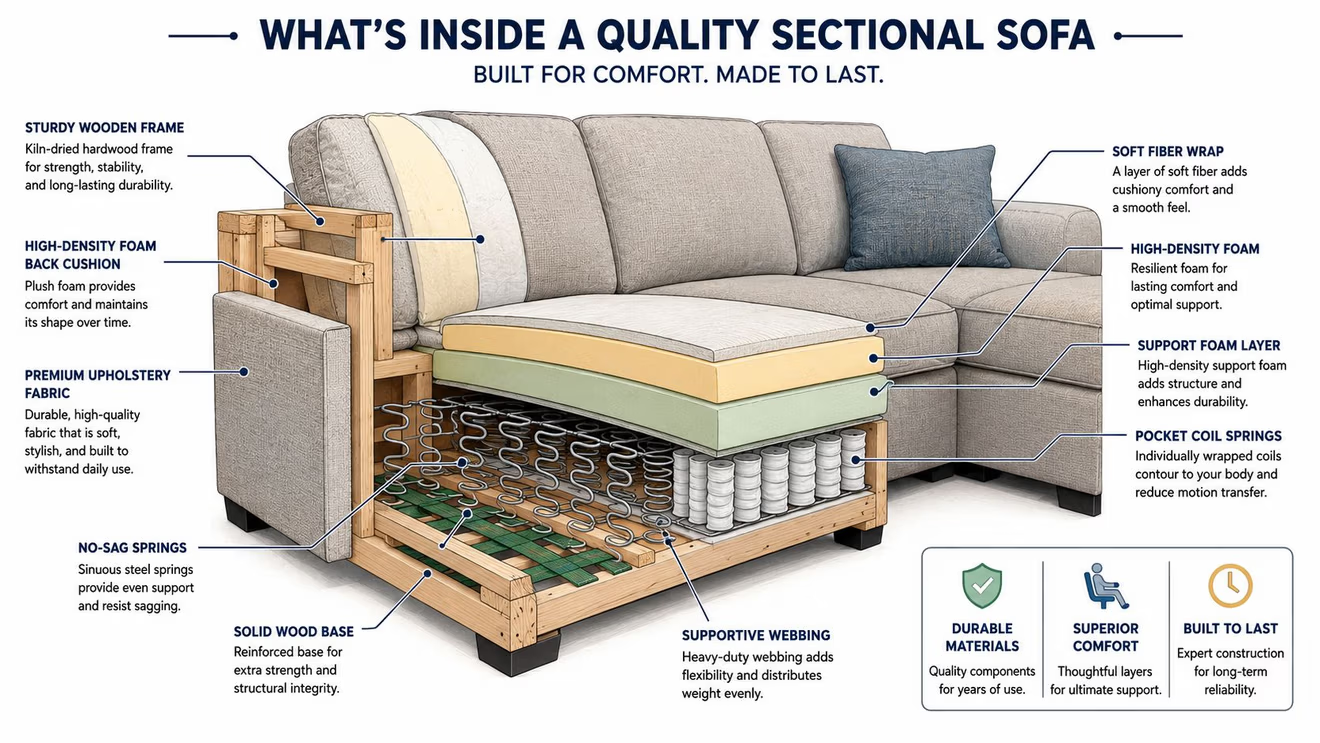
For shoppers who care about longevity, “heirloom quality” shouldn't be a fluffy phrase. It should mean the bones are right. Real solid wood matters. Good joinery matters. Honest construction matters. USA-made and Amish-made pieces often stand out because those makers still treat furniture like something that should live in a house for a long time.
What to check before saying yes
A sectional doesn't need fancy language. It needs strong fundamentals.
Look for these signs:
- Frame material: Ask whether the frame is real solid wood or a lower-grade substitute.
- Construction honesty: If the answer gets vague, that's a warning sign.
- Support system: Sit long enough to feel whether the seat holds steady or drops too fast.
- Cushion consistency: One seat shouldn't feel firm while the next feels hollow.
- Repair mindset: Better furniture is usually built with the assumption that it's worth maintaining.
BILTRITE Furniture-Leather-Mattresses carries categories that line up with that thinking, including USA-made, Amish-made, and real solid wood furniture identified in-store with icons that help shoppers verify what they're buying.
Cheap furniture isn't always cheap. If it wears out quickly, the customer pays twice.
For anyone wondering what lifespan should look like from a quality piece, this guide on how long furniture should last is worth reading before choosing a sectional by price alone.
Pick the Right Upholstery for Your Family
Saturday night in a Milwaukee living room tells you more about upholstery than any showroom tag ever will. Somebody drops pizza crust in the corner seat, the dog claims the chaise, a grandkid climbs up with wet boots, and by bedtime everyone is stretched out for a movie. Buy the wrong cover, and that sectional starts looking tired in a hurry.
Upholstery should match the way your house lives.
Fabric or leather depends on who uses it every day
Families with kids, pets, and regular company usually do best with practical, forgiving materials. Performance fabrics, microfiber, and other tight weaves handle daily wear better than delicate textures that show every mark. If you want to compare real-world pros and cons, read about the benefits of performance fabrics for busy households.
Leather is a strong choice if you want easy wipe-down cleanup and a cleaner, classic look. It also tends to age well if the quality is there. Cheap leather is another story. It can dry out, crack, or wear unevenly, which is why upholstery choice and build quality should always be judged together.
Color matters more than shoppers think. Mid-tone shades, heathered fabrics, and subtle texture do a much better job hiding daily use than very light solids or very dark covers that show lint, dust, and pet hair. If your family uses the room, choose the fabric that forgives real life.
One more family secret. If you are investing in heirloom-quality construction, do not cover it in a fabric you will resent in two years. A solid wood, USA-made or Amish-made sectional deserves an upholstery that can stay in the house for the long haul too.
The right upholstery should still look respectable after everyday living, not just on delivery day.
Fabric vs. Leather at a Glance
| Consideration | Fabric | Leather |
|---|---|---|
| Daily comfort | Soft, warm, and available in many textures | Smooth, supportive, and easy to slide in and out of |
| Family use | Great for relaxed, high-use rooms | Great for quick cleanup and a cleaner look |
| Pet households | Microfiber and durable weaves are smart picks | Easier to wipe off, but claws can still leave marks |
| Maintenance | Vacuuming and spot cleaning are typical | Damp cloth cleaning and occasional conditioning |
| Style flexibility | Broad range of colors, patterns, and textures | More classic visual appeal |
| Senior-friendly concerns | Usually offers a steadier, less slippery sit | Firmer surface, often easier to clean |
Pick the upholstery you will be happy to live with five years from now. That is the standard that saves money.
The Final Checks and Why Visiting Us Matters
A sectional isn't a lamp. Nobody should buy one blind and hope for the best.

Sit in it before it comes home
The final check is simple. Sit in the sectional the way it'll be used.
Lean back. Sit upright. Try the corner. Test the chaise. See whether the seat depth feels easy or awkward. A sectional can look handsome and still be wrong for the people using it every day.
That's one reason an in-store visit matters so much. A showroom lets shoppers compare scale, seat feel, arm height, and upholstery in real time. It also gives them a chance to talk with experienced staff instead of guessing from product photos.
Ask the delivery question early
This is the often-missed Milwaukee question. Does the sectional come apart for delivery?
According to this discussion of come-apart sectional demand and delivery access, 68% of urban homeowners prioritize furniture that can be disassembled for delivery, yet few buying guides explain how to find these sectionals for tight doorways. In older Metro Milwaukee homes, that's not a small detail. It's often the difference between a smooth delivery and a very frustrating return.
Ask these questions before buying:
- Does it come apart into two or more pieces
- What are the maximum dimensions of each module
- Can the delivery team handle narrow turns or tight stair access
- Is white-glove service available
For shoppers sorting through that part of the process, this explanation of white glove delivery service helps clarify what to expect.
A good budget decision belongs here too. Spend for the frame and the fit. Don't overspend on a look that won't wear well, and don't underspend on something the family will use every single day.
BILTRITE Furniture-Leather-Mattresses has served Metro Milwaukee since 1928 with a Greenfield showroom focused on affordable, better-quality furniture, including small-scale options, come-apart sectionals, USA-made and Amish-made pieces, and a mattress department with over 60 models. Shoppers who want hands-on help can visit BILTRITE Furniture-Leather-Mattresses in Greenfield, see the construction up close, sit in different sectionals, and talk with an experienced team that helps without pressure.