Your Guide to Amish Made Baby Furniture from BILTRITE

A lot of young parents are in the same spot right now. One tab is open with crib ideas, another has paint colors, and somewhere in the middle there's a quiet question that matters more than all the cute nursery photos. What furniture will be safe, solid, and worth bringing into a baby's room?
That question gets even bigger when the words Amish made baby furniture enter the mix. The term sounds warm and trustworthy, but plenty of shoppers still wonder what it really means, how to tell genuine products from clever marketing, and whether the higher price brings meaningful value. Families around Metro Milwaukee often want more than a pretty crib. They want furniture that feels dependable from the first night home onward.
Table of Contents
- Welcome to the Family A Nursery Built on Love
- What Amish Made Really Means for Your Nursery
- The Building Blocks of Lasting Quality
- A Healthy Start with Safe Materials and Finishes
- Furniture That Grows with Your Family
- Budgeting for Quality A Smart Investment
- Come See the Difference for Yourself in Our Showroom
Welcome to the Family A Nursery Built on Love
A nursery usually starts with a mix of excitement and second-guessing. One family might be measuring a wall twice to see whether a crib and dresser can fit side by side. Another may already have hand-me-down blankets and books, but still feel unsure about the furniture because that part has to work hard every single day.
That's where a little perspective helps. A nursery isn't just décor. It's the room where midnight feedings happen, where a baby first learns routines, and where parents spend a surprising amount of time opening drawers, lowering a mattress, folding clothes, and looking for calm in the middle of a busy season.
Families often feel better once they stop shopping by color alone and start shopping by purpose. A crib needs to be sturdy. A dresser needs to glide smoothly when someone is holding a baby on one hip. A finish needs to feel safe in a room where little hands and curious mouths will eventually explore everything.
A good nursery works hard long before it looks finished.
For many households, Amish made baby furniture stands out because it answers practical questions first. Is it solid wood? Does it feel stable? Can it stay useful as a child grows? Those are the same kinds of questions that have guided furniture buying for generations.
There's also comfort in learning from a business with roots in family life. A fourth-generation Milwaukee furniture story carries a different kind of trust, especially when it has served local homes since 1928. Families who enjoy reading more about that history can get a feel for those values in this look at family tradition and quality at BILTRITE.
Small moments shape big decisions
Many parents don't need dozens of nursery pieces. They need a handful of pieces that do their jobs well.
- A crib that feels steady: No wobble. No flimsy sides. No sense that it was built for a short season.
- Storage that stays useful: A dresser can begin with sleepers and swaddles, then move on to clothes, toys, and school gear.
- A style that lasts: Soft nursery colors change quickly. Good wood furniture still looks at home years later.
That's the heart of the decision. The best nursery furniture doesn't only welcome a newborn. It supports a growing family.
What Amish Made Really Means for Your Nursery
The word “Amish” gets used loosely in furniture advertising, and that's where many families get tripped up. A nursery set may look handcrafted in a photo, yet the key question is whether it was built in a small-shop setting with the materials and construction shoppers expect from authentic Amish work.
Why the label can be confusing
Parents aren't imagining the confusion. Existing content on Amish-made baby furniture often omits detailed guidance on how to verify authenticity. Many parents worry about misleading labeling such as “Amish inspired” versus true handcrafted pieces. Neutral industry organizations note that these claims are not always monitored, leaving consumers to rely on retailer certifications and production location disclosures in this discussion of handcrafted Amish baby furniture authenticity.
That's why “Amish made” should be treated as a claim to verify, not just a look to admire.
A useful starting point is learning what Amish furniture means in practical terms. Once a shopper understands the basics, the showroom conversation gets much easier and much clearer.
A local buyer's authenticity checklist
Real Amish made baby furniture usually leaves clues. They aren't flashy. They're honest.
Ask where it's built.
A trustworthy seller should be able to explain the production location and whether the piece comes from a small family-run shop rather than an anonymous factory setup.Look for visible craftsmanship.
Clean joinery, consistent wood grain, solid drawer parts, and careful finishing tend to say more than a product tag.Ask what the furniture is made of.
If the answer gets fuzzy around engineered materials, laminates, or heavily processed panels, that's worth slowing down for.Check how much customization is available.
Handcrafted furniture often gives families choices in wood species, finish, and hardware. That kind of flexibility usually points to a smaller-build process rather than assembly-line production.
Shoppers don't need to become woodworkers. They just need a seller who answers direct questions directly.
Many parents get nervous about asking those questions because they don't want to sound skeptical. They shouldn't worry. Careful questions are exactly what a nursery purchase deserves.
The Building Blocks of Lasting Quality
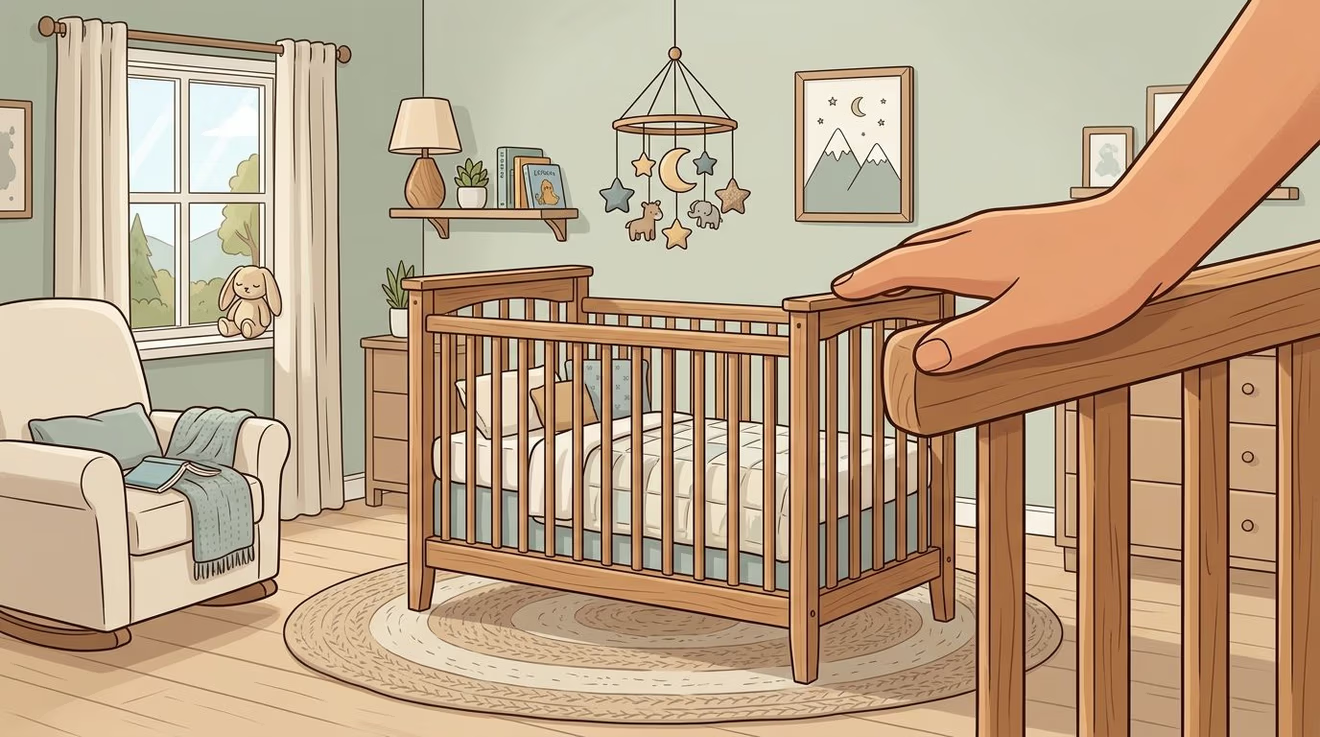
A crib can look sturdy from across the room and still tell a different story up close. The best clues show up in the wood itself, the way the parts are joined, and how the whole piece feels when a hand rests on the rail.
Why solid hardwood matters
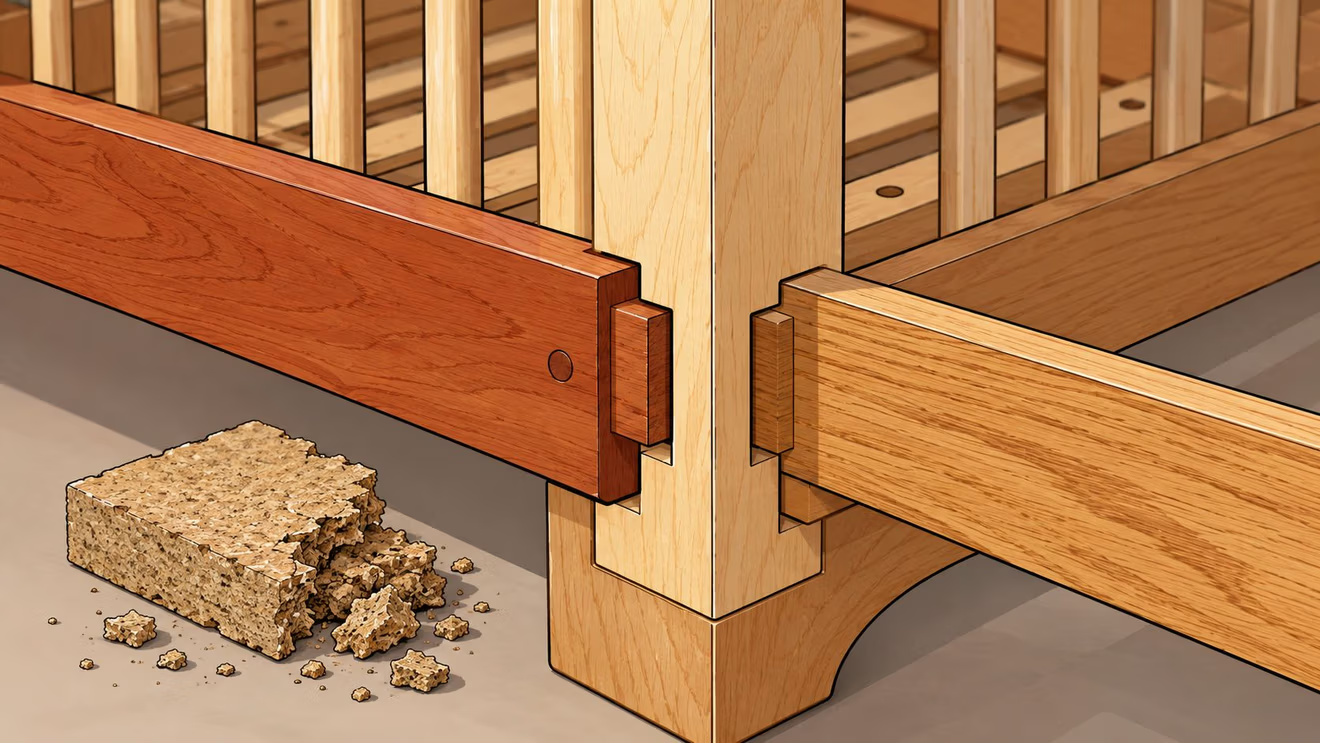
Amish-made baby cribs are typically constructed from solid hardwoods such as North American birch, maple, cherry, or oak, which provide higher density and mechanical strength than particleboard. The dovetail and mortise-and-tenon joints frequently used can withstand repeated assembly/disassembly cycles while maintaining joint integrity, which is critical for long-term safety according to this overview of Amish baby and kids furniture construction.
That matters because nursery furniture gets real use. A crib may be assembled, adjusted, converted, and moved. A dresser may be opened many times each day. Families don't need technical language to understand the result. Solid hardwood generally feels heavier, steadier, and more dependable than lighter composite alternatives.
The joinery matters just as much as the lumber. Many parents hear terms like mortise-and-tenon and wonder if they're just fancy showroom words. They're not. Those joints are a traditional way to lock wood components together so the piece stays strong over time. Families curious about the construction side can see a plain-language breakdown in this explanation of the mortise-and-tenon joint.
What joinery tells a parent
A nursery piece doesn't need to be ornate to be well made. It needs to be built with care in the places people don't always notice first.
- At the corners: Strong corner construction helps a crib or dresser resist loosening with daily use.
- At the rails and posts: These are high-stress areas. Good joinery helps them stay aligned.
- At moving parts: Drawers, mattress supports, and conversion points reveal whether the design was made for a short season or a long life.
A simple example helps. Two dressers can have the same size, same color, and similar hardware. One may feel smooth and planted when a drawer opens. The other may wiggle, catch, or sound hollow. Parents often recognize the difference immediately once they touch both.
Practical rule: If a crib or dresser feels light, shaky, or overly dependent on surface hardware, it probably won't inspire more confidence after years of family use.
This is also why many families connect Amish made baby furniture with heirloom potential. The point isn't nostalgia alone. The point is structure. Better materials and better joinery usually lead to a longer useful life.
A Healthy Start with Safe Materials and Finishes
A nursery is a small room with a big job. Babies sleep there, rest there, and spend long stretches close to the same surfaces every day. That's why materials and finishes deserve the same attention as style and storage.
Why nursery air quality matters
Many Amish-made baby furniture lines emphasize low-VOC or virtually VOC-free finishes, which are important in enclosed nursery environments. Solid-wood Amish cribs often use water-based, low-VOC stains certified to meet child-safe material standards, reducing off-gassing and improving indoor air quality as described in this collection of Amish cribs and finishes.
Parents often hear the term off-gassing and aren't quite sure what it means. In plain language, it refers to chemicals that can release from certain materials and finishes into the air over time. In a nursery, that issue feels more personal because the room is small and the child using it is especially sensitive.
What to ask before bringing furniture home
A thoughtful furniture conversation should include finish questions, not just color samples.
- Ask about the stain or clear coat. Families should feel comfortable asking whether the finish is water-based and low-VOC.
- Ask about the substrate under the finish. Solid wood and heavily processed pressed wood don't behave the same way.
- Ask how the surface feels. A good nursery finish should feel smooth, even, and well cured, not tacky or overly chemical.
There's a useful comparison here with other solid-wood rooms in the home. Families who've looked into dining furniture care and finish types will recognize similar concerns in this guide to choosing the best wood finish for a dining table. The nursery raises the stakes because the user is a baby.
A safe-feeling nursery usually comes from dozens of careful material decisions, not one dramatic feature.
Parents sometimes focus so much on crib dimensions and drawer counts that they forget to ask what's on the wood. That's understandable. Still, the finish is one of the most important parts of the buying decision, especially for families trying to create a calmer, cleaner room from day one.
Furniture That Grows with Your Family
The smartest nursery purchases usually do more than solve today's needs. They keep working when a baby becomes a toddler, when a changing setup disappears, and when the room starts looking less like a nursery and more like a child's bedroom.

The pieces families use the longest
The standout item here is usually the convertible crib. Many Amish-made baby cribs are built as 3-in-1 or 4-in-1 convertible units that transition from infant crib to toddler bed and then to a youth or full-size bed, effectively extending usable life across multiple developmental stages and reducing the need to purchase new beds as children age according to this overview of Amish kids furniture and convertible crib designs.
That kind of flexibility changes the buying decision. A crib stops being a short-term purchase and starts acting more like the first version of a long-term bed.
Other nursery pieces can pull the same trick.
- A dresser with a strong top surface: It can begin beside a changing pad and later stand on its own as regular bedroom storage.
- A solid nightstand or chest: It can move from nursery duty into a child's room or guest space without looking out of place.
- A well-built glider area companion piece: Small tables and storage units often keep serving long after bottles and burp cloths are gone.
How one nursery can keep serving for years
A family might start with a crib, dresser, and one accent piece. A few years later, the crib becomes a toddler bed. The dresser stays exactly where it is. The room gets new bedding and a fresh wall color, but the furniture still fits the stage of life.
That's one reason Amish baby furniture often earns the word heirloom. Not because every family wants to save every piece forever, but because the furniture doesn't force a quick replacement cycle.
Good nursery furniture should adapt when family life changes. It shouldn't become disposable the moment diapers are gone.
This is also where style matters in a quiet way. Clean wood designs tend to age well. A crib with balanced lines and a dresser with simple proportions can move through childhood without looking tied to one brief trend.
Budgeting for Quality A Smart Investment
Price matters. Every young family has a budget, and nursery furniture has to share that budget with a stroller, car seat, mattress, monitor, and all the rest. The useful question isn't whether Amish made baby furniture costs more up front. In many cases, it does. The better question is what a family receives in return.
What families are paying for
The broader context helps. The U.S. baby furniture market was valued at approximately USD 10.5 billion in 2023, and solid wood furniture has grown in importance. Retailers report that solid wood cribs frequently command 20 to 40 percent higher price points than comparable mass-produced cribs, underscoring the premium consumers are willing to pay for craftsmanship and durability according to this baby furniture market report.
That premium usually reflects a few things at once. Material quality is one part. Construction is another. Customization also plays a role, since handcrafted furniture often offers choices in wood, finish, and hardware that factory-made pieces may not.
A young family doesn't have to think of that higher initial cost as a luxury purchase. It can be a decision to buy fewer times, replace less often, and live with furniture that keeps doing its job.
Amish-Made vs. Mass-Produced Baby Furniture
| Feature | Amish-Made Furniture | Mass-Produced Furniture |
|---|---|---|
| Materials | Often solid hardwood | Often mixed materials, including engineered components |
| Construction | Traditional joinery and hand-finished details | More likely to rely on standardized factory assembly |
| Custom options | Wood, finish, and hardware choices are often available | Fewer personalization options |
| Timeframe | Often built to order, so waiting is common | Often faster to take home |
| Long-term use | Frequently designed for years of service | May suit a shorter ownership cycle |
| Feel in person | Usually heavier and more substantial | Can vary widely from piece to piece |
Some families will still choose a simpler starter option, and that's understandable. But when the goal is better long-term value, solid wood nursery furniture often makes a strong case for itself.
Come See the Difference for Yourself in Our Showroom
Reading about wood species, finishes, and joinery is helpful. Touching the furniture is better. Nursery buying gets easier the moment a parent opens a drawer, runs a hand along a crib rail, and feels whether the piece seems calm and solid or light and uncertain.
Why touching the furniture matters
This is one category where showroom shopping still makes a lot of sense. Parents can test how a dresser drawer moves with one hand. They can check whether a crib's finish feels smooth. They can stand back and see whether the scale works for the room they're planning at home.
That in-person experience matters even more when a family is comparing options that may look similar in a photo. A picture can show color and silhouette. It can't show weight, steadiness, or the difference between furniture that merely looks nice and furniture that feels dependable.
What local families can expect
For Metro Milwaukee shoppers, local guidance is part of the value. A seasoned furniture team can answer practical questions without turning the conversation into pressure. They can help families think through room size, storage needs, finish preferences, and whether a convertible piece makes sense for the long haul.
That kind of service is especially valuable in a family business that's been part of the community since 1928. Experience counts, and so does consistency. A showroom team with more than 400 years of combined experience has usually heard every nursery question a young parent can bring in. Families can also appreciate values that feel grounded in real life, including being closed on Sundays for family time and focusing on a buy-local approach.
Those who want to plan a visit can use the BILTRITE locations page before heading to Greenfield. Seeing real solid wood, USA-made, and Amish-made furniture in person often turns a complicated decision into a confident one.
Families shopping for a nursery deserve furniture that feels safe, beautiful, and built for everyday life. BILTRITE Furniture-Leather-Mattresses has served Metro Milwaukee since 1928 with affordable, better-quality furniture, Amish-made and USA-made favorites, and a friendly team that helps without pressure. Come on down to the showroom in Greenfield, say hello, and see the difference for yourself.