What Is Modular Furniture? Explore Benefits Today


A lot of families don't start by asking, “What is modular furniture?” They start with a problem.
The sofa won't make it around the stair landing in an older Milwaukee home. The guest room now needs to be a home office. The apartment living room has to handle movie night, toy storage, and a spot to stretch out after a long day. Furniture that looked fine in the store suddenly feels like it's asking the family to change their life to fit it.
That's where modular furniture starts making sense. For families dealing with tight hallways, changing rooms, and growing households, modular pieces can be less about trends and more about relief. They're built to adapt, to separate, to expand, and to work harder in the same square footage.
At a family-owned store that has served Metro Milwaukee since 1928, those problems aren't abstract. They're everyday conversations. Older homes, condo living, downsizing, kids, pets, guests, and moves all change what furniture needs to do. Modular design gives families more ways to keep a room useful without starting over each time life shifts.
Table of Contents
- Your Furniture Should Fit Your Life Not the Other Way Around
- So What Is Modular Furniture Anyway
- The Many Faces of Modular Furniture
- The Good The Not So Good and The Honest Truth
- Is Modular Furniture Right for Your Family
- How to Choose Modular Pieces Like a Pro
- Let Us Help You Find Your Familys Flexible Fit
Your Furniture Should Fit Your Life Not the Other Way Around
A family buys a full-size sofa for the basement. Delivery day arrives. The sofa clears the front door, clears the hallway, and then loses the battle at the turn in the stairwell. That story has played out in plenty of older homes, flats, and duplexes around Milwaukee.
Another household starts with a formal sitting area. A few years later, that same room needs toy storage, a reading corner, and extra seating when relatives visit. The furniture didn't break. Life just changed faster than the room did.
That's the issue. A lot of furniture is made for one layout, one purpose, and one stage of life.
Practical rule: If a piece only works in one exact spot and one exact season of life, it may be too rigid for a busy household.
Modular furniture offers another path. Instead of one fixed piece doing one fixed job, it gives a family smaller parts or flexible units that can be arranged to suit the room they have. In plain language, it's furniture that can change shape, expand, separate, or move more easily when the home needs something different.
That matters in smaller homes, apartment living, and any house where one room wears several hats. It also matters for people who want smart sizing from the beginning. Families comparing layouts often find helpful ideas in small space furniture solutions for apartments and compact rooms.
Why this matters in real homes
Some families need a sectional that can add seating later. Others need shelves that grow upward instead of outward. Some just need a sofa that can come apart for delivery and future moves.
Modular design answers all three. It isn't about making a room look technical or trendy. It's about giving the room a little breathing room so the people living there don't feel boxed in.
So What Is Modular Furniture Anyway
Modular furniture is furniture made from separate parts, often called modules, that work together as a system. Those parts can be arranged in different ways, added to later, or separated when the room or household changes.
Think building blocks for grown-ups
The easiest way to understand what is modular furniture is to think of grown-up building blocks. One unit might be a chair section. Another might be a corner. Another could be an ottoman or storage piece. Put them together one way and the room gets a cozy sectional. Rearrange them and the same pieces may work better for conversation, lounging, or a future move.
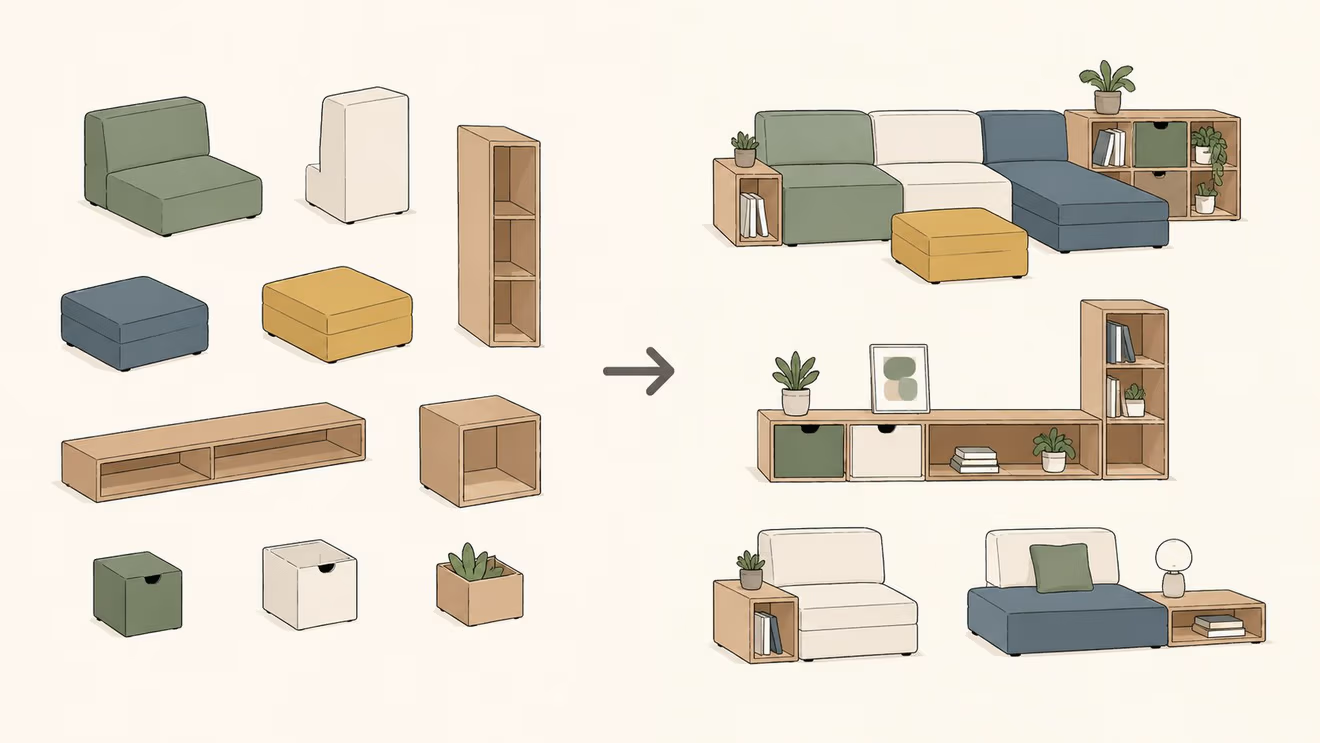
That idea applies well beyond sofas. Bookcases can be built from stackable sections. Home office setups can combine desks, storage, and work surfaces. Bedroom pieces can be planned around changing needs instead of one fixed arrangement. Families looking at multipurpose rooms often get useful ideas from this guide to multifunctional home office furniture.
Why it became such a big deal
Modular furniture didn't appear out of nowhere. The modern idea is closely tied to the 20th century, when designers responded to urbanization and smaller living spaces with simple, functional, adaptable pieces that could be mass-produced and made more accessible, as discussed in research on the evolution of furniture design and modular adaptability.
That history helps explain why modular design shows up so often in apartments, condos, offices, and homes where every room has to earn its keep. It solves a practical problem. People need furniture that can do more than sit in one place forever.
| Traditional furniture | Modular furniture |
|---|---|
| Usually fixed in one form | Built from separate parts |
| Harder to adjust later | Easier to rework later |
| Often sized for one layout | Can adapt to changing rooms |
| Moving can be more awkward | Pieces may separate for transport |
The short version is simple. If a piece can be reconfigured, rebuilt, or modified to fit changing space, that's modular.
The Many Faces of Modular Furniture
A lot of families hear “modular” and picture one thing. Usually a sectional. In real homes, it shows up in far more places than that.
In Milwaukee, that matters. A family might be setting up a Bay View bungalow with a narrow stair turn, helping a college student furnish a smaller apartment, or trying to make one spare room work as office, guest room, and homework zone. Modular furniture helps because it gives you pieces that can be arranged, separated, added to, or adapted instead of locking you into one fixed setup.
Seating that comes apart and comes together
Sofas and sectionals are still the clearest example. A modular sofa is built from individual pieces such as armless chairs, corner units, chaises, and ottomans that connect to create one larger seating plan. It works a bit like building blocks for grown-up living rooms. You start with the shape your room needs now, then adjust if life changes later.
That flexibility becomes very real during delivery day. In older Milwaukee homes, one big sofa frame can be a wrestling match through a tight entry, steep basement stair, or second-floor landing. Come-apart seating gives families another option. The pieces go in separately, then connect in the room. If you want a closer look at layout choices and sizing, this sectional buying guide explains what to know before buying a sectional.
A sofa can feel substantial without being one giant piece.
That is one reason families often ask us about come-apart sofas in the store. They want comfort and durability, but they also want something that can get into the house, survive a future move, and still make sense if the room gets rearranged.
Storage that grows with the room
Storage is another place modular design shines. A shelving system can begin as a low unit under a window, then expand upward or outward later. That makes sense in kids' rooms, playrooms, and family rooms where the amount of stuff never seems to stay the same for long.
The same idea applies to media cabinets and wall units. You might start with a simple base for the TV, then add matching storage as your needs change. That gives a family room some breathing room. It also helps avoid the all-or-nothing decision that comes with a large one-piece wall system.
Workspaces and bedroom pieces with some breathing room
Modular desks and workstations follow the same basic logic. One setup might start with a desk surface and a small storage piece. Later, it may need room for two people, more filing, or better organization for school papers, crafts, or remote work. Instead of replacing everything, you adjust the setup.
Bedrooms can use modular ideas too. That may mean configurable storage, nightstands that coordinate with changing layouts, or pieces that help a smaller room work harder. In an apartment or older home where every inch counts, that kind of flexibility can be more practical than a perfectly matched set that only works one way.
Some of the most common forms include:
- Living room seating: Sectionals, armless chairs, corner units, ottomans, and chaises
- Storage pieces: Stackable shelves, cabinets, and media units
- Bedroom furniture: Adaptable storage and flexible room layouts
- Home office furniture: Desks, return pieces, storage modules, and shared work surfaces
The easiest way to understand it is this. Modular furniture works like a set of well-made parts instead of one fixed object. For Milwaukee families dealing with tighter spaces, changing needs, and the hope that furniture will last through more than one chapter of life, that can be a very practical difference.
The Good The Not So Good and The Honest Truth
A Milwaukee family usually figures out the value of modular furniture at a very practical moment. It might be the day a sofa has to go up a narrow stairwell in a Bay View duplex. It might be after a move into an older bungalow where the room looks generous on paper but every doorway says otherwise. That is where modular furniture can be a real help, or a real letdown if the piece was built for the showroom and not for everyday life.
Where modular shines
At its best, modular furniture gives a family options without asking them to start over. You can begin with the pieces you need now, then adjust the setup as your room, household, or budget changes. In a smaller apartment, that may mean a sofa that fits the space today and can grow later. In an older Milwaukee home, it may mean sections that are easier to carry, turn, and place than one large fixed piece.
That flexibility matters most when the construction is done well. Good modular furniture works like a set of well-made building blocks. The parts should connect securely, sit evenly, and still feel solid after being rearranged more than once. For households trying to make the most of tighter rooms, older entries, or multi-use spaces, that can be a much better answer than forcing one oversized piece into a home that was never designed for it.
It can also save a lot of frustration. A single damaged section may be replaceable. A room update may call for a new layout, not a whole new purchase. Families furnishing condos or starter homes often see the same benefit in small space convertible furniture ideas for apartments and tighter layouts.
Where buyers should slow down
Flexibility is not the same thing as value.
Some modular pieces cost more up front, and some earn that price better than others. The difference usually shows up in the details a shopper cannot judge from a quick glance across the showroom. If the connectors are flimsy, the sections can drift apart. If the cushions are inconsistent, one seat feels great and the next feels flat. If add-on pieces disappear a year later, the whole promise of "grow with you" gets weaker.
A few things deserve a closer look:
- Connector quality: Sections should stay together during normal family use, not slide apart every time someone sits down.
- Seat feel across modules: The corner seat, center seat, and chaise should feel like they belong to the same sofa.
- Future availability: If you may add pieces later, ask whether matching modules are likely to remain available.
- How it behaves on your floor: Area rugs, hardwood, and smooth surfaces can all affect how stable a sectional feels.
- Delivery into the home: A modular piece that comes apart can be a lifesaver in older houses with tight stairs and sharp turns.
The honest truth
Modular furniture is a smart solution for many families, but it is not automatically the right one. It works best for people whose homes or lives change enough to use that flexibility, and who choose a piece built strongly enough to handle real family living.
That last part matters a lot.
In our world, the most dependable modular pieces are the ones that do two jobs at once. They solve a space problem today, and they keep doing their job years from now. That is why durable construction, steady comfort, and repairable design matter just as much as the ability to rearrange. A come-apart sofa for a tight stairwell is helpful. A come-apart sofa that still feels solid after years of kids, guests, movie nights, and moves is the one that earns its place in your home.
Is Modular Furniture Right for Your Family
For many households, the better question isn't just what is modular furniture. It's whether modular furniture matches the way the family lives.
It's not a niche category anymore. The global modular furniture market was estimated at USD 89 billion in 2025 and one report says 68% of urban households prefer space-efficient modular solutions, showing how strongly this category connects with city and suburban living in this modular furniture market analysis.
Three households that often benefit most
The first group is apartment and condo households. In neighborhoods with tighter footprints, furniture has to fit the room, the hallway, and the building. Smaller-scale modular seating and configurable storage can make a compact layout feel more usable day to day. Families exploring this kind of setup often look at small space convertible furniture ideas.
The second group is growing families. A couple may begin with a simple sofa and later need extra seats for kids, sleepovers, or movie night. Modular seating can give that room a little runway. The layout can change as the household changes, without throwing everything out.
The third group is downsizers, seniors, and caregivers planning a more manageable home. A smaller room can still feel comfortable if the furniture is scaled thoughtfully and arranged with purpose. Modular pieces can help create seating and storage without crowding the space.
A quick gut-check helps:
| Household situation | Modular may be a good fit if |
|---|---|
| Apartment or condo living | access is tight and rooms do more than one job |
| Growing family | seating and storage needs keep changing |
| Downsizing | the new space needs flexibility without clutter |
| Frequent movers | furniture must separate and travel more easily |
Modular furniture isn't mandatory for every home. But for households in transition, it often makes daily life smoother.
How to Choose Modular Pieces Like a Pro
A Milwaukee family can fall in love with a sofa in five minutes and still end up frustrated on delivery day. The room looks right on paper. Then the stair turn in a Bay View bungalow is tighter than expected, or the apartment elevator is smaller than the building manager remembered. Choosing modular furniture well starts before fabric swatches and color names.
Start with the room and the route
Measure the space where the piece will live. Then measure the path it has to travel to get there. That includes doorways, stairwells, hallway corners, elevator openings, and low basement ceilings.
This part trips people up.
A modular sofa can solve access problems because it comes in sections, but only if each section fits through the tightest point. Older Milwaukee homes are full of charm. They are also full of narrow turns that punish guesswork. If you have ever tried to carry a full-size sofa into a duplex with a sharp stair landing, you already know the lesson.
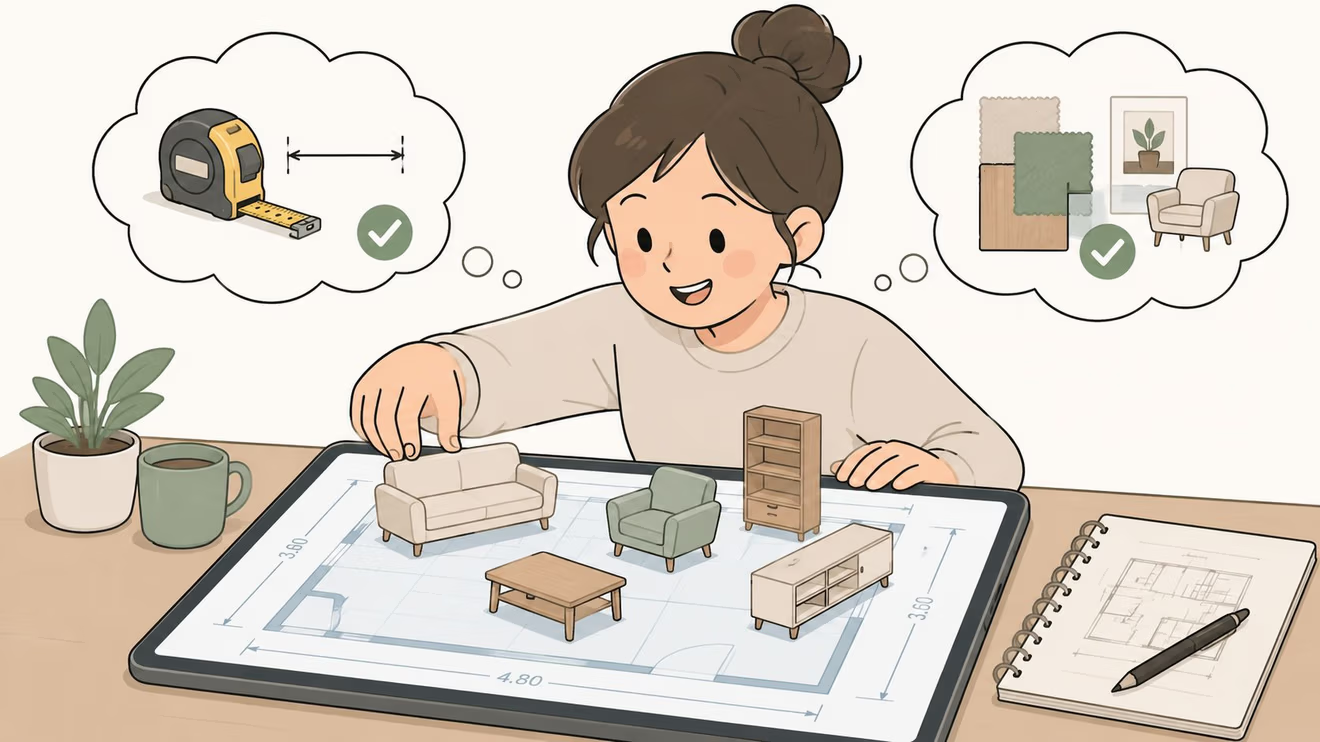
It helps to sketch the room too. A simple drawing shows whether the layout leaves walking space, keeps outlets reachable, and gives everyone a place to sit without crowding the room.
Check construction before color
Fabric gets the attention. Construction earns the long life.
Modular furniture works like a sectional with a handshake system. Each piece has to stand strong on its own, then connect cleanly with the next piece without shifting, squeaking, or drifting apart over time. That is why the build matters so much, especially for busy households with kids, pets, or frequent guests.
Use a practical checklist:
- Frame strength: Look for a frame that feels steady and well-built, not light or shaky.
- Connection hardware: Ask how the sections lock together and whether they stay aligned on real floors, not just in a showroom.
- Cushion and cover care: Find out what can be cleaned, rotated, repaired, or replaced.
- Future options: Ask whether you can add another piece later if the room or family changes.
- Delivery access: Confirm the size of each individual module, not just the overall dimensions of the finished setup.
If your family wants furniture that will stay in service for years, this is also where craftsmanship matters. Well-built modular pieces, including some come-apart designs and Amish-made options, tend to hold up better because the joinery, materials, and fit are treated with more care from the start.
Finish with comfort and customization
Once the frame and layout make sense, sit in it the way you would use it on a normal weeknight. Lean back. Put your feet up. Check the seat depth. Notice whether the arms are chunky and space-hungry or scaled well for the room. In a smaller apartment or an older home with modest room sizes, a few extra inches in the wrong place can make the whole setup feel cramped.
Customization helps here because families do not all live the same way. One household needs a compact sectional that can come apart for a move. Another wants a tougher fabric that can handle juice boxes, dogs, and Saturday movie night. If you want to compare layouts, materials, and finishes in person, custom furniture options made simple is a useful place to start.
One rule has served families well for generations. Buy for an ordinary Tuesday. If the piece works for homework, naps, guests, snack spills, and the path to the laundry room, it will usually keep working long after delivery day.
Let Us Help You Find Your Familys Flexible Fit
Modular furniture works because life doesn't stand still. Families grow, rooms change jobs, people move, and houses keep asking for creative solutions. Furniture that can separate, expand, reconfigure, or adapt often makes those changes easier to handle.
That's especially useful in a place like Metro Milwaukee, where one household may be furnishing a compact apartment and another may be working around the quirks of an older home with narrow access. Flexibility matters, but quality matters just as much. A modular piece only earns its keep when it's built well enough to stay comfortable and dependable over time.
Since 1928, a fourth-generation family furniture business in Greenfield has helped local households sort through these practical questions with a face-to-face, low-pressure approach. For shoppers who want to compare layouts, materials, and construction in person, custom furniture options made simple can be a helpful place to start.
The biggest advantage of visiting a showroom is simple. Families can sit on the furniture, look at scale, test comfort, ask about delivery challenges, and talk through the room they're trying to solve. That's often the fastest way to tell whether modular furniture is the right fit, or whether another style would serve the home better.
For families who want flexible seating, small-space solutions, Amish-made pieces, solid wood furniture, or a better look at quality before buying, a visit to BILTRITE Furniture-Leather-Mattresses in Greenfield is the next step. The showroom serves Metro Milwaukee with a friendly, experienced team, and it gives shoppers a chance to see, touch, and compare options in person.