Custom Upholstery Fabric: Durable & Beautiful Choices

A lot of people reach the same point the same way. They look at the sofa where movie nights happen, where the dog naps, where kids sprawl out with snacks, and they think, “The frame still feels good. The room still needs this piece. But the fabric has had a life.”
That's where custom upholstery fabric becomes exciting instead of stressful. A well-loved chair, sofa, or sectional doesn't always need to be replaced with something generic. Sometimes it needs a fresh surface, a smarter material, and a little guidance from someone who knows how fabric choices play out in real homes.
Custom work can feel overwhelming online. Tiny swatch photos, vague fabric names, and too many choices can leave shoppers guessing. A hands-on showroom experience changes that. People can touch texture, compare colors side by side, and talk through how a piece gets used every day.
Your Furniture Refresh Starts With a Dream
A family sofa usually tells the truth about a home. One arm might be slightly darker from years of use. One cushion might be the unofficial favorite seat. The fabric may have done its job faithfully, but it no longer fits the room or the season of life.
That's often where the idea begins. Not with a technical spec sheet, but with a simple hope. A calmer living room. A chair that feels fresh again. A sectional that still works for the family, only with fabric that looks better and holds up better.
A familiar Milwaukee story
In Metro Milwaukee, many households don't want furniture that feels disposable. They want something that suits the room, supports daily life, and still feels welcoming years from now. Custom upholstery fabric gives them a chance to choose the look and feel instead of settling for whatever happens to be on the floor.
That kind of guidance matters. BILTRITE describes itself as a fourth-generation family-owned business serving the Metro Milwaukee area since 1928, and a 2025 Milwaukee Magazine feature notes that the company has “come a long way since 1928” while remaining locally and family-owned, as shared in this Milwaukee Magazine feature on BILTRITE's local family ownership.
A long history doesn't make fabric selection automatic. It does make the conversation calmer. Families often need help answering basic questions first. Should the next fabric feel soft, easy to clean, tightly woven, casual, dressy, or all of the above?
Custom upholstery works best when the shopper starts with real life, not just a color card.
Start with the room people actually live in
A good fabric choice usually starts with a few honest observations:
- How the piece gets used: A formal sitting room asks something different from the main family sofa.
- Who uses it most: Kids, pets, guests, and older adults all put different demands on upholstery.
- What the room needs visually: Sometimes the room needs warmth. Sometimes it needs contrast. Sometimes it needs calm.
People who feel stuck often benefit from beginning with room planning before fabric planning. That's why a guide like home design where to begin can help frame the bigger picture before anyone falls in love with the wrong swatch.
A furniture refresh usually starts as a dream, but it comes together through small, clear decisions. Fabric is one of the biggest of those decisions, and understanding the language around it makes the whole process easier.
Understanding Upholstery Fabric Lingo
Fabric terms can sound more complicated than they are. Once the basics are translated into plain language, most shoppers catch on quickly. They don't need jargon. They need a few practical ways to judge comfort, durability, and maintenance.
This is one place where custom upholstery fabric gets easier in person. Texture, weave, softness, and thickness are hard to judge from a screen.
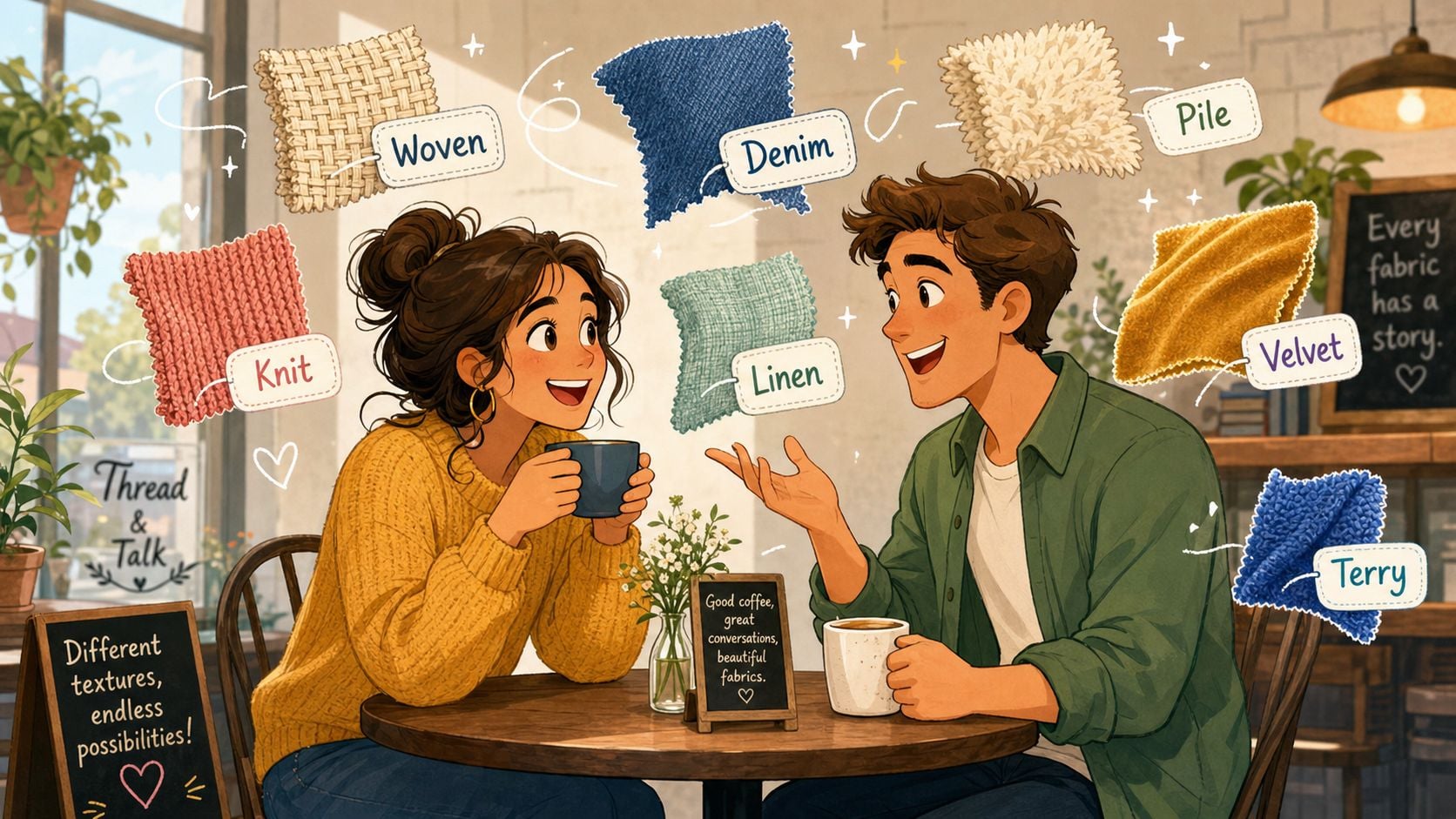
The fabric families in simple terms
Most upholstery choices fall into a few broad groups.
- Natural-feeling fabrics: These often give a soft, relaxed, welcoming look. They can feel breathable and comfortable, especially in everyday seating.
- Synthetic blends: These are often selected because they're practical workhorses. They can handle regular use and are often easier to maintain.
- Performance fabrics: These are chosen when a household needs beauty and tougher day-to-day behavior from the upholstery.
None of those categories is automatically right for every home. A quiet guest room may not need the same fabric profile as the sofa where everyone gathers nightly.
What double rubs actually mean
The term double rubs sounds technical, but the idea is straightforward. It's a durability measure used to help judge how well upholstery fabric can stand up to repeated friction.
Industry standards use Wyzenbeek double-rub testing, with 15,000 rubs as a minimum for low-traffic residential use and 30,000 or more for high-traffic family rooms, according to this upholstery durability overview on Wyzenbeek standards.
That number becomes easier to understand with simple examples:
- A guest bedroom chair: Lower daily wear. A fabric meeting the residential minimum may be suitable.
- A reading nook used every evening: Moderate wear. Durability starts to matter more.
- The main family-room sofa: Constant sitting, lounging, climbing, and repeated cleanup. Under these circumstances, higher durability gains significant importance.
Practical rule: A fabric's feel matters on day one. Its durability matters every day after that.
A few words that often confuse shoppers
Here are the terms that usually deserve translation:
- Weave: This is how the fabric is constructed. A tighter weave often feels sturdier and can wear differently over time.
- Hand: This means how the fabric feels to the touch. Soft, crisp, smooth, textured, and plush all describe hand.
- Cleanability: This is how realistic the fabric is for your household when spills, lint, or pet messes happen.
- Performance: This usually points to fabrics designed for demanding use, especially in busy homes.
Shoppers who want a plain-English starting point can browse everything to know about upholstery materials before stepping into a showroom.
A fabric label shouldn't make anyone feel lost. It should answer one core question. Will this hold up, and will this fit the way the home is used?
Matching Your Fabric to Your Family's Lifestyle
Most fabric mistakes happen when people shop with their eyes only. A swatch may look beautiful and still be wrong for the room. That's why lifestyle should lead the decision.
One of the biggest gaps in furniture advice is performance-based fabric selection for modern households. Many guides don't explain the tradeoffs among stain resistance, abrasion resistance, and cleanability for homes with kids, pets, and heavy daily use, as noted in this discussion of upholstery questions for real households.
The Pet and Kid Zone
In homes with children or pets, fabric needs to forgive a lot. Paw traffic, snack crumbs, jumping, leaning, and quick cleanups all add up.
For these spaces, shoppers often do well to prioritize:
- Easy cleanup: A fabric that won't turn every small spill into a crisis.
- Steadier texture: Some fabrics show fur, marks, or wear patterns more quickly than others.
- Solid day-to-day durability: The main sofa needs different protection than a decorative bench.
A soft, delicate fabric may still work in that home, but often on the right piece. An accent chair in a lower-traffic corner is a different story from the sofa everyone piles onto after dinner.
The Heavy-Duty Hangout
Some rooms do all the work. The family room, finished basement, and everyday den are where furniture has to earn its keep.
In those rooms, shoppers usually compare custom upholstery fabric by asking three direct questions:
- Can it handle repeated use?
- Will it stay looking respectable between cleanings?
- Does it still feel good enough for long evenings?
Performance fabrics often make sense here, not because they're flashy, but because they can reduce regret. A living room used hard every day benefits from fabrics chosen for abrasion resistance and realistic maintenance.
The right fabric for a busy room should lower stress, not raise it.
Serene spaces for seniors
Senior living spaces and lift-chair settings often call for a different balance. The fabric should feel comfortable, but it also needs to be practical for routine care.
In these rooms, many households look for:
- Comfortable hand: The fabric shouldn't feel harsh or overly stiff.
- Manageable cleaning: Easy upkeep matters.
- Reliable wear: The chair or sofa may be used daily and for long stretches.
This is also where texture matters. Very rough surfaces can feel less inviting over time, while very delicate ones may not hold up as hoped.
Fabric Matchmaker Chart
| Lifestyle Need | Best Fabric Choices | Key Benefit |
|---|---|---|
| Busy family room | Performance fabrics, tightly woven durable blends | Better resistance to daily wear |
| Pets in the house | Easy-clean performance options, lower-fuss textures | Less stress around mess and fur |
| Young kids | Stain-conscious fabrics with practical cleanup | Easier maintenance after spills |
| Guest room seating | Softer decorative fabrics, lower-traffic options | More flexibility in style |
| Senior seating or lift chairs | Comfortable, durable, easy-care fabrics | Better balance of comfort and upkeep |
| Dining chairs | Practical fabrics with good cleanability | More forgiving for everyday meals |
Households that want a closer look at these tradeoffs can review the benefits of performance fabrics.
A smart match isn't about chasing the fanciest material. It's about choosing a fabric that respects how the room gets used, who uses it, and how much maintenance the household wants to do.
Finding Your Style with Colors and Patterns
After durability and lifestyle are sorted out, the fun part opens up. Color and pattern turn a useful furniture decision into a personal one. Custom upholstery fabric begins shaping the mood of the whole room.
A fabric can make a piece feel quieter, warmer, lighter, richer, or more grounded. That doesn't mean every decision has to be dramatic. Some of the most satisfying rooms are built from simple choices that hold together well.
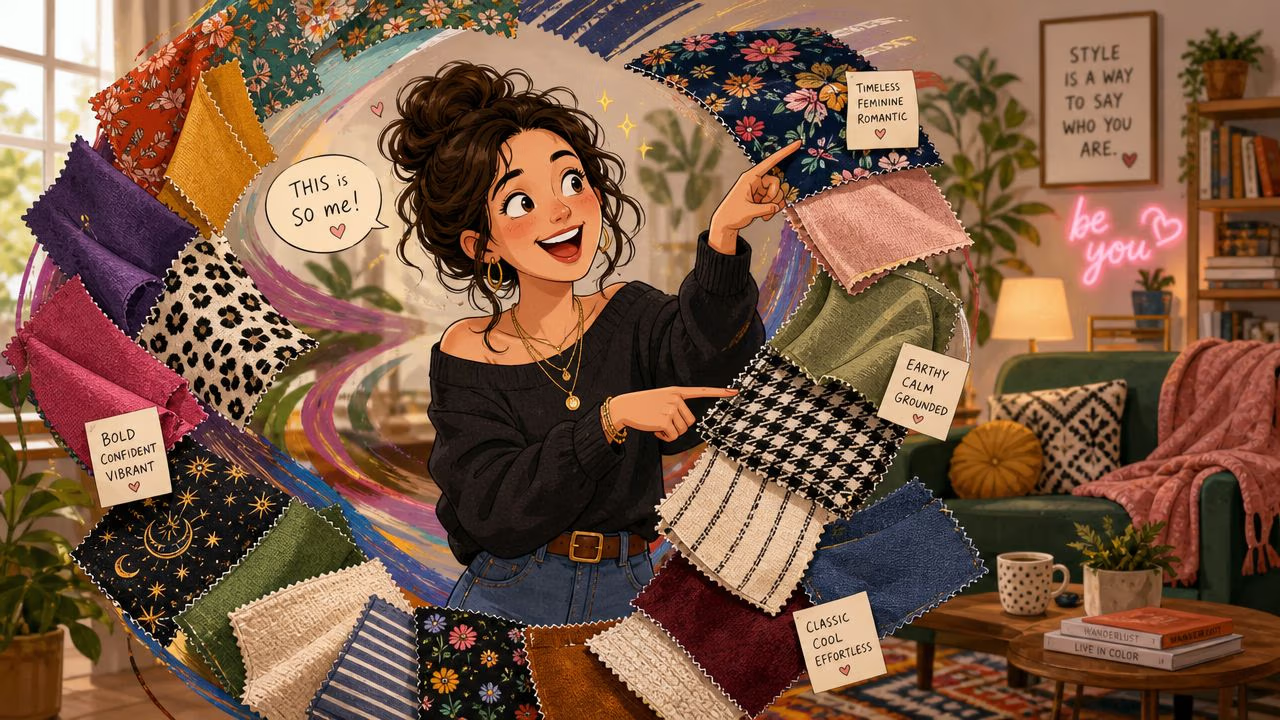
Start broad, then narrow down
Many shoppers feel pressure to pick the exact “right” color too early. It's easier to start with a wider direction.
- Neutrals for large pieces: Sofas and sectionals often stay visually flexible in grounded, quieter shades.
- Patterns for smaller pieces: Accent chairs, ottomans, and occasional seating can carry more personality.
- Texture for depth: Even a solid fabric can bring a lot to the room if the weave or surface has visual interest.
A large patterned sofa can absolutely work. It just asks more of the room around it. For many homes, it's easier to keep the main piece calmer and add personality through smaller upholstered items.
Why swatches should go home
Fabric doesn't look the same everywhere. Showroom light, morning light, afternoon sun, and evening lamp light can all shift the color and mood.
That's why physical swatches matter so much. People should look at them next to flooring, paint, rugs, and wood tones already in the home. A fabric that seemed warm in the store may read cooler at home. Another may suddenly feel just right once it's placed against the room's actual finishes.
Take the swatch to the room, not just to the checkout decision.
People looking for help pairing upholstery with surrounding finishes can use an expert's guide to the perfect color palette as a starting point.
A simple style filter
If the options begin to blur together, this quick filter usually helps:
- If the room already has a lot happening, a quieter upholstery choice often brings balance.
- If the room feels flat, texture or a subtle pattern can wake it up.
- If the piece is meant to last through changing trends, a classic base fabric often gives more flexibility later.
That's one of the pleasures of shopping locally and in person. A shopper can sit with the choices, feel the materials, compare them under real light, and make a decision with more confidence than a screen usually allows.
Our Simple Custom Order Process
The biggest advantage of a guided showroom experience is risk reduction. Many shoppers don't need more choices. They need someone to narrow the choices to the ones that make sense for the room, the budget, and the way the furniture will be used.
That's especially true with custom upholstery fabric, where one wrong turn can affect comfort, appearance, maintenance, and overall satisfaction.
What a guided process helps prevent
One overlooked part of custom upholstery is ordering risk. Buyers often wonder whether they should source their own fabric, how much yardage they need, and how custom choices change the final cost. Those questions are often scattered across different bits of advice instead of being explained clearly in one place, as discussed in this overview of upholstery questions shoppers should ask before ordering.
That matters because fabric decisions affect more than looks. They affect ordering accuracy, waste, and whether the finished result matches expectations.
How the showroom process usually works
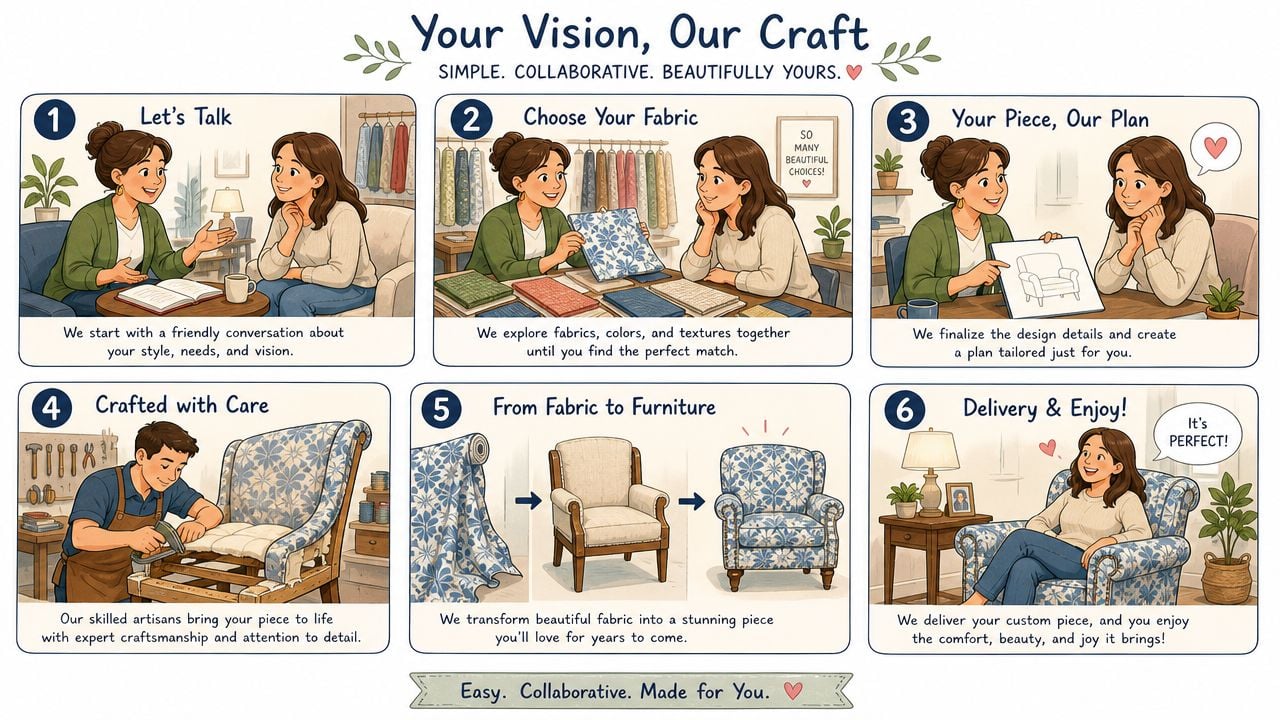
A practical custom order process tends to move through a few steady stages.
Conversation first
The shopper talks through the room, the furniture piece, and daily use. A family-room sofa and a formal chair won't get the same recommendation.Fabric choices get narrowed
Instead of flipping through endless options without context, the selection gets filtered by use, feel, and style.Swatches and comparison
Materials are compared side by side. Texture, color, and visual weight become easier to judge in person.Construction and customization details
This may include style decisions, scale, comfort preferences, and other finishing choices.Order review
Questions about pricing, material selection, and specifications are checked before the order moves ahead.Delivery and setup
The finished piece arrives with fewer surprises because the decision-making happened carefully upfront.
Why USA-made and Amish-made options matter here
Customization tends to be especially meaningful when the furniture itself is built with long-term ownership in mind. An independent Milwaukee-area article notes that the showroom specializes in quality American-made furniture, including Amish furniture, which supports the practical value of custom choices in domestically made and handcrafted categories, as described in this OnMilwaukee profile of BILTRITE's American-made and Amish focus.
That connection matters. Better customization makes more sense when applied to furniture built to stay in the home for a long time.
One local option for that guided process is custom furniture made simple at BILTRITE Furniture-Leather-Mattresses, where shoppers can work through fabric, comfort, and finish decisions in person rather than guessing from a screen.
A custom order should feel more like a careful fitting than a blind leap.
For many households, that's the true value. Not just more choices, but better choices with less uncertainty.
Let's Find Your Family's Next Favorite Piece
Once the fabric is chosen well, daily care gets much easier. Upholstery doesn't need complicated attention, but it does benefit from consistency. Light vacuuming, prompt cleanup, and following the fabric's care guidance can go a long way toward keeping the piece looking fresh.
Shoppers also benefit from learning the cleaning code attached to a fabric before the piece arrives. That way, routine maintenance feels familiar instead of intimidating. A home with pets, kids, or everyday entertaining should always think about upkeep before falling in love with appearance alone.
Why heritage still matters
Custom upholstery fabric isn't only about trends. It's tied to a much older idea. People want furniture that feels like it belongs in their home and suits the way they live.
That's part of why heritage carries weight here. BILTRITE traces its roots to 1928, when Irwin Kerns founded the business as an upholstery shop, a beginning that still fits naturally with conversations about fabric, craftsmanship, and custom furniture choices, as noted in BILTRITE's history page about founder Irwin Kerns.
A local, family-first way to shop
There's also something refreshing about a business that still lives its values plainly. The showroom is closed on Sundays, and that family-first rhythm tells shoppers something useful about the kind of place they're walking into. It isn't built around hurry. It's built around helping people make thoughtful choices.
For Milwaukee-area homeowners, that local approach can make custom selection feel much more manageable. Instead of chasing mystery fabrics online, they can sit on the furniture, study the swatches, ask real questions, and leave with a clearer sense of what fits their space.
The next favorite chair, sofa, or sectional usually starts with one honest conversation. A tired piece doesn't always mean the end of the story. Sometimes it's just the beginning of a better one.
A visit to BILTRITE Furniture-Leather-Mattresses gives Milwaukee-area shoppers a chance to explore custom upholstery fabric in person at 5430 West Layton Avenue in Greenfield. Families can compare swatches, talk through daily-use needs, and get help choosing USA-made and Amish-made furniture that fits their home with care and common sense.