Navigate Tight Spaces: Couches That Can Be Taken Apart

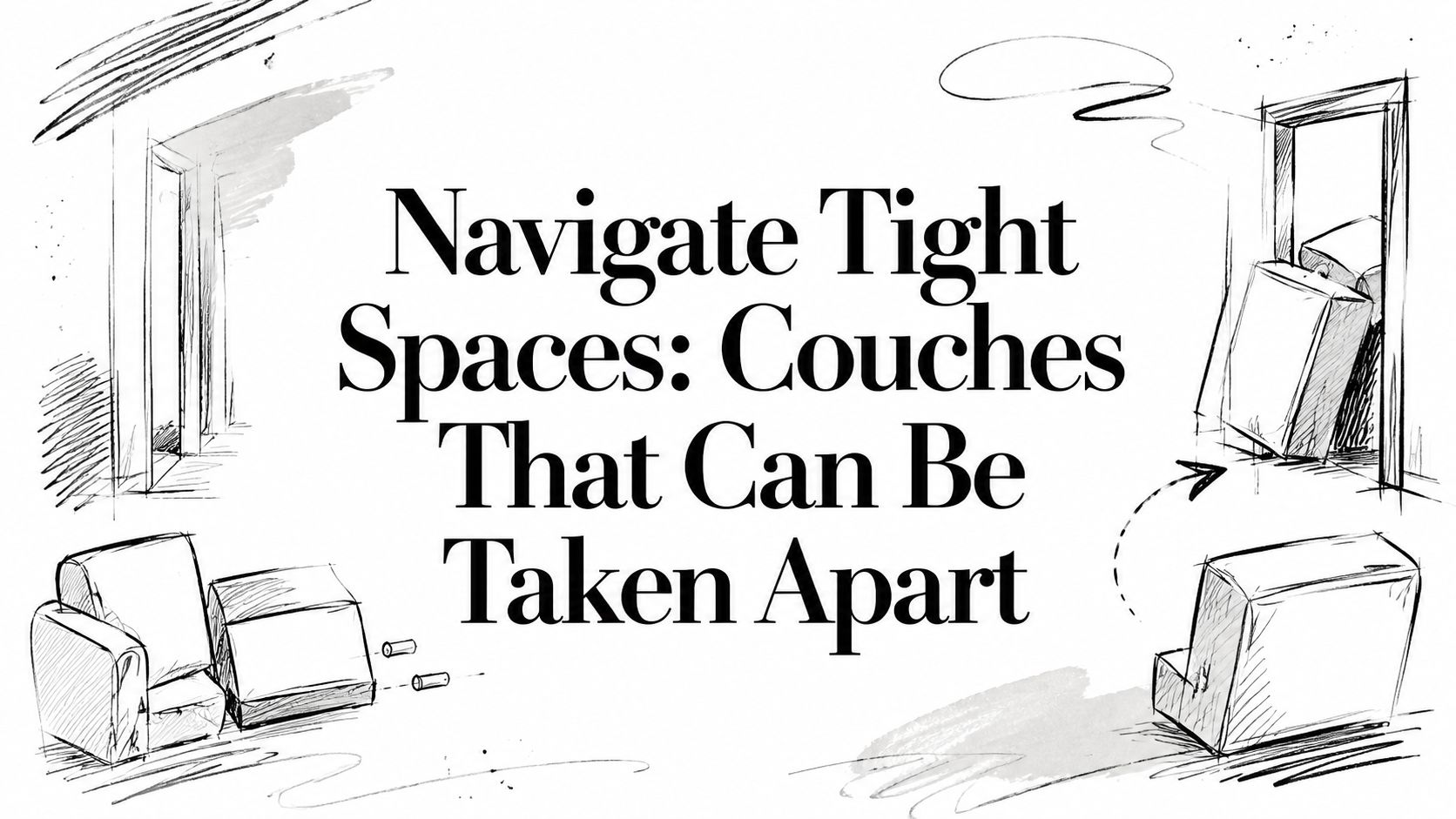
A lot of Milwaukee-area furniture stories start the same way. A sofa looks manageable in the showroom, manageable in the driveway, and then suddenly very unmanageable at the front door of a bungalow, up a split-level stair, or around that one basement turn that seems to shrink by the minute.
That's why so many shoppers ask about couches that can be taken apart. They're not just a clever idea. They solve a real home-access problem, especially in older houses, apartments, condos, and senior living spaces where doorways, stairwells, and elevators set the rules. Modern sectional and modular designs became such a major furniture category partly because separate sections can be moved more easily through tight spaces than one fixed-frame sofa, as noted in this guide to sectional construction and moving flexibility.
For a family-owned Milwaukee furniture store that's been helping local households since 1928, this topic isn't abstract. It's daily life. It's the difference between “That'll fit” and “How on earth are they getting that upstairs?”
Table of Contents
- That “PIVOT!” Moment We All Know Too Well
- What Are Come-Apart Couches Anyway
- The Amazing Benefits of a Flexible Sofa
- What to Look For When You Shop
- Our Favorite Come-Apart Styles at BILTRITE
- Getting Ready for Delivery and DIY Basics
- Your Come-Apart Couch Questions Answered
That “PIVOT!” Moment We All Know Too Well
Sofa access is often overlooked until moving day. Then the truck is outside, the entry feels narrower than ever, and somebody is standing on a landing saying, “Turn it. No, the other way.”

In Metro Milwaukee, that scene happens all the time. Charming older homes have personality. They also have tight vestibules, short hallway turns, steep staircases, and low-clearance corners that don't care how much anyone likes a big comfy couch.
A fourth-generation furniture family hears these stories every week. Since 1928, local shoppers have walked into the Greenfield showroom with phone photos of stairwells, hand-written doorway measurements, and that worried look that says, “This sofa has to work, because Plan B isn't looking good.” That's exactly where couches that come apart earn their keep.
Why this matters in Milwaukee homes
Some furniture is built with access in mind from the start. That can mean sections that separate cleanly, backs that remove for delivery, or layouts that break into manageable pieces instead of one oversized frame.
For anyone dealing with an older duplex, upper flat, condo elevator, or narrow side entry, furniture for narrow doorways isn't a niche category. It's practical problem-solving.
Older homes have charm. Smart furniture helps them stay livable.
The stress isn't just about moving day
A stuck sofa creates more than a funny story. It can lead to scuffed walls, damaged trim, scraped upholstery, and a whole lot of second-guessing. That's why the right question isn't just “Do they like the style?” It's also “Can this piece get into the room without drama?”
That small shift in thinking saves people headaches. And it opens the door to a category of seating that more shoppers should know about.
What Are Come-Apart Couches Anyway
People often get tripped up here. Come-apart couch sounds simple, but it can describe a few very different designs.
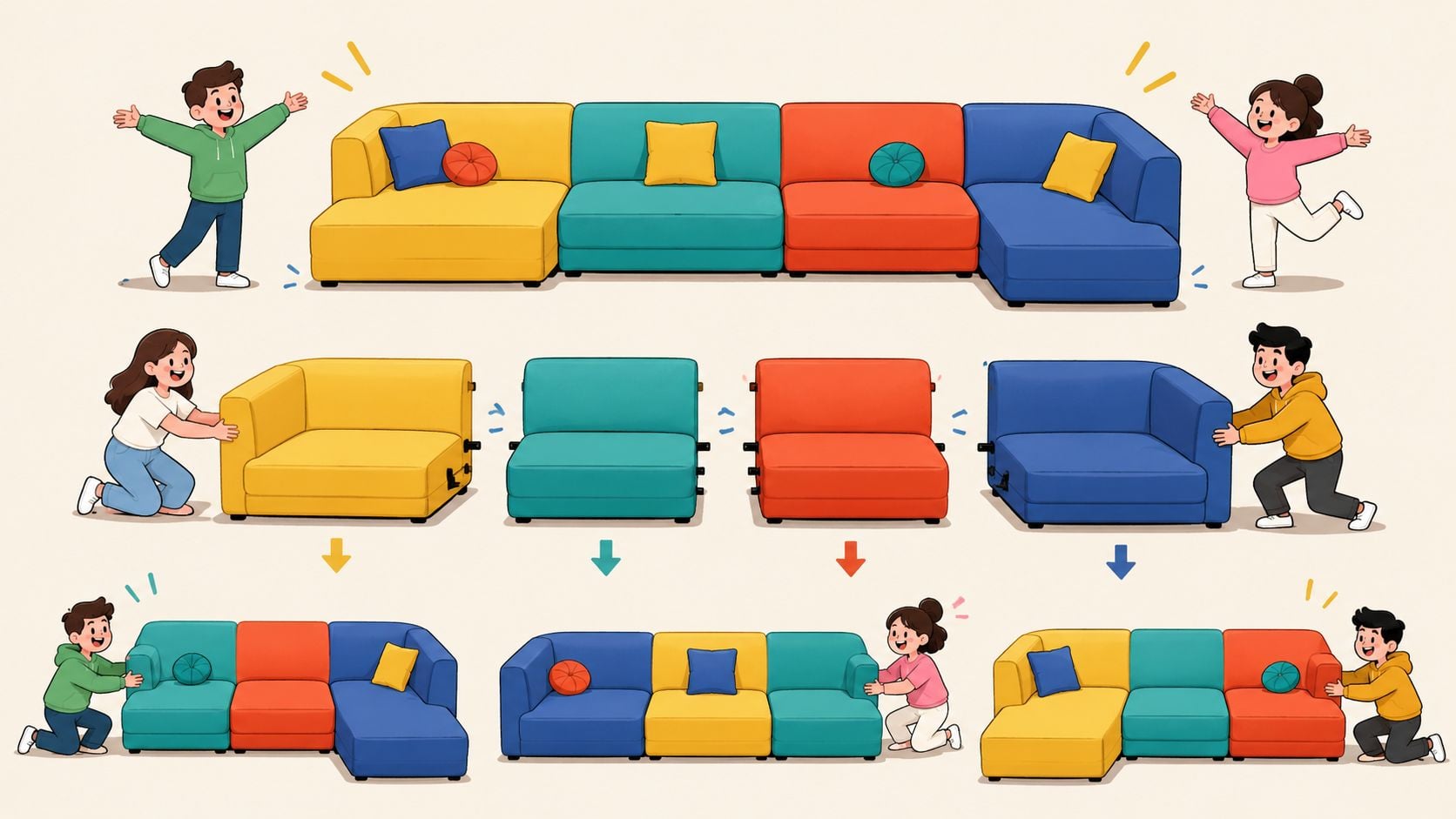
Some are made for regular rearranging. Others only separate when somebody needs to get them through a doorway. Those are not the same thing, and shoppers should treat them differently.
Two main types shoppers should know
Here's the easiest way to think about it.
| Type | What it means | Best for |
|---|---|---|
| True modular sofa | Built from separate portable sections, often called modules, that can be rearranged as needs change | People who want layout flexibility |
| Delivery-friendly sofa or sectional | Has removable parts, hidden brackets, bolts, or backs that come off mainly for transport or setup | People whose main problem is access |
A true modular design acts a bit like furniture building blocks. One household might place the chaise on the left today, then switch things around after a move or remodel. Another piece may separate only so the delivery team can get it inside, then stay in that one configuration for years.
Industry explainers make this distinction clear. Many sofas separate using hidden bolts or removable backs designed for moving, which is different from true modular systems with consumer-friendly connectors meant for regular layout changes, as described in this sectional sofa explainer.
Why the difference matters
A shopper who wants to host movie night one month and open up floor space the next needs one kind of couch. A shopper in a Milwaukee duplex who needs the sofa only to make one brutal stair turn needs another.
That's why the phrase couches that can be taken apart can cause confusion. It sounds like one feature, but there are really separate use cases:
- Frequent reconfiguration: for people who like to change room layouts
- One-time access help: for people who need the piece delivered through a difficult path
- Service access: for owners who may need to remove parts later for maintenance or moving
Practical rule: Ask not just “Does it come apart?” Ask “Is it designed to come apart once, or regularly?”
A simple example
A family in a smaller condo might choose a modular sectional because they may move in a few years and want furniture that adapts. A couple in a classic Milwaukee bungalow may choose a sofa with a removable back because their front entry and stair geometry are the main issue, not daily rearranging.
Both choices can be smart. The key is buying the right kind of flexibility.
The Amazing Benefits of a Flexible Sofa
The first benefit is obvious. Delivery gets easier. But that's only the beginning.
Come-apart seating also helps with cleaning, maintenance, room changes, and long-term usefulness. That matters for real households, not magazine living rooms. Kids spill things. Pets claim corners. People move, downsize, upsize, and switch rooms around.
Cleaning gets a lot less intimidating
One of the strongest selling points in recent years has been cleanability. Public-facing product coverage has highlighted disassemblable couches with fully removable and machine-washable covers, including examples marketed as removable and washable down to the inserts, as discussed in this article about washable couches.
That shift matters because washable or removable components let owners clean parts of the sofa instead of treating one stain like a full-house emergency.
A practical household benefit looks like this:
- One cushion problem: A spill affects one section, not the entire sofa.
- Pet cleanup: Hair, muddy paw prints, or accidents are easier to deal with when covers come off.
- Longer use: Owners can maintain the sofa instead of giving up on it early.
Flexibility after the sale
Some furniture works only for the room it was bought for. Flexible sofas can keep working after life changes.
A modular piece may suit a family room now, then adapt to a condo later. A sectional may fit a large open plan today, then break down into a more efficient arrangement after a move. That kind of adaptability is useful for first homes, growing families, and senior living transitions.
A good flexible sofa doesn't just survive delivery day. It stays useful when the household changes.
Better access can protect the furniture too
People often focus on whether the sofa can get in. They should also think about how it gets in. A piece that separates properly is less likely to be forced through a bad angle. That can reduce stress on frames, upholstery, and wall surfaces.
For local households trying to make the most of smaller footprints, sofas for small spaces often make more sense when they combine scaled-down dimensions with smart construction.
It's a practical kind of value
Affordable, better-quality furniture isn't about buying the lowest price tag. It's about buying something that works for the way people live. Flexible construction can support that goal because it addresses use, maintenance, and access all at once.
That's one reason this category keeps getting attention. It solves old problems in a very straightforward way.
What to Look For When You Shop
A couch can look perfect on the showroom floor and still become a headache if it is wrong for your doorway, stair turn, or daily routine. Around Milwaukee, that happens more than shoppers expect. Old bungalows, narrow upper flats, condo elevators, and basement family rooms all create different access problems, so the best choice is usually the one that fits both the home and the way the piece is built to live there.
That is the first distinction to make. Some couches come apart once, mainly to get through a tight opening during delivery. Others are modular, which means the pieces are meant to be rearranged as your room or household changes. A lot of confusion starts right there. If you want flexibility for years, shop for a sofa designed for repeat reconfiguration, not just a sofa that happens to separate for moving day.
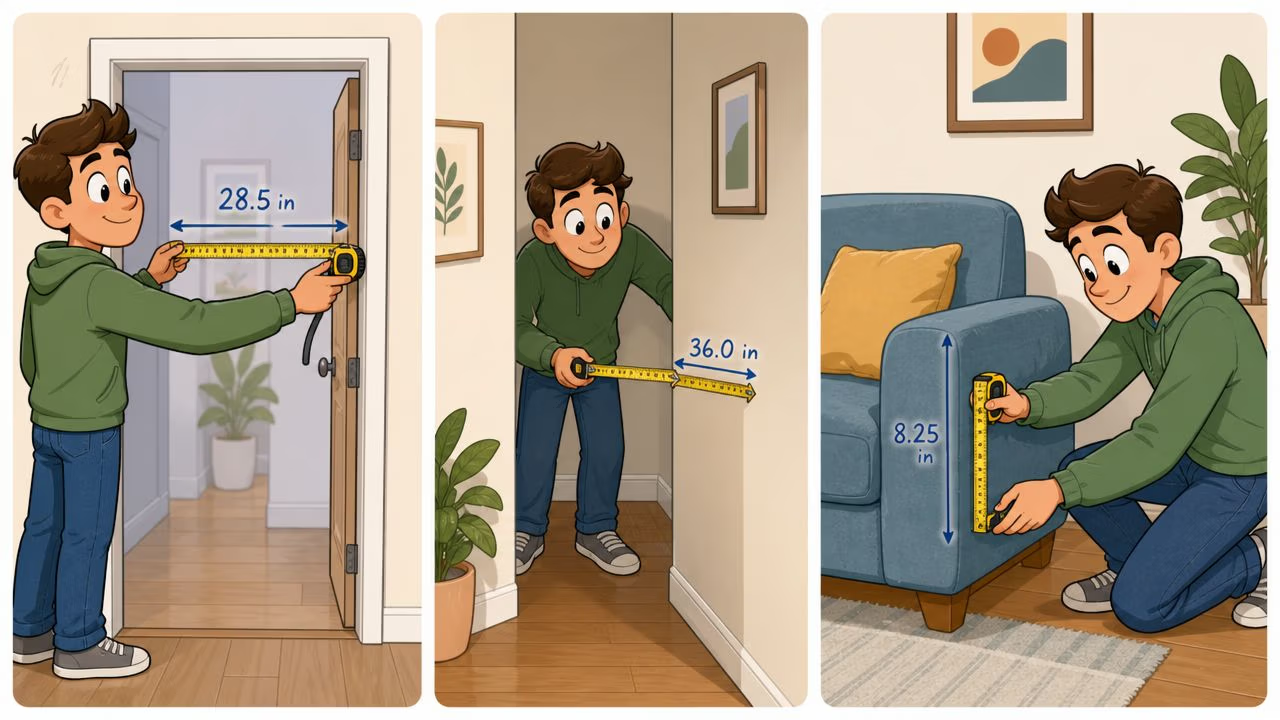
Start with measurements that matter
The wall where the sofa will sit is only part of the story. The main test is the full path from outside the home to the final room.
In Milwaukee-area houses, the trouble spots are often the ones people miss at first glance. Front steps with a railing that narrows the approach. A storm door that cuts into the opening. A stair landing where the ceiling drops lower than expected. Those little pinch points matter because furniture moves through a home like a boat through a lock. If one section is too tight, everything stops.
A better measuring checklist includes:
- Entry points: front door, side door, back door, apartment door
- Travel path: hall width, corner clearance, stair landings, elevator interior
- Final room: wall length, traffic space, nearby windows, nearby tables or lamps
For sectional shoppers, how to measure for a sectional sofa gives a clear step-by-step way to check those dimensions before you buy.
Ask how the sofa comes apart
This question saves people a lot of frustration.
Some pieces have sections that lock together readily and come back apart just as easily. Others require more effort, tools, or a technician-style approach. Neither option is automatically wrong. It depends on what you need. A family that may rearrange the room every year should shop differently than a homeowner who only needs the sofa to make one tricky trip up a Bay View staircase.
Ask the salesperson questions like these:
- Does it separate for delivery only, or for regular reconfiguration too?
- Do the connectors come apart by hand, or do they require tools?
- Will the joining points stay aligned with everyday use?
- If one section is damaged later, can that section be serviced or replaced?
That last point gets overlooked. In a real home, kids flop, pets climb, and people slide into the same favorite seat every night. The connection system should hold up under actual use, not just look clever on paper.
Check the seat, seams, and support in person
A come-apart couch still has to feel like one good couch when it is assembled.
Sit across the connection points. Shift your weight. Look at the cushion line from the front and from the side. If the seams make the sofa look chopped into blocks, or if one seat feels firmer than the next, you will notice it more at home than you do in the showroom.
Here is what I would pay attention to first:
- Frame stability: the sections should feel planted, not wobbly
- Seam placement: the breaks between pieces should look clean and intentional
- Cushion consistency: each seat should feel supported, not uneven
- Fabric practicality: choose a cover that suits pets, kids, guests, and daily wear
Photos help too. Bring pictures of your doorway, staircase, and room. Numbers tell part of the story. Photos show the shape of the problem.
Match the construction to your household
A good furniture choice works a little like a good winter coat in Wisconsin. It has to suit the conditions you live in.
A condo owner in downtown Milwaukee may care most about tight-access delivery and a smaller footprint. A family in Franklin may want a sectional that stays put, feels sturdy, and stands up to heavy use. Someone helping a parent move into senior living may want simpler assembly and easier room access without a lot of fuss later.
That is why the strongest shopping decision usually balances these four priorities:
| Priority | Why it matters |
|---|---|
| Access | The couch has to make it through the real path into the home |
| Comfort | The seat depth, back support, and cushion feel have to work every day |
| Durability | Frames and connectors should hold up with regular use |
| Maintenance | Cleaning, service, and future moves should feel manageable |
Shoppers who slow down and check those basics usually make better long-term choices. The goal is not just getting a couch into the house. The goal is getting one that still makes sense after the delivery team leaves.
Our Favorite Come-Apart Styles at BILTRITE
Some shoppers need a sofa for a narrow Bay View stair. Others need a sectional that works in a Franklin family room now and still makes sense after the next move. That's why this category isn't one-size-fits-all.
In the Greenfield showroom, shoppers can look for the store icon that marks Come Apart Sofas & Sectionals. That makes it easier to spot pieces built for tight-access deliveries, changing layouts, or both.
Styles that solve different problems
The most useful way to shop this category is by life situation.
- Small-scale seating: helpful for apartments, condos, and senior living spaces where every inch matters
- Heavy-duty sectionals: built for busy family rooms and frequent use
- Customizable configurations: useful when the room shape is awkward or the household wants a desired configuration
Many shoppers also want construction that feels worth bringing home. That often leads them toward USA-made and Amish-made furniture, plus solid wood where the design calls for it.
Why in-person shopping helps here
This is one furniture category that benefits from hands-on checking. A shopper can sit on the seam area, look at the connector placement, test the scale in person, and ask whether the piece is built for repeated rearranging or simple delivery access.
That kind of side-by-side evaluation is hard to replace with screen shopping. It also helps when a household has a very Milwaukee-style challenge, like a two-family upper with a tight turn at the top of the stairs, or a brick ranch with a compact side entrance.
A local advantage that matters
BILTRITE Furniture-Leather-Mattresses offers come-apart sofas and sectionals as part of its showroom selection in Greenfield, alongside small-scale, heavy-duty, USA-made, and Amish-made furniture. For shoppers who want to compare construction styles in person and ask detailed fit questions, that showroom setup gives them a practical place to do it.
The right sofa for a tricky home isn't always the biggest or the trendiest one. It's the one that fits the space, the path, and the people using it.
Custom can help when standard sizes don't
Some homes need a little more thought. Maybe the room works with a chaise, but only on one side. Maybe the seat depth matters because one person likes to lounge and another wants firmer upright support. Maybe the household needs durable fabric because the dog has already claimed the sunny corner.
That's where custom options become useful. Fabric, leather, configuration, wood, and finish choices can help shoppers build something that feels at home in their space instead of squeezed into it.
For a store that has served Metro Milwaukee since 1928, that kind of problem-solving is part of the everyday conversation.
Getting Ready for Delivery and DIY Basics
Once the sofa is chosen, a little prep makes delivery day smoother. Most problems happen before the furniture even reaches the room. Shoes pile up by the door. A narrow console table stays in the hallway. Wall art hangs right where the turn gets tight.
A clear path helps the delivery team work safely and helps the furniture arrive in better shape.
Before the truck arrives
A quick home prep checklist goes a long way:
- Move small obstacles: floor lamps, rugs, baskets, and accent tables
- Protect delicate areas: fresh paint, sharp corners, and flooring transitions
- Keep pets and kids clear: delivery paths need space and calm
- Double-check the destination room: make sure old furniture is out of the way
Households that want more setup support often ask about white glove delivery service because it helps take some of the strain out of the process.
How sectional pieces usually go together
Most come-apart sectionals use mechanical connectors that disengage by lifting one module, then go back together by aligning and pushing the sections into place. Once reassembled, the fit often gets tighter as the foam compresses and the joints settle, as shown in this demonstration of sectional connectors and reassembly.
That means two things for shoppers. First, alignment matters. Second, a freshly assembled sectional may feel a bit different on day one than it does after it has settled in.
If a sectional seems slightly loose right after setup, that doesn't automatically mean something is wrong. Proper alignment and normal settling matter.
A note on DIY disassembly
Some owners like to handle future moves themselves. That can work, but caution helps. Practical teardown guidance often starts with non-structural parts like cushions, then moves to lower coverings or visible connectors, because that gives better access to the hardware and lowers the chance of damaging the frame.
Not every sofa is meant for frequent homeowner disassembly, so if the piece uses hidden hardware or more involved fastening, it's smart to ask before trying to take it apart later.
Your Come-Apart Couch Questions Answered
A few questions come up in our Greenfield showroom week after week, especially from Milwaukee-area shoppers trying to solve an old-house doorway, a narrow stair turn, or a room that needs to change with the family.
Are couches that can be taken apart less durable
Durability comes from the bones of the piece. The frame, the joinery, the quality of the connectors, and how the sofa is meant to be used all matter more than whether it separates.
A couch built to come apart one time for delivery can still be solid for everyday sitting. A true modular sofa, the kind designed to be rearranged as life changes, should also have hardware and construction made for repeated setup. That distinction helps clear up a lot of confusion.
Will people feel the seams
Sometimes, but usually less than shoppers expect.
It depends on where the sections meet, how the cushions are built, and how well the pieces line up. A good modular design works a bit like fitted cabinet doors. If the parts are made well and set correctly, the joints do their job without calling attention to themselves. In real use, many people notice the overall comfort long before they notice a seam line.
Can one piece be added later
Often yes, if you are buying a true modular collection.
That is one of the biggest differences between a sofa that merely comes apart for moving and one built for everyday flexibility. Some designs separate only so they can get into the home, then stay in that shape. Others are more like building blocks, so you may be able to add an armless chair, chaise, or corner piece later. The catch is availability. Collections can change, fabrics can be discontinued, and sizing has to match, so it helps to ask those questions up front.
What if the main challenge is the stairs
That is a very Milwaukee question.
Bungalows, duplexes, older apartment buildings, and upper flats often have tight turns that look fine until moving day. In that case, focus on measurements, removable parts, and the actual path into the room, not just the sofa's description online. If you are planning an upstairs setup, our guide on how to move heavy furniture upstairs helps you spot trouble points before delivery day.
A good come-apart couch solves two different problems, and it helps to know which one you are buying for. One type is built to get through the house once. The other is built to adapt to the way you live, whether that means reworking a basement hangout, adding seating after a move, or fitting a condo today and a larger home later.
That is why seeing these sofas in person still matters. At BILTRITE Furniture-Leather-Mattresses in Greenfield, shoppers can compare the pieces side by side and get help from a 4th-generation family business that has spent a long time helping Milwaukee households match furniture to real homes, real staircases, and real daily life.