Leather Furniture and Cats

A lot of families stand in front of a leather sofa and have the same thought. “This would look great in the living room. But what about the cat?”
That's a fair question. A sleek leather sofa and a cat with sharp opinions can feel like a bad match. Still, leather furniture and cats can absolutely live in the same house when the choice is smart and the routine is realistic.
At BILTRITE, that kind of real-life furniture problem comes up all the time. Since 1928, this fourth-generation family business has helped Metro Milwaukee families buy furniture for actual homes, not staged rooms that never see pets, kids, or a busy weeknight. The goal isn't to pretend cats won't act like cats. The goal is to help families choose furniture that looks good, lives well, and holds up with the right care.
Table of Contents
- Yes You Can Have Both Leather Furniture and Cats
- Choosing Cat-Friendly Leather in Our Showroom
- A Cat-Owner's Prevention Playbook
- Quick Cleaning for Fur and Minor Scuffs
- Repairing Deeper Cat Scratches Like a Pro
- Find Your Family's Next Heirloom at BILTRITE
Yes You Can Have Both Leather Furniture and Cats
A couple walks into the showroom. One person is sold on leather. The other is thinking about the family cat launching onto the armrest every evening. That's usually where the conversation starts, and it should. Leather furniture and cats can work together, but only when the family goes in with open eyes.
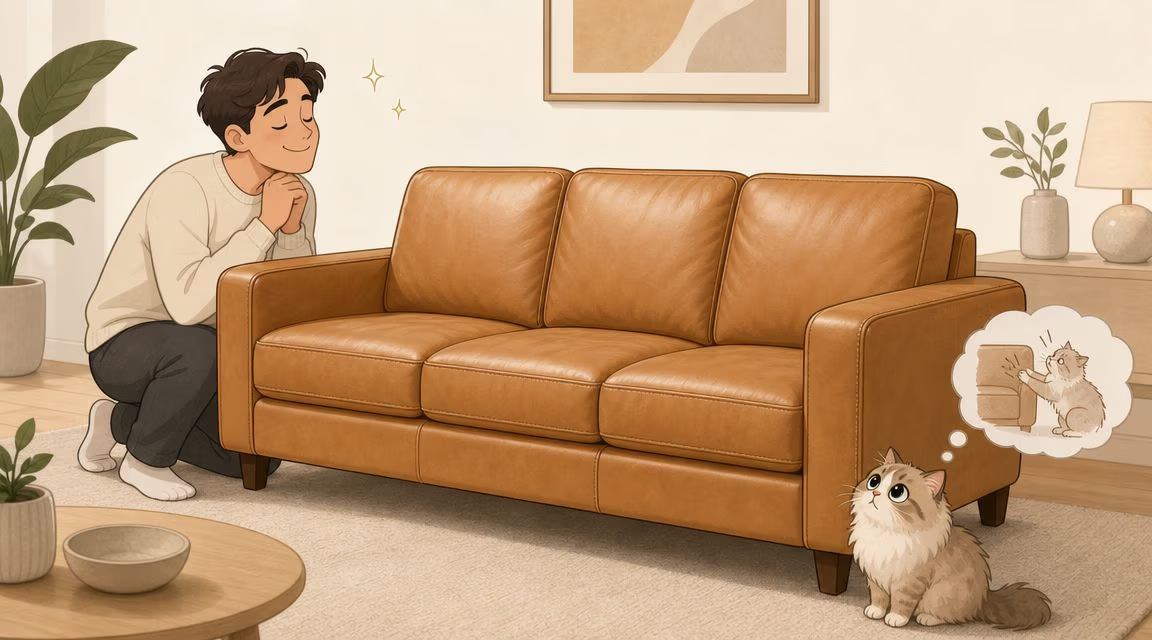
The biggest mistake is assuming leather is invincible. It isn't. Scratching is normal feline behavior used for exercise, claw maintenance, and scent marking, and consumer guidance notes that leather can be a “prime target for cat claws” even though it resists odors and hair better than fabric, as explained in this guidance on cats scratching leather.
What that means in plain English
Leather is a strong, cleanable, long-lasting material. It's just not scratch-proof. That's the honest answer.
Practical rule: Buy leather because the family likes how it looks, feels, and cleans up. Don't buy it because someone promised the cat can't mark it.
That sounds blunt, but it's helpful. Families usually do better when they treat leather as a material that can age well, not one that stays untouched forever. A busy home gives furniture character. The key is choosing the right leather and building a few habits around it.
For many cat owners, leather is still a solid choice because fur doesn't bury itself into the upholstery the way it can with many fabrics. Day-to-day cleanup is simpler. The tradeoff is obvious. Claws can leave a mark if the cat picks that sofa as the favorite scratching spot.
That's why the smartest path isn't fear. It's strategy.
Choosing Cat-Friendly Leather in Our Showroom
Not all leather behaves the same way in a cat household. That's where a lot of shoppers get tripped up. They hear “genuine leather” and assume every leather sofa offers the same level of durability. It doesn't.
What to look for first
For homes with cats, top-grain and full top-grain leather are often recommended because of their thickness and durability. Distressed leather also deserves serious attention because its worn-in look helps hide minor abrasions, according to this pet-friendly leather guidance.
That leads to a simple opinion. If a family has cats and wants leather, they should start by looking at thicker leathers and finishes that forgive a little life.
A smooth, pristine leather with a very polished look can be beautiful in the showroom. It can also show every little mark at home. Distressed leather often makes more sense for a family room because it doesn't ask the piece to stay flawless.
Cat-Friendly Leather Comparison
| Leather Type | Cat-Friendliness Rating (1-5) | Best For |
|---|---|---|
| Full top-grain leather | 5 | Families who want durability and a stronger surface |
| Top-grain leather | 4 | Everyday seating with cats in the home |
| Distressed leather | 4 | Households that want minor abrasions to blend in visually |
| Smooth dyed leather | 3 | Lower-risk cat households that stay on top of prevention |
Why in-store shopping matters
Leather is one of those categories that needs hands, eyes, and honest conversation. Photos don't tell the whole story. Families need to sit on it, touch the finish, see how the color shifts in the light, and ask whether the leather will show every little scuff.
That's one reason a showroom visit matters so much in Greenfield. A family can compare a soft, polished look against a more relaxed distressed look in the same afternoon. They can also see which scale fits the room, which matters just as much as the upholstery when a cat likes to perch, nap, or leap across cushions.
The smartest leather choice for cat owners usually isn't the fanciest-looking one. It's the one that stays attractive after real life happens.
This is also where American-made and Amish-made construction can help. Strong frames, quality cushions, and better overall build matter because a cat household isn't only about claws. It's about repeated daily use. A sofa that's built well from the inside out gives the family more value over time.
One practical note belongs here too. If leather already feels like more maintenance than the household wants to take on, that's worth admitting before the purchase. Some cat owners are happier with a tightly woven synthetic or microfiber-style option. That doesn't mean leather is wrong. It means the family should choose the material that matches their habits, not their fantasy routine.
A Cat-Owner's Prevention Playbook
A cat usually gives you a warning before real damage starts. It paces near one arm, hooks a claw during a stretch, or keeps circling the same corner cushion. Act then. Once that spot becomes part of the daily routine, breaking the habit takes a lot more work.

The families who do best with leather and cats usually follow a simple plan. Give the cat a better place to scratch, keep claws trimmed, and protect the favorite trouble spots while the new habit sticks. Nail caps and furniture guards can help too, as outlined in this cat-owner furniture guide.
Start with the scratching setup
A scratching post in a far corner rarely solves anything. Put the scratching surface beside the exact spot your cat wants to use. If the sofa arm is the target, the post or pad belongs right there.
Then make that new spot worth using. Some cats want sisal. Others prefer cardboard or carpet. Watch what your cat already goes after and match it. Reward the behavior the second it happens with a treat, a little praise, or a quick play session. Fast timing matters.
- Place it close: Keep the post or pad beside the sofa.
- Match the texture: Choose a surface your cat already likes to scratch.
- Reward right away: Reinforce the behavior while the cat still connects action and reward.
Keep claws managed
Claw trimming will not stop a cat from scratching. It will limit how much leather gets torn up when the cat does it, and that alone makes a big difference over time.
Some families also do well with nail caps during a training period. They are a practical short-term tool, especially for one cat that keeps returning to the same arm or corner. If your cat hates them, skip them and focus on trimming plus redirection.
A good prevention routine should be easy enough to repeat on a busy Tuesday.
Use barriers that buy you time
You do not need to turn the room into a plastic-wrapped museum. Cover the problem area instead. A throw over one arm, a temporary scratch guard, or a fitted furniture protector can interrupt the habit long enough for the cat to accept a better scratching spot.
Stay calm while you do it. Yelling usually adds stress and makes the behavior harder to change. Quiet redirection works better in real homes, especially with cats that are already keyed into one favorite scratching zone.
That practical, family-first approach matters in the showroom too. The right leather choice helps, but the daily routine at home is what keeps it looking good for years.
Quick Cleaning for Fur and Minor Scuffs
Daily mess is the part leather usually handles well. Fur, dust, and those faint little marks from a jump up or slide off the cushion are annoying, but they usually aren't a crisis.
For fur and daily dust
Use a soft dry cloth first. That alone handles a lot more than people expect. Leather doesn't trap cat hair the way many fabrics do, so regular wipe-downs go a long way.
A quick routine works best.
- Wipe the seat and arms: Focus on the places where the cat lounges or lands.
- Check seams and corners: Hair likes to gather there.
- Stay gentle: Rough scrubbing does more harm than the fur ever did.
A family that spends a minute or two every few days usually keeps the piece looking tidy without turning furniture care into a project.
For light surface scuffs
Minor surface scuffs often look worse than they are. Start simple.
Use a clean, soft cloth and gently buff the area in small motions. If the leather still looks dry or slightly dull afterward, a leather-safe conditioner can help restore a more even appearance. The key word is light. This section is for marks on the surface, not deep claw channels.
Small scuffs should be treated like routine maintenance, not a sign the sofa is ruined.
One more piece of practical advice. Don't let dust, grit, or tracked litter sit on the seating surface. Tiny particles can act like sandpaper when people or pets move across the leather. Consistent light cleaning is easier than trying to undo neglect later.
Repairing Deeper Cat Scratches Like a Pro
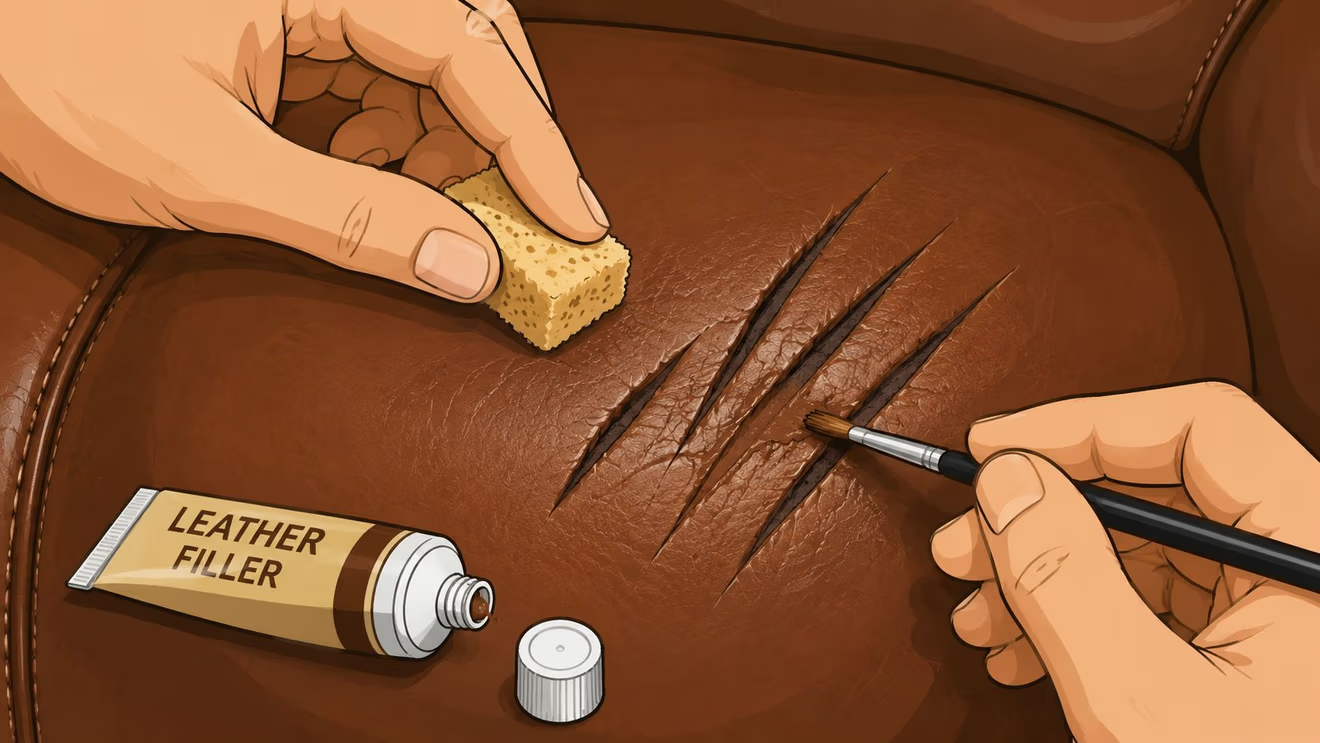
Sooner or later, some households end up with a scratch that goes beyond a simple wipe and buff. That's when people panic. They shouldn't. Quality leather is repairable, and that's one reason it remains a worthwhile material for long-term furniture.
Cats scratch instinctively to stretch, sharpen claws, and leave scent from their paws. Leather is easy to clean, but some pet guidance notes that tightly woven microfiber can be a strong alternative because it may be less prone to snagging from light scratching, as explained in this guide to why cats scratch leather furniture.
When a scratch needs more than a wipe
A deeper scratch usually has one or more of these signs:
- Visible groove: The mark has depth, not just discoloration.
- Rough edges: The area feels lifted or torn.
- Finish loss: Color looks uneven because the top layer has been disturbed.
At that point, a repair kit makes more sense than conditioner alone.
A simple repair kit routine
Most basic leather repair kits follow the same rhythm. Slow, neat work beats rushing every time.
- Clean the area first: Remove dust and any loose debris so the repair material can bond properly.
- Apply filler in thin layers: Don't glob it on. Thin applications usually give a smoother result.
- Let it dry fully: Patience matters here. Half-dry filler is how repairs turn lumpy.
- Blend the color carefully: Build up color gradually instead of trying to nail it in one heavy pass.
- Seal and let it cure: Give the repair time before the seat goes back into regular use.
A family shouldn't expect every repair to vanish completely. That's not the standard. The standard is making the damage far less noticeable and stopping it from getting worse.
Good leather doesn't have to stay untouched to stay worth owning.
If the scratch has turned into a tear, or if repeated scratching has stripped a whole section, that's usually the point to call a leather repair professional rather than experimenting further.
Find Your Family's Next Heirloom at BILTRITE
You bring home a leather sofa you love. The cat is still part of the family. Life goes on. That is the right goal, and it starts with choosing a piece that fits the way your home works.
At BILTRITE, we have spent generations helping families buy furniture they can live with for years, not just admire for a week. Since 1928, our family has served Metro Milwaukee with a simple point of view. Good furniture should feel right, wear well, and make sense for the people using it every day. That matters even more when pets, kids, guests, and busy routines all share the same room.
A showroom visit helps because leather is a touch-and-see decision. One family may do better with a more forgiving look that hides the small signs of everyday life. Another may want a cleaner, more sleek style and be ready to stay on top of scratching prevention and upkeep. Both are smart choices when they match the household realistically.
That is the value of experienced guidance. Our staff brings product knowledge, yes, but also practical perspective built from helping real families furnish real homes. We can show you the difference between leather options, talk through how each one tends to age, and help you sort out what will feel comfortable six months from now, not just on delivery day.
We are local, family-focused, and closed on Sundays and Mondays so family time stays part of how we do business.
If leather is still on your list and the cat is not going anywhere, stop in and put your hands on a few options. BILTRITE Furniture-Leather-Mattresses in Greenfield welcomes families who want honest advice and furniture with staying power.