Solid Wood Table for Sale: Milwaukee’s Best 2026


Dinner dishes are piled in the sink. One child is finishing homework at the table. Another is coloring on the far end. Someone set down a hot pizza box without a trivet, and the whole table gave a little wobble. That's usually the moment a family starts searching for a solid wood table for sale.
A dining table gets asked to do a lot. It hosts Tuesday tacos, science projects, birthday candles, bills, laptops, card games, and holiday meals that run long because nobody wants to leave. That's why this purchase deserves more thought than a quick style decision.
In Metro Milwaukee, families have been making that call for generations. BILTRITE has served the area since 1928, and that long view changes how a table gets judged. The right one isn't just nice for now. It should still look right, feel sturdy, and serve the household well years down the road.
Table of Contents
- Your Next Family Heirloom Starts Here
- Why Invest in a Real Solid Wood Table
- How to Judge a Table By Its Cover And Whats Underneath
- The Beauty of Amish and USA-Made Craftsmanship
- Finding the Right Size and Style for Your Home
- In-Stock Speed or Custom Creation Whats Your Style
- Come Say Hi and Find Your Familys Table
Your Next Family Heirloom Starts Here
Some furniture is easy to replace. A dining table usually isn't. It sits in the middle of family life, and when it's chosen well, it sticks around long enough to carry stories with it.
That's one reason more shoppers are taking their time. The global solid wood dining table market was valued at about USD 10.5 billion in 2023 and is projected to reach USD 15.8 billion by 2032, according to this solid wood dining table market overview. That doesn't mean every table is worth owning. It means more people are deciding that durable, natural-wood furniture still belongs in a modern home.
A table should earn its place
A family with young kids needs something different from a retired couple downsizing to a condo. One household wants room for schoolwork and spaghetti night. Another wants a compact table that still feels substantial. In both cases, the same rule applies. Buy for the life that happens around the table, not just the photo in a catalog.
That's where a showroom visit matters. Grain, finish, edge shape, and legroom are hard to judge on a screen. A table can look handsome online and feel disappointing in person. The reverse is also true.
A dining table should feel like it belongs in the home before it ever gets delivered there.
BILTRITE has spent generations helping Milwaukee-area households sort through those details. That family perspective tends to keep the advice practical. Is the top thick enough? Will the finish forgive daily use? Do the chairs tuck in well? Those are better questions than whether a style is having a moment.
Look for heirloom signals early
A shopper who wants a forever piece should start with construction, wood character, and long-term livability. A useful place to begin is this guide to a solid wood table top, because the surface tells a big part of the story. It's where wear shows first, and it's where quality usually reveals itself fast.
A good solid wood table doesn't need to shout. It just needs to stay steady, age gracefully, and keep inviting people back for one more cup of coffee.
Why Invest in a Real Solid Wood Table
Cheap tables can look fine for a little while. Then the finish chips, the top starts to feel tired, and the base gets loose at the worst time, usually when the whole family is sitting down. A real solid wood table costs more up front, but it behaves like a long-term household piece, not a temporary placeholder.

That difference matters because buyers aren't only chasing looks anymore. A broader market report on solid wood furniture says the segment is valued at USD 5.76 billion in 2025 and expected to grow to USD 8.36 billion by 2035 at a 4.8% CAGR. The same report says over 70% of consumers prioritize sustainably sourced wood and 65% are willing to pay a premium for it, according to this solid wood furniture market report. That lines up with what careful furniture shoppers already know. Quality and values often travel together.
Real wood pays back in daily life
A solid wood table can take normal wear with more dignity. Small marks often blend into the character of the piece instead of looking like fatal damage. Many solid wood surfaces can also be refreshed over time, which gives a family options instead of forcing a replacement.
That makes solid wood the home-cooked meal of the furniture world. It takes more care to make. It satisfies longer. And it doesn't leave regret sitting in the room for the next five years.
Here's what makes the investment sensible:
- Durability that shows up every day. Family meals, laptop work, serving dishes, and chair movement all put stress on a table. Real wood handles that routine with more confidence than lighter, mixed-material builds.
- Better aging. A quality table often looks more settled and attractive as the finish softens and the wood gains character.
- Repairability. Surface wear doesn't always mean the piece is done. With the right construction and finish, there's often a path forward.
Practical rule: Buy one table that can be lived with for years, not one table that only survives the move-in phase.
A stronger value than sticker price suggests
Price tags can fool people. A lower ticket feels smart until the table starts failing in plain sight. A well-built solid wood piece often gives better value because it stays useful, stable, and attractive for the long haul.
Shoppers who want a plain-English breakdown of that logic can look at the benefits of solid wood furniture. The biggest benefit isn't fancy. It's peace of mind. The table keeps doing its job.
How to Judge a Table By Its Cover And Whats Underneath
Most shoppers start with color and style. That's normal. The problem is that appearance alone doesn't tell the whole truth. Some tables wear the words “solid wood” loosely, and that's where buyers get burned.
Many shoppers aren't sure how to tell if a table is solid wood. A key differentiator is construction. Real solid wood furniture often features visible joinery and consistent grain patterns, while veneer-heavy pieces may use other materials for less visible parts like table aprons or legs, as noted in this guide on wooden dining table buying considerations.
What to ask before falling for the finish
Start with direct questions. Is the top solid wood? Are the aprons solid wood? Are the leaves solid wood too? Those questions get more useful answers than “What kind of wood is it?”
Then look closely:
- Check the grain pattern. Real wood usually shows natural variation. Repeating patterns can be a warning sign.
- Inspect the edges. A solid top often shows more natural continuity at the edge. Veneer-heavy construction can look too uniform or reveal a layered build.
- Look under the table. Aprons, supports, and attachment points tell the truth fast.
- Ask about joinery. Strong joinery matters because it helps the table stay tight and stable over years of use.
One more practical point often gets missed. Thickness matters. Commercial wood-table guidance commonly points to 25 mm, 32 mm, or 45 mm tops, with thicker tops used as structural demand increases because added depth improves stiffness and resistance to flexing, according to this wood table top thickness guide. For busy homes, a thicker top is usually the safer bet.
Quick Guide to Common Wood Table Species
| Wood Type | Hardness & Durability | Typical Look | Great For… |
|---|---|---|---|
| Oak | Strong and dependable | Visible grain, classic character | Busy family dining rooms |
| Maple | Hard and smooth-feeling | Cleaner, more even appearance | Simpler or more tailored looks |
| Cherry | Solid and graceful | Rich, warm tone that deepens with age | Formal dining spaces or heirloom styling |
| Walnut | Durable with a refined feel | Darker tone, elegant grain | Statement tables with warmth |
| Ash | Sturdy and resilient | Lively grain with brightness | Casual rooms that still want personality |
| Beech | Dependable and workmanlike | Fine grain, clean look | Everyday use where function comes first |
A species choice should match the household, not just the mood board. Oak and maple tend to make a lot of sense for families who use the table hard. Cherry and walnut can be wonderful when a room calls for warmth and a more deliberate aesthetic.
A shopper who wants to sharpen their eye before walking a showroom can review how to tell if furniture is real wood. That knowledge pays off quickly. It helps separate a handsome table from a lasting one.
The Beauty of Amish and USA-Made Craftsmanship
A table built with care feels different before anyone says a word about it. The top feels substantial. The base sits with confidence. The finish has depth instead of a sprayed-on look that tries to fake depth.
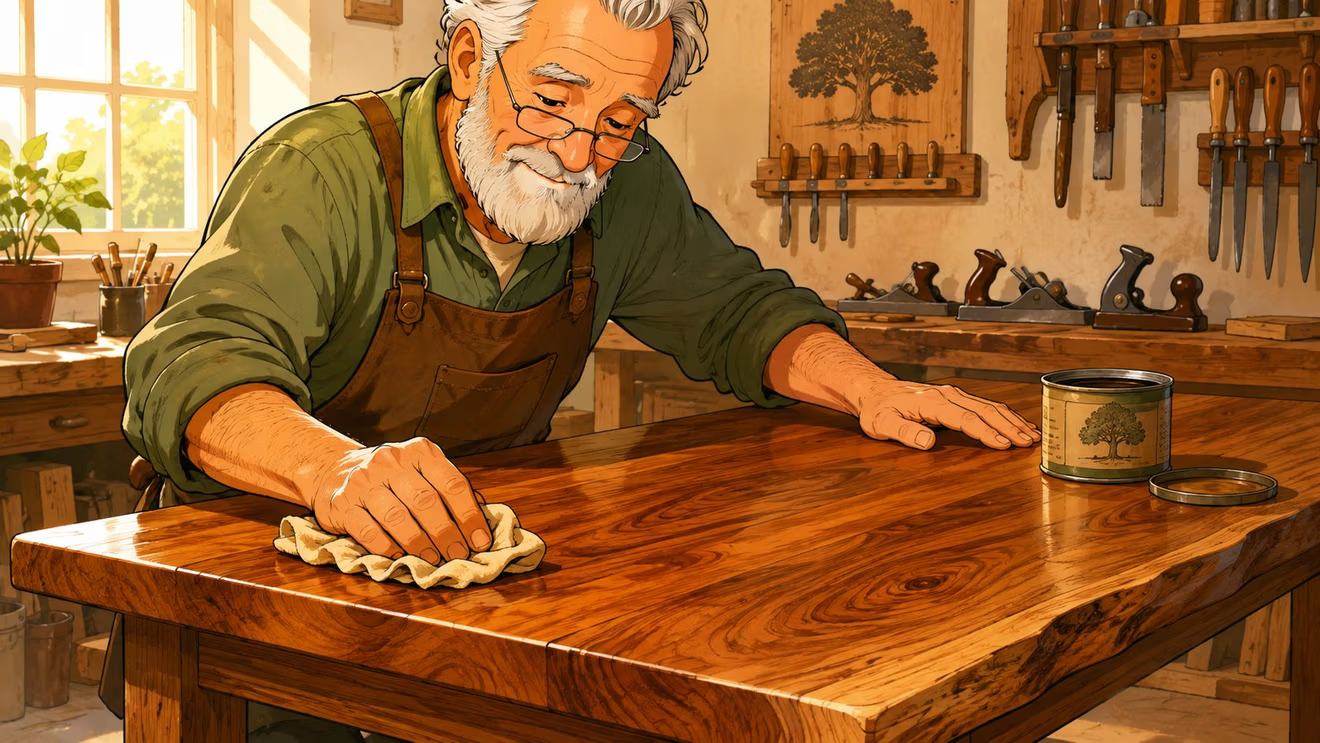
That's one reason Amish-made and USA-made dining furniture keeps drawing serious buyers. These pieces are often built by craftspeople who treat furniture as long-term work, not fast output. The result is usually easier to spot in person than to explain online.
Why the build feels different
Good craftsmanship shows up in small things. Edges are smoothed properly. Bases feel balanced. Leaves fit the table the way they should. Even the underside tends to look considered rather than forgotten.
That matters because dining tables live under stress. They get dragged, leaned on, expanded, cleaned, and loaded down. A rushed build may survive a showroom floor just fine. It may not thrive in a real household.
Craftsmanship isn't decoration. It's the reason a table still feels good after years of daily use.
For buyers interested in heritage construction and what sets those pieces apart, this overview of what Amish furniture is gives helpful background.
What shoppers should look for in the showroom
When a store highlights USA-made and Amish-made pieces clearly, shopping gets easier. BILTRITE Furniture-Leather-Mattresses identifies those categories in-store, which helps shoppers narrow the field to tables built with a stronger emphasis on craftsmanship, durability, and domestic production.
A few signs tend to stand out:
- Hand-finished character. The finish doesn't look flat or plastic.
- Confident joinery. The structure looks intentional and built to stay tight.
- Material honesty. The table doesn't rely on tricks to look substantial.
- A sense of weight and balance. Even before sitting down, the piece feels planted.
There's also a community side to this purchase. Buying a table made by American craftspeople supports households and workshops that still believe furniture should be built to last. That's a value many Milwaukee-area families understand right away.
Finding the Right Size and Style for Your Home
A table can be beautiful and still be wrong for the room. That happens all the time. Buyers fall in love with the top, the stain, or the chairs, then get it home and realize nobody can move around it comfortably.

The fix is simple. Measure first, dream second. For comfortable dining, expert guidance places standard table height at 28–30 inches and recommends about 24–30 inches of table width per person, plus at least 36 inches of clearance from the table edge to walls or other furniture. For a family of six, tables in the 63-inch to 72-inch range often work well, according to this dining table sizing guide.
Start with the room, not the table
A tape measure settles a lot of arguments fast. Measure the space where the table will sit. Then subtract the walkway and chair-pull space before even looking at styles.
A few rules help:
- Remember the 3-foot rule. Leave about 36 inches from the table edge to the wall or nearby furniture so chairs can move without turning dinner into a traffic jam.
- Seat people realistically. Plan on 24–30 inches of table width per person so elbows aren't knocking all night.
- Pay attention to the base. Pedestal and trestle bases can improve legroom compared with bulky corner legs.
If the room feels cramped on paper, it will feel worse once chairs, people, and serving dishes show up.
Choose the shape that fits real life
Rectangular tables are dependable and often easiest for bigger families. Round tables soften a room and help conversation, especially in tighter spaces. Oval shapes split the difference and can be very forgiving in homes where traffic flow matters.
Small-space buyers should think just as hard about access as square footage. Apartments, condos, and narrower homes often need compact proportions without sacrificing stability or visual weight. That's why fit-first shopping matters so much. A table should suit both the room and the way the household moves through it.
The right size isn't the biggest one that fits. It's the one that lets people sit, stand, pass food, and live comfortably.
In-Stock Speed or Custom Creation Whats Your Style
Some shoppers want a table this week. Others want to choose the wood, the stain, the size, and maybe even the edge profile. Both paths make sense. The only bad choice is pretending they solve the same problem.
When in-stock makes the most sense
An in-stock table is the right call when the need is immediate and the fit is already there. Maybe the old table finally gave out. Maybe a move is happening now. Maybe guests are coming, and the household doesn't want to host on a stopgap piece.
In-stock buying works well for people who:
- Need speed. They want a real table in the home soon, not a future plan.
- Prefer seeing the exact piece. No guessing about color, feel, or scale.
- Like simpler decisions. The field narrows quickly when the choices are physically in front of them.
There's comfort in walking a showroom, touching the finish, and knowing exactly what's coming home.
When custom is worth the wait
Custom makes more sense when the room has unusual needs or the buyer has a clear vision. That's especially useful as living spaces become more diverse and more people need furniture sized for apartments, condos, or narrow-entry homes. Delivery access and room scale matter, especially with the weight of solid wood, as discussed in this custom dining table sizing and fit overview.
Custom is often the smarter route when:
- The room is tricky. Tight entries, awkward footprints, or compact dining areas can call for a made-to-fit solution.
- The household wants control. Wood species, finish, edge style, and size all affect the final result.
- The table needs to do double duty. Everyday use may be compact, but holidays may call for leaves or expansion.
A buyer considering that route can start with getting started with a custom order. The smart custom decision balances dream features with everyday realities, especially delivery path, tabletop weight, and how the piece will live in the room.
A good finish choice helps too. Busy homes usually do better with finishes that are easier to live with and less fussy about every fingerprint. Fancy isn't the goal. Usable is.
Come Say Hi and Find Your Familys Table
Buying a dining table online can feel efficient right up until the day it arrives. Then the stain looks different, the scale feels off, the edge is sharper than expected, or the base steals more legroom than the photos suggested. That's why a solid wood table is still one of those purchases that benefits from being seen in person.

Why seeing it in person matters
A showroom visit answers questions that pictures can't. Shoppers can feel the thickness of the top, test the chairs, check how the finish catches light, and see whether the style feels right for their home rather than just right for a screen.
That kind of shopping also slows the decision down in a good way. It gives families a chance to compare scale, base styles, wood tones, and practical details without pressure. With solid wood, touch tells the truth quickly.
The best table choices usually happen when shoppers stop scrolling and start opening drawers, pulling out chairs, and looking underneath the top.
A local way to buy with confidence
BILTRITE has served Metro Milwaukee since 1928, and that kind of history shapes how furniture gets presented. The store doesn't sell online, which keeps the focus on in-person guidance and the actual feel of the piece. It's also closed on Sundays and Mondays to protect family time, which says a lot about the kind of business it is.
The team brings over 400 years of combined experience, and that experience helps with the details buyers often miss on their own. Which base gives better seating flexibility? Which finish is easier for a household with young kids? Which table works for a condo without giving up solid-wood character? Those are the conversations that help a shopper buy with confidence instead of hope.
A great table should fit the room, suit the family, and feel good every time people gather around it. That's worth taking a little extra care over.
Ready to find a solid wood table that feels right in person? Visit BILTRITE Furniture-Leather-Mattresses in Greenfield, say hello, and let the team help match the room, the lifestyle, and the wood craftsmanship to the home.