Your patio furniture usually tells the truth before you do.
If the chairs wobble, the finish is chalky, or the table looks tired before summer has even hit its stride, you already know what's coming. Another season of “maybe it'll last one more year.” Around Milwaukee, that gets old fast.
We've been helping local families furnish their homes since 1928, and one thing we've learned over four generations is simple. Outdoor furniture has to work hard in Wisconsin. It has to handle sunny afternoons, damp spring days, and the kind of winter that tests everything sitting outside. That's why so many shoppers ask us about amish made polywood furniture. It blends the handcrafted look people love with a material built for real outdoor use.
There's also a little confusion around the name, so let's clear that up right away. POLYWOOD is a specific brand. Poly lumber is the broader material category used by many furniture makers, including Amish shops. The common usage of “amish made polywood furniture” refers to Amish-built outdoor furniture made from poly lumber, not necessarily the POLYWOOD brand.
A lot of backyard projects start the same way. A family in the Milwaukee area wants to freshen up the patio. Maybe the grill is ready, the fire table is set, and the landscaping finally looks the way they wanted. Then they look at the old furniture and realize it's the weak link.
That's usually where the conversation turns. Do they buy another inexpensive set and hope for the best, or do they step up to something made to stay put and keep looking good? For many families, amish made polywood furniture ends up being the answer because it offers that solid, handcrafted feel without the constant upkeep that wood often needs outdoors.
Amish shops haven't treated poly furniture like a passing fad, either. One industry source says a 2022 survey found that 40% of shops in an Indiana Amish market offered poly options, and that share rose to 70% in tourist-heavy areas. You can read that in this industry discussion of Amish use of poly lumber. That matters because it shows poly outdoor furniture had already become a meaningful category, not some niche side project.
People usually come to us with a few very practical questions:
That's where this category gets interesting. Amish builders can take a modern outdoor material and still deliver the kind of craftsmanship shoppers expect from handcrafted furniture.
Neighborly advice: If you're replacing outdoor furniture because of maintenance fatigue, not just style, poly furniture is worth a serious look.
If you're planning your space from scratch, our guide to essential outdoor furniture pieces for a comfortable and functional patio can help you think through layout, seating, and how your family will use the space.
A basic patio set often asks you to compromise. Maybe the price is easy, but the finish won't hold up. Maybe it looks nice in the store, but it feels light once you touch it.
Amish-made poly furniture sits in a different lane. It's built for people who want outdoor pieces that look intentional, feel substantial, and let them spend more time enjoying the yard instead of fixing furniture every spring.
The material sounds more complicated than it is. Poly furniture is typically made from high-density polyethylene, or HDPE. That's a plastic lumber material designed for outdoor use, and one of its biggest advantages is that it's non-porous, which means it resists moisture absorption. That's a big reason it's often considered a smart fit for climates with freeze-thaw cycles, as explained in this overview of Amish-built polymer outdoor furniture.
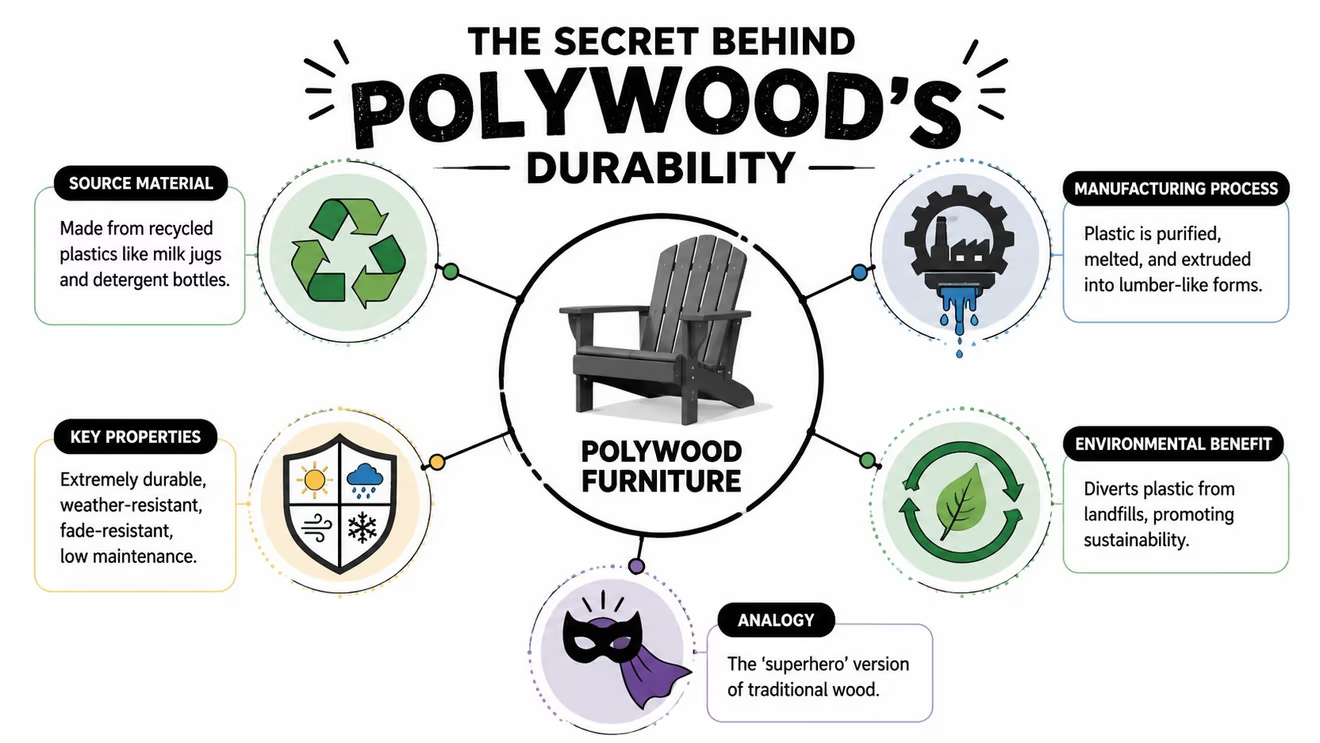
Think of HDPE as a wood-look material that doesn't react to moisture the same way natural wood does. Wood has pores and grain. That gives it beauty, but it also means weather can affect it in all sorts of ways. Poly lumber doesn't soak up water the way wood can.
That difference helps explain why shoppers choose it for patios, decks, porches, and poolside areas. In a place where snow, rain, and humidity all take turns showing up, that low-absorption structure is a real advantage.
Here's the plain-English version:
Not all poly furniture is built the same. That's one of the biggest points shoppers miss.
HDPE itself has useful properties, but the finished furniture still depends on how the maker processes the material and constructs the piece. Thickness, fastening, and finish quality all matter. The same source notes that buyers should look for a smooth, consistent finish, because voids, rough extrusion marks, or uneven color can point to lower-quality processing.
Run your hand along the arm, seat edge, and back slats. Good poly furniture should feel finished, not rough or patchy.
When you're standing in front of a chair or table, use this quick checklist:
| What to check | What you want to see |
|---|---|
| Surface finish | Smooth, even color and texture |
| Edges | Cleanly finished, not sharp or ragged |
| Fasteners | Secure assembly with hardware that looks built for outdoor use |
| Overall feel | Solid and steady, not flimsy |
That hands-on test tells you more than a tag ever will. For a material that's supposed to reduce maintenance and hold up outdoors, build quality is the whole story.
Wisconsin doesn't ask permission before changing seasons. One month your patio is getting hot sun, and before long you're brushing leaves off the table and wondering if the snow will come early. Outdoor furniture has to handle a lot here, and that's where poly furniture makes a strong case.
Its biggest everyday advantage is simple. It's made for all-weather use, and sellers commonly position it as furniture you can leave outside year-round without painting or staining. That takes a lot of stress out of owning it, especially for homeowners who are done with sanding, sealing, and touch-up work.

Some furniture looks fine in a catalog but doesn't fit the way people live. Poly furniture tends to line up well with busy households because it asks for less attention.
A few practical reasons stand out:
If your yard gets heavy use from kids, guests, pets, or regular get-togethers, those small conveniences add up.
This is the part where honest conversations matter. Poly furniture often costs more at the start than some wood, resin, or metal alternatives. That can make shoppers pause, and that's understandable.
But cost isn't just the sticker. One retailer summary notes that while the initial price may be higher, the total cost of ownership is often lower over time because fade resistance and low maintenance remove the recurring costs and labor tied to refinishing or replacing less durable materials. That point is discussed in this look at poly outdoor furniture ownership tradeoffs.
Practical rule: Don't judge outdoor furniture only by day-one price. Judge it by how much work and replacement it asks from you over the years.
That's a useful way to think if you're planning for a Wisconsin backyard you want to enjoy, not constantly maintain.
For broader seasonal ideas around patios, gardens, and outdoor living, our spring home and garden guide for Milwaukee-area homes is a helpful starting point.
Poly furniture is often heavier than some alternatives. For many homeowners, that's a good thing because it feels planted and sturdy. If you rearrange your patio every weekend, though, weight is worth considering.
So the choice comes down to your habits. If you want furniture that stays put, handles weather, and keeps maintenance light, poly checks a lot of boxes for Wisconsin living.
“Amish made” should mean more than a look. It should show up in the way the furniture is built, finished, and explained by the retailer standing behind it.
That's especially important with poly furniture because shoppers can't rely on the old clues they use with solid wood, like wood species or visible grain. Instead, you want to look at construction details, finish quality, and the answers you get when you ask where the material came from and how the piece was made.

A strong retailer should be ready for good questions. One source specifically says shoppers should ask about the material's origin, recycled content, and the quality of UV inhibitors, and should inspect hardware, joinery, and overall finish to separate artisan-built pieces from lower-quality shop-assembled options. That guidance appears in this discussion of Amish poly outdoor furniture authenticity and sourcing.
Here are the questions I'd ask if we were chatting over the fence:
You don't need to be a furniture maker to notice quality. Flip a chair over. Look underneath the table. Check whether the hardware looks cleanly installed. Sit down and shift your weight.
Good Amish craftsmanship often shows up in these little moments:
| Detail | What quality feels like |
|---|---|
| Joinery | Tight, stable connections |
| Hardware | Clean installation and a durable look |
| Edges | Smooth and comfortable to the touch |
| Finish | Consistent color and texture |
| Weight | Substantial, with a planted feel |
If a piece looks rushed underneath, it was probably rushed where you can't see it too.
For a deeper look at what sets handcrafted furniture apart, our article on what Amish furniture is and what makes it different adds useful context.
Some shoppers assume “Amish made,” “USA made,” and “polywood” all mean the same thing. They don't. Those terms can overlap, but they aren't interchangeable.
That's why the best buying habit is simple. Ask specific questions, inspect the piece closely, and deal with people who can explain what you're looking at without dancing around the details.
One of the most enjoyable parts of shopping for poly furniture is that it doesn't have to look one-note. You're not stuck with one color, one shape, or one patio personality.
Some Amish dealers describe poly furniture as available in over 50 color options and combinations, which helps explain why this category has become more design-friendly over time. Instead of choosing between “plain” and “plainer,” families can build a space that feels classic, coastal, modern, or playful depending on the colors and silhouettes they choose.

A few common approaches work well:
Local shopping offers distinct advantages. You can compare finishes in person and see how colors read under real light instead of guessing from a screen.
Poly furniture appeals to busy households because the care routine is simple. Day to day, most pieces just need routine cleaning and a little attention after pollen season, storms, or a messy cookout.
A straightforward care routine looks like this:
Our guide on how to clean wood furniture focuses on a different material, but it shares the same big idea: gentle, regular care usually beats aggressive cleaning after neglect.
Outdoor furniture lasts longer and looks better when you clean it a little at a time instead of waiting for it to get grimy.
The nice part here is that “care” doesn't usually mean weekend refinishing projects. It means a basic cleanup, then getting back to your family and your patio.
Buying outdoor furniture should feel reassuring, not confusing. You're bringing something into your backyard that may host family dinners, birthday parties, quiet morning coffee, and long summer evenings. That purchase deserves a little confidence behind it.
One of the clearest confidence signals in this category is warranty coverage. Amish-made poly furniture is often marketed with long-term or even lifetime limited warranties, which reflects how sellers position the material's durability, fade resistance, and ability to stay outside year-round without painting or staining. That's explained in this patio furniture overview discussing poly warranties.
A good furniture-buying experience usually includes a few things:
That last point matters more than people think. A dining set for a narrow patio needs different proportions than seating around a fire pit. A condo balcony calls for a different scale than a big backyard deck.
This is one of those categories where in-person shopping earns its keep. Color, heft, comfort, and craftsmanship are easier to judge when you can see them up close.
BILTRITE Furniture-Leather-Mattresses is one local option for shoppers who want to compare Amish furniture in person in the Greenfield and Metro Milwaukee area. Since we don't sell online, the showroom experience matters to us. People can sit in the chairs, inspect the finish, and talk through what will fit their home and backyard.
We're a fourth-generation family business, and that family side shows up in how we work. We've been part of the Milwaukee area since 1928. We're proud of our local roots, proud of the Amish and USA-made craftsmanship we carry, and proud that our team helps people without turning the conversation into a hard sell.
If you want to make a strong choice, keep these in your back pocket:
The right outdoor furniture isn't just about surviving weather. It's about supporting the way your family lives outside.
If you're ready to compare styles, colors, and craftsmanship up close, we'd love to see you at BILTRITE Furniture-Leather-Mattresses. Stop by our showroom in Greenfield, say hi, and let our family help your family find outdoor furniture that fits your backyard and your everyday life.