How to Choose a Bed Frame: Our Family Guide


A lot of bedroom projects start the same way. Someone buys a new mattress, starts scrolling bed styles, falls in love with a tall headboard or a sleek platform bed, and only later realizes the frame is too bulky for the room, too flimsy for daily use, or too awkward to get up the stairs.
That's where good advice matters.
Since 1928, a family-owned furniture business in Metro Milwaukee has helped neighbors sort through these choices in person, with the kind of practical guidance that online shopping carts can't give. A bed frame isn't just décor. It affects how the room moves, how the mattress performs, and how easy the bed is to live with every single day. Learning how to choose a bed frame comes down to a few honest questions: Will it fit the room? Will it support the mattress correctly? Will it stay sturdy? Will it work for the people using it?
Table of Contents
- Welcome to Your Bedroom Refresh
- Measure Twice and Buy with Confidence
- Exploring Frame Types and Quality Materials
- The Secrets to Unshakeable Support and Durability
- Finding a Frame That Fits Your Family's Life
- The Biltrite Difference Why Shopping Local Matters
Welcome to Your Bedroom Refresh
A new bed frame should feel like a fresh start, not a puzzle. The right one can make a bedroom feel pulled together, calmer, and more comfortable to use. The wrong one can become a daily annoyance, even if it looked great in a photo.
That's why the smartest shoppers slow down before they buy. They don't start with color or trend. They start with how the bed needs to function in the room and in the household. A guest room has different needs than a primary bedroom. A condo has different limits than a roomy suburban home. A family with kids, pets, or frequent moves should shop differently than someone furnishing a forever home.
Practical rule: Buy the frame that works hard first, then pick the one that looks good doing it.
That kind of advice comes naturally from a business with deep local roots. BILTRITE has served Metro Milwaukee since 1928, and that long history shows up in the way bedroom furniture is discussed on the showroom floor. The focus isn't on fast trends. It's on lasting value, honest construction, and choices that fit real homes.
Some shoppers want warm, solid wood with timeless lines. Others need a low-profile frame for a smaller room. Others need something sturdy enough for daily use without the wobble and squeak that show up later. All of those are reasonable goals. The key is knowing which details matter before money gets spent.
Measure Twice and Buy with Confidence
You find a bed frame you love, get it home, and then the room feels pinched every time you walk past it. That mistake happens before anyone sleeps on the bed. It happens with a tape measure left in the drawer.
Start with the room. A frame always claims more space than the mattress size on the tag. Headboards stick out, footboards add length, rails widen the footprint, and nearby nightstands can turn a decent layout into an awkward one fast.
Measure these first:
- Your mattress dimensions: Make sure the frame matches the mattress you already own or plan to buy.
- The full room size: Get wall-to-wall measurements, then note windows, floor vents, radiators, closets, and door swings.
- Open walking space: Leave enough room to move around the bed comfortably and open drawers without banging into the frame.
- Companion furniture: Nightstands, dressers, chests, and benches need their share of the room too.
- Overall bed height: The frame, mattress, and any foundation should leave you with a bed that feels comfortable to get in and out of every day.
One of the most common showroom surprises is a shopper who measured for a queen mattress but never measured for a queen bed with a tall headboard and wide side rails. On paper, it fits. In real life, it eats the room.
That is why the practical part of local shopping matters. In a store, you can stand next to the frame, look at its true outside dimensions, and ask the questions online listings tend to hide. How far does the headboard project? How thick are the rails? Will the footboard crowd a narrow bedroom in a Milwaukee bungalow or an upper-flat guest room?
If you want to get organized before you shop, BILTRITE's guide on how to measure furniture before delivery is worth using. It helps you write down the numbers that matter before delivery day.
Don't forget the delivery path
The bedroom is only half the job. The route to the bedroom matters just as much.
Older Milwaukee homes can have tight stairs, narrow landings, sharp turns, and shorter hallways. Condos and upper flats bring their own headaches. A substantial wood headboard or a bed with long side rails may fit the room perfectly and still be a pain to get upstairs if nobody checked the path in.
Measure entry doors, hallway widths, stair openings, ceiling height near turns, and the doorway into the bedroom itself. If the frame needs assembly in the room, ask that question before you buy. If you are ordering a custom or Amish-made piece, confirm whether it ships in manageable parts or arrives in larger sections.
Good bed shopping is not glamorous. It is careful. Do the measuring now, and you avoid the expensive, frustrating kind of surprise later.
Exploring Frame Types and Quality Materials
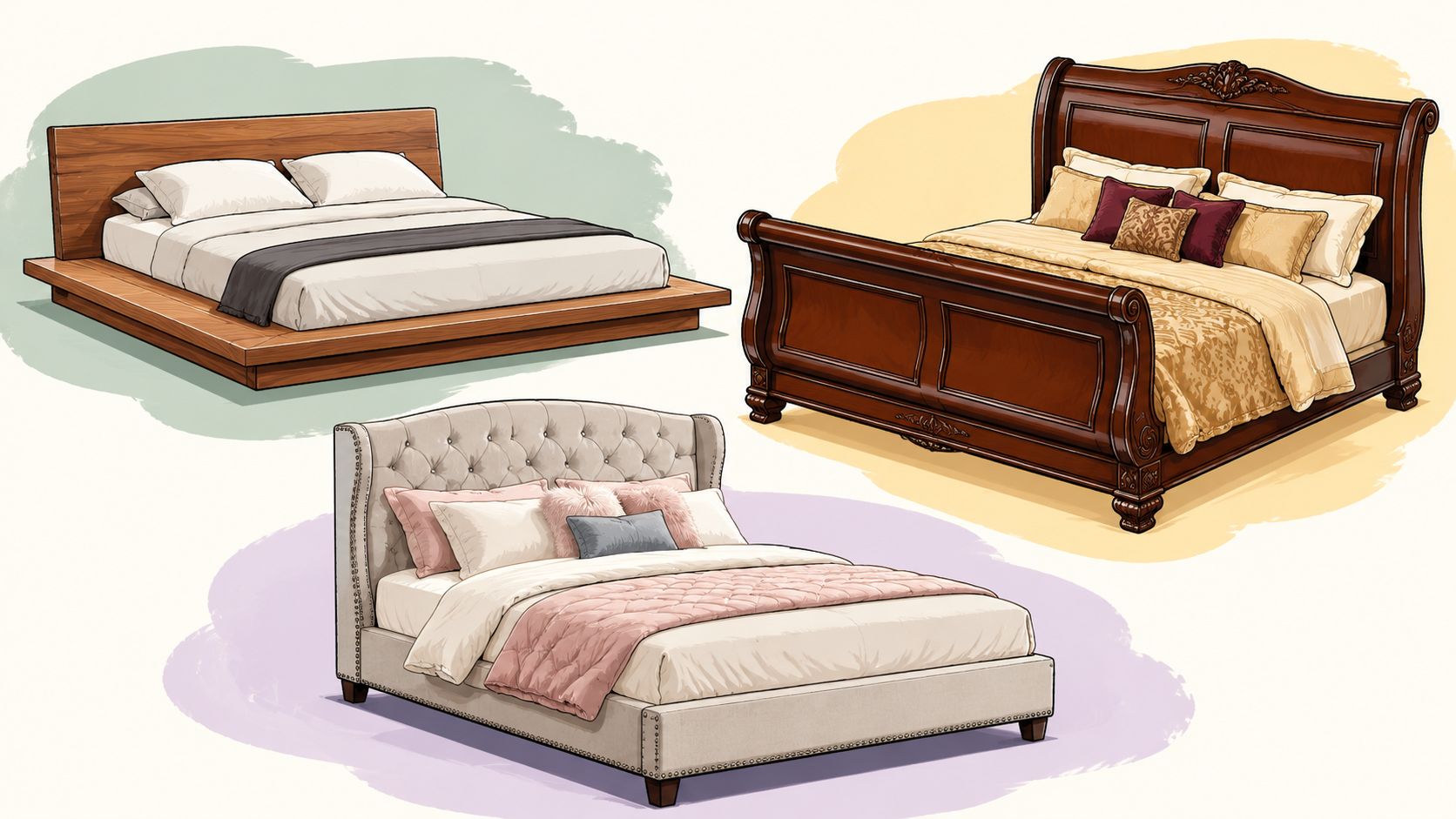
A bed frame has two jobs. It needs to suit your room, and it needs to hold up year after year. If it only does one of those well, keep shopping.
The smart way to compare frame types is in person. Walk up to the bed. Put a hand on the rail. Sit against the headboard. Look at how thick the side rails are, how the corners are joined, and whether the whole piece feels planted or flimsy. Online photos rarely show that.
What each frame style does well
Some styles make more sense for certain homes and routines.
| Frame type | Strong fit for | Watch for |
|---|---|---|
| Platform bed | Clean lines, lower height, simpler setup | Whether the support design underneath is built well |
| Upholstered bed | A softer look and a comfortable surface for reading in bed | Fabric wear, cleaning needs, and how firmly the headboard is built |
| Sleigh bed | Traditional rooms and larger bedrooms that can handle more visual weight | Extra bulk, especially in tighter spaces |
| Open, simplified frame | Smaller bedrooms, guest rooms, and homes where lighter scale works better | A plainer look if you want more furniture presence |
If you want the most practical style for many Milwaukee-area homes, start with a platform bed. It keeps the footprint visually lighter, works well in smaller rooms, and often gives you a straightforward setup. BILTRITE has a useful guide on what a platform bed frame is and how it works.
My advice is simple. Modest room, modest frame. Save the tall footboards, thick upholstery, and sweeping curves for bedrooms with real breathing room.
Choose materials that age well
Material decides how a bed feels after the honeymoon period is over.
Solid wood is the first place I'd look if you want a frame that still feels like furniture ten years from now. It has weight, warmth, and character. Better pieces also let you see the difference in the details, cleaner joinery, better finishing, and parts that fit the way they should.
Steel is a good choice too, especially if your priority is straightforward strength and a simpler design. It can be a very practical fit in kids' rooms, guest rooms, and more casual spaces.
Composite-heavy construction is where I'd be careful. Some of it looks fine on the sales floor. The question is how it handles years of use, moves, tightening, and daily wear. That is where cheaper construction usually shows itself.
Local shopping helps here in a way online-only guides cannot. In store, you can compare the weight of the materials, inspect the finish up close, and ask whether a piece is USA-made, Amish-made, or available with custom options in a different wood, stain, or bed height. That matters if you want a bed built for your home instead of a one-size-fits-all box headed to the front porch.
BILTRITE Furniture-Leather-Mattresses is known locally for affordable, better-quality furniture with a strong focus on USA-made, Amish-made, and solid-wood options. That matters because material quality is one of the bed-frame decisions you will keep living with long after the first day it looks good.
Good wood and good joinery still matter. A bed frame should feel like furniture, not packaging.
The Secrets to Unshakeable Support and Durability
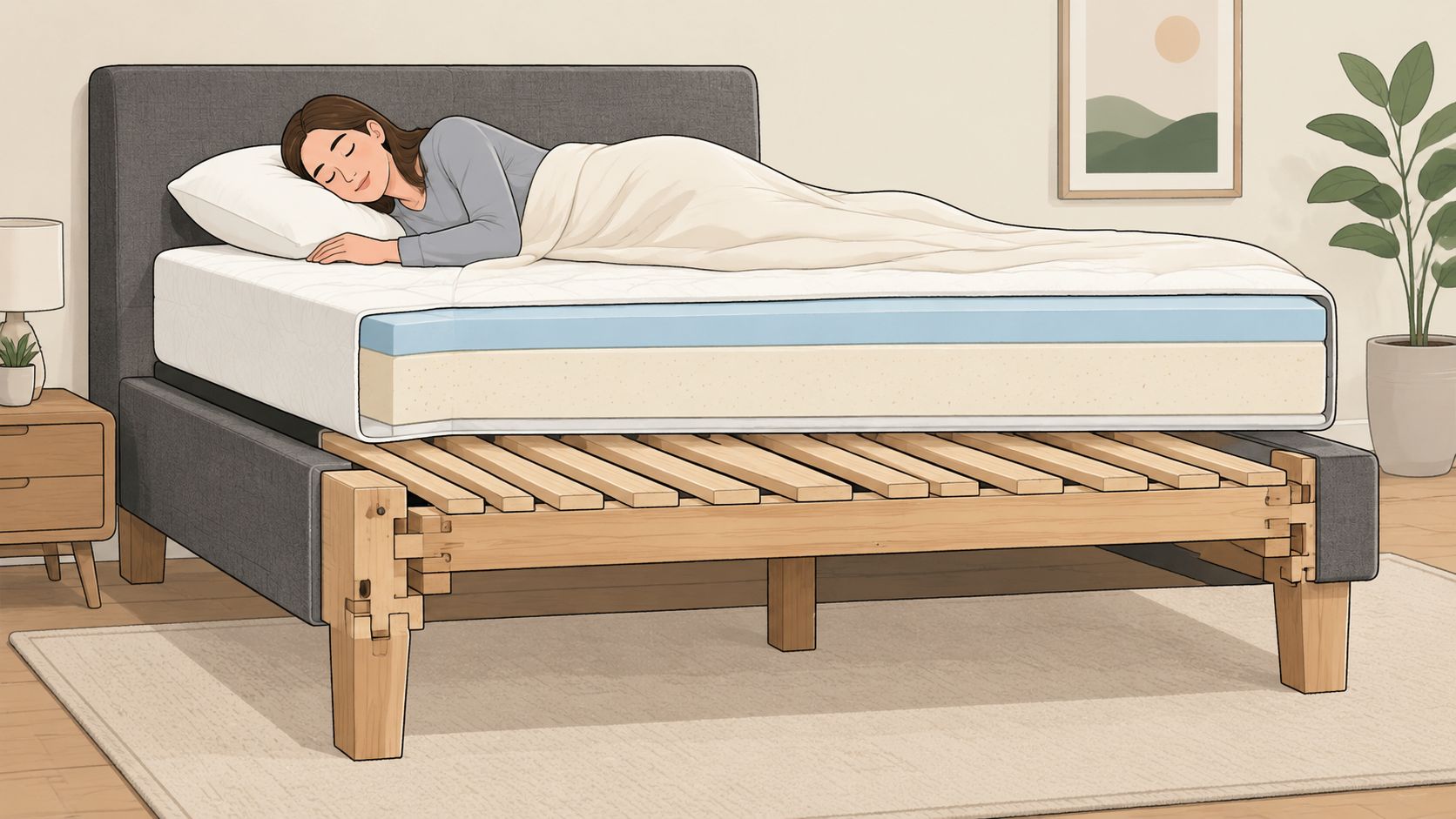
A bed frame earns its keep underneath the mattress, not in the headboard photo.
Support decides whether the bed feels quiet, steady, and comfortable after years of real use. If the frame flexes, shifts, or leaves the middle unsupported, you will feel it. So will your mattress.
What to inspect under the mattress
Start with the center of the bed. Larger sizes need a continuous center support beam or another clearly built middle support system. Then look at the slats. They should sit evenly, feel secure, and give the mattress consistent support across the whole surface.
Here's the checklist I'd use in the store:
- Center support: Look for a real support structure under the middle, not just side rails doing all the work.
- Slat strength and spacing: Slats should feel sturdy and placed closely enough to support the mattress properly.
- Weight capacity: The frame should be rated for the combined weight of the mattress and the people using it.
- Hardware and joinery: Connections should feel tight and deliberate, not flimsy or easy to wiggle loose.
Some frames also let air move better under the mattress, and many slatted designs do not need a box spring. Still, the main question is simple. Does the support system look built for nightly use, or built to get through delivery day?
For readers comparing heavier-duty construction, BILTRITE also offers guidance on what makes the strongest bed frame.
A quick in-store durability check
This is one of the biggest advantages of shopping local around Milwaukee. You can test the frame before it ever comes through your doorway, and that saves people from a lot of regret.
Try these simple checks on the showroom floor:
- Lean on the side rail. It should feel planted, not springy.
- Press on a corner or the footboard. A well-built frame stays square and resists twisting.
- Watch the joints while it moves. If the connection points shift now, they will loosen more at home.
- Ask how the middle is supported. A clear answer matters, especially for queen and king sizes.
- Ask about delivery and assembly. In older Milwaukee homes, tighter stair turns, narrower halls, and upstairs bedrooms can affect which frame styles are smartest to buy.
That last point gets missed in online-only buying guides. A frame can be strong and still be wrong for the house if it is difficult to get upstairs, awkward to assemble in a tight room, or harder to tighten later after a move. In-store help matters here, especially if you are choosing a USA-made or Amish-made piece with options for height, wood species, or rail setup.
A bed frame that feels loose on the sales floor will not feel better after six months of sleep.
Strong support is not flashy. It is what keeps the bed quiet, the mattress properly supported, and the whole setup feeling like real furniture instead of a temporary fix.
Finding a Frame That Fits Your Family's Life
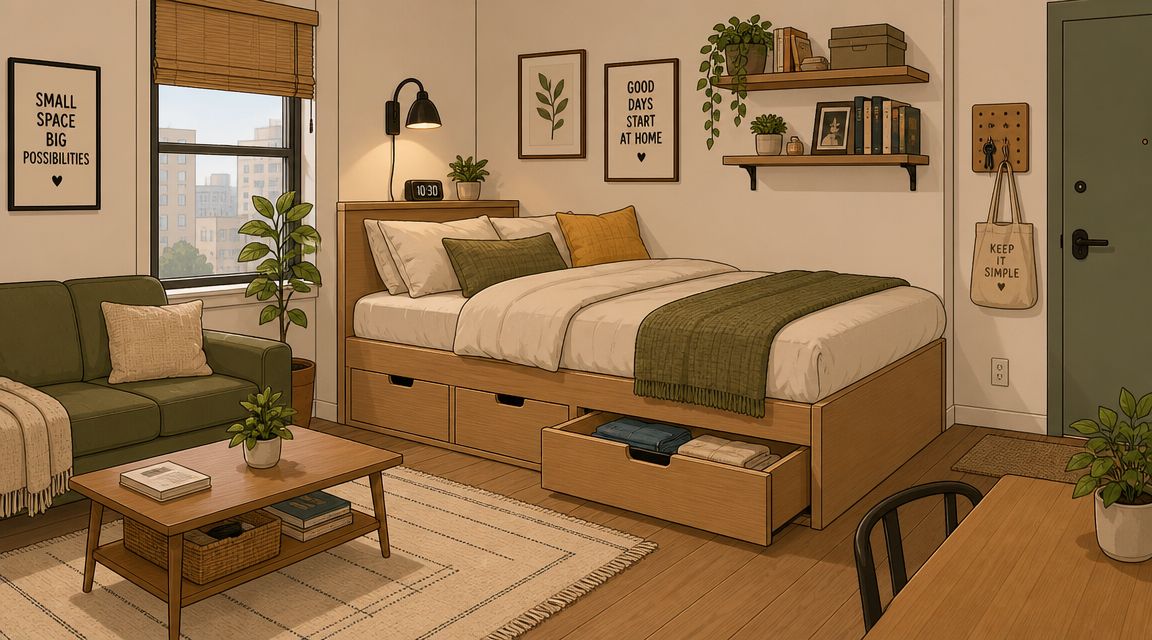
You get the bed into the room, set it in place, and then the trouble starts. The door barely clears, the nightstand has nowhere to go, and the walk to the closet turns into a sidestep. A frame can fit the mattress and still be a bad fit for daily life.
That is why families around Milwaukee need to shop for the whole room, not just the sleeping surface. Room flow, bed height, storage needs, and delivery access matter just as much as the style on the headboard. Online guides usually stop at dimensions on a product page. In a real home, especially an older bungalow, condo, upstairs flat, or senior living space, those details decide whether the frame feels easy to live with or annoying every single day.
Small rooms need smart scale
Big, dramatic beds sell a look. They do not always serve the room.
In a smaller bedroom, clean lines and a lighter visual footprint usually win. Lower-profile frames can make the space feel calmer and easier to move through. Storage beds can also earn their keep if the room is short on closet space, but only if the drawers have enough clearance to open fully.
A few questions will keep you out of trouble:
- Can you walk around the bed without squeezing sideways?
- Will your nightstands still fit and function?
- Does the footboard crowd the doorway, dresser, or closet path?
- Will under-bed storage open in the room you have?
If you are furnishing an apartment, condo, guest room, or tighter primary bedroom, BILTRITE's collection of beds for small spaces is a good place to start.
Accessibility matters more than people think
Bed height changes how a room feels, but it also changes how a bed works. If someone in the household has sore knees, hip pain, or just wants an easier in-and-out height, that should drive the decision. Style comes second.
This is also where local shopping helps in a practical way. You can sit on the bed, stand up from it, and decide in thirty seconds whether the height feels right. You can also ask about custom options on USA-made and Amish-made pieces, including wood species, finish, rail height, and storage configurations that suit the person using the bed.
Delivery can make or break the purchase
A beautiful frame is no bargain if it will not make the turn at the top of the stairs.
Older Milwaukee-area homes often have narrow halls, tighter staircases, and bedrooms with less assembly space than newer builds. Families with kids also tend to move furniture around more than they expect. That makes simple assembly, manageable parts, and future disassembly worth asking about before you buy.
Here is the plain advice. Bring room measurements, hallway widths, and stair details with you. Ask whether the frame ships in parts, how it is assembled, and whether the design is a smart choice for your home's layout. Those are the kind of real-world checks that save headaches later.
The right bed frame should support sleep, fit the room, and make life easier for the people living there. If it misses one of those jobs, keep looking.
The Biltrite Difference Why Shopping Local Matters
Some furniture is fine to buy from a screen. A bed frame usually isn't.
Shoppers need to feel the side rail, check the joints, look underneath, test the stability, and compare wood finishes in real light. They also need honest answers about scale, delivery, assembly, and mattress support. That's hard to get from product photos alone.
A local showroom gives people something much more useful than endless scrolling. It gives them context. In Greenfield, shoppers can compare small-scale pieces with heavier-duty options, look at USA-made and Amish-made bedroom furniture up close, and talk with people who understand how furniture has to function in actual Milwaukee-area homes. That practical, in-person guidance is a big reason many families still prefer to shop locally for major bedroom pieces.
There's also a values side to it. BILTRITE has been family-owned since 1928, serves the Metro Milwaukee community, and stays closed on Sundays and Mondays to support family time. That isn't a marketing line. It's a business choice that says something about priorities.
For shoppers who care about craftsmanship, local service, and long-term value, the showroom experience still matters. Readers who want to understand the appeal of better-built bedroom pieces can learn more about why shoppers invest in American-made bedroom furniture.
A good bed frame should fit the room, support the mattress correctly, and make everyday life easier. That's what matters most. For anyone in Metro Milwaukee who wants to compare sturdy options in person, ask questions, and get practical guidance without pressure, BILTRITE Furniture-Leather-Mattresses is worth a visit in Greenfield.