Best Dining Room Table and Chairs for Small Spaces


You’re probably here because your dining area is doing triple duty.
Maybe it’s a little nook off the kitchen. Maybe it’s the only open corner in a condo. Maybe your “dining room” is really part of the living room, and every chair has to earn its keep. You want a table that fits, chairs that don’t block the walkway, and a setup that still feels welcoming when family or friends come over.
That’s a very real challenge, and around here, we’ve helped people solve it for a long time. Our family has been serving Metro Milwaukee since 1928, and small-space furniture questions come up every day. A first apartment. A downsized home. A senior living move. A breakfast nook that needs to handle coffee, homework, and dinner.
You’re also not alone in shopping this way. The global market for dining room furniture made for compact homes was valued at USD 8.68 billion in 2025 and is projected to reach USD 13.71 billion by 2032, reflecting growing demand for multifunctional pieces in smaller homes and urban spaces, according to small-space dining furniture market data.
Welcome to the Family! Let's Find Your Dining Set
A lot of people think a small dining area means settling for something flimsy, awkward, or too tight to use comfortably. That’s usually what causes regret. The table looks fine in a photo, then it lands in the room and suddenly nobody can scoot a chair back without bumping the wall.
We’ve seen that story again and again in Greenfield and across Metro Milwaukee. A young couple moves into a smaller place and wants room for takeout nights and holiday brunch. A retired homeowner wants a sturdy set that’s easier to move around. A family wants one table that can handle dinner, puzzles, and school projects without taking over the whole room.
That’s where thoughtful shopping helps. Small-scale dining furniture isn’t a compromise anymore. It’s a smart category with real design behind it, from round pedestal tables to drop-leaf styles that can open up when you need them and stay compact the rest of the week.
If you’re furnishing a tighter home, our guide to furniture ideas for compact homes is a helpful place to gather ideas before you visit a showroom.
What people usually want in a small dining space
Some shoppers come in saying they need “a small table.” What they usually mean is something more specific:
- Room to move: They don’t want chairs sticking into the main walkway.
- Flexible seating: They need everyday seating for a smaller group, plus extra room now and then.
- Better scale: They want furniture that looks right in the room, not oversized and bulky.
- Durability: They don’t want to replace it after a few years of daily use.
A small dining area can still feel warm, useful, and pulled together. The trick is matching the table shape, chair size, and room layout instead of shopping by looks alone.
That’s the fun part of this topic. Once you know what to measure and what shapes work where, the whole process gets easier. And a lot more enjoyable.
Start with the Tape Measure Not the Showroom
Before you fall for a table finish or a chair fabric, measure your space. This step saves people from the most common mistake we see. Buying a set that technically fits, but doesn’t function.
A dining set has to do more than sit inside the room. People need to pull chairs out, sit down, stand up, and walk by without squeezing sideways. That’s where clearance matters.
For small dining spaces, the recommended clearance around rectangular tables is at least 36 inches on all sides, according to small dining layout guidance. When clearance gets too tight, chairs can stick out into traffic paths and make the room harder to use.
The three measurements that matter
Most people only measure wall to wall. That’s not enough. Grab a tape measure and write down these three things:
The full room size
Measure the length and width of the dining area.The usable furniture zone
Subtract anything that steals space, like heat vents, a cabinet swing, patio doors, or a walkway you use constantly.The entry path
Make note of where people naturally walk. If the room connects the kitchen and living area, that path needs breathing room.
A simple way to map it out
Blue painter’s tape is your friend. Mark a table shape on the floor before you shop. Then walk around it as if chairs were occupied.
Try these questions while you test the layout:
- Can someone pass behind a seated person?
- Does a chair back land in a walkway?
- Will the table block a drawer, pantry door, or patio door?
- Does the room still feel open, or does it feel crowded?
Practical rule: If a table only works when every chair stays tucked in, it’s too big for daily life.
That one rule clears up a lot of confusion.
Why shoppers get tripped up
Dining tables are usually listed by tabletop size, not by the space they need once chairs are in use. A compact tabletop can still create a cramped room if the chair backs sit far out or the table legs make it hard to tuck seats in.
That’s why the whole dining set has to be considered as one system. Table size, base style, chair depth, and room flow all work together.
A lot of shoppers like to compare dimensions side by side before visiting us. Our dining table size guide can help you sort out what sizes make sense for your room.
Keep this checklist with you
Here’s a quick measuring list worth saving to your phone:
- Measure wall to wall
- Mark doors, windows, and traffic lanes
- Leave clearance around the table
- Account for chair pull-out space
- Bring your measurements when you shop
Do that, and you’ll shop with a lot more confidence.
Find Your Ideal Table Shape
Once the room is measured, shape becomes the big decision. Many small-space problems often get solved through this.
A table can be the right size on paper and still feel wrong in the room because the shape fights the layout. Corners, walkways, and chair placement all change depending on whether you choose round, square, rectangular, or drop-leaf.
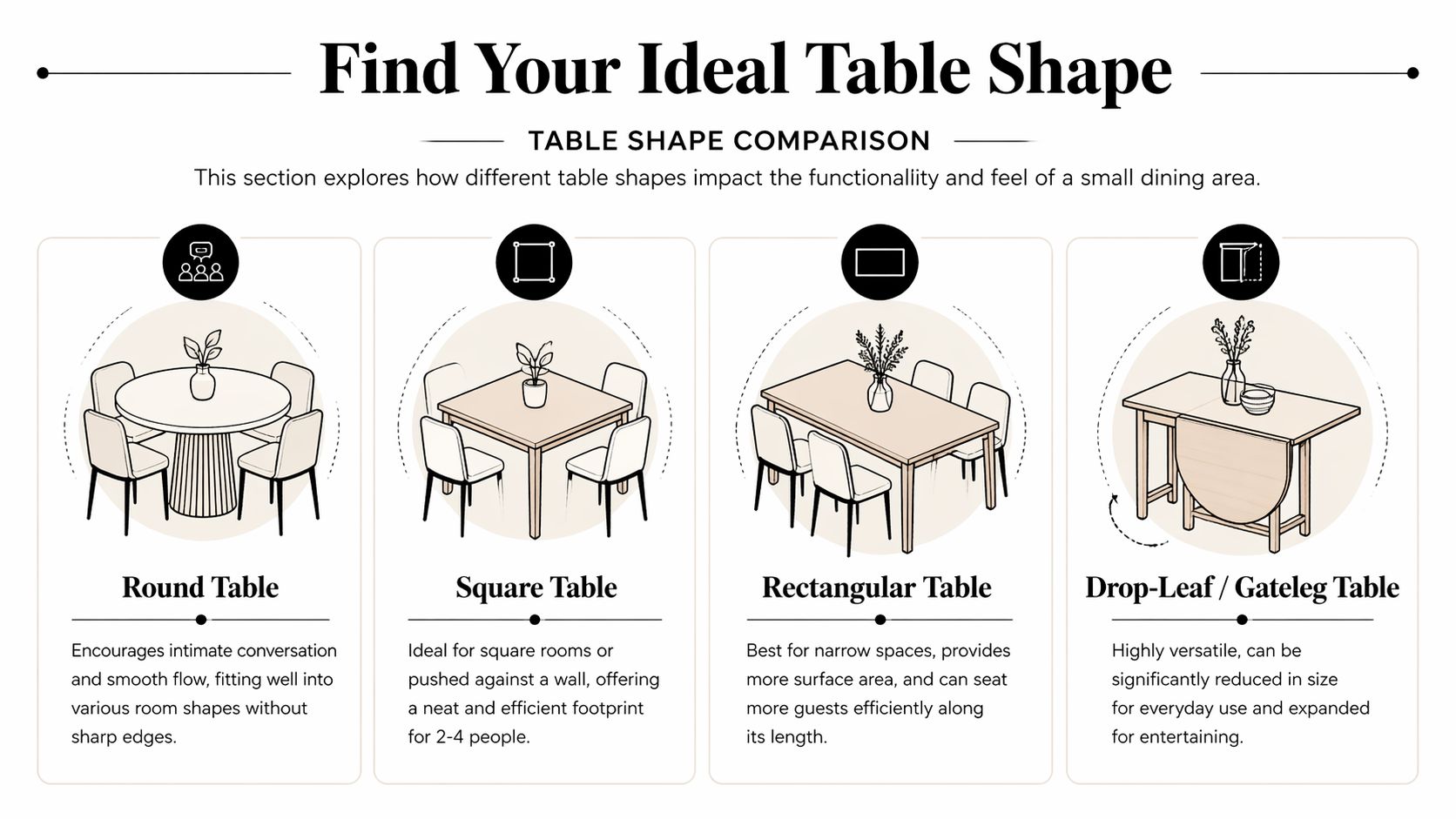
Seating benchmarks help narrow the field. A 48-inch round table seats 4-6 people, while a 36-inch square table fits 4 intimately, based on small table seating standards.
Round tables
Round tables are often the friendliest choice in a tight room. Without corners, they soften traffic flow and make conversation easy. They also work nicely in breakfast nooks and squarer rooms where a rectangular table might feel too stiff.
A pedestal base is especially useful because people don’t have to dodge table legs.
Square tables
Square tables can be a strong match for square rooms or smaller eat-in kitchens. They feel tidy and balanced. For a smaller household, they often create a cozy, close-knit setup.
Their weakness shows up when you need to seat more people regularly. At that point, things can feel tight fast.
Rectangular tables
Rectangular tables shine in long, narrow spaces. If your dining area runs along a wall or sits between the kitchen and living room, this shape often uses space most efficiently.
They also give you more surface area for place settings, serving dishes, and everyday tasks like homework or laptop time.
Drop-leaf and gateleg styles
These are the secret weapon for a lot of small homes. On an ordinary day, they stay compact. When company comes over, you lift the leaves and gain more usable top space.
For anyone searching for dining room table and chairs for small spaces, this style deserves a serious look.
Table Shape Guide for Small Spaces
| Table Shape | Best For… | Seats | BILTRITE Pro-Tip |
|---|---|---|---|
| Round | Square rooms, breakfast nooks, open corners | A 48-inch round seats 4-6 | Choose a pedestal base if you want easier chair placement |
| Square | Small square rooms, casual dining for a smaller household | A 36-inch square fits 4 intimately | Works well when all sides don’t need heavy traffic around them |
| Rectangular | Long narrow spaces, eat-in kitchens, wall-adjacent layouts | Varies by length and chair style | Look for slim legs and chairs that tuck in cleanly |
| Drop-leaf / Gateleg | Multipurpose rooms, apartments, flexible layouts | Depends on leaf position and chair choice | Great when the room needs open floor space between meals |
If you want to compare silhouettes and styles in person, our guide to different table types can help you sort out what shape matches your room.
Discover Clever Multifunctional Designs
A small dining area often has to do more than one job. That’s why multifunctional furniture makes so much sense. The room can be breakfast spot, workspace, game table, and holiday overflow seating, sometimes all in the same week.
The most useful pieces aren’t flashy. They’re the ones that quietly adapt.
Drop-leaf tables that shrink when you’re done
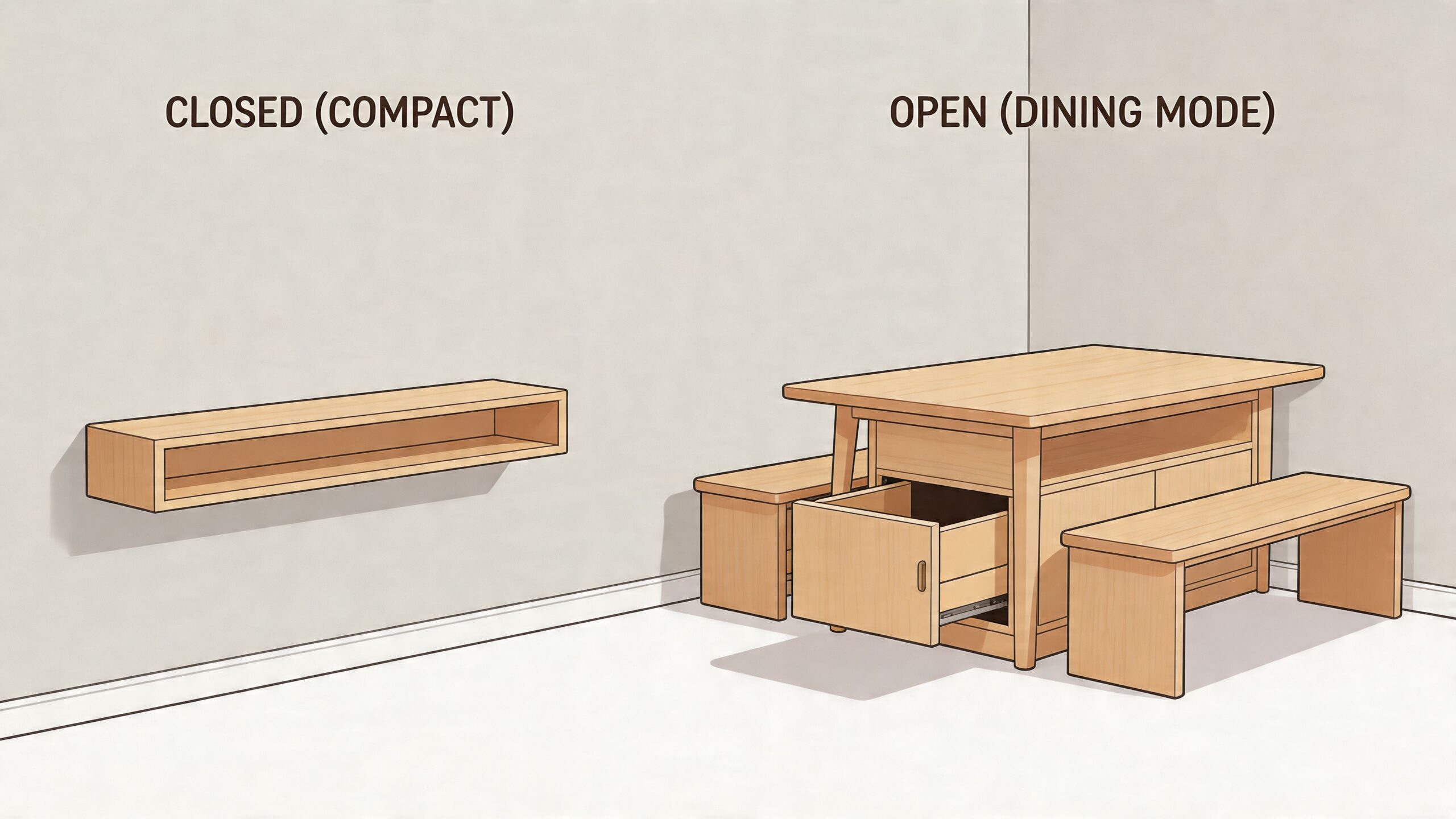
Drop-leaf tables are a longtime favorite for a reason. When the leaves are down, the table takes up far less visual and physical space. You can park it near a wall and keep the room open. When you need more surface area, raise one or both leaves and you’re ready for a meal or guests.
That flexibility is hard to beat in apartments, condos, and smaller kitchens.
Extendable tables for occasional company
Some people don’t need extra seating every day. They just need it once in a while. An extendable table helps you keep a smaller footprint most of the time without giving up the option to host.
This is especially handy if your dining area is part of a larger open room. Closed up, the table feels scaled right. Opened up, it handles company more comfortably.
Wall-hugging and dual-purpose solutions
In the tiniest homes, a dining table may need to sit close to a wall or work like a console between meals. That’s where compact multifunctional pieces earn their place.
A few practical ideas:
- Wall-friendly tables: Good for households where one side isn’t used every day.
- Counter-height dinettes: Helpful in casual kitchen areas where a standard dining set feels too formal.
- Nesting stools or benches: Easy to tuck away when the floor needs to stay clear.
- Small-scale solid wood sets: A showroom such as BILTRITE’s small-space furniture collection includes compact dining options, including hard-to-find drop-leaf styles designed for tighter rooms.
The smartest small-space furniture doesn’t ask the room to do less. It helps the room do more without feeling crowded.
How to decide if multifunctional is right for you
Ask yourself how the room works on an ordinary Tuesday, not just on holidays.
If you need open floor space most days, go with a table that folds, drops, or tucks neatly into the room. If you host often, an extendable table may make more sense. If the dining area shares space with a living room or home office, choose a style that looks clean even when it’s not fully in use.
That’s usually the difference between a set that “fits” and one that supports your life.
Choose Chairs and Benches That Fit Just Right
People spend a lot of time choosing the table and then treat the chairs like an afterthought. In a small room, chairs can make or break the whole setup.
Bulky seating steals space fast. Wide arms, deep backs, and flared legs may look inviting on a showroom floor, but in a compact dining area they can crowd the table and tighten your walkway.
Why armless chairs help so much
Armless chairs are often the easiest win in a smaller room. They slide under the table more neatly, they create less visual bulk, and they make the whole area feel lighter.
That matters every single day. When chairs tuck in well, the room instantly feels cleaner and easier to move through.
Look for these features:
- Slim chair profiles: Narrower silhouettes usually play better with tighter table spacing.
- Tuck-friendly backs: A chair should sit close to the table when not in use.
- Open leg designs: These can help the set look less heavy.
- Comfortable upholstered seats: You can still have softness without oversized frames.
If you want a softer sit without too much visual weight, upholstered dining chairs with manageable scale are worth a look.
Don’t overlook a bench
A bench can be a very practical move in a compact home. It can slide fully under one side of the table when not in use, which keeps the aisle more open. It can also seat kids especially well, and it brings a casual, relaxed look.
A bench tends to work best when:
- One side of the table sits near a wall
- You want flexible seating for family use
- You’d like the room to feel less cluttered
- You don’t need a fully formal dining setup
Think about the chairs with the table, not after
This is the insider tip shoppers often miss. Don’t ask, “Do I like this chair?” Ask, “How does this chair behave with this table?”
A few combinations work especially well:
- A pedestal table with armless chairs
- A rectangular table with one bench and side chairs
- A drop-leaf table with smaller chairs that tuck tightly
- A square table with chairs that have clean, straight lines
If the chairs can’t disappear neatly under the table, they’ll keep reminding you the room is small.
Comfort still matters, of course. Nobody wants a dining chair that looks neat but feels punishing after one meal. But in a compact home, comfort and scale have to work together. The right chairs support both.
Why Quality Materials and Construction Matter Most
Small-space dining furniture gets used hard.
In many homes, that same table handles breakfast, bills, laptop time, crafts, puzzles, and dinner. The chairs get pulled out and pushed back constantly. Leaves open and close. Benches slide in and out. In a compact room, furniture doesn’t just sit there looking nice. It works.
That’s why material and construction matter so much.
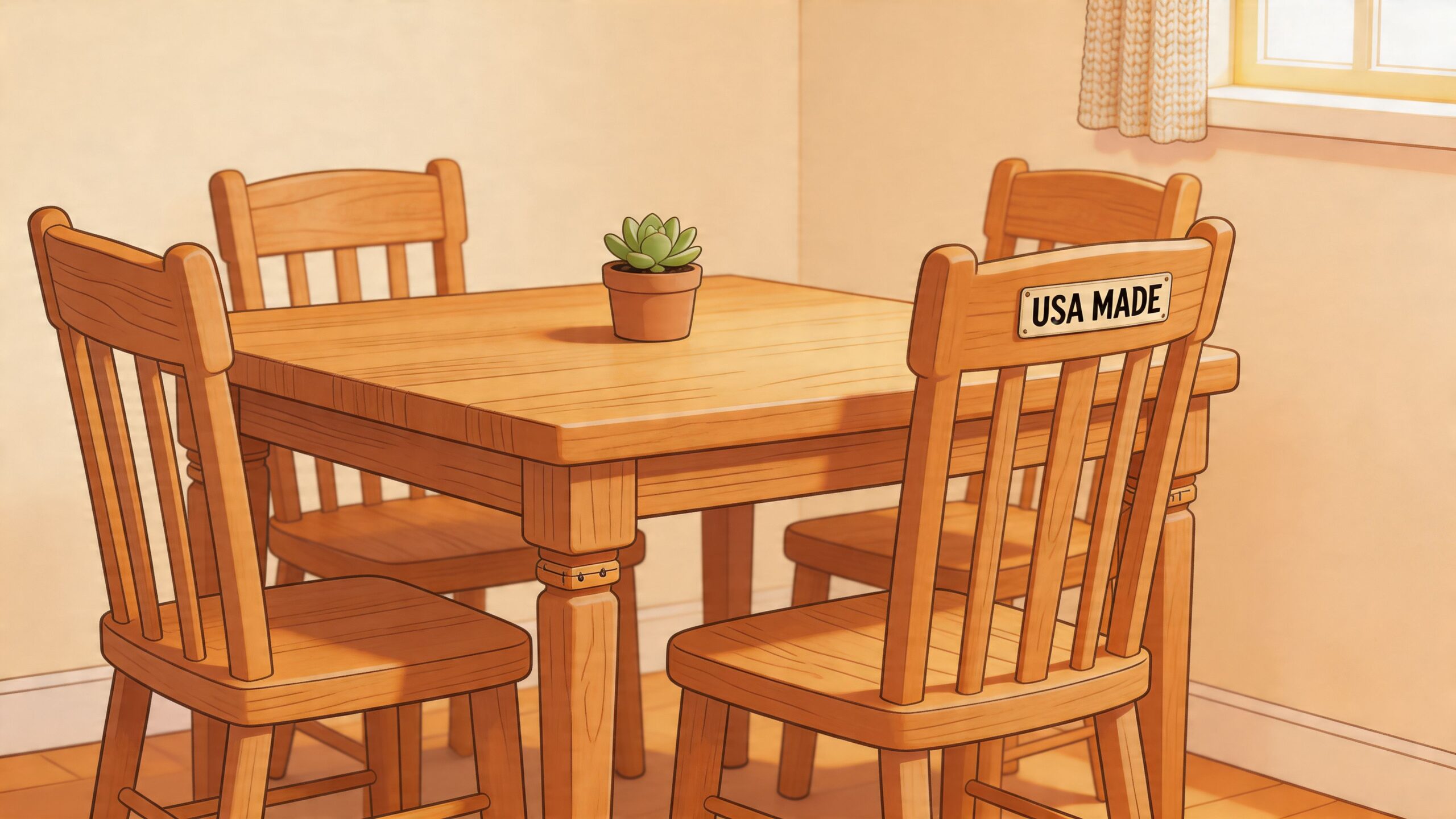
Solid wood holds up better to real life
A well-built solid wood table handles daily wear differently than lower-grade alternatives. It tends to feel steadier, age more gracefully, and stay useful longer. In a smaller home, that matters because there usually isn’t a second dining table or backup room to spread the wear around.
One useful point of comparison comes from Amish-crafted small dining sets that use solid oak. Oak has a Janka hardness rating of 1290 lbf, compared with 800 lbf for engineered wood, and that stronger material profile helps resist warping and sagging for over 20 years, according to solid wood and engineered wood comparison data.
That doesn’t mean every engineered product is bad. It does mean material choice has consequences, especially in furniture you’ll use every day.
Why cheap-looking wear shows up faster in tight rooms
In a larger home, a nicked edge or a wobbly chair may not feel urgent. In a small room, you notice everything. The table is close to the kitchen, visible from the sofa, and used multiple times a day.
That’s why lower-quality construction can become frustrating quickly:
- Loose joints: Chairs can start feeling shaky.
- Thin surfaces: Tops may show wear sooner.
- Less durable cores: Repeated use can lead to sagging or fatigue.
- Shorter useful life: Replacing furniture more often usually costs more in the long run.
Why local shoppers often choose USA and Amish-made pieces
This is one of those areas where buying local and buying better-quality line up nicely. Many shoppers want a dining set that feels sturdy from day one and still looks good years from now. USA-made and Amish-made solid wood furniture often fits that goal well because the build quality is part of the product, not just the styling.
In our showroom, people often look for the USA Made, Amish Made, and Real Solid Wood icons because those markers make it easier to spot furniture built for long-term use. For a smaller home, that’s not just about pride of ownership. It’s about function. A dependable table and chairs reduce the hassle of repairs, replacements, and everyday annoyance.
What to check before you buy
When you sit down with a dining set, pay attention to more than color and shape.
Check these things:
- How the chair feels when you shift your weight
- Whether the table wobbles when you lean on it
- How smoothly leaves open and close
- Whether the finish feels substantial
- How the set looks when chairs are tucked in
A small dining set should save space without feeling temporary.
That’s the difference many families notice right away. A solid piece feels calmer, steadier, and more settled in the room. And when a table gets used as much as most small-space tables do, that steady feel is worth a lot.
Styling Tricks to Make Your Small Space Feel Bigger
Once the furniture is right, the room gets easier to style. You don’t need a giant makeover. A few simple visual choices can help the area feel more open and comfortable.
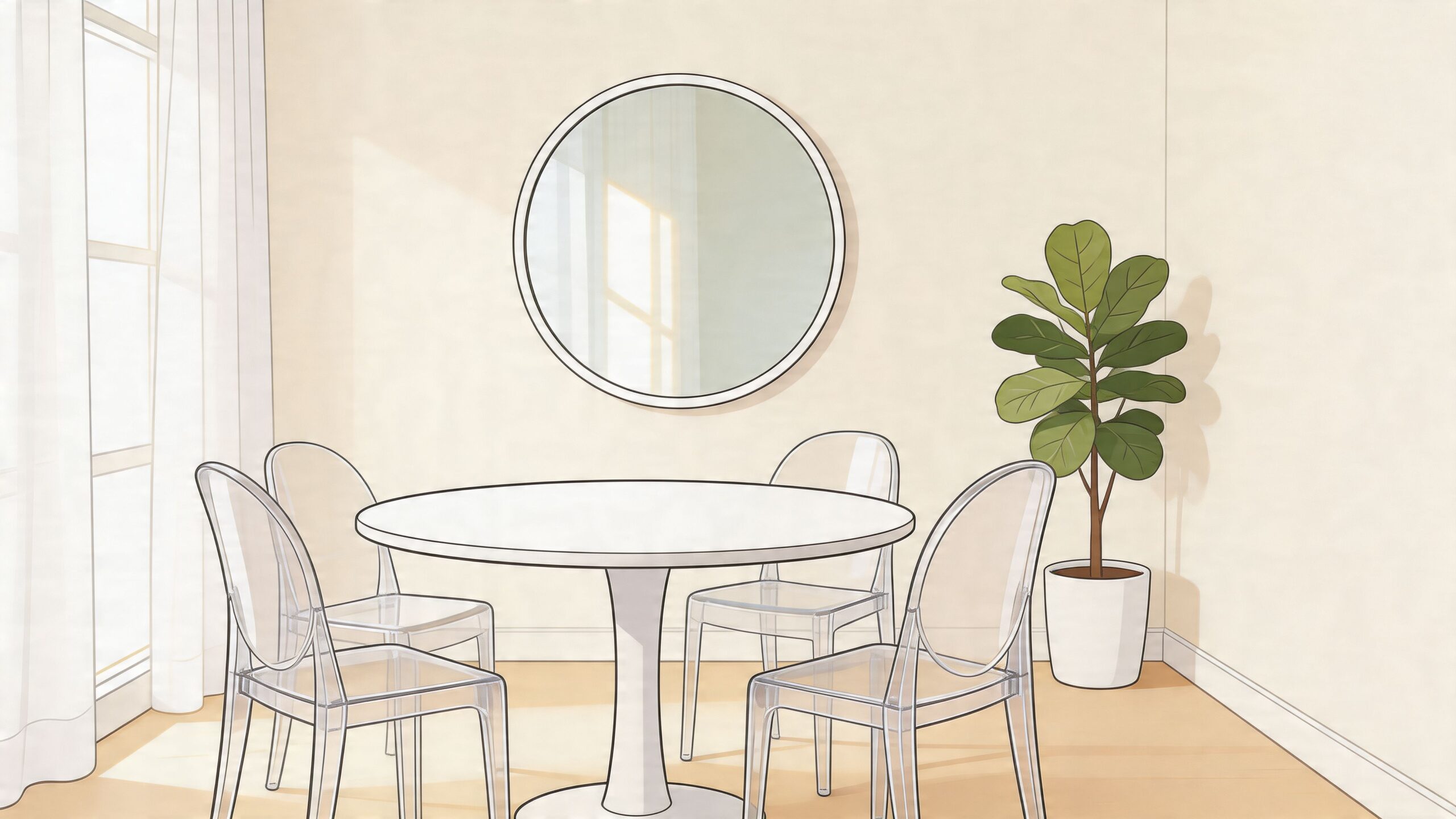
Use lighter finishes and cleaner lines
In a tighter room, heavy visual weight can make the area feel crowded even if the measurements are fine. Lighter wood tones, soft neutrals, and simple silhouettes usually feel more airy than very dark, bulky forms.
That doesn’t mean the room has to be plain. It just means every piece should earn its visual space.
Let a mirror do some work
A mirror can help bounce light and add a sense of depth. In a dining nook or apartment corner, that little trick can make the setup feel less boxed in.
Round mirrors are especially nice near round tables because they echo the shape without adding sharp lines.
Keep the tabletop and floor from getting busy
Small rooms look fuller faster. If you pile on a big centerpiece, oversized placemats, a thick rug, and heavy window treatments, the room can start feeling cluttered.
Try this instead:
- Choose one centerpiece: A small bowl, a plant, or a low vase is enough.
- Keep chair fabrics quiet: Simple textures often work better than busy prints.
- Be careful with rugs: If a rug is too small, it can make the dining area look chopped up.
- Use compact lighting: A fixture should define the space, not dominate it.
A few fast wins
These little choices often make a big difference:
- Pull the table slightly off the wall if traffic allows
- Use chairs with open backs or lighter visual profiles
- Limit decorative extras on nearby surfaces
- Match the scale of art and lighting to the table
Sometimes the room doesn’t need smaller furniture. It needs less visual noise.
That’s good news because styling changes are often easy to try. Once the dining room table and chairs for small spaces are scaled properly, the finishing touches become much simpler.
Let Our Family Help Yours Find the Right Set
There’s only so much a photo can tell you.
A dining chair might look slim online but feel cramped when you sit in it. A table might seem compact until you try pulling out the chairs. A finish might read warm in one room and flat in another. That’s why seeing furniture in person still matters so much, especially for a smaller home where every inch counts.
Delivery matters more than most people expect
One of the biggest headaches with small-space furniture isn’t choosing it. It’s getting it into the home.
Recent survey findings note that over 60% of small-space furniture buyers report delivery issues, and demand for come-apart furniture designed for narrow doorways has risen 25% in the USA, according to small-space furniture delivery and modular demand data. That tracks with what many apartment, condo, and senior living shoppers already know. Tight entries, stair turns, and narrow doorways can determine what will work.
Why in-person shopping helps
In a showroom, you can answer the questions that matter:
- Can I sit comfortably in these chairs?
- Do the chairs tuck in as neatly as I hoped?
- Does the tabletop feel too large or too small?
- Will this finish work with my cabinets or flooring?
- Is there a version that comes apart for delivery?
Those answers are much easier to trust when you can see the furniture, touch the materials, and talk with someone who’s helped lots of local households solve the same problems.
What makes the process easier at our store
We’re a fourth-generation family business, and we’ve been helping Metro Milwaukee homes since 1928. We don’t sell online, and that’s intentional. We’d rather help you make a more confident choice in person than leave you guessing from a screen.
A few things shoppers often appreciate:
- A large in-stock selection: Helpful if you need something sooner.
- Affordable custom options: Useful when you want a certain wood, finish, or fabric.
- Small-scale and heavy-duty choices: Important because not every compact set is built the same.
- Experienced guidance: Our team brings over 400 years of combined experience.
- Local delivery support: Especially helpful for tricky entries and room setups.
We’re also proud of our family-first approach. We’re closed on Sundays and Mondays so our people can spend time with their families, just like many of our customers want to do around their own dining tables.
Bring your measurements and questions
If you visit, bring your room measurements, a few phone photos, and any doorway concerns. That makes it much easier to narrow the choices to sets that fit your room and your life.
A good dining set doesn’t just fill an empty corner. It gives your home a place to gather, eat, talk, work, laugh, and slow down for a bit. Even in a smaller space, that matters.
We’d love to help you find a dining set that fits your space, your style, and the way your family lives. Come visit BILTRITE Furniture-Leather-Mattresses in Greenfield, say hi, and let our family help yours choose something comfortable, durable, and right for your home.