3 DAY MATTRESS SALE! TUESDAY - WEDNESDAY - THURSDAY!
LABOR DAY SALE EXTENDED ENDS SATURDAY, OCTOBER 3RD AT 5PM!
NO CREDIT CARD FEES!
1000's of Items IN-STOCK + 500 Mattresses!
Largest selection of USA Made Furniture & Mattresses + Amish Made!
FREE In-Store Design Services!
BUY LOCAL & LOVE YOUR HOME!
3 DAY MATTRESS SALE! TUESDAY - WEDNESDAY - THURSDAY!
LABOR DAY SALE EXTENDED ENDS SATURDAY, OCTOBER 3RD AT 5PM!
NO CREDIT CARD FEES!
1000's of Items IN-STOCK + 500 Mattresses!
Largest selection of USA Made Furniture & Mattresses + Amish Made!
FREE In-Store Design Services!
BUY LOCAL & LOVE YOUR HOME!
OPEN LABOR DAY | Tuesday-Thursday 10am to 6pm | Friday 10am to 7pm | Saturday 10am to 5pm | Sunday Closed To Be With Family & Friends | Monday Showroom Closed
5430 West Layton Ave, Greenfield - Metro Milwaukee
Shopping for a new table, dresser, or bed should feel exciting. Instead, a lot of folks end up staring at tags that say things like “engineered wood,” “veneer,” or “solid hardwood” and wondering what any of it means.
That confusion is normal. The good news is that solid wood furniture vs particle board isn’t as mysterious as the labels make it sound. Once you understand what each material is, how it behaves in a real home, and what it means for your family over time, the choice gets much easier.
Welcome to the Great Furniture Debate
A family comes in looking for a dining set. They’ve got kids, busy weeknights, holiday meals, and a budget that matters. They see two tables that look nice from ten feet away, but one is labeled solid wood and the other is particle board with a finished surface. Right there is where shoppers often pause.
The reason is simple. Furniture terms can sound technical, but what you really want to know is much more practical. Will this piece feel sturdy? Will it handle everyday life? Will it still look good years from now?
A simple side by side look
Feature
Solid wood
Particle board
What it’s made of
Natural lumber
Wood particles and sawdust bonded with adhesive
Typical feel
Heavier, sturdier
Lighter, more uniform
Moisture response
Handles it better with care
More likely to swell or warp
Repair options
Can often be sanded or refinished
Usually limited to surface cleaning
Best fit
Long-term everyday use
Shorter-term or lighter-use needs
Many shoppers also assume the debate is only about appearance or price. It’s not. It’s about how the piece is built and how that construction affects daily use. A family table has a different job than a temporary desk for a spare room.
Neighborly advice: If a piece will be used every day, the material matters more than the showroom tag might suggest.
That’s why this topic matters so much for homeowners. Furniture isn’t just décor. It’s where your kids do homework, where guests gather, where coffee mugs land, where drawers open and close every morning, and where life leaves little marks.
Why this matters for real homes
People often get tripped up by one big question. If two pieces look similar, why does one cost more? The answer usually starts beneath the finish.
Solid wood is valued for strength, character, and the ability to stay useful for a long time. Particle board can serve a purpose too, especially when someone needs something simple and budget-conscious for a shorter stretch. But they are not built the same, and they do not age the same.
Once you know the building blocks, the rest of the decision starts to click.
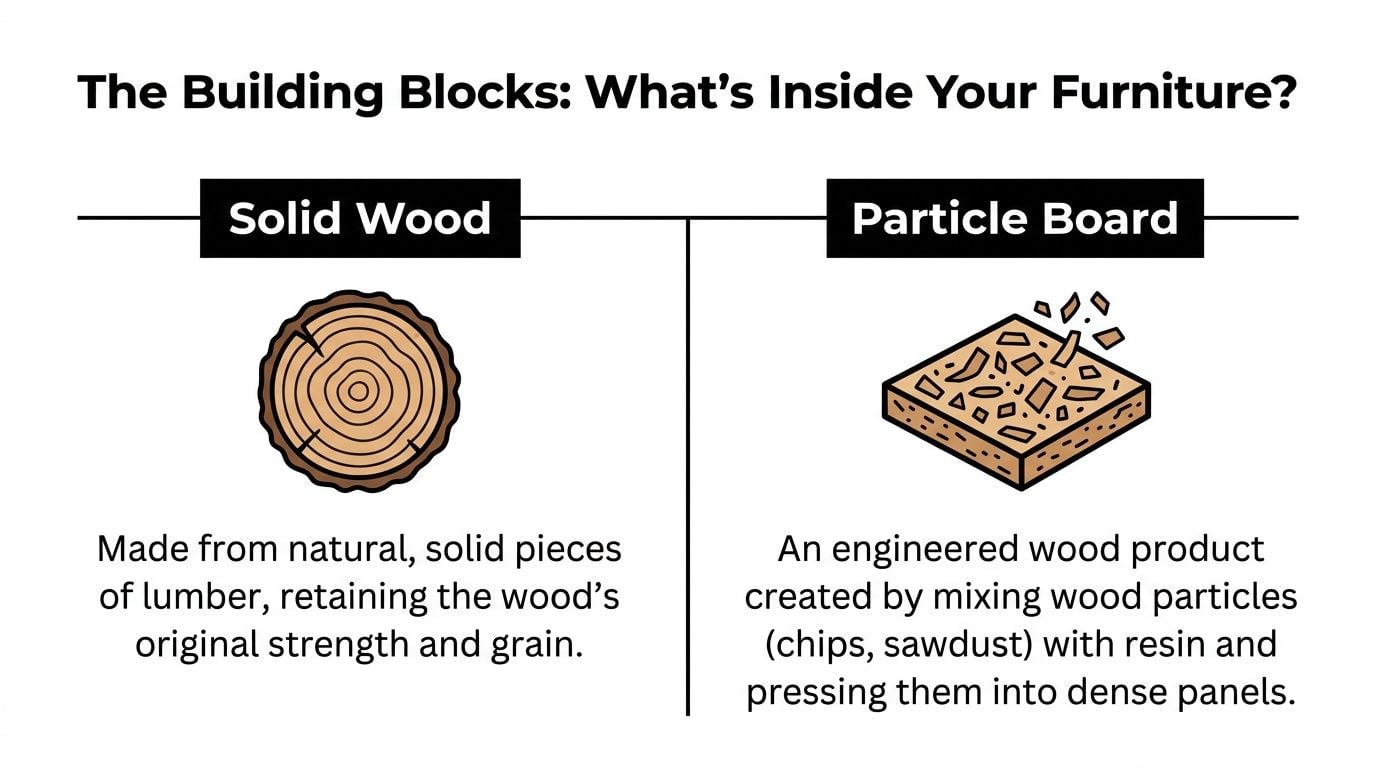
The Building Blocks Whats Inside Your Furniture
The easiest way to understand this is to think about what’s under the surface.
Solid wood furniture is made from actual pieces of lumber. That means the material runs through the piece, not just across the top layer. You’re seeing and touching real wood with natural grain, variation, and texture throughout.
Particle board is different. It’s made from smaller wood particles, chips, or sawdust that are bonded together with adhesive and pressed into panels. Then a finished layer is added on top so the outside has a cleaner, styled appearance.
A kitchen table way to think about it
A simple comparison helps.
Solid wood is like a loaf of bread. What you see on the outside is consistent with what’s inside.
Particle board is more like pressed crumbs formed into shape. It can look smooth and finished on the outside, but the inside is a blended material.
That doesn’t make particle board “bad” in every situation. It does mean it behaves differently. When people say two dressers “look the same,” they’re usually talking about the finish, not the structure.
The material inside determines a lot of what happens later.
A solid wood piece carries its strength through the full board. That’s part of why it often feels more grounded and substantial. Particle board relies on compressed material and a finished outer layer, which can work fine in some lower-stress situations but tends to be less forgiving when life gets messy.
The inside of a piece often tells you more than the stain color or hardware ever will.
This is also where terms like veneer can confuse people. A surface can look polished and attractive, but that doesn’t automatically tell you what the core material is. The outer look and the inner build are two different things.
When you shop, try to move beyond the top finish. Open drawers. Feel the weight. Look at edges, backs, and undersides when possible. Those clues often reveal whether a piece is made for the long haul or meant for a shorter chapter.
Built to Last or Built to Replace
A lot of furniture decisions come down to one plain question. Do you want something that serves you for a while, or something that stands up to years of family life?
Solid wood often stands out due to its longevity. According to TY Fine Furniture’s comparison of solid wood and particle board, solid wood furniture can last generations, often 20 to 50+ years, while particle board typically lasts 3 to 15 years. That gap matters when you’re buying for a busy home instead of a temporary setup.
What daily life does to each material
Think about what a dining table or dresser goes through.
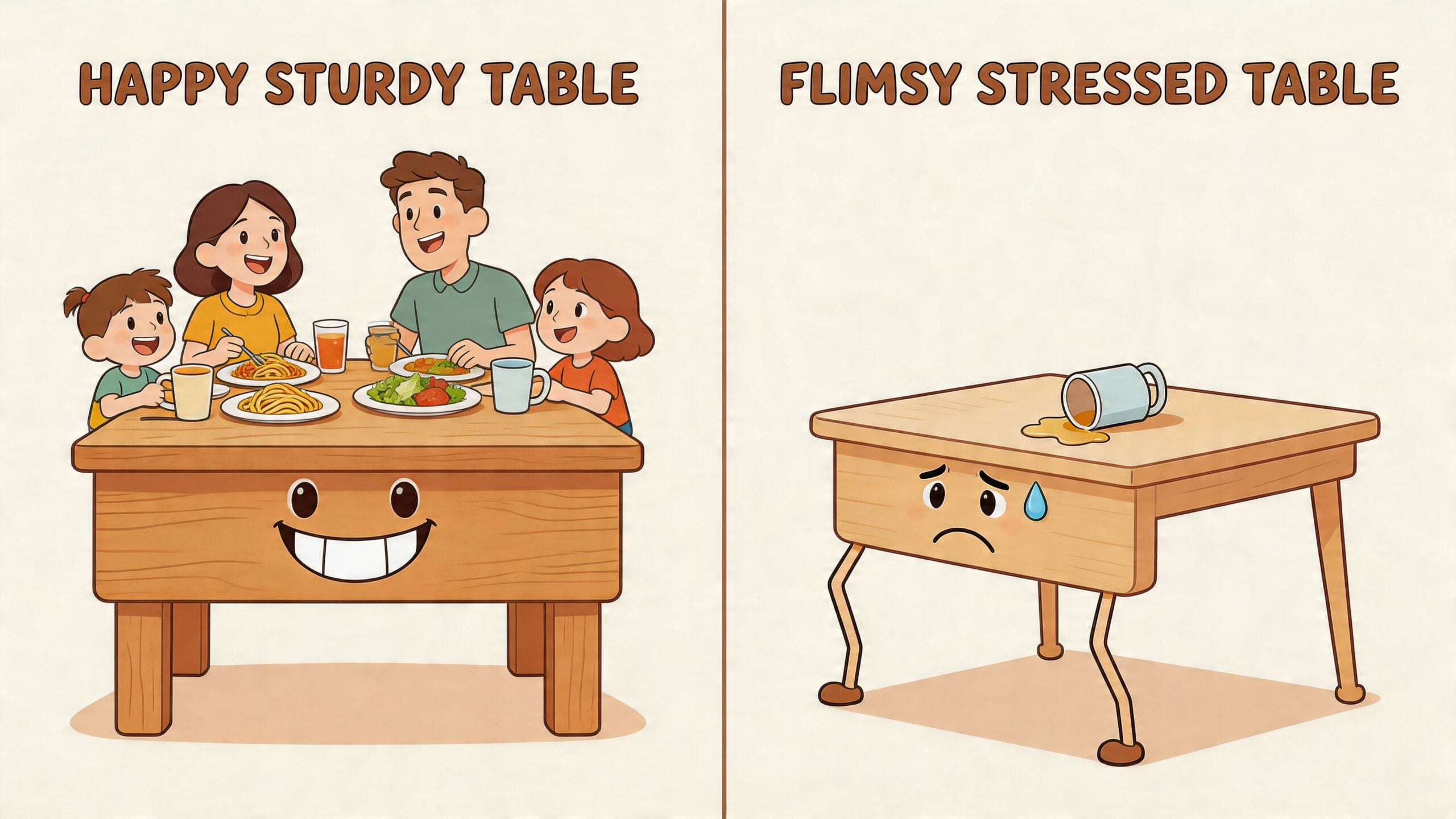
Weight and pressure: Solid wood tends to hold up better under regular use.
Moisture and spills: Particle board is more vulnerable to swelling and warping.
Joints and hardware: Particle board can loosen over time, especially in high-use spots.
That last point confuses people sometimes. A drawer might look fine when it’s new, but repeated pulling, loading, and shifting can be harder on particle board construction. With solid wood, you often get a structure that feels firmer and more dependable over time.
The repair question matters
Durability isn’t only about avoiding damage. It’s also about what happens after damage.
A nick on solid wood can be part of the piece’s story, and many marks can be addressed later. A damaged particle board panel often gives you fewer good options. Once swelling, chipping, or breakdown starts, you may be looking at replacement instead of repair.
If you want to learn more about why people choose this route for long-term use, this article on the benefits of solid wood furniture gives a good overview.
When a piece has to survive kids, guests, pets, and Wisconsin seasons, sturdiness stops being a luxury and starts being practical.
That’s why solid wood often becomes the family choice for beds, dining tables, bedroom storage, and other hard-working pieces. It isn’t just about tradition. It’s about wanting a piece to keep doing its job year after year.
The Beauty Contest Appearance and Finishes
Some furniture wins you over with strength. Some wins you over with looks. The interesting part is that solid wood often brings both.
Solid wood has natural grain, color shifts, knots, and little variations that give each piece personality. Two oak tables can be built in the same style and still not look exactly alike. For many homeowners, that’s the charm. The piece feels warm, honest, and one of a kind.
Particle board usually offers a more uniform look. That can appeal to shoppers who want a smooth, consistent surface and a very even finish. There’s nothing wrong with liking that cleaner, more controlled appearance.
Natural character versus even consistency
Here’s where people often differ in taste:
Solid wood fans tend to enjoy movement in the grain, visible texture, and that lived-in look that feels richer over time.
Particle board fans often like a more consistent appearance from panel to panel.
Neither preference is strange. It just depends on what kind of room you’re building. A farmhouse dining room, cozy bedroom, or craftsman-style home often pairs beautifully with real wood character. A simpler guest room or low-commitment office setup may not need that same depth.
What happens when the finish gets worn
Looks aren’t only about day one. They’re also about year ten.
According to Cypress Kitchen and Bath’s guide to particle board vs solid wood cabinets, solid wood can be sanded, stained, and painted multiple times over decades, and dents can often be professionally restored, while particle board is limited mainly to surface cleaning. That one difference gives solid wood a lot more style flexibility over time.
A piece that can be refreshed later gives you more freedom than a piece that has to stay exactly as it is.
That matters when your taste changes. Maybe you want a darker stain later. Maybe the kids leave behind a few battle scars. Maybe you move and the room calls for a different finish. Solid wood gives you room to adapt instead of starting from scratch.
The Real Cost of Furniture for Your Family
Price tags get attention first, and that makes sense. Families have budgets. New homeowners have lists. Nobody wants to overspend.
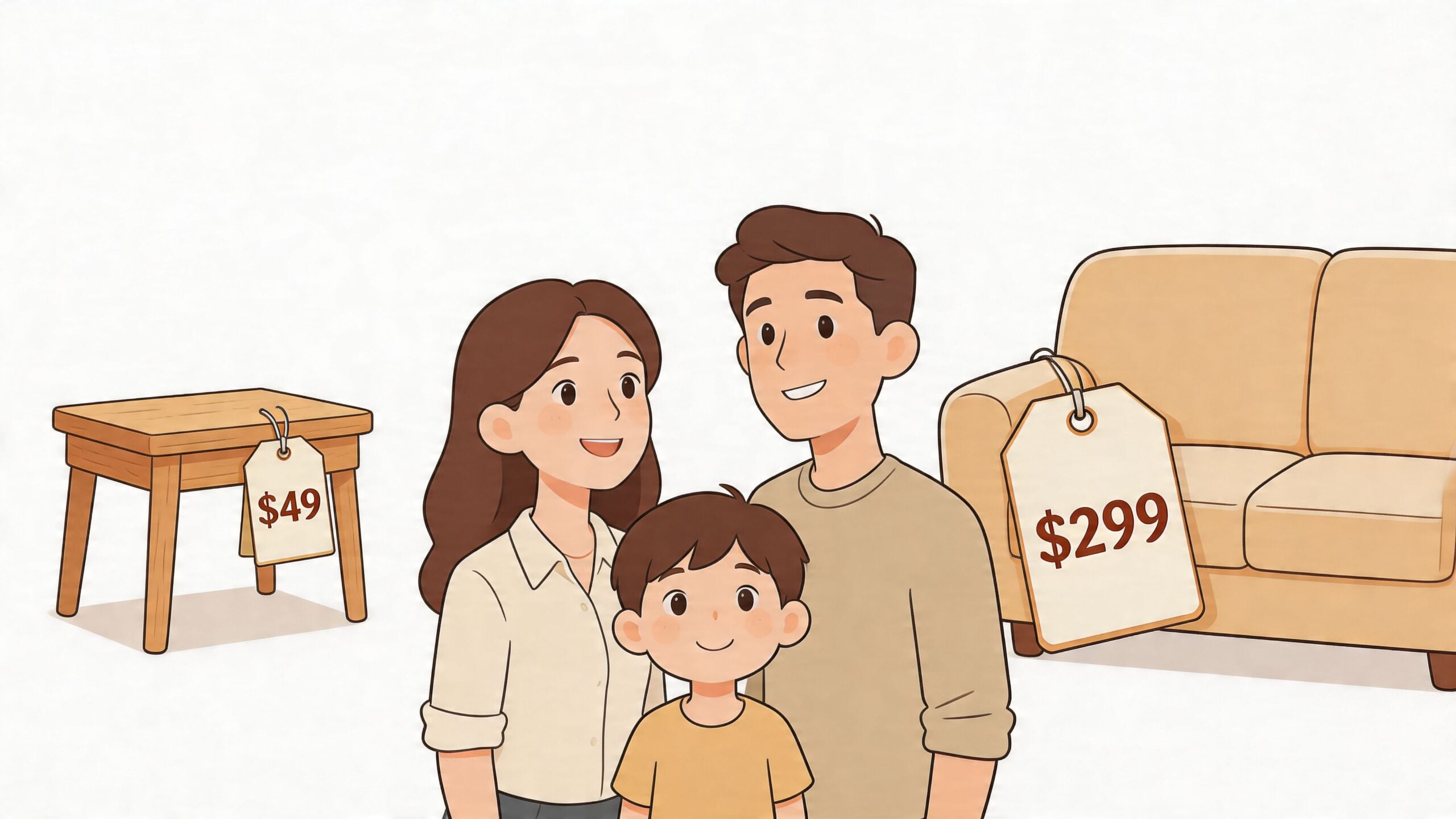
Particle board often looks attractive at the start because the upfront number is lower. In many stores, that lower entry price is what gets the piece into the conversation. But the first price and the full cost are not always the same thing.
A real example over time
According to James and James Furniture’s solid wood investment guide, a particle board dining table at $799 may need 6 replacements over 30 years, totaling $4,794. In the same example, a solid wood table at $3,500 works out to $116 annually over 30 years.
That’s the kind of example that changes how people shop. The lower-price option can feel budget-friendly in the moment, but repeated replacement shifts the story.
Why families feel this difference
The cost isn’t only financial. It also shows up in hassle.
You shop again sooner. That means more comparing, measuring, scheduling, and waiting.
You live with wear sooner. Loose parts, chipped surfaces, or swelling can make a room feel tired faster.
You may throw away something that still looks decent from far away but no longer functions well.
A helpful question is not “What does this cost today?” It’s “How long do I want this piece to serve my home?”
If you’re weighing lifespan along with price, this article on how long furniture should last can help frame the decision.
The cheapest piece at checkout isn’t always the lower-cost choice once replacement enters the picture.
For guest rooms, temporary apartments, or short-term needs, a lower initial price may still make sense. For the pieces your family leans on every single day, long-term value deserves a closer look.
Why We Champion USA and Amish-Made Solid Wood
In a family business, you learn to respect things that are built with care. That mindset is a big reason so many people feel drawn to USA-made and Amish-made solid wood furniture.
There’s a different spirit in a piece that was built by craftspeople who know their trade and take pride in getting it right. You can often see it in the joinery, feel it in the weight, and notice it in the way drawers and doors operate.
Why local and American craftsmanship matters
Choosing USA-made furniture means more than choosing a country of origin. For many homeowners, it means supporting skilled work, valuing craftsmanship, and keeping dollars closer to home. That carries extra meaning in a place like Metro Milwaukee, where neighbors still care about buying from people they trust.
Amish-made furniture has its own special reputation because it reflects handcraft, patience, and consistency. These builders are known for making pieces with substance, not shortcuts.
If you’re curious why so many families seek out those pieces, this look at the advantages of Amish furniture gives a helpful overview.
Why this fits family values
This choice isn’t just about furniture. It’s about what kind of household you want to build.
Some people want pieces that can move from one home to the next. Others want furniture that feels rooted, meaningful, and made with real human effort. USA-made and Amish-made solid wood fits that mindset beautifully because it connects craftsmanship, durability, and pride of ownership.
“Buy local” matters here too. In communities across Milwaukee County and beyond, families often want their purchases to reflect the same values they bring to everyday life. Support good work. Choose quality where it counts. Bring home something you’ll be glad you picked years from now.
That kind of thinking never goes out of style.
Finding Your Familys Fit in Our Showroom
Not every furniture need is the same, and that’s the honest truth.
If you need a desk for a short-term apartment, a starter bookshelf, or a piece for a room that won’t get much action, particle board can be a reasonable option. It fills a need, keeps upfront cost lower, and may do the job just fine for a season of life.
When each choice can make sense
Solid wood is often the stronger fit for pieces like these:
Dining tables: Daily meals, homework, holidays, and spills ask a lot from a table.
Dressers and chests: Drawers get opened and closed constantly.
Bed frames: People want these to feel steady and dependable.
Long-term living room pieces with wood structure: Especially when the piece needs to age well.
Particle board may fit better in situations like these:
Short-term spaces: First apartments, dorms, or temporary rooms.
Light-use areas: A spare room or occasional-use office.
Tighter immediate budgets: When getting functional furniture in place is the top priority.
What to notice when you shop in person
Seeing furniture in person clears up a lot.
Pick up a chair if you can. Open a drawer. Look at the backside and underside. Run your hand along the grain. Notice whether the piece feels grounded or hollow, whether it has natural variation or a printed sameness, whether it seems ready for real life or only for careful use.
One more thing matters. Talk to experienced people who answer questions plainly. Good furniture guidance shouldn’t feel pushy. It should feel like a helpful conversation with someone who wants you to choose well for your home, your family, and your budget.
That’s especially helpful if you’re furnishing a smaller condo, a busy family house, or a senior living space where function matters just as much as style. The right material depends on the job you need the furniture to do.
If you’d like to compare solid wood furniture vs particle board in person, BILTRITE Furniture-Leather-Mattresses would love to welcome you to the showroom in Greenfield. We’re a fourth-generation family business serving Metro Milwaukee since 1928, with a strong focus on affordable, better-quality furniture, including USA-made and Amish-made solid wood built for real homes. Stop in, say hi, and let our experienced team help you find a piece your family will love for years.