3 DAY MATTRESS SALE! TUESDAY - WEDNESDAY - THURSDAY!
LABOR DAY SALE EXTENDED ENDS SATURDAY, OCTOBER 3RD AT 5PM!
NO CREDIT CARD FEES!
1000's of Items IN-STOCK + 500 Mattresses!
Largest selection of USA Made Furniture & Mattresses + Amish Made!
FREE In-Store Design Services!
BUY LOCAL & LOVE YOUR HOME!
3 DAY MATTRESS SALE! TUESDAY - WEDNESDAY - THURSDAY!
LABOR DAY SALE EXTENDED ENDS SATURDAY, OCTOBER 3RD AT 5PM!
NO CREDIT CARD FEES!
1000's of Items IN-STOCK + 500 Mattresses!
Largest selection of USA Made Furniture & Mattresses + Amish Made!
FREE In-Store Design Services!
BUY LOCAL & LOVE YOUR HOME!
OPEN LABOR DAY | Tuesday-Thursday 10am to 6pm | Friday 10am to 7pm | Saturday 10am to 5pm | Sunday Closed To Be With Family & Friends | Monday Showroom Closed
5430 West Layton Ave, Greenfield - Metro Milwaukee
TL;DR: A good queen-size mattress typically costs between $1,000 and $2,000. That’s a general guideline, and it’s usually the range where shoppers find the strongest balance of quality materials, durability, and long-term comfort before getting into unnecessary extras.
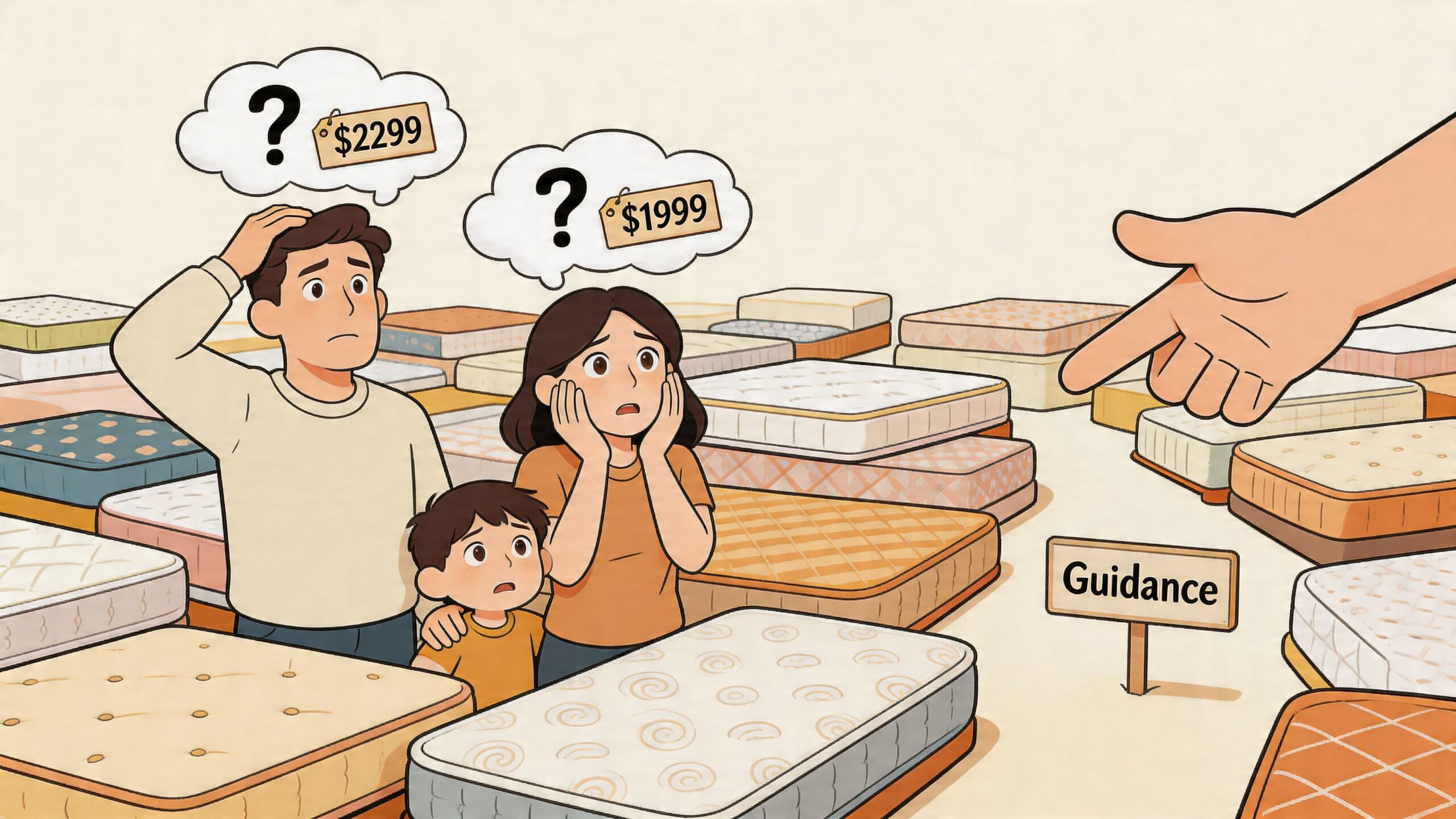
You’re probably here because mattress prices seem to be all over the map. One bed is a few hundred dollars, another is well over a thousand, and then there’s that luxury model sitting in the corner with a price tag that makes you blink twice.
We get it.
At our family store, we’ve been helping Metro Milwaukee families sort through these questions since 1928. We’re a 4th-generation business, and we’ve learned that customers aren’t really asking, “What’s the cheapest mattress?” They’re asking, “What’s a fair price for something I’ll sleep on every night?”
That’s a much better question.
A mattress isn’t like a lamp or an accent table. You use it for hours every single day. If it feels good in the showroom but starts sagging too soon, that low price stops looking like a bargain. On the other hand, paying more doesn’t automatically mean you’re getting better value.
The trick is learning what you’re paying for.
Let's Talk About Finding a Great Mattress
A lot of folks walk into mattress shopping with a simple plan. They think they’ll lie down on a couple beds, pick one they like, and head home. Then they see memory foam, hybrids, latex, pillow tops, firm, plush, cooling layers, online specials, “luxury” labels, and prices that jump all over the place.
That’s when the confusion starts.
We’ve seen this for generations. A couple comes in. One person wants soft, the other wants firm. They’ve seen a boxed mattress online, a national brand at a chain store, and a recommendation from a neighbor. By the time they get to a showroom, they’re not sure what a “good” mattress even means anymore.
The number most shoppers should know
For most households, the sweet spot is fairly straightforward. In 2026, a good queen-size mattress typically costs between $1,000 and $2,000, which lines up with quality materials, durability, and long-term support according to Casper’s mattress spending guide.
That range matters because it tends to be where you start seeing things that affect everyday use, not just marketing language. Better materials. Solid warranties. Construction made for regular nightly sleeping, not just getting through a guest room setup.
Practical rule: If you’re shopping for your main bedroom, don’t judge a mattress by sticker price alone. Judge it by how well it will hold up after years of real use.
Why this decision feels bigger than other furniture buys
A sofa matters. A dining table matters. But a mattress affects your body every night. If your back, shoulders, or hips aren’t getting the support they need, you feel it fast.
That’s why we like to slow this process down and make it simpler. We’re closed on Sundays so our family can be with family, and that same mindset shows up in how we help customers. No pressure. No rush. Just honest conversation about comfort, support, and whether the mattress is worth the money.
Here’s the heart of it. A good mattress cost isn’t just about dollars. It’s about what those dollars buy you over time.
What Makes a Mattress 'Good' Anyway
Price matters, but good and expensive are not the same thing.
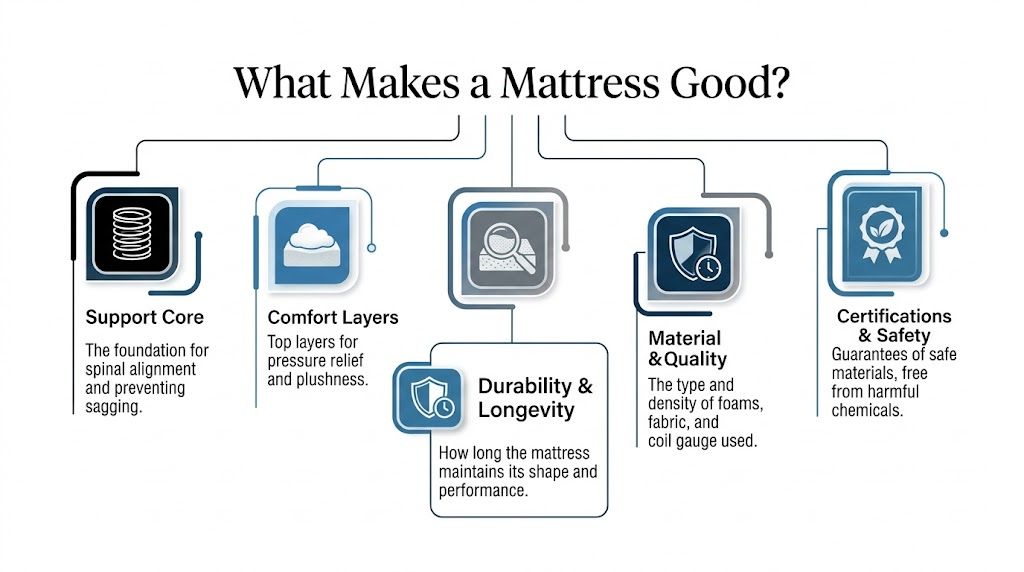
A mattress is good when it does three jobs well. It supports your body, feels comfortable for your sleep style, and keeps doing both of those things long after the new-mattress smell is gone.
Support comes first
People often say, “I want a comfortable mattress.” That makes sense, but comfort is personal. Support is foundational.
A soft top can feel cozy for five minutes in a showroom. If the mattress underneath doesn’t hold your body in a healthy position, that soft feel won’t save you. A good support system helps keep your spine more neutral and helps prevent that “rolling into a dip” feeling over time.
That’s one reason construction matters so much. Better foams, stronger coil systems, and two-sided designs can all play a role in how a mattress wears.
Materials tell you a lot
Some of the biggest differences in mattress quality are hidden inside the bed. You can’t always see them, but you’ll feel them later.
Mattresses under $800 often use low-density polyfoams that can lose 40% of their resilience in just 3-5 years, while models over $1,000 more often use higher-density foams or latex that hold their shape and support longer, according to Furniture Fair’s mattress price guide.
That can sound technical, so here’s the plain-English version:
Low-density foam tends to break down faster.
Higher-density foam usually holds up better.
Latex is known for being more durable than many basic foams.
A well-built support core helps the top layers do their job longer.
If you want a helpful primer before shopping in person, our guide on how to choose the right mattress breaks down these basics in a simple way.
Durability is part of comfort
A mattress that feels nice on day one but not year four isn’t a good value.
That’s why we always tell shoppers to think beyond the showroom test. Ask what’s inside. Ask whether it’s one-sided or two-sided. Ask how it’s meant to be cared for. A flippable mattress, for example, gives you another way to spread wear more evenly over time.
A mattress should still feel supportive after the honeymoon period. That’s where build quality earns its keep.
A quick checklist you can actually use
When you’re comparing beds, focus on these five things:
Support underneath: Does the mattress keep your body from sinking out of alignment?
Comfort on top: Does it cushion pressure points without swallowing you?
Material quality: Are the foams, coils, or latex built for long-term use?
Longevity: Will it keep its shape and feel for years, not months?
Safety and standards: Look for certifications and warranty coverage that give you more confidence in what you’re bringing home.
A good mattress should do more than feel nice for ten minutes. It should keep earning its place night after night.
A Guide to Mattress Prices and Types
If you’ve been wondering how much does a good mattress cost by type, focusing on specific types offers a more practical perspective. Different mattress materials come with different feels, different lifespans, and different price expectations.
Some people love the hug of foam. Others want the bounce and airflow of coils. Some want a blend of both. And some are willing to spend more upfront for a mattress that may stay comfortable for many more years.
Mattress Type & Cost Comparison
Mattress Type
Average Price Range
Typical Lifespan
Best For
Foam
Around $1,100 on average
8-10 years
Shoppers who like closer body contouring and pressure relief
Hybrid
Around $1,400 on average
Varies by build
People who want a mix of foam comfort and coil support
Latex
Around $1,800 on average
15-20 years
Buyers focused on durability and long-term value
Budget all-foam or innerspring
Often $300-$700
Shorter-term use is common
Guest rooms, temporary setups, tight budgets
Those latex numbers stand out for a reason. Latex mattresses average around $1,800 for a queen and often last 15-20 years, while foam averages $1,100 and hybrids average $1,400. Because of that long lifespan, latex can work out to less than $0.25 per night, based on Purple’s mattress cost guide.
How each type tends to feel
Foam usually has a more contouring feel. Many side sleepers like how it cushions shoulders and hips. The downside is that not every foam mattress is built the same, so lower-end options can wear out sooner.
Hybrid models combine a coil support core with comfort layers on top. For many shoppers, this is the middle ground. You get more lift and airflow than all-foam, with a softer surface feel than a traditional coil mattress. If you want a deeper look, our article on what a hybrid mattress is explains why this category has become such a common choice.
Latex tends to feel more buoyant than memory foam. It doesn’t have the same deep sink. People often choose it because it’s durable, responsive, and a smart long-term buy if the feel suits them.
A simple way to decide
If you’re stuck between options, use your habits as a guide:
Choose foam if you like a more cushioning surface.
Choose hybrid if you want balanced comfort and support.
Choose latex if durability is high on your list and you’re okay with a higher upfront price.
Choose budget models carefully if this is for occasional use, not your main bed.
We always encourage shoppers to lie down on different types because the feel differences are hard to understand from product descriptions alone. What sounds good online doesn’t always feel good in person.
Factors That Influence Mattress Cost
Two mattresses can look similar from the outside and still have very different price tags. That’s usually because the underlying cost is hiding under the fabric.
What you’re paying for inside the bed
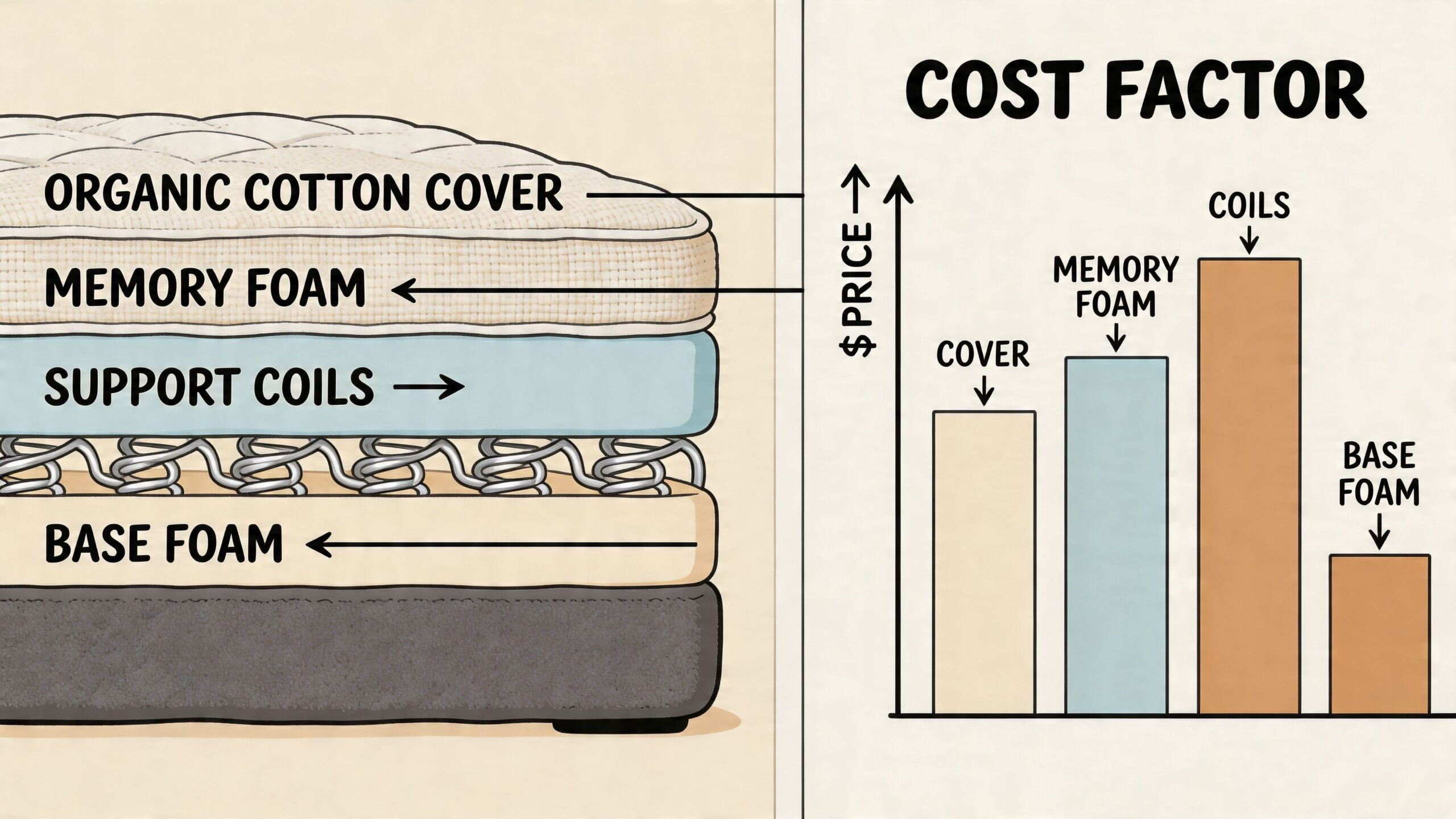
A mattress price usually reflects a mix of materials, construction, and how long the maker expects that mattress to hold up.
Here are the factors shoppers should pay attention to:
Material quality: Better foams, latex, stronger coils, and sturdier covers usually cost more than basic components.
Construction style: A simpler build costs less. A more layered or more carefully finished design often costs more.
Country of origin and craftsmanship: USA-made and Amish-crafted products can reflect different labor and build standards.
Special features: Cooling materials, reinforced edges, hand-tufting, and flippable designs can all add cost.
Size: Bigger mattresses use more material, so queen, king, and beyond naturally move upward in price.
Why flippable and two-sided designs matter
This one is easy to miss.
A one-sided mattress gives you one sleeping surface. A two-sided mattress gives you two. That doesn’t automatically make every two-sided bed right for every shopper, but it does give you a practical advantage regarding wear. You can rotate and flip it to help the surface wear more evenly.
That’s one reason some families are willing to pay a little more for heavier-duty construction. They’re not only buying comfort. They’re buying a product designed to stay useful longer.
Don’t ask only, “How much does this mattress cost today?” Ask, “What am I likely to need to replace sooner?”
Local craftsmanship and real-world shopping choices
This is also where a local showroom can make a difference. When you can compare USA-made models, heavier-duty options, and flippable builds side by side, pricing starts to make more sense. You’re no longer guessing based on photos and marketing words.
If you’re timing a purchase around promotions, our article on the best month to buy a mattress can help you think through seasonality and value without chasing every flashy sale.
The main idea is simple. Cost is shaped by what goes into the mattress and how it’s expected to perform. The more clearly you understand that, the easier it is to tell the difference between a fair price and a disappointing shortcut.
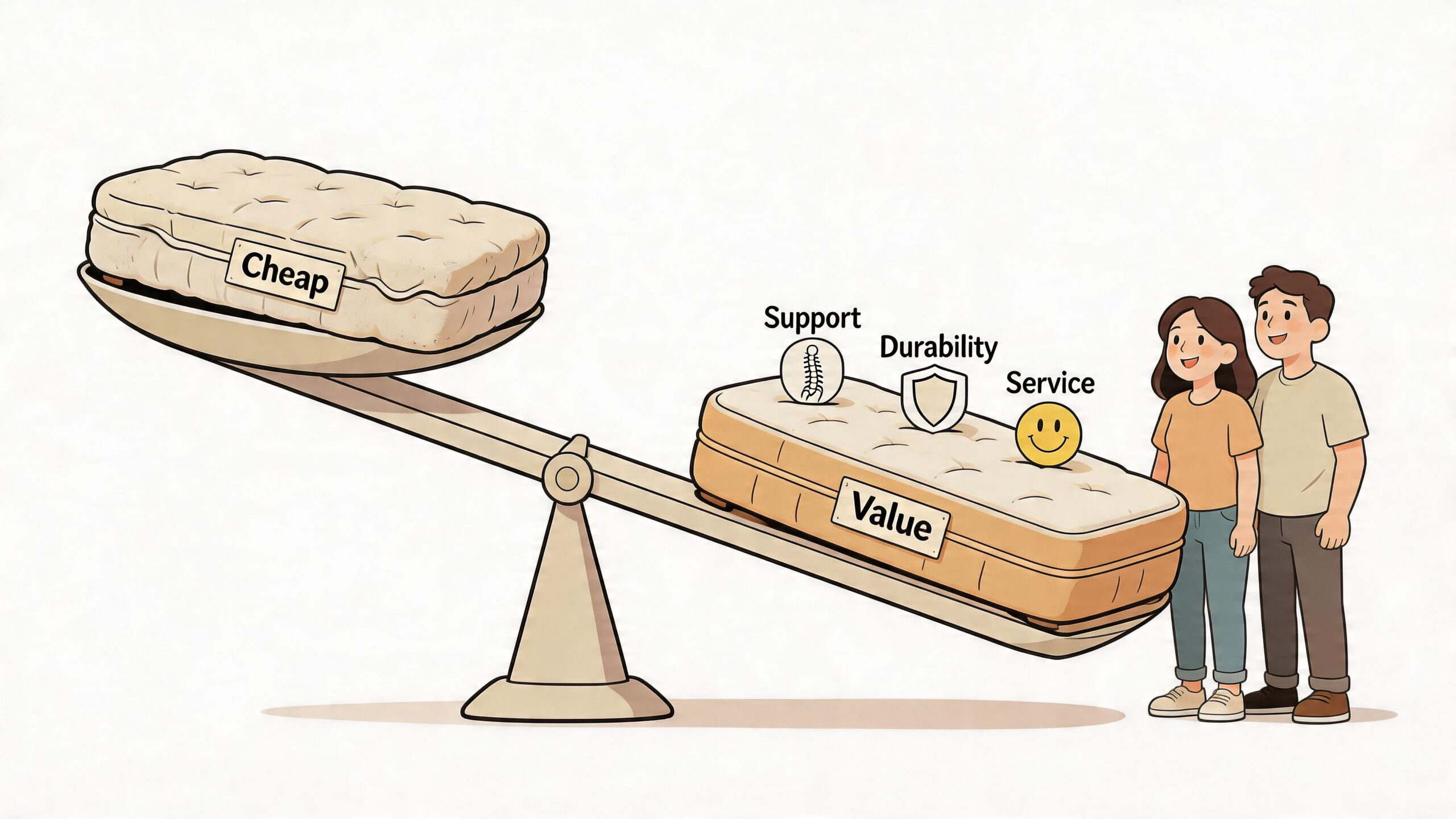
Finding Great Value Beyond the Price Tag
The cheapest mattress in the room is not always the smartest buy.
That doesn’t mean everyone needs the most expensive option. It means value is bigger than the number on the tag. A mattress can cost less upfront and still be the more expensive choice if it wears out too fast, feels wrong after a few weeks, or comes with hassles that make the whole experience harder.
Why local and online prices can feel so different
Shoppers often notice a gap between online pricing and what they see in stores. That’s real, but it doesn’t tell the whole story.
Some reports claim brick-and-mortar stores have high markups, but they often overlook the value of expert consultation, white-glove delivery, old mattress removal, and the ability to test products in person, as noted in Sleep Foundation’s guide to mattress costs.
That’s an important distinction. A lower online price might be a fine fit for some people. But plenty of shoppers would rather know how a mattress feels before they live with it. They also like having a team help with setup, removal, and questions that come up after the sale.
What real value can look like
At BILTRITE Furniture-Leather-Mattresses, shoppers can compare over 60 models with 500+ mattresses in stock, including flip-able and 2-sided options, plus services such as white-glove delivery and old mattress removal on qualifying purchases.
Those extras aren’t fluff. They solve real problems.
Trying before buying: You can feel the difference between foam, hybrid, and latex instead of guessing.
Delivery help: You don’t have to wrestle a mattress through a hallway or staircase.
Old mattress removal: That’s one less task on an already busy day.
Experienced guidance: A knowledgeable sleep specialist can help narrow choices faster.
Longer-use construction: Two-sided and heavy-duty designs can support better long-term value for some households.
If you’re also wondering how long various mattress types tend to stay comfortable, our guide on how long mattresses last is a useful next step.
The smarter question to ask
Instead of asking, “What’s the lowest price I can pay?” try this:
“What am I getting for that price?”
That question changes everything. It gets you thinking about durability, setup, service, support, and whether the mattress fits your body and your home. For many Milwaukee-area families, that’s where local shopping starts to make more sense.
A mattress becomes a good value when the comfort, construction, and service all line up with the price you paid.
Come Find Your Best Night's Sleep With Us
A good mattress is one of the most practical investments you can make in your home. You use it every night. Your family feels the difference every morning. And when you buy thoughtfully, you’re not just avoiding a bad purchase. You’re choosing comfort and support that lasts.
That’s why we believe mattress shopping should feel calm, honest, and human.
Our family has been serving Metro Milwaukee since 1928, and we still believe the old-fashioned way of doing business matters. Listen first. Help people compare clearly. Stand behind what you sell. Stay rooted in the community. Close on Sundays and Mondays so family time stays family time.
If you’re trying to figure out how much does a good mattress cost for your home, the next step isn’t staring at another product page. It’s lying down on a few options, noticing the differences, and talking with someone who knows how these mattresses are built.
A quick read through our guide on how to shop for a mattress can help you walk in with even more confidence.
We’d love to help you sort through the choices in plain language. No pressure. No gimmicks. Just real guidance from people who’ve been doing this for generations.
Come on down to our Greenfield showroom and see for yourself.
If you’re ready to compare mattress types, feel the difference in person, and talk with a local team that’s been serving Metro Milwaukee since 1928, visit BILTRITE Furniture-Leather-Mattresses. We’d love to see you in Greenfield and help you find real value for your home.