How to Protect Your Leather Couch From Cats: A Friendly Guide

So, you’ve found a leather couch you love—maybe even one of our beautiful, USA-made pieces—but one furry thought is holding you back: the cat. You’re picturing your brand-new sofa covered in tiny claw marks, and we get it! It’s a classic dilemma for pet owners.
Here at BILTRITE, we've been helping Metro Milwaukee families create beautiful, functional homes since 1928. As a 4th generation, family-owned business, trust us when we say we’ve heard this concern more times than we can count! We’re here to tell you that you can have both a gorgeous leather couch and a happy cat.
The key is to think proactively. A good strategy involves giving your cat better things to scratch, making your couch a less-than-ideal scratching spot, and keeping those claws in check.
Creating a Home Where Leather Sofas and Cats Coexist
You're not alone in worrying about this. Cat scratching is a serious—and often expensive—problem for furniture owners everywhere.
Think about it this way: A family invests in a stunning leather sectional from our Greenfield, WI showroom. It becomes the heart of their living room, only for their beloved cat to start using it as a personal scratching post. This isn't a rare nightmare scenario. One professional repair shop fixes over 10,000 individual cat scratches a year. With 47 million US households owning cats, the collective cost of repairing or replacing damaged leather furniture climbs to an estimated $500 million annually.
This guide is filled with our friendly, real-world advice to help you protect your investment so that everyone, two-legged and four-legged, can relax in style.
The numbers are staggering, aren't they? This infographic really puts the scale of cat-related furniture damage into perspective.
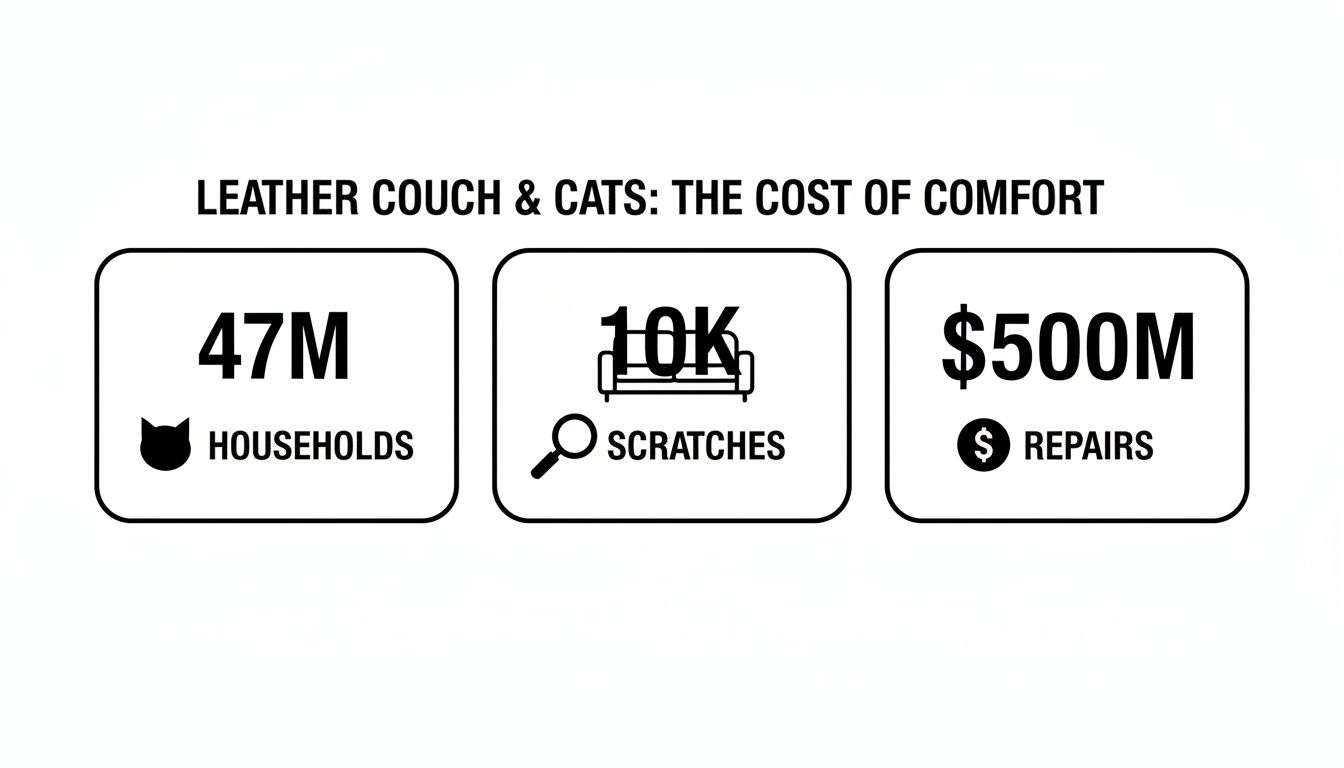
These figures show just how important it is to have a game plan. Let's make your living room a place of harmony, not heartache!
To help you get started right away, we've put together a quick-reference table.
Your Quick-Start Guide to Protecting Your Leather Couch
Here's a quick look at the most effective methods to start protecting your leather furniture from cat scratches today.
| Strategy Type | What to Do | Why It Works for Cats |
|---|---|---|
| Provide Alternatives | Place sturdy scratching posts (sisal, cardboard) near the couch. | Cats need to scratch. Giving them a better option redirects their natural instinct. |
| Use Deterrents | Apply double-sided tape or a citrus-scented spray to the couch corners. | Cats hate sticky textures and strong citrus smells, making the couch unpleasant. |
| Maintain Claws | Regularly trim your cat's nails or use soft nail caps. | Dull or covered claws can't do nearly as much damage if they do try to scratch. |
| Positive Reinforcement | Reward your cat with treats and praise when they use the scratching post. | Positive association encourages them to repeat the desired behavior. |
| Strategic Covering | Use a stylish throw blanket or a fitted slipcover on their favorite spots. | It creates a physical barrier while still looking great in your living room. |
These are just the starting points, of course. Combining a few of these strategies is usually the most effective way to teach your cat that the couch is off-limits.
Why This Matters for Your Furniture
Protecting your couch is about more than just looks; it's about preserving a piece of your home that brings the family together. A well-cared-for leather sofa can last for generations, becoming a centerpiece for countless memories.
When you invest in a quality piece, especially one of our affordable, better-quality USA or Amish-made selections, you're choosing something built to last. If you're exploring different materials, you might also find our guide on whether faux leather is durable helpful.
By taking a few preventative steps, you ensure that your furniture remains a source of pride and comfort. The goal is to create an environment where your cat's needs are met and your furniture stays in fantastic condition. It’s a win-win for the whole family!
Decoding Your Cat's Instinct to Scratch
To figure out how to protect a leather couch from cats, you first have to get inside their heads. Why are they so drawn to it? We promise, it’s not a personal attack on your new furniture—it’s pure, unadulterated cat instinct.
When your cat sinks its claws into your beautiful sofa, they aren't being naughty. They're just doing what cats have done for thousands of years.
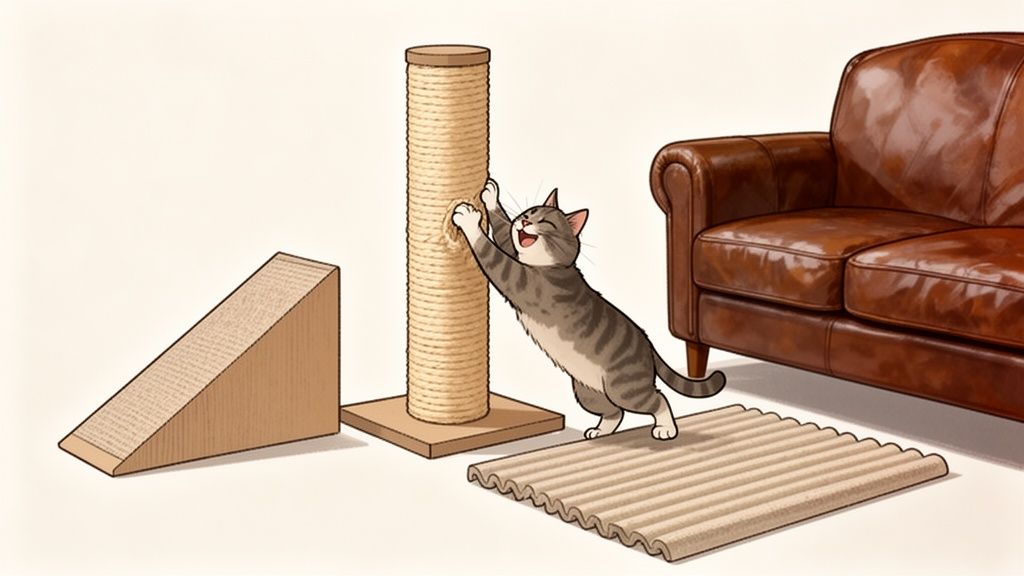
Scratching is a fundamental need, and it serves a few critical purposes for your feline companion. Understanding these reasons is the first real step toward redirecting that behavior somewhere much more appropriate (like a sturdy scratching post!).
The Why Behind the Claw
So, what’s really going on when those claws come out? It's usually a combination of a few key things.
- Claw Maintenance: Think of it as a cat manicure. Scratching helps them shed the dead, outer husk of their claws, keeping them sharp and healthy.
- A Full-Body Stretch: It's not just about the claws. Watch your cat next time they scratch—they dig in, pull back, and stretch their entire body, from paws and legs all the way up to their shoulders and spine. It clearly feels amazing.
- Marking Territory: This is a big one. Cats have scent glands in their paws, so when they scratch, they leave behind both a visual "I was here" mark and an invisible scent signature that stakes their claim.
Leather, with its unique firm-yet-giving texture, often presents the best surface for this whole ritual. It provides a satisfying resistance that lets them get a good, deep pull. This is exactly why a brand-new leather couch can become their favorite scratching spot almost overnight. If you're curious about how different fabrics hold up, check out our guide to upholstery materials to see how they compare.
The key is to shift your mindset. Don't try to stop your cat from scratching. The goal is to redirect this completely natural instinct to a better, more desirable location.
By giving them enticing alternatives, you can teach your cat that their scratching post is the absolute best place in the house to get their scratch on. This approach keeps your cat happy, your furniture safe, and everyone in the family stress-free. It's a true win-win!
Building a Scratch-Worthy Paradise for Your Cat
The best defense is a great offense. In the battle to save your sofa, that means giving your cat something way better to scratch. Think of it as decorating with your cat's happiness in mind.
The goal isn't to stop the scratching—it's to redirect that natural instinct to a place that makes them happy and keeps your beautiful BILTRITE leather couch looking fantastic. Creating this "scratching paradise" is all about understanding what your cat finds irresistible. It's more than just plopping a post in the corner and hoping for the best.
Location, Location, Location
Placement is everything! A scratching post hidden away in the basement is a lonely, ignored scratching post. Cats are social creatures and want their "stuff" right where the family hangs out.
- Near the Scene of the Crime: Place a sturdy, tall scratching post right next to the arm of the couch they've been eyeing. This gives them a fantastic alternative the exact moment temptation strikes.
- By Their Favorite Napping Spot: Cats absolutely love a good stretch-and-scratch session right after they wake up. Putting a post near their bed or a favorite sunny spot is a surefire way to encourage good habits.
- High-Traffic Zones: Think entryways to rooms or hallways. Cats love to mark their territory in these important areas.
Protecting your furniture starts with understanding cat psychology. One of the best preventative measures is to provide multiple scratching posts. Some experts even recommend one per room, especially near sleeping areas, to mimic the trees cats would naturally use outdoors for claw maintenance, stretching, and scent marking.
In fact, a 2019 survey found that 85% of cats stopped scratching furniture when they were given sisal or cardboard posts that matched their texture preferences. And don't forget the manicure! Trimming your cat's claws every 10–14 days is also a huge help. According to veterinary data, regular grooming can reduce potential damage by as much as 70%. You can learn more about how experts handle cat scratches and their causes.
Variety is the Spice of Life
Just like we have different preferences for our furniture, not all cats like the same thing. Some are vertical scratchers who love to stretch way up high, while others are horizontal scratchers who prefer flat or angled surfaces.
To figure out what your furry friend loves, it's best to offer a few different options:
- Tall, Sturdy Posts: These should be tall enough for a full body stretch (at least 3 feet) and heavy enough that they don't wobble. Sisal rope is a classic crowd-pleaser for a reason.
- Horizontal Scratchers: Simple cardboard or sisal pads that lie on the floor are great, especially for cats who tend to go for rugs.
- Angled Scratchers: These offer the best of both worlds and add another fun texture and position to their scratching routine.
Finding a good scratching post can feel like a quest, but it's worth the effort. The right material and shape can make all the difference in luring your cat away from the leather.
Choosing the Right Scratching Post for Your Cat
| Material Type | Best For | Pro Tip |
|---|---|---|
| Sisal Rope | Vertical climbers and powerful scratchers who need something durable. | Look for tightly wound rope. The texture is incredibly satisfying for them and it sheds less than other materials. |
| Cardboard | Horizontal scratchers and cats who love a shreddable texture. | These are inexpensive, so you can place them in multiple rooms. Sprinkle some catnip on it to make it extra enticing! |
| Carpet | Cats who are already attracted to scratching rugs or carpets. | Be cautious with this one. It can sometimes reinforce bad habits if you're trying to stop them from scratching your actual carpet. |
| Wood/Bark | Cats who love a natural, outdoor feel and a tough surface. | A fantastic, sturdy option for strong cats. Make sure the wood is untreated and safe for pets. |
By giving your cat a variety of appealing, well-placed options, you’re setting them—and your beautiful leather couch—up for success.
Making Your Couch Less Appealing to Curious Claws
While you're setting up that fabulous new scratching paradise, the next step is to gently teach your cat that the couch is a "no-claws zone." This isn't about punishment; it's about making the sofa a less interesting place to scratch.
We're going to use a few clever, cat-friendly tricks to make your beautiful leather furniture unappealing to those curious paws.
Think of it from your cat's perspective. They love textures they can really dig their claws into. So, what if we made those tempting corners feel… well, a little weird? This is where some simple deterrents come into play.
Use Textures Cats Dislike
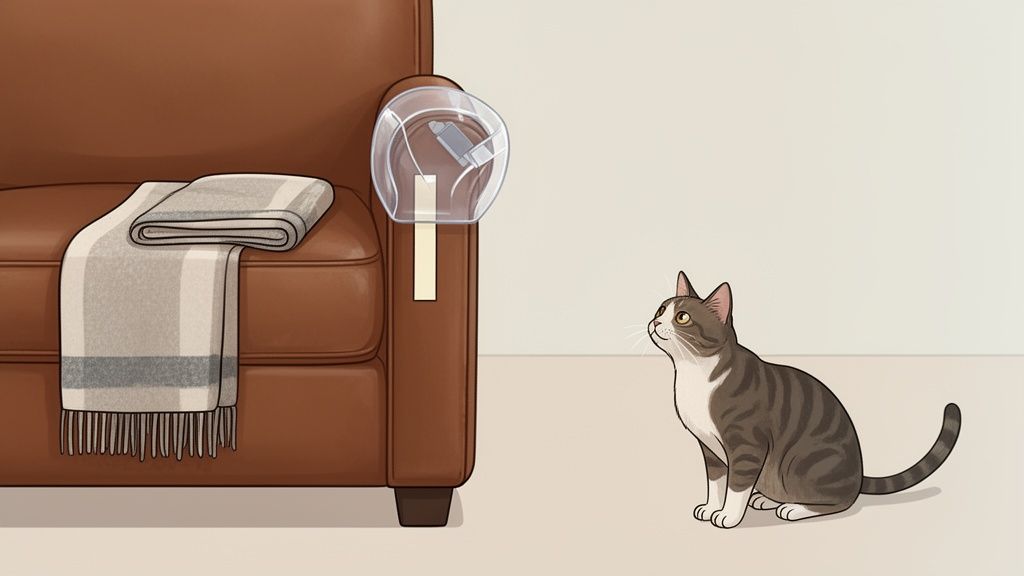
One of the most effective and harmless tools is double-sided sticky tape. You can buy tape made specifically for furniture that won't harm your leather. Simply apply it to the corners or armrests your cat has been eyeing.
Cats are tidy creatures and absolutely hate the tacky sensation on their paws. That sticky feeling is usually enough to convince them to move on very quickly.
Another fantastic option is using clear, flexible plastic shields. These are designed to fit right over the corners of your couch. They're nearly invisible but create a smooth, slippery surface that claws can't grip, making any scratching attempt completely unsatisfying.
These physical barriers are great because they directly address the behavior without causing any stress to your pet. They send a simple message: "this spot isn't fun to scratch," which nudges them toward the sisal post you've so thoughtfully provided. You can find more tips on selecting durable materials in our guide on how to choose kid-friendly and pet-friendly furniture.
The Power of Scent and Sight
Cats have incredibly sensitive noses, which we can use to our advantage! Many felines have a natural aversion to citrus scents. A light spritz of a citrus-based spray (made with pet-safe essential oils, of course) on the couch can work wonders. The scent is pleasant to us but tells your cat to steer clear.
You can also use simple visual barriers. Sometimes, just draping a stylish throw blanket over their favorite scratching area is all it takes. It not only protects the leather but also changes the texture, making it far less appealing for a scratching session.
Feline behavior studies show that deterrents work wonders. Using furniture guards or double-sided tape on couch edges can deter 78% of cats because they dislike the sticky or slick textures. Similarly, a simple spray bottle with water has been shown to interrupt 92% of scratching episodes almost immediately, though we prefer more positive methods first! Discover more insights about handling cat scratches on leather.
By combining these gentle deterrents, you create a multi-sensory message that your couch is for cuddling, not clawing. This strategy helps protect your furniture while reinforcing the positive training you're doing with their new scratching posts.
Choosing Pet-Friendly Leather at BILTRITE
Let's be honest, not all leather is created equal, especially when you have four-legged family members ruling the roost. One of the single best ways to protect a leather couch from cats is to make a smart choice from the very beginning. Here at BILTRITE, our team has over 400 years of combined experience, and we absolutely love helping families find furniture that’s both gorgeous and built for real life.
The secret really comes down to choosing the right type of leather. Some leathers are just naturally more resilient against the daily adventures of pets. This is a topic we get pretty excited about because a little bit of knowledge here can make a massive difference in how your furniture holds up for years to come.
Understanding Different Leather Types
When it comes to pet-friendly options, your new best friends are protected or finished leathers. These types have a special topcoat applied during the tanning process. Think of it as a built-in shield that offers an extra layer of defense against minor scratches, spills, and stains. It’s simply much tougher for a claw to do real, lasting damage to this kind of surface.
On the flip side, you have more delicate options like aniline leather. They're beautiful and prized for their soft, natural feel, but they also absorb oils and scratch far more easily. It's just not the most practical choice for a home with a playful cat. If you want to dive deeper into the different grades, you can learn more about buying a leather couch in our guide.
BILTRITE’s Heavy-Duty Advantage
We take a huge amount of pride in our selection of heavy-duty furniture, with much of it made right here in the USA or by incredibly skilled Amish craftspeople. These pieces aren't just assembled; they're engineered from the ground up to handle the demands of a busy household—and that absolutely includes your pets.
For Milwaukee-area homeowners, our heavy-duty leather options are a true game-changer. These pieces are often made with thicker, more durable hides that are naturally more resistant to punctures than standard leather. You can discover more insights about cat-proofing your furniture and see for yourself why a tougher hide really matters.
When you visit our Greenfield showroom, just keep an eye out for our "Heavy Duty" icon on the furniture tags. It’s our simple way of letting you know that a piece is truly built to last, ready for movie nights, family gatherings, and yes, even a catnap or two. Come on down and let us show you the difference real quality makes!
What To Do When Scratches Happen Anyway
Even with the most well-behaved cat and the best preventative measures, a stray scratch can still happen. When it does, don't panic! Here at BILTRITE, we know that life happens, and a minor mark on your leather sofa isn’t the end of the world. In fact, you can often handle it right at home.
The trick is to act fast. For a very light, surface-level scuff, sometimes all it takes is a little bit of targeted care. A good leather conditioner can work wonders, restoring moisture to the area and helping the mark blend right back into the surrounding leather. It’s a simple first step that’s surprisingly effective. We have a great guide on how to properly condition a leather sofa that walks you through the whole process.
Tackling Slightly Deeper Marks
If you're dealing with a scratch that's a bit more noticeable, a DIY leather repair kit is your new best friend. These kits are fantastic and usually come with a filler compound and color-matching tints, so you can fill in the scratch and blend it seamlessly. You'd be surprised how well they work—they can make a scratch practically disappear.
It’s amazing how far repair techniques have come. Today's DIY kits with leather-specific fillers can repair up to 90% of minor scratches almost invisibly. Of course, for a flawless finish, professionals can match colors with incredible precision, a skill that has saved countless pieces of furniture over the years. You can learn more about how advanced repair techniques work.
When to Call in a Professional
Now, for more significant damage like a deep gouge or an actual tear, we always recommend calling a professional. Trying to fix a major issue on your own can sometimes do more harm than good. An expert has the proper tools and years of experience to handle serious repairs and restore your furniture beautifully.
If you’re ever on the fence about what to do, just remember our team is here to help! With our incredible sales team's combined experience, we’ve seen it all. We'd love to see you in our store! Come say hi and let us share more tips and advice in person.
Common Questions About Cats and Leather Furniture
As a 4th generation, family-owned business right here in Metro Milwaukee, we've heard just about every question you can imagine from fellow pet lovers! Helping families find beautiful furniture that actually fits their lives—pets included—is what we do best.
Here are the honest answers to a few of the questions that come up all the time in our showroom.
Are Any Leather Types Truly Cat-Proof?
This is the big one. While no leather is completely indestructible against a determined cat, some types are definitely more resilient than others!
Protected leathers, which have a durable topcoat finish, are going to be your best bet. They resist minor scratches far better than softer, more delicate leathers like aniline. Think of it as a built-in shield.
At BILTRITE, we can show you our heavy-duty options, many of which are USA or Amish-made with thicker hides that are tougher for little claws to really dig into. When you come see us in Greenfield, we'll be happy to point you toward some fantastic choices for a pet-friendly home.
Will Declawing My Cat Solve the Problem?
This is a really sensitive topic, and it's one we feel strongly about. Declawing isn't just a nail trim; it's a major surgical procedure that involves amputating the last bone of each toe. It's a big deal.
Many veterinarians and animal welfare groups now advise against it due to the risk of long-term pain and behavioral issues for your furry family member.
We believe the kinder—and highly effective—path is focusing on positive redirection with great scratching posts and gentle deterrents. It’s a win-win: you protect your furniture, and your cat stays happy and healthy.
Why Does My Cat Ignore the New Scratching Post?
Don't feel bad, this happens to almost everyone! It usually comes down to two simple things: your cat's personal preference and where you put the post.
- Try Different Materials: Cats can be picky about textures. If you have a carpeted post and they're ignoring it, try one wrapped in sisal rope. If they're snubbing the sisal, maybe a simple cardboard scratcher is what they're after.
- Location, Location, Location! This is key. The post needs to be in a socially important area, like right next to the couch they're eyeing up or near their bed. A post hidden in a back corner won't get used.
- Add an Incentive: A little catnip sprinkled on the post can make it instantly more interesting and inviting!
Ready to find a beautiful, durable leather sofa your whole family will love? The friendly team at BILTRITE Furniture-Leather-Mattresses is here to help you explore all our pet-friendly options. Come visit our showroom in Greenfield today! https://www.biltritefurniture.com